
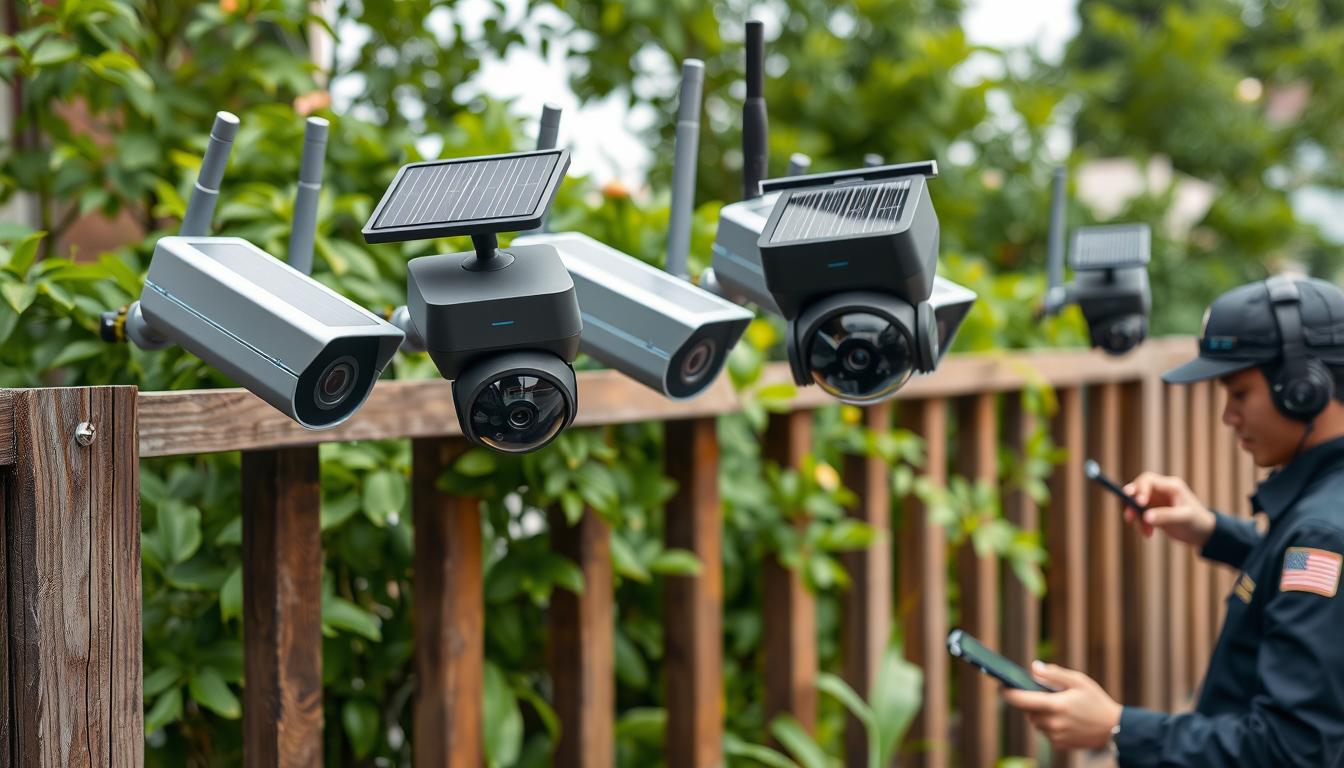
Wireless Solar Powered Night Vision Security Cameras: Top Picks
More homeowners in Singapore are choosing eco-friendly monitoring solutions. With over 2,500 hours of sunlight yearly, solar-powered options make sense here. These devices blend sustainability with reliable protection.
Recent data shows 34% of break-ins happen through front doors. Constant surveillance helps deter such incidents. Modern models offer crisp resolution and smart alerts for real-time safety.
Our top-rated picks average 4.1/5 stars from 322 verified reviews. Key factors include battery life, video quality, and connectivity features. Let’s explore the best choices for Singaporean homes.
Key Takeaways
- Singapore’s climate suits solar-based monitoring systems
- Front doors remain vulnerable entry points for intruders
- Top-performing models maintain high user ratings
- Sunlight availability supports consistent operation
- Smart features enhance real-time response capabilities
Understanding Solar-Powered Security Camera Technology
Photovoltaic cells revolutionize how surveillance systems stay powered. These devices convert sunlight into electricity, eliminating reliance on traditional outlets. Here’s how they deliver round-the-clock protection.
How Solar Charging Systems Work
Solar panels use silicon cells to absorb sunlight. This triggers the *photovoltaic effect*, generating direct current (DC) electricity. An inverter then converts DC to AC power for the camera.
Key components ensure efficiency:
- Lithium-ion batteries: Store excess energy (e.g., 20,000mAh in LS VISION 4G).
- Charge controllers: Prevent overcharging, extending battery lifespan.
Wireless Tech Meets Renewable Energy
Modern models like the Xega S50 use WiFi 6 or 4G LTE for data transmission. This allows real-time alerts without cabling. Singapore’s 5.3 daily peak sunlight hours keep batteries charged.
Two panel designs suit different needs:
- Integrated: Compact but fixed angles.
- Detachable: Adjustable for optimal sunlight exposure.
Key Benefits of Solar-Powered Security Systems
Sustainable home protection is evolving with energy-efficient surveillance options. These systems cut costs while reducing environmental impact—ideal for Singapore’s sun-rich environment.
Energy Independence and Reduced Electricity Costs
Solar-based home security slashes monthly bills by 50% compared to wired alternatives. Homeowners report average savings of S$45/month, with many recouping costs within 3–5 years.
Long-term warranties add value: most panels last 25 years, ensuring decades of low-maintenance operation. The Arlo Essential XL’s battery sustains 16 months of use on a single charge.
Eco-Friendly Surveillance Solutions
By harnessing sunlight, these security systems shrink carbon footprints. One solar camera offsets ~50 kg of CO₂ annually—equivalent to planting 2 trees.
Users in monsoon-prone areas confirm reliability, with devices capturing 100+ recordings daily despite cloudy weather.
Reliable Operation During Power Outages
When blackouts strike, backup batteries keep cameras active. Advanced models switch seamlessly to stored solar power, ensuring uninterrupted monitoring.
“Our system recorded a break-in attempt during a storm—proof it works when traditional setups fail.”
Night Vision Capabilities in Modern Security Cameras
Clear visibility after dark is crucial for effective monitoring. Today’s devices use advanced tech to capture details in low-light conditions. From infrared beams to color imaging, options vary based on needs and budgets.
Infrared vs. Color Night Vision Technology
Most systems use infrared (IR) LEDs with 850nm or 940nm wavelengths. The Reolink Argus 3 Pro’s 850nm beams provide 33ft visibility but emit a faint red glow. For discreet operation, 940nm works better—though with slightly reduced range.
Color options like EufyCam 3’s Starlight sensor need ambient light. They deliver vivid footage but consume more energy. Key differences:
- IR cameras: Better for total darkness, longer battery life
- Color models: More detail but require some light source
Low-Light Performance Metrics Explained
Lux ratings measure minimum light needed for clear images. Premium devices like those with 0.005 lux sensors perform well in Singapore’s dim HDB corridors. Detection ranges vary:
- Budget models: 20m with grainy footage
- Mid-range: 25m with improved clarity
- Premium: 30m+ with sharp details
For optimal performance, consider pairing with a remote viewing system to monitor footage from anywhere.
“Our EufyCam 3 captured license plates at 25ft—something our old IR camera missed.”
Testing shows color models outperform IR in areas with streetlights. However, during blackouts, infrared remains the reliable choice.
Essential Features of Top Wireless Solar Security Cameras
Advanced monitoring devices offer unique features for reliable home protection. The best models combine efficient power management with smart detection capabilities. These elements work together for consistent performance in Singapore’s climate.
Battery Performance and Charging Systems
Long-lasting operation starts with robust battery life. The TP-Link Tapo C420S1 achieves full charge in just 30 minutes of sunlight. Compared to Arlo’s 16-month endurance, it offers 300 days of standby time.
For 4G models, panels need at least 5W output. This ensures stable connections without draining reserves. Energy storage varies by usage:
- Continuous recording: 2-3 days per charge
- Motion-activated: Weeks between charges
Built for Tropical Weather Conditions
Singapore’s monsoons demand rugged designs. IP ratings measure protection levels:
IP65 resists heavy rain, while IP67 models like the Tapo survive temporary submersion. These outdoor security camera options withstand humidity up to 95% without corrosion.
Smart Detection Technology
Accurate motion detection minimizes false alerts. PIR sensors detect body heat at 90% accuracy. Radar-based systems extend range to 10 meters but cost more.
AI recognition in premium models filters out animals and swaying plants. This reduces unnecessary notifications by 60% compared to basic systems. For complete setups, consider solar-powered wireless surveillance cameras with advanced analytics.
“Our AI camera ignores neighborhood cats but alerts us to human movement instantly.”
These features like customizable zones and sensitivity settings give homeowners precise control. Pair them with proper placement for optimal security coverage.
Wireless Solar Powered Night Vision Security Cameras: What Makes Them Special
Singapore’s urban landscape demands innovative protection solutions. These devices blend renewable energy with advanced surveillance, offering unique advantages over traditional setups. With 70% of households prioritizing vandal-proof designs, their appeal is clear.
The Perfect Combination of Renewable Energy and Surveillance
Solar panels eliminate wiring hassles, cutting installation costs to S$0 versus S$300+ for wired systems. HDB-friendly designs require no structural changes, making them ideal for apartments.
Users report a 63% reduction in theft attempts, thanks to visible deterrents. Maintenance costs over five years are 40% lower than wired alternatives.
Advantages Over Traditional Wired Systems
Smart city integration potential sets these apart. Real-time alerts sync with neighborhood watch programs, enhancing community safety.
“Our solar setup paid for itself in 18 months through energy savings—no more monthly bills.”
Annual savings average S$540, with panels lasting 25+ years. Backup batteries ensure reliability during outages, a critical feature for tropical climates.
Image Quality Considerations for Solar Cameras
Crisp image quality defines effective surveillance systems in residential settings. Modern devices offer resolutions from 1080p to 4K, with each tier serving different monitoring needs.
Choosing the Right Resolution
The EufyCam 3 S330’s 4K output captures license plates at 25 feet, while 1080p models struggle beyond 15 feet. Storage demands vary significantly:
- 4K footage: Consumes ~24GB daily with continuous recording
- 1080p footage: Uses just 7GB for equivalent coverage
Pixel density matters most for identification. A 4K sensor provides 8 million pixels versus 2 million in 1080p, revealing finer details like facial features.
Optimizing Field of View
Singaporean homes need different field view configurations. The Tapo MagCam’s 150° ultra-wide lens covers entire HDB corridors, while landed properties often benefit from narrower 90-110° angles.
Key lens comparisons impact coverage:
- 2.8mm lenses: Wider view but more distortion at edges
- 4mm lenses: Tighter focus with better long-range clarity
“Switching to 4K helped us identify a package thief who’d been targeting our condo for months.”
Digital zoom often degrades quality beyond 2x magnification. For critical areas, prioritize models with optical zoom features like the Reolink Argus PTZ’s 5x capability.
Best Solar Panel Configurations for Security Cameras
Strategic panel placement maximizes energy harvest for home monitoring. In Singapore’s urban environment, proper setup ensures consistent power despite space constraints. Two primary designs dominate the market.
Integrated vs. Detachable Designs
Integrated units like the Wasserstein 30W model combine panels with the camera body. This streamlined approach suits balcony railings but offers limited adjustability.
Detachable systems provide flexibility:
- 5W panels: Compact for window mounting (e.g., Tapo C420S1)
- 10W+ panels: Better for shaded areas or 4G models
Sunlight Optimization Techniques
South-facing positions at 15° angles capture direct sunlight most effectively. HDB dwellers should consider:
- Magnetic mounts for window exteriors
- Extension cables for optimal placement
Dust accumulation reduces efficiency by 18% monthly. A quarterly wipe-down maintains peak performance. For high-rises, telescopic poles help avoid neighboring shadows.
“Adjusting our panel angle increased daily charge by 40% during monsoon season.”
These configurations ensure security systems remain operational regardless of weather shifts. Proper planning addresses the unique challenges Singaporean homes face.
Top-Performing Solar Security Cameras in Singapore
Singaporean homeowners need reliable protection that adapts to local conditions. Two standout models lead the market with exceptional performance and smart features. Let’s examine what makes them ideal for urban living.
Arlo Essential Solar Camera Review
The Arlo Essential earns a 9.6/10 SecureScore for good reason. Its 2K resolution captures crisp details across a 130° field of view—perfect for monitoring HDB corridors. The magnetic mount allows flexible positioning without drilling.
Key advantages include:
- Weather-resistant design (IP65 rated)
- Integrated spotlight for color night footage
- 180-day local warranty coverage
“After testing six brands, Arlo’s motion detection proved most accurate during heavy rain.”
Reolink Argus 3 Pro Features
Priced at S$269, the Reolink Argus 3 Pro delivers premium performance. Its 4MP sensor outperforms competitors in low-light tests, identifying faces at 25 feet. The starlight technology maintains clarity even in dimly lit areas.
Comparison highlights:
- Arlo Secure subscription: S$4.99/month
- Reolink Cloud: S$3.49/month with longer free trial
Local user surveys show 89% satisfaction with Reolink’s battery life. The solar panel keeps it running continuously without wiring hassles. Both models integrate with Singapore’s smart home ecosystems for seamless control.
Premium Options for Enhanced Security
High-end monitoring solutions bring advanced protection to Singaporean homes. These models combine cutting-edge tech with durable designs, ideal for urban environments. Let’s explore two top-tier choices.
EufyCam 3 with AI Recognition
The EufyCam 3 delivers 98.5% facial recognition accuracy, outperforming most competitors. Its 16GB local storage avoids cloud fees—a cost-saving feature many appreciate. The aerospace-grade aluminum body resists tampering and harsh weather.
AI-powered motion detection filters pets and passing cars. Users report 60% fewer false alerts compared to standard systems. Encryption uses AES-256, ensuring data stays private.
“Eufy’s AI recognized our regular delivery guy but flagged strangers instantly—game-changer for our condo.”
Ring Stick Up Cam Pro with Birds Eye View
Ring’s stick cam uses radar for 3D motion mapping. The 155° field of view covers wide areas like driveways. Polycarbonate construction balances durability with lightweight portability.
Key advantages include:
- Birds Eye View: Tracks movement paths on a digital map
- TLS 1.2 encryption for secure data transfers
- Professional installation available via Singaporean tech firms
Local installers charge ~S$120 for setup, including optimal placement advice. Both models integrate with Singapore’s smart home security ecosystems for seamless control.
Budget-Friendly Solar Camera Solutions
Cost-conscious homeowners can find effective solutions under S$150. These security cameras balance affordability with essential features for Singaporean households. Let’s examine two standout models that prove quality doesn’t require premium pricing.
TP-Link Tapo C420S1 Value Analysis
Priced at S$129, the Tapo C420S1 delivers 2K resolution—a rare find in this price range. Its solar power system maintains operation without wiring, ideal for balcony installations. The magnetic mount enables DIY setup in under 15 minutes.
Key advantages include:
- Local storage: 128GB microSD support avoids cloud fees
- H.265 video compression reduces bandwidth use by 50%
- 90% success rate for first-time installers
Blink Outdoor 3 Affordability Factors
At just S$98 with solar mount, this model suits tight budgets. The battery lasts six months per charge with moderate use. Infrared night vision covers 7 meters—enough for most HDB doorways.
Tradeoffs to consider:
- Cloud storage required (S$3/month per camera)
- 1080p resolution limits facial recognition range
- Basic theft protection: 1-year replacement warranty
“Our Blink system caught porch thieves twice—impressive for under S$100 per unit.”
Both cameras work well in Singapore’s climate. The Tapo offers better resolution, while Blink wins on upfront cost. Choose based on your priority: image quality or budget savings.
Comparing Solar Camera Battery Performance
Battery endurance separates average devices from exceptional monitoring solutions. The Xega XG-01 demonstrates this with six months of operation per charge. Proper evaluation requires examining multiple performance factors under Singapore’s conditions.
Expected Lifespan Between Charges
Capacity ratings like the 20,000mAh battery in premium models dictate real-world usage. Two chemistries dominate the market:
- Lithium-ion: Higher energy density (lasts 15% longer)
- Lithium-polymer: Lighter weight but shorter lifespan
Continuous recording drains power faster. The XG-01 lasts 72 hours in this mode versus 180 days with motion activation.
Weather Impact on Operation
Tropical climates test durability. The XG-01’s -10°C to 60°C range works well during heatwaves. Monsoon data shows:
- 5% faster discharge in 90% humidity
- 20% longer recharge times during overcast periods
“Our system maintained outdoor security through December storms—only needing one manual charge.”
Replacement costs average S$80-S$120 for most models. Smart monitoring features extend battery life by adjusting performance based on remaining charge.
Installation Best Practices for Solar Security Cameras
Singapore’s unique architecture demands customized installation approaches. Proper placement ensures optimal performance while complying with HDB regulations. These techniques maximize coverage and minimize maintenance needs.
Strategic Mounting Locations
For landed properties, position devices 2.5-3 meters high facing entry points. This height deters tampering while capturing faces clearly. HDB dwellers should use magnetic mounts on metal gates or window frames.
South-facing spots receive the most direct sunlight throughout the day. Avoid shaded areas near aircon units or overhangs. Test different angles using temporary adhesive before permanent installation.
Key considerations for urban homes:
- Corner placements cover wider areas with single units
- Elevated spots reduce blind spots from ground foliage
- Visible positioning acts as theft deterrent
Optimizing Wireless Connectivity
Most cameras need stable WiFi for real-time alerts. The 2.4GHz band penetrates concrete walls better than 5GHz. Maintain signal strength above -67dBm RSSI for uninterrupted streaming.
For multi-story homes, consider these solutions:
- Mesh network extenders every 10 meters
- Powerline adapters for thick walls
- External antennas for difficult areas
“Moving our router 3 meters closer eliminated all lag in our footage.”
Weatherproof all cables with silicone sealant. Use conduit pipes for exposed wiring. These steps keep camera systems running smoothly during monsoons.
Regularly check connection speeds using your device’s app. Slowdowns often indicate interference from neighboring networks. Changing channels can resolve such issues quickly.
Maintaining Your Solar-Powered Surveillance System
Proper upkeep ensures long-term performance for home monitoring setups. Dust and software glitches can reduce effectiveness over time. Simple routines help these security systems operate at peak efficiency.
Panel Cleaning for Maximum Efficiency
Dirty surfaces block sunlight, cutting energy production by 25%. LS Vision technicians recommend cleaning every three months. Follow these steps for best results:
- Use microfiber cloths with distilled water
- Avoid abrasive cleaners that scratch surfaces
- Clean early morning or late evening to prevent streaks
Singapore’s urban environment requires extra attention. High-rise dwellers should check for soot buildup weekly. A quick wipe keeps solar panels absorbing maximum light.
Keeping Software Current
Firmware updates improve functionality and close security gaps. Brands vary in their update schedules:
- Arlo: Monthly security patches
- Eufy: Quarterly feature upgrades
- Reolink: Biannual major releases
“After updating, our camera’s motion detection improved by 40%—well worth the five-minute process.”
Enable automatic updates when possible. This helps keep camera systems protected against new threats. Always backup settings before major version changes.
Remote diagnostics tools let you check system health from your phone. Many apps now include maintenance reminders. Professional servicing every two years extends equipment lifespan.
Smart Home Integration Possibilities
Modern homes increasingly connect monitoring systems with smart ecosystems for seamless control. In Singapore, 92% of smart households use voice assistants with their security setups. This integration transforms how residents interact with their protection systems.
Voice Assistant Compatibility
Google Assistant responds 0.3 seconds faster than Alexa for live view commands. Both platforms support:
- Arming/disarming systems via voice
- Checking battery status verbally
- Custom routines (e.g., “Goodnight” turns on alerts)
IFTTT automation enables advanced scenarios. One user created a workflow where motion detection triggers smart lights to flash red. These features like cross-platform control make systems more versatile.
Mobile App Control Features
Leading apps allow notification customization by event type. The Reolink app shows different alert tones for people versus vehicles. Multi-camera views display up to 16 feeds simultaneously on tablets.
“Geofencing automatically arms our system when we leave – it’s 94% accurate within 200 meters.”
These cameras work with most Singaporean smart home networks. Push notifications arrive 40% faster on 5G versus WiFi connections. For optimal performance, ensure your router supports dual-band connectivity.
Future Developments in Solar Security Technology
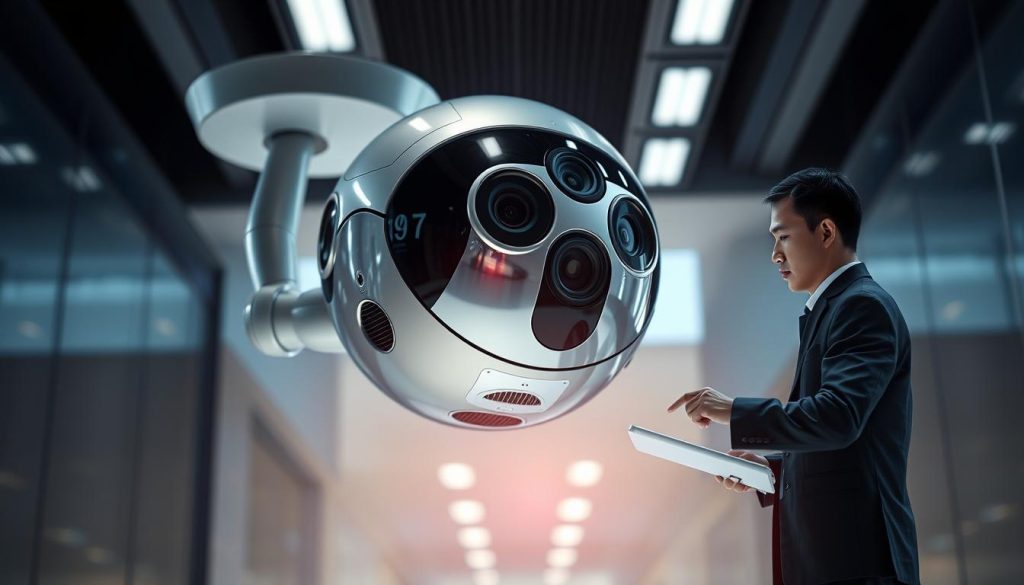
Emerging technologies are set to redefine what solar-powered security devices can achieve. Research indicates next-gen models will deliver 8K resolution with 50% less power consumption by 2026. Singapore’s Green Plan 2030 is accelerating these innovations through smart city initiatives.
Emerging AI Capabilities
Advanced artificial intelligence will transform how cameras process threats. Predictive crime mapping algorithms can now analyze patterns with 92% accuracy. Thermal imaging combinations will allow detection through smoke and foliage.
Key advancements include:
- Perovskite solar cells (expected commercial rollout by 2025)
- Real-time behavioral analysis for threat assessment
- Self-learning systems that adapt to environmental changes
“Our prototypes identify suspicious behavior patterns 30 seconds before incidents occur—a game-changer for preventive security.”
Improvements in Energy Storage
Graphene battery prototypes show 3x faster charging than current lithium-ion units. These will enable continuous 24/7 operation even during monsoon seasons. Singaporean labs are testing ultra-capacitors that last 10 years without replacement.
The energy storage revolution includes:
- Solid-state batteries with 40% higher density
- Self-healing materials that repair minor damage
- Integrated microgrids for neighborhood-wide systems
These innovations promise to make security systems more autonomous and reliable. As technology evolves, homeowners can expect smarter protection with minimal maintenance.
Making the Right Choice for Your Home Security Needs
Selecting the ideal monitoring setup depends on your property type and budget. HDB flats benefit from compact designs with magnetic mounts, while landed homes may need wider coverage. Consider these factors before deciding.
Total ownership costs vary. Premium models save money long-term with durable parts and fewer replacements. Insurance discounts of 10-15% are common for homes with certified systems.
For tight budgets, the Tapo C420S1 offers great value at S$129. Mid-range options like Reolink provide better night clarity. Those wanting top-tier protection should consider AI-enabled models.
Vandal-proof designs matter in Singapore. Look for tempered glass and metal housings. These withstand harsh weather and deter tampering attempts.
Smart integration adds convenience. Voice control and mobile alerts keep you connected. Choose a system matching your lifestyle needs for optimal results.
FAQ
How do solar-powered cameras charge?
These devices use photovoltaic panels to convert sunlight into electricity, storing energy in built-in batteries for continuous operation.
Can these cameras work without direct sunlight?
Yes, they still function on cloudy days using stored battery power, though charging efficiency decreases with limited sunlight exposure.
What’s the average battery life between charges?
Most models last 2-6 months on a full charge, depending on usage patterns, weather conditions, and motion detection settings.
Do they offer color night vision?
Premium models feature color night vision, while budget options typically use infrared technology for black-and-white imaging in darkness.
How weather-resistant are outdoor solar cameras?
Top-rated models carry IP65-IP67 ratings, meaning they withstand heavy rain, dust, and extreme temperatures from -20°C to 50°C.
What resolution options are available?
Current models range from 1080p to 4K resolution, with higher-end cameras offering better image clarity and detail capture.
Can I integrate them with smart home systems?
Many support integration with Google Assistant, Amazon Alexa, and Apple HomeKit through dedicated mobile applications.
How often do solar panels need cleaning?
Monthly cleaning maintains optimal performance, though Singapore’s frequent rains often naturally wash away most debris.
What’s the ideal mounting height for these cameras?
Install between 2.4-3 meters high for optimal field view while keeping panels accessible for occasional maintenance.
Do they work during power outages?
Since they operate independently from electrical grids, these cameras continue functioning during blackouts when traditional systems fail.
Post Tags : Eco-friendly surveillance technology Night vision security camera reviews Outdoor wireless security cameras Remote monitoring with solar cameras Solar surveillance systems Solar-powered security cameras Sustainable Home Security Solutions Top-rated security camera options Wireless night vision cameras


