
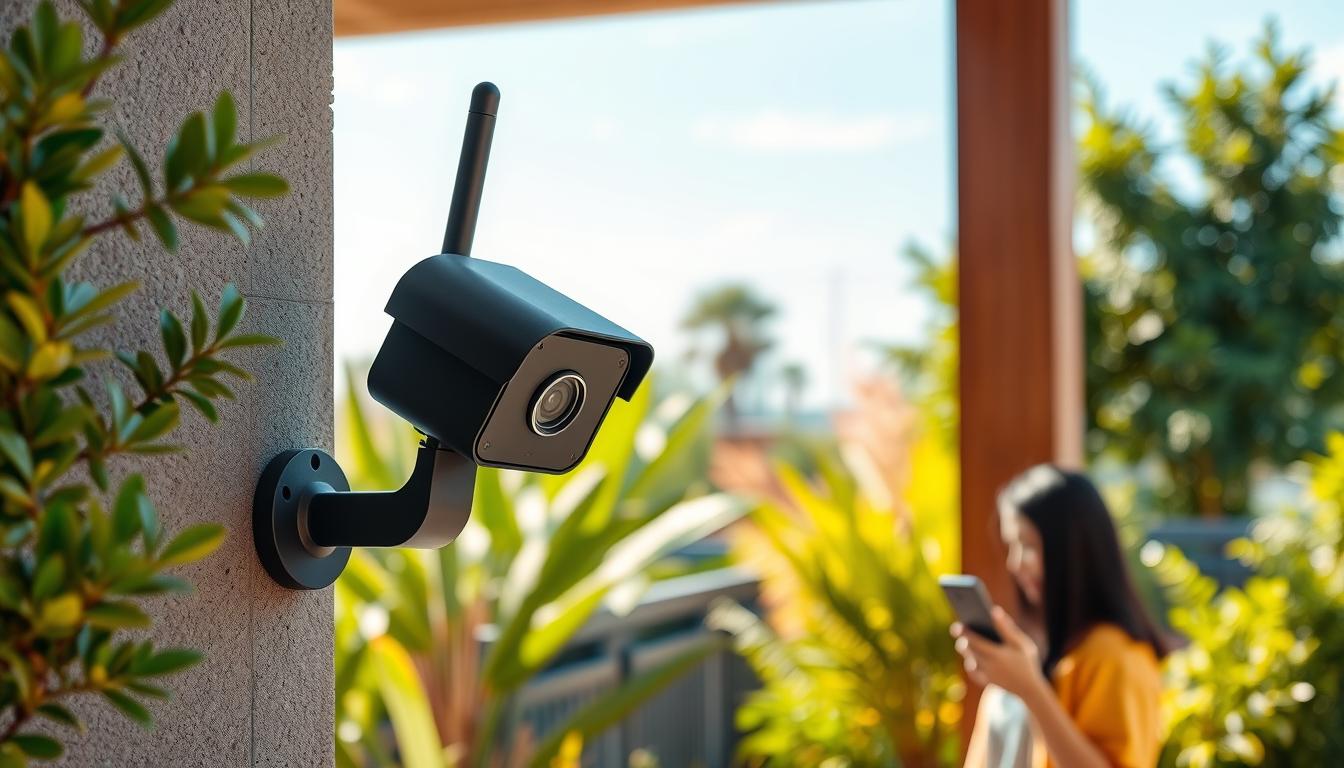
Secure Your Space: Top WiFi Solar CCTV Cameras
In recent years, the need for good security has grown. This has led to more people choosing solar-powered systems, like WiFi solar CCTV cameras. These devices are getting popular in Singapore for their reliability, easy setup, and green use.
They use solar energy, making them great for sunny areas. By picking these smart options, homeowners can boost their security. Plus, they’re good for the planet. To find the best WiFi solar CCTV cameras, check out top recommendations.
Key Takeaways
- WiFi solar CCTV cameras are highly reliable and easy to install.
- These cameras harness solar energy, making them eco-friendly.
- Perfect for Singapore’s sunny climate, boosting outdoor security.
- Featuring high-definition video quality, some reach up to 4K resolution.
- Long battery life ensures continuous operation for extended periods.
- Integrated motion sensors and two-way audio provide advanced security features.
Introduction to Solar CCTV Cameras
Solar CCTV cameras are a big step forward in outdoor surveillance, perfect for sunny places like Singapore. They use the sun’s energy to work, unlike traditional power sources. This makes them great for areas without steady electricity.
These cameras have high video quality and can see at night. They can even work in very low light up to 150 meters away. Plus, they’re built to last in bad weather, thanks to their IP66 rating.
Solar CCTV systems are also very flexible. They can connect wirelessly and use SIM cards for mobile monitoring. For example, the Reolink Argus 3 Pro can last six months on a single charge. This makes them perfect for farms, construction sites, and outdoor events.
When installing solar CCTV cameras, it’s important to think about the location. They need at least six hours of sunlight a day. Mount them at a 30 to 45-degree angle to catch the most sun. Their smart batteries can keep them running for weeks without needing a charge.
Understanding the Technology Behind Solar WiFi CCTV Cameras
Solar WiFi cameras are a big step forward in security tech. They turn sunlight into electricity using photovoltaic cells. This energy is stored in batteries, so they work even when it’s not sunny.
These cameras can record in high definition, like 4K and 1080p. They also have features like motion detection and night vision. This means they work well day or night. Plus, they’re built to withstand bad weather thanks to their solar panels.
Setting up solar energy security cameras is easy, making them great for remote spots. They’re perfect for anyone who wants reliable security without a lot of setup. You can choose from different types, like fixed or PTZ cameras, for various needs.
Even though they’re tough, it’s important to keep the batteries in good shape. This ensures they keep working well for a long time. Solar panels often come with long warranties, showing they’re built to last. Solar WiFi cameras are a smart choice for better security and less harm to the environment.
| Feature | Benefit |
|---|---|
| Photovoltaic Cells | Convert sunlight into electrical energy |
| Rechargeable Batteries | Store energy for continuous operation |
| Motion Detection | Enhances real-time surveillance |
| Night Vision | Provides clear video in low light |
| Weatherproof Design | Operates effectively in harsh conditions |
| Wireless Connectivity | Allows remote monitoring via apps |
| Minimal Wiring | Facilitates easy DIY installations |
Importance of Off-Grid Security Solutions
Off-grid security solutions are key for protecting homes in remote areas with unreliable power. Solar WiFi surveillance cameras use sunlight, making them a green and affordable choice. They work without needing traditional energy sources.
These systems use just 2 watts a day, which is very little. They can keep running for up to 7 days without sunlight. In places like Singapore, they can get up to 21% efficiency from sunlight. This means big savings on electricity bills over time.
Modern models have cool features like 24/7 color video and night vision up to 150 meters. They also have motion alerts and live streaming from anywhere. These techs make security better and let you watch over hard-to-reach areas.
These benefits make off-grid security a wise and essential choice. It helps protect your property and gives you peace of mind.
Benefits of Solar Powered Security Cameras
Solar powered security cameras have many advantages. They improve security, help the environment, and save money in the long run. Knowing these benefits helps homeowners choose the right solar powered wifi cctv camera.
Environmental Advantages of Going Solar
Using solar energy cuts down on carbon emissions. Singapore gets a lot of sunlight, making solar cameras work well. They don’t need complicated wiring, reducing waste.
More than 80% of security systems in Singapore now use solar power. This shows a big move towards being eco-friendly.
Long-Term Cost Savings
Solar powered security cameras save a lot of money over time. They cost less to install and maintain than wired systems. This means big savings on energy bills.
They also have features like motion detection and long battery life. This means they work well without needing constant upkeep. Plus, you can monitor them from anywhere, making them a smart choice.
How Solar WiFi CCTV Cameras Enhance Security
Solar WiFi CCTV cameras are key for keeping an eye on your property. They let you watch your home live on your phone or computer. This makes it easy to stay safe from anywhere.
These cameras can work for up to seven days without sunlight. This means you can always keep an eye on things, no matter the weather. They also use less energy, which saves you money and is better for the planet.
These cameras are built to handle Singapore’s hot and humid weather. They can work in temperatures from -10°C to 55°C and humidity up to 90%. Models like the Reolink Argus Pro 4 and Arlo Pro 4 have great video quality and night vision. This makes them even better for watching over your property.
They are also made to withstand Singapore’s rainy and humid weather. They work well in low light and cloudy conditions. Features like motion detection and 24/7 color imaging help you keep a close eye on your property.
Setting them up is easy because they connect wirelessly. They need little upkeep, and their batteries and solar panels last a long time. This makes them a great choice for homes, farms, and construction sites.
| Feature | Description |
|---|---|
| Operating Time | Up to 7 days without sunlight |
| Energy Efficiency | Reduces consumption by up to 75% |
| Temperature Resistance | -10°C to 55°C |
| Humidity Resistance | Up to 90% |
| Video Quality | High-definition with night vision available |
| Weather Resistance | IP66 rating for humid and rainy conditions |
| Battery Life | Lasts up to 3 years |
| Solar Panel Longevity | 25 years of efficient operation |
Understanding SIM Card Integration in Solar CCTV
Solar CCTV cameras with SIM card integration are great for remote surveillance. They work well in places without regular internet. This lets users watch their properties from anywhere, giving them peace of mind.
Advantages of SIM Card Connectivity
There are many good things about SIM card integration in solar CCTV systems. Here are some:
- 4G LTE Connectivity: It lets you watch live and get alerts on your phone, keeping you informed.
- Continuous Data Plans: It means you can keep watching even in far-off places, making it reliable everywhere.
- Remote Access: You can control and watch your footage from anywhere, anytime, which is super convenient.
- High-Quality Features: Cameras like CCSOLAR4G and Hikvision have cool features like motion alerts and clear video.
- Weather Resilience: Solar CCTV systems can work for up to 7 days without sunlight, even in bad weather.
- Reduced Installation Costs: They don’t need messy wires, making setup and upkeep easier.
- Cloud Storage: You can store footage on Micro SD cards or in the cloud, so you can access it anytime, anywhere.
- Real-Time Alerts: They send alerts for any odd activity, helping keep your property safe.
With SIM cards, solar CCTV systems are a smart and flexible choice for security today. They offer a mix of green tech and the latest tech features.
Choosing the Right Solar WiFi CCTV Camera
Choosing the right camera for your security needs is important. Look at video quality, battery life, weather resistance, and how easy it is to install. Cameras with 1080p resolution or higher offer clear footage. Models like the Reolink Argus 4 Pro are top choices for their high quality.
Battery life is key. Solar cameras can last up to seven days without sunlight. The Reolink Go PT Ultra and Reolink Atlas PT Ultra have batteries that last up to twelve months. This means less maintenance for you.
Durability is also important. Look for cameras that can handle Singapore’s humid weather. They should be waterproof and work in temperatures from -10°C to +60°C. Cloud and local storage options let you manage your footage easily.
Features like AI person detection and motion detection make cameras more effective. With 4G LTE, you can monitor your property remotely and get alerts. Think about these features when picking a solar wifi cctv camera. This will help you find the best one for your needs.
Installation Guide for Solar CCTV Cameras
Setting up a solar CCTV camera system is easy and boosts security. This guide will walk you through the steps for a smooth installation. You’ll learn how to set it up right, make sure it works well, and last long.
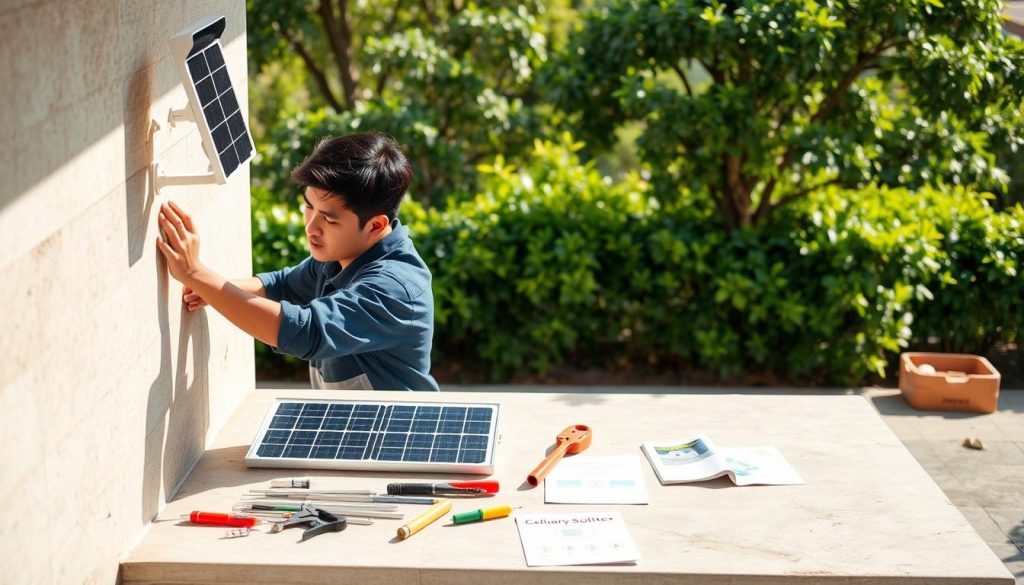
First, pick a spot that gets 6 to 8 hours of direct sunlight each day. This is key for the system’s power. Mount the solar panels at a 35° to 45° angle for best sun catch. Use at least three screws and anchors to keep the panel steady.
Next, connect the solar panel to a charge controller. This helps manage energy to the battery and camera. Keep batteries safe in weatherproof enclosures. You’ll need a drill, screwdrivers, pliers, a ladder, and other tools for the job.
Here’s what to do next: put everything together, mount the panel and camera, connect the system, set up the camera app, and test it. Don’t forget to keep it clean and check the battery and camera placement often.
Watch out for common problems. If the solar power is low, check the spot and clean the panels. For battery issues, charge it for three days and replace if needed. Fix network problems by choosing a good provider and use weatherproof housing to avoid damage.
For wiring, use 14 AWG cables and crimp connectors. Make sure electrical connections are sealed to avoid overheating. Insulate batteries in harsh weather to keep them working well. Look into brands like Hikvision, Revlight, Lorex, and Ring for reliable systems with features like motion detection and night vision.
| Step | Description |
|---|---|
| 1 | Select a location with 6-8 hours of sunlight |
| 2 | Mount solar panels at a 35° to 45° angle |
| 3 | Secure the solar panel with screws and anchors |
| 4 | Connect the solar panel to a charge controller |
| 5 | Use weatherproof enclosures for the battery |
| 6 | Configure and test the camera settings |
| 7 | Perform regular maintenance on the system |
This guide will help you set up solar wifi CCTV easily. You’ll be able to protect your property with confidence and simplicity.
Conclusion
Using solar WiFi CCTV camera solutions is a smart move for better property security and eco-friendliness. These systems use Singapore’s sunlight well. This way, homeowners can keep their space safe and save money, all while helping the environment.
More people are choosing these advanced surveillance options. They offer clear video, work at night, and are easy to set up. Solar cameras are also tough and efficient, making them great for many places, like construction sites and homes.
If you want to improve your security, talking to a pro like CCTV Maintenance at +65 6013 5960 is a good idea. They can help you find the best options. It’s a way to make your property safer and support a greener future.
FAQ
What is a WiFi solar CCTV camera?
A WiFi solar CCTV camera uses solar energy and connects to the internet via WiFi. It’s perfect for outdoor use where electricity is scarce.
How does solar CCTV technology work?
Solar CCTV cameras use solar panels to turn sunlight into electricity. They can store energy for nighttime use. This makes them reliable for off-grid locations.
What are the benefits of using solar-powered cameras for outdoor security?
Solar-powered cameras save on energy costs and need little installation. They use renewable energy, reducing environmental impact.
Can I monitor my property remotely with solar CCTV cameras?
Yes, many solar WiFi CCTV cameras stream video live. You can watch your property from anywhere with an internet connection.
What are the key features to look for in a best WiFi solar CCTV camera?
Look for high-definition video (at least 1080p), long battery life, and weather resistance. Easy installation and advanced motion detection are also key.
Are there any popular brands for solar security camera systems?
Yes, brands like Hikvision and Eufy offer solar WiFi CCTV cameras. They have different features for various security needs.
How do I install a solar WiFi outdoor camera?
First, choose a sunny spot. Then, gather tools and mount the solar panel at the right angle. Set up the camera and configure motion detection for best results.
What maintenance is required for solar CCTV cameras?
Keep solar panels clean for efficiency. Check for obstructions and ensure the battery works well for continuous operation.
Can solar CCTV cameras work without WiFi?
Yes, many solar CCTV cameras use cellular networks via SIM cards. This allows monitoring without traditional internet, ideal for remote areas.
How do solar cameras contribute to reducing carbon footprints?
Solar cameras use renewable energy, not fossil fuels, cutting carbon emissions. They also have minimal wiring, reducing waste and promoting eco-friendly security.


