
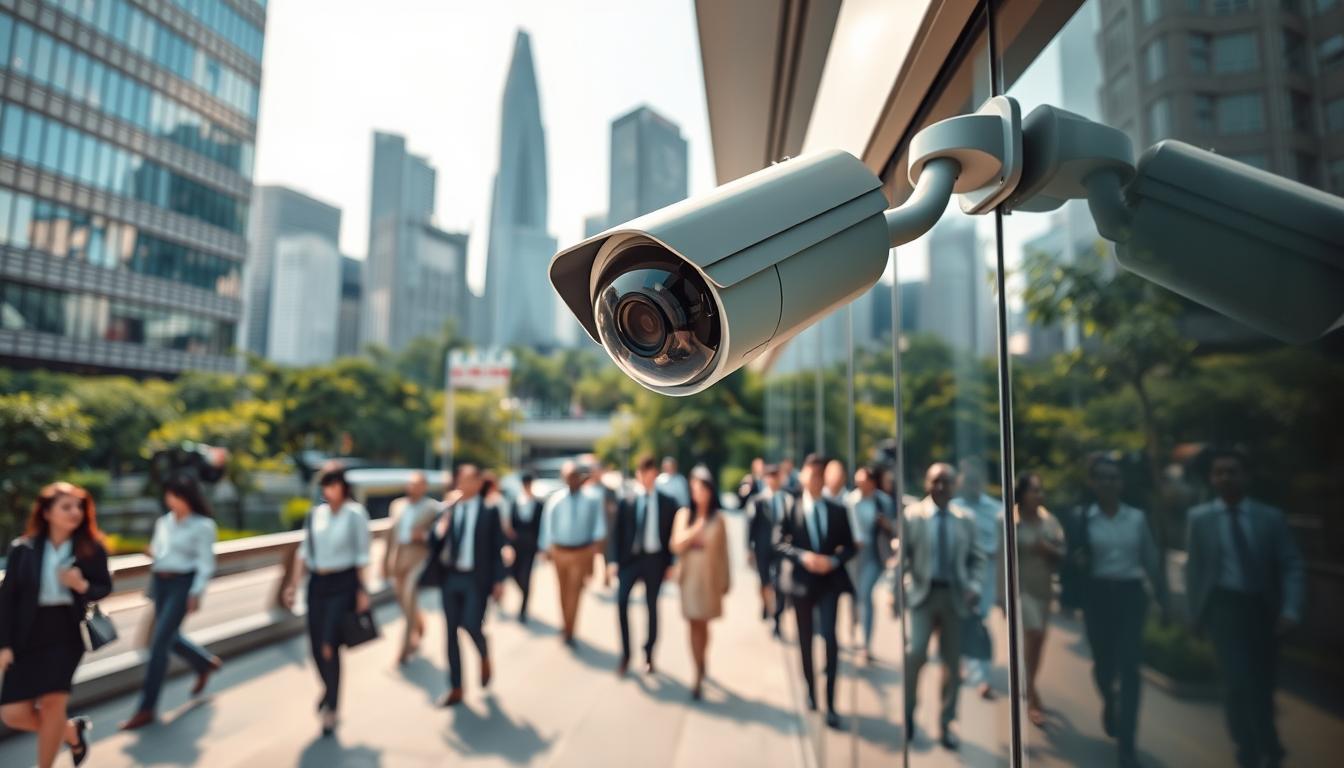
Who is responsible for CCTV camera? Singapore Guide
Singapore’s landscape is dotted with surveillance technology. Over 500,000 installations monitor various spaces across the nation.
This widespread use creates a critical balance. It enhances security but also raises important privacy questions.
Homeowners, business operators, landlords, and tenants all use these systems. Clear guidelines are essential for proper management.
Singapore’s laws, like the Personal Data Protection Act (PDPA), set the rules. They define how to handle recorded footage and personal data.
This guide explains the specific obligations for different users. It helps ensure your surveillance practices are fully compliant.
Key Takeaways
- Singapore has a high density of surveillance cameras for public and private security.
- Using CCTV systems involves balancing security benefits with individual privacy rights.
- Multiple parties, including property owners and business operators, have stewardship duties.
- The Personal Data Protection Act (PDPA) is the key law governing surveillance footage.
- Proper installation and data handling procedures are legal requirements.
- Understanding your specific obligations depends on your role and the camera’s location.
- This guide provides practical steps for maintaining compliance with Singaporean regulations.
Introduction: The Pervasive Eye of Security in Singapore
From bustling shopping malls to quiet residential corridors, watchful devices are a common sight. This network forms a critical part of the nation’s approach to safety and order. Understanding its scale and the reasons behind it is the first step.
The Widespread Adoption of CCTV Systems
The numbers speak for themselves. A national survey reveals that a staggering 93% of retailers rely on these systems. Nationwide, installations exceed half a million units.
This growth is driven by clear results. Studies show surveillance can reduce retail theft by up to 50%. It is seen as the most effective anti-theft tool by 83% of professionals.
Several factors fuel this expansion. Rising public safety concerns are a primary driver. Technological advances have also made systems more affordable and user-friendly.
Community-led safety initiatives often include installing monitoring equipment. This collective move towards electronic vigilance is reshaping urban living.
Balancing Security Enhancement with Privacy Rights
A visible camera can be a powerful deterrent. Its presence promotes a sense of safety in public and private spaces. However, its lens must be carefully directed.
The very tool that protects can also intrude if misused. This creates a fundamental tension between collective security and individual privacy. Responsible practices are not optional; they are essential.
Deployment must be managed to avoid monitoring private areas like neighboring homes. The purpose of collection must be legitimate and transparent.
This balance is the core challenge of modern surveillance. It sets the stage for the specific rules and laws that govern proper usage in Singapore.
Defining CCTV Camera Ownership and Responsibility
The concept of ownership for video surveillance extends beyond physical possession to operational control. Legal stewardship involves specific duties under Singapore’s regulatory framework.
Understanding these definitions helps prevent violations. It clarifies who must ensure proper system operation.
What Qualifies as Legal Ownership of a Surveillance System?
Legal ownership is not determined by who buys the equipment. Instead, it hinges on who controls the system’s operation and data.
The party that installs, manages, or operates the monitoring equipment assumes key obligations. This entity becomes the data controller under the Personal Data Protection Act.
This status applies regardless of property titles. A tenant operating cameras bears the same duties as a property owner would.
Permit requirements vary by location. Installations on public property often need government authorization.
For personal indoor use on private property, no formal permit is typically required. The system’s purpose and placement dictate the specific rules that apply.
The Core Principle: The Installer is Typically the Responsible Party
This foundational rule simplifies accountability. The person or organization that installs the system assumes primary responsibility.
This stewardship encompasses the entire lifecycle of the equipment. It begins with planning and continues through daily operation.
Owners must follow all relevant laws from the start. This includes obtaining necessary permits for public-facing cctv cameras.
Daily operation must respect privacy boundaries. Proper management ensures cameras monitor only intended spaces.
Regular checks maintain system integrity. These obligations form the basis of legal compliance in Singapore.
Both residential users and commercial entities should understand this principle. It defines their legal standing from the outset of installation.
Who is Ultimately Responsible for CCTV Camera Operations?
The chain of command for monitoring systems culminates with those who control the equipment and its collected information. This final authority carries substantial legal weight under Singapore’s regulatory environment.
Identifying this party clarifies where the buck stops for daily operations and legal compliance. Both individuals and organizations must understand their position in this hierarchy.
The Legal Obligations of the CCTV System Owner
System owners bear concrete duties under the Personal Data Protection Act. These obligations form the backbone of lawful surveillance practice.
Key responsibilities include obtaining proper consent for recording in private areas. Clear notification must be provided where consent may not be practical.
Secure storage of recorded footage is non-negotiable. Data retention policies must be established and followed strictly.
The system must follow its stated purpose only. Using recordings for unauthorized reasons violates the purpose limitation principle.
Non-compliance carries real consequences. The PDPC can impose significant financial penalties for breaches.
Reputational damage often accompanies legal sanctions. Both business owners and residential users face these risks.
Implementing proper data protection measures is essential. This includes encryption and access controls for stored personal data.
Implications for Property Landlords and Their Tenants
Landlords installing systems in shared spaces have specific notification duties. Tenants must be informed about any monitoring in common property areas.
Transparent communication prevents disputes before they begin. It fosters a respectful living environment for all parties.
Tenants maintain privacy rights within their leased premises. Cameras should never point into private residential spaces.
The protection act grants individuals access to their personal data. This includes requesting relevant footage where they appear.
Open dialogue between landlords and tenants balances security with personal rights. Written agreements about system use provide clarity for everyone involved.
Proper management of these relationships ensures compliance with Singapore’s law. It turns potential conflict into cooperative security.
Residential CCTV: Rules for Homes and HDB Flats
Homeowners seeking to protect their property must balance technological solutions with community considerations. Residential surveillance operates within specific frameworks that differ from commercial settings.
Understanding these distinctions helps maintain harmony while enhancing security. Both legal compliance and social respect are essential components.
Understanding the Updated HDB Regulations for Corridor Cameras
Recent changes to Housing Development Board rules have simplified the process for residents. Homeowners can now install corridor-facing cctv cameras without seeking prior town council approval.
This liberalization reflects growing security concerns among residents. However, specific placement constraints remain firmly in place.
Cameras must be positioned to avoid capturing neighbors’ doors or windows. The field of view should focus exclusively on your own entryway and immediate corridor space.
Violating Town Council bylaws for unauthorized installations in common areas carries serious consequences. Fines can reach up to $5,000 for non-compliance.
For indoor installation within private homes, no formal permit is typically required. The key consideration becomes avoiding infringement on others’ privacy.
These updated regulations aim to streamline security enhancements. They empower residents while maintaining essential community protections.
Privacy Considerations and Neighborly Etiquette
Legal compliance represents only one aspect of responsible surveillance. Building trust with those living nearby is equally important for long-term harmony.
Proactive communication before installing any equipment can prevent misunderstandings. A simple conversation can address concerns and build cooperative relationships.
“Good fences make good neighbors, and clear communication makes good surveillance practices.”
Respect for others’ personal space should guide all technical decisions. Cameras should never monitor areas where people have a reasonable expectation of privacy.
These considerations extend beyond legal requirements to community ethics. They help avoid legal disputes while fostering positive neighborhood dynamics.
Transparent practices demonstrate respect for fellow residents. This approach balances individual safety needs with collective comfort.
Best Practices for Homeowner CCTV Surveillance
Effective residential security combines strategic planning with consistent management. Several proven approaches can enhance protection while minimizing intrusion.
Focus monitoring equipment on your own property entrances rather than public spaces. Position cctv cameras to cover doorways, gates, and vulnerable access points.
Clear signage informing visitors about surveillance serves multiple purposes. It acts as a deterrent while fulfilling notification requirements under the protection act.
Establish specific data retention periods for recorded footage. Most residential needs are met with storage spanning 30 to 90 days.
Digital locks with built-in cameras have gained popularity as integrated solutions. These devices enhance security without creating excessive visual intrusion.
Make sure your system’s usage aligns with its stated purpose of property protection. Regular system checks ensure continued proper operation.
Implement basic data protection measures for stored personal data. Password protection and encrypted storage represent fundamental safeguards.
These practices create a holistic approach to home security. They address technical, legal, and social considerations simultaneously.
Following established guidelines helps make sure your surveillance efforts remain both effective and respectful. This balanced approach serves individual and community interests equally well.
Commercial CCTV: Stricter Rules for Businesses
Businesses deploying monitoring technology face a more complex compliance landscape than residential users. Commercial surveillance operates under enhanced scrutiny from Singapore’s regulatory bodies.
The stakes are higher when cameras serve business interests. Organizations must navigate specific mandates that protect both security and privacy rights.
The Heightened Responsibilities of Business Owners
Commercial operators carry substantial legal duties under the Personal Data Protection Act. These obligations extend beyond basic installation to comprehensive data stewardship.
Every monitoring system must have a clear, legitimate purpose. This purpose should be documented and communicated to all affected parties.
Business owners must implement stringent data protection measures for stored personal data. This includes encryption, access controls, and secure storage protocols.
For higher-risk monitoring situations, conducting a Data Protection Impact Assessment becomes mandatory. These assessments evaluate potential privacy risks before system deployment.
Placement of cameras requires careful consideration. Areas with high privacy expectations, like restrooms or changing rooms, must remain completely free from surveillance.
Organizations must follow strict guidelines for footage access and usage. Recordings should only serve their documented security purpose.
Regular system audits help maintain ongoing compliance. These checks ensure monitoring practices align with current laws and rules.
“Transparency isn’t just good ethics in business surveillance—it’s a legal requirement that builds trust while ensuring compliance.”
Surveillance in the Workplace: Informing Employees and Customers
Clear communication forms the foundation of lawful commercial monitoring. Both staff and visitors should understand when and why recording occurs.
Notification typically involves visible signage at entry points. These signs should state the purpose of surveillance in simple language.
Employee handbooks should include detailed monitoring policies. Staff need to know how recorded data will be used and protected.
Obtaining consent follows specific guidelines under the PDPA. Work-related monitoring in common areas may not require individual consent, but transparency remains essential.
Organizations must provide footage to individuals who appear in recordings. These access requests should typically be fulfilled within one month.
A reasonable fee may be charged for providing copies of recorded material. This fee should reflect the actual cost of retrieval and preparation.
Regular training ensures staff understand proper data handling protocols. This education helps prevent breaches and maintains organizational compliance.
Effective management of surveillance systems requires documented procedures. These procedures should cover installation, operation, and data disposal.
Business owners should make sure their cctv systems enhance security without violating privacy rights. This balance helps avoid legal complications while protecting assets.
Following these commercial rules demonstrates respect for the protection act. It turns regulatory requirements into competitive advantages through demonstrated responsibility.
The Legal Framework: Singapore’s Personal Data Protection Act (PDPA)
Understanding surveillance obligations requires familiarity with the legislative pillars that govern personal information collection through monitoring technology. The Personal Data Protection Act serves as the definitive rulebook for all video monitoring activities across the nation.
This comprehensive law establishes clear boundaries for what surveillance systems can legally capture and how that information must be handled. Every operator of monitoring equipment must follow its provisions to maintain compliance.
The PDPA’s scope extends to any recording that contains personal data, which includes identifiable images of individuals. Its principles create a balanced framework that respects both security needs and privacy rights.
Organizations and individuals operating CCTV systems become data controllers under this protection act. This status carries specific obligations that cannot be ignored.
Consent, Notification, and Purpose Limitation
Three interconnected principles form the foundation of lawful monitoring under Singapore’s data protection regime. These rules work together to ensure transparency and respect for individual rights.
Obtaining consent is generally required before collecting personal data through surveillance. However, exceptions exist for recordings in publicly accessible areas where individuals have lower privacy expectations.
For non-public spaces like private offices or restricted areas, explicit consent typically becomes necessary. The data protection act provides specific guidance on when and how this permission should be obtained.
Clear notification serves as a practical alternative when direct consent proves challenging. Visible signage at entry points fulfills this requirement effectively.
These signs should state the monitoring’s purpose in simple language. They inform people they are entering a surveilled space.
The purpose limitation principle represents a critical restriction under the Personal Data Protection Act. Recorded footage can only be used for the specific reason it was collected.
CCTV footage captured for security monitoring cannot later be used for employee performance evaluation. Similarly, recordings intended for theft prevention should not support marketing analysis.
“The purpose for which personal data is collected, used or disclosed must not be unrelated to the original purpose without the individual’s consent.”
Business owners should document their monitoring purposes clearly. This documentation helps demonstrate compliance during audits or investigations.
Regular staff training ensures everyone understands these limitations. Proper management of recorded material prevents accidental misuse.
Data Retention and Secure Storage Requirements
Operational practices for handling recorded material carry significant weight under the protection act. Establishing clear policies for both retention periods and storage security is essential.
The PDPA does not specify fixed timeframes for keeping CCTV footage. Instead, it mandates that organizations retain personal data only as long as necessary for its original purpose.
Most security needs are satisfied with retention periods between 30 to 90 days. Extended storage without legitimate justification violates the data protection principles.
Formal data retention policies help organizations avoid legal complications. These written guidelines should specify exact durations for different types of recordings.
Regular purging of outdated footage should become standard operational procedure. Automated deletion systems can streamline this process effectively.
Secure storage represents another critical requirement under the Personal Data Protection Act. The law mandates “reasonable security arrangements” to protect collected information.
Basic protective measures include password protection for access systems. Encryption of stored data provides additional security against unauthorized viewing.
Access controls should limit system entry to authorized personnel only. Logs tracking who views recordings create valuable audit trails.
Physical security for storage devices and servers completes the protection picture. Locked cabinets or secure server rooms prevent physical tampering.
Regular security assessments help identify potential vulnerabilities in storage systems. These checks make sure protective measures remain effective over time.
Implementing these requirements demonstrates serious commitment to personal data protection. It transforms regulatory compliance into operational excellence.
The data protection act provides the framework, but individual operators supply the diligence. Together, they create a surveillance environment that protects both people and property.
Additional Regulations: Town Council Bylaws and Public Space Laws
Beyond the Personal Data Protection Act, Singapore’s surveillance landscape is shaped by additional layers of regulation. These local rules and temporary provisions create specific requirements for monitoring shared spaces.
Understanding these complementary laws helps operators navigate complex environments. Different regulations apply depending on location and authority.
Municipal town council guidelines govern common areas in housing estates. Separate legislation covers government surveillance in public spaces.
This regulatory patchwork demands careful attention. Operators must make sure their systems comply with all applicable rules.
Rules for Cameras in Common and Publicly Accessible Areas
Shared spaces present unique challenges for monitoring equipment. Housing Development Board estates fall under specific town council jurisdiction.
Common areas like corridors, lobbies, and void decks require special consideration. These spaces balance collective security with individual privacy rights.
Recent updates have simplified installation processes for residents. However, placement restrictions remain strictly enforced.
Cameras must focus exclusively on the resident’s own doorway. They should not capture neighbors’ doors or windows.
“Proper placement respects community living while enhancing security. It’s about protecting your space without invading others’.”
Unauthorized installation in common property can lead to significant penalties. Fines may reach up to $5,000 for violations.
These regulations help maintain harmonious living environments. They prevent disputes between neighbors over monitoring usage.
For commercial buildings, management corporations often establish their own guidelines. These complement national laws with building-specific rules.
Clear communication with all stakeholders is essential. This approach helps avoid legal complications and community friction.
The Surveillance Cameras (Temporary Provisions) Act
This specialized legislation authorizes government agencies to deploy monitoring equipment. It serves specific public purposes like maintaining order and safety.
The act provides a framework for temporary surveillance operations. These installations address particular security concerns in public spaces.
Public notification represents a core requirement under this legislation. Clear signage must inform people about monitoring in affected areas.
This transparency principle aligns with broader data protection values. It respects individuals’ right to know when they’re being recorded.
The temporary nature of these provisions distinguishes them from permanent installations. Government agencies must justify continued usage beyond authorized periods.
Private operators should understand this distinction. Different rules may apply to government-installed cctv cameras in public spaces.
This legislation demonstrates Singapore’s balanced approach to public safety. It enables necessary monitoring while maintaining accountability.
The protection act and these additional regulations work together. They create comprehensive governance for all monitoring activities.
Operators of private cctv systems should note these public space laws. Understanding the full regulatory landscape ensures complete compliance.
Whether managing residential corridors or commercial premises, multiple rules may apply. A thorough approach considers all relevant regulations.
Proper installation and operation require awareness of these layers. The town council bylaws and temporary provisions complete Singapore’s surveillance framework.
This comprehensive system protects both security interests and privacy rights. It represents Singapore’s thoughtful approach to modern monitoring challenges.
CCTV Camera Maintenance and Upkeep Responsibility
Installing a camera is just the beginning. Its long-term value hinges on a disciplined maintenance routine.
This ongoing responsibility falls squarely on the system owners or operators. A regular schedule is crucial for system reliability and legal compliance.
Neglected cctv systems can fail when needed most. Proper management ensures your investment continues to protect people and property.
Routine Checks and Performance Monitoring
A proactive approach prevents most problems. Establish a simple monthly checklist for your security setup.
Essential tasks include visually inspecting all cameras. Look for clean lenses and clear, unobstructed views.
Verify that recording is continuous and storage is adequate. Test features like motion detection and night vision to make sure they work.
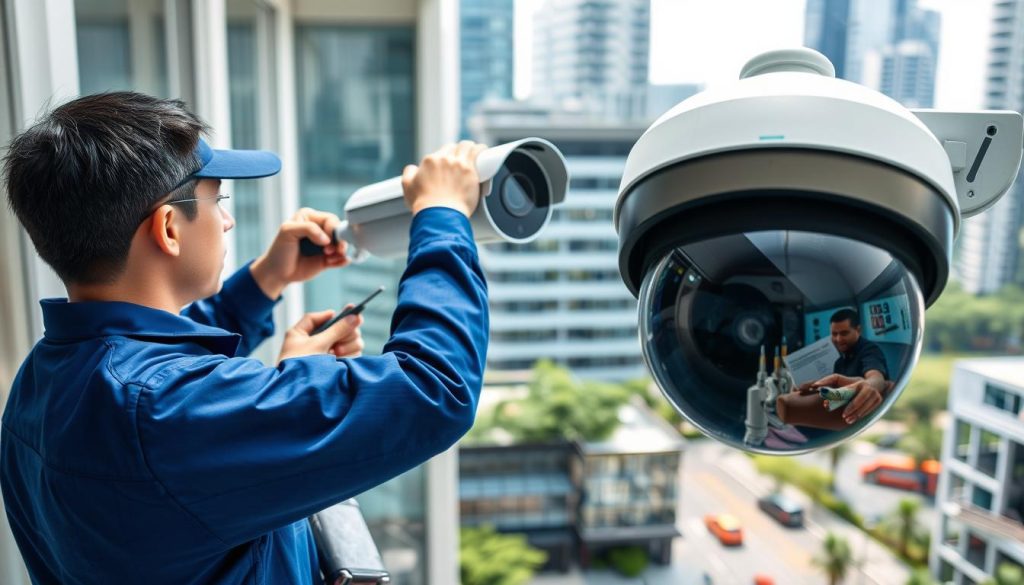
Check all physical mounts and wiring for integrity. Loose connections can cause intermittent failures.
Update software and firmware when available. This patches security vulnerabilities and improves performance.
Conduct a more thorough bi-annual test of all system functions. This comprehensive check covers every component.
“Preventive maintenance is not an expense; it’s an investment in continuous protection and peace of mind.”
Professional Maintenance vs. DIY: Weighing the Options
System owners must choose how to handle these duties. Both professional service and do-it-yourself practices have clear pros and cons.
Hiring experts offers significant advantages. Professionals bring specialized expertise and tools for comprehensive service.
They adhere to warranty requirements and can spot subtle issues. The main drawbacks are the recurring cost and dependency on their schedule.
The DIY route can be cost-effective and allows for immediate attention. It empowers owners with direct knowledge of their cctv systems.
However, it requires technical knowledge and carries risk. Potential for error, significant time investment, and lack of specialized tools are key cons.
Consider these points when deciding:
- Complexity: Advanced systems with multiple cameras often benefit from professional management.
- Criticality: For high-security areas, expert servicing minimizes risk.
- Cost: Weigh long-term reliability against upfront savings.
- Compliance: Professionals help you avoid legal pitfalls related to data handling and system failures.
Your choice should ensure recorded footage is always usable. It must support safety objectives without violating privacy rules.
A well-maintained cctv camera is a reliable asset. Regular care turns technical equipment into a trustworthy guardian for your space.
The Role and Duties of CCTV Operators
Operational protocols form the critical link between recording devices and their intended security purpose. These practices define how monitoring technology is used day-to-day.
Individuals overseeing these cctv systems carry specific duties. Their actions directly impact system effectiveness and legal compliance.
Proper management ensures equipment remains functional and recordings are usable. It also safeguards the privacy of individuals captured on cctv footage.
Active Monitoring vs. Passive Recording
Not all surveillance requires constant human attention. Understanding the difference between these two modes is key.
Active monitoring involves real-time observation of live video feeds. This approach is common in control rooms for banks, casinos, or large retail stores.
Operators must maintain high levels of focus and attentiveness. They are trained to identify suspicious behavior and respond immediately to incidents.
Passive recording, on the other hand, relies on automated systems. Cameras capture footage that is stored for later review if needed.
This method is typical for most homes, small businesses, and residential corridors. The duties here shift from constant watching to system maintenance and data management.
“The choice between active and passive systems should match the security risk. High-value targets need eyes on screens; most properties just need a reliable record.”
Both modes require operators to make sure equipment is working correctly. Regular checks on recording functions and storage capacity are essential obligations.
Protocols for Accessing, Reviewing, and Handling Footage
Strict guidelines govern how recorded data is handled. These rules protect the integrity of the footage and the rights of individuals.
A core protocol is maintaining detailed access logs. Every time someone views, copies, or exports cctv footage, it must be recorded.
This log creates an audit trail. It shows who accessed what data and for what purpose.
Clear circumstances must be defined for reviewing recordings. Legitimate reasons include investigating a reported incident or responding to a formal data access request.
When sharing footage with authorities, secure methods should be used. Encrypted transfers help avoid legal risks related to data breaches.
All actions must comply with the PDPA’s purpose limitation principle. Cctv footage collected for security cannot be used for unrelated reasons.
Operators should control physical access to the monitoring area itself. This protects the surveillance system from tampering and upholds confidentiality.
Holding relevant certifications, like an SIA PSS license, demonstrates professional competence. Regular training on privacy laws and ethical surveillance is crucial.
These structured practices ensure accountability at the operational level. They turn security policy into consistent, lawful action.
Ensuring Accountability in CCTV Surveillance
True security stewardship requires more than just functional cameras—it demands documented proof of proper management. Systematic processes turn monitoring from passive recording into verifiable protection.
These accountability measures demonstrate your commitment to lawful operation. They provide evidence during regulatory reviews or investigations.
Maintaining Access Logs and Audit Trails
Comprehensive access logs create a digital paper trail for all viewing activities. This practice is fundamental for data protection compliance under Singapore’s protection act.
Each log entry should capture specific details. Record who accessed the cctv footage, when they viewed it, and their stated purpose.
The system should also note if any personal data was copied or exported. This creates a complete chain of custody for recorded material.
These audit trails serve multiple security functions. They deter unauthorized access by creating accountability for every user.
During incidents, logs help reconstruct events accurately. They show who reviewed relevant recordings and when.
For regulatory compliance, these records prove your system follows established rules. They demonstrate responsible management of surveillance data.
Business owners should implement automated logging whenever possible. Manual systems are prone to human error and inconsistency.
Regular audits of access logs help identify unusual patterns. This proactive approach can reveal potential security breaches early.
Conducting Data Protection Impact Assessments (DPIAs)
A Data Protection Impact Assessment is a proactive planning tool. It evaluates privacy risks before deploying new monitoring systems.
This structured process helps determine if a proposed project is necessary and proportionate. It ensures compliance with Singapore’s data protection laws from the start.
DPIAs are particularly valuable for complex installations. Consider conducting one for large-scale systems or those monitoring sensitive areas.
“A DPIA isn’t about creating barriers to security—it’s about building better, more responsible systems that protect both people and property.”
The assessment should document key decision points. Explain why surveillance is needed and how it will operate.
Identify potential impacts on individual privacy. Then develop specific safeguards to mitigate these risks.
Common scenarios where a DPIA is advisable include:
- Monitoring areas with high privacy expectations
- Using advanced features like facial recognition
- Installing systems that track individual movements
- Deploying cameras in employee-only zones
The completed assessment justifies your surveillance approach. It shows regulators you’ve considered personal data protection seriously.
This documentation helps avoid legal complications later. It embeds accountability into the system’s design phase.
Regular reviews ensure your assessment remains current. Update it when expanding or modifying your cctv systems.
These structured practices transform good intentions into verifiable actions. They provide the evidence needed to demonstrate proper oversight.
System owners should make sure both processes—logging and assessments—work together. They create a comprehensive framework for accountable surveillance.
Following these guidelines strengthens your security position. It shows commitment to both protection and compliance with Singapore’s protection act.
Addressing Privacy Concerns and Community Engagement
Community harmony and effective security can coexist when camera installations prioritize both protection and privacy. This balance transforms monitoring from a potential source of tension into a collaborative neighborhood asset.
Successful integration requires thoughtful planning from the start. Proactive engagement addresses concerns before they become conflicts.
Two key approaches make this possible. Clear communication builds understanding, while technical choices demonstrate respect for personal space.
Transparent Communication with Neighbors and the Public
Opening a dialogue before installation prevents misunderstandings. A simple conversation can explain your security rationale and address questions.
For residential settings, consider speaking with adjacent neighbors. Explain where cameras will point and what they will monitor.
Businesses should inform both employees and customers. Clear signage at entry points fulfills legal notification requirements under Singapore’s data protection laws.
These signs should state the monitoring purpose in friendly language. Include a contact point for any privacy questions or concerns.
Sharing local crime statistics can build support for your security measures. Highlight how monitoring protects everyone in the community.
Formal notices work well for larger residential complexes or commercial buildings. Distribute them through management offices or community boards.
“When people understand why cameras are there and how they’re used, they’re more likely to support them as a community safety tool.”
This transparent approach builds trust from the beginning. It demonstrates respect for others‘ comfort and peace of mind.
Regular updates maintain this positive relationship. Inform neighbors about any changes to your system’s usage or coverage.
Strategic Camera Placement to Minimize Intrusion
Technical choices can significantly reduce privacy impacts. Thoughtful positioning achieves security goals without unnecessary intrusion.
Focus lenses exclusively on your own property and entry points. Deliberately angle cctv cameras away from neighboring windows, gardens, or balconies.
Use equipment with adjustable fields of view. Narrow the coverage to essential areas only.
Install physical barriers or hoods to limit sightlines. These accessories prevent cameras from capturing adjacent spaces.
For general monitoring areas, consider lower-resolution settings. This provides adequate identification while reducing detail in non-critical zones.
Conduct a “privacy walk” around your installation site. View what each camera captures from different angles.
Check for any inadvertent views into private homes or spaces. Adjust positions to eliminate these sightlines.
For business premises, avoid pointing equipment at rest areas or changing rooms. These spaces deserve complete privacy protection.
Regularly review your camera angles. Seasonal changes in foliage or new constructions might create unintended views.
These technical practices show respect for community privacy. They align with both ethical considerations and legal requirements.
System owners should make sure their management includes these placement checks. Document your efforts to demonstrate responsible usage.
This approach proves that security and respect for personal data are not mutually exclusive. Both goals can be achieved through careful planning.
Following these rules strengthens your community relationships. It turns potential surveillance concerns into collaborative protection efforts.
Navigating Your CCTV Responsibilities for a Secure Singapore
A well-operated security system represents more than hardware. It embodies a commitment to ethical protection practices.
Clear stewardship lies with system owners. This duty spans installation, daily operation, and maintenance of all cameras.
Understanding Singapore’s laws like the PDPA is crucial. These rules ensure data protection while allowing effective surveillance.
Regular checks keep equipment reliable. Ethical operation respects everyone’s privacy rights in monitored spaces.
Your approach balances community safety with individual rights. This creates trustworthy security for all residents.
Meeting these obligations ensures full compliance. It turns technology into a responsible community asset.
Every properly managed system strengthens Singapore’s protective fabric. Your conscientious management contributes to national safety.
FAQ
Who is legally accountable for a CCTV system in Singapore?
The individual or entity that installs the surveillance equipment is typically the legally accountable party. This system owner holds all obligations under the Personal Data Protection Act (PDPA). They must ensure proper usage, secure storage of footage, and overall compliance with Singapore’s laws.
What are the main PDPA rules for CCTV camera usage?
Business owners and individuals must follow key PDPA principles. You must notify people about surveillance, often through clear signage. The purpose for collecting personal data via cameras must be legitimate. You also need to limit access to the CCTV footage and securely dispose of it after its retention period ends.
Can I install a CCTV camera outside my HDB flat door?
Yes, but strict regulations apply. The Housing & Development Board (HDB) permits installation on your own front door, but the device cannot monitor common corridors or a neighbor’s unit. Your camera should only cover your immediate doorstep to protect safety without infringing on others’ privacy.
Do I need consent from employees for workplace CCTV?
Explicit consent is not always required, but transparency is mandatory. Businesses must inform staff about the presence of CCTV systems, the purpose of recording (like security or productivity), and the management practices for the footage. This notification is a core duty under the PDPA.
What are the penalties for misusing CCTV footage?
Misuse can lead to serious consequences. Violating the PDPA can result in financial penalties and enforcement orders from the Personal Data Protection Commission (PDPC). In severe cases, such as using cameras for voyeurism, criminal charges under other Singapore statutes may apply.
Who handles the maintenance of a CCTV system?
Maintenance is the responsibility of the system owner. This includes routine checks for functionality, cleaning lenses, ensuring secure data storage, and updating software. Many property owners opt for professional service contracts to ensure reliable operation and avoid legal issues from system failure.
Are there special rules for cameras in public areas?
A> Yes. Installing surveillance in common areas of condominiums or public spaces often requires approval from the town council or relevant authority. The Surveillance Cameras (Temporary Provisions) Act also governs specific government usage. The key is to justify installation with a clear security need.
Post Tags : CCTV camera ownership CCTV installation regulations CCTV Monitoring Guidelines Privacy Rights in Singapore Public safety and security Public surveillance in Singapore Security camera responsibilities Singapore CCTV regulations Surveillance camera jurisdiction Surveillance laws in Singapore


