
CCTV NVR Buying Guide: Which CCTV NVR is Best?
Choosing the right network video recorder (NVR) is crucial for modern surveillance. Whether for homes or businesses, a high-quality NVR ensures smooth footage management and enhanced security. With evolving technology, selecting a system that meets your needs can be challenging.
Top models in 2025, like the eufy S4 Max and Lorex 4K+, offer advanced features such as AI-powered analytics and ultra-HD resolution. Unlike older DVRs, modern NVRs provide superior flexibility, remote access, and scalability. This guide helps you navigate key factors like storage capacity, resolution, and connectivity.
Key Takeaways
- NVRs handle IP camera footage efficiently, improving security.
- Look for high resolution, ample storage, and remote access.
- Top 2025 picks include eufy S4 Max and Lorex 4K+.
- NVRs outperform DVRs in video quality and flexibility.
- Future-proof your setup with scalable systems.
Understanding NVR Security Systems
Modern surveillance relies on advanced network video recorders for seamless security. These systems process footage from IP cameras over a network, offering superior clarity and flexibility compared to older analog setups.
How Network Video Recorders Work
NVRs capture and store video from IP cameras via Ethernet or Wi-Fi. Unlike DVRs, which use coaxial cables, NVRs transmit digital signals for crisper images. Power over Ethernet (PoE) simplifies wiring by delivering both data and power through a single cable.
Key advantages include:
- Higher resolution: Supports 8MP-16MP vs. DVRs’ 2MP limit.
- Remote access: View live feeds from anywhere via apps.
- Scalability: Add cameras without rewiring.
NVR vs DVR: Key Differences
DVRs struggle with analog signals, while NVRs excel with digital IP cameras. The latter handles 4K+ resolution and AI analytics, making them ideal for future-proof security systems.
For businesses in Singapore, NVRs reduce installation complexity and offer effortless expansion. Their cloud compatibility ensures real-time monitoring, a must for modern surveillance needs.
Why Modern Security Needs an NVR Solution
Security demands have evolved, requiring smarter surveillance solutions. A network video recorder (NVR) delivers the precision and flexibility needed for today’s threats, from homes to multi-site businesses.
Superior Video Quality Advantages
High-resolution video is non-negotiable for accurate identification. Lorex 4K+ records at 12MP, capturing facial features and license plates with forensic detail. Hikvision’s ColorVu technology adds full-color clarity in low light, eliminating grainy nighttime footage.
Key benefits of 4K NVRs:
- Enhanced evidence: Crisp images aid law enforcement investigations.
- AI integration: Advanced analytics distinguish people from objects.
- Future-proofing: Supports next-gen camera upgrades.
Remote Access Capabilities
Stay connected to your security system from anywhere. Reolink’s mobile app streams live feeds and sends instant alerts for motion detection. Business owners in Singapore manage multiple locations via a centralized NVR, reducing onsite checks.
Storage options compared:
- Local: Lower long-term costs with expandable hard drives.
- Cloud: Off-site backups but requires monthly fees.
“Centralized NVR systems cut operational costs by 30% for retail chains with remote monitoring.”
Which CCTV NVR is Best? Top 2025 Options
In 2025, advanced surveillance demands high-performance recording solutions. The right NVR combines cutting-edge features with reliability, whether for homes or businesses. Below, we compare top models to simplify your decision.
Premium Pick: eufy PoE NVR Security System S4 Max
The eufy S4 Max sets the bar with 16MP triple-lens cameras and AI motion tracking. Its PoE design reduces clutter while delivering crisp footage. Unlike subscription-based systems, it operates fee-free, ideal for hassle-free monitoring.
- AI analytics: Identifies people, pets, and vehicles.
- Triple coverage: Wide, ultra-wide, and zoom lenses in one unit.
- Local storage: No cloud fees, ensuring data privacy.
Best High-Resolution: Lorex 4K+ 12MP NVR System
For unmatched clarity, the Lorex 4K+ records at 12MP, capturing fine details like license plates. Its 16-channel support and weatherproof cameras suit large properties. The included 2TB storage is expandable for longer retention.
- 4K+ resolution: Forensic-grade detail day or night.
- PoE/Wi-Fi hybrid: Flexible installation options.
- Smart alerts: Filters false triggers from wind or animals.
Business-Grade Choice: Hikvision EKI-K41T44C NVR
Commercial users favor the Hikvision EKI-K41T44C for its rugged build and 8MP ColorVu cameras. With 4TB base storage (expandable to 12TB), it handles high-traffic areas effortlessly. Ideal for Singaporean retail or office spaces.
- ColorVu technology: Full-color footage in low light.
- Enterprise scalability: Supports up to 32 channels.
- Cybersecurity: Encrypted data transmission.
Budget-conscious buyers should consider Reolink’s 8CH system, offering solid performance at a lower cost. Whether prioritizing resolution, AI, or scalability, 2025’s top NVR options cater to every need.
Essential Features for Effective Surveillance
Effective surveillance systems depend on key technical specifications that ensure reliability. Three features form the backbone of any robust setup: high resolution imaging, adequate storage capacity, and intelligent detection capabilities. Balancing these elements creates a system that captures, stores, and analyzes footage efficiently.
Camera Resolution and Night Vision Standards
Modern cameras should record at minimum 4K resolution (8MP) to capture facial details or license plates. Swann’s 12MP systems demonstrate how higher pixel counts prevent pixelation during zooming. For nighttime monitoring, compare:
- IR night vision: 30m+ infrared range (standard in budget models)
- ColorVu technology: Full-color recording in low light (e.g., Hikvision)
Storage Capacity Requirements
H.265+ compression reduces file sizes by 50% versus older formats. A 12TB hard drive typically stores 30 days of continuous 4K footage from four cameras. For Singaporean businesses, hybrid systems combine local storage with cloud backups for redundancy.
Smart Detection Technology
AI-powered detection filters 90% of false alerts from foliage or animals. The eufy S4 Max distinguishes between humans, vehicles, and pets using deep learning. Key advantages include:
- Customizable alert zones
- Real-time push notifications
- Integration with smart home systems
For high-traffic areas, thermal sensors add another layer of reliable motion sensing unaffected by lighting conditions.
Leading NVR Brands Compared
Top manufacturers offer distinct advantages tailored to different security system needs and budgets. Whether prioritizing simplicity, smart home integration, or enterprise-grade reliability, brands like Lorex, Reolink, and Hikvision dominate the market with specialized features.
Lorex: User-Friendly Systems
Lorex excels with pre-configured nvr kits requiring minimal setup. Their plug-and-play design includes 4K cameras and zero subscription fees, ideal for homeowners. Key strengths:
- No contracts: Local storage eliminates monthly cloud costs
- Ultra-HD clarity: 12MP resolution for forensic detail
- DIY focus: Mobile app guides installation in 15 minutes
Reolink: Smart Home Integration
Budget-conscious buyers favor Reolink for seamless Alexa/Google Home compatibility. Their 5MP systems include AI-powered person/vehicle alerts, reducing false notifications.
- Voice control: Adjust settings via smart speakers
- Affordable scalability: Add cameras without rewiring
- 2-year warranty: Standard coverage for residential use
Hikvision: Commercial-Grade Solutions
Enterprises in Singapore rely on Hikvision’s NDAA-compliant nvr systems for cybersecurity and ONVIF standardization. Their 3-year warranty underscores durability.
- Military-grade encryption: Protects against data breaches
- 32-channel support: Scales for large facilities
- ColorVu technology: 24/7 full-color monitoring
Niche alternatives include Amcrest for budget 4K systems and Axis for ultra-high-end installations. Compare warranties—Hikvision’s extended coverage often justifies its premium pricing for business users.
NVR Technology Integration Guide
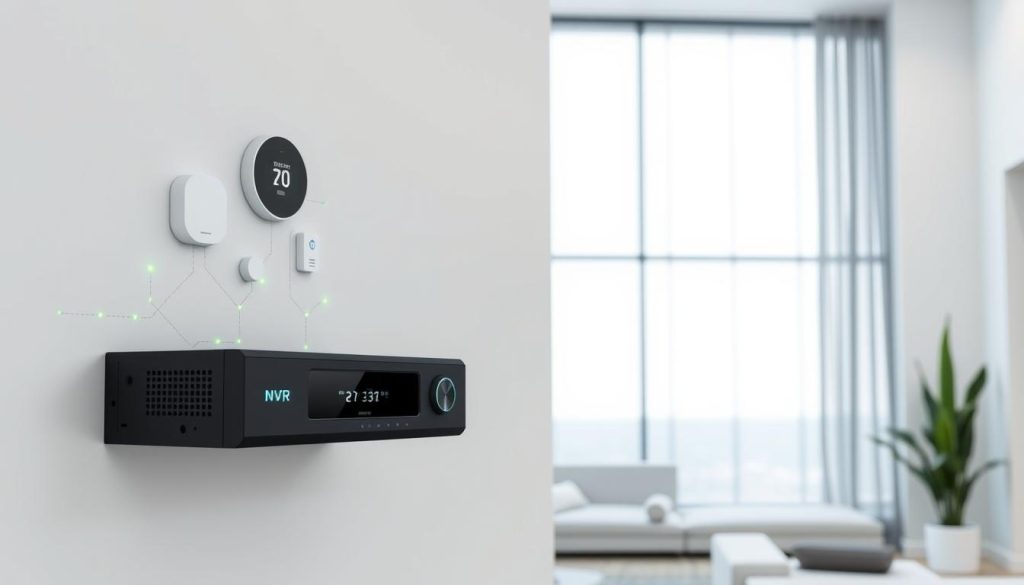
Seamless integration elevates modern security systems beyond basic monitoring. By connecting network video recorders with other devices, users unlock advanced features like automated alerts and centralized control. This section covers practical steps to merge NVRs with existing setups and smart home ecosystems.
Connecting with Existing Security Systems
Modern NVRs support ONVIF compliance, ensuring compatibility with third-party cameras and access control systems. For businesses, Hikvision’s Hik-Connect platform centralizes monitoring across multiple locations. Key tips:
- VLAN setup: Isolate surveillance traffic to prevent network congestion.
- POS synchronization: Retailers pair NVRs with point-of-sale systems to deter theft.
- IFTTT automation: Trigger smart locks or lights when motion is detected.
Smart Home Compatibility Options
For homeowners, brands like Reolink offer Alexa and Google Home integration. Voice commands can arm systems or pull up live feeds on smart displays. Consider these features:
- Proprietary apps: Simplifies setup for non-tech users.
- Data sharing: Sync alerts with family members’ devices.
- Energy efficiency: Smart plugs can power cameras during specific hours.
“A Singaporean retail chain reduced shrinkage by 40% after integrating NVRs with inventory tracking.”
Professional Installation and Maintenance
Strategic camera placement maximizes coverage while minimizing blind spots. Mount devices 8-10 feet high for optimal viewing angles and vandal resistance. Avoid positioning lenses toward direct sunlight to prevent backlight interference.
Optimizing Your Surveillance Setup
PTZ cameras work best in parking lots, covering wide areas with rotational flexibility. For indoor security, corner placements provide overlapping fields of view. Always test motion detection zones during setup to eliminate coverage gaps.
Key placement rules:
- Maintain 30-40° tilt for facial recognition
- Use weatherproof enclosures for outdoor units
- Position near entry points for identification clarity
Sustaining System Performance
Quarterly lens cleaning prevents dust buildup that degrades video quality. Monthly firmware updates patch security vulnerabilities and add features. Schedule these maintenance tasks:
- Test alerts and notification systems bi-monthly
- Check HDD health through the NVR interface
- Backup configuration data before updates
“Singaporean installers report 60% fewer service calls when following structured maintenance routines.”
For PoE network connections, apply silicone seals to outdoor RJ45 ports. Most issues resolve with NVR reboots—reserve factory resets for major malfunctions. Proper care extends equipment lifespan by 3-5 years.
Cost Considerations for NVR Systems
Budget planning is crucial when investing in a reliable surveillance setup. Smart allocation between hardware, storage, and features ensures optimal performance without overspending. Singaporean buyers should weigh initial investments against 3-5 year operational costs.
Upfront vs Long-Term Expenses
Entry-level 4-channel systems start at $300 (Reolink), while enterprise solutions like Hikvision exceed $2,000. The breakdown typically includes:
- Cameras: 60% of total cost (higher resolution = higher price)
- NVR unit: 30% (varies by channel capacity)
- Accessories: 10% for cables, mounts, and power supplies
Cloud subscriptions add $10-$50/month, making local storage more economical long-term. Lorex’s lifetime free local recording eliminates recurring fees.
Value for Money Features
Prioritize features that reduce ongoing costs. AI-powered alerts minimize false notifications, saving review time. Extended warranties (like Hikvision’s 3-year coverage) prevent unexpected repair bills.
For most Singaporean properties, $800-$1,200 buys a future-proof 8-channel 4K system. Retailers see 18-month ROI through theft reduction, while homeowners benefit from 5+ years of maintenance-free operation.
“Commercial users recover NVR costs within 24 months via reduced shrinkage and insurance discounts.”
Balancing price and performance leads to the right choice—investing in scalable technology avoids costly replacements as security needs evolve.
Making the Right NVR Choice for Your Property
Finding the perfect security setup starts with matching needs to features. Homeowners benefit from user-friendly nvr systems like the eufy S4 Max, while businesses require scalable solutions such as Hikvision’s enterprise models.
Use this checklist to compare options:
- Resolution: 4K+ for clear identification
- Storage: 25% buffer for future expansion
- Integration: ONVIF or smart home compatibility
For small homes, 4–8 cameras suffice. Larger properties need 16+ channels. Pro tip: Review local guidelines for camera limits in Singapore.
Invest in a system that grows with your security demands—prioritize warranty and upgrade paths. The right nvr choice ensures lasting protection without costly replacements.
FAQ
What’s the difference between an NVR and a DVR?
Network video recorders (NVRs) process video digitally from IP cameras, while DVRs work with analog signals. NVRs offer better resolution, remote access, and wireless flexibility.
How much storage do I need for my security system?
Storage needs depend on camera count, resolution, and recording settings. A 4-camera setup with 4K resolution may need 4TB for 30 days of footage.
Can I access my NVR remotely?
Yes, most modern NVRs support remote viewing via apps. Brands like Reolink and Lorex provide cloud access for live feeds and playback from anywhere.
Are PoE NVR systems better than wireless?
Power over Ethernet (PoE) NVRs offer stable connections and power through one cable. Wireless systems provide easier installation but may suffer from signal interference.
What’s the best resolution for night vision?
4K cameras with infrared or starlight sensors deliver sharp night footage. Look for models like the Lorex 4K+ for superior low-light performance.
How do smart detection features help?
Motion alerts, person/vehicle detection, and AI analytics reduce false alarms. Hikvision and eufy systems excel in accurate event-triggered notifications.
Can I mix different camera brands with an NVR?
Some NVRs support ONVIF compatibility for mixed-brand setups. Check specifications—Reolink 8CH NVR works best with its own cameras for full features.
What’s the average lifespan of an NVR?
Quality NVRs last 3-5 years. Regular firmware updates and proper ventilation extend longevity. Business-grade models like Hikvision often outlast consumer versions.


