
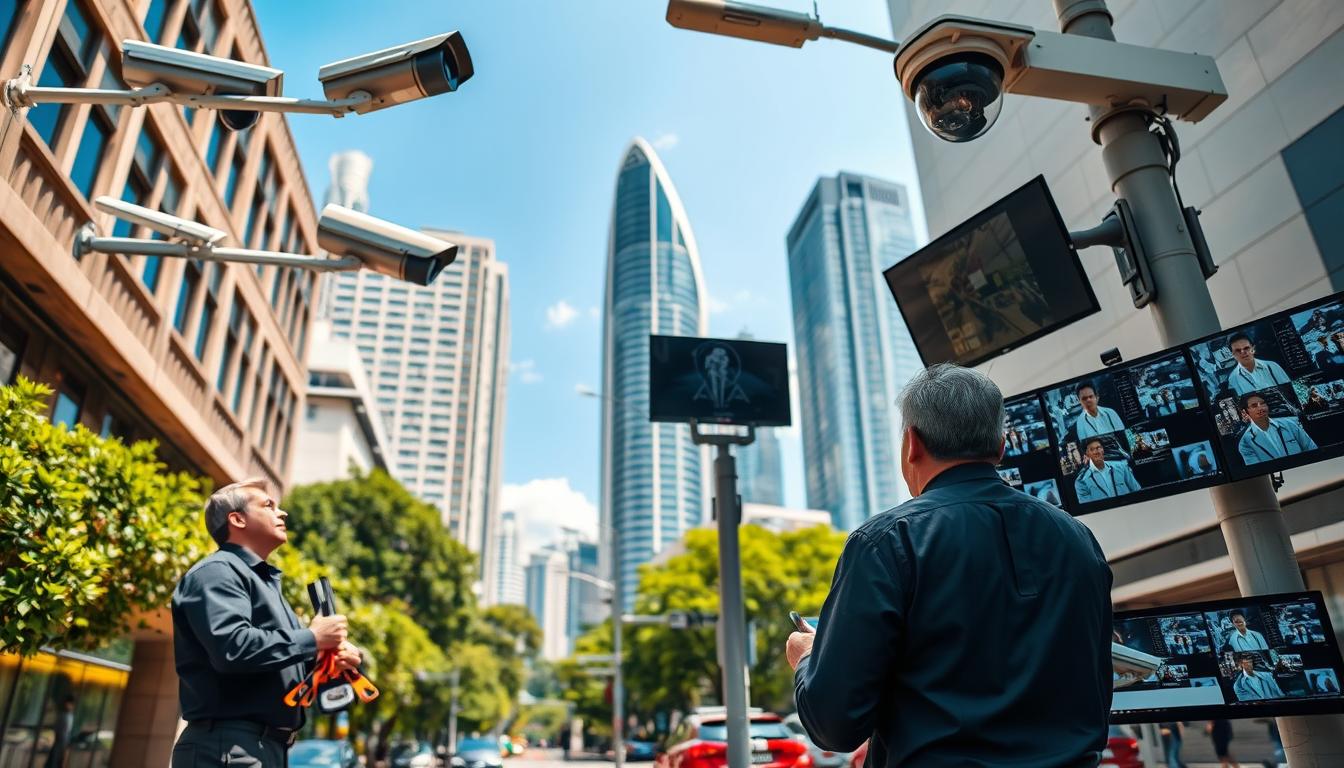
What is the difference between CCTV technician and CCTV operator?
Modern security systems form the backbone of protection for businesses and public areas across Singapore. These surveillance networks help prevent crime and ensure safety. They are essential for the country’s Smart Nation vision.
Two specialized professionals maintain these vital systems. One focuses on hardware installation and technical maintenance. The other oversees live monitoring and incident response. Both roles are crucial but involve very different daily tasks.
Singapore’s urban development and tech integration drive demand for these positions. Understanding each career path helps job seekers make informed choices. It also assists businesses in hiring the right expertise.
This article explores the distinct responsibilities, required skills, and training pathways. We’ll compare daily duties and career progression opportunities. The local job outlook and certification requirements will also be covered.
Clarifying this distinction is valuable for anyone entering the security field. Companies building their protection teams will find this information practical too.
Key Takeaways
- Security systems are fundamental to Singapore’s business and public safety infrastructure.
- CCTV technicians and operators represent two distinct career paths within the surveillance industry.
- Technicians focus on installation, maintenance, and technical troubleshooting of equipment.
- Operators specialize in live monitoring, incident response, and surveillance management.
- Singapore’s Smart Nation initiatives and urban development increase demand for both roles.
- Understanding the difference helps individuals choose the right career path in security.
- Businesses benefit from this knowledge when building effective security teams.
Understanding the Core Difference: CCTV Technician vs. Operator
Think of a complete security system as a stage production. One professional builds the set, installs the lights, and ensures all technical equipment works flawlessly. Another has the critical job of watching the performance, ready to act if anything goes wrong.
This division defines the two primary roles in the surveillance industry. One focuses on the physical and digital creation of the system. The other specializes in its active, intelligent use.
Defining the CCTV Technician: The Architect of the System
A CCTV technician is the hands-on builder. This certified expert deals with electrical systems, network cabling, and IP configurations. Their core mission is foundational reliability.
Daily tasks involve mounting cameras, running wires, and configuring recording devices like DVRs and NVRs. They manage power supplies and ensure every component communicates across the network.
Their work environment is varied and on-site. CCTV technicians travel to client locations, climb ladders, and use specialized tools. They troubleshoot issues where the equipment lives.
The technician’s goal is simple but vital: ensure the system captures clear, uninterrupted footage. Without them, there is nothing to monitor.
Defining the CCTV Operator: The Guardian of the Feed
A CCTV operator is the vigilant observer. This specialist is trained in real-time surveillance and threat analysis. They are the human intelligence behind the cameras.
Their primary duty is continuous monitoring of live video feeds. They watch multiple screens, looking for unusual activity or security breaches. When an incident occurs, they log details and alert response teams.
Operators typically work from a Security Operations Center (SOC) or control room. This setting requires sustained focus on displays for entire shifts. It’s a role built on concentration and quick judgment.
As one industry manager notes, “The operator transforms raw video into actionable security intelligence.” They interpret the footage the technician’s system provides.
This clear division creates a powerful, comprehensive solution. Technicians guarantee system uptime and quality. Operators use that system to enable proactive prevention and response. Together, they form the complete backbone of modern security in Singapore.
Key Responsibilities: A Side-by-Side Look at Daily Duties
Daily operations in security surveillance split clearly between physical installation and active monitoring. One role focuses on creating reliable systems. The other specializes in using them effectively.
This division shapes everything from work schedules to problem-solving approaches. Understanding these daily responsibilities helps clarify each career path.
Hands-On Work: The Domain of the CCTV Technician
A CCTV technician’s day begins with project planning and site assessment. They conduct detailed surveys to determine optimal camera placement. This ensures complete coverage of all vulnerable areas.
Physical installation forms their core work. Technicians mount cameras on walls, poles, and ceilings. They run and terminate various cables like coaxial, Ethernet, and fiber optic.
Configuration comes next. These professionals set up network video recorders and digital video recorders. They establish power supplies and install uninterruptible power backups.
Advanced duties include calibrating cameras for challenging conditions. Low-light and thermal imaging setups require precise adjustment. Technicians calculate storage needs and implement RAID configurations for data safety.
Maintenance and troubleshooting are ongoing responsibilities. They perform firmware updates and diagnose faults using multimeters. Routine tasks like cleaning camera lenses prevent image degradation.
Their work follows a project-based cycle. Each installation or upgrade represents a distinct technical challenge. When equipment fails, understanding CCTV camera repair options becomes essential for restoration.
Vigilant Observation: The Realm of the CCTV Operator
CCTV operators work fixed shifts to ensure continuous surveillance coverage. Their primary task involves monitoring multiple live video feeds simultaneously. This requires sustained concentration over long periods.
They operate sophisticated video management software daily. Operators pan, tilt, and zoom cameras to follow activity. Reviewing recorded footage helps investigate past incidents.
Identifying suspicious behavior forms a critical part of their job. They track unauthorized access and potential security breaches. Immediate recognition of threats enables rapid response.
CCTV operators need strong documentation skills. They maintain accurate logs of all incidents and activities. Every entry must include precise times, locations, and descriptions.
Evidence handling requires special care. Operators archive and tag footage according to legal standards like Singapore’s PDPA. Proper chain of custody ensures materials remain admissible in court.
Communication represents another vital duty. They alert on-site security teams via radio when motion detection triggers. Clear, prompt information exchange coordinates effective response.
These professionals must work effectively without supervision. Their analytical skills help interpret visual data and initiate protocols. They transform raw video into actionable security intelligence.
The fundamental difference lies in problem-solving focus. Technicians solve technical issues to restore system function. Operators solve security problems by interpreting visual information.
One builds and maintains the cctv system. The other operates and leverages it for protection. Both roles are equally vital for comprehensive security in Singapore.
Essential Skill Sets: Technical Prowess vs. Analytical Acumen
Effective security operations require complementary expertise in hardware management and human observation. One role demands engineering precision to build reliable systems. The other needs psychological insight to interpret visual data.
These distinct skill sets define career success in Singapore’s surveillance sector. Technical mastery ensures cameras function perfectly. Analytical sharpness transforms video feeds into actionable intelligence.
Technical Skills for Installing and Maintaining Systems
CCTV technicians need robust engineering and IT capabilities. Their work begins with reading architectural schematics and electrical plans. They must interpret building layouts for optimal camera placement.
Electrical expertise is fundamental. Technicians follow Singapore’s SS ISO safety standards for all wiring. They calculate power loads and install uninterrupted supply backups.
Networking knowledge drives modern systems. These professionals configure IP cameras, routers, and network switches. They understand video compression formats like H.264 and H.265 for efficient storage.
Practical abilities include using specialized diagnostic tools. Multimeters check voltage levels. Tone generators trace cable routes. Network analyzers troubleshoot connectivity issues.
Hands-on skills ensure physical reliability:
- Precise cable crimping and termination for stable connections
- Configuring cloud-based storage and secure remote access
- Integrating CCTV with access control and alarm systems
- Calibrating thermal imaging cameras for low-light conditions
- Installing RAID-configured HDD arrays for data protection
Evolving technical skills now include cybersecurity fundamentals. IP-based systems require protection against digital threats. Technicians must implement firewalls and encryption for network security.
Monitoring and Reporting Skills for Effective Surveillance
CCTV operators rely on sharp observational and cognitive abilities. Their primary tool is sustained human attention. They monitor multiple screens for entire shifts without performance degradation.
Behavioral analysis forms their core competency. Operators recognize patterns of normal activity. They quickly identify anomalies that may indicate security threats.
Exceptional communication skills enable effective response. CCTV operators need clear verbal reporting during incidents. Written logs must document events with precise detail and timing.
Critical cognitive abilities include:
- Rapid decision-making under pressure during security breaches
- Discretion when handling sensitive footage of private individuals
- Multitasking to watch screens while maintaining accurate records
- Applying Singapore’s PDPA guidelines for data protection
- Coordinating rapid responses with on-site security teams
Advanced operators now train in AI analytics interpretation. Automated alerts for facial recognition or crowd behavior require human verification. The operator’s judgment validates machine-generated data.
Legal knowledge is essential for these professionals. They understand surveillance regulations governing evidence collection. Proper chain of custody procedures ensure video remains admissible in legal proceedings.
Attention to detail separates competent observers from exceptional ones. They notice subtle changes in environments or individual behaviors. This vigilance prevents minor issues from escalating into major incidents.
The evolution continues for both roles. Technicians master the “how” of security systems—their construction and maintenance. Operators master the “why” and “what next”—interpreting events and initiating responses. Both skill sets remain indispensable for comprehensive protection in Singapore’s urban landscape.
Training and Certification Paths in Singapore
Accredited training programs differentiate technical builders from analytical observers in this field. Singapore maintains rigorous standards for security professionals through nationally recognized qualifications. These structured pathways ensure both technicians and operators meet industry expectations.
Formal certification serves as a gateway to employment in the regulated surveillance sector. Employers consistently prioritize candidates with verified competencies. This emphasis on credentials reflects Singapore’s commitment to professional excellence.
Courses and Credentials for Aspiring CCTV Technicians
Future technicians pursue comprehensive technical education. The Workforce Skills Qualifications in Security Systems Integration represents the foundational standard. This program covers essential electrical work and network configuration.
Vendor-specific certifications add specialized value. Companies like Axis Communications and Hikvision offer IP Surveillance Specialist credentials. These courses teach proprietary software and hardware troubleshooting.
Local polytechnics provide advanced technical training. Singapore Polytechnic runs intensive six-month courses featuring RAID storage laboratories. Students gain hands-on experience with enterprise-level data protection.
Temasek Polytechnic focuses on smart city integration modules. Their curriculum addresses how surveillance systems connect with broader urban infrastructure. This forward-looking approach prepares technicians for evolving technological landscapes.
The technical curriculum emphasizes practical competencies:
- Precision electrical and fiber optic cabling installation
- Network configuration for IP-based camera deployment
- System design principles for optimal coverage
- Advanced troubleshooting using diagnostic equipment
- Compliance with Singapore’s security regulations
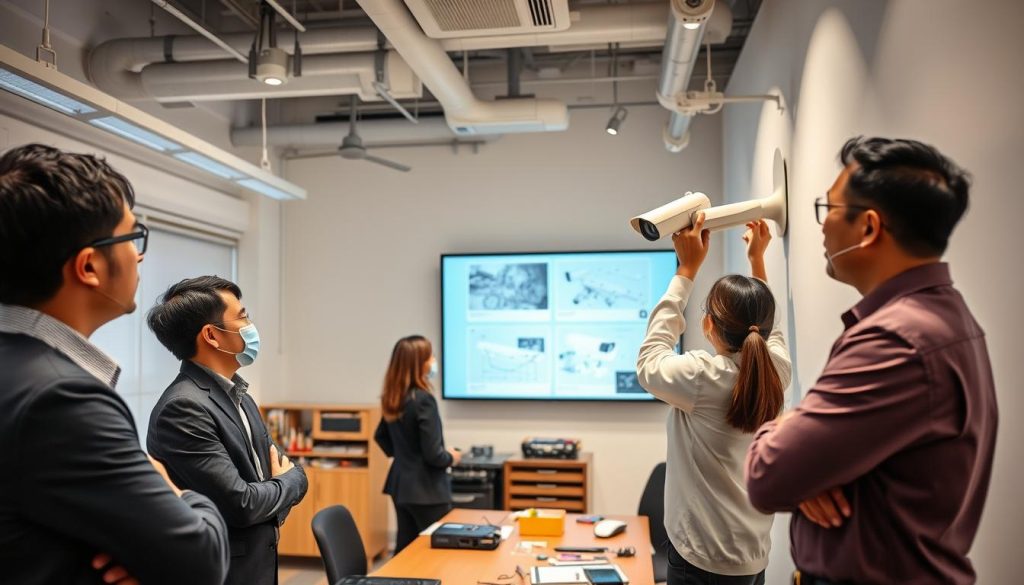
Training Programs for Future CCTV Operators
Aspiring operators follow distinct educational routes focused on observational skills. The Security Operations Centre Management program spans three intensive months. This course includes crisis communication simulations and PDPA-compliant reporting protocols.
The Security Industry Institute offers specialized cctv operator training. Their curriculum covers Public Space Surveillance requirements for licensing. Graduates understand legal boundaries for monitoring public areas.
Modern operator training incorporates technology integration. Simulated monitoring environments feature AI analytics tools. Students learn to validate automated alerts for facial recognition or unusual crowd behavior.
Behavioral pattern recognition forms a core module. Trainees develop the ability to identify subtle anomalies in video feeds. This psychological training enhances threat detection capabilities.
Key learning objectives for surveillance operators include:
- Legal aspects of monitoring under the Personal Data Protection Act
- Effective communication and precise report writing techniques
- Proficient operation of Video Management Software interfaces
- Standardized incident response procedures
- Evidence handling for legal admissibility
Technical courses generally require longer duration and greater depth. They demand mastery of complex hardware and software integration. Operator programs concentrate on procedural knowledge and situational awareness.
Certification remains essential for employability in Singapore’s security industry. Many projects and employers mandate WSQ or equivalent accredited qualifications. These credentials verify competency to clients and regulatory bodies.
Continuous learning keeps pace with rapid technological advancement. Both roles now require updates in AI analytics interpretation and cybersecurity fundamentals. Professional development ensures skills remain relevant.
This structured educational landscape provides clear progression path cctv professionals can follow. Each certification builds toward greater specialization and responsibility. Singapore’s approach ensures high standards across the surveillance sector.
Career Progression and Growth Opportunities
Professional growth trajectories diverge significantly between the hands-on builders and the vigilant observers of security systems. One path emphasizes technical mastery and project leadership. The other focuses on supervisory experience and strategic threat management.
Singapore’s expanding urban security needs create stable advancement routes for both specialties. Clear promotion ladders exist within established companies and government agencies. Specialized certifications often accelerate movement up these career structures.
Understanding these progression models helps individuals plan their long-term development. It also assists employers in creating retention strategies for valuable professionals.
Advancement Pathways for CCTV Technicians
CCTV technicians typically begin as entry-level installers. They handle basic cable runs and camera mounting under supervision. Within two years, many advance to handling independent site surveys and configurations.
The next step often involves becoming a lead technician or field supervisor. These professionals mentor junior staff and manage complex installations. They ensure work meets Singapore’s strict electrical and safety standards.
With three to five years of experience, many move into project management. These roles involve designing complete systems for commercial buildings. Responsibilities include budgeting, client consultation, and technical team coordination.
Senior positions offer monthly salaries ranging from S$4,500 to S$6,000. Specialized consultants can command even higher compensation. Their expertise becomes particularly valuable for complex integrated projects.
Technical specialists often pursue niche qualifications in emerging areas:
- Designing integrated security networks for smart buildings and campuses
- Focusing on government or high-security installations with enhanced protocols
- Becoming experts in thermal imaging or AI camera analytics applications
- Developing cybersecurity measures for network-connected surveillance equipment
Entrepreneurial technicians sometimes launch their own installation companies. They leverage industry contacts and technical reputation to secure contracts. This represents the ultimate progression in technical autonomy.
Career Trajectory for CCTV Operators
CCTV operators start in control rooms monitoring basic video feeds. They learn to identify suspicious patterns and follow response protocols. Most demonstrate competency for increased responsibilities within their first year.
Control room staff frequently advance to surveillance supervisor within two years. These operators manage shift schedules and quality-check incident reports. They serve as the primary escalation point during security events.
The next logical step involves Security Operations Center management. SOC managers oversee multiple monitoring stations and coordinate with external agencies. They develop standard operating procedures and training programs.
With additional qualifications, some transition into corporate security leadership. Positions like Security Manager or Head of Security involve strategic planning. They align surveillance operations with broader organizational protection goals.
Lateral career moves offer exciting alternatives for experienced operators:
- Transitioning into retail loss prevention or corporate investigation roles
- Moving into cybersecurity monitoring centers as threat analysts
- Specializing in digital forensics to analyze captured video evidence
- Developing and delivering corporate security training programs
Operators who obtain cybersecurity certifications often pivot into digital forensics. This growing field combines surveillance expertise with investigative techniques.
Salary progression correlates with supervisory responsibilities and specialized training. Crisis management or cybersecurity certifications significantly boost earning potential. These additional skills make operators valuable for high-stakes environments.
Entrepreneurial opportunities include starting specialized monitoring services. Some experienced operators establish firms serving niche markets like construction sites or special events.
The growth trajectories reveal complementary patterns. Technicians advance through deepening technical mastery and project leadership. Operators progress through expanded supervisory experience and strategic security management.
Both paths offer stability in Singapore’s security sector. Continued professional development ensures relevance as technology evolves. Whether through technical specialization or operational leadership, meaningful career growth awaits dedicated professionals in both domains.
Industry Demand and Job Outlook in Singapore’s Security Sector
Robust demand characterizes Singapore’s market for both technical installers and analytical monitors of security infrastructure. This growth reflects the nation’s commitment to becoming a global leader in urban safety. The job outlook remains exceptionally positive for qualified individuals.
Government statistics reveal a 38% surge in security technology roles from 2020 to 2023. This expansion outpaces many other technical fields. Both private enterprises and public agencies drive this hiring momentum.
Current Employment Trends for CCTV Professionals
Retail and healthcare sectors lead private job creation for surveillance specialists. Shopping malls and hospitals require extensive camera coverage. They need reliable systems to protect assets, patients, and sensitive data.
The national SG Secure program fuels public sector demand. This initiative enhances community preparedness and protection. It creates steady opportunities for installing and operating public space monitoring networks.
Employers increasingly seek hybrid professionals with dual understanding. These individuals grasp both technical installation and operational responsibilities. Their versatility makes them valuable for troubleshooting and system optimization.
Another major trend involves upgrading aging analog cctv systems. Businesses replace old equipment with modern IP-based digital solutions. This transition requires skilled technicians familiar with network configuration.
The need for certified qualifications remains paramount. Employers consistently prefer candidates with WSQ or vendor-specific credentials. Proper training ensures compliance with Singapore’s strict regulatory standards.
Future Projections and the Impact of Emerging Tech
Industry analysts project that 60% of new installations will require smart city certification by 2026. Surveillance systems are becoming integral nodes in larger urban data networks. This integration demands new skills in cloud computing and API connectivity.
Artificial Intelligence transforms traditional roles. AI-powered facial recognition adoption grew 65% in commercial properties last year. Automated license plate recognition is now standard for parking and access control.
For operators, AI automates routine observation tasks. This shifts their focus toward managing complex alerts and conducting deeper analysis. Human judgment remains essential for verifying AI-generated warnings.
Technicians face evolving hardware requirements. They must install and maintain AI-enabled cameras with edge computing capabilities. Servers for processing video analytics require specialized configuration knowledge.
Internet of Things integration represents another frontier. CCTV equipment connects with HDB’s Smart Hub and JTC industrial estate networks. Professionals need to understand how security systems interact with other building automation.
Cybersecurity has become a non-negotiable skill for all surveillance specialists. Networked cameras and data storage present attractive targets for digital threats. Protecting these systems requires implementing firewalls, encryption, and access controls.
The fundamental need for human expertise persists despite technological advances. Skilled technicians ensure physical and digital system reliability. Discerning operators provide the contextual intelligence that machines cannot replicate.
Long-term career prospects appear strong for both specializations. Technology changes specific tasks but amplifies the value of human oversight. Singapore’s security sector offers stable, meaningful work for years to come.
Choosing Your Path in the CCTV and Security Industry
Your journey into Singapore’s security sector begins with understanding your personal aptitudes. With 84% job satisfaction reported, both roles offer rewarding career paths. Technicians (S$2.8k-S$4.5k monthly) suit those with technical minds who enjoy hands-on work. Operators (S$2.5k-S$3.8k) fit detail-oriented individuals skilled in monitoring.
Start with honest self-assessment. Do you prefer solving technical problems or analyzing visual data? Next, invest in proper training. Singapore’s industry highly values WSQ or polytechnic qualifications. These certified professionals meet the growing demand for skilled surveillance personnel.
Both paths provide stable, meaningful work protecting communities. Whether installing systems or overseeing operations, your skills will contribute to Singapore’s safety. Choose the role matching your strengths for a fulfilling career.
FAQ
What are the main job duties of a CCTV technician?
A CCTV technician handles the physical security systems. Their daily duties include installing cameras, running cables, configuring digital video recorders (DVRs), and performing maintenance. They troubleshoot technical faults to ensure the entire surveillance infrastructure operates correctly.
What does a CCTV operator do on a daily basis?
A CCTV operator is responsible for active monitoring. They watch live and recorded video footage from multiple screens. Their core duty is vigilant observation to detect incidents, manage alarms, and report suspicious activity to on-site security personnel.
Which role requires more technical knowledge?
The CCTV technician role demands deeper technical skills. They need knowledge of electronics, networking, and security systems integration. CCTV operators require strong analytical abilities and attention to detail for monitoring, rather than hands-on repair work.
What kind of training is available for these careers in Singapore?
A> In Singapore, aspiring technicians often pursue WSQ courses in security systems installation. Future operators typically complete operator training programs like the WSQ Monitor CCTV Systems module. Both paths may require licensing from the Police Licensing & Regulatory Department.
Can a CCTV operator become a technician, or vice versa?
Yes, crossover is possible with additional training. An operator gaining technical skills through courses can move into a technician role. A technician can transition to an operator position by honing their monitoring and reporting competencies.
How does the job demand differ for these two security professionals?
Demand for both roles is strong in Singapore’s security sector. Technicians are needed for new installations and smart city projects. Operators remain essential for manned security operations in sectors like retail, hospitality, and public transport.


