
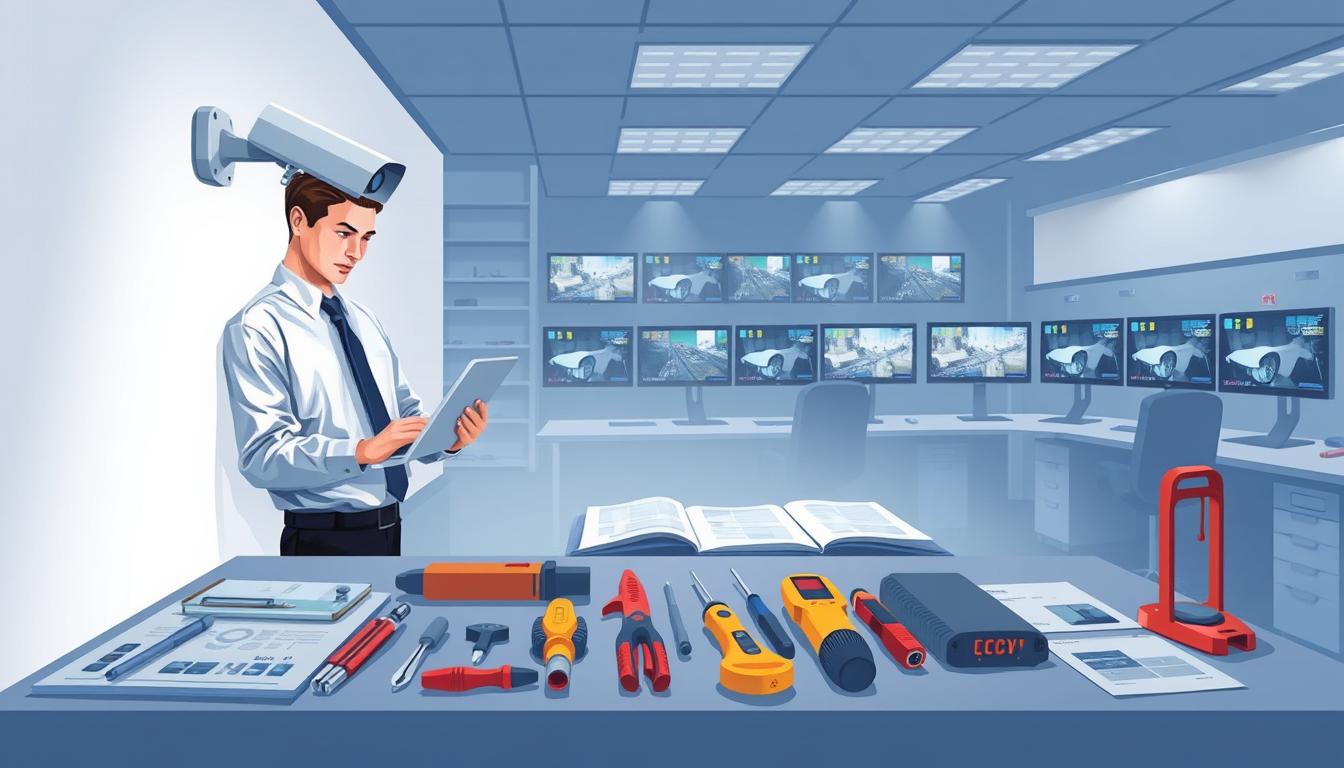
Understanding CCTV Maintenance: A How-To Guide
Keeping your surveillance equipment in top shape requires regular attention. This process involves scheduled checks and updates to ensure everything works properly.
Proper care goes beyond fixing issues when they appear. It means staying ahead of problems through consistent monitoring and preventive measures.
Your security depends on reliable performance from all components. Regular upkeep helps avoid unexpected failures and maintains continuous protection.
This guide will show you how to manage your surveillance setup effectively. You’ll learn practical steps to preserve your system’s functionality over time.
Key Takeaways
- Regular maintenance prevents system failures and ensures reliable security coverage
- Proactive checks and updates are more effective than reactive repairs
- Physical inspections, software management, and hardware care form the core maintenance components
- Proper upkeep helps comply with local surveillance and data protection regulations
- Understanding maintenance basics is the first step toward effective system management
- Neglecting regular care can lead to security gaps and system downtime
Why CCTV Maintenance is Non-Negotiable for Security
A consistent upkeep regimen forms the backbone of any effective security strategy. Research reveals that 87% of security breaches could be prevented through regular system checks.
Neglecting your surveillance equipment dramatically increases failure risks. Studies show proper care reduces equipment malfunctions by up to 30%.
System neglect creates dangerous vulnerabilities criminals can exploit. Malfunctioning security cameras create blind spots in your coverage.
Maintenance extends beyond physical cameras to recording and storage components. Evidence preservation depends on fully functional systems.
Proper care delivers invaluable peace of mind for property owners. You can trust your security infrastructure when it receives regular attention.
Consider these critical benefits of consistent upkeep:
- Prevents unexpected system failures during crucial moments
- Ensures continuous monitoring without coverage gaps
- Protects your investment in security equipment
- Maintains compliance with local surveillance regulations
Regular maintenance represents a cost-effective security approach. The potential losses from system failure far exceed upkeep costs.
Proactive care transforms security from reactive to preventive. Don’t wait for problems to emerge before addressing system needs.
The Critical Role of CCTV in Singapore’s Security Landscape
Singapore’s security infrastructure stands as a global benchmark with its extensive surveillance network. The nation maintains approximately 109,072 active cameras across the island.
This creates an impressive ratio of one camera for every 13 residents. Such density ensures comprehensive coverage of public and private spaces.
Properties equipped with surveillance systems demonstrate significantly lower crime rates. Visible cameras create psychological barriers against potential offenders.
Impact on Deterring and Solving Crime
Modern surveillance cameras serve as powerful crime prevention tools. Their presence alone reduces criminal activity in monitored areas.
High-quality video footage provides crucial evidence for investigations. Police departments rely on clear recordings to identify suspects and build cases.
Key benefits include:
- Immediate deterrence of criminal behavior
- Valuable evidence collection for legal proceedings
- Enhanced public safety through visible monitoring
- Faster response times during security incidents
Recorded material often becomes the deciding factor in prosecutions. Quality footage makes the difference between solved and unsolved cases.
The Advantages of Remote Monitoring Capabilities
Modern surveillance systems offer remote access features that transform security management. Users can view live feeds from smartphones or computers anywhere.
Motion alert notifications provide real-time security updates. This technology sends immediate warnings when movement triggers cameras.
Business owners particularly benefit from remote monitoring capabilities. Managing multiple properties becomes efficient and cost-effective.
Homeowners gain peace of mind while traveling. They can check their property’s security status from any location.
These advanced features depend entirely on properly functioning equipment. Regular maintenance types ensure continuous access to remote monitoring benefits.
System reliability directly impacts security effectiveness. Functional cameras provide the protection that modern properties require.
What is CCTV Maintenance? Defining the Core Concept
Surveillance system care involves keeping your security setup functioning at peak levels through consistent attention and professional service. This comprehensive approach combines visual checks, cleaning routines, software management, and necessary repairs.
Properly maintained security cameras can operate effectively for many years. Consistent attention helps identify potential issues before they become serious problems.
A Comprehensive Overview of the Process
The surveillance care process begins with a thorough visual assessment. Technicians examine each camera housing for damage, dirt accumulation, or signs of wear.
Next comes functional testing of all components. This includes verifying video quality, testing recording functions, and checking night vision capabilities.
Key steps in the maintenance process include:
- Physical inspection of cameras and mounting hardware
- Lens cleaning and housing maintenance
- Software and firmware version checks
- Storage system verification and testing
- Power supply and connection examinations
Professional technicians follow a systematic approach during each service visit. They document findings and recommend necessary adjustments or replacements.
The Direct Link Between Upkeep and System Longevity
Regular care directly impacts how long your security equipment remains operational. Proactive maintenance prevents excessive wear that leads to premature failure.
Well-maintained surveillance systems typically last 30-50% longer than neglected setups. This extended lifespan represents significant cost savings over time.
Consistent upkeep helps avoid major repair expenses. Small issues addressed early prevent them from developing into costly system failures.
Your investment in security equipment deserves proper protection through scheduled maintenance services. This approach ensures reliable performance when you need it most.
Surveillance system reliability depends on regular attention to all components. Proper care maintains optimal performance throughout your equipment’s operational life.
Building Your CCTV Maintenance Checklist: The Essential Elements
Transform your security strategy from theory to action with a comprehensive upkeep plan. This practical guide helps you create an effective routine for your surveillance equipment.
A well-structured checklist ensures no component gets overlooked during your service visits. It serves as your roadmap to reliable security coverage.
Scheduling Regular Physical Inspections and Functional Tests
Begin with visual assessments of all equipment. Check camera housing for weather damage or tampering signs.
Verify cable connections remain secure and protected. Loose wiring causes 72% of power-related failures.
Conduct these critical functional tests:
- Verify recording functions across all cameras
- Test night vision capabilities after dark
- Check motion detection sensitivity settings
- Confirm proper camera alignment for optimal coverage
These regular inspections help identify problems early. Addressing minor issues prevents major system failures.
Implementing Software and Firmware Updates
Software updates provide crucial security patches and new features. They protect your surveillance systems from emerging threats.
Firmware updates maintain compatibility between components. They ensure smooth operation across your entire security setup.
Schedule updates during low-activity periods to minimize disruption. Always backup configurations before proceeding with any updates.
Consistent updating practices maintain optimal performance. They keep your equipment functioning at its best capacity.
Performing Thorough Cleaning and Hardware Adjustments
Clean camera lenses every three months for clear image quality. Use soft microfiber cloths to avoid scratching delicate surfaces.
Remove dust from housings using compressed air. This prevents overheating and maintains proper ventilation.
Include these hardware adjustments in your routine:
- Retighten mounting brackets and hardware
- Adjust camera angles for optimal field of view
- Check housing seals for weather protection
- Verify adequate storage capacity for video footage
Proper cleaning preserves image and video clarity. It ensures your surveillance systems capture usable evidence.
Make sure your maintenance routine includes all these essential elements. A complete checklist guarantees comprehensive coverage.
Proactive vs. Reactive: The Types of CCTV Maintenance
Choosing the right upkeep strategy makes all the difference in your security effectiveness. Three distinct approaches exist for managing your surveillance equipment.
Each method offers different benefits and suits various situations. Understanding these options helps you make informed decisions about your security.
Preventative Maintenance: Avoiding Problems Before They Start
This approach focuses on scheduled checks and part replacements before failures occur. It represents the most cost-effective strategy for long-term security.
Regular inspections catch small issues before they become big problems. This method prevents unexpected downtime and maintains continuous protection.
Key advantages include:
- Reduced emergency repair costs
- Consistent system performance
- Extended equipment lifespan
- Enhanced peace of mind
Preventative care typically involves quarterly or semi-annual professional services. These scheduled visits keep everything functioning optimally.
Corrective Maintenance: Fixing Issues After a Failure
This reactive approach addresses problems only after components malfunction. While sometimes necessary, it often proves more expensive than preventive methods.
System downtime creates security gaps during repair periods. Emergency services usually cost more than scheduled maintenance visits.
Common scenarios requiring corrective action include:
- Sudden camera failures
- Recording system malfunctions
- Network connectivity issues
- Power supply problems
This approach works best as a backup rather than primary strategy. Combining it with preventive measures creates comprehensive coverage.
Predictive Maintenance: Using Data to Forecast Needs
Advanced systems utilize analytics to predict when service becomes necessary. This data-driven approach represents the future of surveillance upkeep.
Sophisticated software monitors equipment performance and identifies patterns. It alerts technicians before actual failures occur.
This method offers incredible efficiency for modern security setups. Service interventions happen precisely when needed—not too early or too late.
Predictive strategies work best with newer, smart surveillance systems. They maximize uptime while minimizing unnecessary service visits.
Each maintenance philosophy serves different security needs and budgets. The optimal approach often combines elements from all three methods.
Diagnosing Common CCTV Problems and Their Solutions
Every surveillance setup encounters technical challenges at some point. Learning to identify and resolve these issues keeps your security operational.
Many problems have simple solutions you can implement yourself. This guide helps you troubleshoot before calling professionals.
Identifying and Addressing Malfunctioning Components
Hardware failures often show clear warning signs. Look for these common indicators of component issues.
No power light usually means electrical problems. Check cables and power supplies first.
Distorted video suggests camera or connection failures. Inspect wiring and connectors for damage.
DVR error messages often indicate storage problems. Verify hard drive functionality and available space.
Basic troubleshooting steps for hardware problems:
- Restart equipment to resolve temporary glitches
- Inspect all physical connections for looseness or damage
- Test individual components to isolate faulty equipment
- Clean lenses and housings to improve image quality
Blurry footage typically requires lens cleaning or focus adjustment. Use proper cleaning materials to avoid scratches.
Complete camera failures might need professional service. Know when DIY solutions reach their limits.
Solving Persistent Connectivity and Network Issues
Network problems affect approximately 15% of modern surveillance setups. These issues often stem from simple configuration errors.
Start by checking physical network cables and connections. Loose wiring causes many connectivity failures.
Verify Wi-Fi signal strength for wireless cameras. Weak signals lead to intermittent footage loss.
Network troubleshooting checklist:
- Confirm cameras have valid IP addresses
- Check router settings for port conflicts
- Test network bandwidth for adequate capacity
- Update firmware to resolve known bugs
IP address conflicts disrupt camera communication. Ensure each device has a unique address on your network.
Router configuration errors block remote access. Verify port forwarding settings work correctly.
Regular firmware updates prevent many network issues. They fix known bugs and improve compatibility.
Complex network problems might require technical support. Don’t hesitate to contact specialists for persistent issues.
Proper troubleshooting maintains your security system’s reliability. Quick identification of problems prevents extended downtime.
Creating a Fail-Safe CCTV Maintenance Schedule
Establishing a reliable timetable for your security equipment ensures consistent protection. A well-planned schedule prevents unexpected breakdowns and maintains optimal performance.
Your surveillance setup requires different attention levels based on various factors. Customizing your approach guarantees comprehensive coverage without unnecessary effort.
Determining the Right Inspection Frequency for Your System
Several elements influence how often you should examine your security equipment. Location plays a crucial role in determining inspection needs.
Outdoor cameras in high-dust areas need more frequent attention. Indoor units in clean environments may require less regular checks.
Consider these critical factors when planning your timetable:
- Environmental conditions around camera placements
- Age and overall condition of your equipment
- Security importance for the protected area
- Historical performance and previous issues
High-risk environments benefit from weekly verification of recording functions. These quick checks ensure everything works when needed most.
Less critical areas might only need monthly visual assessments. Adjust your schedule based on actual usage patterns.
Recommended Intervals for Professional Servicing
Expert technicians provide deeper analysis than routine self-checks. Their comprehensive approach identifies potential problems early.
Business establishments in Singapore typically benefit from quarterly professional attention. This frequency matches the demanding security needs of commercial properties.
Residential properties often follow a six-month service schedule. This balanced approach maintains reliability without excessive costs.
Professional service includes advanced components beyond basic visual examination:
- Thorough cleaning of internal components
- Detailed diagnostic testing of all functions
- Firmware updates and software optimization
- Performance benchmarking against standards
An annual comprehensive audit represents industry best practice. This thorough evaluation examines every aspect of your security setup.
Make sure your schedule includes both self-checks and professional attention. This combined approach creates a fail-safe maintenance strategy.
Your customized timetable should reflect your specific security requirements. Regular care prevents most common system failures before they occur.
CCTV Maintenance Best Practices for Optimal Performance
Mastering proper upkeep techniques ensures your surveillance system delivers reliable protection. These professional methods maximize equipment longevity and prevent common failures.
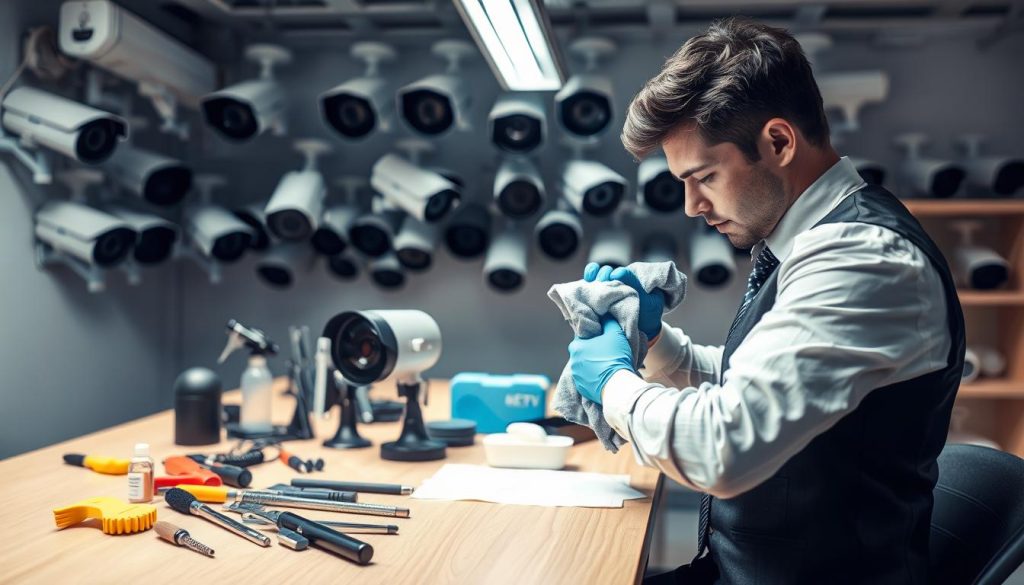
Proper Techniques for Maintaining Camera Lenses
Clear vision depends on pristine optical surfaces. Dust, moisture, and debris gradually accumulate on external covers.
Begin with a soft brush to remove loose particles. Follow with a microfiber cloth using gentle circular motions.
Essential lens care steps include:
- Quarterly cleaning using appropriate materials
- Inspecting for scratches or coating damage
- Checking housing seals against moisture intrusion
- Verifying focus and alignment after cleaning
Weatherproof enclosures require special attention. Ensure seals remain intact to protect internal components.
Professional-grade cleaning solutions prevent residue buildup. Avoid household chemicals that might damage optical coatings.
Regular attention maintains crisp image quality. This ensures your recordings remain useful for identification purposes.
Monitoring Power Supplies and Cable Connections
Electrical components form the foundation of system reliability. Intermittent power causes approximately 40% of surveillance failures.
Visual inspections should examine all cabling routes. Look for fraying, animal damage, or corrosion signs.
Voltage testing confirms stable power delivery. Fluctuations often indicate failing adapters or transformers.
Critical power system checks:
- Monthly visual cable inspections
- Quarterly voltage output verification
- Testing backup battery systems
- Checking grounding connections
Recording equipment requires internal cleaning. Dust accumulation inside DVR/NVR units causes overheating issues.
Compressed air safely removes particles from ventilation areas. This prevents thermal shutdown during extended operation.
Consistent power monitoring prevents unexpected downtime. Your security system remains operational through proper electrical care.
Navigating CCTV Maintenance Costs and Budgeting in Singapore
Smart financial planning for your surveillance setup ensures continuous protection without unexpected expenses. Understanding typical service fees helps you create a realistic security budget.
In Singapore, professional attention for surveillance equipment typically ranges from SGD 300 to SGD 600 annually. This investment prevents costly emergency repairs and maintains system reliability.
Budgeting for Annual Service Plans and Regular Upkeep
Different service levels offer varying protection for your security cameras. Basic packages usually include quarterly inspections and cleaning.
Comprehensive plans provide more frequent checks and priority response times. These options ensure quicker resolution of any emerging issues.
Consider these budgeting strategies:
- Allocate funds monthly rather than facing large annual payments
- Compare service providers for competitive pricing
- Include potential part replacements in your budget
- Account for possible emergency service needs
Well-maintained surveillance systems experience 50% fewer operational problems. This reliability justifies the ongoing investment in professional care.
Evaluating the Long-Term Savings of Preventive Care
Proactive service proves far more economical than reactive repairs over time. Emergency call-outs often cost three times more than scheduled visits.
Replacing failed components becomes necessary when neglect causes damage. These unexpected expenses can strain your security budget.
Insurance companies sometimes offer better rates for properties with maintained systems. This additional saving makes professional service even more valuable.
Your surveillance equipment represents a significant financial investment. Protecting that investment through regular care makes solid economic sense.
The return on investment becomes clear when comparing maintenance costs against replacement expenses. Proper upkeep extends equipment lifespan and performance.
How to Choose a Professional CCTV Maintenance Company
Selecting the right partner for your surveillance needs requires careful consideration. Your security depends on reliable performance from qualified professionals.
Reputable maintenance companies demonstrate proven expertise through their track record. Look for providers with extensive experience in Singapore’s unique security landscape.
Key Criteria for Selecting a Service Provider in Singapore
Evaluate potential companies based on several critical factors. Years of operation indicate stability and accumulated knowledge.
Certifications validate technical competence and professional standards. Positive client testimonials reveal real-world performance and customer satisfaction.
Essential selection criteria include:
- Minimum five years of industry experience
- Relevant technical certifications and training
- Familiarity with PDPA and local surveillance regulations
- Positive references from previous clients
Request examples of previous work on similar systems. This demonstrates practical experience with your specific setup.
Emergency response capabilities prove crucial during critical situations. Choose providers offering 24/7 support for urgent issues.
Understanding Service Plans and Maintenance Contracts
Service agreements outline the scope of professional attention. Clear contracts prevent misunderstandings about included services.
Standard plans typically cover quarterly inspections and routine checks. They include cleaning, basic adjustments, and performance verification.
Common contract elements to review:
- Number of scheduled visits per year
- Coverage for parts and labor costs
- Response time guarantees for emergency calls
- Software update and backup procedures
Compare offerings from different maintenance companies to find the best value. Ensure the plan matches your security requirements and budget.
“A well-structured service agreement provides peace of mind and predictable costs.”
Make sure you understand what constitutes extra charges beyond the base plan. Clarify hourly rates for additional work and part replacement policies.
Thorough vetting ensures you select a reliable partner for your surveillance needs. Proper due diligence prevents future issues with your security systems.
The Tangible Benefits of Regular CCTV System Inspections
Your investment in surveillance technology yields greater returns through systematic care. Consistent oversight transforms security from reactive protection to proactive prevention.
Regular examinations identify vulnerabilities before criminals can exploit them. This approach stops threats at their source rather than responding after incidents occur.
Preventing Security Threats Through Diligent Oversight
Professional checks catch alignment issues and component failures early. A misaligned camera or failed infrared LED creates dangerous blind spots.
These inspections maintain forensic-ready video quality for investigations. Clear footage becomes crucial evidence when incidents occur.
Key threat prevention benefits include:
- 75% reduction in equipment failures through early detection
- 40% less downtime by maintaining compliance standards
- Prevention of break-ins and thefts through continuous coverage
- Enhanced evidence quality for legal proceedings
Over 80% of businesses report better satisfaction with properly maintained setups. They experience fewer security issues and more reliable performance.
Significantly Extending Your Equipment’s Lifespan
Routine care adds years to your surveillance components’ operational life. Cameras, recorders, and storage drives last 50% longer with proper attention.
This longevity delays capital expenditure on replacement gear. You protect your financial investment while maintaining optimal security.
System reliability improves dramatically with consistent service. Intermittent problems that frustrate users become much less common.
Extended equipment life means fewer disruptions to your security coverage. Your protection remains consistent over time without unexpected gaps.
These combined benefits create powerful value for property owners. You gain both immediate security and long-term financial advantages.
“Regular inspections transform security equipment from expense to investment.”
The peace mind that comes with reliable protection proves invaluable. Knowing your surveillance systems work properly lets you focus on other priorities.
Future-Proofing Your Security: Trends in CCTV Maintenance
Technology transforms how we protect our properties and assets. The latest innovations make security smarter and more efficient than ever before.
Modern approaches focus on prevention rather than reaction. Advanced tools detect issues before they become problems.
These developments change how we think about protection. They create more reliable and responsive security solutions.
The Integration of AI and Smart Surveillance Systems
Artificial intelligence brings new capabilities to security monitoring. Smart algorithms analyze video feeds in real-time.
These systems detect unusual activity automatically. They generate instant alerts for potential security threats.
AI can predict equipment load and potential failures. This proactive approach prevents unexpected downtime.
Key advantages of AI-powered security include:
- Automated threat detection without constant human monitoring
- Predictive analytics for equipment performance management
- Real-time alert systems for immediate response
- Advanced pattern recognition for unusual activity
Machine learning improves accuracy over time. The system becomes smarter with continued use.
These technologies automate tasks that required manual attention. They make security management more efficient and effective.
The Shift Towards Automated and Remote Monitoring Solutions
Cloud-based platforms revolutionize how we manage security setups. These systems provide comprehensive health dashboards.
Remote access allows monitoring from anywhere. Mobile apps keep you connected to your protection systems.
Automated updates ensure optimal performance. Remote configuration simplifies system management.
Modern remote monitoring features include:
- Automated health reports and system status updates
- Remote firmware and software deployment
- Cloud-based video recording and storage solutions
- 24/7 system health monitoring capabilities
“Managed services represent the future of security system maintenance, combining remote monitoring with targeted technical support.”
Providers can monitor system health continuously. They dispatch technicians only when needed.
This approach reduces costs while improving reliability. It represents the next evolution in security management.
These trends point toward more intelligent and efficient protection. They help create safer environments through advanced technology.
Taking the Next Step for Your Surveillance System’s Health
Your surveillance setup’s reliability directly depends on consistent professional attention. This guide has shown how regular upkeep prevents failures and extends equipment life.
Neglecting your security systems creates vulnerabilities while proper care ensures continuous protection. A maintenance schedule keeps everything functioning optimally.
Now put this knowledge into immediate action. Use our detailed checklist to inspect your cameras or contact professional services for comprehensive assessment.
You now possess the information needed to maintain dependable security for years ahead. Take that first step toward complete peace mind today.
FAQ
Why is maintaining my security cameras so important?
Regular upkeep ensures your surveillance system performs reliably, capturing clear video footage. It prevents unexpected system failures and protects your investment in security equipment.
How often should I schedule professional servicing for my equipment?
Most security systems benefit from professional inspections every three to six months. This frequency helps catch problems early and keeps your surveillance running smoothly.
What are common issues that maintenance can prevent?
Routine checks help avoid blurry image quality, power supply failures, and recording errors. They also keep camera lenses clean and connections secure.
Does regular upkeep really extend the lifespan of my security system?
Yes. Consistent maintenance significantly prolongs your equipment’s operational life, ensuring long-term performance and better return on your security investment.
What should a basic maintenance checklist include?
Essential tasks include cleaning camera lenses, checking power and cable connections, updating software, and verifying recording and image quality.
How does preventive care save money over time?
Addressing small issues early avoids costly repairs or full system replacements later. It reduces downtime and maintains continuous property protection.
Can I perform any maintenance tasks myself?
Yes, simple actions like visual inspections and lens cleaning can be done yourself. However, complex issues should be handled by qualified maintenance companies.
What are the benefits of remote monitoring capabilities?
Remote features allow real-time oversight and quicker response to alerts. They enhance overall security and provide greater peace of mind for property owners.


