
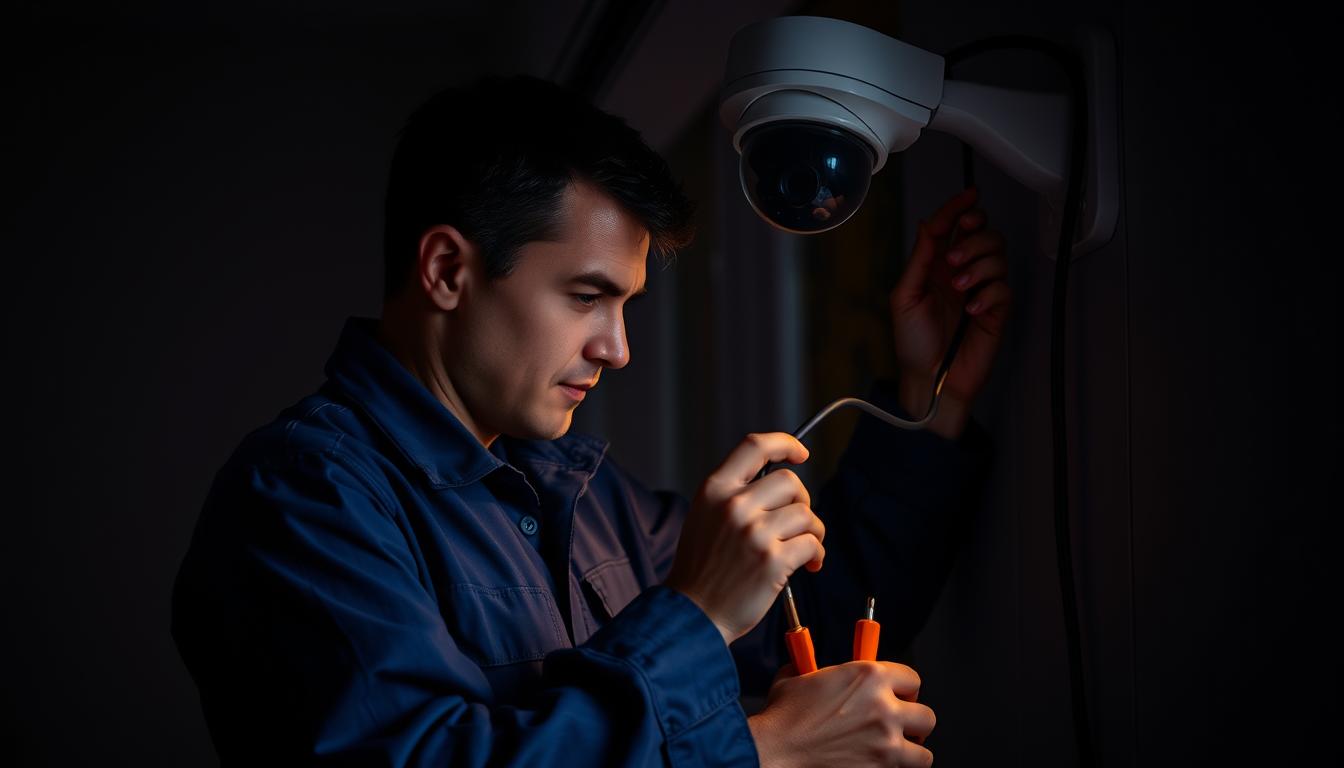
What is CCTV installer called? CCTV Installation Explained
Professionals who set up surveillance systems go by several titles, including CCTV technician and security systems installer. These experts handle everything from wiring cameras to configuring digital recording devices. Their work keeps homes and businesses safe across Singapore.
Modern setups now use IP cameras and NVR technology instead of older analog systems. With over 5.2 million operational cameras nationwide, demand for skilled installers keeps growing. Many technicians start as apprentices before becoming independent contractors.
The security industry offers clear career paths for those with technical skills. Later sections will cover essential knowledge like network configurations and troubleshooting common issues.
Key Takeaways
- Surveillance professionals are often called CCTV technicians or security systems installers
- IP cameras and NVRs have replaced older analog technology
- Singapore has over 5.2 million active surveillance cameras
- Career paths range from entry-level roles to independent contracting
- Technical skills in networking and configuration are essential
Understanding the Role of a CCTV Installer
Surveillance technicians play a critical role in safeguarding properties through precise system setups. Their expertise ensures cameras, recorders, and networks function seamlessly to deter threats. In Singapore, where over 5.2 million cameras operate, their work directly impacts public and private security.
Key Responsibilities in Surveillance Systems
Every project begins with a site survey to assess client needs and optimize camera placement. Technicians design systems to eliminate blind spots while complying with PDPA regulations for data privacy. Advanced tools allow remote adjustments to camera angles, ensuring 24/7 coverage.
Other duties include:
- Configuring digital interfaces for real-time monitoring (operators often manage 15+ screens simultaneously)
- Coordinating with law enforcement for evidence collection
- Scheduling maintenance to prevent system failures
Daily Tasks and Client Interactions
A typical day involves troubleshooting connectivity issues or upgrading outdated hardware. Technicians train clients to use monitoring software and respond to emergencies like false alarms. Strong communication skills help translate technical details into actionable advice.
Practical experience shines when balancing multiple projects—from residential setups to commercial complexes. Whether adjusting a camera’s field of view or explaining storage options, their work keeps Singapore’s security systems reliable.
Essential Technical Skills for CCTV Installation
Modern security systems demand specialized skills beyond basic camera mounting. Technicians must master electrical, networking, and diagnostic tech to ensure seamless operation. In Singapore’s high-tech landscape, cutting-edge equipment like IP cameras requires precise handling.
Electrical Wiring and Network Configuration
Proper cable management is critical for Power over Ethernet (PoE) systems. Professionals terminate CAT6 cables to maintain signal integrity and use network segmentation to isolate security feeds from other traffic. This prevents bandwidth conflicts and cyber threats.
VLAN implementation adds another layer of protection, aligning with Singapore’s strict data privacy laws. Technicians also calculate storage needs based on retention policies, ensuring optimal performance.
Camera and Recording System Expertise
Choosing the right codecs balances video quality with storage efficiency. Installers configure compression settings to suit client needs—whether monitoring retail spaces or high-risk facilities.
Firmware updates across brands like Hikvision or Dahua require meticulous attention. A single outdated system can create vulnerabilities, making regular maintenance non-negotiable.
Troubleshooting and System Optimization
Advanced troubleshooting minimizes downtime. Spectrum analyzers detect signal interference, while diagnostic tools pinpoint faulty connections. Technicians optimize camera angles and IR settings for low-light clarity.
Industry certifications, such as those from ASIS International, validate these skills. They ensure installers meet global standards in an ever-evolving field.
Qualifications Needed to Become a CCTV Installer
Entering the surveillance industry requires a mix of formal education and practical expertise. Technicians often start with a Nitec in Electronics Engineering or similar credential, which covers circuitry and system design fundamentals. Singapore’s Security Industry Institute further refines these skills through specialized programs.
Educational Background and Vocational Training
The WSQ Security Workforce Skills Qualifications framework sets industry standards for technical proficiency. Courses cover IP camera configurations, network security, and compliance with local laws. Many aspiring installers supplement classroom learning with apprenticeships at firms like Certis or ST Engineering.
Manufacturer-specific certifications, such as those from Hikvision or Dahua, validate expertise in advanced hardware. Cross-training in fire alarm integration expands career opportunities, blending safety and surveillance systems.
Trade Skills and Hands-On Experience
Real-world projects test a technician’s ability to troubleshoot under pressure. Hands-on experience with cable testers, PoE injectors, and termination tools is mandatory. Employers prioritize candidates who’ve supervised site installations or resolved signal interference issues.
Singapore’s competitive market demands continuous upskilling. Regular certifications and familiarity with AI-driven analytics keep professionals ahead in this evolving field.
Licensing Requirements for CCTV Installers in Singapore
Operating surveillance systems legally in Singapore requires proper licensing. The Police Licensing & Regulatory Department (PLRD) mandates certifications for all security professionals. These rules ensure technicians meet national standards for safety and privacy.
Regional Compliance and Legal Standards
Technicians must apply for a Security Consultant License under PLRD guidelines. The process includes:
- Background checks and fingerprint submissions
- Proof of technical training (WSQ certifications)
- CCTV-specific endorsements for system design
Government facilities demand additional permits. Unauthorized installations in restricted zones risk fines or license revocation.
Personal Data Protection Act (PDPA) Considerations
Singapore’s PDPA dictates how footage is stored and accessed. Installers must:
- Anonymize faces in public-space recordings
- Maintain 90-day audit trails for access logs
- Block cross-border data transfers without consent
Breaches incur penalties up to S$1 million. Regular training keeps technicians updated on compliance changes.
Starting Your Career as a CCTV Installer
Breaking into the security industry offers diverse pathways for tech-savvy individuals. Major firms like ST Electronics and Singapore Technologies Engineering run graduate programs with integrated WSQ certifications. These combine classroom learning with paid apprenticeships, easing the transition into the field.
Entry-Level Positions and Apprenticeships
Beginner roles often involve assisting senior technicians with cable runs and equipment testing. The Security Association Singapore provides mentorship programs matching newcomers with experienced professionals. Many advance to site supervision within 18-24 months through structured progression pathways.
Cross-training in electronic access control systems increases employability. Freelance platforms now require proof of technical certifications before approving contractor profiles. This ensures quality standards across Singapore’s security landscape.
Building a Professional Network
Trade events like Intersec Singapore connect installers with industry leaders and vendors. Membership in the Association of Certified Security Agencies unlocks exclusive training seminars and job boards. Regular participation builds credibility and reveals emerging technologies.
Successful technicians often attribute their growth to peer knowledge sharing. Online forums and manufacturer workshops provide ongoing skill updates. These connections become invaluable when troubleshooting complex installations or seeking new opportunities.
Importance of Certifications in CCTV Installation
Earning recognized credentials separates skilled professionals from amateurs in the security field. The Certified Security Consultant (CSC) program endorsed by Singapore’s PLRD sets the benchmark for technical competence. These qualifications validate an installer’s ability to design compliant systems that meet strict PDPA requirements.

Key Credentials for Professional Growth
The SISO-001 Security Installation Specialist certification covers advanced network configurations and troubleshooting methodologies. Singapore’s Building and Construction Authority rewards technicians with Green Mark credentials for energy-efficient system designs. International programs like IPVM-rated training ensure compatibility with global best practices.
Government contracts often mandate specific qualifications for bidding eligibility. Certified professionals typically command 15-25% higher salaries due to verified expertise. Reciprocal agreements with ASEAN nations allow credential portability across regional markets.
Career Advantages of Certified Status
Continuing education units (CEUs) maintain certification validity while keeping skills current. Employers prioritize certified candidates for supervisory roles and complex projects. Specialized credentials open doors to niche markets like AI-powered analytics integration.
Industry leaders recognize certification as proof of commitment to professional standards. The structured learning path from basic to advanced levels creates clear career advancement trajectories. For ambitious technicians, these qualifications become stepping stones to consultancy or entrepreneurship.
Training Programs and Courses for Aspiring Installers
Singapore’s institutes offer structured pathways for mastering electronic security systems. The ITE Nitec in Security Technology provides foundational knowledge with CCTV specialization modules. This program covers everything from wiring diagrams to network configurations for modern surveillance setups.
College Courses in Electronic Security
Polytechnic diplomas require O-level passes in mathematics and sciences, with options like Nanyang Polytechnic’s Diploma in Engineering with Security Systems. The Integrated Work Study Programme (IWSP) blends classroom learning with paid field experience at partner companies. Students gain exposure to real-world installations while earning industry-recognized credentials.
Manufacturer-sponsored training centers like Axis Communications Academy offer brand-specific certifications. These intensive courses teach advanced troubleshooting for high-end equipment. Graduates often receive priority hiring at authorized dealerships.
Hands-On Apprenticeships and Workshops
Virtual reality simulations now train technicians in risk-free environments. Trainees practice configuring camera angles in digital twins of shopping malls or transit hubs. This hands-on approach reduces errors during actual installations.
Specialized workshops integrate Crime Prevention Through Environmental Design (CPTED) principles. BIM software training helps visualize system layouts before physical implementation. Disaster recovery scenarios prepare technicians for emergency maintenance situations.
Soft Skills for Successful CCTV Installation
Beyond technical expertise, surveillance professionals need interpersonal abilities to excel in their roles. Singapore’s Security Association reports 72% of installation disputes stem from communication gaps rather than technical failures.
Communication and Client Management
Effective client management begins with translating technical jargon into clear benefits. Installers often explain storage options or camera specs to homeowners unfamiliar with security systems.
Cultural awareness matters in Singapore’s diverse workplaces. Technicians might adjust explanations for multinational teams or resolve conflicts between contractors. Precise documentation prevents misunderstandings about system capabilities.
Problem-Solving Under Pressure
Emergency callouts test a technician’s problem-solving skills when systems fail during critical moments. Pressure simulations in training prepare installers for real-world crises like false alarms at high-security sites.
Time management becomes crucial during complex installations. Prioritizing tasks ensures projects meet deadlines without compromising safety standards. Stress-reduction techniques help maintain focus during 14-hour shifts.
These human skills complement technical knowledge, creating well-rounded security experts. They turn adequate installations into exceptional client experiences that generate referrals.
Advancements in CCTV Technology
Singapore’s security landscape is transforming through cutting-edge surveillance innovations. GovTech’s Safe City Test Bed initiatives demonstrate how technology evolves beyond traditional monitoring. Modern systems now process visual data in real-time, identifying threats before human operators spot them.
The shift from passive recording to active analysis marks a revolutionary change. Edge computing devices analyze footage locally, reducing bandwidth needs. This aligns with Singapore’s Smart Nation goals for efficient urban security infrastructure.
AI and Video Analytics Integration
Machine learning algorithms now power advanced video analytics capabilities. Systems automatically detect unusual activities like loitering or unattended packages. Certified Video Content Analysis (VCA) specialists configure these intelligent monitoring parameters.
Key developments include:
- Predictive algorithms that forecast security breaches based on behavioral patterns
- 5G-enabled networks providing ultra-low latency for emergency alerts
- Digital twin simulations testing system responses to various threat scenarios
Continuous Learning and Skill Updates
Professionals must embrace continuous learning to master these advancements. Cybersecurity threat intelligence feeds now integrate with surveillance networks. Technicians train on hybrid systems combining IoT sensors with traditional cameras.
Regular skills upgrades cover:
- Configuring AI-powered thermal imaging for perimeter protection
- Implementing network slicing to prioritize critical surveillance data
- Maintaining compliance with evolving PDPA regulations
The field rewards those who combine technical adaptability with strategic security thinking. Singapore’s dynamic environment makes ongoing education essential for career longevity.
Pathways to Becoming a Sole Trader in CCTV Installation
Singapore’s thriving security market creates opportunities for self-employed installation experts. Operating as a sole trader offers control over projects and earnings potential beyond typical technician salaries. However, success requires careful planning and compliance with local business regulations.
Business Planning and Legal Requirements
Registering with ACRA is mandatory for all security service providers in Singapore. The process includes obtaining a Unique Entity Number and selecting appropriate SSIC codes for surveillance services. Many independent installers begin with Enterprise Singapore’s startup grants for equipment financing.
Essential legal considerations include:
- Professional Indemnity insurance coverage of at least S$500,000
- BCA registration for public sector tender eligibility
- PDPA compliance training for handling surveillance data
Marketing Strategies for Independent Installers
Effective marketing strategies combine digital outreach with local networking. Geofencing ads target property managers within specific districts, while SEO-optimized service pages attract organic searches. Government e-procurement portals provide direct access to public sector contracts.
Successful operators often develop niche specializations such as:
- Marine surveillance systems for port facilities
- AI-powered retail analytics integration
- Heritage building-compatible installations
Building relationships with property management firms creates recurring maintenance contracts. Many independent installers report 40% of revenue comes from such partnerships within two years of launching.
Why CCTV Installation is a Rewarding Career Choice
Choosing a career in electronic security offers both stability and innovation in Singapore’s growing market. The security industry projects 8.7% annual expansion, creating steady growth opportunities for skilled professionals.
Technicians gain job satisfaction by directly enhancing public safety through smart surveillance solutions. Many advance to system design roles or specialize in emerging fields like IoT integration.
ASEAN partnerships open doors to regional projects, while government digitalization initiatives ensure long-term demand. This rewarding career blends technical challenges with meaningful community impact.
Continuous learning keeps professionals at technology’s forefront. From smart buildings to AI analytics, the field rewards those passionate about shaping safer urban environments.
FAQ
What does a CCTV installer do?
Professionals in this field install, configure, and maintain surveillance systems, ensuring optimal performance for security needs.
What skills are required for CCTV installation?
Key abilities include electrical wiring, network setup, troubleshooting, and understanding camera placement for effective monitoring.
Are certifications necessary for this career?
While not always mandatory, certifications enhance credibility and job prospects in the security industry.
How do I start as a CCTV technician?
Begin with vocational training, apprenticeships, or entry-level roles to gain hands-on experience with security systems.
What’s the role of AI in modern surveillance?
AI improves video analytics, enabling features like facial recognition and motion detection for smarter security solutions.
Do installers need knowledge of data protection laws?
Yes, compliance with regulations like Singapore’s PDPA ensures lawful handling of recorded footage.
Can I run my own CCTV installation business?
Absolutely. With experience, proper licensing, and marketing strategies, you can establish a successful independent operation.
What’s the job outlook for this profession?
Demand is rising due to increased security concerns, making it a stable and growing career choice.


