
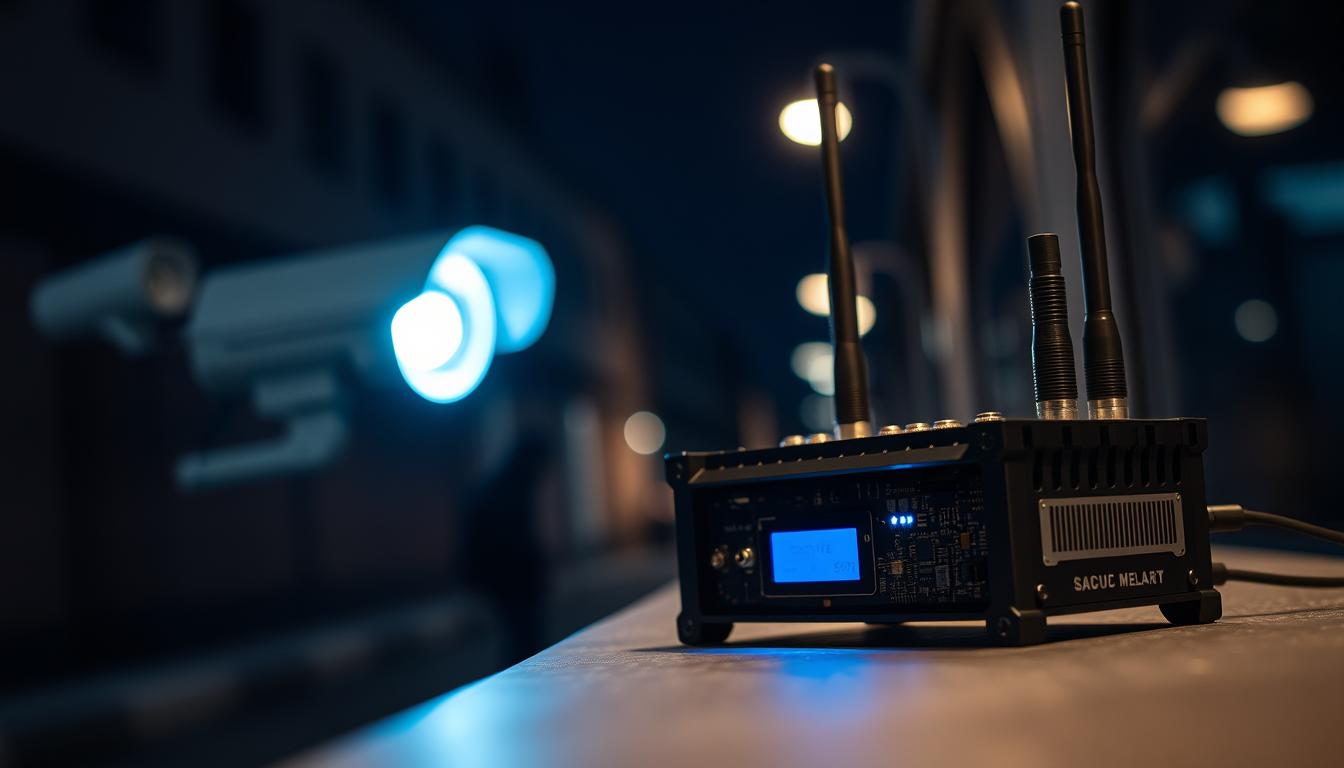
What is a Camera Jammer? How it Works and Uses
Modern security systems face a growing threat from signal disruption technology. These devices can block wireless cameras from transmitting footage, creating critical vulnerabilities.
Most security cameras operate on specific frequencies like 2.4 GHz or 5.0 GHz. Jammers overwhelm these signals with stronger interference, causing connection loss and recording failure.
Understanding this technology is essential for protecting both residential and commercial properties. While illegal in Singapore, jamming remains a real risk requiring proactive measures.
This article explores how jammers work, their impacts on home security, and practical protection strategies. We’ll cover detection methods, prevention tips, and legal considerations for Singapore readers.
Key Takeaways
- Wireless security cameras are vulnerable to signal jamming attacks
- Jammers work by overpowering Wi-Fi frequencies like 2.4GHz and 5.0GHz
- Signal disruption can cause complete loss of video footage and alerts
- Jamming devices are illegal in Singapore but remain accessible
- Protection requires understanding both technology and legal frameworks
- Multi-layered security approaches provide the best defense
- Both homeowners and businesses need awareness of this threat
What is a Camera Jammer? Understanding the Basics
Wireless security systems face a hidden vulnerability that many property owners overlook. Specialized devices can intentionally block transmission between cameras and monitoring stations.
This interference occurs when jammers emit powerful signals matching Wi-Fi frequencies. They overwhelm legitimate communications at 2.4 GHz or 5 GHz bands.
Defining Signal Disruption Technology
Signal jamming represents the deliberate blocking of wireless transmissions. These devices create radio frequency interference that prevents normal operation.
Security cameras become unable to send footage to receivers or cloud storage. The technology essentially creates a communication blackout zone.
Common Types of Interference Devices
Various jammers serve different purposes with distinct capabilities:
- Basic signal jammers block all wireless communications within their range
- WiFi-focused devices specifically target network connections
- Bluetooth disruptors affect short-range wireless peripherals
- Frequency-specific units allow precise targeting of particular bands
Basic models create widespread disruption affecting phones and radios. WiFi-specific devices pose the greatest threat to modern security systems.
More advanced jammers can cover entire buildings with powerful interference. Their increasing accessibility makes understanding them crucial for proper protection.
Recognizing these device types helps identify appropriate security countermeasures. This knowledge prepares us for examining their technical operation methods.
How Camera Jammers Work: The Technical Mechanics
Understanding the operational principles behind signal disruption reveals critical security vulnerabilities. These mechanisms exploit wireless communication weaknesses with precision engineering.
Modern security systems rely on uninterrupted data transmission. Disruption devices target this dependency through sophisticated technical approaches.
Frequency Targeting and Signal Overpowering
Jammers identify specific wireless bands used by surveillance equipment. They then emit powerful signals matching these exact frequencies.
This targeted approach creates intentional interference on designated channels. The overwhelming signal strength drowns out legitimate communications.
Security cameras struggle to maintain connection under this electronic assault. Data transmission fails completely when the jammer’s output exceeds the camera’s capabilities.
Key factors in signal overpowering include:
- Precise frequency matching to specific security systems
- Superior transmission power compared to protected devices
- Continuous signal emission throughout the attack duration
- Ability to target multiple frequency bands simultaneously
Jamming Range and Effectiveness
The impact area of these devices varies significantly based on multiple factors. Operational range determines how much territory becomes vulnerable.
Higher power output extends the effective disruption distance. Advanced units can cover entire buildings or outdoor areas.
Environmental elements greatly influence jamming effectiveness. Physical barriers like walls reduce signal penetration while open spaces enhance it.
Other critical factors affecting performance:
- Antenna design and positioning
- Battery life for portable units
- Presence of other wireless signals
- Target device sensitivity and configuration
Dual-band cameras present additional challenges for attackers. They may maintain partial functionality if only one frequency gets disrupted.
Understanding these technical aspects helps develop effective countermeasures. This knowledge forms the foundation for comprehensive security protection strategies.
Primary Uses and Applications of Camera Jammers
Beyond criminal applications, jamming devices have specialized professional uses. These tools serve important functions in security testing and privacy protection when used responsibly.
Understanding these applications helps distinguish between legitimate security work and illegal activities. Both homeowners and businesses should recognize the dual nature of this technology.
Security Testing and Vulnerability Assessment
Professional security teams sometimes use jammers for controlled testing. They evaluate wireless system robustness against signal disruption attacks.
These assessments simulate real-world interference scenarios. Teams check if security cameras maintain functionality during jamming attempts.
Testing reveals critical weaknesses in wireless security systems. Professionals identify whether backup systems like local storage work properly.
Key testing objectives include:
- Evaluating connection stability under signal stress
- Testing backup recording systems during transmission failure
- Assessing alert systems for disruption detection capabilities
- Identifying range limitations for wireless security coverage
Privacy Protection in Sensitive Environments
Some organizations use signal blocking for temporary privacy protection. Corporate settings might employ jammers in confidential meeting areas.
High-security zones sometimes authorize controlled jamming during sensitive operations. This prevents unauthorized surveillance or data interception.
Entertainment industries use these devices during filming operations. They block unauthorized recordings or drone interference near sets.
Public privacy concerns also drive some usage attempts. Individuals might seek protection against invasive recording in personal spaces.
However, most these applications remain illegal without proper authorization. Singapore regulations strictly control any signal disruption technology.
Criminal misuse represents the most dangerous application. Burglars use jammers to disable security cameras during intrusions. They avoid detection by blocking video footage transmission and security alerts.
Understanding these varied uses helps recognize potential threats. This knowledge prepares for detecting unauthorized jamming activities around your property.
Identifying Camera Jamming: Detection Signs and Symptoms
Recognizing signal disruption early protects your property from security breaches. These signs often indicate deliberate interference rather than normal network issues.
Quick identification allows faster response to potential threats. Understanding these patterns helps distinguish between technical glitches and intentional attacks.
Sudden Loss of Video Feed and Connectivity
Unexpected loss of video transmission serves as a primary warning sign. Security camera systems may display black screens despite proper power supply.
These problems occur without changes to network settings or environmental factors. The disruption feels abrupt compared to gradual signal degradation.
Key indicators include:
- Complete disappearance of live footage from monitoring applications
- Failure to receive motion detection alerts or notifications
- Cameras showing offline status despite confirmed power connection
- Inability to access recorded footage through normal channels
Unusual Signal Interference Patterns
Abnormal visual distortions differentiate jamming from typical network issues. Interference often manifests as persistent static or image pixelation.
These artifacts appear consistently across multiple cameras simultaneously. They differ from occasional glitches caused by bandwidth limitations.
Common distortion patterns include:
- Horizontal lines or screen tearing during recording
- Consistent audio distortion or complete audio dropouts
- Frozen frames that persist beyond normal buffering periods
- Color abnormalities that affect entire camera networks
Simultaneous Multi-Device Disconnections
Coordinated failure across multiple devices strongly suggests external interference. Wi-Fi connected smart home equipment often fails alongside security systems.
This pattern helps rule out individual device malfunctions or isolated network problems. The scope of disruption indicates broad-spectrum signal blocking.
Affected systems typically include:
- Wireless security cameras losing connection simultaneously
- Smart lights, thermostats, and other IoT devices failing together
- Router status indicators showing unusual activity patterns
- Mobile devices experiencing unexpected network switching
Advanced detection methods provide concrete evidence of signal disruption. Spectrum analyzers can identify unauthorized transmissions in your frequency range.
Comparing current performance against baseline logs helps confirm suspicions. This documentation assists authorities in investigating potential jamming activities.
Prompt detection reduces vulnerability windows during security breaches. Early recognition leads directly into implementing protective measures discussed in our next section about prevention strategies.
Preventing Camera Jamming: Protective Strategies
Comprehensive security strategies combine physical and digital solutions to counter wireless disruption threats. Property owners should implement multiple defensive layers rather than relying on single-point protection.
These approaches create redundancy that maintains surveillance functionality during interference attempts. A well-designed security plan addresses both prevention and continuity of operations.
Implementing Wired Security Systems
Wired surveillance equipment provides immunity to wireless signal disruption. These systems use physical cables for data transmission and power delivery.
Physical connections eliminate vulnerability to radio frequency interference. Intruders cannot disable them remotely through signal blocking technology.
Installation requires professional expertise but offers superior reliability. The initial investment delivers long-term protection against evolving threats.
Key advantages include:
- Complete immunity to wireless jamming attempts
- Consistent performance without network dependency
- Higher data transmission speeds and quality
- Reduced vulnerability to cyber attacks
Enhanced Network Encryption and Authentication
Modern encryption standards significantly improve wireless security resilience. WPA3 protocol provides robust protection against unauthorized network access.
Strong authentication measures prevent credential compromise attempts. Unique passwords for each device create additional security layers.
Network configuration changes reduce detectability by potential intruders. Custom SSIDs make targeting specific systems more challenging.
Essential security enhancements:
- WPA3 encryption for all wireless connections
- Multi-factor authentication for system access
- Regular credential rotation and complexity requirements
- Network segmentation for critical security systems
Utilizing Local Storage and Backup Systems
On-device storage ensures continuous recording during network disruptions. MicroSD cards and internal memory maintain footage when transmissions fail.
Cloud-based management systems provide real-time alert capabilities. Services like Reconeyez monitor connection status and trigger notifications.
Redundant storage solutions preserve evidence despite interference attempts. Multiple recording locations prevent complete data loss.
Effective continuity measures include:
- Local storage in all surveillance cameras
- Automatic cloud backup when connections restore
- Multiple access points for network redundancy
- Signal boosters to maintain connection strength
Regular system audits identify potential vulnerabilities before exploitation. Firmware updates address security gaps that jammers might target.
A multi-layered approach combining these strategies offers comprehensive protection. This methodology ensures security system integrity against various disruption techniques.
Legal and Ethical Considerations in Singapore
Singapore maintains strict legal frameworks governing signal disruption technology to protect public communications. These regulations balance security needs with ethical use of potentially dangerous devices.
Understanding these rules helps property owners make informed decisions about their protection strategies. Compliance ensures both personal security and public safety.
Singapore’s Regulations on Jamming Devices
The Telecommunications Act prohibits unauthorized use, possession, or sale of signal blocking equipment. The Infocomm Media Development Authority (IMDA) controls all authorization processes.
Legal consequences for violations include substantial fines and potential imprisonment. These penalties apply to both individuals and organizations.
Even well-intentioned usage requires proper permits and approvals. Privacy protection attempts without authorization remain illegal under current regulations.
Responsible Use and Potential Consequences
Authorized professionals may use jammers for legitimate security testing purposes. Businesses must obtain explicit permissions and follow strict guidelines during assessments.
Consumers should avoid purchasing these devices from unauthorized sources. Such purchases violate laws and compromise public safety systems.
Signal disruption can affect emergency communications and essential services. This societal impact reinforces the need for strict controls.
Report suspected jamming activities to the Singapore Police Force or IMDA. Prompt reporting helps authorities investigate potential threats.
Understanding these regulations helps prioritize legal security measures over risky alternatives. Compliance ensures comprehensive protection without legal exposure.
This awareness leads directly into our final discussion about security in our evolving technological landscape.
Ensuring Security in an Evolving Technological Landscape
The battle between security measures and disruption techniques continues to evolve rapidly. Protection requires ongoing adaptation to emerging threats in our connected world.
Multi-layered approaches provide the best defense against signal interference. Combine wired systems, strong encryption, and local storage for comprehensive coverage.
Regular system audits and maintenance ensure optimal performance. Stay informed about new vulnerabilities and legal regulations in Singapore.
Advanced solutions like Reconeyez offer enhanced resilience through AI-driven alerts. These systems maintain surveillance even during network disruptions.
Assess your current security setup today and implement these strategies. A well-maintained, informed approach offers the strongest protection for your property.
FAQ
How do these devices interfere with security systems?
These units disrupt signals by transmitting powerful radio waves on identical frequencies. This action overwhelms cameras, causing loss of video feed or connectivity issues.
What types of security cameras can be affected?
Wireless systems using Wi-Fi, Bluetooth, or cellular connections are most vulnerable. Wired cameras with local storage remain more resistant to such interference.
Are there legitimate uses for signal blocking technology?
Yes, security professionals use them for testing system vulnerabilities. Some organizations employ these devices in sensitive areas to protect privacy during confidential meetings.
How can I tell if my cameras are being jammed?
Look for sudden feed loss, connection drops, or unusual interference patterns. Multiple devices disconnecting simultaneously often indicates jamming activity.
What protection methods work against signal interference?
Implement wired connections, enhance network encryption, and use local storage systems. Regular security updates and strong authentication protocols also help prevent disruptions.
What are Singapore’s regulations regarding these devices?
Singapore strictly prohibits unauthorized use under the Telecommunications Act. Possession or operation without proper authorization carries significant legal penalties.


