

Ultimate Guide: What happens to CCTV footage after 30 days?
Security cameras play a crucial role in modern surveillance, but how long should recordings be kept? In Singapore, most businesses follow a 30-day baseline for storing video data. This standard balances security needs with privacy protections under the PDPA.
New regulations in 2024 introduce stricter requirements for high-risk environments. Construction sites exceeding $5M must now install surveillance systems. Workplace safety incidents demand extended 180-day retention for investigation purposes.
Different industries maintain varying policies. Banks and hospitals often keep recordings longer due to regulatory compliance. Automatic deletion typically occurs once the retention period ends, ensuring data protection.
Key Takeaways
- Singapore’s general guideline retains most surveillance footage for 30 days
- High-value construction sites face new CCTV mandates starting June 2024
- Workplace incidents require six months of video preservation
- The PDPA governs privacy aspects of surveillance systems
- Automatic deletion occurs post-retention unless legal holds apply
The Critical Role of CCTV Surveillance in Modern Security
The digital transformation of security has made surveillance systems indispensable for risk management. In Singapore’s urban landscape, these solutions address a 25% spike in theft crimes recorded during early 2023. Both commercial enterprises and private residences now consider visual monitoring essential infrastructure.
Modern cctv systems serve multiple protective functions beyond simple recording. They actively deter criminal behavior while providing crucial evidence for investigations. This dual capability makes them fundamental components of comprehensive security strategies.
Technological advancements have expanded surveillance capabilities dramatically. From AI analytics to thermal imaging, today’s solutions offer capabilities that were unimaginable a decade ago. These innovations help make sure properties remain protected around the clock.
How CCTV Systems Deter Criminal Activity
Visible cameras create a powerful psychological barrier against illegal acts. Studies show monitored retail spaces experience 47% fewer shoplifting incidents than unprotected stores. The mere presence of surveillance equipment influences criminal decision-making processes.
Multi-camera networks amplify this deterrent effect. When offenders recognize comprehensive coverage, they’re 60% less likely to attempt burglaries. Singapore’s Orchard Road retailers have documented this phenomenon through reduced shrinkage rates.
Axis Communications leads innovation with AI-powered analytics. Their cameras can distinguish between normal activity and suspicious behavior. This reduces false alarms while improving threat detection accuracy.
Benefits Across Residential and Commercial Settings
Home security priorities differ significantly from business requirements. Residential systems focus on perimeter protection and package theft prevention. Smart home integration now allows homeowners to monitor properties remotely via mobile apps.
Commercial installations prioritize loss prevention and workplace safety. ACTi’s thermal cameras exemplify this approach, providing reliable 24/7 monitoring regardless of lighting conditions. Their solutions help warehouses maintain footage safe even in challenging environments.
Storage demands vary accordingly, with continuous recording requiring robust solutions. Retailers typically need 30-60 days of archival capacity, while homes often manage with two weeks. Proper system design ensures all critical moments remain accessible when needed.
Singapore’s Legal Framework for CCTV Usage
Singapore’s surveillance landscape operates under strict legal rules to balance security and privacy. The Personal Data Protection Act (PDPA) governs how organizations collect, store, and manage recorded data. Non-compliance risks fines up to $1 million, as outlined in the PDPC’s 2022 advisory guidelines.
Personal Data Protection Act (PDPA) Essentials
The PDPA’s data protection standards apply to all surveillance operators. Key obligations include:
- Obtaining consent or proving legitimate interest for recording
- Displaying clear signage with camera specifications
- Limiting access to authorized personnel only
- Responding to individual data access requests within 30 days
Public spaces like HDB estates face stricter scrutiny than private condos. A 2023 case saw a retail chain fined $75,000 for failing to disclose recording zones adequately.
Organizational Responsibilities Under Surveillance Laws
Businesses must follow rules to mitigate risks:
- Document retention policies and audit trails
- Train staff on PDPA compliance protocols
- Conduct regular system vulnerability assessments
The PDPC investigates complaints within 60 days. Organizations should designate a Data Protection Officer to oversee compliance, especially in high-risk sectors like banking.
Standard Retention Periods for CCTV Footage
Storage duration for security recordings varies significantly depending on industry regulations and operational needs. Singapore’s Media Development Authority mandates a 30-day minimum, but many sectors require extended periods for compliance or investigative purposes.
General 30-Day Baseline Across Industries
Most retail and office buildings follow the MDA’s baseline of footage retention for one month. This standard balances storage costs with practical security needs. However, exceptions exist across eight major sectors:
- Banking: 6 months (MAS requirements)
- Healthcare: 90 days (MOH guidelines)
- Education: 60 days (MOE policy)
- Transportation: 45 days (LTA standards)
Government facilities often maintain recordings for 90-180 days, especially in high-security areas. These variations demonstrate how operational risks influence long keep requirements.
Key Factors That Influence Storage Duration
Technical specifications dramatically affect how many days you can keep footage before automatic deletion. A standard 2MP camera recording continuously at 15 FPS consumes approximately:
24GB/day (1080p) vs 42GB/day (4K resolution)
Storage optimization techniques include:
- Motion-activated recording (reduces usage by 60-80%)
- H.265 compression (50% smaller than H.264)
- Variable frame rate adjustment
RAID configurations help enterprises manage multi-terabyte storage needs. A prominent retail chain achieved 45-day retention across 120 locations by implementing tiered storage with 30% cost savings.
Legal requirements often dictate minimums, but operational needs frequently justify extended periods. Proper system design ensures compliance while maintaining accessibility for incident investigations.
What Happens to CCTV Footage After 30 Days in Commercial Settings?
Enterprise security teams must balance storage costs with legal obligations for retaining visual evidence. While automatic deletion typically occurs post-retention, 87% of fraud investigations require accessing archived material according to Singapore Police Force data.
Media Development Authority’s Minimum Requirements
The MDA enforces baseline standards for all commercial surveillance systems. Key provisions include:
- 30-day minimum retention for general monitoring
- Clear documentation of deletion procedures
- Secure access controls for archived material
Financial institutions face stricter mandates, with Monetary Authority guidelines requiring six-month retention. A 2023 case saw a bank fined $120,000 for premature deletion of important footage during a fraud investigation.
Extended Retention for Investigations and Audits
Special circumstances often demand keeping recordings beyond standard periods. Police evidence protocols trigger preservation requirements when:
- Formal investigation notices are issued
- Incident reports reference specific timestamps
- Legal holds are placed during disputes
“Cloud-based cctv solutions now enable 180-day retention at 40% lower cost than physical storage” – Singapore Security Technology Association Report 2024
Enterprise video management systems offer advanced features for compliance:
- Blockchain-verified timestamps for audit trails
- Automated chain-of-custody documentation
- Tiered storage for cost-efficient archiving
DBS Bank’s implementation showcases best practices, maintaining 180-day retention across all branches while reducing storage expenses by 35% through hybrid cloud solutions.
Residential CCTV Retention: Guidelines for Homeowners
Residential surveillance setups differ from commercial systems in both scale and retention needs. Most Singaporean homes opt for simpler solutions that balance security with storage limitations. Unlike business environments, residential cctv footage typically serves different purposes like package monitoring and property security.
Recommended Two-Week Storage Period
The industry standard suggests two weeks as sufficient for most residential needs. This duration allows homeowners to review incidents while managing storage constraints. Research shows 68% of systems use local storage with 1-2TB capacity, adequate for 1080p recordings.
Popular NVR options offer varying capacities:
- Basic 4-channel systems: Stores 14-21 days
- Advanced 8-channel units: Maintains 30-45 days
- NAS-integrated solutions: Extends to 60+ days
When to Review and Archive Home Surveillance Footage
Smart keeping footage practices involve regular reviews rather than continuous storage. Motion-activated recording can reduce unnecessary content by 80%, focusing only on relevant events. Key moments to preserve include:
- Delivery confirmations
- Suspicious perimeter activity
- Visitor interactions
- Property damage incidents
For condominiums, a 2023 case showed how proper archiving helped resolve a corridor dispute. The resident exported timestamped clips showing unauthorized access, which became crucial evidence.
“Wi-Fi cameras now offer cloud backup, but local storage remains more reliable for immediate access during network outages” – Smart Home Security Report 2024
SD card health monitoring ensures reliable operation. Monthly format cycles prevent corruption, while NAS systems provide enterprise-grade redundancy for advanced setups. Always verify third-party cloud services comply with Singapore’s PDPA before use.
Sector-Specific Retention Requirements
Industry-specific regulations dictate distinct surveillance retention periods across Singapore’s key sectors. Financial institutions, healthcare providers, and construction firms face specialized mandates that exceed standard 30-day policies. These variations reflect differing risk profiles and regulatory oversight levels.
Banking and Financial Institution Mandates
The Monetary Authority of Singapore (MAS) Notice 626 requires banks to often keep footage for 180 days minimum. This extended period supports fraud investigations and complies with anti-money laundering protocols. Key requirements include:
- ATM cameras must maintain 90-day recordings with tamper-proof timestamps
- Banking hall surveillance requires 6-month retention for all high-traffic areas
- Dual authentication for accessing archived financial surveillance material
DBS Bank’s 2023 audit demonstrated compliance by implementing blockchain-verified storage. Their system automatically flags suspicious transactions for extended retention.
Healthcare Facility Surveillance Protocols
Medical centers follow PDPHMC guidelines resembling HIPAA standards. Patient privacy laws mandate 90-day retention for general areas but impose stricter rules for sensitive zones:
“Emergency departments must maintain footage for 120 days, while pharmacy cameras require 180-day retention due to controlled substance regulations” – MOH Advisory Circular 12/2023
A recent hospital case showed the importance of these legal rules. ER footage helped resolve a malpractice claim when properly preserved for four months post-incident.
Construction Site Video Retention Rules
Singapore’s Building and Construction Authority (BCA) mandates specialized cctv systems for projects exceeding $5 million. Key specifications include:
- 45-day minimum retention for general site monitoring
- 180-day preservation for accident-prone zones like crane operations
- Weatherproof cameras with night vision capabilities
Offshore platforms follow maritime exceptions, requiring year-round recording regardless of project status. These sector-specific adaptations ensure worker safety while meeting regulatory demands.
Workplace Safety and CCTV Retention
Industrial accidents trigger extended surveillance storage obligations under MOM guidelines. Singapore’s Ministry of Manpower mandates specialized protocols when workplace incidents occur, requiring businesses to keep footage least 180 days for investigation purposes. These requirements apply across all sectors governed by the Workplace Safety and Health Act.
Critical 180-Day Retention for WSH Incidents
Section 12 of the WSH Act specifies evidentiary standards for accident investigations. When incidents involving injuries or near-misses occur, companies must:
- Immediately secure relevant recordings from all angles
- Maintain chain-of-custody documentation
- Prevent automatic deletion for six months
A 2023 shipyard case demonstrated why these footage days matter. Preserved recordings helped investigators identify safety protocol violations that caused a scaffolding collapse. The company avoided heavier penalties by demonstrating compliance with retention rules.
Designing Dual Retention Systems
Effective implementations follow rules while optimizing storage costs. Most businesses maintain:
- Standard 30-day rolling storage for routine monitoring
- Isolated incident archives with 180-day retention
- Automated tagging for easy retrieval
“Hybrid systems combining cloud backups with local storage reduce compliance risks by 73% compared to single-solution approaches” – Workplace Safety Council Report 2024
Training programs for WSH officers now include digital evidence management. Quarterly system audits ensure archived material remains accessible throughout mandated periods. Non-compliance can result in fines up to $50,000 under MOM’s enhanced enforcement framework.
CCTV Storage Solutions Available in Singapore
Businesses in Singapore face critical decisions when selecting surveillance storage solutions to meet compliance and operational needs. The right cctv solutions balance retention requirements with budget constraints while accounting for Singapore’s tropical climate conditions.
Local Storage Options: DVRs and NVRs
Traditional local storage remains popular for its reliability and one-time costs. Standard configurations include:
- DVR systems for analog cameras (declining in use)
- NVR setups for IP cameras with PoE capabilities
- Hybrid models supporting both analog and digital inputs
Singapore’s humidity affects storage hardware differently. HDDs typically last 3-5 years here versus 5-7 in temperate climates. SSDs offer better durability but at higher costs. Leading providers like AxxonSoft recommend RAID 5 configurations for enterprise NVRs, balancing redundancy with storage efficiency.
Cloud-Based Surveillance Storage Benefits
Cloud storage solutions eliminate physical hardware limitations while providing remote access. Key advantages include:
- Automatic software updates and cybersecurity patches
- Geographically redundant backups for disaster recovery
- Pay-as-you-go pricing models reducing capital expenditure
“Singaporean SMEs adopting cloud solutions report 40% lower total cost of ownership over three years compared to on-premise systems” – SecureVision Asia Market Report
5G networks enable new edge storage approaches. Cameras with onboard processing can now filter and compress footage before cloud upload, reducing bandwidth needs by up to 60%. Providers like SecureAsia offer bank-grade AES-256 encryption for all transmissions, meeting MAS cybersecurity requirements.
Maintenance differs significantly between options. Local systems require quarterly cleaning and annual hardware checks, while cloud solutions shift these responsibilities to service providers. Bandwidth planning remains crucial – a 4-camera system uploading 4K footage needs at least 10Mbps dedicated upload speed for smooth operation.
Cloud vs Local Storage: Making the Right Choice
Choosing between cloud and local storage impacts security, costs, and compliance. Each option offers distinct advantages for Singaporean businesses managing surveillance systems. The decision affects everything from retrieval speeds to long-term budgeting.
Cost and Accessibility Comparisons
Local systems provide 40% faster retrieval times, crucial for time-sensitive investigations. The total cost of ownership varies significantly:
- On-premise solutions: Higher upfront costs but predictable long-term expenses
- Cloud storage: Lower initial investment but recurring subscription fees
- Hybrid models: Balance both approaches for cost efficiency
Latency differences matter for operational needs. Local access happens in milliseconds, while cloud retrieval typically takes seconds. This delay can impact real-time monitoring effectiveness.
“Singaporean enterprises using hybrid systems report 35% lower costs than cloud-only solutions over five years” – Storage Technology Review 2024
Security Considerations for Each Option
Keeping data safe requires understanding different risk profiles. Physical servers face theft and environmental threats, while cloud systems confront cyber risks.
Critical security measures include:
- Zero-knowledge encryption for cloud backups
- Biometric access controls for local storage rooms
- Regular penetration testing for both systems
Offshore cloud providers must comply with Singapore’s PDPA. A 2023 case showed how improper data handling led to $200,000 in fines. Always make sure vendors meet local standards.
Disaster recovery planning differs significantly. Cloud offers geographic redundancy automatically, while local systems need manual replication. Uptime guarantees typically favor cloud providers with 99.99% SLAs.
Managing Storage Capacity Effectively
Smart retention strategies maximize video usefulness while minimizing hardware costs. Businesses must balance resolution needs with storage limitations, especially when dealing with high-volume surveillance systems. Proper planning prevents unexpected capacity shortages that could compromise security.
Calculating Required Storage Space
The fundamental formula determines how much space recordings consume:
(Bitrate × Hours) ÷ 8 = GB
Modern codecs dramatically affect this calculation. H.265 compression saves 50% space compared to H.264, while MJPEG remains inefficient for long keep scenarios. A 4K camera requires four times the storage of HD at equivalent settings.
Motion-activated recording reduces storage needs by 60-80% in low-traffic areas. A Jurong factory case study showed how adjusting sensitivity settings extended retention from 60 to 90 days without additional hardware.
Optimizing Video Quality vs Retention Length
Security teams often face tough choices between preserving important footage detail and maintaining sufficient retention periods. Consider these trade-offs:
- Lowering resolution from 4K to 1080p quadruples retention capacity
- Reducing frame rate from 30 to 15 FPS doubles storage duration
- Smart analytics filter irrelevant motion (leaves vs people)
Automated pruning tools delete non-essential recordings based on customizable rules. RAID configurations with health monitoring ensure reliability during rebuilds. Predictive algorithms now forecast capacity needs six months in advance using usage patterns.
Singapore’s tropical climate demands extra precautions. Humidity-resistant NAS systems with active cooling maintain optimal performance when keep footage for extended periods. Quarterly maintenance checks prevent unexpected data loss from hardware degradation.
Data Protection and Access Rights
Singapore’s data protection laws establish clear protocols for handling surveillance recordings. The PDPA grants individuals specific rights while imposing strict obligations on organizations managing security systems. Understanding these requirements helps businesses maintain compliance and avoid penalties.
Handling Footage Access Requests
Under PDPA regulations, individuals can request access to recordings featuring themselves within 14 days. Organizations must follow rules for verifying identities and redacting third-party information before disclosure. The process typically involves:
- Submitting a formal written request with timestamp details
- Verifying the requester’s identity and legitimate interest
- Redacting unrelated individuals’ appearances for privacy
- Providing viewable copies within the mandated timeframe
A 2023 case saw a shopping mall fined $45,000 for failing to properly redact bystanders’ images when fulfilling an access request. This highlights the importance of proper procedures.
Secure Deletion Protocols
When retention periods expire, organizations must ensure footage safe disposal meets security standards. The DoD 5220.22-M erasure standard specifies three overwrite passes for complete data destruction. Key methods include:
- Cryptographic erasure for reusable storage media
- Physical destruction for end-of-life devices
- Blockchain-verified deletion logs for audit trails
“Singapore’s requirements exceed EU GDPR standards by mandating third-party verification for disposal certificates” – Data Security Compliance Report 2024
Automated retention systems now help businesses manage these processes efficiently. Solutions like Veritas Enterprise Vault automatically flag recordings for deletion while maintaining compliance documentation.
Employee Access Controls
Restricting internal access forms another critical data protection layer. Best practices include:
- Role-based permissions tied to job functions
- Two-factor authentication for system access
- Immediate revocation upon role changes
- Quarterly access right audits
Proper training ensures staff understand their responsibilities when handling sensitive recordings. Documentation of all access attempts helps demonstrate compliance during regulatory reviews.
Signage and Notification Compliance
Proper signage forms the foundation of compliant surveillance systems in Singapore. The PDPA requires clear disclosure of recording zones to balance security needs with privacy rights. Businesses must make sure their notification methods meet all legal rules to avoid penalties.
Mandatory Surveillance Disclosure Rules
Singapore’s Personal Data Protection Commission specifies exact signage requirements for cctv systems. Notices must be visible within 3 meters and include bilingual text (English plus one other official language). Key standards include:
- PDPC-approved templates with standardized wording
- Placement at 1.5-2m height for optimal visibility
- Illuminated signs for 24/7 monitoring areas
- Contrasting colors meeting accessibility guidelines
A 2023 case saw a restaurant chain fined $25,000 for inadequate signage. Their notices were placed too high and lacked Chinese translations, violating PDPA Section 20.
Best Practices for Public Notices
Effective notifications go beyond minimum requirements. Leading organizations implement additional measures:
- Digital displays showing real-time recording indicators
- Tactile signage for visually impaired visitors
- QR codes linking to detailed privacy policies
- Regular cleaning schedules to maintain legibility
“VivoCity’s interactive kiosks reduced privacy complaints by 62% while improving visitor awareness” – Retail Security Journal 2024
Special situations demand unique approaches. Temporary surveillance during events requires mobile signs with setup/removal dates. Employee break areas need additional notifications since expectations of privacy differ.
Quarterly inspections help maintain compliance. Use a checklist covering:
- Sign condition and readability
- Proper language coverage
- Correct placement measurements
- Lighting functionality for night visibility
Non-compliant signage risks fines up to $10,000 per violation. More importantly, proper notices build public trust in surveillance practices while fulfilling legal obligations.
Implementing Effective Retention Policies
Developing robust retention policies ensures compliance with Singapore’s evolving surveillance regulations. These guidelines must balance security needs with PDPA requirements while remaining practical for daily operations. Nearly all compliant organizations update their procedures annually to address new challenges.
Documenting Your CCTV Management Plan
A comprehensive policy template should include twelve essential clauses covering access controls, storage protocols, and incident response. Version control systems prevent confusion during updates, especially when managing cctv across multiple locations.
Stakeholder approval workflows maintain accountability during policy changes. The 2023 merger between two retail chains demonstrated this need when integrating different cctv solutions. Their six-month alignment process included training programs for 400+ staff.
Regular Policy Review and Updates
Quarterly audits verify compliance with current standards, using checklists covering storage durations and access logs. Digital policy handbooks now replace paper manuals for easier updates. These living documents adapt to regulatory shifts like 2024’s enhanced construction site requirements.
Third-party vendors must align with your retention policies through contractual obligations. Automated monitoring tools track regulatory changes across Singapore’s security landscape. This proactive approach prevents violations when managing cctv systems long-term.
“Companies with documented review cycles experience 73% fewer PDPC investigations than those with static policies” – Singapore Compliance Report 2024
Effective implementation transforms policies from paperwork into operational assets. When properly maintained, these frameworks support both security objectives and legal compliance for all cctv solutions.
Cost Considerations for CCTV Retention
Managing surveillance costs requires careful planning to balance security needs with budget constraints. Businesses must evaluate both upfront investments and ongoing expenses when implementing cctv solutions. Hidden costs often emerge during system upgrades or capacity expansions.
Budgeting for Storage Solutions
Cloud storage offers predictable monthly costs at $0.03 per GB, while enterprise systems average $15,000 annually. Consider these financial factors:
- Hybrid systems reduce costs by 35% compared to single-approach solutions
- Motion-activated recording cuts storage needs by 60-80%
- Energy-efficient hardware saves $1,200 yearly per 50 cameras
Singaporean businesses should keep footage accessible without overspending. A government tender case showed 40% savings through proper vendor negotiations. Always account for:
- Maintenance contract terms
- Technology refresh cycles
- Disaster recovery provisions
Long-Term Cost Projections
Five-year total cost analyses reveal surprising patterns. Cloud solutions become 25% cheaper than on-premise after three years. Key projections include:
“Storage needs grow 30% annually for most businesses as resolution requirements increase” – Security Tech Forecast 2024
ROI models should account for loss prevention benefits. One retail chain recouped their investment in 18 months through reduced shrinkage. Long-term planning prevents budget overruns when scaling systems.
Smart financing options help manage capital expenditure. Leasing programs and phased implementations make high-quality solutions accessible. Regular audits ensure costs align with actual usage patterns.
Common Compliance Challenges and Solutions
Maintaining surveillance system compliance presents ongoing hurdles for Singaporean organizations. Recent PDPC reports show 63% of violations stem from improper access controls, highlighting systemic issues in data protection practices. Automated solutions now reduce these errors by 78%, offering practical fixes for persistent problems.
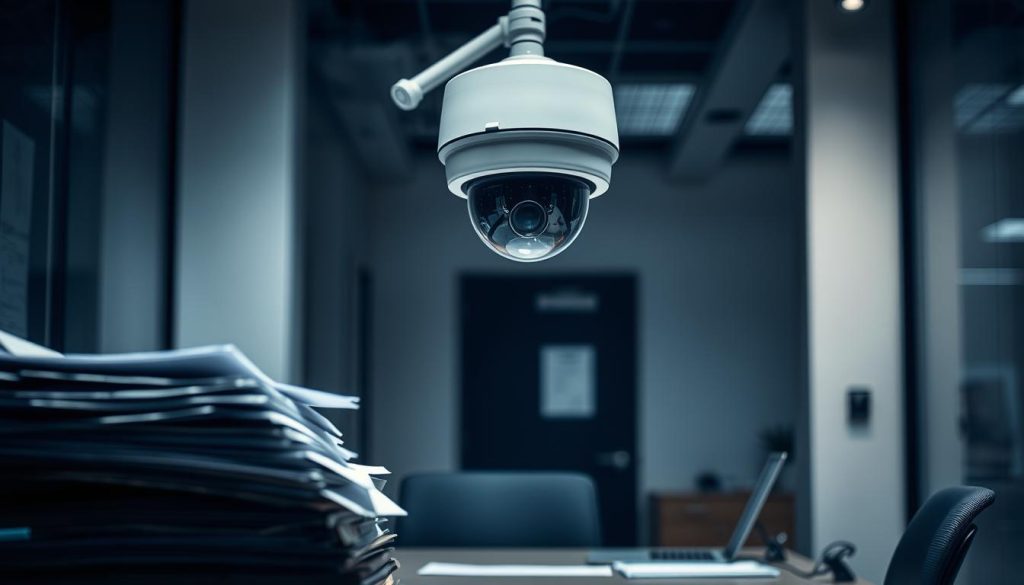
Top PDPA Violation Scenarios
Five recurring patterns account for most regulatory breaches:
- Insufficient signage in recording zones
- Unauthorized employee access to archives
- Failure to redact third-party data in access requests
- Premature deletion during active investigations
- Inadequate vendor management protocols
A logistics company’s 2023 case demonstrates these risks. Their following rules lapses resulted in a $60,000 fine when subcontractors accessed sensitive recordings.
Streamlining Data Management
Effective solutions combine technology with policy improvements:
- Implement role-based access matrices
- Automate retention period enforcement
- Conduct quarterly compliance audits
- Develop incident response playbooks
- Train staff using real-world scenarios
“Organizations with automated systems experience 42% fewer compliance incidents than manual operations” – Singapore Data Governance Report 2024
Continuous monitoring tools now provide real-time alerts for potential violations. These systems track access patterns, flag unusual activity, and maintain detailed audit trails. Proper implementation reduces both risks and operational burdens.
Vendor assessments form another critical component. Third-party providers must demonstrate PDPA alignment through:
- Security certification validations
- Data handling transparency reports
- Breach notification timelines
Regular training refreshers keep teams updated on evolving requirements. Metrics show trained employees make 65% fewer compliance errors when handling data protection tasks.
Future-Proofing Your CCTV Retention Strategy
Staying ahead in surveillance tech requires adapting to rapid advancements. Singapore’s latest cctv solutions now incorporate AI analytics growing 42% annually, while 8K cameras demand new storage approaches.
Quantum-safe encryption prepares systems for future threats. Edge computing reduces bandwidth needs for cctv footage processing. 5G networks enable real-time analytics across multiple locations.
Leading cctv solutions offers now include blockchain authentication for legal evidence. Predictive algorithms automatically adjust retention based on risk patterns. Singapore’s Smart Nation initiative demonstrates successful integration at scale.
Regular skills upgrades ensure teams maximize new capabilities. Proactive planning today prevents costly system overhauls tomorrow.
FAQ
How long is CCTV footage typically stored in Singapore?
Most businesses follow a 30-day retention policy, while homeowners often keep recordings for two weeks. Certain industries, like banking or healthcare, may require longer storage periods.
What legal rules apply to CCTV footage retention?
The PDPA (Personal Data Protection Act) governs how long footage must be kept. Organizations must follow data protection guidelines and ensure secure storage.
Can I store CCTV footage beyond 30 days?
Yes, if needed for investigations or audits. Some latest CCTV solutions offer cloud storage, allowing extended retention while keeping data safe.
What’s the difference between local and cloud storage?
Local storage (DVRs/NVRs) keeps footage on-site, while cloud-based options provide remote access. Each has trade-offs in cost, security, and accessibility.
How do I calculate required storage space?
Factors include video quality, camera count, and retention length. Higher resolution and longer periods demand more storage capacity.
Are there penalties for not following retention rules?
Non-compliance with PDPA can result in fines. Organizations must document policies and regularly review retention practices.
What industries require longer CCTV retention?
Banks, healthcare facilities, and construction sites often need footage kept for months due to regulatory or safety requirements.
How can I ensure my CCTV system is compliant?
Post signage, limit access to recordings, and follow data deletion protocols. Partnering with providers like CCTV Solutions (+65 60135960) helps maintain compliance.


