
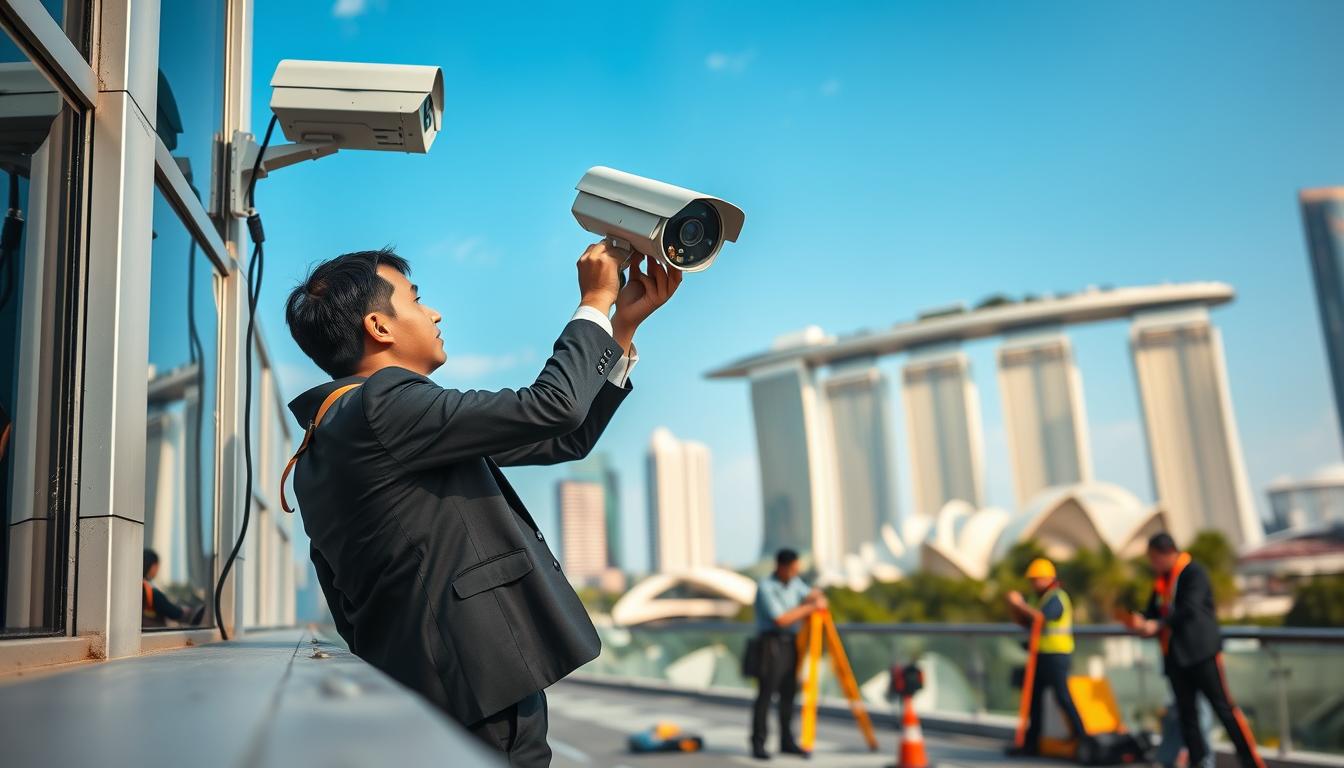
What are the rules for CCTV in Singapore? Step-by-Step
Singapore has seen a 61% surge in surveillance camera usage since 2020, with over 500,000 devices now operating across the island. This growth reflects the nation’s commitment to security while carefully balancing privacy concerns.
The legal framework governing these systems primarily involves the Personal Data Protection Act (PDPA). This legislation sets clear guidelines for how businesses and homeowners handle CCTV footage and data collection.
Recent policy updates have simplified installation for residents. Since May 2023, HDB approval is no longer required for corridor-facing cameras, making security enhancements more accessible to homeowners.
Businesses face stricter requirements under the PDPA, including consent obligations and proper signage. Non-compliance can result in significant penalties, emphasizing the importance of understanding these regulations.
Key Takeaways
- Singapore’s surveillance laws balance security needs with privacy protection
- The PDPA serves as the primary legal framework for CCTV usage
- HDB approval is no longer needed for corridor-facing cameras since May 2023
- Businesses have stricter compliance requirements than homeowners
- Proper installation and placement prevent privacy violations
- Violations can lead to substantial financial penalties
- Professional installation helps ensure legal compliance
Understanding Singapore’s CCTV Legal Foundation
Singapore’s approach to surveillance balances security needs with privacy rights through two key legislative frameworks. These laws create clear boundaries for both residential and commercial camera usage.
The Personal Data Protection Act (PDPA) and Your Responsibilities
The Personal Data Protection Act serves as Singapore’s primary data protection legislation. This protection act establishes how organizations must handle personal information collected through surveillance systems.
Under PDPA Section 4.34, video footage capturing identifiable individuals qualifies as personal data. This includes faces, license plates, or other distinguishing features. Businesses must obtain consent through clear signage when recording public areas.
Compliance requirements include appointing a Data Protection Officer to oversee implementation. Many professionals obtain certifications from recognized bodies like ISC2 or IAPP. Organizations must maintain proper audit trails for potential investigations.
Financial penalties for violations can reach $1 million, emphasizing the importance of proper implementation. The 2021 animal abuse case demonstrated how courts treat footage as evidence while enforcing PDPA standards.
The Community Disputes Resolution Act (CDRA) and Your Neighbors
This legislation addresses residential surveillance concerns between neighbors living within 100 meters. The CDRA protects individuals from intrusive monitoring that affects their property enjoyment.
Neighbors may file complaints with the Community Disputes Resolution Tribunal regarding problematic camera placement. The tribunal can order camera removal, adjustments, or compensation up to $20,000.
Residents should avoid pointing cameras directly at neighbors’ doors or windows. Transparent communication about surveillance purposes often prevents disputes before they begin.
“Proper camera placement respects both security needs and community harmony”
Understanding both acts helps users navigate different responsibilities: PDPA for organizations and CDRA for residential relationships. Regular staff training and privacy impact assessments ensure ongoing compliance with these important laws.
What are the rules for CCTV in Singapore? A Residential Overview
Homeowners enjoy simplified surveillance options under updated guidelines. The Housing and Development Board revised its policies to make security enhancements more accessible.
Since May 2023, residents no longer need approval for corridor-facing devices. This change streamlines the process for installing cctv cameras while maintaining privacy standards.
Different property types follow distinct guidelines. HDB flats, condominiums, and landed homes each have specific requirements under the Personal Data Protection Act and Community Disputes Resolution Act.
Temporary security setups require special handling. Residents dealing with harassment or theft must file police reports and remove cameras within six months.
Key Placement Guidelines
- Angle cameras to avoid neighbors’ windows and private spaces
- Follow the 45-degree rule for HDB corridor installations
- Never point devices at building facades or private balconies
- Smart doorbells must not continuously record common areas
Retention periods balance security needs with data protection principles. The Housing Board recommends keeping cctv footage for 21 days before deletion.
Condominium residents face additional layers of regulation. Management Corporation Strata Title (MCST) by-laws may require approval for exterior cameras and specify duration limits.
“Proper camera placement respects both security needs and community harmony” – Singapore Community Disputes Resolution Tribunal
Landed properties enjoy greater flexibility but must still comply with basic privacy protections. Homeowners should avoid capturing public pathways or neighboring properties.
Community etiquette plays a crucial role in successful surveillance. Notifying neighbors and conducting privacy assessments prevents most disputes before they begin.
Real-world cases demonstrate compliant systems in action. The Teck Whye shoe theft investigation used properly placed cameras as valid evidence without violating privacy rights.
Understanding these residential guidelines helps homeowners choose appropriate devices and maintain neighborhood harmony. For detailed installation procedures, consult our complete guide to CCTV regulations.
Installing CCTV in HDB Flats: A Step-by-Step Guide
HDB residents now enjoy streamlined procedures for enhancing home security through surveillance systems. Understanding proper implementation prevents privacy issues and ensures full compliance with local regulations.
Corridor-Facing Cameras: The New Approval Exemption
Since May 2023, homeowners no longer need approval for corridor-facing devices. This policy change simplifies security upgrades for residents.
Approved models like Hikvision DS-2CE70DF0T-MF meet technical specifications. These cameras must use non-intrusive mounting brackets that don’t damage property surfaces.
Proper installation maintains building aesthetics while providing security coverage. Residents should choose HDB-compliant models to avoid disputes.
Cameras in Common Areas: The Temporary Approval Process
Surveillance in shared spaces requires formal authorization. Residents must file police reports for incidents like harassment or theft.
Submit the report to your Town Council with an installation request. Approval typically comes within 1-2 weeks for valid security concerns.
Temporary permissions last up to six months. After this period, you must remove all devices from common areas.
Failure to remove cameras risks fines reaching $5,000. These rules prevent permanent surveillance in shared spaces.
Critical Restrictions on Camera Angles and Placement
The 45-degree rule ensures devices focus on your doorstep only. This prevents capturing adjacent units’ doors or windows.
Mounting heights must reach at least 2.4 meters for corridor devices. This placement avoids obstructing walkways while maintaining coverage.
Prohibited locations include building facades and private balconies. Window mounts cannot extend beyond immediate doorways.
Weight limits restrict facade units to 1.5 kilograms maximum. These measures protect building integrity and neighbor privacy.
“Professional installation ensures compliance with all technical requirements while maintaining community harmony” – Singapore Security Association
Technical specifications require disabled audio recording without explicit consent. Privacy shields help block neighboring areas from view.
Regular maintenance checks ensure cameras remain properly aligned. Quarterly reviews of angles and signage prevent gradual compliance drift.
PSI-licensed professionals handle paperwork and placement correctly. DIY installations void insurance and violate regulations.
Notifying neighbors demonstrates courtesy and prevents disputes. Many conflicts resolve through transparent communication about security purposes.
Following these steps creates effective protection while respecting community standards. Proper implementation balances security needs with privacy considerations.
Rules for Private Properties: Condos and Landed Homes
Condominium and landed home owners face different compliance requirements for security camera installations. Each property type operates under specific regulatory frameworks that balance security needs with privacy protections.
Navigating Condominium MCST By-Laws
Condominium residents must follow Management Corporation Strata Title regulations. These by-laws typically require formal approval for exterior cctv cameras installations.
The approval process usually takes about two weeks. Residents must submit technical specifications and floor plans. MCST rules may restrict certain camera types to maintain community standards.
Pan-tilt-zoom models often face operating hour restrictions. This prevents excessive coverage that might disturb other residents. Violations can lead to significant financial penalties.
A 2022 Bukit Timah case demonstrated enforcement. The management issued a $5,000 fine for unauthorized pool area monitoring. This highlights the importance of proper compliance.
Industry reports show approximately 30% of applications get rejected. Common reasons include improper angles or excessive coverage areas. Consulting your MCST before installation prevents issues.
Freedom and Limits for Landed Property Owners
Landed homeowners enjoy greater flexibility with surveillance placement. They can install cameras anywhere within their private compound. This includes gates, driveways, and perimeter areas.
Mounting heights up to 3 meters are generally permitted. However, property owners must avoid capturing public spaces. This includes sidewalks and neighboring homes.
A 2023 Sentosa Cove case illustrates these boundaries. Authorities issued a warning for cameras overlooking a shared beach access path. The incident emphasized privacy concerns for adjacent properties.
Both property types must handle cctv footage according to PDPA standards. Condominiums face additional MCST regulation layers. These may include annual audits and insurance requirements.
Professional installation helps navigate these complex rules. Experts ensure systems meet all technical and legal standards. For guidance on proper installation, consult our professional installation guide.
Understanding these distinctions ensures effective surveillance implementation. Property owners can maintain security while respecting regulatory boundaries and neighbor privacy.
Smart Doorbells and Peephole Cameras: Special Considerations
Modern surveillance technology offers innovative alternatives to traditional security systems. Smart doorbells and peephole cameras provide discreet monitoring with advanced features.
These devices blend seamlessly into residential settings while maintaining robust security functions. Understanding their proper implementation ensures both effectiveness and legal compliance.
HDB’s Stance on Modern Surveillance Devices
The Housing Board permits smart door viewers that don’t modify building exteriors. Devices must not extend more than 5cm from door surfaces.
Battery-powered models receive preference for their non-invasive installation. Approved options include Ring Doorbell 4 and Hikvision DS-KD8003-IME1.
These units provide HD monitoring without damaging property structures. They must avoid capturing adjacent units’ activities.
For common areas, Town Council approval remains necessary. This mirrors traditional CCTV requirements for shared spaces.
Choosing Compliant Technology
Selecting appropriate devices involves several technical considerations. Look for models with 180-degree field-of-view limits.
Privacy shields help block neighboring doorways from view. Local storage options reduce cloud data security risks.
Preferred features include 1080p resolution and automatic deletion after 30 days. Disable audio recording without explicit consent.
Motion-activated recording reduces unnecessary footage collection. This aligns with data minimization principles.
Comparative advantages over traditional systems include easier installation. Many models require no drilling or permanent modifications.
Integration with voice commands adds convenience for daily use. Real-time alerts provide immediate security notifications.
“Proper device selection ensures both security effectiveness and regulatory compliance” – Singapore Security Technology Association
The 2022 Boon Lay case demonstrated practical applications. Doorbell footage helped identify a neighborhood issue.
However, improper camera angles made the evidence inadmissible in court. This highlights the importance of correct placement.
Professional installers recommend HDB-approved models and optimal positioning. They avoid common pitfalls like excessive coverage areas.
Understanding these considerations helps residents leverage modern technology effectively. It maintains security while respecting legal boundaries and community harmony.
Business CCTV Systems: Complying with the PDPA
Commercial surveillance operates under stricter guidelines than residential setups. Organizations must navigate complex legal requirements when implementing monitoring systems.
The Personal Data Protection Act establishes clear boundaries for business operations. This framework protects individual rights while allowing necessary security measures.
Proper implementation requires understanding different zone classifications. Public and private spaces follow distinct compliance protocols.
Public vs. Non-Public Areas: Different Rules Apply
Publicly accessible spaces like retail floors have limited exemptions. Visitors generally expect observation in these environments.
Non-public zones require explicit consent and clear signage. Staff rooms and offices fall under this category.
The distinction affects how organizations handle personal data collection. Different rules govern footage retention and access.
Fulfilling Notification and Consent Obligations
Visible notices must appear at all entrances to monitored areas. Standard dimensions measure 90cm by 60cm for optimal visibility.
Notices should state clear purposes like security monitoring. This fulfills consent notification requirements under the protection act.
Written consent remains necessary for employee monitoring in non-public zones. This protects individual privacy rights.
The “Reasonable Purposes” Requirement for Surveillance
Camera coverage must align with legitimate business needs. Perimeter monitoring for factory security represents acceptable use.
Excessive coverage beyond operational requirements violates regulations. The 2022 logistics case demonstrated this principle.
That company faced penalties of $75,000 for inadequate security practices. Their system captured unnecessary employee areas.
Businesses must appoint Data Protection Officers to oversee compliance. These professionals often hold certifications from bodies like ISC2.
Regular audits ensure systems meet evolving standards. Penetration testing checks network-connected devices.
Sector-specific rules create additional layers of regulation. F&B outlets may record dining areas but never restrooms.
Healthcare facilities need special clearance for patient zones. These environments demand heightened privacy protections.
“Proportional coverage balances security needs with privacy expectations” – Singapore Data Protection Commission
Annual training programs keep staff updated on best practices. Sessions cover incident response and access request handling.
Understanding these obligations helps organizations implement effective systems. Proper compliance avoids fines while maintaining trust.
Legally Accessing, Using, and Retaining CCTV Footage
Managing recorded surveillance material involves careful attention to legal protocols. Both individuals and organizations must understand proper procedures for handling video evidence.
The Personal Data Protection Act establishes clear guidelines for footage management. These rules protect privacy while allowing legitimate security uses.
Organizations must balance security needs with data protection responsibilities. Proper handling prevents legal issues and maintains public trust.
How Individuals Can Request Their Footage
People have legal rights to access recordings containing their information. PDPA Section 21 grants this access through formal requests.
Requesters must complete subject access forms with identification details. They should specify exact dates and times of relevant recordings.
Processing fees range between $18-50 depending on request complexity. Organizations must respond within 72 hours of receiving complete documentation.
Released cctv footage must protect third-party identities. Redaction techniques like blurring or masking ensure others’ privacy.
Section 21(3)(c) prohibits releasing unredacted material containing multiple people. This prevents unauthorized disclosure of others’ personal data.
Establishing Compliant Data Retention Policies
Organizations should implement clear retention guidelines for surveillance material. Standard security purposes typically warrant 21-30 day storage periods.
Extended retention applies to ongoing investigations or legal disputes. Financial institutions often keep footage longer due to regulatory requirements.
Automated deletion systems help maintain compliance with storage limits. Encryption methods like AES-256 protect stored data from unauthorized access.
Documentation should outline retention periods and deletion procedures. Regular reviews prevent unnecessary data accumulation.
“Proper retention policies balance investigative needs with privacy protection” – Data Protection Commission
The 2021 convenience store case demonstrated retention violations. A $45,000 penalty resulted from deleting robbery footage during an active dispute.
Cloud storage with Singapore-based servers enhances data security. Chain-of-custody documentation maintains evidence integrity for legal purposes.
Staff training ensures proper handling of access requests and breaches. Simulation exercises prepare teams for real-world scenarios within legal timelines.
Understanding these protocols helps organizations manage surveillance material responsibly. It balances individual rights with security needs under Singapore laws.
Balancing Security with Privacy: Community Etiquette
Effective surveillance requires thoughtful consideration of both security needs and neighbor relations. Proper etiquette prevents conflicts while maintaining protection benefits for everyone involved.
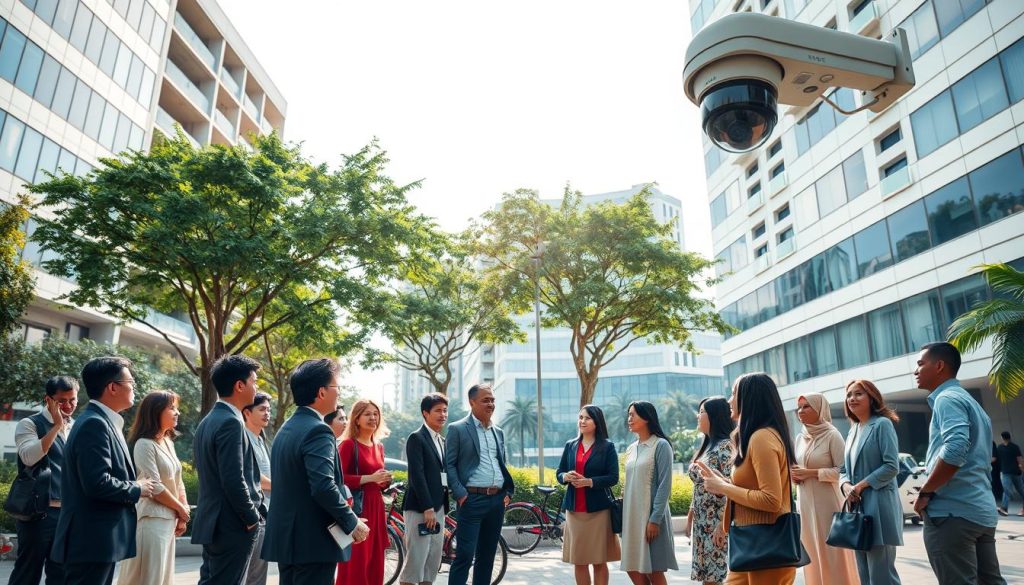
Conducting a Privacy Impact Assessment
Before installing any surveillance devices, evaluate potential privacy impacts. This assessment identifies how cameras might affect neighbors and shared spaces.
Many town councils provide free templates for these evaluations. They help residents consider camera angles and coverage areas responsibly.
Technical solutions like privacy masking software automatically blur sensitive zones. This protects individual privacy while maintaining security coverage.
Seasonal reviews prevent issues as sunlight patterns change throughout the year. Adjustments ensure cameras don’t inadvertently capture private areas.
Steps for Resolving Camera Disputes with Neighbors
Most conflicts begin with simple misunderstandings about surveillance purposes. Polite discussions often resolve concerns before they escalate.
The Mediation Center Singapore handles approximately 15 camera-related disputes monthly. About 40% involve improper angles that invade privacy.
If direct communication fails, the Community Disputes Resolution Tribunal offers formal mediation. This body can order camera removal or adjustments when necessary.
Compensation awards can reach $20,000 for serious privacy violations. Understanding these steps helps residents address concerns properly.
“Proactive communication and technical safeguards create harmonious surveillance environments” – Community Relations Specialist
Rental property owners must inform tenants about existing cameras. Clear communication prevents surprises and maintains trust between parties.
Multi-lingual signage helps diverse neighborhoods understand camera purposes. This aligns with notification requirements under local data protection laws.
Insurance providers may require proof of compliant installations for coverage. Documentation and regular audits provide liability protection.
Professional installers assist with placement to avoid common disputes. Their expertise ensures devices meet both technical and community standards.
Understanding these etiquette practices fosters neighborhood harmony. Surveillance enhances security without compromising privacy or leading to legal issues.
Prohibited Areas and High-Risk Surveillance Zones
Singapore maintains strict boundaries for surveillance placement to protect fundamental privacy rights. Certain locations demand special consideration under local regulations.
Understanding these restrictions prevents serious legal consequences. Violations can lead to substantial fines or even criminal charges.
Absolute Bans: Bathrooms, Changing Rooms, and Helper Quarters
Recording private spaces faces absolute prohibitions under multiple laws. Bathrooms and changing rooms receive maximum protection due to their intimate nature.
The Personal Data Protection Act specifically forbids monitoring these areas. Section 509 of the Penal Code adds criminal penalties for voyeurism.
Helper quarters require special handling under employment regulations. Standard FDW contracts now include clauses prohibiting cameras in sleeping areas.
A 2021 case demonstrated enforcement when an employer faced $15,000 fines. They installed bathroom cameras without proper consent or signage.
Written permission remains the only exception for monitoring helper rooms. Visible notices must accompany any approved devices.
Special Rules for Sensitive Locations
Childcare centers and religious sites operate under enhanced protections. These environments serve vulnerable groups needing extra security.
Unauthorized surveillance here often carries doubled financial penalties. Special clearance requirements apply before installation.
Medical facilities follow similar protocols for patient privacy. Cameras must never capture treatment areas or consultation rooms.
Construction sites and animal facilities have unique safety needs. They may install devices but must avoid restroom angles completely.
The Agri-Food and Veterinary Authority provides specific guidelines. These ensure animal welfare without compromising worker privacy.
“Respecting spatial boundaries maintains dignity while ensuring security” – Privacy Protection Advisory
Temporary surveillance gets permitted during genuine emergencies. Valid police reports for harassment or domestic abuse enable short-term monitoring.
These installations require periodic reviews and automatic deletion. Devices must remove once threats subside.
Businesses should implement privacy masking and angle restrictions. Technical safeguards prevent accidental violations of prohibited zones.
High-risk industries face quarterly compliance audits. Residential properties undergo random spot checks for proper placement.
Understanding these prohibitions helps users implement ethical surveillance. It balances security needs with fundamental privacy rights.
Penalties for Misusing CCTV Systems and Footage
Singapore’s regulatory framework imposes serious consequences for improper surveillance practices. Understanding these penalties helps organizations and individuals maintain legal compliance while using security systems.
The Personal Data Protection Commission actively enforces these standards. In 2023 alone, they issued 23 penalties for cctv-related breaches across various industries.
Financial Penalties Under the PDPA
Organizations face substantial fines for violating the data protection act. Penalties can reach $1 million for serious breaches of personal data protection rules.
Recent cases demonstrate enforcement patterns. A logistics company received a $75,000 fine for inadequate security practices. A retail chain faced $110,000 in penalties for improper cctv footage handling.
Fine amounts consider several factors. These include negligence scope and corrective action promptness. The number of affected individuals also influences final penalty calculations.
Criminal Prosecution for Severe Violations
Extreme cases may lead to criminal charges under Section 509 of the Penal Code. This applies to voyeurism or harassment using surveillance systems.
A landlord received an 8-month jail sentence in 2022. They secretly recorded tenants in private areas without consent. Such violations demonstrate clear privacy breaches.
Company directors face personal liability for violations. Investigations may reveal knowledge of non-compliant practices. Professional indemnity insurance often excludes coverage for PDPA violations.
“Proper implementation prevents both financial penalties and criminal liability” – Singapore Legal Advisory
The PDPC encourages whistleblowing for reporting misuse. Protected individuals can report concerns through established channels. Organizations must investigate complaints within 14 days.
Real cases highlight cross-border risks. A hotel chain shared guest footage with overseas marketers. This resulted in both criminal charges and administrative penalties.
Mitigation steps include isolating affected devices and forensic imaging. Providing credit monitoring services to victims follows NIST cybersecurity frameworks.
Regular staff training remains the best defense against violations. About 85% of breaches trace to human error rather than technical failures.
Enforcement actions show incomplete logs lead to penalties. Documentation and Data Protection Officer oversight prove crucial for maintaining compliance.
Understanding these penalties helps prioritize legal adherence. Robust security measures prevent reputational damage while maintaining effective surveillance.
Choosing a Professional and Licensed CCTV Installer
Selecting the right installation partner ensures your security system meets all legal standards. Certified professionals handle technical requirements while maintaining full compliance with local regulations.
Proper installation prevents common issues like privacy violations or insurance voids. It also saves time on paperwork and approval processes.
Verifying a Provider’s PSI License
All legitimate installers must hold a Grade PL1 license with CCTV-SP certification. This credential falls under the Private Security Industry Act requirements.
Verify credentials through the Singapore Police Force online portal. Simply enter the company name or license number for instant validation.
Unlicensed operators create serious risks for property owners. A 2023 retail case showed how improper installations voided insurance coverage entirely.
Look for technicians with SPF-approved training in privacy laws. These professionals understand angle restrictions and signage requirements thoroughly.
Key Questions to Ask Before Hiring
Start by requesting current SPF license documentation. Reputable companies provide this information willingly during initial consultations.
Ask about warranty periods for both equipment and labor. Reliable providers typically offer comprehensive coverage for several years.
Inquire about emergency call-out procedures for after-hours issues. Quick response times prevent security gaps during critical situations.
Discuss data handling protocols that match PDPA standards. Proper data protection ensures personal data remains secure throughout the system’s operation.
Confirm who handles building management approval paperwork. Good installers manage this process, saving homeowners weeks of processing time.
“Professional installation combines technical expertise with regulatory knowledge, ensuring systems work effectively while respecting legal boundaries”
Review maintenance agreements before signing any contracts. Reputable providers offer 3-year plans with bi-annual system checks.
These regular inspections prevent 80% of compliance issues. They address camera drift or data storage failures proactively.
Ensure contracts include technology upgrade options. This allows for future expansion as security needs evolve over time.
Choose installers with substantial liability insurance coverage. $5 million policies provide added protection against unforeseen incidents.
Understanding these selection criteria helps users find reliable partners. Professional services ensure cctv cameras function properly while meeting all legal requirements.
Your Guide to Implementing Compliant CCTV Security
Singapore’s evolving security environment combines advanced monitoring technologies with robust privacy safeguards for all residents. With 98% of professional installers meeting compliance standards, proper implementation ensures both protection and legal adherence.
Key steps include consulting PDPC guidelines before installation and using certified equipment with encryption features. Emerging technologies like AI analytics and 5G connectivity offer enhanced capabilities but require careful integration to avoid privacy overreach.
Ongoing compliance demands regular audits, staff training, and proper documentation maintenance. Businesses should appoint Data Protection Officers while residents should choose devices with local storage and privacy features.
Professional associations provide updates on regulation changes, helping users avoid common pitfalls like unauthorized recordings. Ultimately, compliant security systems protect both property and privacy while fostering community trust.
FAQ
Do I need approval to install a CCTV camera outside my HDB flat?
For corridor-facing cameras, you typically do not need formal approval from the HDB or your Town Council if the device meets specific size and technical criteria. However, installing cameras in other common areas still requires a temporary permit.
What are the main laws governing CCTV use in Singapore?
The primary legislation is the Personal Data Protection Act (PDPA), which regulates the collection, use, and disclosure of personal data, including footage. The Community Disputes Resolution Act (CDRA) also applies, helping to resolve neighbor disputes over privacy invasions.
Can my neighbor point a camera directly at my windows or main door?
No. Surveillance that intrudes on a neighbor’s private living spaces, like bedrooms or bathrooms, is generally prohibited. Cameras should be positioned to monitor only your own property to avoid infringing on others’ privacy and to prevent potential legal disputes.
Are smart doorbells with cameras allowed in HDB flats?
Yes, but they must be compliant. HDB allows these devices if they function as a digital door viewer, replacing the traditional peephole. Stand-alone smart doorbells that are mounted on the wall may be subject to the same rules as other CCTV cameras.
What are the rules for businesses using CCTV?
Businesses must comply with the PDPA. This includes notifying individuals they are under surveillance, obtaining consent where required, and only collecting footage for legitimate business purposes. Different rules apply for cameras in public versus non-public areas.
How long can I legally keep recorded CCTV footage?
Under the PDPA, you should not retain personal data, including footage, longer than necessary for the purpose it was collected. For security purposes, a retention period of 30 days is common, but the exact timeframe should be justified by your specific needs.
Where is it absolutely forbidden to install a CCTV camera?
It is illegal to place cameras in areas where individuals have a high expectation of privacy. This includes bathrooms, changing rooms, and helper’s quarters. Surveillance in these areas can lead to severe penalties and criminal prosecution.
What happens if I misuse my CCTV system or its footage?
Misuse can result in significant penalties. The Personal Data Protection Commission (PDPC) can impose financial fines for PDPA breaches. In severe cases, such as voyeurism, offenders may face criminal charges under other laws.
Should I hire a professional to install my CCTV system?
Hiring a licensed installer is highly recommended. Professionals understand compliance requirements and can ensure proper placement. Always verify that your provider holds a valid Police Security Industry (PSI) license.
How can I request CCTV footage that I appear in?
Individuals have the right to request access to their personal data. You should contact the organization or individual that owns the CCTV system. They are obligated to provide the footage, or a copy of it, unless specific exceptions under the PDPA apply.


