

What are the 7 components of CCTV?
The success of a security camera system depends on its CCTV components. Knowing these parts well can greatly improve surveillance, which is key in busy places like Singapore. Each part has a special job. Together, they form a strong system for watching and recording, helping to prevent crime and document incidents.
To understand a good CCTV system better, let’s look at its seven key parts. These include the cameras and the tools needed for them to work well. Knowing about these parts helps users choose the right security for their needs. You can learn more about CCTV components here.
Key Takeaways
- Understanding the CCTV components is key for good surveillance.
- In Singapore, solid security camera systems boost safety for everyone.
- A well-made CCTV system can stop crime and offer important evidence.
- Each part has a unique role in the system’s work.
- Picking the right parts can make your security setup better.
Understanding the Role of CCTV in Security
CCTV systems have changed a lot in recent years. They are key in keeping places safe by watching and recording what happens. They help stop crime and give important clues when needed.
The Importance of Surveillance
Surveillance is key to making places safer. It makes people feel more secure. Just knowing cameras are around can stop some crimes.
In busy cities like Singapore, CCTV is even more important. It lets people watch what’s happening live. This helps respond quickly to problems, making everyone safer.
Enhancing Safety in Different Environments
CCTV works well in many places, like schools, government buildings, and shops. It fits the needs of each place, making security better. For example, in schools, CCTV helps keep students safe while they learn.
In stores, it helps prevent theft and makes shopping safer. CCTV makes our public and private spaces safer. It helps us feel more secure everywhere we go.
Introduction to CCTV Technology
CCTV technology has changed a lot over the years. Now, we have many options for watching over places. There are two main types: analog and digital systems. Knowing the difference helps pick the best CCTV setup.
Analog vs. Digital Systems
Analog systems are the old-school way of CCTV. They send video as a continuous signal. This makes them simple but they don’t have the best image quality.
They are easy to set up and might be cheaper for small areas. But, they don’t have the cool features of newer systems.
Digital systems, like those with IP cameras, are a big step up. They send video in a compressed format. This means better image quality and more flexibility in how you install them.
You can watch feeds from anywhere, making monitoring easier. Features like motion detection and smart video analytics make digital systems more effective.
Digital systems are changing CCTV technology. They offer flexibility and high-quality images. This is great for both businesses and homes looking to improve security.
What are the 7 components of CCTV?
Knowing the key parts of CCTV systems is vital for good surveillance. Each part is important for a complete security solution. Here’s a quick look at the CCTV components that make a system work well.
Overview of Essential Components
The seven main parts of CCTV systems are:
- Cameras: The core of any security setup, they capture the footage.
- Monitoring Stations: Places with screens to watch the live feed and recorded videos.
- Video Recording Systems: Devices that keep and manage the captured videos, making them easy to find.
- Supporting Accessories: Stuff like mounts, lenses, and audio gear that make cameras better.
- Data Storage Solutions: Hard drives or cloud storage that keep the recorded videos safe for later use.
- Power Supply: Needed for the cameras and other parts to work.
- Video Management Software: Offers tools for viewing, managing, and analyzing video footage well.
Each part helps the CCTV system work better, making sure surveillance meets specific security needs.
Camera Types in CCTV Systems
CCTV systems use different types of cameras for security. Choosing between IP and analog cameras is key. Knowing the differences helps pick the right camera.
IP Cameras vs. Analog Cameras
IP cameras are a step up in surveillance tech. They offer better resolution and more flexibility. They send data over a network for remote access.
Analog cameras are good for older systems. They’re easy to install and reliable. They might not have the high definition of IP cameras but work well where high quality isn’t needed.
Different Configurations: Dome, Bullet, and PTZ
Choosing the right camera setup is important. Here are some common types:
- Dome cameras: Great for indoor use, they’re discreet and perfect for retail and office settings.
- Bullet cameras: Built tough, they’re best for outdoor use. They’re visible and help prevent theft.
- PTZ cameras: These cameras can move and zoom. They’re good for covering large areas with one device.
Knowing about different CCTV cameras helps users choose the best for their needs. This makes surveillance more effective in various settings.
Monitoring Stations: Where Surveillance Happens
Monitoring stations are the heart of security operations. They allow people to watch live feeds and recorded videos. This setup helps teams respond quickly to any issues. It’s key to have a good CCTV system and monitoring stations for top security.
Setting Up Effective Monitoring Stations
Creating effective monitoring stations requires careful planning. A good setup includes:
- Multiple screens for watching different camera views
- High-resolution monitors for clear images
- Comfortable seating for long monitoring hours
- Ergonomic designs for easy access to controls
Modern software is also vital. It lets operators monitor from mobile devices. This makes monitoring more flexible and helps in preventing security issues.
Video Recording Systems Explained
It’s important to know about the different video recording systems for your CCTV setup. The main ones are Digital Video Recorders (DVR) and Network Video Recorders (NVR). Each has its own features, depending on the cameras and what you need.
DVRs vs. NVRs: Key Differences
DVRs work with analog cameras, changing their signals to digital for storage. This means they often have lower resolution. NVRs, on the other hand, handle digital cameras, keeping video quality high and flexible.
- DVR systems are good for old analog setups and are easy to use.
- NVR systems are better for new installs, with features like remote access and high-definition recording.
Choosing the right system is key for your CCTV’s performance and storage. Knowing the differences helps you make the best choice for your security needs.
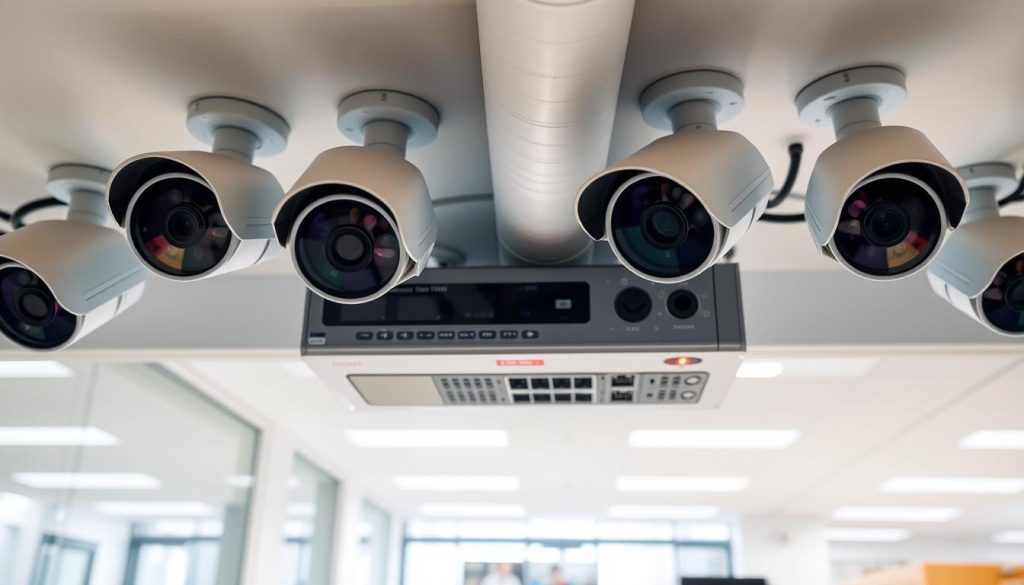
Supporting Accessories for CCTV Systems
For a CCTV system to work well, you need the right accessories. Cables, connectors, and power solutions are key. They make sure your system runs smoothly and effectively.
Types of Cables and Connectors
Cables and connectors are basic but important. RG59 Siamese coaxial cables are great for commercial use. They carry both video and power, making installation easier.
Using good connectors keeps connections strong and clear. This is important for keeping video quality high.
Importance of Power Sources
Power sources are vital for CCTV systems. Good power management is key. It can come from multi-camera power boxes or Power over Ethernet (PoE).
A reliable power source keeps all cameras working. This is essential for constant surveillance. Choosing the right power solutions boosts your system’s reliability.
Data Storage Solutions for CCTV Systems
Effective data storage for CCTV is key to any surveillance system. The right storage keeps video footage safe and easy to access. Surveillance-grade hard drives are vital for reliable video data handling, even in busy environments.
Understanding Surveillance-Grade Hard Drives
Surveillance-grade hard drives are not like regular ones. They’re made for non-stop recording, which is common in CCTV systems. These drives handle many video streams well and rarely fail. They offer better durability, performance, and error recovery.
When looking for secure video storage, think about these:
- Capacity: Make sure the drive can hold all the needed footage.
- Speed: Choose drives that support fast read/write speeds for smooth playback.
- Reliability: Pick drives built to handle constant recording stress.
Choosing the right surveillance-grade hard drives boosts your CCTV system’s reliability and efficiency.
Video Management Software: The Control Center
Video management software (VMS) is the heart of modern surveillance systems. It brings together video feeds from different sources. This makes it easy to manage, store, and find footage.
A user-friendly interface is a big plus. It lets operators quickly handle incidents and check recordings. This is key for fast and effective response.
VMS also meets regulatory standards and offers advanced features. It can do real-time analytics and send out alerts. This helps spot unusual activities fast, boosting security everywhere.
Plus, VMS lets users monitor their systems remotely. This means they can keep an eye on things even when they’re not there. As tech gets better, VMS will become even more important for CCTV systems.
FAQ
What are the seven essential components of a CCTV system?
A CCTV system has seven key parts. These include cameras, monitoring stations, and video recording systems. You also need supporting accessories, data storage, and a power supply. Lastly, video management software is vital for managing the system.
How does a CCTV system enhance security?
CCTV systems boost security by monitoring and recording activities in real-time. This helps prevent crime and provides evidence for investigations. It also makes people feel safer in communities and businesses.
What is the difference between analog and digital CCTV systems?
Analog CCTV systems are old and basic. Digital systems, on the other hand, use network technology. They offer better image quality, remote access, and more flexibility.
What types of cameras are used in CCTV systems?
CCTV systems use different cameras. IP cameras are high-resolution and flexible. Analog cameras are also used. There are dome, bullet, and PTZ cameras for various needs.
What should I consider when setting up monitoring stations?
When setting up monitoring stations, think about the layout and equipment. Use screens or multiple monitors. Choose software that allows remote access and mobile monitoring for better visibility and response.
How do DVRs and NVRs differ in video recording systems?
DVRs work with analog cameras and convert video to digital for storage. NVRs are for digital systems and store video directly in digital form. This offers better quality and flexibility.
What supporting accessories are necessary for a CCTV installation?
You need cables, connectors, and reliable power sources for CCTV installations. RG59 Siamese coaxial cables are good for commercial use because they perform well.
Why are surveillance-grade hard drives important for CCTV systems?
Surveillance-grade hard drives are made for CCTV systems. They handle continuous video data well. This ensures efficient management and keeps recorded footage accessible and intact.
What is the role of video management software in CCTV systems?
Video management software (VMS) is key for CCTV systems. It integrates video feeds and helps manage and retrieve footage. It also supports real-time analytics, meets regulatory standards, and allows remote monitoring.


