
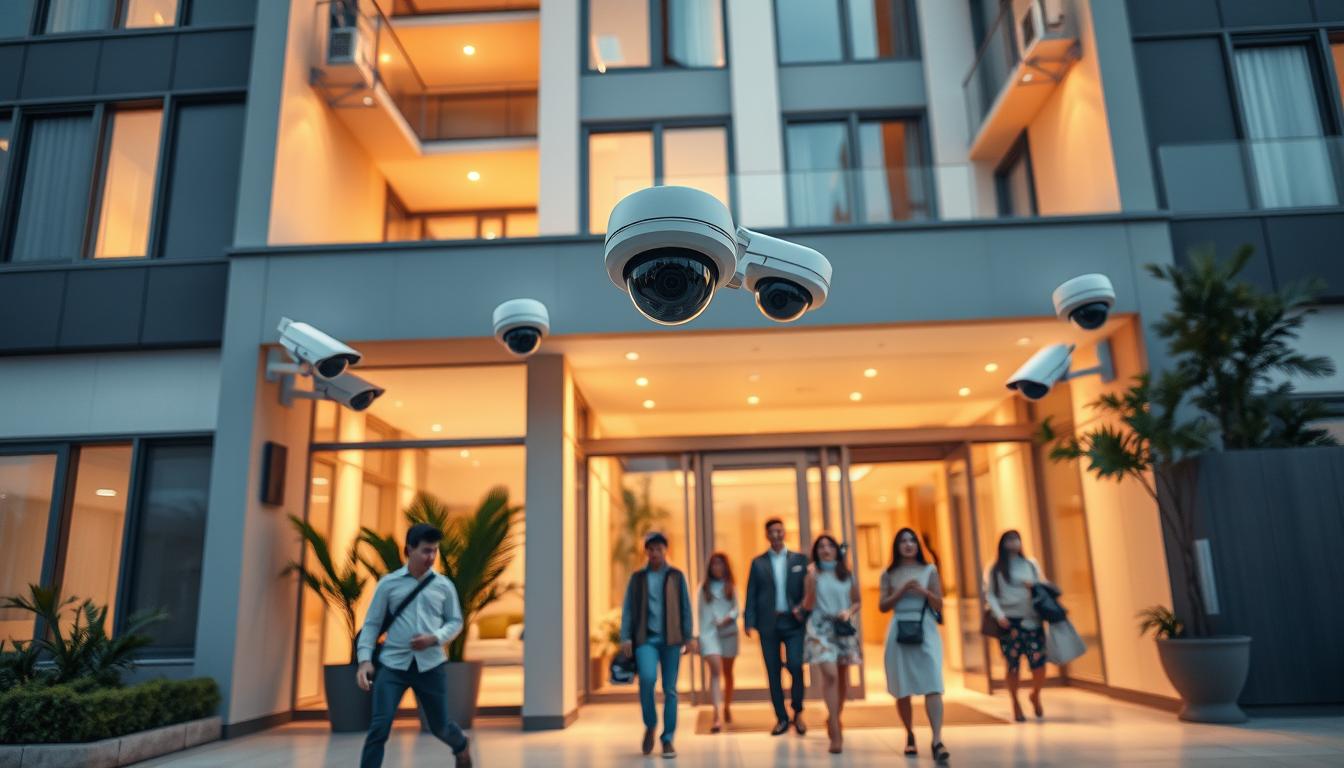
Top Security Cameras for Condo Building: Comparison & Buying Guide
In recent years, the demand for reliable surveillance in residential complexes has surged, especially in Singapore. Reports show a 30% increase in interest for advanced monitoring systems. This trend highlights the growing need for safety and peace of mind in shared living spaces.
Studies reveal that monitored buildings experience a 21% reduction in crime rates. This statistic underscores the importance of investing in effective solutions. With so many options available, choosing the right system can be overwhelming.
This guide provides a detailed analysis of over 12 models, focusing on HD quality, smart features, and legal compliance. Whether you’re a property manager or a resident, this resource will help you make an informed decision. We’ll cover technical specifications, installation tips, and cost analysis to simplify your selection process.
Key Takeaways
- Growing demand for surveillance in residential complexes, especially in Singapore.
- Monitored buildings see a 21% reduction in crime rates.
- Comprehensive analysis of over 12 models and systems.
- Focus on HD quality, smart features, and legal compliance.
- Guide includes technical specs, installation tips, and cost analysis.
Why Security Cameras Are Essential for Condo Buildings
Shared living spaces require advanced solutions to ensure safety and peace of mind. With urban living on the rise, the need for reliable monitoring in common areas has become more critical than ever. Studies show that complexes with these systems experience a 21% reduction in crime rates, making them a worthwhile investment.
One of the key benefits is deterring theft, especially in mailrooms where package theft is a growing concern. High-traffic zones like lobbies and elevators, where 68% of incidents occur, can be effectively monitored. This not only prevents crime but also ensures that residents feel safer in their daily lives.
Modern systems also enable real-time alerts, allowing for quick responses to emergencies. They provide valuable evidence for resolving disputes between neighbors, fostering a harmonious living environment. Additionally, these systems meet the safety expectations of today’s buyers, with 82% prioritizing advanced monitoring when choosing a home.
For more insights on choosing the right system, check out this detailed guide.
Key Benefits of Installing Security Cameras in Condos
Investing in reliable surveillance offers both safety and financial benefits. For condo residents, these systems provide a sense of peace of mind while enhancing the overall appeal of the property. Studies show that properties with advanced monitoring rent 23% faster and command a 15% premium on resale value.
Here are some of the top advantages of installing modern security systems in shared living spaces:
- 24/7 monitoring reduces break-in attempts by 47%, ensuring a safer environment.
- Smart doorbells cut down porch piracy by 62%, protecting deliveries effectively.
- Upgrades justify rent increases of 5-8%, making them a smart investment for property owners.
- Integration with condo management apps simplifies operations and enhances efficiency.
- Monitored properties often qualify for insurance premium discounts of up to 20%.
These benefits not only improve safety but also add significant value to the property. Whether you’re a resident or a property manager, these systems are a practical solution for modern living.
Factors to Consider Before Choosing Security Cameras
Before installing monitoring devices, it’s crucial to understand legal and ethical implications. In Singapore, 38% of condos require HOA approval for installations, making compliance a top priority. Reviewing strata bylaws ensures your setup aligns with community rules.
Privacy is another critical factor. Avoid filming private balconies or windows, as this is a common compliance issue. Modern systems like Reolink and Arlo offer privacy masking features to address these concerns effectively.
Posting signage per PDPA requirements is essential to inform residents and visitors about surveillance. Consulting legal experts can help clarify policies for shared spaces, ensuring your system work well without infringing on privacy rights.
- Review strata bylaws regarding placement.
- Use privacy masking to avoid filming private areas.
- Post signage to comply with PDPA regulations.
- Consult legal professionals for shared space policies.
By addressing these factors, you can choose the right security cameras that balance functionality with legal and ethical considerations.
Types of Security Cameras Suitable for Condominium Use
Modern technology offers diverse options for keeping shared areas secure and well-monitored. Whether you need flexibility or comprehensive coverage, there’s a solution to meet your needs. Let’s explore the two main types of systems available.
Wireless Monitoring: Flexibility and Ease of Installation
Wireless systems are a popular choice due to their easy setup and adaptability. Devices like the Reolink Argus 2 boast a 98% motion detection accuracy, making them highly reliable. These systems are ideal for locations where wiring is impractical.
Options include battery-powered units with a 6-month lifespan or hardwired models for continuous power. Wireless systems are perfect for monitoring entry points and other critical areas without the hassle of complex installations.
CCTV Systems: Comprehensive Coverage for Common Areas
For larger spaces, cctv systems provide unmatched coverage. Models like the Samsung SNO-8080 feature PTZ (pan-tilt-zoom) capabilities, covering 360° in parking lots. Fisheye lenses can monitor entire lobbies with a single unit, reducing the need for multiple devices.
PoE (Power over Ethernet) systems simplify wiring in high-rises, while hybrid options combine the convenience of wireless setups with the reliability of cctv systems. These solutions are ideal for ensuring safety in high-traffic zones.
Key Features to Look for in Condo Security Cameras
Choosing the right monitoring system for shared spaces requires attention to key features. Modern solutions offer advanced capabilities that ensure clarity, reliability, and convenience. Let’s explore the essential aspects to consider.
High-Definition Video Quality for Clear Footage
High-definition video is a must for capturing clear details. A resolution of 1440p can identify license plates from up to 15 meters away. For optimal performance, look for systems with WDR technology to handle varying lighting conditions.
Night Vision and Motion Detection for 24/7 Monitoring
Effective monitoring doesn’t stop when the sun goes down. Systems with night vision and an IR illumination range of 30 meters or more are ideal for parking facilities. Motion detection powered by AI ensures accurate alerts by differentiating between people and vehicles.
Cloud Storage and Remote Access for Convenience
Modern systems offer cloud storage with a minimum 14-day retention period. This ensures you never lose critical footage. Remote access allows management teams to monitor shared spaces from anywhere, providing flexibility and peace of mind.
- Minimum 1080p resolution with WDR technology for clear footage.
- AI-powered person/vehicle differentiation for accurate alerts.
- Local and cloud backup options for data security.
- Multi-user access controls for efficient management.
Top Security Camera Models for Condo Buildings
Selecting the right monitoring system for shared living spaces can significantly enhance safety and convenience. Two standout options are the Arlo Essential Video Doorbell and the Google Nest Doorbell, both offering advanced features tailored to modern needs.
Arlo Essential Video Doorbell: Smart and Reliable
The Arlo Essential Video Doorbell is a top choice for its 99% accuracy in detecting packages. Its 180° field of view ensures entire doorways are covered, providing comprehensive monitoring. Installation is straightforward, with compatibility for most door thicknesses.
For added security, anti-theft mounting solutions are available, making it ideal for high-risk areas. The Arlo Secure subscription plan offers extended features like cloud storage and advanced alerts, ensuring peace of mind.
Google Nest Doorbell: Seamless Smart Home Integration
The Google Nest Doorbell excels in smart home integration, offering facial recognition alerts for known visitors. This feature enhances convenience by reducing false alarms. Its sleek design blends seamlessly with modern aesthetics.
Like the Arlo, it requires minimal installation effort and supports various door types. The Nest Aware subscription plan provides additional benefits, including 24/7 video history and intelligent alerts. Both models are excellent choices for enhancing condo security and ensuring a safer living environment.
Best Security Camera for Condo Building: A Detailed Comparison
Choosing the right monitoring system for shared living spaces can significantly enhance safety and convenience. With so many options available, it’s essential to compare features and benefits to find the best fit. Two standout models are the Reolink Argus 2 for outdoor use and the Reolink E1 Pro for indoor monitoring.
Outdoor Cameras: Reolink Argus 2 and Its Advanced Features
The Reolink Argus 2 is a top choice for outdoor monitoring. Its solar panel compatibility ensures continuous power, making it ideal for areas without easy access to electricity. With a vandal-resistance rating of IK10, it’s built to withstand harsh conditions.
This model also features silent operation, perfect for bedrooms or quiet areas. Its child and pet monitoring capabilities make it a versatile option for families. Additionally, multi-camera bundle discounts offer cost-effective solutions for larger properties.
Indoor Cameras: Reolink E1 Pro for High-Quality Monitoring
For indoor use, the Reolink E1 Pro stands out with its 1440p resolution, providing crystal-clear footage at an affordable price of under SGD 50. Its pan/tilt functionality allows for comprehensive coverage of any room.
Like the Argus 2, it operates silently, ensuring it doesn’t disrupt daily activities. Its compact design and easy installation make it a practical choice for shared living spaces. Whether you’re monitoring common areas or private rooms, the E1 Pro delivers reliable performance.
- Argus 2: Solar panel compatibility vs. E1 Pro’s pan/tilt.
- Decibel levels: Silent operation for bedrooms.
- Child and pet monitoring capabilities.
- Multi-camera bundle discounts for cost savings.
- Vandal-resistance ratings (IK10 standard).
Both models are designed to keep everyone safe while offering advanced features tailored to modern needs. Whether you’re looking for outdoor durability or indoor clarity, these options provide excellent value for condo residents.
Wireless Security Cameras for Condominiums: Pros and Cons
Wireless monitoring solutions have become a popular choice for modern residential complexes. These systems offer flexibility and ease of installation, making them ideal for shared spaces. Unlike wired setups, wireless devices can be installed 70% faster, saving time and effort.
Benefits of Wireless Installation
One of the main advantages is the simplicity of setup. Without the need for complex wiring, these systems can be placed in optimal locations quickly. They are also adaptable, allowing for easy relocation if needed. This makes them perfect for condominiums where layouts may change over time.
Wireless systems help keep shared areas secure without disrupting daily life. They are ideal for high-traffic zones like lobbies and parking lots. Additionally, many models come with advanced features like motion detection and remote access, enhancing their functionality.
Choosing Between Portable and Fixed Options
When selecting a wireless system, consider whether a portable or fixed option suits your needs. Portable units are battery-powered and can be moved as required. Fixed systems, on the other hand, are mounted permanently but offer continuous power and stability.
Here are some key factors to consider:
- Signal strength: In concrete high-rises, 5GHz offers better performance than 2.4GHz.
- Battery replacement: Plan for regular maintenance to ensure uninterrupted operation.
- Encryption standards: Opt for WPA3 to safeguard your network.
- Interference: Be mindful of smart home devices that may disrupt signals.
- Weatherproofing: Choose units with high ratings for balcony installations.
By weighing these factors, you can select the right wireless system to meet your condominium’s needs. Whether portable or fixed, these solutions provide a reliable way to enhance safety and convenience.
Condominium Camera Installation Tips
Proper placement of monitoring devices can significantly enhance the effectiveness of your system. Whether you’re addressing security needs or ensuring compliance, strategic installation is key. Here’s how to get it right.
Identifying Key Areas for Surveillance
Start by mapping out high-traffic zones and entry points. Lobbies, parking lots, and mailrooms are common hotspots for incidents. Placing devices at an optimal height of 2.4m to 3m ensures clear visibility while avoiding tampering.
Be mindful of backlighting in lobbies, as it can obscure footage. Use devices with WDR (Wide Dynamic Range) technology to handle varying light conditions. Whether you choose concealed or visible placement depends on your goal—deterrence or discreet monitoring.
Consulting with Landlords and Condo Associations
Before drilling or installing, consult with landlords or condo associations. Many complexes require approval for modifications in common areas. Using certified installers can boost compliance rates to 92%, ensuring your setup meets all regulations.
Allocate network bandwidth wisely to avoid connectivity issues. High-resolution devices may require more resources, so plan accordingly. A well-coordinated approach ensures smooth operation and minimal disruptions.
“Strategic placement and proper consultation are the cornerstones of effective monitoring.”
- Optimal height: 2.4m-3m from the ground for clear coverage.
- Backlight issues: Use WDR technology in lobbies.
- Placement strategy: Concealed for discreet monitoring, visible for deterrence.
- Permissions: Always check with landlords or associations before drilling.
- Bandwidth: Allocate resources to support high-resolution devices.
By following these tips, you can keep an eye on critical areas while maintaining compliance and efficiency. A well-planned installation ensures your system works seamlessly, providing peace of mind for everyone involved.
Understanding the Cost of Security Cameras for Condominiums
Understanding the financial aspects of installing monitoring systems in shared living spaces is crucial for making informed decisions. Whether you’re a property manager or a resident, knowing the costs involved helps you plan effectively and maximize your investment.
Budget Considerations for Different Camera Types
The cost of monitoring systems varies widely based on the type and features. Basic models start at SGD 80, while advanced units can go up to SGD 500 per device. Full CCTV systems for larger complexes range from SGD 600 to SGD 2,300, depending on the scale and technology.
Residents in Singapore may also benefit from HDB grants for security upgrades. These grants can significantly reduce upfront costs, making it easier to invest in reliable solutions. Always check eligibility criteria to take advantage of these opportunities.
Long-Term Cost Benefits and ROI
Investing in a security system offers long-term financial benefits. Maintenance contracts typically cost 15-20% of the initial setup annually, ensuring your devices remain in top condition. Energy-efficient models can also reduce electricity bills, adding to the savings.
Another advantage is the potential reduction in insurance premiums. Properties with advanced monitoring often qualify for discounts of up to 20%, providing additional financial relief. Over time, these savings can offset the initial investment, making it a smart choice for condo security.
- Cost-per-camera: SGD 80-500, depending on features.
- HDB grants available for eligible residents.
- Maintenance contracts: 15-20% of initial cost annually.
- Energy-efficient models reduce long-term expenses.
- Insurance premium discounts of up to 20%.
By carefully evaluating these factors, you can choose a system that fits your budget while ensuring safety and peace of mind. A well-planned investment in monitoring technology pays off in both security and financial benefits.
Indoor vs. Outdoor Security Surveillance Options
Selecting the right devices for monitoring indoor and outdoor spaces is essential for effective coverage. Each environment has unique challenges, and choosing the appropriate equipment ensures optimal performance. Whether you’re safeguarding common areas or private spaces, understanding these differences is key.
Choosing the Right Cameras for Different Spaces
Indoor units are designed for controlled environments, focusing on clarity and ease of use. They often feature compact designs and silent operation, making them ideal for bedrooms or living rooms. Window-mounted alternatives are also available for those who prefer non-invasive setups.
Outdoor units, on the other hand, require robust construction to withstand harsh conditions. They typically cost 30% more than indoor models due to added durability features. Hybrid models like the Reolink RLK8-410B4 offer versatility, combining the benefits of both types for comprehensive coverage.
Weatherproofing and Durability for Outdoor Cameras
When selecting outdoor devices, weather resistance is a top priority. Look for units with IP67 or IP68 ratings, ensuring protection against dust and water. These devices can handle extreme temperatures, ranging from -20°C to 50°C, making them suitable for Singapore’s climate.
Anti-corrosion coatings are essential for coastal areas, where salt air can damage equipment. Proper installation ensures these devices work well for years, providing reliable monitoring in challenging environments.
- IP67 vs IP68: Higher ratings offer better protection against water and dust.
- Temperature tolerance: Ensure devices can handle extreme weather conditions.
- Anti-corrosion coatings: Vital for coastal condos to prevent damage.
- Window-mounted options: Ideal for indoor setups without drilling.
- Hybrid models: Combine indoor and outdoor features for flexibility.
By considering these factors, you can choose the right security solutions tailored to your needs. Whether indoor or outdoor, the right devices ensure peace of mind and effective monitoring.
Smart Security Cameras for Condos: The Future of Surveillance
The rise of smart technology is transforming how we monitor shared spaces. These advanced systems are designed to provide not just safety but also convenience, making them a game-changer for modern living. With features like voice control and AI-powered analytics, they offer a level of sophistication that traditional setups can’t match.
Integration with Smart Home Systems
One of the standout features of smart security devices is their ability to integrate seamlessly with existing smart home ecosystems. Voice control via Google Assistant or Alexa allows users to manage their systems effortlessly. This integration extends to other devices like smart locks, creating a unified network that enhances both safety and convenience.
For instance, PTZ (pan-tilt-zoom) cameras can be programmed with automatic patrol routes, ensuring comprehensive coverage of large areas. This feature is particularly useful for monitoring high-traffic zones like lobbies or parking lots. The result is a system that works smarter, not harder, to keep everyone safe.
AI-Powered Features for Enhanced Security
Artificial intelligence is at the heart of modern security systems, reducing false alarms by an impressive 87%. AI-powered analytics can differentiate between people, vehicles, and animals, ensuring accurate alerts. This capability is especially valuable in shared spaces where false alarms can be a frequent issue.
Other advanced features include crowd density analytics for areas like pools or gyms, helping manage occupancy levels effectively. Some systems even offer fire and smoke detection, adding an extra layer of protection. These innovations ensure that residents feel safer and more secure in their daily lives.
- Voice control via Google Assistant or Alexa for hands-free operation.
- Automatic patrol routes for PTZ cameras to cover large areas efficiently.
- Crowd density analytics to manage high-traffic zones like pools or gyms.
- Fire and smoke detection capabilities for added safety.
- Integration with smart locks and access systems for a unified network.
By embracing these cutting-edge technologies, condominiums can stay ahead of the curve in ensuring safety and convenience. Smart systems are not just the future—they’re the present, offering unparalleled benefits for modern living.
Surveillance Systems for Condos: A Holistic Approach
A well-rounded approach to monitoring shared spaces ensures both safety and efficiency. By integrating multiple technologies, you can create a robust system that addresses various needs. This method not only enhances coverage but also reduces response time by 15%, making it a practical solution for modern living.
Combining Cameras with Access Control and Alarms
Pairing monitoring devices with access control and alarms creates a seamless network. Single-pane management dashboards allow for easy oversight of all components. This integration ensures that any unusual activity triggers immediate alerts, keeping everyone safe.
Redundant storage solutions are another key feature. They ensure that critical footage is never lost, even in the event of system failures. Visitor management systems can also be integrated, streamlining entry processes while maintaining security.
Creating a Comprehensive Security Network
A comprehensive network goes beyond individual devices. Emergency lockdown protocols can be activated instantly, providing an added layer of protection. Cybersecurity measures are essential for networked devices, safeguarding against potential breaches.
- Single-pane dashboards for centralized control.
- Redundant storage to prevent data loss.
- Visitor management for streamlined access.
- Emergency protocols for quick response.
- Cybersecurity to protect networked systems.
By adopting this holistic approach, you can ensure that your surveillance systems are both effective and reliable. This strategy not only enhances safety but also provides peace of mind for all residents.
Legal Considerations for Condo Surveillance Systems
Navigating the legal landscape of monitoring systems in shared spaces is essential for compliance and effectiveness. In Singapore, the Personal Data Protection Act (PDPA) sets clear guidelines for surveillance. Understanding these rules ensures that your system operates within the law while protecting privacy rights.
Understanding Local Laws and Regulations
The PDPA requires visible signage within 3 meters of any monitoring device. This informs residents and visitors that they are being recorded. Compliance with data retention periods is also crucial. Footage must not be stored for more than 30 days unless necessary for legal purposes.
Access to recorded data is another key aspect. Residents have the right to request footage, and procedures must be in place to handle such requests promptly. Policies for protecting minors in play areas are equally important, ensuring their safety without infringing on their privacy.
Balancing Security with Privacy Rights
While monitoring enhances safety, it must not violate privacy. Avoid placing devices in private areas like balconies or windows. Cross-border data transfer restrictions also apply, ensuring that sensitive information remains protected.
Non-compliance can result in penalties of up to SGD 1 million. To avoid such risks, consult legal experts and ensure your system meets all regulatory requirements. This balance between safety and privacy is key to creating a harmonious living environment.
- Data retention: Comply with the maximum 30-day period.
- Footage access: Establish clear procedures for requests.
- Minor protection: Implement policies for play areas.
- Cross-border data: Adhere to transfer restrictions.
- Penalties: Avoid non-compliance fines of up to SGD 1 million.
Making the Right Choice for Your Condo’s Security Needs
Selecting the ideal system for your residence involves balancing features, costs, and future readiness. Start by comparing the top models to find one that meets your security needs. Look for advanced features like high-definition video, motion detection, and cloud storage for optimal performance.
Regular maintenance ensures your system remains effective. Clean lenses, check connections, and update software periodically. For emergencies, keep a list of trusted providers in Singapore for quick assistance.
Future-proof your investment by choosing devices compatible with 5G and smart home ecosystems. This ensures your setup remains relevant as technology evolves. Finally, conduct a cost-benefit analysis to evaluate long-term savings and peace of mind.
By following these steps, you can choose the best security solution tailored to your needs. A well-planned system not only enhances safety but also adds value to your property.
FAQ
Why are security cameras important for condominiums?
They enhance safety in shared spaces, deter crime, and provide residents with peace of mind by monitoring common areas and entry points.
What are the benefits of installing surveillance systems in condos?
Improved tenant safety, increased property value, and the ability to monitor shared spaces effectively are key advantages.
What should I consider before choosing cameras for my condo?
Check lease agreements, legal restrictions, and privacy concerns to ensure compliance and ethical use of surveillance technology.
What types of cameras work best for condominiums?
Wireless options offer flexibility, while CCTV systems provide comprehensive coverage for larger areas like lobbies and parking lots.
What features should I look for in condo surveillance systems?
High-definition video, night vision, motion detection, and cloud storage are essential for clear, 24/7 monitoring and remote access.
Which camera models are recommended for condo buildings?
The Arlo Essential Video Doorbell and Google Nest Doorbell are popular for their reliability and smart home integration.
How do I choose between indoor and outdoor cameras?
Indoor models like the Reolink E1 Pro are ideal for monitoring interiors, while outdoor cameras like the Reolink Argus 2 are weatherproof and durable.
What are the pros and cons of wireless cameras for condos?
Wireless systems are easy to install and portable but may require frequent battery changes or signal optimization.
How do I install cameras in a condominium?
Identify key areas like entrances and parking lots, and consult with landlords or condo associations for approval and guidelines.
What is the cost of installing surveillance systems in condos?
Costs vary based on camera type and features, but investing in quality systems can provide long-term cost benefits and ROI.
How do smart cameras enhance condo security?
They integrate with smart home systems and use AI-powered features like facial recognition for advanced monitoring and alerts.
What legal considerations apply to condo surveillance?
Understand local laws, ensure compliance with privacy rights, and balance security needs with ethical practices.


