
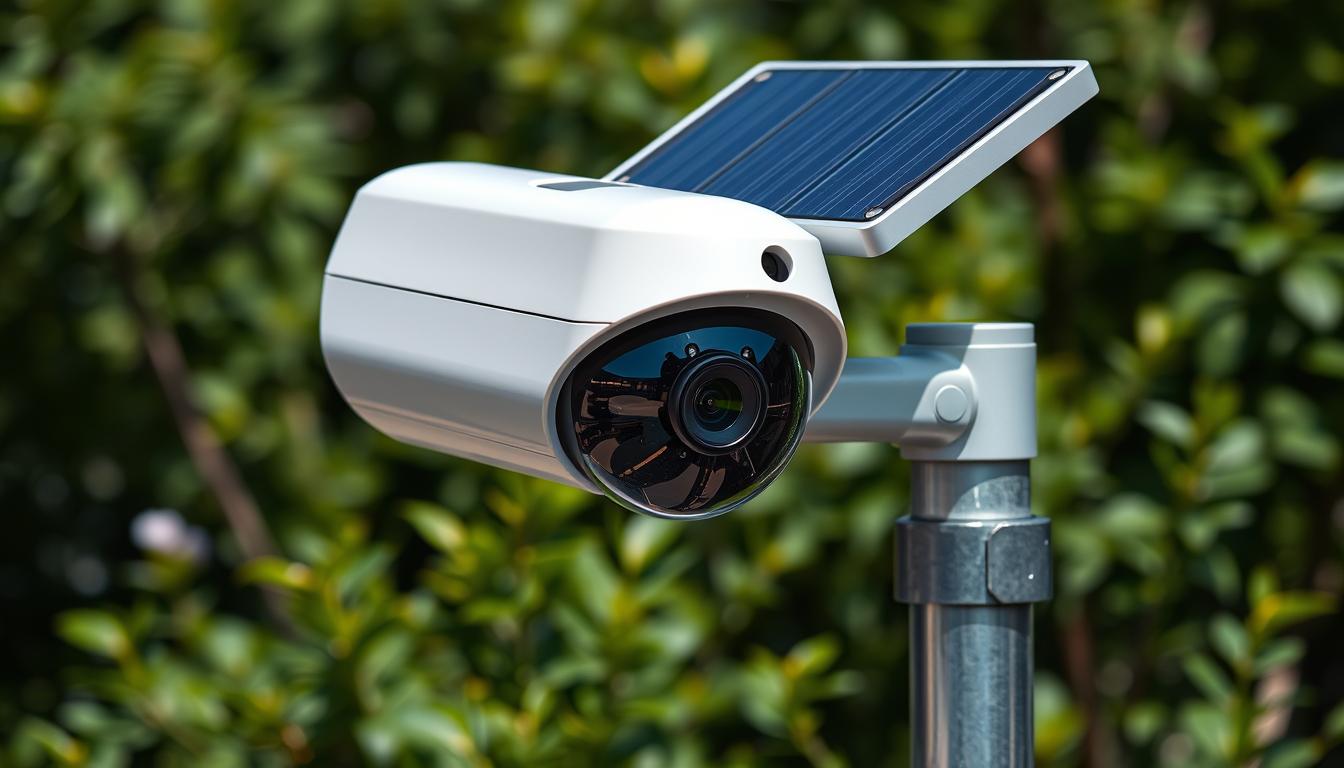
Solar Wireless Video Camera: Eco-Friendly Security
In today’s world, caring for the environment is more important than ever. Solar wireless video cameras are leading the way in green home security. They use the sun’s power, making them a reliable and eco-friendly choice for homes and businesses.
These cameras don’t need lots of cables or constant battery changes. They work smoothly, saving you money on energy and helping the planet. By combining new tech with solar energy, they’re making homes safer and greener.
Key Takeaways
- Solar wireless video cameras use solar power for efficient surveillance.
- They contribute to sustainable home security by reducing electricity consumption.
- These cameras eliminate the need for battery replacements and wired installations.
- Eco-friendly surveillance options support a commitment to reducing carbon footprints.
- They are suitable for both residential and commercial applications.
Introduction to Solar Wireless Video Cameras
In recent years, home security has changed a lot with solar wireless cameras. These devices use solar energy, cutting down on traditional power needs. They work well in different weather, making them popular for their easy upkeep and green benefits.
More people want to protect the environment, so solar cameras are a big plus. They offer solid security and help the planet. This makes them a great pick for those who care about both security and the environment.
Benefits of Using Solar Wireless Video Cameras
Solar wireless video cameras offer many benefits for both homes and businesses. They boost security and help the environment. Let’s look at how these cameras save energy and money.
Eco-Friendly Energy Solutions
Solar cameras use the sun’s power, making them eco-friendly. They don’t need electricity from the grid. This means they’re good for the planet and save on energy costs.
Cost Savings on Electricity Bills
Switching to solar cameras can cut down on electricity bills. They run on sunlight, so you don’t pay for power. This is great for saving money, whether you’re a family or a business.
Reduced Carbon Footprint
Solar cameras help lower a property’s carbon footprint. They use less electricity, which means less pollution. This move towards green energy is good for security and the planet.
How Solar Wireless Video Cameras Work
Solar cameras use solar power to work. They have special panels that catch sunlight and turn it into electricity. This electricity is stored in batteries, so the cameras keep working, even when it’s dark or cloudy.
This technology is great for security without using regular electricity. It’s a green way to watch over your place.
When you put up solar cameras, think about where they get the most sun. This helps them work best. They save money on energy and are good for the planet, too.
Features to Look for in a Solar Wireless Video Camera
Choosing the right solar wireless video camera is key to a good security system. Look for high camera resolution for clear images, smart home integration for easy control, and good battery life for ongoing use.
Resolution and Image Quality
Camera resolution is very important for solar security cameras. High-resolution cameras give you sharp images, helping you spot people or events. Choose models with at least 1080p resolution for the best results in any light.
Smart Home Connectivity
Smart home integration is a big plus in today’s solar security cameras. It lets you link your cameras to your home’s automation system. This means you can control them from your phone or with voice commands, making your home safer and more convenient.
Battery Life and Maintenance Requirements
A long battery life is essential for solar security cameras to work well. Look for cameras with strong batteries to cut down on upkeep. Regular checks and updates keep your camera running smoothly, ensuring your home is always watched over.
Top Solar Wireless Video Cameras for Home Security
Choosing the right solar wireless video camera can greatly improve your home’s security. This section looks at some of the best solar cameras. They are known for their reliability and innovative features that are good for the environment.
Arlo Essential Camera 2nd-Gen
The Arlo Essential Camera 2nd-Gen is a top pick for solar security. It offers 2K resolution for clear video. It also works with smart home systems for remote monitoring and alerts.
Eufy SoloCam S230
The Eufy SoloCam S230 is known for its built-in solar panel. This ensures it always has power. It also has free AI detection, which helps reduce false alarms.
TP-Link Tapo Outdoor Camera
The TP-Link Tapo Outdoor Camera is great for outdoor security. Its solar panel design is flexible and works well in different outdoor settings. It’s known for its solid performance and easy-to-use features.
Installation Tips for Solar Wireless Video Cameras
Proper solar camera installation is key to their efficiency. Start by finding the best spots for mounting solar security cameras to get the most sunlight. Make sure they have a clear view to capture images well and charge efficiently.
Here are some setup tips for solar cameras:
- Choose spots that face south for the most sunlight all day.
- Mount cameras high enough to see everything without being blocked.
- Adjust the camera’s angle to avoid glare and get sharp images. This balances sunlight and surveillance.
- Make sure cables and connections are easy to reach for future maintenance after solar camera installation.
By considering these tips, your solar cameras will work better. They’ll keep your property safe and use green energy. Every step in the installation helps make your security system reliable and eco-friendly.
Ideal Locations for Solar Wireless Video Cameras
Choosing the right spot for solar cameras is key to their success. The location affects how well they use sunlight and watch over your area. By picking the best spots, your cameras will work their best and catch the sun’s rays well.
Placement Considerations for Maximum Sunlight Exposure
For solar cameras to work well, they need lots of sunlight. Here are some tips to help:
- Put cameras on south-facing walls to catch the most sun.
- Keep cameras away from things that cast shadows, like trees and buildings.
- Make sure solar panels are clear of any blocks to keep energy up.
Avoiding Obstructive Structures
When picking a spot for your camera, avoid things that block sunlight. Think about these points:
- Check if nearby buildings or trees might cast shadows.
- Avoid places where moving things or leaves might block the sun.
- Keep solar panels clean to catch more sun and work better.
Solar Wireless Video Cameras vs. Traditional Security Cameras
It’s key to know the differences between solar and traditional cameras for better security choices. Each type has its own pros and cons, mainly in cost and environmental impact.
Cost Comparison
Looking at the cost of solar wireless cameras versus traditional ones, we see both upfront and long-term savings. Traditional cameras need installation fees, wiring, and constant electricity costs. On the other hand, solar cameras use sunlight, cutting down on electricity bills over time.
This leads to big savings. Plus, solar systems need less maintenance because they have fewer parts and don’t need power outlets.
Environmental Impact
The environmental effects of solar and traditional cameras are quite different. Solar cameras use sunlight, which is clean energy, and cut down on carbon emissions. This makes them better for the planet than traditional cameras, which use more energy and harm the environment.
As people become more aware of the need to protect our planet, they’re choosing solar cameras more often.
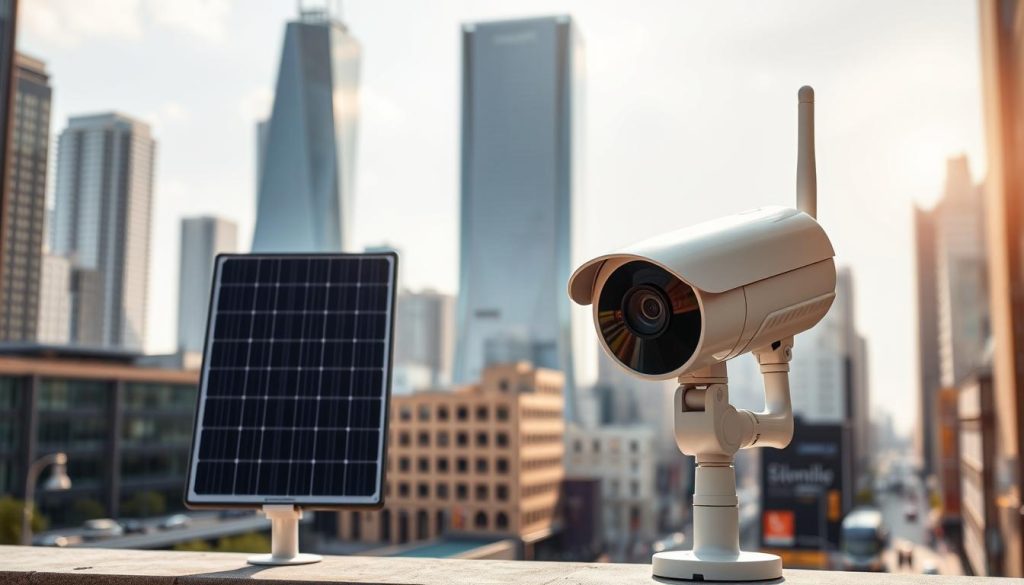
Common Concerns with Solar Wireless Video Cameras
Solar wireless video cameras are popular for being eco-friendly and easy to use. But, there are some challenges to consider. Knowing about these can help you make better choices and solve problems.
Battery Performance in Cloudy Weather
Battery performance is a big issue, mainly on cloudy or rainy days. Solar cameras need sunlight to charge their batteries. In low light, their batteries don’t work as well.
To improve charging, try placing cameras in spots that get some sunlight. This can help even on cloudy days.
Wi-Fi Connectivity and Signal Strength
Wi-Fi is also a key concern for solar cameras. A strong Wi-Fi connection is needed for video streaming and alerts. But, thick walls or large homes can weaken the signal.
Move your router closer to the camera or use Wi-Fi extenders. This can keep your connection stable. So, you can watch your property without any breaks.
Real-World Applications of Solar Wireless Video Cameras
Solar wireless video cameras have many uses, making places safer. They work well in homes and businesses. These cameras help keep an eye on things.
Residential Use Cases
Homeowners use solar cameras to keep their homes safe. These systems let them:
- Watch driveways and entry points live
- Keep an eye on kids and pets outside
- Scare off intruders with visible cameras
Using solar cameras at home saves money on electricity. It also gives peace of mind.
Commercial Use Cases
Businesses use solar cameras for security too. They are used for:
- Watching over stores to stop theft and keep customers safe
- Protecting construction sites from theft of expensive tools
- Improving security in warehouses and distribution centers
Solar cameras are a smart choice for businesses. They fit many industries well.
Future Trends in Solar Wireless Video Camera Technology
The world of solar camera tech is always changing, bringing new chances for home and business security. Artificial intelligence will make future solar security cameras smarter, with better analytics and alerts. This means users will get more tailored security solutions.
Battery life is also getting a boost. New materials and tech will make batteries last longer and charge quicker. This ensures cameras keep working without pause. Better energy management will also help use solar power more efficiently, even when the weather isn’t perfect.
Connecting with smart homes is another big trend. As people want all devices to talk to each other, video surveillance will get better. Soon, you’ll be able to watch and control your security from your phone, making life easier.
Also, expect better pictures and night vision. As tech advances, high-def video and better low-light shots will be common. This means cameras will work better in all kinds of light.
For those curious about these changes, solar-powered security camera systems are leading the way. They combine green tech with cutting-edge features. The mix of these trends will make security systems more reliable and easy to use than ever.
Conclusion: A Sustainable Choice for Home Security
In today’s world, choosing solar wireless video cameras is a big step towards green security. These cameras watch over your home better and help the planet by using the sun’s power. They also save you money on your electricity bill, making them smart for your wallet too.
Thanks to new solar tech, these cameras work well in all kinds of weather. They give you top-notch security and help reduce your carbon footprint. Going for solar cameras is a smart move for your home and the planet.
More people are seeing the good in solar wireless video cameras. This trend makes homes safer and helps the environment. Switching to these green options is more than just a new way to watch your home. It’s a promise to live sustainably for years to come.
FAQ
What are solar wireless video cameras?
Solar wireless video cameras use sunlight to power them. They are great for keeping an eye on homes and businesses. They don’t need batteries or wires, making them easy to use.
How do solar wireless video cameras work?
These cameras catch sunlight with special panels. This sunlight charges batteries inside the camera. So, they work day and night, even when it’s cloudy.
What are the benefits of using solar wireless video cameras?
They are good for the planet because they use sunlight. They also save money on electricity. Plus, they help reduce carbon emissions, making our environment greener.
What features should I consider when choosing a solar wireless video camera?
Look for cameras with clear pictures and work well with smart homes. Check how long the battery lasts and how easy they are to keep up. This ensures they work well for a long time.
Can solar wireless video cameras work in cloudy conditions?
Yes, they can. They use stored energy from sunlight, even when it’s cloudy. This is thanks to their rechargeable batteries.
What are some popular solar wireless video camera models?
Some top picks are the Arlo Essential Camera 2nd-Gen and the Eufy SoloCam S230. They offer great features like high resolution and smart home integration. The TP-Link Tapo Outdoor Camera is also popular for its solar panel design.
How should I install a solar wireless video camera?
Choose a spot that gets a lot of sunlight. Make sure the camera is at the right height and angle. This helps it see everything it needs to.
Where are the best locations to install solar wireless video cameras?
Pick places that get lots of sunlight. Avoid spots with shadows from trees or buildings. This keeps the camera working well for a long time.
How do solar wireless video cameras compare to traditional wired security systems?
Solar cameras are cheaper to start and save money over time. They’re also better for the environment. This makes them a smart choice for security.
What are common concerns with solar wireless video cameras?
Some worries are about battery performance in cloudy weather. Also, a strong Wi-Fi signal is key for them to work right.
What are some real-world applications of solar wireless video cameras?
They’re great for watching over homes, stores, and construction sites. They’re versatile and can be used in many places.
What future innovations can we expect in solar wireless video cameras?
We might see better AI, more efficient batteries, and smarter connections with homes. These changes will make security tech even better.


