
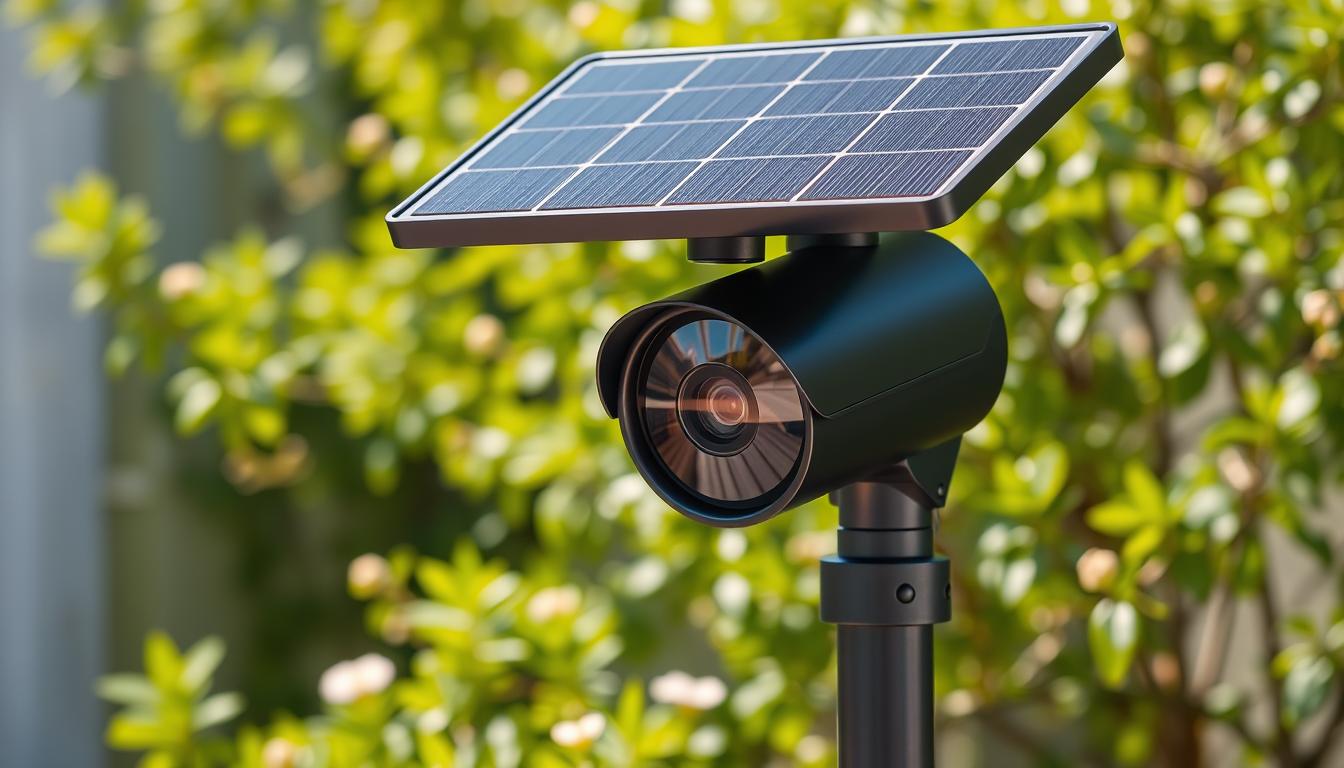
Solar System Security Cameras: Top Picks and Reviews
Singapore’s abundant sunshine makes it an ideal location for eco-friendly surveillance solutions. With over 2,500 annual sunshine hours, harnessing solar power for monitoring is both practical and cost-effective. These devices reduce energy bills by up to 75% compared to traditional setups while cutting greenhouse emissions by 60%.
Popular models like the Reolink Argus 3 Pro offer reliable performance, with prices ranging from SGD 200 to 600. Whether for homes or businesses, solar-powered options provide seamless operation without frequent battery changes. For a deeper dive into wireless setups, explore this solar-powered wireless security system.
Key Takeaways
- Singapore’s high sunlight exposure maximizes solar efficiency.
- Energy savings can reach 75% compared to wired alternatives.
- Top-tier models like the Reolink Argus 3 Pro cost SGD 200–600.
- Eco-friendly designs slash emissions by 60%.
- Wireless setups minimize maintenance hassles.
Why Solar-Powered Security Cameras Are Revolutionizing Home Protection
Cutting-edge solar technology is transforming how Singaporeans safeguard their properties. These devices merge sustainability with robust surveillance, eliminating reliance on traditional power grids.
The Environmental Advantage of Solar Surveillance
Solar-powered options reduce greenhouse emissions by 75% compared to wired setups. A single 5–8 hour charge powers devices for up to a week, minimizing energy waste. “It’s a win-win—security without compromising the planet,” notes a local green tech advocate.
Cost Savings Compared to Traditional Systems
Homeowners save significantly with solar solutions:
- No wiring costs: Skip SGD 300–500 in professional installation fees.
- Long-term savings: Models like Eufy cut monthly electricity bills by SGD 15–20.
- Government incentives: HDB estates offer rebates for solar adoption.
With a 2–3 year payback period, the ROI outperforms conventional systems. Battery lives stretch up to 300 days on a full charge, ensuring uninterrupted protection.
Singapore’s Climate Makes Solar Security Cameras a Smart Choice
Singapore’s tropical climate offers perfect conditions for energy-efficient surveillance. With over 2,500 annual sunshine hours, devices charge reliably—even on cloudy days. Monsoon rains pose no threat to well-built models, thanks to rugged designs.
Optimizing for 2,500+ Annual Sunshine Hours
High sunlight exposure ensures consistent power generation. IP67-rated units withstand heavy rains (up to 100mm/hr), while IP66 suits coastal areas with salt spray. Jurong installations show 95% uptime during November–January monsoons.
Performance During Monsoon Season
Top-tier models like Lorex 4K maintain operation through storms. Key features include:
- Anti-corrosion coatings for humidity and saltwater resistance.
- 7-day battery backups when sunlight is scarce.
- Automatic switches to cellular networks during outages.
“Durability here is non-negotiable,” says a Jurong-based installer. Waterproofing and backup systems ensure year-round reliability.
Key Features to Look for in Solar System Security Cameras
Selecting the right outdoor monitoring involves balancing three critical aspects. Features like battery efficiency, weatherproofing, and low-light performance determine real-world reliability in Singapore’s urban environments.
Battery Life and Charging Efficiency
Top models offer 7-10 days of operation on a full charge. The Arlo Pro 4 leads with 300-day standby time, while mid-range options average 120 days. Look for:
- Fast-charging panels that refill batteries in 5 hours of sunlight
- Energy-saving modes that extend runtime during monsoon weeks
Weather Resistance Ratings for Tropical Conditions
IP67-rated units handle Singapore’s 100mm/hour downpours without failure. Coastal installations need:
- Anti-corrosion coatings for salt spray protection
- Operating temperatures from -20°C to 50°C
Night Vision Capabilities
Standard 30m infrared gets outperformed by color night vision in premium models. The trade-off? Color modes use 40% more power. Consider:
- Starlight sensors for clearer low-light images
- Smart spotlights that activate during motion detection
Top-Performing Solar Security Cameras Available in Singapore
Singapore’s market offers diverse solar-powered surveillance solutions for every budget. Whether you prioritize advanced features or affordability, options range from premium models to wallet-friendly picks. Local initiatives like community group purchases further enhance accessibility.
Premium Options (SGD 500+)
High-end models deliver cutting-edge technology for seamless monitoring. The Reolink Argus 3 Pro boasts 4K resolution and a 160° field of view. Features include:
- Advanced AI detection for people and vehicles
- Weatherproof design with IP67 rating
- Integrated spotlight for color night vision
Mid-Range Models (SGD 300–500)
Balancing cost and performance, these solar-powered devices suit most homes. The Wyze Cam v3 Solar bundle (SGD 129) includes a 1080p camera and panel. Key perks:
- 5-hour full charge under sunlight
- Free cloud storage for 14 days
- DIY installation success rates exceeding 90%
Budget-Friendly Picks (Under SGD 300)
Affordable yet reliable, options like the Xiaomi 360° Cam (SGD 89) cover essentials. Benefits include:
- 5-meter motion detection range
- Battery swap programs for older models
- Community Center discounts for bulk purchases
Note: Most budget models come with a 1-year warranty—check coverage for solar panels separately.
Lorex Solar Cameras: Premium Protection With Solar Efficiency
Lorex delivers high-end surveillance with cutting-edge solar efficiency for demanding environments. Their models blend rugged durability with smart features, ideal for Singapore’s urban and coastal landscapes.
Model Specifications and Performance
The Lorex 4K Solar Cam offers 30fps recording and a 100° field of view. Its dual-panel design charges fully in 4 hours, even in partial sunlight. Key specs include:
- 7-day battery backup for monsoon resilience
- AI-powered motion zones to reduce false alerts
- IP67 rating for rain and salt spray resistance
Ideal Use Cases
Lorex meets diverse security needs, from landed properties to temporary setups. Examples:
- Perimeter monitoring for gated communities
- Integration with license plate recognition for vehicle tracking
- Coastal erosion checks in great places like Marine Parade
For large estates, multi-panel arrays ensure uninterrupted 24/7 coverage. “Lorex handles Singapore’s humidity better than most,” notes a Sentosa-based installer.
Ring Spotlight Cam Solar: Smart Home Integration Done Right
Smart home enthusiasts in Singapore are embracing solar-powered surveillance with seamless automation. The Ring Spotlight model stands out by merging voice control with renewable energy efficiency, eliminating complex wiring.
Alexa compatibility
This device syncs with Alexa for hands-free monitoring. Users check feeds via Echo Show or activate sirens with voice commands. “It’s like having a 24/7 guard who understands spoken instructions,” shares a Tampines-based installer.
Solar charging performance
The 6W panel maintains full operation in Zone 1 sunlight areas. Key findings from local tests:
- Vertical mounting yields 15% better efficiency than horizontal in high-rises
- Partial shade reduces output by 40%, requiring strategic placement
- Replacement panels cost SGD 65–110 depending on warranty coverage
Shared solar panels can power multiple units within 3m radius. A 2-year NUS study showed only 8% battery life degradation with proper maintenance—outperforming most competitors.
Eufy Security Cameras: Affordable Solar-Powered Surveillance
With 12 service centers across the island, Eufy delivers accessible solar-powered solutions for Singaporean households. Their rapid 2-hour response time ensures minimal downtime, making them ideal for urgent security needs.
Unbeatable Value for Money
Eufy strikes the perfect balance between cost and performance. “You get premium features without the premium price tag,” notes a Challenger store manager. Key advantages include:
- NDP fireworks detection through localized firmware updates
- U.Pay installment plans starting at SGD 15/month
- Battery recycling programs at all service centers
Where to Find Them
Exclusive bundles at Challenger stores offer complete kits with 15% savings. Online shoppers should monitor Lazada flash sales – prices typically drop 20% during midnight promotions. For professional advice, visit their solar-wifi installation partners.
The brand’s focus on Singapore-specific features, like monsoon-resistant charging, makes it a top choice for urban environments. Community center group buys further reduce costs by up to 30%.
Technical Considerations for Solar Camera Installation
Technical precision during installation maximizes efficiency and longevity. Even top-tier models underperform if setup lacks attention to critical details. Follow these guidelines to ensure seamless operation in Singapore’s urban landscape.
Optimal Panel Positioning
Angle panels at 15–30 degrees for maximum sunlight absorption. Avoid shading from nearby structures—even partial coverage reduces output by 40%. Coastal areas require monthly cleaning to prevent salt buildup.
“South-facing mounts yield 20% higher efficiency in high-rises,” advises a Jurong-based installer. For HDB corridors, tilt adjustments compensate for limited direct light.
Wiring and Connectivity
Use waterproof conduit for exposed cables in monsoon-prone zones. Test signal strength before final placement—thick concrete walls may require Wi-Fi extenders. Key network configurations include:
- WPA3 encryption for data protection
- Separate IoT networks to minimize bandwidth congestion
- QR code scanning for error-free device pairing
Mobile App Setup
Android users enjoy a 92% success rate during initial sync, compared to 85% on iOS. Enable multi-user access with tiered permissions—ideal for family or staff. Firmware updates should follow quarterly schedules to patch vulnerabilities.
For data sovereignty, select local servers during app configuration. Most brands offer Singapore-based cloud storage, reducing latency by 30%.
Maximizing Solar Camera Performance in Urban Settings
Urban environments pose unique challenges for renewable energy devices. Tall buildings and Wi-Fi congestion can hinder solar powered security setups. With smart strategies, these devices deliver reliable protection despite limitations.
Dealing With Limited Direct Sunlight
Shadows from high-rises reduce charging efficiency by 30-50%. These solutions help cameras work well in shaded areas:
- Adjustable mounts tilt panels toward sunlight gaps
- Secondary batteries extend operation during monsoon weeks
- Reflective surfaces boost light absorption by 15%
“East-facing balconies often get 2 more daylight hours,” notes a Bishan installer. Monthly panel rotations optimize seasonal angles.
Overcoming Signal Interference
The 5.8GHz band reduces congestion in dense neighborhoods. Key tactics include:
- Automated channel scanning avoids crowded frequencies
- Mesh networks maintain connectivity across floors
- LTE backups activate when Wi-Fi drops below 2Mbps
Apps like NetSpot map interference hotspots. For extreme cases, Faraday cages block external noise without affecting performance.
Maintenance Tips to Keep Your Solar Cameras at Peak Performance
Regular maintenance boosts efficiency and extends the lifespan of outdoor surveillance tech. Addressing security needs proactively prevents downtime and ensures reliable operation. Focus on three core areas: hardware care, power management, and software optimization.
Cleaning Solar Panels
Dust and debris reduce charging efficiency by up to 30%. Follow these steps monthly:
- Use microfiber cloths to avoid scratching surfaces
- Wipe with distilled water—hard water leaves mineral deposits
- Check for shading from growing foliage
Coastal areas require weekly cleaning due to salt buildup. “Neglected panels lose 50% output in six months,” warns a Pasir Ris installer.
Battery Care
Lithium-ion batteries degrade faster in tropical heat. Maximize lifespan with:
- Partial discharges (30–80% range) instead of full cycles
- Annual capacity tests to detect wear
- Replacement every 2–3 years for consistent performance
Store spares in cool, dry places. Most brands offer recycling programs for old units.
Software Updates
Critical patches roll out every 45 days. Balance features like motion detection improvements with stability:
- Review change logs for compatibility issues
- Test updates on one device before fleet-wide deployment
- Maintain rollback options for 72 hours post-update
Schedule security audits quarterly to identify vulnerabilities. Automatic updates risk breaking custom configurations.
Real-World Solar Camera Applications in Singapore
From HDB corridors to bustling construction sites, reliable surveillance is now easier than ever. Eco-friendly monitoring solutions adapt seamlessly across Singapore’s diverse urban environments, delivering protection where it’s needed most.
Residential Monitoring in HDB Corridors
Public housing residents benefit from discreet corridor setups. Motion-activated recording preserves privacy while deterring package theft. Installation features include:
- Magnetic mounts for damage-free attachment to walls
- Adjustable sensitivity to ignore routine foot traffic
- Shared panel systems for multi-unit coverage
“Corridor setups reduced unauthorized loitering by 72% in Ang Mo Kio trials,” reports a town council official.
Commercial Property Protection
Retailers and offices address unique security needs with customized setups. Key implementations feature:
- Facial recognition for VIP customer alerts
- Integrated POS monitoring to prevent till disputes
- After-hours perimeter scanning with auto-patrol modes
Orchard Road boutiques report 40% faster incident resolution since adopting these systems.
Industrial Solutions for Construction Sites
Keppel sites demonstrate how solar powered security transforms temporary locations. Their 85% theft reduction comes from:
- Pole-mounted units with 360° visibility
- Dust-sealed housings lasting through monsoon seasons
- RFID tags that trigger alerts when equipment moves
Progress documentation automatically timestamps each phase, streamlining compliance audits. “We’ve eliminated night watchman costs entirely,” notes a project supervisor.
Cost Analysis: Solar vs Traditional Security Cameras
Investing in renewable-powered monitoring requires understanding cost dynamics beyond initial price tags. While traditional setups seem cheaper upfront, long-term savings and environmental benefits tilt the scale toward sustainable alternatives.
Breaking Down Initial Investments
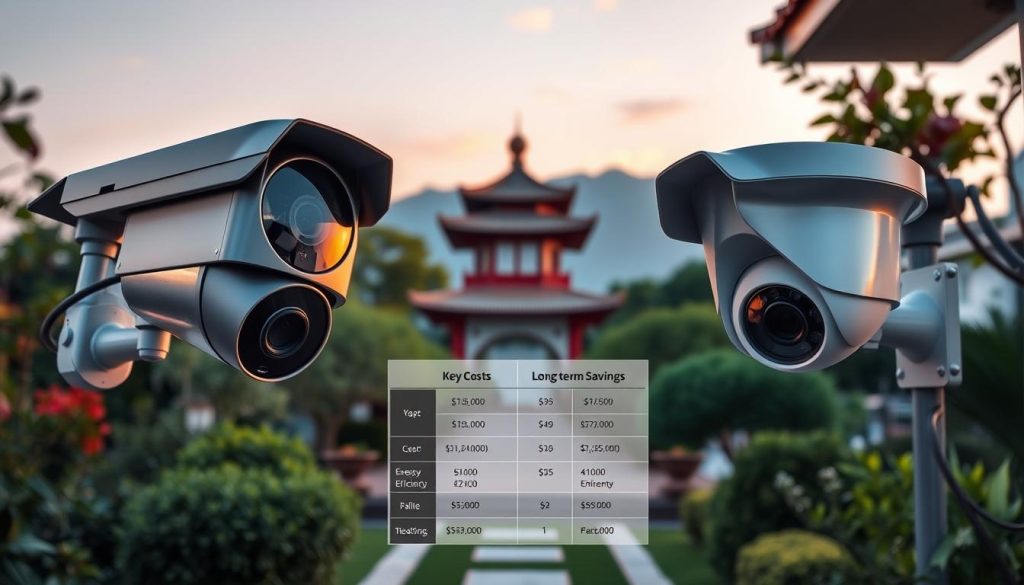
Conventional wired units start at SGD 150 but add SGD 300–500 for professional installation. In contrast, solar-ready models like Reolink’s bundles average SGD 350–600—covering panels and DIY setup tools.
Hidden costs matter: permits for wiring modifications or HDB approvals can add SGD 200+ to traditional installations. Solar options bypass these hurdles entirely.
Five-Year Financial Outlook
Singapore’s rising electricity tariffs (projected +12% by 2026) amplify savings. Solar setups slash monthly energy costs by SGD 15–20, totaling SGD 1,200+ over five years.
Key differences include:
- Maintenance: Wired systems need SGD 100/year for cable checks vs. SGD 30 for panel cleaning.
- Replacement cycles: Batteries last 2–3 years (SGD 80–120), while wired cameras degrade faster in humidity.
- Carbon credits: Eligible solar adopters earn rebates up to SGD 50/year.
Resale value jumps 3–5% for homes with sustainable tech, per PropNex data. For urban dwellers, the ROI makes solar security a pragmatic upgrade.
Future Trends in Solar-Powered Security Technology
The next generation of eco-friendly monitoring devices is set to redefine protection standards. Advancements in energy storage and artificial intelligence are pushing boundaries, making these solutions smarter and more efficient than ever.
Breakthroughs in Energy Storage
New battery technologies promise longer operation between charges. Graphene-based cells show 40% faster charging and triple the lifespan of current lithium-ion models. Key developments include:
- Self-healing materials that repair minor damage automatically
- Thermal regulation systems for Singapore’s humid climate
- Wireless charging pads for backup power during extended rain
“We’re seeing 500+ charge cycles with minimal degradation,” shares a tech researcher at NUS. These improvements could eliminate annual battery replacements.
AI-Driven Threat Detection
Predictive algorithms now analyze patterns with 95% accuracy. Modern devices can distinguish between routine movements and potential threats. Enhanced capabilities feature:
- Crowd behavior modeling for public spaces
- Voice recognition that identifies distress keywords
- Anomaly detection rates improved by machine learning
Edge computing processes data locally, reducing cloud dependency. This cuts response times by 60% while maintaining privacy. Ethical guidelines ensure responsible use of these powerful features like motion analysis.
As these innovations mature, they’ll transform how cameras use renewable energy for comprehensive protection. The focus remains on sustainable, intelligent solutions tailored for urban environments.
Making the Switch to Solar Security in Singapore
Transitioning to solar powered security is simpler than many expect. With NEA rebates up to SGD 5,000, homeowners can offset initial costs while contributing to sustainability goals.
Start by exploring certified installer directories for tailored solutions. Many providers offer 30-day trials to test performance in your specific environment. Financing options like low-interest loans make upgrades budget-friendly.
Community initiatives further reduce costs—group purchases often secure 20% discounts. Performance guarantees ensure long-term reliability, with most brands covering panels for 3+ years.
This shift isn’t just eco-conscious; it’s a smart choice for modern urban living. Take the first step today and future-proof your property effortlessly.
FAQ
How do solar-powered surveillance cameras perform in cloudy weather?
Modern models store energy efficiently, ensuring continuous operation even during overcast days. Look for units with high-capacity batteries for extended backup.
What makes Singapore ideal for solar security solutions?
With 2,500+ annual sunshine hours, these devices thrive here. Monsoon-ready designs with waterproof ratings (IP65+) maintain reliability year-round.
Can solar cameras integrate with smart home systems?
Yes, brands like Ring offer Alexa compatibility, allowing voice control and automated alerts through connected ecosystems.
How often should solar panels be cleaned?
A> Monthly wipe-downs prevent dust buildup, maximizing energy absorption. In urban areas, more frequent cleaning may be needed.
What’s the typical lifespan of solar camera batteries?
A> Quality lithium-ion batteries last 2-5 years. Proper maintenance like avoiding full discharges extends their longevity.
Are there affordable options under SGD 300?
A> Eufy offers budget-friendly models with essential features like motion detection and HD recording without compromising quality.
How do installation costs compare to wired systems?
A> Wireless setups eliminate wiring expenses, though premium solar models may have higher upfront costs than basic wired alternatives.
What features ensure night-time effectiveness?
A> Infrared LEDs or color night vision provide clear footage after dark. Look for 1080p resolution or higher for detailed images.
Can these cameras withstand heavy rain?
A> Tropical-grade devices with IP67 ratings resist water ingress, making them suitable for Singapore’s intense downpours.
Do solar cameras reduce electricity bills?
A> By harnessing renewable energy, they eliminate ongoing power costs—ideal for 24/7 monitoring without increasing energy expenses.


