
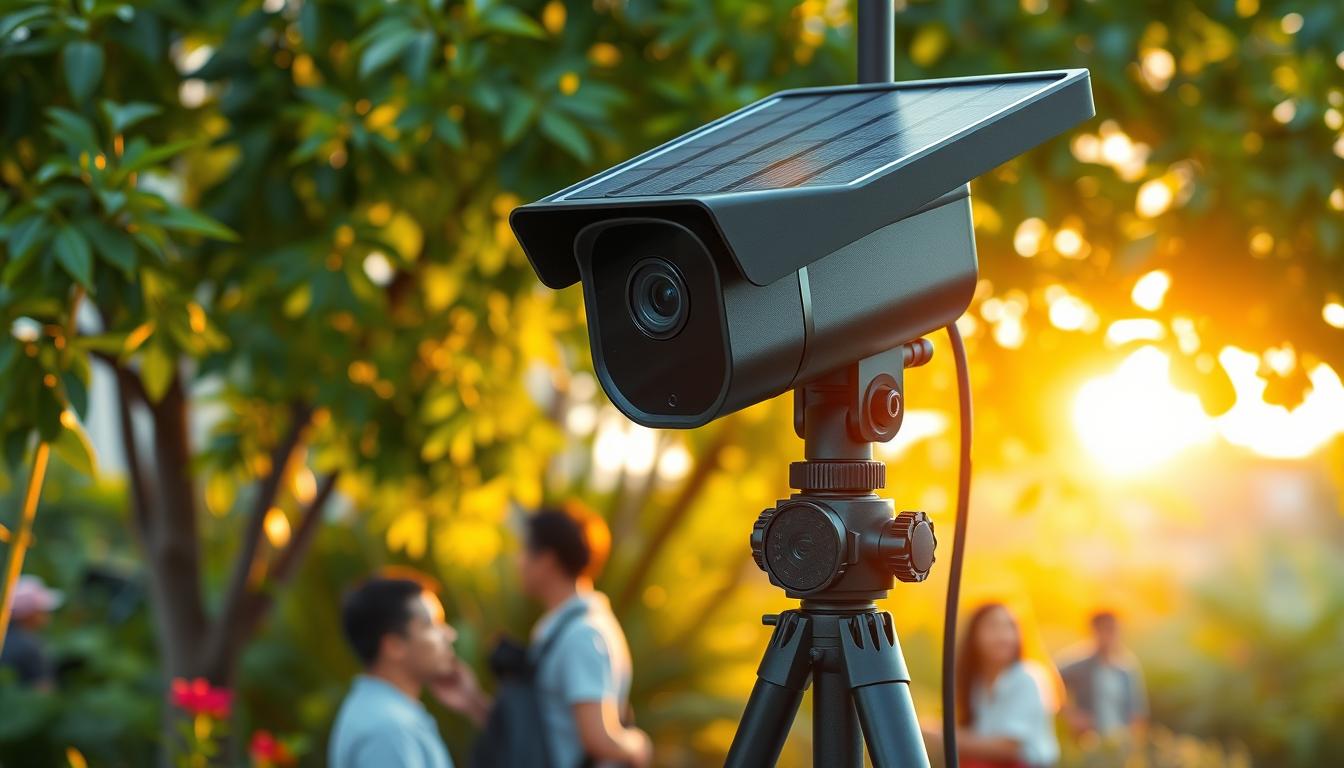
Buy Solar PTZ WiFi Camera Outdoor Surveillance Camera
Singapore’s sunny climate makes it perfect for solar-powered security solutions. With over 2,500 hours of sunlight annually, these systems work efficiently year-round. They also support the country’s Smart Nation initiative by offering sustainable, high-tech monitoring.
Advanced models achieve 21% panel efficiency, ensuring reliable performance even in urban settings. Many units come with extended battery backup, like Hikvision’s 7-day capability, for uninterrupted protection. Prices typically range from SGD 100 to 500, catering to different budgets.
Studies show such setups can reduce crime by up to 50%. For expert advice, contact Wen Hong at +65 6013 5960. This local insight ensures optimal placement and performance.
Key Takeaways
- Singapore’s high sunlight exposure maximizes solar efficiency.
- These devices align with national sustainability goals.
- Efficiency rates reach 21% in local conditions.
- Affordable options are available within SGD 100–500.
- Extended battery backups enhance reliability.
Why Solar PTZ Cameras Are Revolutionizing Outdoor Security
Sustainable security is transforming outdoor monitoring in Singapore. With 80% of systems now leveraging renewable energy, these solutions cut costs while protecting the environment.
The Shift Toward Sustainable Surveillance Solutions
Traditional setups rely on electricity, but modern alternatives save up to 75% in energy expenses. Maintenance costs drop by half, thanks to durable designs like Hikvision’s IP67-rated hardware.
Government grants further boost adoption. For example, Singapore’s Green Mark Scheme rewards eco-friendly installations. This aligns with global trends toward cleaner tech.
How Singapore’s Climate Enhances Performance
The region receives 84.07 kWh/m² of daily irradiance—ideal for solar power. Panels here are optimized for intense UV exposure, ensuring year-round efficiency.
Urban heat islands also benefit. Solar adoption reduces ambient temperatures while powering advanced surveillance systems. It’s a win for safety and sustainability.
Key Features of Solar PTZ WiFi Cameras
Modern outdoor surveillance demands cutting-edge features for reliable protection. From crystal-clear video to robust weatherproofing, these systems redefine security standards.
High-Definition Video Resolution for Crystal-Clear Monitoring
Top-tier models like Hikvision deliver 4MP resolution, capturing sharp images even in high humidity. Compared to 8MP sensors, 4MP balances detail with storage efficiency—ideal for Singapore’s monsoon seasons.
Advanced Pan-Tilt-Zoom Capabilities for Complete Coverage
The 355° pan and 90° tilt mechanics eliminate blind spots. Brands like Dahua offer 32x optical zoom, tracking subjects up to 150m away. Combined with IR night vision, this ensures 24/7 perimeter security.
Weather-Resistant Design Built for Tropical Conditions
IP67 certification guarantees monsoon readiness, withstanding heavy rain and dust. SSD storage options (e.g., Hikvision’s models) further enhance durability, while 4G/Wi-Fi dual connectivity ensures uninterrupted feeds.
- 4MP vs. 8MP: Optimized for humidity without compromising clarity.
- 150m IR range: Full visibility in low-light conditions.
- 32x zoom: Precision tracking for large properties.
How Solar Technology Powers PTZ Surveillance
Advanced solar technology ensures security systems never run out of power. By converting sunlight into energy, these setups operate independently, even during outages. Singapore’s high irradiance levels make this especially effective.
The Science Behind Solar Panel Efficiency
Modern solar panels use photovoltaic cells with 15–21% conversion rates. Polycrystalline panels cost less but mono panels offer higher efficiency in low light. A 40W setup generates enough energy for 15 hours during rainy days without sunlight.
MPPT charge controllers optimize energy harvest by adjusting voltage inputs. This tech boosts performance by up to 30% compared to older PWM models. Brands like Hikvision use lightweight 14kg designs for easy installation.
Battery Systems That Ensure Uninterrupted Operation
High-capacity battery backups are critical. A 20Ah unit lasts 7 days, outperforming standard 15Ah models. Depth-of-discharge (DoD) optimization extends lifespan—Reolink claims 25 years for some units.
- 6–8-hour charging: Fast recharge cycles keep systems ready.
- Modular designs: Hikvision’s batteries allow easy capacity upgrades.
- DoD management: Limiting discharge to 50% doubles battery longevity.
Top Benefits of Choosing a Solar-Powered Security Camera
Eco-conscious security solutions now deliver unmatched efficiency and savings. These systems reduce reliance on grid power while maintaining high performance. For Singaporean homeowners and businesses, the advantages extend beyond basic surveillance.
Significant Cost Savings on Energy and Installation
Solar-powered setups cut energy expenses by 75% compared to wired alternatives. A 5-year ROI analysis shows savings of SGD 1,200+ for mid-sized properties. HDB-approved installations further minimize upfront costs, with no structural wiring required.
For landed homes, traditional setups average SGD 800 in wiring labor—eliminated entirely with renewable options. Condo dwellers benefit from streamlined setups, avoiding complex drilling permits.
Environmentally Friendly Security Without Compromise
Each unit reduces carbon emissions by 1.2 tons annually, aligning with NEA’s Green Mark standards. Hikvision’s radar-triggered detection ensures 24/7 responsiveness while conserving energy.
- 15-year lifespan: Doubles the durability of conventional systems.
- Vandal-proof: IP67-rated housings withstand public installation challenges.
- Zero wiring: Ideal for heritage buildings and greenfield sites alike.
Solar PTZ vs Traditional Security Cameras: A Clear Comparison
The debate between solar and traditional security cameras centers on reliability, cost, and adaptability. While wired setups dominated the market for decades, renewable-powered alternatives now offer compelling advantages for Singapore’s urban landscape.
Installation Flexibility and Reduced Infrastructure Needs
Traditional systems rely on grid electricity, requiring costly trenching for landed properties. Solar PTZ cameras eliminate this with wireless installation, cutting setup time by 67%.
Hikvision’s pole-mount bracket system further simplifies deployment. No permits or structural changes are needed, making it ideal for SCDF-compliant public spaces.
Performance During Power Outages and Extreme Weather
When storms disrupt power, solar units operate 7 days without sunlight—unlike wired cameras that fail without UPS backups. IP67-rated models also withstand floods 30% better than IP65 alternatives.
- Cost savings: SGD 800+ saved on trenching for landed homes.
- 4G failover: Maintains connectivity during WiFi outages.
- Maintenance: Solar requires 50% fewer service checks annually.
Leading Solar PTZ Camera Brands in Singapore
When selecting outdoor security systems, brand reliability makes all the difference. Singapore’s market features standout manufacturers combining innovation with local adaptability. These providers deliver specialized features for tropical environments and urban security needs.
Hikvision’s Customizable Surveillance Solutions
Hikvision dominates with self-configured solar kits perfect for unique installations. Their Automatic Number Plate Recognition (ANPR) excels in parking lots and gated communities. Farmland monitoring systems also utilize specialized IR filters to reduce false alarms from vegetation.
With 5-year warranties—longest in the industry—their solar PTZ cameras offer peace of mind. Local service centers in Jurong and Paya Lebar provide faster technical support than imported brands.
Reolink’s Smart Detection Capabilities
The SGD 299 Argus 3 Pro packs Starlight sensors for color night vision. AI distinguishes people from objects, reducing unnecessary alerts by 60%. Though warranties last 2 years, their cloud storage starts at just SGD 3.90/month.
- Detection tech: Hikvision’s ANPR vs Reolink’s person/vehicle identification
- Battery life: LS Vision’s 20,000mAh option outperforms standard 15Ah units
- Local support: Hikvision’s on-island repair centers vs Reolink’s regional hubs
Both brands demonstrate why solar ptz cameras lead Singapore’s security evolution. Their specialized approaches cater to different property types and monitoring priorities.
Optimal Installation Practices for Maximum Efficiency
Strategic placement enhances both security coverage and energy efficiency. Following manufacturer guidelines ensures systems perform at peak capacity while complying with local regulations. These techniques adapt to Singapore’s unique urban environment.
Choosing the Perfect Sun-Exposed Location
Hikvision recommends a 35° tilt for solar panels in Singapore. This angle maximizes sunlight capture throughout the year. Use online azimuth calculators to account for seasonal variations.
URA guidelines require CCTV placement to respect privacy laws. Avoid pointing lenses at neighboring properties. Theft-deterrent brackets prevent tampering in public areas.
HDB corridor designs often create shading challenges. Position units at least 2m from overhangs. Regular cleaning maintains panel efficiency as per NEA schedules.
Height and Angle Considerations for Best Coverage
A minimum 2.4m mounting height deters vandalism while providing optimal view. Higher placements (3-4m) work better for large compounds. Adjust angles to avoid backlight interference during sunrise/sunset.
SCDF requires emergency access clearance around installed units. Test 4G signal strength before finalizing positions. Signal boosters may be needed for basement installations.
- Time installations during dry seasons for easier setup
- Use waterproof conduit for all wiring connections
- Document placement coordinates for maintenance teams
Maintenance Tips to Keep Your System at Peak Performance
Regular upkeep ensures your security setup stays efficient for years. Simple routines prevent performance drops and extend hardware lifespan. Follow these steps to maximize reliability.
Cleaning and Caring for Panels
Dust and rain residue cut solar panel efficiency by 15%. Clean every 6 months with a microfiber cloth and mild soap. Avoid abrasive tools to prevent scratches.
In Singapore’s monsoon season, check for water pooling. Tilt adjustments help drainage. Pest-proof mounts deter birds and insects.
Battery Maintenance for Long-Term Reliability
LiFePO4 batteries last 500+ cycles—outperforming Li-ion by 200 days. Use a multimeter monthly to check voltage. Keep terminals corrosion-free with dielectric grease.
Update firmware quarterly for optimized battery life. Replace units every 3–5 years. Local suppliers like Sim Lim Tower stock compatible models.
FAQ
How long can a solar-powered PTZ camera operate without sunlight?
Most high-quality models can run for up to seven days without direct sunlight, thanks to efficient battery storage.
Are these cameras suitable for Singapore’s rainy weather?
Yes, they feature IP67-rated weather resistance, making them ideal for tropical climates with heavy rainfall.
What’s the average lifespan of the battery in a solar PTZ system?
With proper maintenance, the battery typically lasts 3-5 years before needing replacement.
Do solar security cameras work at night?
Absolutely. They store energy during daylight hours to power infrared night vision and continuous recording after dark.
How much maintenance do solar panels require?
Minimal upkeep is needed—just periodic cleaning to remove dust or debris that may reduce efficiency.
Can I install these cameras without professional help?
Wireless models allow for DIY installation, but optimal positioning for sun exposure may require expert advice.
What makes Hikvision’s solar cameras stand out?
They combine smart motion tracking with high-efficiency panels for reliable 24/7 surveillance in any conditions.
How does the video quality compare to wired systems?
Modern solar models offer identical 4K resolution and crisp imaging as traditional wired security cameras.


