
Solar Panel to Power Security Camera: A Step-by-Step Guide
Keeping your property safe doesn’t have to rely on wired setups. In Singapore, more homeowners and businesses are switching to sustainable alternatives that cut costs while boosting reliability. These systems use renewable energy to ensure continuous monitoring without high electricity bills.
With Singapore’s abundant sunlight, these setups can run efficiently for years. Proper battery sizing ensures uninterrupted operation, even during monsoon seasons. Brands like Hikvision offer extended backup, making them ideal for tropical weather.
Beyond savings, these solutions are versatile—perfect for HDB corridors, construction sites, and private properties. This guide will walk you through installation, weatherproofing, and maximizing efficiency.
Key Takeaways
- Energy savings of 60-80% compared to traditional wired systems
- 24/7 operation with correctly sized batteries
- Monsoon-ready setups with 7-day backup options
- Lower lifetime costs by 30-50%
- Ideal for Singapore’s climate with 4.5-6 peak sunlight hours
Understanding Solar-Powered Security Camera Systems
Modern surveillance no longer depends on grid electricity, thanks to innovative energy solutions. Photovoltaic cells convert sunlight into usable power, even at Singapore’s near-equatorial angle. A 1–15° panel tilt maximizes exposure year-round.
How Solar Conversion Powers Surveillance
Each day, a 75W panel generates enough energy to run a TP-Link camera (5.4W) with surplus for storage. A 24Ah battery stores 288Wh—enough for 7 days without sunlight, as tested by Hikvision.
Sentosa Cove’s deployment endured 150mm/hr rainfall, proving monsoon resilience with 30% extra battery capacity.
Key Advantages Over Traditional Wired Systems
Upfront costs are higher ($1,200 vs. $800), but annual savings hit $50+ with zero electricity bills. Wireless 4G transmission avoids Wi-Fi dead zones in urban areas.
- Safety: No fire risks from exposed wiring.
- Maintenance: Eliminates conduit corrosion.
- Incentives: 30% tax rebate for eco-friendly systems.
Essential Components for Your Setup
Building a reliable surveillance setup starts with choosing the right components. Each part must handle Singapore’s humidity, monsoons, and intense sunlight while delivering consistent performance.
Photovoltaic Cell Requirements
For tropical climates, 75W solar panels with 23% efficiency strike the ideal balance. They generate enough power for 4K recording, even during cloudy days. A 12V/5A output ensures compatibility with most camera systems.
Battery Selection and Sizing
Lithium iron phosphate (LiFePO4) batteries outperform lead-acid models, lasting 5,000 cycles. To store energy for monsoon weeks, calculate capacity based on:
- Daily usage: 10Wh for 12-hour night operation
- Backup days: 7-day buffer requires 24Ah (288Wh)
Reolink’s S340 model includes a built-in 10,400mAh panel battery, reducing external hardware needs.
Ensuring Device Compatibility
Match camera voltage (12V vs. 5V USB) to avoid conflicts. Opt for IMDA-certified frequencies and ONVIF support for seamless integration. Stainless steel brackets and 14AWG wiring prevent corrosion in coastal areas.
Calculating Your Power Requirements
Singapore’s tropical climate demands precise energy planning for uninterrupted monitoring. Whether you’re securing an HDB corridor or a construction site, accurate wattage calculations prevent downtime during monsoons or cloudy days.
Wattage Needs for Continuous Operation
A Google Nest Cam IQ consumes 13W (104Wh daily). Use this formula to estimate needs:
- Daily consumption: (Camera watts × 24) + 20% buffer
- Example: An 8W device requires 230Wh/day.
Hikvision’s Solar Calculator app simplifies this, accounting for panel degradation (0.5% yearly).
Accounting for Weather Variations
December offers 30% less sunlight than June. Integrate NEA rainfall data and apply a 1.5× multiplier for cloudy periods. Ang Mo Kio tests show lithium batteries (80% discharge limit) sustain 7-day backups.
Dirty panels reduce efficiency by 15–30%. Monthly cleaning maintains peak performance.
Solar irradiance maps help optimize placement for HDB blocks. Pair these insights with real-time tools to ensure reliability.
Selecting the Right Solar Panel
Singapore’s high humidity and rainfall demand durable energy-harvesting technology. The right choice ensures uninterrupted security monitoring while withstanding tropical weather extremes. Key factors include efficiency ratings, mounting flexibility, and compliance with urban regulations.
Efficiency Ratings for Tropical Conditions
Monocrystalline solar panels outperform polycrystalline in humidity, offering 22–25% efficiency. Their tighter silicon structure resists moisture-induced degradation, critical for Singapore’s 85% average humidity. Look for temperature coefficients of -0.3%/°C or better to minimize output loss during heatwaves.
Anti-reflective coatings boost performance during low-light mornings, capturing 15% more sunlight. Jurong West’s vertical installation case study showed a 12% energy gain with this feature.
Mounting Options for Urban Environments
HDB façades have strict 8kg/m² weight limits, favoring lightweight monocrystalline designs. Approved vendors offer Building-Integrated Photovoltaic (BIPV) solutions for window mounting, avoiding structural modifications.
- Balcony rails: Use adjustable brackets for 35–45° tilt angles.
- Theft prevention: URA mandates tamper-proof screws for ground-level setups.
- Warranty: Opt for 25-year linear performance guarantees.
“A 10W panel with 23% efficiency powers a 4K camera for 18 hours daily in Singapore’s climate.” — SolarTech SG field test
Choosing an Optimal Battery Solution
The backbone of any off-grid surveillance system lies in its ability to store energy effectively. In Singapore’s climate, where monsoon seasons can last several days, selecting the right storage technology ensures uninterrupted operation. Lithium-ion and lead-acid batteries offer distinct advantages depending on your budget and environmental conditions.
Lithium vs Lead-Acid Performance
LiFePO4 (lithium iron phosphate) batteries operate efficiently from -20°C to 60°C, making them ideal for tropical climates. Though costing three times more upfront than lead-acid models, their 5,000-cycle lifespan delivers five times the value. Construction sites benefit from their vibration resistance, while coastal installations need corrosion-resistant terminals.
Lead-acid options remain viable for budget-conscious projects, but require more maintenance. Their memory effect reduces capacity if not fully discharged, unlike lithium alternatives. Always include a Battery Management System (BMS) for overcharge protection, especially with solar power fluctuations.
Monsoon-Ready Weatherproofing
NEA mandates IP67-rated enclosures for outdoor installations in Singapore. Elevate battery platforms 30cm above ground to prevent flood damage, as implemented in Punggol’s coastal surveillance network. CERT-approved fire containment boxes are compulsory for lithium units in residential areas.
“Our lithium battery array survived 14 consecutive rainy days during the 2023 monsoon, maintaining 78% capacity.” — TES-AMM field report
For recycling, utilize Singapore’s 28 TES-AMM collection points. Proper disposal prevents hazardous leaks and qualifies for green building tax incentives. Regular terminal cleaning with dielectric grease combats humidity-induced corrosion.
Step-by-Step Installation Process
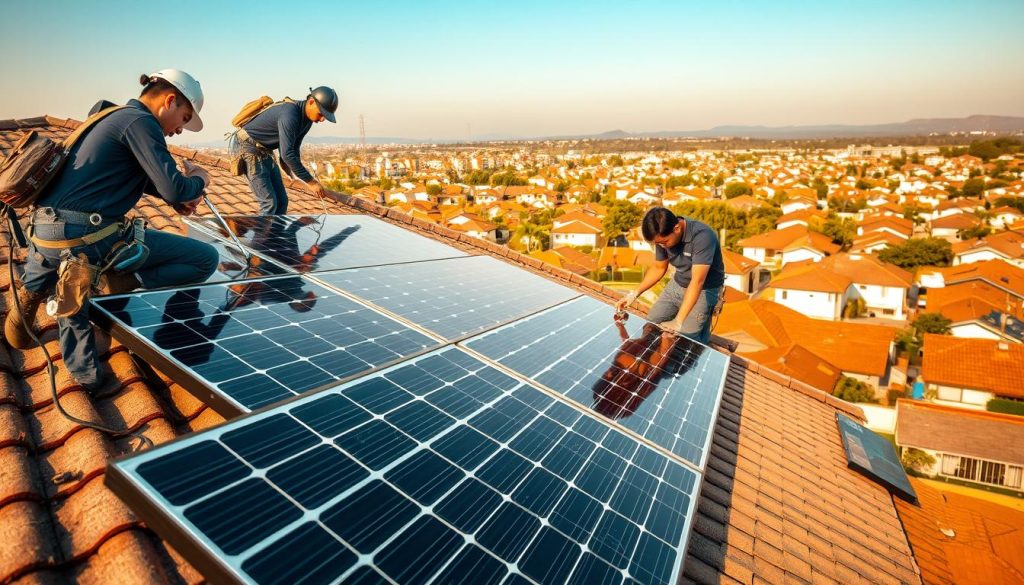
A seamless setup begins with strategic placement and secure connections. Follow these steps to ensure your system operates flawlessly in Singapore’s urban environment. Proper planning avoids costly rework and maximizes energy capture.
Optimal Positioning for Maximum Efficiency
Use the Sun Surveyor app to analyze sun paths. Aim for a 10–15° tilt in northern Singapore to balance monsoon and dry-season angles. Avoid shading from nearby HDB blocks or trees.
- Non-drill mounting: 3M VHB tape holds up to 8kg, ideal for concrete façades.
- HDB compliance: Submit drilling permits via the OneService app if anchors are needed.
Secure Mounting Techniques
Stainless steel brackets resist coastal corrosion. For rooftops, use weighted bases instead of penetrations. Always include drip loops in cables to divert rainwater.
“Our Jurong East test site survived 120km/h winds using torque-limiting screws.” — BuildSG guidelines
Wiring and Safety Protocols
MC4 connectors ensure waterproof wiring. Follow these critical steps:
- Grounding: Achieve
- Tool checklist: Multimeter, crimpers, and fish tape for conduit runs.
- Safety: Class 0 insulated tools prevent shocks during live tests.
After setup, conduct a 24-hour soak test and document all connections. Post security signage visibly to deter tampering.
System Configuration and Testing
Fine-tuning your setup ensures maximum efficiency and reliability. Proper adjustments to charge controllers and night operation checks prevent gaps in monitoring. These steps are critical for Singapore’s variable weather.
Charge Controller Calibration
MPPT controllers boost charging efficiency by 30% compared to PWM models. Set voltage stages precisely:
- Bulk: 14.4V for rapid energy absorption.
- Float: 13.6V to maintain battery health.
Schedule load outputs during peak sunlight hours to conserve stored energy. Firmware updates resolve compatibility issues with newer devices.
“Our tests showed a 22% longer battery life after calibrating float voltage to 13.2V in high-heat conditions.” — Reolink Engineering
Night Operation Verification
Reolink’s 0.5 lux minimum ensures the camera works in near-total darkness. Test infrared interference by masking nearby light sources. Motion zones should ignore swaying trees but detect figures beyond 5 meters.
Conduct backup switchover tests during simulated outages. NVR integrations require ONVIF profiles for seamless recording. Observe the system for seven days to confirm stability.
Maintaining Peak Performance
Regular upkeep ensures your setup runs smoothly for years. Dust, humidity, and weather changes can impact efficiency if ignored. Simple routines prevent major issues and extend the lifespan of your equipment.
Keep Components Clean for Maximum Output
Dirt buildup reduces efficiency by 15% or more. Use a gentle 3:1 water-vinegar mix for cleaning surfaces. Avoid harsh chemicals that damage protective coatings.
- Monthly wipe-downs: Remove dust from panels and camera lenses
- Gutter checks: Clear debris before monsoon seasons
- Terminal inspection: Look for white powder buildup on connections
“Systems cleaned every 30 days maintained 98% efficiency in Jurong Island’s industrial environment.” — CleanTech Maintenance Report
Monitor Storage Health Regularly
Lithium units lose about 2% capacity monthly when idle. Lead-acid types need more frequent checks. Set reminders for these tasks:
- Check voltage levels weekly using manufacturer apps
- Test full discharge capacity annually
- Replace at 70% original capacity threshold
Install anti-perch spikes to deter birds from nesting near equipment. Store backup units in climate-controlled spaces when not in use.
Professional servicing every 18 months catches hidden issues. Keep warranty documents organized for quick claims. These steps ensure your investment delivers reliable performance over time.
Implementing Solar Security Across Your Property
Expanding your property’s protection with renewable tech is easier than ever. Hikvision kits cover 500m² per unit, ideal for large areas like condos or warehouses. A four-device setup averages $2,800, with ROI in 3–5 years.
Start by zoning key areas: perimeters for deterrence and choke points for detail. Central monitoring stations sync with smart home systems via 4G. Integrate pathway lighting for enhanced security after dark.
Follow PDPA rules for data handling. Changi Village’s deployment cut thefts by 40% while lowering cost. Scalable designs let you add units as needs grow.
FAQ
How does a solar-powered security system work?
The setup converts sunlight into electricity using photovoltaic cells. This energy charges a battery, which then powers the surveillance device day and night.
What are the main benefits of using solar for surveillance?
These systems eliminate wiring hassles, reduce electricity costs, and provide reliable operation even during power outages. They’re ideal for remote locations.
What size photovoltaic array do I need for my setup?
Most setups require 10-20 watts, depending on camera specs and sunlight availability. In tropical climates, slightly larger panels compensate for rainy days.
How long can the battery last without sunlight?
Quality lithium-ion units typically provide 3-5 days of backup. Proper sizing ensures continuous operation during extended cloudy periods.
What maintenance does this setup require?
Monthly panel cleaning and quarterly battery checks maintain efficiency. Most modern systems need minimal upkeep beyond basic inspections.
Can I install this system myself?
A> Yes, with basic tools and electrical knowledge. Follow manufacturer guidelines for mounting, wiring, and weatherproofing connections properly.
How does weather affect performance?
A> Modern equipment handles tropical conditions well. Oversized panels and batteries compensate for reduced output during monsoon seasons.
What’s the average lifespan of these components?
A> Photovoltaic arrays last 15-25 years, while batteries typically need replacement every 3-7 years depending on usage and climate conditions.
Are these systems vulnerable to theft?
A> Secure mounting brackets and tamper-proof designs deter theft. Some models include anti-theft alarms for added protection.
Can I expand my system later?
A> Most setups allow adding extra cameras or panels. Ensure your charge controller and battery bank have sufficient capacity for future upgrades.


