
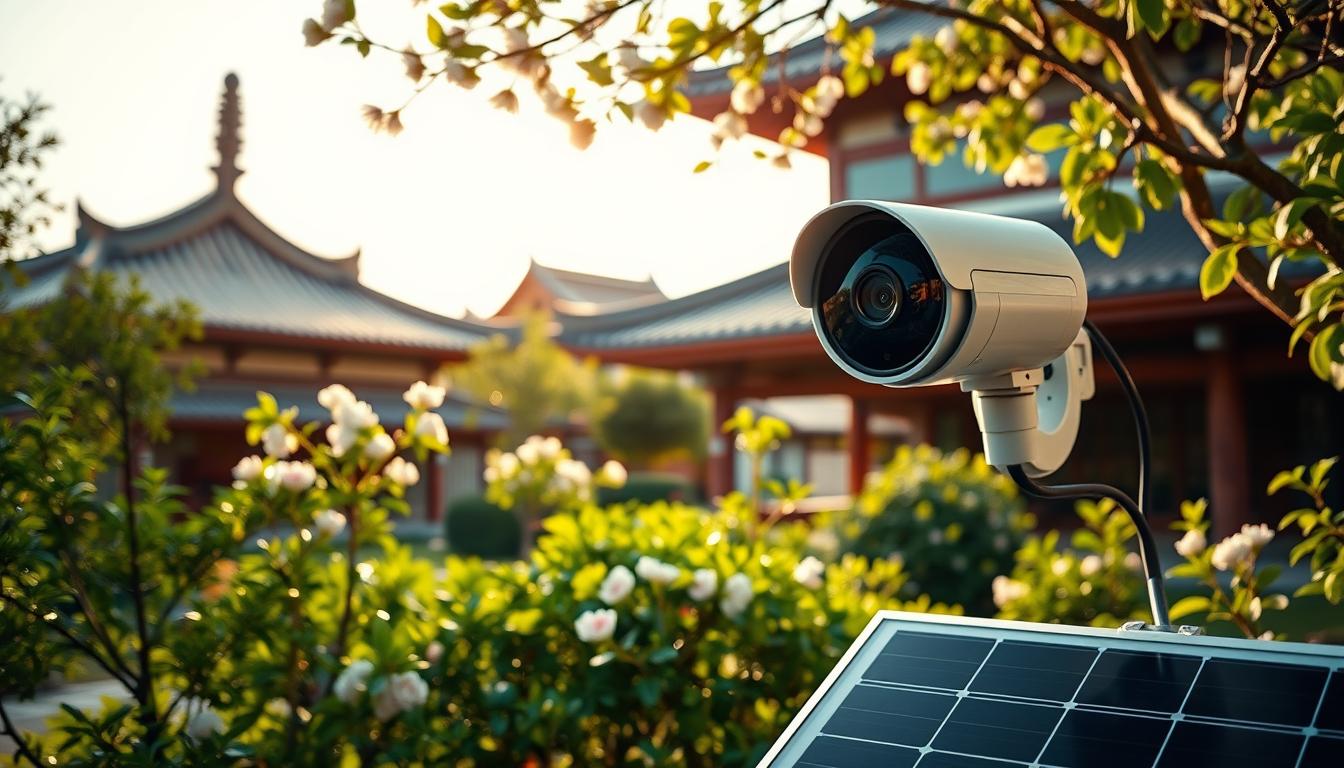
Solar Panel for Wireless Security Camera: A Buyer’s Guide
More homeowners in Singapore are switching to solar-powered security solutions. With over 2,500 hours of sunlight annually, these systems offer a reliable way to keep properties safe while cutting energy costs.
Modern setups can reduce electricity bills by up to 75%, making them a smart long-term investment. The country’s push for sustainable energy—aiming for 20% solar adoption by 2030—further supports this shift.
These devices eliminate complex wiring and integrate with popular smart home platforms. Many models now include 7-day battery backups, ensuring uninterrupted protection even during cloudy days.
Key Takeaways
- Singapore’s sunny climate makes solar security ideal.
- Energy savings can reach 75% with proper setup.
- Government targets 20% solar energy use by 2030.
- Advanced systems offer week-long battery backups.
- Prices have dropped 80% in the last decade.
Understanding Solar-Powered Security Camera Systems
Sustainable monitoring solutions are transforming how we safeguard homes. These setups combine renewable energy with advanced tech to deliver reliable protection without grid dependency.
Energy Conversion and Storage
Modern systems use 30W solar panels to convert sunlight into electricity. Photovoltaic cells capture energy even on cloudy days, feeding it to a 24Ah lithium-ion battery. This storage unit powers devices for 3–4 days without sunlight.
Energy flows through a smart charge controller, preventing overcharging. The controller regulates power to the battery, which then supplies the camera. This seamless process ensures continuous operation.
Advanced Features
- 2650×1440 pixel resolution in high-end models for crisp footage
- AI-driven motion detection to minimize false alarms
- IP66/IP67 weatherproofing for Singapore’s heavy rains
- 30% more efficient solar cells than older versions
Premium security camera models now support H.265 compression. This tech reduces file sizes without losing quality, saving storage space and bandwidth.
Benefits of Solar Panels for Wireless Security Cameras
Cutting energy bills while enhancing safety is now achievable with innovative technology. These systems harness sunlight to deliver 24/7 protection while slashing expenses. Homeowners report savings of SGD $200–$500 annually, with some achieving a 75% reduction in energy costs.
Financial Advantages
Initial setup costs are offset by long-term gains. Traditional wired systems require extensive cabling, while renewable alternatives operate *without needing* grid connections. Most users recoup investments within 2–3 years.
Singapore’s NEA offers grants to further save money on adoption. Premium models include 14-day battery backups, ensuring functionality during prolonged cloudy periods.
- Lower maintenance: 80% fewer servicing needs compared to wired setups.
- Zero cabling: Ideal for remote or hard-to-access areas.
- Scalability: Easily expandable as security needs grow.
Singapore’s Solar Potential for Security Systems
Singapore’s tropical climate creates ideal conditions for renewable energy solutions. The city-state receives 1,580 kWh/m² of annual solar irradiance, with 5.5 peak sun hours daily. This makes solar energy highly viable for powering security setups.
Local Sunlight Conditions and Efficiency
Performance varies across property types. HDB estates often face shading challenges, while landed homes achieve 15–20% higher yields. In places like eastern Singapore, coastal areas see 10% more output than western industrial zones.
The equatorial UV index accelerates panel degradation by 1.5% yearly. A 35° tilt ensures best performance during monsoon seasons. Haze reduces efficiency temporarily, but modern PERC panels maintain 22% conversion rates.
- SolarNova incentives cover 30% of installation costs for HDB residents.
- Lithium batteries outperform lead-acid in humidity, lasting 3x longer.
- Daily cleaning boosts efficiency by 8% in urban areas.
Key Features to Look for in Solar Security Cameras
Battery performance is the backbone of any effective outdoor monitoring system. Without reliable power, even advanced setups fail during critical moments. Here’s what to prioritize for uninterrupted protection.
Power Capacity and Efficiency
A 10,000mAh minimum ensures extended operation. Brands like EufyCam 3 boast a 1-year battery life, while Reolink Argus 3 Pro offers 6 months on standby. Lithium-ion batteries charge faster, but LiFePO4 variants last 3x longer in humidity.
Recharge times matter too. Optimal systems refill in 5–8 hours of sunlight. Smart power management reduces waste by 30%, adjusting output based on usage.
Critical Add-Ons
- Night vision impact: Drains 20% more power; opt for models with adaptive IR.
- IP68 enclosures: Protect against Singapore’s heavy rains and corrosion.
- Warranties: Look for 2–5 years coverage for peace of mind.
For seamless integration, explore solar-powered surveillance cameras with AI-driven features like motion detection. These minimize false alerts and extend built last durability.
Solar Panel Specifications for Optimal Performance
Efficiency starts with matching power needs to equipment specifications. The right setup ensures continuous operation while minimizing energy waste. Key factors include wattage, panel type, and local compliance standards.
Wattage Requirements for Different Cameras
Basic models need just 5W, while PTZ or thermal imaging security cameras require 10W–15W. Multi-camera systems often use 75W panels for consistent output. Below is a quick reference:
- 2W: Doorbell cameras
- 5W–8W: Standard HD models
- 15W+: Advanced features like night vision
Calculate daily consumption (in watt-hours) and multiply by 1.5 for buffer capacity. Monocrystalline panels works well in Singapore’s climate, offering 22% efficiency—5% higher than polycrystalline alternatives.
Installation and Durability
BCA-compliant mounts prevent structural issues. Anti-reflective coatings boost output on cloudy days by 15%. For vandal-prone areas, tempered glass with CSA certification adds safety.
Choosing the Right Battery for Your System
The heart of any reliable setup lies in its power storage. Picking the ideal battery ensures consistent performance, especially during Singapore’s frequent rainstorms. Two main options dominate the market: lithium-ion and lead-acid.
Lithium-Ion vs. Lead-Acid: Key Differences
Lithium-ion batteries outperform lead-acid with 5,000 charge cycles—eight times more than their counterparts. They handle deeper discharges (80% vs. 50%), making them ideal for high-demand setups. Their compact size saves 40% space, crucial for urban installations.
Temperature resilience is another win. Li-ion operates smoothly from -20°C to 60°C, while lead-acid struggles in humidity. A battery management system (BMS) further optimizes battery health, preventing overcharging and overheating.
- Eco-friendly options: Singapore’s NEA sponsors recycling programs for expired units.
- Safety first: Look for UL1973 or IEC62619 certifications to reduce fire risks.
- Longevity: Premium Li-ion models last longer, averaging 5 years with proper care.
“24V systems are now the industry standard, balancing efficiency and cost for solar powered setups.”
For homeowners, the choice boils down to upfront cost versus long-term savings. While lead-acid batteries are cheaper initially, lithium-ion’s durability and efficiency justify the investment over time.
Top Solar Panel Options Available in Singapore
Singapore’s market offers diverse energy solutions for modern surveillance needs. From budget-friendly picks to premium models, here’s a breakdown of top-performing brands tailored for local conditions.
Eufy’s Compact Charger
The 2.6W model stands out with its IP65-rated weatherproofing and 4-meter cable. Ideal for discreet setups, it supports like motion detection features without frequent maintenance. Warranty coverage spans two years.
Reolink’s Waterproof Design
With 6W output and dual-port charging, this option powers multiple devices simultaneously. Its corrosion-resistant casing suits coastal areas, though it’s slightly bulkier than competitors.
- TP-Link Tapo: Balances affordability (SGD $89) with 5W output.
- Arlo: Magnetic mounts simplify installation on metal surfaces.
- Sunpro: Budget pick at SGD $39, but lacks advanced weatherproofing.
Harvey Norman provides installation packages, while Sunpro’s 1-year warranty is the shortest among major brands. For longevity, Reolink’s 5-year coverage is unmatched.
Installation Requirements for Solar Security Systems
Strategic positioning transforms sunlight into reliable protection for properties. In Singapore’s urban environment, careful planning ensures systems capture enough energy while complying with local regulations.
Sunlight Capture Essentials
Most setups need 6-8 hours of direct sunlight daily to function optimally. Professionals recommend 14 AWG cables for runs under 10 feet to minimize power loss. Make sure to assess shading from nearby structures throughout the day.
Seasonal adjustments improve performance significantly. A 15° tilt change between June and December matches the sun’s path. Drone surveys help identify ideal spots in complex layouts.
Singapore-Specific Considerations
HDB facade regulations restrict certain mounting methods. URA guidelines for conservation areas add another layer of requirements. Anti-theft brackets become essential in public housing estates.
- Professional site surveys identify optimal placement while respecting local laws
- Lithium batteries perform better in shaded areas when sunlight is limited
- Regular cleaning maintains efficiency in Singapore’s dusty urban environment
When working well, these systems require minimal maintenance. Proper installation prevents 80% of common issues reported by homeowners.
“Angled mounts facing north-east capture 20% more morning sunlight in high-rise environments.”
Wiring and Connectivity Solutions
Proper wiring ensures your monitoring setup operates without hiccups. In Singapore’s humid climate, waterproof MC4 connectors prevent corrosion while maintaining consistent power flow. For wireless setups, 2.4GHz networks reliably cover 150m outdoors—ideal for landed properties.
Cable Management Best Practices
Choose between PoE and wireless based on your needs. Wired Power-over-Ethernet delivers stable connections but requires conduit installation. Wireless offers flexibility though may need signal boosters for thick concrete walls.
Exposed wiring risks damage from weather or pests. UV-resistant jackets protect against Singapore’s intense sun when routing cables externally. Always include drip loops near connections to divert rainwater.
- Surge protection: Essential during thunderstorms; look for 10kA+ rated devices
- NEMA-4X enclosures: Resist salt spray in coastal areas
- IMDA compliance: Ensures RF emissions stay within legal limits
“Properly installed conduit systems last 3x longer than exposed wiring in tropical climates.”
For systems running smoothly, schedule annual inspections. Check for frayed cables or loose terminals that could interrupt your security camera feed. Strategic planning during installation prevents 90% of common connectivity issues.
Maintaining Your Solar-Powered Security System
Regular upkeep ensures your monitoring setup runs smoothly for years. Proper care maximizes efficiency and prevents unexpected downtime. Follow these guidelines to keep solar components in top condition.
Essential Cleaning Techniques
Dust and debris can reduce performance by 25%. Use a soft brush and distilled water for quarterly cleaning. Early morning is ideal, as cooler temperatures prevent rapid drying streaks.
Bird droppings require immediate attention. A mild soap solution works best for stubborn stains. Avoid abrasive tools that could scratch surfaces.
- Coastal areas: Rinse weekly to remove salt buildup
- Urban locations: Check for pollution residue monthly
- Professional services: Consider annual deep-cleaning packages
System Monitoring and Updates
Smartphone apps help track energy production and battery health. Set alerts for unusual drops in performance. Most apps show real-time data and historical trends.
Firmware updates improve functionality and security. Schedule these during low-usage periods. The NEA provides detailed guidelines for optimal maintenance routines.
“Proper care extends equipment lifespan by 40% compared to neglected systems.”
Regularly check connections for corrosion or looseness. Tighten any loose terminals and replace damaged cables immediately. These simple steps prevent most common issues.
Performance in Singapore’s Climate
Singapore’s unique weather patterns demand resilient protection solutions. The combination of 90% humidity and frequent downpours challenges even high-end equipment. Systems must maintain functionality through temperature swings from 25°C to 35°C daily.
Environmental Resilience Features
Advanced conformal coatings protect circuit boards from moisture damage. These microscopic layers prevent short circuits in places like coastal areas where salt accelerates corrosion. Manufacturers use acrylic or polyurethane variants depending on exposure levels.
Enclosure design plays a crucial role in longevity. Silica gel packets work well for absorbing moisture but require replacement every 6 months. Some models now feature automatic drainage channels that redirect condensation away from sensitive components.
Thermal expansion affects mounting hardware over time. Stainless steel brackets with rubber isolators accommodate material movement. The built last systems undergo NSF 75-80 testing to verify corrosion resistance under simulated monsoon conditions.
“PSB certification now includes 1,000-hour salt spray testing for security equipment installed within 5km of coastlines.”
For optimal performance, check these key aspects quarterly:
- Desiccant saturation levels in sealed compartments
- Mounting bracket integrity after temperature extremes
- Weather stripping around cable entry points
- Cleanliness of ventilation filters in active cooling systems
Cost Analysis: Solar vs Traditional Security Systems
Smart investments in home protection require careful cost evaluation of available options. While eco-friendly setups demand higher initial spending, their long-term savings often justify the premium. In Singapore, the average break-even point hits at 28 months.
Breaking Down the Numbers
Conventional wired systems seem cheaper upfront but hide expenses. Concrete wall wiring adds SGD $200–$500 in labor, while SCDF fire safety certifications cost another $150. Solar alternatives eliminate these fees but require panel and battery investments.
Here’s a component comparison:
- Cameras: Both types cost ~SGD $100–$300 per unit
- Installation: Solar saves 40% with no cabling
- Permits: Traditional setups need extra SCDF approvals
Financial Incentives Matter
Singapore’s 30% tax rebate on green installations helps save money. Banks like DBS offer low-interest loans for solar, spreading costs over 5 years. CASE’s price transparency guidelines prevent overcharging.
“GST absorption promotions now cover 8% of solar security setups until December 2024.”
When comparing energy costs, solar slashes monthly bills by 60–75%. This makes them superior security solutions for budget-conscious homeowners. The math is clear: pay more now, save significantly later.
Integration with Smart Home Systems
Singapore’s tech-savvy households now expect devices to work together effortlessly. Modern protection solutions shine when they connect with existing smart ecosystems. This seamless integration creates responsive environments that adapt to daily routines.
Local Platform Compatibility
The Smart Nation app serves as Singapore’s digital command center. Most current models support this platform through 2.4GHz Wi-Fi connections. This allows residents to monitor their property alongside other smart services.
StarHub HomeHub users enjoy plug-and-play setup with compatible devices. The system recognizes new additions automatically, making configuration an easy set process. Voice commands via Google Assistant or Alexa add hands-free control.
- IMDA TR64 certified for reliable Singaporean network performance
- IFTTT triggers enable custom automations based on motion detection
- Military-grade encryption meets PDPA requirements for data protection
Popular integrations include Philips Hue lighting and Yale smart locks. These partnerships create features like automatic lights during alerts. The result is comprehensive home security that works with your lifestyle.
“Singaporean households average 8 connected devices, demanding robust interoperability standards.”
Future updates will expand Matter protocol support. This ensures long-term compatibility as smart home technology evolves. Choosing systems with open standards guarantees your investment stays relevant.
Security Considerations for Solar Installations
Protecting your energy investment requires smart precautions. While eco-friendly setups offer convenience, they also need safeguards against theft and tampering. Singapore’s urban environment demands extra vigilance for outdoor equipment.
Physical Protection Strategies
Anti-tamper Torx screws deter casual thieves better than standard bolts. Premium models include GPS tracking, helping authorities recover stolen items quickly. Engraving NRIC numbers on components creates visible deterrents and aids identification.
Positioning matters too. Install units at least 3 meters above ground level. Pair them with existing security camera coverage for added monitoring. Motion-activated spotlights startle intruders while alerting homeowners.
Community and Legal Safeguards
- Insurance policies: Check if your plan covers theft of outdoor tech equipment
- Neighborhood watch: Coordinate with local groups for extra surveillance
- Police advice: SPF offers free security audits for residential setups
“Marking equipment reduces resale value by 80%, making theft less appealing to criminals.”
Regular maintenance checks should include inspecting mounts and fasteners. Make sure all components remain securely attached after storms or extreme weather. These simple steps maintain both functionality and protection.
Future-Proofing Your Solar Security Investment
Tech advancements make it crucial to plan ahead for home protection systems. In Singapore’s fast-moving tech landscape, today’s cutting-edge setup could become outdated within 3 years. Smart homeowners choose adaptable solutions that evolve with emerging technologies.
System Upgrade Paths
Modular designs let you add components as needs change. Many solar powered kits now include expansion ports for extra batteries or panels. This flexibility ensures your system grows alongside your property’s requirements.
Firmware updates maintain best performance as standards evolve. Manufacturers release patches every 4-6 months, often adding:
- New encryption protocols for better data protection
- Improved motion detection algorithms
- Energy management optimizations
Hardware compatibility matters too. Look for universal mounting brackets that fit newer models. The NEA’s tech roadmap suggests 5G readiness will soon become essential for smart city integration.
Battery systems with expansion ports last longer between replacements. Some support stackable units, letting you double capacity without replacing the main unit. Solar sharing grids are another emerging option for HDB clusters.
“Subscribing to AI features ensures continuous access to the latest analytics without hardware changes.”
Consider these upgrade cycles for optimal performance:
- Software: Quarterly updates
- Batteries: Every 3-5 years
- Main units: 5-7 year refresh
- Panels: 10+ years with proper care
Aligning with Singapore’s Smart Nation initiative future-proofs your investment. Systems that adapt to new standards will deliver better value over time.
Making the Switch to Solar-Powered Security
Singapore’s sunny climate and government incentives make now the ideal time to upgrade your property’s protection. These security solutions combine sustainability with smart technology, reducing both energy bills and carbon footprints.
Key benefits for local homeowners include:
- 30% NEA rebates available until December 2024
- 15% GST absorption on qualified installations
- 5-year equipment warranties from trusted brands
For personalized advice, contact Wen Hong at +65 6013 5960. Their team handles everything from site surveys to BCA-compliant mounting.
Every switch to renewable home security contributes to Singapore’s 2030 green goals. Start with a free consultation today—your property and planet will thank you.
FAQ
How do solar-powered security cameras work?
These devices use photovoltaic cells to convert sunlight into electricity. The energy charges a built-in battery, which powers the camera day and night. Many models include motion detection to conserve power.
What are the main benefits of using solar energy for surveillance?
You’ll enjoy lower energy costs and uninterrupted operation even during power outages. These systems require no wiring, making installation flexible while reducing environmental impact.
Are solar security cameras effective in Singapore’s climate?
Yes, Singapore’s abundant sunlight makes these systems highly efficient. Modern models handle humidity well and maintain strong performance throughout seasonal weather changes.
What battery specifications should I consider?
Look for lithium-ion batteries with at least 5000mAh capacity for reliable overnight operation. Higher capacity extends recording time during cloudy periods.
How often should I clean the photovoltaic panels?
Monthly cleaning maintains peak efficiency. Use a soft cloth and mild detergent to remove dust and debris without scratching the surface.
Can these cameras integrate with smart home systems?
Many models work with popular platforms like Google Home and Amazon Alexa. Check for compatibility with your existing smart devices before purchasing.
What theft prevention measures are available?
Choose cameras with tamper alerts and secure mounting options. Some models feature locking mechanisms or can be installed in hard-to-reach locations.
How does upfront cost compare to traditional systems?
While initial investment may be higher, solar options eliminate monthly electricity costs. Most users recover the difference within 2-3 years through energy savings.
What maintenance ensures long-term performance?
Regularly check battery health and keep panels free of obstructions. Update firmware when available to maintain security features and functionality.
Can I expand my system later?
A> Many manufacturers offer modular designs that allow adding cameras or storage capacity. Verify expansion options before purchasing your initial setup.


