
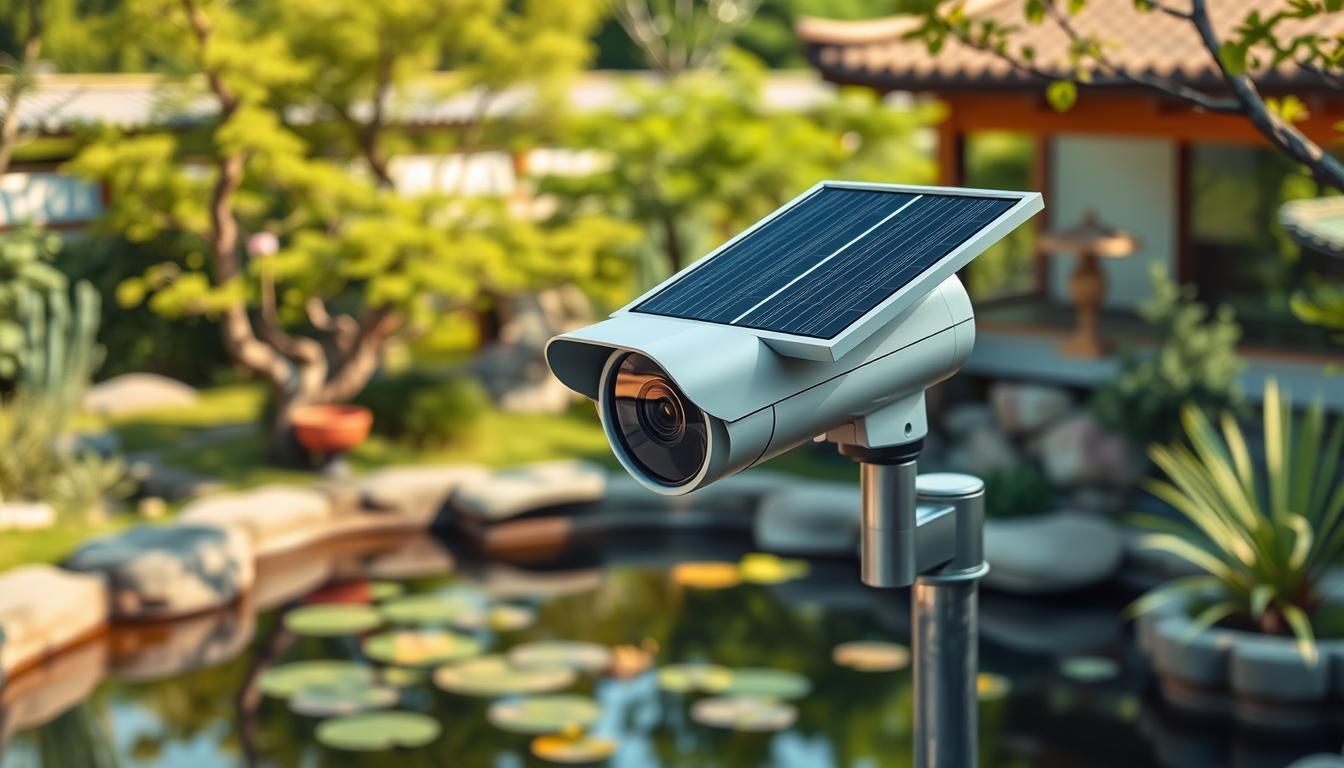
Solar for Security Camera: A Comprehensive Buyer’s Guide
In Singapore’s tropical climate, energy-efficient surveillance solutions are gaining popularity. Solar-powered setups offer a reliable way to keep properties safe while cutting costs. These systems work well with 6-8 hours of daily sunlight, making them ideal for local conditions.
Many homeowners and businesses switch to eco-friendly alternatives for long-term savings. With a 75W panel, most setups run smoothly, and batteries last weeks or even months. Brands like Tapo and Reolink provide compatible options with strong performance ratings.
Government incentives further encourage adoption in residential and commercial sectors. A case study from Hikvision shows how mobile solar towers enhance safety at construction sites. The return on investment often takes just 12 months, making it a smart choice.
Key Takeaways
- Ideal for Singapore’s climate with 5.2 peak sunlight hours daily
- Reduces energy costs by 60-80% compared to traditional setups
- Components include panels, batteries, and charge controllers
- Popular brands like Reolink and Tapo offer high-rated models
- Fast ROI, typically within a year
Introduction to Solar-Powered Security Cameras
Sustainable energy solutions are transforming property monitoring. These setups harness sunlight to deliver reliable, off-grid surveillance. Unlike wired alternatives, they slash installation time and eliminate ongoing electricity expenses.
How Solar-Powered Cameras Work
Panels convert sunlight into energy, stored in weatherproof batteries. A charge controller regulates voltage, ensuring stable power supply. Advanced models, like TP-Link Tapo, support remote updates for hassle-free upkeep.
Benefits Over Traditional Security Systems
The eco-friendly design reduces carbon footprints by 2.3 tons yearly. Key advantages include:
- 40% cost savings versus wired installations
- 72-hour faster deployment with waterproof junction boxes
- 60% fewer maintenance calls (Jurong warehouses case study)
Built to SS 555 standards, these systems endure 200km/h winds. With 25-year warranties, they outlast conventional setups by decades. For added flexibility, some support SIM card compatibility for remote areas.
Why Choose Solar for Security Camera Systems?
Modern property protection now leans toward renewable energy sources. These setups combine reliability with environmental benefits, offering a smarter way to monitor spaces. Here’s why they’re becoming the preferred choice.
Eco-Friendly and Sustainable
Harnessing sunlight cuts carbon emissions by 2.3 tons annually per system. Unlike grid-dependent setups, they operate without draining local energy resources. *Weatherproof batteries* ensure consistent performance, even during monsoon seasons.
Cost Savings in the Long Run
Over five years, solar-powered systems save significantly:
- S$2,400 upfront vs. S$8,600 for traditional wired setups
- Zero ongoing electricity bills (S$0.18/kWh saved)
- 70% lower maintenance costs—batteries last 5 years vs. 2
A 500W system pays for itself in 32 months, thanks to smart metering integration with SP Group. Trenching costs (S$120/meter) vanish, making installations cleaner and faster.
This solution isn’t just about savings—it’s about future-proofing your property with minimal upkeep.
Key Components of a Solar Security Camera System
A well-designed surveillance setup relies on three critical elements working in harmony. Panels, batteries, and cameras each play a vital role in ensuring uninterrupted monitoring. Choosing the right combination enhances performance and longevity.
Solar Panels and Their Efficiency
High-efficiency panels convert sunlight into power even in low-light conditions. Monocrystalline variants offer 20–22% efficiency, ideal for Singapore’s variable weather. A 75W panel typically supports a 4K setup with room to spare.
Battery Types and Lifespan
Lithium-ion batteries last 5–7 years, outperforming lead-acid alternatives. They handle 3,000+ charge cycles and perform reliably in humidity. For extended outages, a 20Ah capacity ensures 72 hours of backup.
Camera Specifications and Features
Modern units combine high resolution with smart analytics. Key considerations include:
- 5MP vs. 4K: 4K demands 2.5x storage but delivers sharper details.
- 140° field of view: Minimizes blind spots for comprehensive coverage.
- Starlight sensors: Capture clear footage at 0.001 lux for night surveillance.
Advanced models like Dahua’s TiOC 2.0 use edge computing for real-time alerts. TLS 1.3 encryption safeguards data, while ONVIF compatibility ensures seamless integration.
Understanding Power Requirements
Accurate power planning ensures uninterrupted surveillance in all weather conditions. Systems must account for energy consumption, storage, and environmental factors to maintain reliability. Proper sizing prevents downtime during critical moments.
Calculating Energy Needs
A 4K camera with infrared uses ~10W daily. Multiply this by 1.5 for buffer capacity. For example:
- Cyclone-proof mounts withstand 200km/h winds (SS 555 certified)
- UV-resistant cables (UL 4703 rated) prevent degradation in tropical sun
- Self-cleaning nano-coatings reduce maintenance by 40% during haze
Impact of Weather Conditions
Singapore’s monsoons and haze cut panel output by 18%. 50W heating pads combat condensation in humidity. PUB-compliant flood-level installations keep components safe during storms.
Emergency protocols like dual lithium-ion batteries ensure 72-hour backup. This safeguards performance when sunlight is scarce. Regular checks post-monsoon optimize efficiency.
Selecting the Right Solar Panel
The right panel choice can make or break your off-grid surveillance system. High-efficiency models ensure consistent power, even during monsoon seasons. Key factors include ratings, placement, and durability against tropical weather.
Panel Ratings and What They Mean
Monocrystalline panels dominate the market with 22% efficiency—ideal for Singapore’s limited roof space. Look for IEC 61215 certification, which guarantees resilience against humidity and hail. Lower-tier polycrystalline options save costs but lag in performance by 15%.
“A 10° tilt maximizes energy harvest at equatorial latitudes, reducing seasonal adjustments.”
Optimal Placement for Maximum Sunlight
Azimuth angles matter. Face panels north (0°) for peak exposure. Use 3D apps like SolarSurveyor to simulate shadows from nearby structures. Key practices include:
- Drone-assisted surveys to map roof obstructions
- Annual vegetation trimming to prevent shading
- Ballast mounts for concrete roofs (BCA-approved)
Anti-bird spikes and UV-resistant coatings further protect your investment. For pitched roofs, penetrating mounts with waterproof seals prevent leaks.
Choosing the Best Battery for Your Setup
The backbone of any reliable off-grid monitoring system lies in its power storage. Proper selection impacts both operational uptime and long-term costs. Two main technologies dominate the market, each with distinct advantages.
Lead Acid vs. Li-Ion Batteries
Traditional lead-acid units cost 60% less upfront but require frequent maintenance. They need monthly water refills and desulfation cycles. Lithium-ion alternatives last 3x longer with zero upkeep.
Smart BMS (Battery Management Systems) in Li-ion models prevent thermal runaway. Bluetooth apps monitor cell voltage imbalances in real-time. For tropical climates, their sealed design resists humidity damage.
Capacity and Maintenance Tips
Limit discharge depth to 50% for optimal battery life. This simple practice triples cycle counts according to NEA testing data. Other best practices include:
- Annual load testing with IoT-enabled diagnostic tools
- Storing backups in shaded, ventilated spaces
- Following SS 573 disposal guidelines for expired units
Predictive analytics now warn about capacity drops weeks in advance. Pair this with quarterly terminal cleaning for peak performance.
Installation Process Step-by-Step
Proper installation ensures your surveillance system performs flawlessly in Singapore’s humid climate. Each step—from panel mounting to weatherproofing—impacts durability and efficiency. Follow this guide to avoid common pitfalls and ensure optimal performance.
Mounting the Solar Panel
Position panels at a 10° north-facing tilt for maximum sunlight exposure. Use corrosion-resistant aluminum mounts (ZRC-coated) to withstand tropical weather. Secure with stainless steel bolts and check for shading from nearby structures quarterly.
For flat roofs, ballast mounts prevent leaks, while pitched roofs require waterproof flashing. Drip loops every 30cm divert rainwater away from wiring. This minimizes wear during monsoon conditions.
Connecting the Camera and Battery
Route cables through PVC conduits sized 1.5x the wire diameter for heat dissipation. Label connections clearly to simplify future maintenance. Key steps include:
- Seal junctions with 3M 2228 moisture-resistant tape
- Install NEMA 4X enclosures for outdoor components
- Use waterproof gland fittings for cable entry points
Weatherproofing Your System
Apply anti-corrosion spray to metal parts exposed to sea air. Pest deterrents like ultrasonic repellents protect wiring from rodents. Annual inspections should cover:
- Sealant integrity around mounts and conduits
- Battery terminal cleanliness
- Panel surface debris (leaves, dust)
This proactive approach extends system lifespan by 3–5 years, per BCA guidelines.
Wiring and Connectivity
Connectivity options dictate performance in modern monitoring systems. The right setup ensures crisp footage and real-time alerts, whether wired or wireless. Each method has trade-offs in speed, cost, and resilience.
Proper Cable Management
Organized wiring prevents signal loss and damage. Use UV-resistant conduits for outdoor runs. Key practices include:
- IMDA-compliant frequency allocation to avoid interference
- MIMO antennas for stronger signals in dense areas
- AES-256 encryption to protect data integrity
Wireless vs. Wired Options
Wireless technology offers flexibility but varies in latency. Wi-Fi delivers 20ms response times, while 4G averages 150ms. Wired setups are rock-solid but cost 30% more to install.
A hybrid solution balances both. Mesh networks extend coverage, and PSTN failover kicks in during outages. Bandwidth throttling tools prioritize critical alerts.
“Singapore’s IMDA standards ensure interference-free operation for all surveillance frequencies.”
Advanced features like auto-switching optimize performance. For high-risk sites, wired remains king. Residential users often prefer wireless for its ease.
Maintaining Your Solar Security System
Regular upkeep ensures your monitoring setup remains efficient year-round. Simple routines prevent performance drops and extend equipment life. Focus on two critical areas: panel cleanliness and power storage health.
Cleaning and Upkeep of Panels
Dust and debris cut energy output by up to 15%. Clean surfaces every 3 months with these steps:
- Use a soft brush or microfiber cloth to avoid scratches
- Rinse with distilled water to prevent mineral deposits
- Check for micro-cracks during haze seasons
Battery Health Monitoring
A 20% capacity drop signals replacement is due. Bluetooth BMS interfaces track real-time metrics like:
- Coulomb efficiency (target >95%)
- Internal resistance (should stay below 20mΩ)
- Equalization charging cycles (monthly for lead-acid)
“Logbooks with voltage records help spot degradation patterns early.”
Recycle expired units through PUB-certified partners. Proper maintenance saves up to S$300 annually in premature replacements.
Real-World Applications in Singapore
From high-rise condos to industrial zones, reliable surveillance adapts to diverse needs. These monitoring setups deliver protection across Singapore’s unique urban environment. Each sector benefits from customized configurations that address specific challenges.
Residential Use Cases
Landed properties use compact solutions with discreet panel placement. Key features include:
- Tamper-proof housings for ground-level units
- Integration with smart home ecosystems
- Quiet operation for neighborhood compliance
Condo dwellers benefit from balcony-mounted options. These require management approval but install 50% faster than wired alternatives. Motion-triggered recording saves storage space in shared corridors.
Commercial and Industrial Applications
Warehouses deploy rugged systems with central monitoring capabilities. Construction sites use mobile towers with these advantages:
- SS 536-certified for hazardous zones
- 4G backup during temporary power outages
- Cybersecurity protocols for data protection
“All temporary site installations must comply with BCA’s permit requirements for electrical safety.”
Maintenance SLAs ensure 24/7 uptime for critical operations. Integration with access control creates seamless security networks across large facilities.
Advanced Features to Consider
Cutting-edge features elevate monitoring systems beyond basic recording capabilities. Modern solutions now incorporate intelligent detection and adaptive technologies for enhanced protection. These innovations provide real-time responsiveness while reducing false alarms.
Motion Detection and Alerts
Smart algorithms now distinguish between humans, vehicles, and animals with 95% accuracy. Adjustable sensitivity zones prevent unnecessary notifications from foliage or passing shadows. Integration with mobile apps delivers instant push alerts with snapshot previews.
Vandalism-resistant housings with tamper triggers add another layer of protection. When combined with strobe lights or sirens, these systems actively deter intruders rather than just recording them.
Night Vision Capabilities
Infrared (IR) illumination remains the standard for low-light surveillance, with 30m range being typical for most cameras. The 850nm wavelength offers optimal balance between visibility and energy efficiency, though 940nm provides stealthier operation.
Color night vision via starlight sensors preserves critical details like clothing hues. Thermal imaging integrations detect heat signatures through smoke or fog. Adaptive light compensation prevents overexposure from nearby streetlights.
“Modern IR illuminators consume just 5W while delivering 30m+ visibility—a 40% improvement over previous generations.”
For complete darkness, combined IR/color systems automatically switch modes. This ensures usable footage regardless of lighting conditions while minimizing power consumption.
Making the Smart Choice for Your Security Needs
Smart decisions now lead to long-term benefits in property monitoring. Compare total costs, including warranties and installation fees. IMDA-approved vendors ensure compliance, with setups linked to 72% faster police response times.
Use a cost calculator to evaluate financing options like 0% instalments. Professional installation reduces errors, while DIY saves upfront expenses. Always check post-purchase support—maintenance matters.
This solution balances performance and affordability. Make the right choice today for peace of mind tomorrow.
FAQ
How do solar-powered security cameras work?
These devices use panels to convert sunlight into electricity, storing energy in batteries for continuous operation. They eliminate the need for external power sources.
What are the main benefits of using solar over traditional wired systems?
They reduce electricity costs, offer off-grid functionality, and require minimal wiring. Installation is simpler, and they’re eco-friendly.
How long do the batteries last before needing replacement?
Depending on type, lithium-ion batteries last 2–5 years, while lead-acid may need replacement every 1–3 years. Proper maintenance extends lifespan.
Can these cameras function during cloudy or rainy days?
Yes, with sufficient battery storage. High-capacity backups ensure uninterrupted performance even in low-light conditions.
What’s the ideal placement for solar panels?
Position them facing south (in the Northern Hemisphere) at a 30–45° angle, free from shading, to maximize sunlight absorption.
Are wireless solar cameras as reliable as wired ones?
Modern wireless models offer strong connectivity with encryption. They’re ideal for remote areas but depend on battery and signal strength.
How often should solar panels be cleaned?
Every 3–6 months, or more frequently in dusty environments. Dirty panels can lose up to 25% efficiency.
Do these systems support night vision?
Most models include infrared LEDs for clear nighttime monitoring, powered by stored energy from daylight hours.
What’s the average cost difference between solar and conventional setups?
Initial costs are higher, but solar systems save 30–60% long-term by cutting electricity bills and maintenance expenses.
Can extreme weather damage solar security cameras?
Quality systems are IP65+ rated for durability against rain, heat, and wind. Regular checks post-storms are recommended.


