
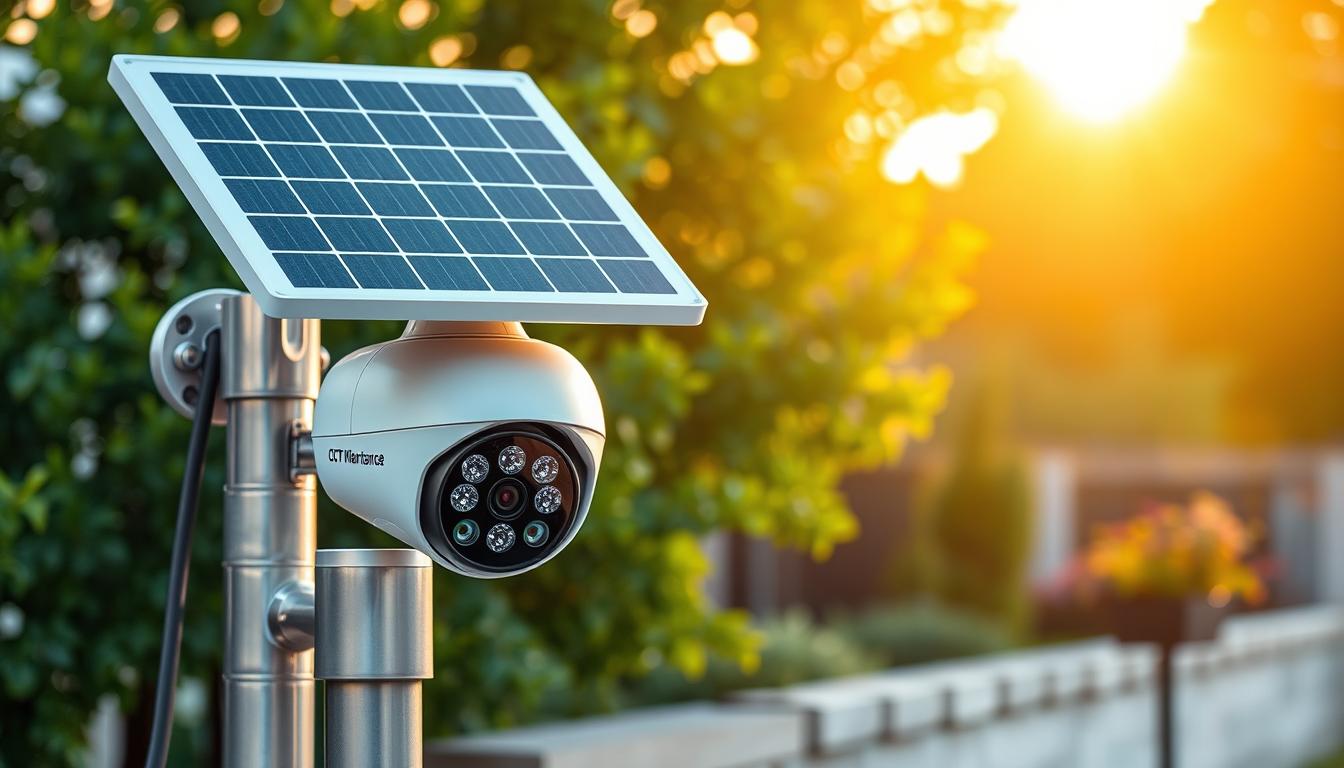
Solar Battery Powered Floodlight PTZ Camera FAQs
Home security is more important than ever. The solar battery powered floodlight PTZ camera is a new solution for outdoor use. It combines surveillance and lighting, making it a reliable choice for keeping your home safe.
This camera uses solar power, which is good for the environment. It also means you don’t have to worry about power cuts. It works well in all kinds of weather.
This section answers common questions about the solar battery powered floodlight PTZ camera. It helps you understand its features and how to install it. If you’re in Singapore and want to improve your home security, this is a smart choice. For more information and special deals, contact CCTV Maintenance for expert advice.
Key Takeaways
- The solar battery powered floodlight PTZ camera offers versatile security solutions for outdoor areas.
- Utilizes renewable solar power for energy efficiency.
- Features advanced motion detection to enhance user safety.
- Supports both cloud storage and local storage options.
- Designed to operate under various weather conditions with an IP66 waterproof rating.
- Equipped with reliable two-way communication functionality.
- Includes built-in night vision for complete monitoring at night.
What Is a Solar Battery Powered Floodlight PTZ Camera?
A solar battery powered floodlight PTZ camera is a smart device that uses the sun’s power. It has a strong light and can move to cover more areas. This camera works well without needing electricity, thanks to its solar panel.
It’s great for many places like farms, events, highways, and forests. It can keep going for up to 7 days without sunlight. It’s also built to withstand wind and water, making it perfect for the outdoors.
This camera has cool features like spotting people and storing videos locally. It can even send data over a 4G SIM card. Setting it up is easy, weighing just 14 kg.
| Feature | Description |
|---|---|
| Solar Panel | 5W with modular design for flexible power management |
| Video Quality | 1080p resolution (1920*1080P), H.265 compression |
| Detection Range | 15M with motion detection capabilities |
| Audio | Two-way voice intercom functionality |
| Operating Temperature | -15℃ to 60℃ |
| Dimensions | 220mm x 170mm x 115mm |
Benefits of Using a Solar Powered Surveillance Camera System
Using a solar powered surveillance camera system has many benefits. It’s cost-effective, saving up to 75% on energy costs. This makes it great for homes and businesses.
These systems also help the environment. They use renewable energy, reducing our need for fossil fuels. This supports global efforts to be more sustainable and cuts down on carbon emissions.
Setting up these cameras is easy. You don’t need to deal with complicated wiring. This makes it simple to place them anywhere, even in places without electricity.
They come with cool features like motion detection and night vision. These features boost security without raising energy bills. Solar cameras are a smart choice because they work well in all kinds of weather.
They can run for up to 7 days without sunlight. This is perfect for places with changing weather, like Singapore. Models like the Reolink Argus 3 Pro and EufyCam 3 offer great video quality at good prices.
Solar cameras use little power and are built to last. They can last up to 10 years with the right care. Their long battery life and wide view make them a great security tool.
How Does a Solar Battery Powered Floodlight PTZ Camera Work?
A solar battery powered floodlight PTZ camera uses smart tech to capture sunlight for watching over areas. It has solar panels that turn sunlight into electricity during the day. This electricity is stored in big batteries, like 5100mAh ones, to power the camera and its lights at night.
These cameras are built to last, working for up to seven days without sunlight. They keep watching even when it’s cloudy. They also have special lights and IR illuminators for seeing in the dark, up to 200 meters away.
With PTZ, these cameras can move around a lot. They can turn 355° horizontally and 100° vertically. This lets them cover any area well. They also use energy wisely, saving up to 75% of power compared to old systems.
These cameras are made to handle Singapore’s hot and wet weather. They have a weatherproof rating of IP66 or higher. This means they can handle rain and high humidity while working great. Solar powered PTZ cameras are a smart choice for keeping an eye on things without spending a lot.
Installation Guidelines for Solar Outdoor Camera Systems
Setting up a solar outdoor camera system needs careful planning. Start by placing the camera and solar panel in the best spot. Choose a spot that gets lots of sunlight all year, facing south in the Northern Hemisphere or north in the Southern Hemisphere.
Adjust the solar panel’s tilt to match your area’s latitude. This helps catch more sunlight. Make sure there are no trees or buildings blocking the sunlight. Also, keep the panel away from open flames or flammable stuff for safety.
Get the right tools like a drill, screwdriver, level, marker, and ladder for the installation. First, mount the camera securely. It should have a clear view of the area you want to watch. A height of at least 9 feet is good for both coverage and safety.
Keep the solar panel clean to avoid dirt and debris. Regular cleaning is key to keeping it working well. By following these steps, your solar outdoor camera system will work great and keep your area safe.
Following the manufacturer’s instructions and best practices is important. For more tips and detailed steps, check out this resource.
Features of the Solar Battery Powered Floodlight PTZ Camera
The solar powered floodlight camera is a key tool for today’s security needs. It boasts a 4MP resolution for clear video. It also has PIR motion detection and AI human detection, sending alerts and recording events.
It connects via 4G/WiFi, letting you watch your place from anywhere. The two-way voice intercom adds to security and communication. You can store footage in the cloud for 30 days or on a TF card up to 128GB.
This camera runs on solar power, backed by a 6W panel and 15000mAh battery. It works well in any light, thanks to its dual-use lens and night vision up to 30 meters.
The camera’s pan/tilt lets you see a wide area. You can zoom in 4x for detailed views. It’s also waterproof, rated IP66, for use in all weather.
It has smart features like automatic arming and works with the UBox app. Here’s a quick look at its main features:
| Feature | Description |
|---|---|
| Resolution | 4MP for clear video quality |
| Connectivity | 4G/WiFi for remote access |
| Power Supply | Solar-powered with a 6W solar panel, 15000mAh battery |
| PTZ Functionality | 355° pan, 100° tilt |
| Audio | Two-way voice intercom |
| Storage Options | Cloud storage with 30 days free, SD card support (up to 128GB) |
| Motion Detection | Automatic video recording with alerts |
| Weather Resistance | IP66 rating for outdoor usage |
| Dual Functionality | Combines courtyard lighting and wireless camera |
| Night Vision | 30 meters with color and infrared capabilities |
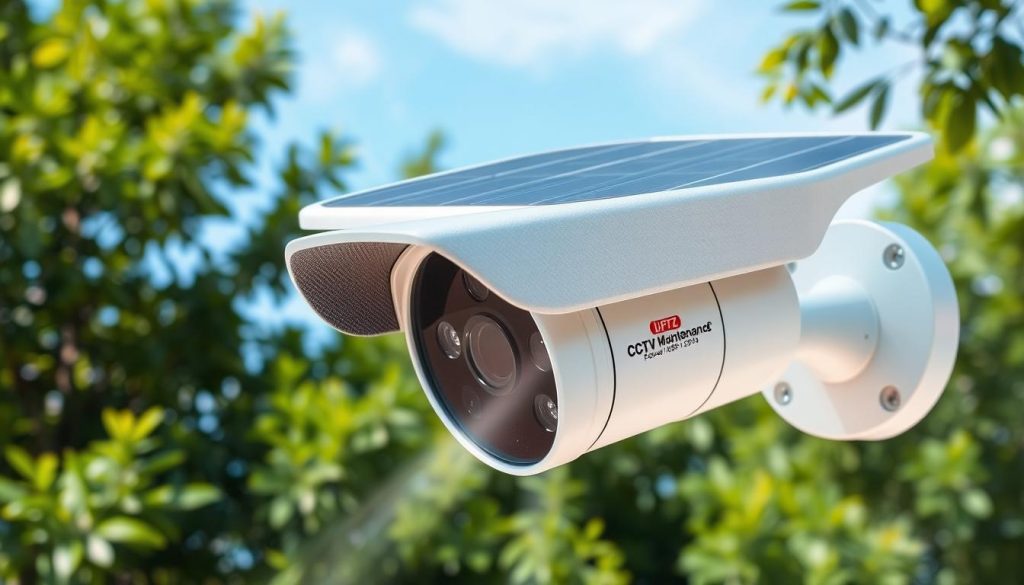
Solar Battery Powered Floodlight PTZ Camera Maintenance Tips
To keep your solar battery powered floodlight PTZ camera working well, it’s key to follow some maintenance tips. Cleaning the solar panels regularly helps them soak up more sunlight. Try to clean them every month to get rid of dirt and dust.
Updating the camera’s firmware is also important. It brings new features and fixes security issues. Also, check the camera’s housing after bad weather to make sure it’s okay.
Checking the battery’s health is another important task. Do this often to make sure it’s storing power well. If the battery isn’t working as it should, it might be time to get a new one. Using the app to keep an eye on the battery can help catch problems early.
Cleaning the camera lens also helps make images clearer. Make sure the solar panel and camera are placed right for the best performance. The solar panel should face the equator and be tilted based on your location.
Weather and location can affect how well the solar panel works. If it’s not getting enough sunlight, you might need to check it more often. Also, keep an eye on the wiring and settings to avoid any power problems. Adjusting the camera’s view and motion detection can also help save battery and improve recording.
| Maintenance Task | Frequency | Purpose |
|---|---|---|
| Clean solar panels | Monthly | Maximize energy absorption |
| Update firmware | Quarterly | Access new features & patches |
| Inspect camera housing | After extreme weather | Ensure durability |
| Check battery performance | Monthly | Reliable power operation |
| Monitor battery health via app | Regularly | Identify potentially issues |
Power Requirements for Solar Powered Floodlight Security Cameras
Knowing the power needs for solar security cameras is key for their use. Most solar powered floodlight security cameras need between 4 to 15 watts. This affects the solar panel size and battery capacity needed for steady performance.
For example, the TP-Link camera uses 5.4W, while the Google Nest Cam IQ uses up to 13W. The Ring Floodlight Cam uses the most at 15W. Choosing the right solar panel size is important for reliable use, where there’s no electricity.
The solar panel’s efficiency is vital. It charges the battery, which powers the camera. It’s important to pick the right sunlight and battery size. A typical camera uses a 3.7V/4.4Ah Lithium-ion battery, working even when it’s not sunny.
Solar panels should face the sun for best charging. A formula helps figure out how long they’ll work: (Solar generator capacity * 0.85) / Operating wattage. For example, a Jackery Explorer 500 can power a 15W camera for days, even on cloudy days.
Knowing about the solar powered floodlight security camera power consumption helps pick the best setup. They work at night, keeping watch without needing electricity. This makes them great for both city and country areas. For more info, see this site.
Choosing the Right Solar Panel for Your Camera Setup
When picking a solar panel for your security cameras, choosing the right one is key. Start by looking at the panel’s rating. A 75W panel usually works well for daily use. Most cameras need 4 to 15 Watts, so check your camera’s power use to pick the right panel.
Where and how you place the solar panel matters a lot. Aim for an angle of 35° to 45° to catch the most sunlight. Also, think about how the seasons and local sunlight will change. Solar panels can make 250-350 watts in full sun.
For simple setups, panels range from 6 to 8 Watts. For more power, like for advanced cameras or more than one, look for 20 to 60 Watts panels. For example, the TP-Link camera needs about 5.4 Watts, so you’ll need a panel that fits its power needs.
Choosing the right battery is also important for keeping your camera running. A 15000mAh battery can last up to seven days without sunlight. This is great for cloudy days or when it’s dark. Use a solar charge controller rated at 10A/12V to manage power and keep the battery safe.
Lastly, think about how efficient the panel is. Monocrystalline panels are the most efficient, making 250-400 Watts daily. Polycrystalline panels are cheaper, making 200-300 Watts daily. Choose based on your budget and needs.
Weather Resistance and Durability of Solar Powered Cameras
When picking solar powered security cameras, their durability is key. These cameras are made to last through harsh weather like rain, wind, and changing temperatures. They are built to withstand all kinds of weather, thanks to their strong materials.
Most solar cameras are built tough for bad weather. They often have an IP66 rating, which means they’re safe from water and dust. This keeps your camera working well, even when it’s raining or dusty.
It’s also important to think about the temperature range. Solar cameras work well from -10°C to 55°C. This means they can handle Singapore’s hot and humid weather. They also handle humidity levels from 10% to 90% without getting damaged.
Another great thing about solar cameras is their battery life. Some can last up to seven days without sunlight. For example, the Reolink Argus 3 Pro and EufyCam 3 are known for their long battery life and cool features like 4K recording and AI facial recognition.
Choosing the right solar camera is more than just about tech. It’s also about where you install it. Bright sunlight areas are best for solar cameras, like in Singapore. Hikvision cameras, for example, work well in low light, showing they can handle tough light conditions. A durable, weather-resistant solar camera keeps your property safe all year.
Conclusion
Solar battery powered floodlight PTZ cameras are changing how we keep our homes and businesses safe in Singapore. They cut energy use by up to 50%, helping the environment and saving money. These cameras also need less maintenance, saving about 60% compared to wired systems.
These cameras have advanced features like 4K imaging and can move in many ways. This makes them great for watching over any area. They offer clear views and full coverage, no matter the setting.
These cameras are also very reliable. They can work for up to 7 days without sunlight and perform well in all kinds of weather. As the solar security market grows, so does the need for these cameras.
If you want to boost your security while being green, consider eufy floodlight cameras. They combine lights and surveillance, setting a new standard in security tech. To learn more about solar cameras and how to add them to your system, contact CCTV Maintenance at +65 6013 5960. They can help you make the right choice!
FAQ
What is a solar battery powered floodlight PTZ camera?
A solar battery powered floodlight PTZ camera is a smart outdoor security tool. It has a strong floodlight and PTZ technology, all run by solar power. This lets you place it anywhere, making sure you’re always watched over without needing electricity.
What are the benefits of using a solar powered surveillance camera system?
Using a solar powered camera system saves money on electricity. It’s also better for the environment because it uses clean energy. Plus, it’s easy to set up and can be placed anywhere. Features like motion detection and night vision add extra security without using a lot of energy.
How does a solar battery powered floodlight PTZ camera work?
Solar panels turn sunlight into electricity, which is stored in batteries. This power runs the camera and its floodlight. Even on cloudy days, the system works thanks to the battery. Smart tech lets you watch and control it from your phone.
What are the installation guidelines for solar outdoor camera systems?
Choose a spot that gets lots of sunlight for your solar panels. Make sure the camera is mounted right for a clear view. Follow the instructions carefully and use the right tools to get it working well.
What features does a solar battery powered floodlight PTZ camera offer?
This camera has high-quality video, infrared for night vision, and alerts for motion. You can control it remotely with PTZ. It’s also tough against bad weather and lets you store footage in the cloud.
What maintenance is required for solar battery powered floodlight PTZ cameras?
Clean your solar panels often to catch the most sunlight. Check the battery and camera regularly. Test the motion detection and internet connection every few months. Also, keep an eye out for updates to keep it working great.
What are the power requirements for solar powered floodlight security cameras?
Cameras use between 4 to 15 watts, which affects the solar panel and battery size. Knowing how much power your camera needs is key. This ensures it works well, even when the weather is bad.
How do I choose the right solar panel for my camera setup?
Consider the panel’s rating, sunlight hours, and your area’s weather. Make sure the solar panel matches your camera’s power needs. Choosing the right battery is also important to keep your camera running.
How weather resistant and durable are solar powered security cameras?
Many solar cameras are built to last, with weatherproof casings and strong parts. They can handle rain, wind, and cold, making them perfect for outside use.


