
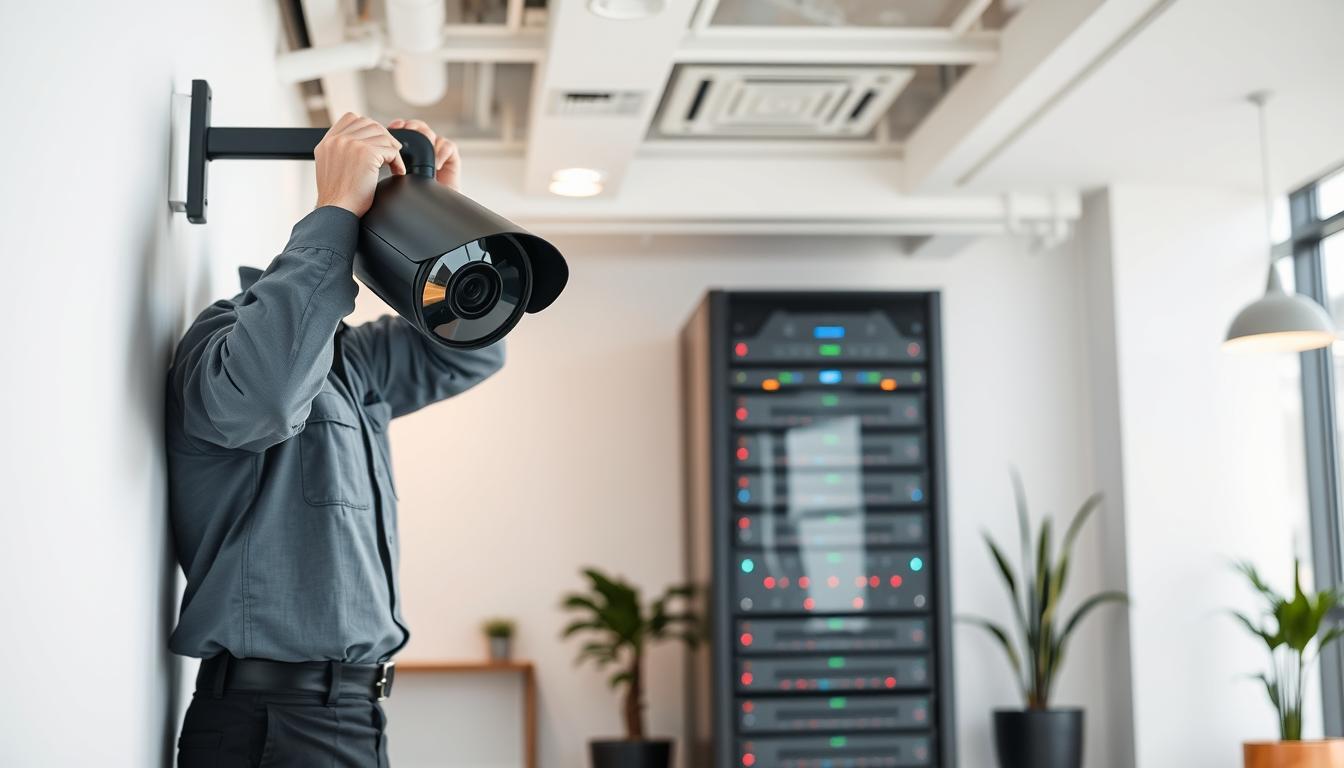
Professional Business Security Camera System Installation
Did you know that 75% of businesses in Singapore without surveillance face theft? This alarming statistic highlights the importance of protecting your assets. In a bustling city like Singapore, staying vigilant is crucial.
Wen Hong Engineering is a trusted name in the industry, offering top-notch solutions tailored to your needs. With years of experience, they ensure every setup complies with Singapore’s Personal Data Protection Act (PDPA). This guarantees your data remains secure and private.
Professional setups differ significantly from DIY approaches. Experts ensure optimal placement, seamless integration, and long-term reliability. Don’t leave your safety to chance—choose a team that delivers results.
Ready to enhance your protection? Call +65 6013 5960 today for a free security assessment. Take the first step toward peace of mind.
Key Takeaways
- 75% of Singapore businesses without surveillance face theft.
- Wen Hong Engineering offers reliable and compliant solutions.
- Professional setups ensure optimal performance and reliability.
- Compliance with PDPA guarantees data security.
- Call +65 6013 5960 for a free assessment.
Why Your Business Needs a Security Camera System
In today’s fast-paced environment, safeguarding your assets is more critical than ever. With a 22% reduction in theft and a 7% increase in profits, investing in commercial security is a smart move. These setups not only protect but also enhance operational efficiency.
Singapore has seen a 47% drop in crime rates where visible surveillance systems are in place. High-value industries like retail, food & beverage, and logistics benefit significantly. For example, Changi Airport’s advanced setup has become a global benchmark for safety and efficiency.
Another advantage is the potential for insurance premium reductions. Companies can save up to 20% by demonstrating robust security needs. Additionally, these systems integrate seamlessly with the Singapore Police Force, ensuring swift responses to incidents.
Key Benefits of Modern Solutions
- Visible setups deter crime by 47% in Singapore.
- High-value industries like retail and logistics see significant improvements.
- Changi Airport’s success highlights the effectiveness of advanced technology.
- Insurance savings of up to 20% are achievable.
- Integration with local authorities enhances overall safety.
By addressing your security needs, you not only protect your assets but also build trust with stakeholders. In a competitive market like Singapore, staying ahead means staying secure.
Types of Business Security Camera Systems
Not all surveillance solutions are created equal—know your options. When choosing a setup, understanding the differences between analog and IP cameras is crucial. Each type has unique features like resolution, latency, and bandwidth requirements, making them suitable for specific applications.
Analog vs. IP Cameras: Which is Right for You?
Analog cameras are a traditional choice, offering a maximum resolution of 720p. They are ideal for environments like warehouses, where high-definition video isn’t a priority. With a latency of just 50ms, they provide real-time monitoring without delays. However, they require only one CCTV channel, making them less demanding on bandwidth.
On the other hand, IP cameras deliver advanced performance with resolutions up to 8K. They are perfect for retail spaces, where clarity and detail are essential. Though they have a higher latency of 150ms, their ability to handle 4-8Mbps of bandwidth ensures smooth operation even in high-traffic areas.
Another standout feature of IP cameras is their low-light performance. Technologies like Hikvision’s DarkFighterX enhance visibility in challenging conditions. While analog cameras cost around $200 per unit, IP cameras start at $450, reflecting their advanced capabilities.
- Latency: Analog (50ms) vs. IP (150ms).
- Bandwidth: Analog uses 1 CCTV channel, while IP requires 4-8Mbps.
- Applications: Analog suits warehouses, while IP is ideal for retail.
- Low-Light Performance: IP cameras excel with features like DarkFighterX.
- Cost: Analog costs $200 per camera, while IP starts at $450.
Choosing the right camera system depends on your specific needs. Whether you prioritize cost-effectiveness or advanced features, understanding these differences ensures you make an informed decision.
Benefits of Professional Installation
Ensuring your premises are fully protected starts with the right setup. Professional installation services bring expertise that DIY methods simply can’t match. With proper placement, blind spots can be reduced by up to 40%, ensuring every corner is covered.
Expert Placement for Maximum Coverage
Professionals use advanced techniques like thermal mapping to identify optimal locations. This ensures maximum coverage and eliminates vulnerabilities. For example, a 360° corridor camera offers full visibility, while a 90° entrance camera focuses on specific areas.
Height optimization is another critical factor. Mounting devices between 2.4m to 3m ensures they are out of reach yet provide clear views. Anti-tamper positioning further enhances durability, preventing interference.
A case study from a Jurong warehouse highlights the effectiveness of professional installation. After implementing expert placement, the site achieved a 100% reduction in theft. This demonstrates how the right setup can transform safety.
- Thermal mapping for optimal coverage.
- 360° corridor vs 90° entrance camera selection.
- Height optimization: 2.4m-3m mounting standard.
- Anti-tamper positioning techniques.
- Case study: 100% theft reduction at Jurong warehouse.
By choosing professional installation, you ensure your premises are business safe and fully protected. The right setup makes all the difference.
Key System Features
High-definition video quality is a game-changer for modern setups. It ensures clarity and reliability, making it easier to identify details like faces within 4 meters. Choosing the right cameras and understanding their features can significantly enhance performance.
Resolution Standards and Performance
Resolution plays a cameras key role in determining video quality. Options range from 2MP for basic needs to 4MP and 8MP for advanced setups. For example, 4MP devices can identify faces within 4 meters, while 8MP offers unmatched detail for high-traffic areas.
WDR (Wide Dynamic Range) technology is essential for high-contrast environments. It balances light and dark areas, ensuring clear footage even in challenging conditions. This feature is particularly useful in spaces with varying lighting.
Frame Rates and Storage Needs
Frame rates determine how smoothly video plays. Standard options include 25fps and 30fps. Higher rates provide smoother playback, which is crucial for fast-moving scenes. Additionally, storage calculations are vital. A 4MP device typically requires 1TB of storage per week, so plan accordingly.
Lens Types and Applications
Lens types also impact performance. Varifocal lenses offer adjustable focus, making them versatile for different setups. Fixed lenses, on the other hand, are ideal for specific, unchanging environments. Choose the option that best suits your needs to make sure your setup will work well.
- Resolution: 2MP for basics, 4MP for clarity, 8MP for detail.
- WDR: Balances light for high-contrast environments.
- Frame Rates: 25fps vs 30fps for smooth playback.
- Storage: 4MP requires 1TB per week.
- Lens Types: Varifocal for versatility, fixed for specific needs.
Installation Process
The foundation of a reliable setup lies in thorough planning. A detailed site assessment ensures every aspect of your camera installation is optimized for performance. Professionals use advanced tools like 3D modeling in 78% of cases to visualize and plan the setup effectively.
Understanding your business needs and security needs is crucial during this phase. A 23-point site survey checklist helps identify potential issues, while network infrastructure evaluation ensures seamless integration. Lighting analysis with lux meters guarantees optimal visibility in all conditions.
Site Assessment and Planning
To find best solutions, experts focus on key areas. Access control integration planning ensures all components work together smoothly. Compliance audits for PDPA signage guarantee adherence to local regulations, protecting your data and privacy.
Here’s what a professional assessment includes:
- Comprehensive site survey with a 23-point checklist.
- Detailed network infrastructure evaluation.
- Lighting analysis using advanced lux meters.
- Access control integration planning.
- Compliance audit for PDPA signage.
By addressing these factors, you ensure your setup is system running efficiently and effectively. Proper planning minimizes risks and maximizes performance, giving you peace of mind.
Why Choose Professional Services
Navigating the complexities of surveillance setups requires expertise. Professional services ensure your commercial security camera systems meet all local regulations. With 75% of DIY installations violating PDPA guidelines, relying on experts is crucial.
Compliance with Local Regulations
Professionals understand the intricacies of Singapore’s laws. They ensure your cctv solutions comply with IMDA certification requirements. This includes using AES-256 data encryption to protect sensitive information.
Restricted zones like toilets and prayer rooms are carefully avoided. Professionals also adhere to retention period laws, keeping footage for a minimum of 31 days. Audit documentation processes are streamlined to ensure transparency.
“Compliance isn’t just about following rules—it’s about protecting your reputation and data.”
By choosing experts, you avoid the pitfalls that many businesses face. They ensure your setup is efficient, reliable, and fully compliant. This helps you keep system running smoothly while meeting all legal requirements.
- IMDA certification: Ensures your setup meets national standards.
- Data encryption: AES-256 protects sensitive information.
- Restricted zones: Areas like toilets are off-limits.
- Retention laws: Footage is stored for at least 31 days.
- Audit documentation: Streamlined processes for transparency.
Professional services not only enhance your security but also provide peace of mind. With experts handling your setup, you can focus on what matters most—your operations.
Cost Considerations
Understanding the financial aspects of surveillance setups is essential for making informed decisions. In Singapore, the average installation cost ranges from $4,000 to $20,000, depending on the scale and complexity of the project. Many businesses focus solely on upfront expenses but overlook hidden costs that can impact the overall budget.
Budgeting for Equipment
Cameras typically account for 30-50% of the total budget. However, additional expenses like conduit piping and server racks can add up quickly. Proper planning helps you save money and avoid unexpected costs.
Calculating the return on investment (ROI) is equally important. Most setups have a payback period of 18-24 months, making them a worthwhile long-term investment. For those looking to reduce upfront costs, government grants like the Productivity Solutions Grant (PSG) offer up to 80% funding.
Leasing options are another way to manage expenses. Instead of an outright purchase, many businesses opt for leasing to spread out payments over time. This approach ensures you get the latest technology without straining your budget.
- Camera costs: 30-50% of the budget.
- Hidden expenses: Conduit piping, server racks.
- ROI: 18-24 month payback period.
- Government grants: PSG covers up to 80%.
- Leasing vs purchase: Flexible payment options.
By carefully considering these factors, you can implement effective surveillance systems that meet your needs without overspending. Proper budgeting ensures you get the most value out of your investment.
Latest Trends
The future of surveillance is here, and it’s powered by AI. Advanced technologies are transforming how we monitor spaces, offering smarter and more efficient solutions. From reducing false alarms to optimizing operations, these innovations are setting new standards.
One standout feature is motion detection, which has become more accurate with AI. False alarms are reduced by an impressive 92%, ensuring you only receive alerts for genuine threats. This saves time and resources while enhancing reliability.
AI-Powered Analytics
AI-driven tools are reshaping surveillance with features like people counting and license plate recognition (LPR). These capabilities are invaluable for crowd control and traffic management. For example, LPR systems can track vehicles in real-time, improving safety and efficiency.
Retail spaces benefit from heat mapping, which analyzes customer movement to optimize store layouts. This data-driven approach boosts sales and enhances the shopping experience. Meanwhile, facial recognition technology raises compliance concerns, requiring careful implementation to adhere to privacy laws.
Predictive maintenance alerts are another game-changer. These notifications ensure your equipment stays operational, minimizing downtime and repair costs. With cloud-based solutions, you can access data from anywhere, enabling remote monitoring and seamless updates.
- People counting for effective crowd control.
- License plate recognition (LPR) for real-time tracking.
- Heat mapping to optimize retail layouts.
- Facial recognition with compliance considerations.
- Predictive maintenance alerts to reduce downtime.
By embracing these trends, you can stay ahead in the evolving world of surveillance. AI-powered solutions not only enhance safety but also drive efficiency and innovation.
Operational Enhancements
A well-monitored environment fosters productivity and safety. With the right tools, you can streamline workflows and create a more efficient workplace. Security cameras play a vital role in this process, offering benefits that go beyond protection.
Studies show that 70% of staff feel safer when monitored, leading to increased focus and performance. These setups also help in various operational aspects, from verifying time-clock entries to ensuring compliance with safety protocols.
Improving Employee Productivity
Modern solutions provide tools to enhance daily operations. Time-clock verification systems ensure accurate attendance tracking, while safety protocol monitoring reduces risks. Hazard detection features, like identifying spills or obstructions, further improve workplace safety.
Training becomes more effective with video playback, allowing employees to learn from real scenarios. Additionally, recorded footage serves as evidence in conflict resolution, ensuring fair outcomes. These features contribute to a smoother and more productive environment.
- Time-clock verification for accurate attendance tracking.
- Safety protocol compliance monitoring to reduce risks.
- Hazard detection for spills, obstructions, and other dangers.
- Training via video playback for effective learning.
- Conflict resolution evidence to ensure fair outcomes.
By integrating these tools, businesses can achieve operational excellence while providing peace of mind to their teams. The right setup not only enhances efficiency but also fosters a safer and more productive workplace.
Choosing Providers
Selecting the right provider for your needs can make all the difference. A trusted partner ensures your setup is efficient, reliable, and compliant with local regulations. With over 20 years of experience, providers like Keydence Systems have set industry standards for excellence.
What to Look for in a Service Provider
Certifications are a key indicator of quality. Look for ISO 9001 and SSIC STAR certifications, which demonstrate adherence to international standards. These credentials ensure your provider meets rigorous quality and safety benchmarks.
Manufacturer partnerships also matter. Providers collaborating with industry leaders like Dahua and Axis offer access to cutting-edge technology. This ensures your setup is equipped with the latest advancements in cctv systems.
Response time SLAs are another critical factor. Providers offering 4-hour response times outperform those with 24-hour guarantees. This ensures minimal downtime and quick resolution of issues.
Uptime guarantees of 99.95% or higher provide peace of mind. These commitments ensure your commercial security camera systems remain operational at all times. Additionally, disaster recovery protocols safeguard your data during emergencies.
- Certifications: ISO 9001, SSIC STAR.
- Manufacturer partnerships: Dahua, Axis.
- Response time SLAs: 4hr vs 24hr.
- Uptime guarantees: 99.95%+.
- Disaster recovery protocols for data protection.
By choosing a provider with these features, you ensure your installation services are handled by experts. This guarantees a seamless and professional installation process, giving you confidence in your setup.
Maintenance Tips
Regular maintenance is the backbone of any reliable setup. It ensures your devices work well and minimizes unexpected issues. Studies show that consistent upkeep can reduce downtime by 67%, making it a critical part of your strategy.
Regular System Check-Ups
To keep system performance at its peak, schedule routine check-ups. These inspections help identify potential problems before they escalate. Here are some essential practices to follow:
- Quarterly cleaning schedules: Dust and debris can affect performance. Regular cleaning ensures your cameras and other components remain functional.
- Firmware update cycles: Stay updated with the latest software to enhance features and fix bugs. This keeps your installation running smoothly.
- Storage health diagnostics: Monitor your storage devices to prevent data loss. Regular checks ensure your footage is always accessible.
- IR illuminator testing: Verify that night vision capabilities are functioning correctly for uninterrupted monitoring.
- Backup power checks: Ensure your backup systems are operational to maintain coverage during power outages.
By following these steps, you can keep system reliability high and avoid costly repairs. For more tips on ensuring your setup is always operational, visit this guide.
Common Mistakes
Effective surveillance starts with proper placement, yet many overlook this critical step. DIY installations often result in 40% coverage gaps, leaving vulnerabilities unaddressed. To make sure your setup meets security needs, avoid these common errors.
Key Placement Errors to Avoid
Backlighting errors are a frequent issue. Placing devices facing bright lights can obscure footage, making it useless. Always position your security camera to avoid direct light sources.
Overlooking choke points is another mistake. High-traffic areas like entrances and exits must be covered to ensure comprehensive monitoring. These spots are critical for meeting business needs and enhancing safety.
Height miscalculations can also compromise effectiveness. Mounting too high or too low affects visibility. Aim for a height of 2.4m to 3m to cameras right balance coverage and accessibility.
Weatherproofing oversights can lead to equipment failure. Ensure outdoor devices are rated for local weather conditions to maintain reliability year-round.
Multi-tenant interference issues often arise in shared spaces. Coordinate with neighbors to avoid overlapping coverage and ensure privacy for all parties.
- Backlighting errors: Avoid direct light sources for clear footage.
- Choke points: Cover high-traffic areas like entrances and exits.
- Height miscalculations: Mount between 2.4m to 3m for optimal visibility.
- Weatherproofing: Use outdoor-rated devices for durability.
- Multi-tenant interference: Coordinate with neighbors to avoid overlaps.
By addressing these mistakes, you can create a robust setup that meets your security needs and ensures comprehensive coverage. Proper placement is the foundation of effective surveillance.
Legal & Insurance Support
Video evidence has become a cornerstone in resolving disputes efficiently. Studies show that it settles 89% of disputes, making it an invaluable tool for both legal and insurance processes. Properly documented footage ensures transparency and accelerates resolutions.
Providing Evidence
To ensure your surveillance system meets legal standards, focus on key documentation practices. Chain of custody records verify the authenticity of footage, while metadata preservation ensures its integrity. These steps are crucial for court-approved export formats, which are often required in legal proceedings.
Insurance claims benefit significantly from video evidence. It accelerates the process by providing clear proof of incidents. Additionally, documented footage can address employee misconduct, offering a factual basis for disciplinary actions. For more insights on optimizing your setup, visit our business CCTV services.
- Chain of custody documentation: Ensures footage authenticity.
- Metadata preservation: Maintains data integrity.
- Court-approved export formats: Meets legal requirements.
- Insurance claim acceleration: Speeds up resolutions.
- Employee misconduct documentation: Provides factual evidence.
By leveraging your commercial security systems effectively, you can streamline legal and insurance processes while maintaining compliance. Proper documentation and evidence handling are essential for achieving these goals.
Take the First Step
Taking proactive steps to safeguard your premises is essential in today’s world. With Wen Hong’s 24/7 support, you can ensure your setup is always reliable and efficient. Start with a free site survey to identify the best solutions tailored to your needs.
Flexible financing options make it easier to invest in advanced technology without straining your budget. Our team also provides a smart city readiness assessment, ensuring your setup aligns with Singapore’s evolving infrastructure.
Enhance your protection with cybersecurity add-ons, keeping your data secure from potential threats. These features ensure your system remains robust and future-proof.
Ready to take action? Secure your premises today: +65 6013 5960. Let us help you create a safer, smarter environment.
FAQ
Why is surveillance important for businesses in Singapore?
Surveillance helps protect assets, deter theft, and ensure safety. In Singapore, it’s especially crucial due to high foot traffic and strict security standards.
What’s the difference between analog and IP cameras?
Analog cameras are cost-effective but offer lower resolution. IP cameras provide high-definition video and advanced features like remote monitoring.
Why should I hire professionals for installation?
Professionals ensure proper placement, compliance with local regulations, and seamless integration with existing systems for maximum coverage.
What features should I look for in a security system?
Look for high-definition video, motion detection, night vision, and cloud storage to meet your specific needs.
How does the installation process work?
It starts with a site assessment to identify key areas, followed by planning, equipment setup, and testing to ensure everything works well.
What are the latest trends in surveillance technology?
AI-powered analytics, facial recognition, and cloud-based solutions are transforming how businesses monitor and secure their premises.
How can I maintain my system effectively?
Regular check-ups, software updates, and cleaning cameras ensure your system runs smoothly and lasts longer.
What are common mistakes to avoid during installation?
Poor camera placement, ignoring lighting conditions, and choosing the wrong equipment can reduce the effectiveness of your setup.
How can surveillance systems support legal and insurance needs?
High-quality footage can provide evidence in disputes, support insurance claims, and help resolve incidents quickly.
What should I consider when choosing a service provider?
Look for experience, customer reviews, compliance with local laws, and the ability to customize solutions for your specific requirements.


