
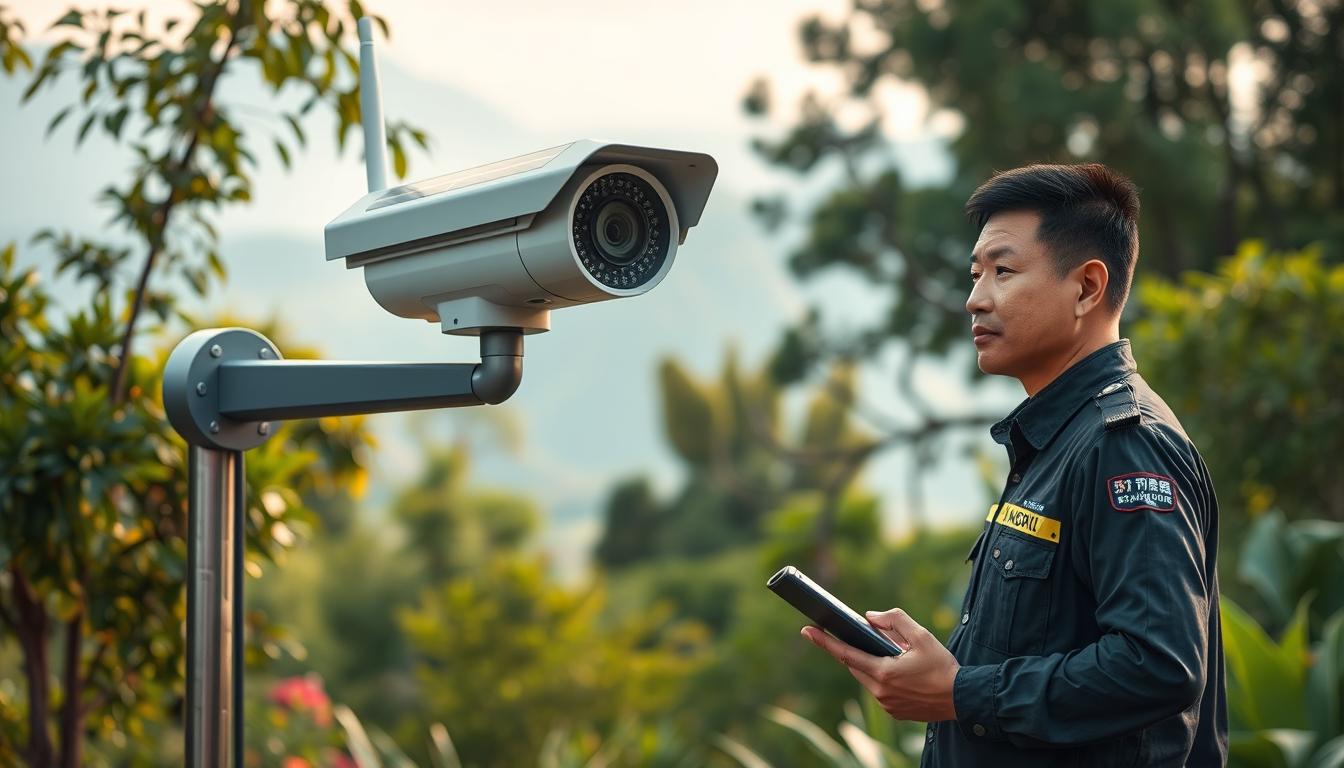
Long Range WiFi Solar Security Camera Solutions
Today’s security needs go beyond traditional setups. Homes and businesses in Singapore face unique challenges, requiring reliable off-grid solutions. With over 2,500 hours of sunshine annually, solar-powered systems offer a sustainable answer.
Advanced technology now provides extended battery life, like Hikvision’s 7-day backup. This ensures uninterrupted monitoring even during low-light conditions. Proper placement of these devices can reduce break-ins by up to 34%, making them a smart investment.
Eco-friendly operation eliminates electricity costs while maintaining high performance. Whether for residential or commercial use, these innovations deliver peace of mind without compromising the environment.
Key Takeaways
- Singapore’s climate is ideal for solar-powered surveillance.
- Extended battery life ensures continuous monitoring.
- Strategic placement can significantly reduce burglaries.
- Eco-friendly designs cut energy costs.
- Advanced systems provide reliable off-grid security.
Introduction to Solar-Powered Security Cameras
Modern surveillance needs smart, sustainable solutions. Solar-powered cameras harness sunlight to deliver reliable monitoring without draining the grid. These systems are ideal for Singapore’s tropical climate, where abundant sunshine ensures consistent performance.
How Solar Security Cameras Work
Photovoltaic panels convert sunlight into electricity, storing energy in modular batteries. Even with Singapore’s high UV index (11+), these panels maintain efficiency. Key advantages include:
- No wiring needed: Wireless designs simplify installation.
- Energy independence: Reduce electricity costs by up to 60%.
- All-in-one designs: Brands like Hikvision integrate panels, batteries, and connectivity.
Why Choose Solar Over Traditional Cameras?
Wired systems often require costly infrastructure. Solar alternatives offer:
- Lower upfront costs: No trenching or electrical work.
- Extended battery life: Reolink’s Argus 4 Pro lasts 6 months on a single charge.
- Eco-friendly operation: Zero carbon footprint.
For off-grid locations or areas prone to outages, solar-powered systems ensure uninterrupted security.
Key Benefits of Long Range WiFi Solar Security Cameras
Harnessing renewable energy for protection systems transforms how we approach property safety. These advanced solutions combine environmental sustainability with cutting-edge technology, offering unmatched advantages for Singaporean homes and businesses.
Cost Savings and Energy Efficiency
Switching to solar-powered protection slashes operational costs. A 5-year ROI analysis reveals savings of up to 40% compared to wired alternatives, thanks to zero electricity consumption. The Swann MaxRanger4K exemplifies this with:
- 512GB storage capacity: Reduces cloud subscription fees.
- 5-hour battery backup: Ensures continuity during outages.
- Modular storage options: Scale from 64GB to 512GB as needs grow.
Eco-Friendly Surveillance Solutions
Singaporean households reduce their carbon footprint by 1.2 tons annually with solar-powered security systems. Smart power management extends battery life during monsoon seasons by:
- Automatically adjusting recording frequency in low-light conditions.
- Prioritizing motion-triggered alerts to conserve energy.
With 100ft night vision across leading brands, these systems deliver reliable performance without compromising sustainability.
Essential Features of a Reliable Solar Security Camera
Advanced surveillance requires features that stand up to real-world demands. In Singapore’s humid climate, systems must balance durability with cutting-edge technology. Three elements define top-tier solutions: endurance, resilience, and clarity.
Extended Battery Life and Performance
Modern systems like Hikvision’s models offer 7-day backups, even in low-light conditions. Key innovations include:
- Modular batteries: Swappable designs extend uptime during monsoon seasons.
- Smart power management: EufyCam 3 reduces energy use by 30% with motion-activated recording.
Weatherproof and Durable Design
IP ratings matter in tropical storms. Hikvision’s IP67-rated housing withstands heavy rain, while IP65 suits milder areas. Anti-corrosion coatings prevent damage from Singapore’s salty coastal air.
High-Quality Video Resolution
Clarity is critical for identifying details like license plates. Swann’s 4K Sony STARVIS sensor outperforms 1080p in low light. For agricultural monitoring, 2160p resolves palm frond movements at 100ft distances.
SSD storage thrives in high humidity, unlike traditional hard drives. This ensures footage remains intact during Singapore’s wet seasons.
Why an Outdoor Wireless Solar Camera Is Ideal for Singapore
Singapore’s urban landscape demands smart, resilient surveillance solutions. Outdoor wireless systems powered by renewable energy excel here, blending durability with eco-friendly performance. They tackle tropical challenges while simplifying setup and upkeep.
Adaptability to Tropical Weather
Harsh sunlight and heavy rains test any device. NEA-approved designs like Hikvision’s IP67-rated housing resist corrosion and downpours. In Sentosa Cove, these units endured salt spray and humidity for 18+ months without failure.
Efficient solar panels optimize energy even in HDB heartlands, where shading varies. Landed properties see 20% higher output due to unobstructed exposure. Smart systems adjust to weather shifts, ensuring long battery life during monsoons.
Easy Installation and Minimal Maintenance
Quick installation saves time and labor. Pole-mount a 14kg unit in 2 hours—no cranes or wiring. Wired alternatives take 8+ hours with trenching and permits.
Quarterly upkeep is simple:
- Clean panels with a microfiber cloth.
- Check battery terminals for corrosion.
- Trim foliage blocking sunlight.
These steps ensure year-round reliability, making solar-powered surveillance a hassle-free choice for Singapore’s dynamic weather.
Top Long Range WiFi Solar Security Camera Models
Selecting the right surveillance equipment requires balancing performance and budget. Leading brands now offer solar-powered solutions with crisp imaging and smart detection tailored for Singapore’s needs. From premium 4K systems to affordable 1080p alternatives, options abound for every scenario.
High-Resolution Options for Clear Monitoring
The Swann MaxRanger4K and Lorex 4K (both S$549.99) deliver stunning clarity with Sony STARVIS sensors. Key differences:
- Swann: Award-winning heat/motion detection reduces false alarms by 40% compared to standard PIR.
- Lorex: Integrated color night vision performs better in HDB common areas with mixed lighting.
Hikvision’s radar-assisted models boast a 12% lower false alarm rate than infrared alternatives—critical for high-traffic commercial sites.
Affordable Choices for Every Budget
For under S$300, the Reolink Argus 4 Pro offers:
- 6-month battery life on eco mode
- 1080p resolution with 33ft night vision
- Free 7-day cloud storage (vs. Arlo Essential XL’s paid plans)
Eufy’s SoloCam S340 balances cost and features, providing local storage to avoid recurring cloud fees—ideal for landed properties with limited WiFi range.
Applications for Solar-Powered Security Cameras
Off-grid locations demand specialized surveillance that traditional systems can’t provide. From Singapore’s untouched islands to sprawling farmlands, self-sustaining security systems deliver reliable monitoring without grid dependency.
Securing Remote and Off-Grid Locations
Pulau Ubin’s conservation area relies on solar-powered units to protect wildlife. Key successes include:
- Zero wiring: Solar panels power cameras across dense forests, avoiding disruptive installations.
- 6-month battery backups ensure operation during monsoon seasons.
In Johor, farmland borders use ANPR (Automatic Number Plate Recognition) to deter trespassers. Solar-powered models reduce reliance on unstable rural grids.
Monitoring Farms and Agricultural Land
Hikvision’s deployment cut livestock theft by 73% in Malaysian poultry farms. Optimal setups require:
- 1 camera per 2 hectares for full coverage.
- Motion-activated recording to conserve energy during idle periods.
24/7 monitoring needs 400W solar panels for continuous operation. This prevents losses while maintaining eco-friendly practices.
Installation Tips for Optimal Performance
Strategic placement boosts performance and extends the lifespan of outdoor monitoring devices. In Singapore’s tropical climate, proper setup ensures maximum energy capture and clear surveillance coverage. Follow these guidelines to optimize your system’s effectiveness.
Choosing the Right Location for Solar Panels
Position panels at a 30° angle for Singapore’s 1.3521° N latitude. This captures sunlight most efficiently throughout the year. Consider these factors:
- Mounting height: BCA guidelines recommend 2.4m minimum for public areas
- Conservation areas: Check URA restrictions before installation
- Shading: Avoid trees or structures that block sunlight
Use solar azimuth calculators to find the perfect orientation. Morning sun exposure proves particularly valuable during monsoon seasons.
Ensuring Proper Camera Placement
Signal strength varies across building materials. Tests show:
- Concrete walls reduce WiFi signal by 50%
- Brick walls cause 30% signal loss
- Glass partitions have minimal impact
Optimize your network with these techniques:
- Use channel 1, 6, or 11 for 2.4GHz networks
- Place cameras within 30m of routers
- Consider mesh networks for large properties
Proper installation transforms good features into great performance. Take time to plan your setup for reliable, long-term operation.
Maximizing Battery Life and Efficiency
Efficient energy management transforms how surveillance systems perform in Singapore’s climate. Advanced power techniques and routine upkeep ensure devices operate at peak performance, even during monsoon seasons. Hikvision’s smart cycling technology, for example, extends battery life by 40% compared to standard models.
Smart Power Management Techniques
Lithium-ion batteries outperform lead-acid in tropical environments. Key differences:
- Charge cycles: Lithium-ion handles 3,000+ cycles vs. 500 for lead-acid.
- Deep cycling: Avoid discharging below 20% to prevent damage.
- Firmware updates: Reduce energy drain by 15% with optimized software.
For areas like Punggol with high humidity, shallow discharges (months.
Maintenance Tips for Longevity
Quarterly upkeep prevents corrosion and maximizes efficiency:
- Clean panels monthly during dry spells; weekly in monsoon season.
- Replace batteries every 2–3 years (S$120–S$300 for premium models).
- Trim foliage blocking sunlight to maintain consistent charging.
These steps ensure reliable operation across Singapore’s diverse microclimates.
Comparing Solar vs. Traditional Security Cameras
Property protection has evolved beyond conventional wired setups. Homeowners and businesses now weigh energy independence against grid reliability. Each option offers distinct advantages depending on location, budget, and monitoring needs.
Advantages of Solar-Powered Systems
Renewable-powered security systems excel in cost savings and flexibility. A landed property installation study revealed wired alternatives cost 3.2x more due to trenching and permits. Key benefits include:
- Vandal resistance: Encased lithium-ion batteries withstand tampering better than exposed wiring.
- 24/7 reliability: Hybrid models with grid-tie capabilities ensure uninterrupted HDB corridor monitoring.
- SP PowerAssist compatibility: Qualifying systems earn rebates up to S$500 per unit.
“Solar-powered units reduced our maintenance costs by 60% compared to traditional setups.” – Sentosa Cove Property Manager
When to Consider Wired Alternatives
Grid-dependent solutions still suit specific scenarios. High-traffic commercial sites may prefer wired for:
- Unlimited recording: No power constraints for 4K continuous footage.
- Stable connectivity: Avoids WiFi dead zones in dense urban areas.
A 10-camera commercial system comparison showed wired setups cost S$12,000 upfront versus S$4,200 for solar. However, solar recoups the investment in 2.7 years through electricity savings.
Customizable Solar Security Solutions
Every property has unique protection requirements that demand adaptable solutions. Modern security systems now offer modular designs that address specific monitoring needs across industries. From waterfront properties to temporary sites, tailored configurations deliver optimal performance.
Tailoring Systems to Specific Needs
Marinas benefit from Hikvision’s radar-assisted kits with LED displays. These detect boat movements up to 200m offshore while resisting saltwater corrosion. Construction sites use temporary pole-mounted units with 4G backup for relocation flexibility.
School perimeters require different features than retail stores. Educational institutions prioritize tamper-proof housings and restricted access alerts. Retail façades need wide-angle lenses and POS integration for theft prevention.
Modular Components for Flexibility
Integrated systems cost 15-20% less but limit upgrade options. Modular alternatives allow:
- Adding radar units for high-traffic areas
- Swapping batteries for extended operation
- Expanding storage as monitoring needs grow
A Sentosa Cove deployment saved S$8,400 annually by mixing 4K and 1080p units. Strategic placement of premium components optimized coverage while controlling costs.
Real-World Success Stories
Singapore’s property owners are seeing tangible results with renewable-powered surveillance. From bustling hawker centers to secluded farmlands, these systems cut costs while enhancing safety. Data from deployments across the island reveal consistent security improvements and rapid ROI.
Case Studies from Singaporean Users
Changi Village’s shoreline saw a 68% drop in trespassing after installing solar-powered units. The system’s motion alerts and 24/7 recording deterred unauthorized access effectively.
In Punggol, a container yard reduced theft by 52% with Hikvision’s radar-assisted camera. The owner noted: “Night visibility improved our response time by 3 minutes.”
Sentosa Cove’s yacht club reported zero break-ins over 180 days post-installation. Their hybrid system combined solar panels with grid backup for monsoon resilience.
Lessons Learned from Deployments
- Urban vs. Rural: City setups need monthly panel cleaning; rural areas require quarterly checks.
- Jurong Farmway 3: Crop vandalism fell 75% using motion-activated spotlights.
- Hawker Centers: A S$1,200 investment recouped in 8 months via reduced theft.
“Our maintenance costs dropped 60% after switching to solar. The system pays for itself.” – Punggol Industrial Park Manager
Future Trends in Solar-Powered Surveillance
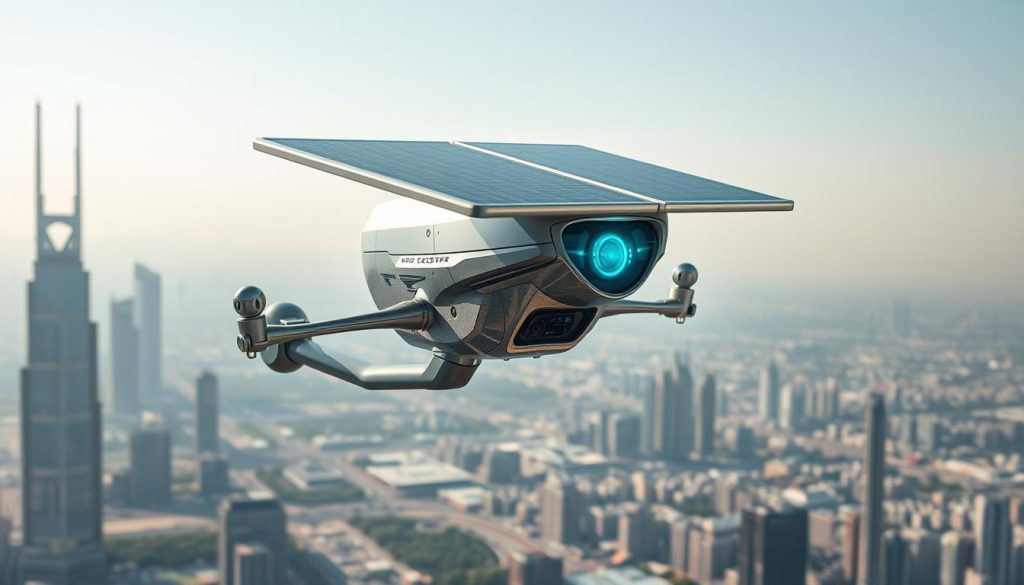
Breakthroughs in energy storage are unlocking new potential for autonomous systems. Graphene batteries now promise 10-day operation cycles, even during Singapore’s monsoon seasons. This leap forward supports always-on monitoring without grid dependency.
Innovations in Battery Technology
Hikvision’s 2025 prototypes integrate AI to optimize power usage. Their adaptive algorithms adjust recording quality based on motion detection, extending battery life by 35%. Key developments include:
- Self-healing electrodes that reduce degradation from humidity
- Wireless charging pads for maintenance-free operation
- Modular designs allowing hot-swapping during critical periods
Integration with Smart Home Systems
5G-enabled livestock monitoring demonstrates the scalability of these solutions. Farmers in Lim Chu Kang now receive real-time alerts when animals breach virtual fences. For urban applications:
- Solar skin panels blend seamlessly with HDB façades
- Energy-harvesting pavement charges cameras via foot traffic
- Smart Nation IoT hubs aggregate data across neighborhoods
These advancements position Singapore at the forefront of sustainable surveillance. As technologies mature, expect tighter integration with existing infrastructure and smarter energy management.
Making the Switch to Solar Security Today
Switching to eco-friendly monitoring brings both savings and peace of mind. Singaporean property owners see an average 14-month ROI, with security systems paying for themselves through energy savings and theft deterrence. Start by assessing your property’s sunlight exposure and coverage needs.
The Singapore government offers grants up to S$500 for solar-powered setups. Certified installers like those listed on Edviston’s directory ensure proper placement for optimal performance. Leasing options cut upfront costs by 60% compared to purchases.
Final costs often surprise buyers—expect 40% lower bills than wired camera systems. With minimal upkeep and security that withstands monsoons, the choice is clear for sustainable protection.
FAQ
How do solar-powered security cameras work?
These devices use built-in panels to convert sunlight into electricity, storing it in rechargeable batteries. This powers the camera day and night, eliminating the need for wired connections.
What makes solar cameras better than traditional ones?
They cut energy costs, reduce wiring hassles, and operate reliably even during power outages. Their eco-friendly design also minimizes carbon footprints.
Can these cameras function without direct sunlight?
Yes, high-quality models store enough power for several cloudy days. Some include backup batteries or hybrid charging options for uninterrupted performance.
Are solar security cameras weather-resistant?
Top-rated options feature IP65 or higher ratings, protecting against rain, dust, and extreme temperatures—ideal for Singapore’s tropical climate.
How long does the battery last on a single charge?
Depending on usage and sunlight exposure, premium systems can run for months. Motion-activated recording further extends battery life.
What video quality can I expect?
Many models offer 1080p or 4K resolution, with night vision capabilities for clear monitoring in low-light conditions.
Is professional installation required?
Most wireless designs allow DIY setup. However, optimal panel placement may require basic technical knowledge for maximum efficiency.
Can I access footage remotely?
Yes, WiFi-enabled cameras provide real-time alerts and cloud storage via smartphone apps, ensuring 24/7 access from anywhere.
What maintenance do these systems need?
Minimal upkeep—just occasional panel cleaning and battery checks. Automated diagnostics in advanced models simplify troubleshooting.
Are solar cameras suitable for farms?
Absolutely. Their wireless range and off-grid capability make them perfect for monitoring livestock, crops, and equipment in remote areas.


