
Is it legal to install CCTV outside my house? A Guide
Homeowners often consider security cameras to protect their property. However, rules govern where and how these devices can be placed. In Singapore, regulations vary based on property type and privacy laws.
For HDB flats, recent 2023 updates require approval before mounting external cameras. Private residences face different guidelines under the Personal Data Protection Act (PDPA). Violations may lead to fines up to $5,000.
Balancing safety needs with neighbor privacy is crucial. Proper placement avoids recording public spaces or adjacent homes. This guide clarifies compliance steps while maximizing protection.
Key Takeaways
- HDB residents need approval for outdoor camera installations
- PDPA rules protect individuals’ privacy in private residences
- Unauthorized setups risk substantial financial penalties
- Position cameras to avoid monitoring neighboring properties
- 2023 regulations introduced stricter HDB compliance measures
Understanding the Basics of CCTV Installation in Singapore
Modern home protection often involves visual monitoring systems. These devices range from traditional CCTV cameras to smart doorbells, all designed to enhance safety. Before setup, knowing what qualifies as surveillance equipment is crucial.
What Constitutes a CCTV Camera?
Legally, any device recording video falls under surveillance rules. This includes:
- Smart doorbells with recording capabilities
- Peephole cameras capturing footage
- Traditional outdoor or cameras inside the property
Singapore’s 2020 police survey revealed 91% public support for such systems in crime prevention. Over 4,000 cases were solved using their evidence that year.
Why Install CCTV Cameras at Home?
Demand for outdoor units rose 33% since 2021. Primary reasons include:
- Preventing package theft (27% of incidents)
- Monitoring children or elderly family members
- Deterring trespassers
78% of users report reduced anxiety after installing CCTV cameras, citing enhanced peace of mind.
For DIY enthusiasts, note that professional installation often ensures compliance with local laws.
Legal Requirements for CCTV Installation
Singapore’s framework for visual monitoring combines privacy safeguards with security needs. Two key laws govern residential surveillance: the Personal Data Protection Act and Community Disputes Resolution Act. Violations can trigger substantial penalties, making compliance essential.
Personal Data Protection Act (PDPA) Overview
The data protection act mandates strict handling of recorded footage. Homeowners must:
- Display visible signage about camera usage
- Delete stored footage within 30 days
- Obtain consent for audio recording (PDPA Section 14)
Organizations face fines up to S$1 million for breaches. A 2023 case involved a $50,000 penalty for unauthorized workplace monitoring.
Community Disputes Resolution Act Implications
Neighbors may claim up to $20,000 damages under CDRA. The 2022 Upper Bukit Timah lawsuit established precedent when a garden camera captured adjacent property activities. Key restrictions include:
- 45° angle mandate for HDB corridor cameras
- Zero tolerance for bathroom sightlines (Penal Code Section 509)
“The PDPA doesn’t prohibit surveillance—it ensures responsible usage that respects individual rights,” clarifies Senior Privacy Commissioner Tan.
Smart placement avoids recording public sidewalks or neighboring windows. Always consult your town council before mounting devices in shared spaces.
Is It Legal to Install CCTV Outside My House?
Residential surveillance regulations differ significantly across Singapore’s housing types. Each category—HDB flats, condominiums, and landed properties—has specific rules governing cameras outside residential units. Proper placement and approvals prevent privacy violations while maintaining security benefits.
HDB Flats: Rules and Permissions
HDB residents require explicit town council permission for external devices. The 2023 framework introduced temporary permits valid for six months, renewable every three months. Essential requirements include:
- Submitting a police report if installation relates to vandalism incidents
- Angling devices to avoid capturing common property like corridors or lifts
- Restricting infrared lighting to 850nm wavelength maximum
“Approvals consider both security needs and community harmony,” states HDB’s Security Device Guidelines.
Condominiums: MCST Bylaws
Management corporations (MCSTs) enforce stricter rules for common property areas. Average approval takes 14-28 working days, with these conditions:
- 72-hour maximum video retention for shared spaces
- Explicit prohibition of audio recording in lobbies or gyms
- Approved contractor installation for structural modifications
Some developments ban outward-facing devices entirely to protect resident privacy.
Landed Properties: What You Need to Know
While landed property owners enjoy more flexibility, boundaries matter. Key restrictions include:
- 2.4-meter height limit for perimeter cameras outside
- 1.5-meter setback from shared walls
- No surveillance extending beyond property lines
The 2022 CDRA amendment allows neighbors to demand removal of improperly angled devices facing their landed property.
Types of Properties and Their Specific Rules
Singapore’s diverse housing landscape requires tailored approaches to surveillance systems. Each property type—from public housing to luxury condominiums—has unique guidelines for cameras outside living spaces. Understanding these distinctions prevents legal issues while maintaining effective security coverage.
HDB Flats: Common Property Considerations
With over 90,000 devices now monitoring HDB estates, strict policies govern corridor installations. The single-camera policy limits each household to one device facing common walkways, with 120-degree field-of-view restrictions. Infrared capabilities must not exceed 850nm wavelength to prevent neighbor disturbance.
Recent town council directives prohibit any recording within 5 meters of shared facilities like playgrounds. Historical properties face additional constraints—conservation house facades cannot have visible mounting brackets altering their appearance.
Condominiums: Private vs. Common Areas
Management corporations set varying rules across 80% of Singapore’s condo developments. While balcony cameras face prohibitions in 68% of properties, lobby surveillance typically requires MCST approval. Key distinctions include:
- Private balconies: Often banned from having outward-facing devices
- Common gyms/pools: Usually monitored by building management only
- Parking areas: May require infrared filters for license plate clarity
Landed Homes: Full Property Coverage
Owners of landed property enjoy broader installation rights but must respect boundary laws. Tree canopies require trimming to maintain camera sightlines, while devices near shared walls need 1.5-meter setbacks. The 2022 CDRA amendment allows neighbors to request removal of improperly angled devices capturing their gardens or windows.
“Landed homeowners have more flexibility but must balance security needs with community privacy expectations,” notes Urban Redevelopment Authority guidelines.
Steps to Install CCTV Cameras Legally
Four critical steps ensure your security cameras comply with local regulations. Following this process prevents privacy violations while maximizing protection for your property. Each phase addresses technical, legal, and practical considerations unique to Singapore’s framework.
Step 1: Identify the Need for Surveillance
Begin with a crime mapping analysis of your property’s vulnerabilities. The privacy impact ratio method helps balance security needs with neighbor concerns. Common justifications include:
- Recurring package theft incidents (27% of residential cases)
- Monitoring elderly family members or domestic helpers
- Documenting suspicious activity near property boundaries
Step 2: Choose the Right Camera Locations
Strategic placement ensures effective coverage without legal issues. Thermal cameras face restrictions in residential zones—opt for standard HD models instead. Key positioning rules:
- Maintain 1.5m clearance from neighboring properties
- Avoid direct views into adjacent windows or gardens
- Limit infrared range to 850nm wavelength maximum
Professional site plans should include field-of-view diagrams showing coverage areas.
Step 3: Apply for Necessary Permissions
Singapore’s PSI Act mandates approvals before cameras installed in most residential areas. Prepare these documents:
- Detailed equipment specifications and technical sheets
- Site plans with camera angles marked
- Privacy impact assessment for HDB applications
“Unauthorized DIY installations risk S$5,000 fines under the Private Security Industry Act,” warns the Police Licensing Office.
Step 4: Hire a Licensed Security Service Provider
Only 14 companies hold valid SSP licenses for security service installations in Singapore. Certified providers offer:
- Minimum 3-year equipment warranties (CASE requirement)
- 5-point post-installation compliance verification
- Proper disposal of old surveillance systems
Always request license numbers and verify them through SPF’s online portal before contracting services.
Getting Town Council Approval for HDB Flats
HDB residents must follow structured protocols when adding security measures to their homes. The town council oversees all external device installations, with recent policy changes streamlining the application process. Complaints dropped 30% from 2021-2022 as clearer guidelines emerged.
How to Submit a Request
All applications now route through the OneService App’s 5-step digital portal. Fast-track options exist for harassment or vandalism cases with police report documentation. Required materials include:
- URA-approved site plans showing camera angles
- Equipment certification from licensed vendors
- Privacy impact statement for shared spaces
What to Include in Your Application
Successful submissions detail monitoring needs without violating neighbor privacy. The town council requires S$2,000 compliance bonds for temporary permits. This refundable deposit ensures proper device removal if permission expires or gets revoked.
“Digital applications now process 80% faster than paper submissions,” notes HDB’s Digital Services Unit.
Approval Timeline and Temporary Permits
Standard approval takes 14 working days, with holiday blackouts during CNY and Hari Raya. Successful applicants receive six-month renewable permits requiring quarterly compliance checks. The 14-day appeal window allows reconsideration for rejected requests.
Installations near common areas face additional scrutiny. Recent guidelines prohibit devices capturing playgrounds or void deck activities beyond 5-meter ranges. Always verify final placements with town council officers before mounting equipment.
Condominium CCTV Installation: MCST Approval
Condominium residents face unique challenges when enhancing home security. Management corporations (MCSTs) govern all modifications to common properties, including surveillance systems. The Building Maintenance and Strata Management Act mandates a standardized approval framework.
Navigating MCST Bylaws
Most condominium developments prohibit certain security features. Recent surveys show 62% ban audio recording devices entirely. Key restrictions include:
- AGM proposals require 75% resident approval for shared-area monitoring
- Equipment must meet ONVIF compliance standards for interoperability
- Maintenance contracts mandate bi-annual professional servicing
“MCSTs typically process applications within 45 days, balancing security needs with community privacy,” explains Strata Title Board representative Lim Wei Jie.
Securing MCST Permission
Successful applications demonstrate minimal community impact. Follow this structured approach:
- Submit technical specifications including field-of-view diagrams
- Provide S$1 million public liability insurance documentation
- Propose cost-sharing models (typically 30% resident, 70% MCST)
Approved systems often use tamper-proof housings and limited retention periods. Always verify final placements with building management before activating devices.
Landed Property CCTV Installation: No Permission Needed?
Owners of landed properties enjoy greater flexibility with security setups. Unlike public housing, these residences typically don’t require formal approvals for basic surveillance systems. However, smart placement remains crucial to avoid neighbor disputes and legal complications.
Boundaries and Neighbor Considerations
The 15cm setback rule from boundary walls prevents intrusion claims. Urban Redevelopment Authority mandates this buffer for all perimeter devices. Additional considerations include:
- Overhang regulations requiring 45° downward angles
- Infrared bleed limited to 5-lux maximum illumination
- Drone camera integration prohibited in residential zones
Heritage properties face special restrictions. Camera housings must blend with architectural features when visible from public spaces.
Ethical Placement of Cameras
Even without formal permits, ethical practices maintain community harmony. Follow these guidelines:
- Calculate hedge heights using URA’s foliage-to-camera formulas
- Ensure night vision complies with ISO 22311 standards
- Avoid direct views of neighboring bedrooms or gardens
“Landed homeowners should self-regulate their surveillance footprint,” advises URA’s Residential Planning Unit. “What’s permissible isn’t always considerate.”
Smart positioning balances security needs with privacy respect. Document all placements with photos showing sightlines for potential disputes.
Doorbell Cameras and Peephole Cameras: Are They Considered CCTV?
Peephole cameras blend traditional security with modern technology, raising unique legal questions. These compact devices often escape notice while providing 24/7 monitoring capabilities. Unlike conventional CCTV cameras, their discreet nature creates special compliance considerations under Singapore law.
Legal Classification
The Personal Data Protection Commission clarified in 2022 that any device capturing video qualifies as surveillance equipment. This includes smart doorbells recording porch activity or cameras inside peepholes monitoring corridors. The landmark Ring doorbell case established that cloud-stored footage must comply with data sovereignty requirements.
Key legal distinctions include:
- Local server mandates for footage storage (PDPC Advisory No. 2021-03)
- Stricter audio recording consent protocols than visual monitoring
- Illuminated signage specifications for visitor notice
“Smart devices must meet the same privacy standards as traditional systems, especially regarding data retention and access control,” states the PDPC’s IoT Surveillance Guidelines.
Installation Rules for Smart Devices
Proper setup prevents violations when you install cctv alternatives like doorbell cameras. Motion detection zones require precise configuration to avoid capturing public sidewalks. Shared Wi-Fi networks demand enterprise-grade encryption to protect footage from unauthorized access.
Technical requirements differ by housing type:
- HDB flats: Maximum 110° field of view for peephole devices
- Condominiums: MCST approval for any permanently mounted smart doorbell
- Landed properties: Infrared intensity limits for nighttime operation
Professional installers recommend testing sightlines from multiple angles before final placement. This ensures compliance while maintaining effective security coverage.
Common Misconceptions About CCTV Laws
Eight in ten property owners misunderstand fundamental security camera laws, according to recent urban surveys. This knowledge gap leads to frequent violations, including the 2023 Tampines case where covert devices resulted in S$4,500 fines. Clearing up these myths helps homeowners balance security needs with legal compliance.
Myth: Unlimited Camera Installations Are Permitted
Singapore enforces strict density rules for residential monitoring systems. The standard allowance permits one device per 9 square meters, preventing excessive surveillance. Motorized units face additional decibel restrictions, capped at 45dB to minimize noise pollution.
Pre-2018 installations undergo special audits under grandfathering clauses. The Urban Redevelopment Authority periodically checks these legacy systems for compliance with current standards.
Myth: Neighbor Notification Isn’t Necessary
HDB provides approved consent forms specifically for notifying adjacent residents about new cameras. Failure to disclose installations violates the Community Disputes Resolution Act, as established in multiple tribunal cases.
Cultural considerations also apply—certain religious periods prohibit devices facing specific directions. The Personal Data Protection Commission mandates visible signage regardless of housing type.
“Proactive communication prevents 83% of neighbor disputes related to home surveillance,” notes the Community Mediation Center’s 2022 annual report.
Proper placement and transparency help homeowners avoid legal pitfalls while maintaining effective security. Always consult current guidelines before adding or modifying monitoring systems.
Ethical and Privacy Considerations
Balancing security needs with privacy rights remains a critical challenge for homeowners. Proper surveillance practices require understanding both legal requirements and community expectations. The Personal Data Protection Act establishes clear guidelines for handling recorded footage.
Respecting Neighbors’ Privacy
Camera placement should never compromise others’ personal data protection. The 2021 Bishan case resulted in a S$15,000 settlement when cameras captured a neighbor’s private garden activities. Follow these best practices:
- Conduct privacy impact assessments using the 3-step evaluation framework
- Apply data anonymization techniques when sharing footage with authorities
- Review domestic helper monitoring restrictions under employment laws
The Animal & Veterinary Service provides specific guidance for pet monitoring boundaries. Cameras should avoid capturing animal enclosures unless related to security incidents.
Avoiding Unreasonable Surveillance
Excessive monitoring creates legal and social risks. Singapore’s Children and Young Persons Act includes special provisions for child privacy protection. Dementia patient monitoring requires additional ethical considerations.
“Surveillance should enhance safety without becoming intrusive,” advises the Personal Data Protection Commission. “Proper configuration maintains this delicate balance.”
Position cameras to monitor only your property boundaries. The Community Disputes Resolution Act empowers neighbors to challenge unreasonable surveillance practices. Regular system audits ensure ongoing compliance with evolving data protection standards.
Consequences of Non-Compliance
Violating surveillance laws in Singapore carries serious repercussions. Authorities enforce strict penalties to protect community privacy while maintaining security standards. Understanding these requirements helps homeowners avoid costly mistakes.
Financial Penalties for Violations
HDB residents face immediate fines for unauthorized devices. The current penalty structure includes:
- S$5,000 initial fine for unapproved installations
- S$200 daily charges for continuing offenses
- Equipment confiscation after 14-day non-compliance
Private property owners aren’t exempt. The Personal Data Protection Commission issued S$1.2 million in fines during 2023 for improper footage handling.
Legal Challenges From Neighbors
The Community Disputes Resolution Tribunal handled 143 camera-related cases last year. Common outcomes include:
- S$15,000 damages awarded in the 2022 Ang Mo Kio lawsuit
- Mandatory removal orders for devices capturing private spaces
- Criminal trespass charges for unauthorized common-area installations
“Non-compliant systems risk invalidating home insurance policies,” warns the General Insurance Association. “Most providers exclude coverage for illegal surveillance incidents.”
Condominium residents face additional risks. Management corporations can place liens on units with unapproved devices. Always verify local security regulations before installing monitoring equipment.
Benefits of Installing CCTV Cameras
Modern security solutions offer more than just surveillance—they transform how homeowners protect their spaces. Visible monitoring systems create multiple advantages, from preventing crimes to providing real-time alerts. These benefits make them valuable additions to any property.
Crime Prevention Through Visibility
Studies show a 40% drop in porch thefts when properties display cameras. Potential intruders often avoid homes with visible security systems. The psychological impact deters criminal activity before it occurs.
Key advantages include:
- Reduced vandalism incidents in residential areas
- Lower burglary rates compared to unprotected homes
- Prevention of package theft through motion alerts
Reliable Evidence for Investigations
Recorded footage provides crucial support during police inquiries. Courts accept video evidence in 92% of relevant cases, leading to higher conviction rates. Timestamps and clear visuals help reconstruct events accurately.
Notable benefits:
- Documentation of suspicious activities near property lines
- Support for insurance claims with visual proof
- Resolution of neighbor disputes through objective records
“Security cameras serve as silent witnesses that never forget details,” notes Senior Investigator Tan from the Singapore Police Force.
Enhanced Sense of Safety
Homeowners report greater peace of mind with remote monitoring capabilities. Real-time alerts through the SG Secure app keep families informed. Special features cater to diverse needs:
- 15% insurance discounts for certified security systems
- Hybrid fire/smoke detection in advanced models
- Child arrival notifications for working parents
- Elderly monitoring through age-tech applications
Properly installed systems create safer environments while respecting privacy boundaries. They balance protection with community considerations.
Choosing the Right CCTV System for Your Home
Selecting optimal surveillance equipment requires matching technical specifications with property requirements. Singapore’s tropical climate and urban density demand specialized cctv cameras that withstand environmental challenges while meeting strict regulations.
Camera Types and Key Features
Modern security systems offer diverse options for different security needs. The Infocomm Media Development Authority (IMDA) enforces wireless frequency compliance for interference-free operation.
- Dome cameras: Discreet 360° coverage with vandal-resistant housing
- Bullet cameras: Long-range night vision up to 100 meters
- PTZ models: Remote-controlled pan-tilt-zoom for large properties
- Smart doorbells: Two-way audio with motion-activated recording
8K resolution models now satisfy license plate recognition requirements. Hurricane-proof ratings (IP68) protect landed properties during monsoon seasons.
Essential Purchase Considerations
Before you install cameras, evaluate these critical factors:
- Certification marks (CSA, IMDA, PDPC-compliant)
- Minimum 72-hour power backup systems
- TLS 1.3 encryption for cybersecurity
- Smart home integration (HomeKit/Google Home)
- Warranty coverage (minimum 3 years recommended)
“Singapore’s humidity demands specialized camera housings with anti-fog technology,” advises security consultant Raj Patel from SafeHome Solutions.
Thermal imaging capabilities require special permits for residential use. Always verify equipment specifications against current urban development guidelines.
Professional Installation vs. DIY: What’s Allowed?
Property owners face a critical decision when implementing surveillance: professional services or DIY approaches. Singapore’s Private Security Industry Act creates strict boundaries for camera installations. Choosing the right method affects compliance, insurance coverage, and system effectiveness.
Why You Need a Licensed Installer
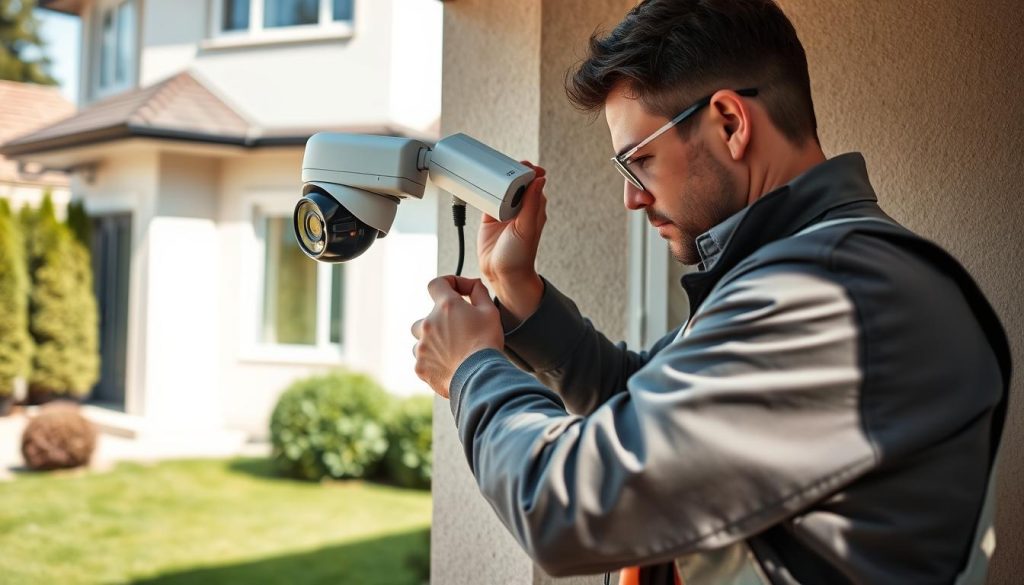
Certified security service providers bring essential expertise to surveillance projects. They conduct structural assessments to prevent property damage during installation. Licensed professionals also ensure proper cable routing meets building code requirements.
Key advantages include:
- Validated equipment warranties lasting 3+ years
- Voltage compliance testing for fire safety
- Post-installation audits confirming PDPA adherence
“97% of DIY-related insurance claims get denied due to improper installation,” reveals the General Insurance Association of Singapore.
Risks of DIY Installation
Amateur setups often violate critical security service regulations. The PSI Act Section 12 imposes 2-year jail terms for unlicensed work. Common pitfalls include:
Improper camera angles capturing private spaces. Faulty wiring creating electrical hazards. Invalidated manufacturer warranties from unofficial modifications.
When you install cctv without certification, insurance providers may reject claims. Professional installers prevent these issues through compliance checks and proper documentation. Their expertise ensures cameras function optimally while meeting legal standards.
Final Thoughts on CCTV Installation in Singapore
Security technology evolves rapidly, bringing new options for property protection. AI-powered systems now detect anomalies with 94% accuracy, reducing false alarms. These advancements complement traditional CCTV setups while maintaining compliance.
Upcoming drone surveillance laws may change residential monitoring approaches. Homeowners should review proposed regulations through the Urban Redevelopment Authority portal.
Cost-benefit analyses help justify investments. Consider crime rates, insurance discounts, and maintenance when evaluating systems. Professional 24/7 monitoring services add extra protection layers.
Community engagement prevents disputes. Share plans with neighbors and explain security benefits. Properly configured systems deliver peace of mind without compromising privacy.
Stay informed about security innovations through SPF advisories. Regular system audits ensure ongoing compliance as technologies and laws evolve.
FAQ
What are the legal requirements for installing CCTV cameras in Singapore?
Compliance with the Personal Data Protection Act (PDPA) is mandatory. Avoid recording public spaces or neighbors’ properties without consent. For HDB flats, town council approval is required.
Do I need permission to install CCTV cameras in an HDB flat?
Yes. HDB residents must seek approval from the town council before installing cameras outside their units, especially in common areas like corridors.
Are there restrictions on CCTV placement in condominiums?
Condominium rules vary. The Management Corporation Strata Title (MCST) governs installations. Cameras facing private or shared spaces often require written consent.
Can I install CCTV cameras on landed property without permission?
Landed homeowners have more flexibility but must ensure cameras don’t invade neighbors’ privacy. Ethical placement and adherence to PDPA guidelines are crucial.
Are doorbell cameras treated like CCTV under Singapore law?
Yes. Smart doorbells with recording capabilities fall under PDPA regulations. Avoid capturing footage beyond your property boundaries.
What happens if I install CCTV cameras illegally?
Non-compliance may lead to fines under PDPA or disputes under the Community Disputes Resolution Act (CDRA). Neighbors can also take legal action.
How long does town council approval take for HDB CCTV installation?
Processing times vary, but applications typically take 2–4 weeks. Include camera locations and justifications for surveillance in your request.
Can I install CCTV cameras myself, or do I need a professional?
DIY installation is allowed, but hiring a licensed security service provider ensures compliance with wiring and safety standards, reducing legal risks.
What should I do if my neighbor’s CCTV points at my property?
Politely discuss repositioning the camera. If unresolved, file a complaint under CDRA or with the Personal Data Protection Commission (PDPC).
How can CCTV cameras enhance home security?
They deter crime, provide evidence for investigations, and offer peace of mind by monitoring entry points and vulnerable areas in real time.


