
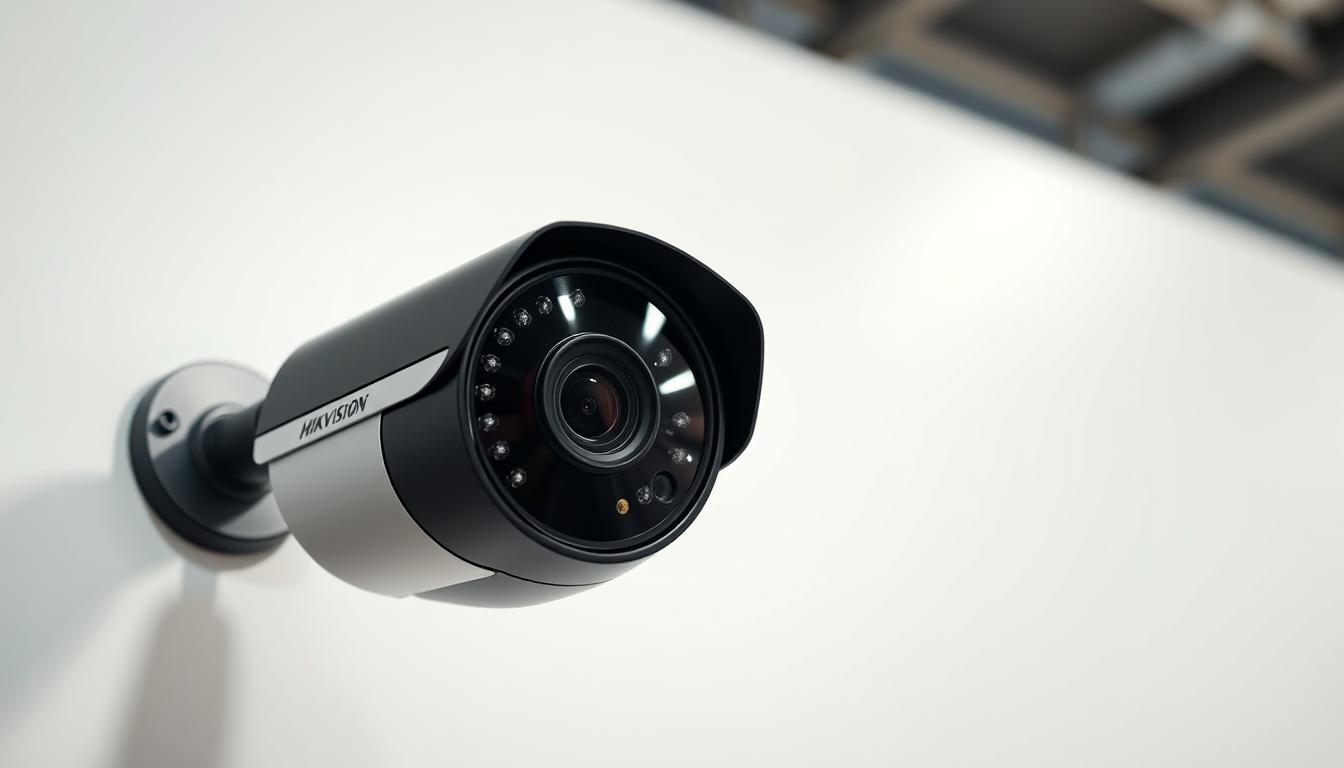
Is Hikvision a Chinese brand? Understanding the Facts
Founded in 2001, this prominent security firm has its headquarters in Hangzhou, China. The company operates under partial state ownership through China Electronics Technology Group, reinforcing its strong ties to the region.
With over 42,000 employees worldwide, the brand has expanded its reach far beyond its origin. Its technology powers advanced surveillance systems used globally, including in Singapore, where compliance with local regulations remains a priority.
Despite misconceptions about its corporate structure, the firm continues to innovate, delivering high-quality products that dominate the market. Later sections will explore controversies and breakthroughs driving its success.
Key Takeaways
- Headquartered in Hangzhou, China, with state-backed ownership
- Global workforce exceeding 42,000 employees
- Specializes in security and surveillance solutions
- Committed to compliance in international markets
- Innovation remains central to its market leadership
Is Hikvision a Chinese Brand? The Definitive Answer
With roots deeply embedded in China’s tech industry, the firm is formally registered as Hangzhou Hikvision Digital Technology Co., Ltd. Its legal name reflects both its geographic origin and specialization in digital technology co. solutions for global markets.
Founding and Headquarters in Hangzhou
The company’s headquarters in Hangzhou anchors its operations, with China Electronics Technology HIK Group holding a 38.88% stake. This state-affiliated ownership links it to China’s broader military-civil fusion strategy, which prioritizes dual-use technologies.
Official Name and Parent Company
As a subsidiary of China Electronics Technology HIK Group, the firm falls under the ultimate control of SASAC (State-owned Assets Supervision and Administration Commission). This structure ensures alignment with national priorities, including advancements in owned China electronics infrastructure.
Board leadership maintains close ties to the Chinese Communist Party, reinforcing the company’s role in state-backed initiatives. Compared to other SOEs in surveillance, its financial disclosures face scrutiny over transparency, though it adheres to international compliance standards in markets like Singapore.
The Origins and Growth of Hikvision
The early 2000s marked the rise of a new leader in intelligent security systems. Starting with a focus on digital surveillance, the company rapidly scaled its operations, leveraging China’s booming tech infrastructure.
Establishment in 2001 and Early Years
Initial efforts centered on CCTV innovations, with products tailored for urban security needs. By 2005, the firm had deployed its first AI-powered cameras, laying groundwork for future advancements.
Expansion into Global Markets
A strategic pricing model helped penetrate emerging economies, while localized services ensured compliance in regions like Singapore. Key milestones include:
- 2014: Supplied 3,000 cameras for Brazil’s World Cup stadiums
- 2018: Opened an R&D hub in London for IoT network solutions
- 2021: Achieved $8.3 billion in international revenue
Dual-use technologies, such as thermal imaging for public safety, further drove adoption in Western markets despite regulatory hurdles.
Hikvision’s Ownership Structure
Behind its global success lies a carefully structured shareholder ecosystem. The firm operates under partial state control while balancing private investments, creating a unique governance model.
State-Owned Enterprise: China Electronics Technology Group
China Electronics Technology Group (CETG) holds a 38.88% stake, anchoring the company’s alignment with national priorities. This state linkage supports dual-use technology development, blending civilian and defense applications.
Key Shareholders and Their Influence
Vice-chairman Gong Hongjia, a tech entrepreneur, owns 10.3% worth $4.1 billion. His stake reflects private-sector dynamism within the state-influenced framework.
Xinjiang Weixun Investment, tied to China’s military-industrial complex, adds strategic weight. Its involvement underscores the firm’s role in national security infrastructure.
“Foreign institutional investors, like Fidelity International, hold 9.77% through HK Securities Clearing—demonstrating global confidence in the company’s growth.”
Additional ownership highlights include:
- Employee stock ownership: Over 5,000 staff participate via management limited partnerships.
- Dividend policies: Annual payouts average 30% of net profits, attracting long-term investors.
- Recent performance: Shares rose 12% in 2023 amid AI product launches.
Despite shareholder activism challenges, the blend of state oversight and private capital fuels innovation. This structure ensures stability while adapting to global market demands.
Hikvision’s Product Portfolio
Cutting-edge security solutions define the company’s diverse product lineup. From high-resolution cameras to integrated platforms, its offerings cater to urban and industrial needs. The blend of hardware and AI-powered internet things ensures adaptability across sectors.
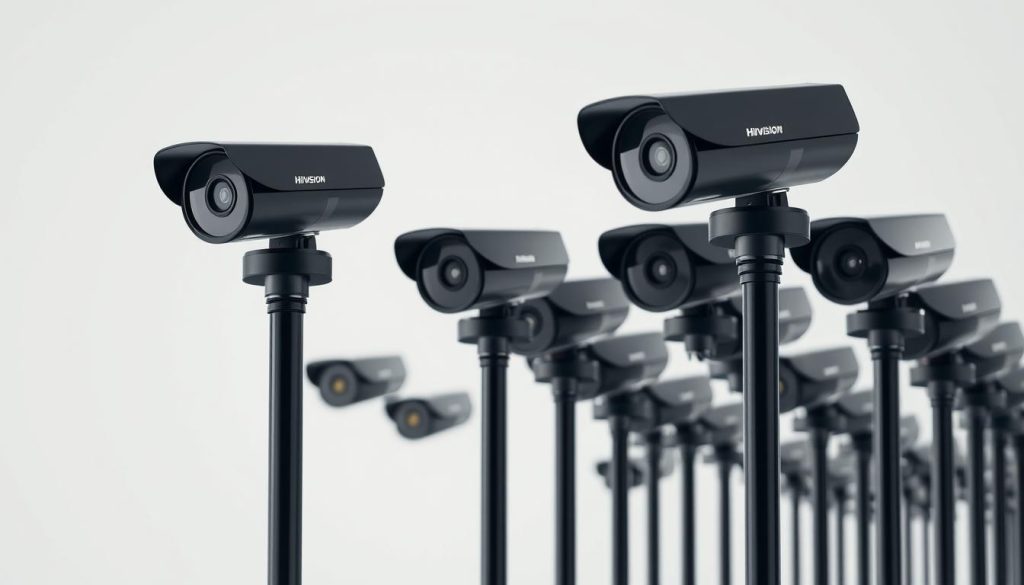
CCTV and Network Surveillance Systems
Deep Learning NVRs achieve 98% recognition accuracy, setting industry benchmarks. These systems process data at the edge, reducing latency for real-time threat detection. Singapore’s smart city projects leverage this architecture for traffic and crowd management.
Facial recognition algorithms minimize false positives, even in low-light conditions. Vehicle analytics further enhance urban safety, cutting congestion by 40% in pilot zones. Compliance with ASEAN technologies standards ensures seamless integration.
AI-Powered Security Solutions
The 2023 HikCentral 2.0 platform unifies access control, alarms, and analytics. Its energy management features optimize power usage without compromising performance. Edge computing decentralizes data processing, aligning with Singapore’s data sovereignty laws.
“Our AI models prioritize actionable insights over raw footage, transforming surveillance into proactive security.”
From retail heatmaps to industrial IoT sensors, the AI-powered internet things ecosystem scales dynamically. These technologies support compliance with GDPR-equivalent frameworks in regulated markets.
Technological Innovations by Hikvision
Security solutions are evolving rapidly, and Hikvision leads with AI-driven and IoT-enabled systems. Its R&D investments focus on compliance with global standards while mitigating emerging threats.
Advancements in AI and IoT
The company’s deep learning algorithms process data at the edge, reducing latency for real-time analytics. Integrated IoT sensors enable predictive maintenance, cutting downtime by 30% in industrial applications.
Singapore’s smart city initiatives utilize these technologies for traffic optimization and energy efficiency. The 2023 HikCentral platform merges access control with environmental monitoring, aligning with urban sustainability goals.
Cybersecurity Measures and Protocols
Independent audits by FTI Consulting (2022) validated end-to-end encryption across all devices. A team of 300+ engineers maintains Secure Boot Chain technology to prevent firmware tampering.
Key safeguards include:
- Firmware signing: Each update undergoes cryptographic verification to ensure authenticity.
- Vulnerability program: Ethical hackers can report flaws through a dedicated disclosure channel.
- Data residency: Singaporean clients benefit from localized storage compliant with CSA standards.
“Penetration tests occur quarterly, exceeding industry norms for threat detection.”
GDPR-equivalent protocols govern data collection, with AES-256 encryption for all transmissions. These cybersecurity frameworks position the company as a trusted partner in regulated markets.
Hikvision’s Global Reach
With a presence spanning six continents, the firm delivers technologies tailored to diverse security needs. Its distributed innovation model combines local expertise with global research capabilities, ensuring relevance across markets.
Expanding Operations Across Borders
Over 170 countries benefit from localized solutions, from AI-driven surveillance in Singapore to thermal imaging in Arctic regions. Strategic partnerships with universities and governments enhance product adaptation.
Investing in Future Solutions
A $1.4 billion annual development budget fuels breakthroughs at hubs like Montreal’s AI lab and London’s IoT center. Key focuses include:
- Cloud computing for scalable security
- IP protection through blockchain
- Talent programs attracting top engineers
Singapore’s R&D team leads smart city projects, aligning with regional compliance standards. This global-local balance drives continuous innovation.
FAQ
Where is Hikvision headquartered?
The company is based in Hangzhou, China, and operates as a subsidiary of China Electronics Technology Group.
What types of products does Hikvision offer?
They specialize in security equipment, including CCTV cameras, AI-powered surveillance systems, and network video recorders.
Does Hikvision have a global presence?
Yes, the brand serves customers in over 170 countries with research centers in key tech hubs worldwide.
Who owns Hikvision?
The majority stake is held by China Electronics Technology Group, a state-owned enterprise.
What cybersecurity measures does Hikvision implement?
The company follows strict protocols, including encryption and compliance with international data protection standards.
Does Hikvision use AI in its products?
Yes, artificial intelligence enhances their surveillance systems with features like facial recognition and motion detection.
Are there concerns about Hikvision’s compliance with human rights?
Some reports raise concerns, but the company states it adheres to legal and ethical guidelines in all operations.
When was Hikvision founded?
The company was established in 2001 and has since grown into a leading security technology provider.


