

Dahua’s Country of Origin: Is Dahua made in China?
Dahua Technology represents a major player in the global security industry. This prominent company specializes in surveillance equipment and smart solutions.
Founded in 2001 in Hangzhou, China, the organization has grown significantly. It now ranks among the world’s largest CCTV camera manufacturers.
Understanding the company’s origins provides crucial context for consumers. The Chinese foundation influences manufacturing processes and global market positioning.
This background information helps assess product quality and regulatory considerations. It establishes the framework for evaluating security technology options.
Key Takeaways
- Dahua Technology was established in 2001 with headquarters in Hangzhou, China
- The company specializes in surveillance equipment and video security systems
- It has become one of the world’s largest CCTV camera manufacturers
- Understanding the company’s origins helps evaluate product quality and pricing
- The Chinese foundation impacts manufacturing processes and global operations
- This information is essential for businesses considering security technology
- The company’s growth reflects significant global expansion in recent years
Understanding Dahua Technology’s Chinese Foundation
Fu Liquan and his team laid the foundation for what would become a global security empire. Their vision transformed digital security solutions across international markets.
Founding and Headquarters in Hangzhou
The company emerged in 2001 through the efforts of former state-owned enterprise professionals. These founders leveraged their technical expertise to enter the security sector.
Initial operations focused on digital video recording equipment manufacturing. This specialized approach allowed rapid market penetration and technology development.
Early Growth and Market Entry
Strategic milestones marked the organization’s expansion trajectory. The 2008 public listing on Shenzhen Stock Exchange provided crucial capital infusion.
This financial boost accelerated research and development initiatives. The company broadened its product range to address diverse security needs.
By 2019, the organization achieved remarkable global positioning. It secured the position as second-largest video surveillance systems manufacturer worldwide.
Key growth strategies included:
- Strategic acquisition of established brands like Lorex
- Development of comprehensive network security solutions
- Adaptation to evolving technological requirements
- Collaboration with government entities on security projects
These approaches enabled responsive adaptation to market shifts. The company’s production capabilities expanded to meet international demand.
“Our foundation in video technology provided the springboard for global security innovation.”
The organization’s tech evolution demonstrates remarkable innovation capacity. From basic recorders to advanced AI-powered systems, the transformation reflects market-responsive development.
Understanding this growth pattern explains current manufacturing approaches. It also clarifies the company’s position within the competitive security landscape.
The Core Answer: Is Dahua Made in China?
Global security solutions often reflect complex manufacturing ecosystems rather than single-country production. The final assembly location represents just one aspect of a multifaceted manufacturing process.
This distinction becomes particularly important when evaluating technological partnerships and supply chain reliability. Understanding the complete picture helps businesses make informed decisions.
Primary Manufacturing Hub in Hangzhou
The company maintains extensive production facilities in its hometown operations center. These facilities represent the heart of the organization’s manufacturing capabilities.
Advanced automated production lines ensure consistent output across all security product categories. Rigorous quality control measures maintain high standards throughout manufacturing projects.
This centralized approach allows for efficient scaling to meet global market needs. The manufacturing strategy balances cost-effectiveness with reliability in security solutions delivery.
Component Sourcing and the “Made in China” Label
The assembly location designation doesn’t tell the complete component origin story. Modern surveillance cameras incorporate parts from various international sources.
Critical electronic components follow a global sourcing strategy:
- Image sensors and semiconductors from multiple international suppliers
- Chipsets from both global technology companies and internal research
- Processing algorithms developed through proprietary R&D programs
- Mechanical components from specialized manufacturers worldwide
This approach enables the company to leverage global technological advancements while maintaining centralized quality assurance. The manufacturing process combines international component excellence with efficient assembly operations.
“Our manufacturing philosophy integrates global technological excellence with disciplined production standards.”
Understanding this component sourcing strategy provides crucial context beyond the assembly location label. It reveals how the organization balances innovation access with production efficiency.
This manufacturing approach addresses various concerns about component quality and technological advancement. The strategy demonstrates how global security companies operate in today’s interconnected manufacturing landscape.
Dahua’s Global Manufacturing and Assembly Network
Modern security technology producers maintain diverse production footprints across multiple continents. This strategic approach enables responsive service delivery to regional markets worldwide.
International expansion represents a calculated business decision for leading security equipment manufacturers. Geographic diversification strengthens supply chain resilience while optimizing market-specific operations.
International Facilities in Vietnam and India
The Vietnam production center serves Southeast Asian customers with specialized surveillance equipment. This facility enables faster delivery times and better adaptation to local requirements.
Local manufacturing reduces shipping costs and import duties for regional buyers. The approach demonstrates commitment to serving diverse market needs effectively.
India’s Mumbai operation focuses on assembly and testing for domestic security solutions. This strategic location supports the growing demand for advanced camera systems across the subcontinent.
Both facilities complement rather than replace existing production capabilities. They represent targeted investments in key growth markets for security technology.
Strategy Behind Geographic Diversification
Risk mitigation drives the decision to establish multiple manufacturing locations. Concentrated production in one region creates vulnerability to disruptions.
Geographic spread offers several strategic advantages:
- Enhanced responsiveness to regional regulatory requirements
- Reduced transportation costs and delivery timelines
- Improved customer support through local presence
- Competitive pricing through optimized logistics
This network approach allows security companies to maintain product availability during global challenges. Local facilities can adapt production to meet specific regional demands.
“Our global manufacturing strategy ensures we can serve customers effectively regardless of geographic location or market conditions.”
Establishing production presence in emerging economies supports market penetration goals. Local manufacturing creates jobs and builds stronger community relationships.
The strategy demonstrates how leading security manufacturers balance global scale with local responsiveness. This approach benefits both the company and its diverse customer base worldwide.
Corporate Structure and State Influence
Corporate ownership structures reveal important insights about technology companies’ operational priorities. The distribution of shares often indicates strategic direction and potential external influences.
This examination helps security professionals understand how ownership affects product development and market positioning.
Analysis of Shareholders and Ownership
Founder Fu Liquan maintains controlling interest with 34.18% of shares. This substantial stake ensures consistent leadership vision across all operations.
State-owned entities hold approximately 11.67% ownership through organizations like Central Huijin and China Mobile. This combination creates a unique public-private partnership model.
The balance between individual and government ownership affects strategic decisions. It also influences how the company approaches international expansion and technology development.
State connections provide significant advantages for manufacturing and innovation. Access to government funding enables aggressive research investment.
Infrastructure support helps maintain competitive quality standards across all products. This backing facilitates rapid scaling of production capabilities.
The management team leverages extensive security sector experience. Their focus remains on efficiency and technological advancement.
Impact of Government Ties on Global Operations
International markets sometimes express concerns about government relationships. These connections create both opportunities and challenges across different countries.
Government partnerships have accelerated global market penetration. They’ve also prompted scrutiny regarding surveillance practices and human rights considerations.
This dynamic affects how customers perceive the company’s security cameras and monitoring systems. Some markets show hesitation while others appreciate the technological capabilities.
The organization navigates these perceptions through transparent operations and consistent product quality. Their manufacturing processes meet international standards despite political considerations.
“Our corporate structure balances innovation independence with strategic resource access.”
Understanding this ownership model is essential for evaluating potential conflicts of interest. It also helps assess the organization’s operational independence in different markets.
The balance between private control and state influence continues shaping global business decisions. This affects everything from research priorities to market expansion strategies.
Navigating Legal and Regulatory Scrutiny
Geopolitical tensions have significantly impacted security technology companies’ international operations. These challenges require careful navigation of complex legal frameworks across different regions.
Understanding regulatory environments helps businesses make informed decisions about security partnerships. The global landscape continues evolving with new compliance requirements.
Overview of International Sanctions
Several nations have implemented restrictions affecting security equipment providers. The United States, United Kingdom, and Australia have taken particular regulatory actions.
These measures primarily address human rights considerations regarding surveillance applications. Certain regional implementations have drawn particular international attention.
Regulatory limitations affect operational capabilities in specific markets. They also influence collaboration opportunities with global partners and clients.
The restrictions present hurdles for worldwide expansion strategies. Companies must adapt their approaches to different regulatory environments.
“Global operations require adaptable compliance strategies that respect diverse legal frameworks.”
Market and Consumer Response to Controversies
Customer reactions to these developments have varied significantly across regions. Some organizations express ethical considerations when selecting security solutions.
Purchasing decisions increasingly factor in corporate responsibility aspects. This trend reflects growing awareness about technology applications.
Brand reputation management becomes crucial amid ongoing scrutiny. Companies must address both practical and perceptual challenges simultaneously.
Key market responses include:
- Increased due diligence processes from enterprise clients
- Growing preference for transparent operational practices
- Enhanced focus on ethical manufacturing standards
- Stronger emphasis on compliance documentation
These developments influence how security providers approach different market segments. Adaptation strategies must address both regulatory and reputational aspects.
The changing landscape requires innovative approaches to customer relationships. Trust-building measures become essential for maintaining market position.
Future success depends on balancing technological excellence with responsible business practices. This comprehensive approach addresses evolving market needs effectively.
Dahua’s Product Portfolio and Technological Innovation
Technological advancement drives the security industry’s evolution, with comprehensive product portfolios defining market leadership. The company maintains a diverse offering that addresses various security needs across different sectors.
Range of Security and Surveillance Solutions
The organization delivers an extensive selection of surveillance equipment. High-definition cameras form the core of their security offerings.
Network video recorders complement these visual monitoring tools. Intelligent software platforms complete the comprehensive security ecosystem.
These solutions serve multiple applications effectively. Smart city infrastructure represents a significant focus area.
Commercial security systems protect business environments. Residential protection products safeguard homes and communities.
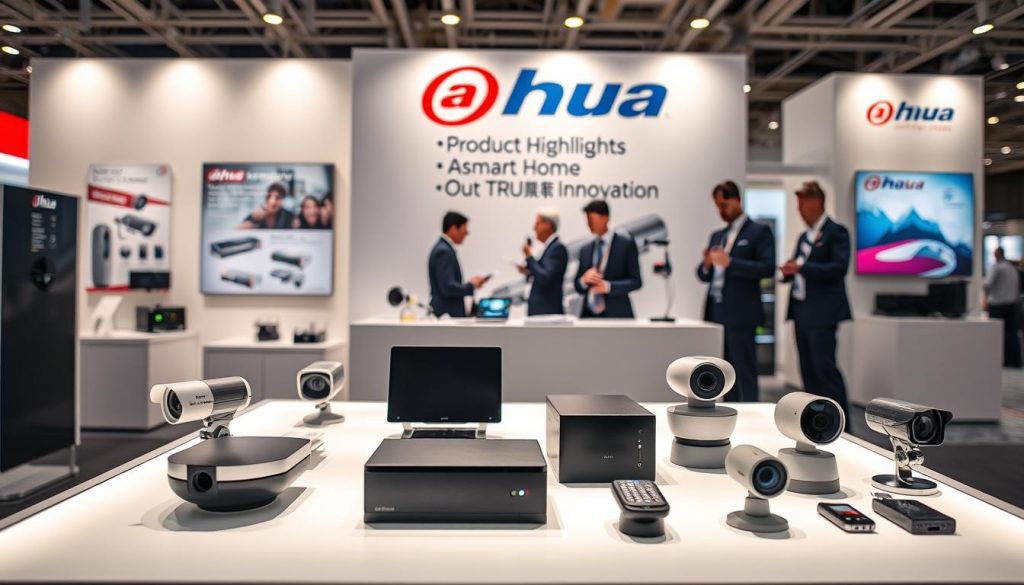
Artificial intelligence integration enables advanced functionality. Real-time data processing occurs seamlessly within the systems.
Smart detection capabilities identify potential threats automatically. Automated monitoring reduces the need for constant human supervision.
Investment in AI and Smart City Technologies
Research and development investment maintains technological competitiveness. The company prioritizes innovation in surveillance technology.
Sophisticated video analytics represent key product features. Enhanced security monitoring occurs through advanced algorithms.
Threat detection capabilities continue to evolve rapidly. Cloud-based surveillance solutions offer remote access benefits.
Management capabilities extend to distributed security systems. The emphasis remains on seamless infrastructure integration.
“Our innovation strategy focuses on anticipating future security challenges through continuous technological advancement.”
Compatibility and operational efficiency receive significant attention. AIoT technologies represent the next generation of security solutions.
Software development complements hardware offerings effectively. Intelligent management platforms enhance overall system performance.
This technological positioning addresses evolving market demands. The comprehensive approach ensures relevance in changing security landscapes.
For more detailed information about manufacturing processes, visit our comprehensive guide on security equipment production standards.
Commitment to Quality Control and Production Standards
Manufacturing excellence forms the foundation of reliable security technology. This organization maintains rigorous standards across all production facilities. Their approach ensures consistent performance in diverse operating environments.
Advanced testing protocols verify every component meets specifications. Automated systems monitor production lines for deviations. This attention to detail prevents quality issues before they occur.
Standardized Manufacturing Processes
Uniform production methodologies create predictable outcomes across global facilities. Each security camera undergoes identical validation procedures. This consistency ensures customers receive identical performance worldwide.
The company implements comprehensive quality control systems throughout manufacturing. Regular audits verify compliance with established standards. Testing procedures cover functionality, durability, and environmental resilience.
Key manufacturing advantages include:
- Automated assembly lines with precision calibration
- Component traceability from sourcing to final assembly
- Environmental stress testing for extreme conditions
- Continuous monitoring of production metrics
Supplier evaluation programs maintain component quality standards. Only certified partners provide materials for production. This upstream control prevents defects before assembly begins.
International Certifications and Compliance
Global market access requires adherence to diverse regulatory frameworks. The company maintains numerous international certifications for its products. These validate safety, performance, and electromagnetic compatibility.
Certification requirements vary by product model and target region. Common approvals include CE marking for European markets. FCC certification addresses North American electromagnetic standards.
“Our certification strategy ensures products meet the highest international standards while addressing regional requirements.”
Large-scale projects demand thorough documentation verification. Government and enterprise clients require complete compliance evidence. Technical specifications must align with local regulations.
Ongoing staff training maintains certification awareness. Regular internal audits ensure continuous compliance. This proactive approach prevents regulatory issues before they arise.
Investment in advanced testing equipment demonstrates quality commitment. State-of-the-art facilities validate product performance under real-world conditions. This infrastructure supports the company’s reputation for reliability.
Compliance with international standards meets global customer expectations. It also facilitates expansion into new markets. The approach balances innovation with regulatory requirements.
Dahua’s Position in the Competitive Security Market
The global security landscape features several prominent players competing for market share. Each organization brings distinct strengths and strategic approaches to the industry.
Understanding these competitive dynamics helps customers make informed decisions. It also reveals how different companies position themselves within the security ecosystem.
Comparing Capabilities with Hikvision
Both organizations demonstrate impressive technological capabilities in surveillance equipment. They share similar origins and manufacturing approaches.
The competitor maintains leadership in overall sales volume across global markets. Their product range extends across numerous security categories.
This organization focuses on high-resolution imaging and artificial intelligence integration. Their approach emphasizes technological sophistication within security solutions.
Key differentiators include:
- Advanced AI features for intelligent threat detection
- Superior low-light performance in surveillance cameras
- Flexible integration with third-party security systems
- Customizable software solutions for specific applications
Manufacturing flexibility allows rapid adaptation to changing customer requirements. This responsiveness addresses evolving security needs effectively.
Market Differentiation from Axis and Reolink
Axis Communications targets the premium segment with professional-grade IP cameras. Their focus remains on high-end users and enterprise applications.
Reolink positions itself in the budget consumer market segment. They offer affordable and reliable options for home security needs.
This company occupies the strategic middle ground between these extremes. They balance advanced features with competitive pricing structures.
The approach addresses diverse customer needs across market segments. Both technological capabilities and cost considerations receive appropriate attention.
“Our market positioning reflects understanding that different customers have varying security requirements and budget constraints.”
Product development incorporates emerging technologies while maintaining cost-effectiveness. This strategy ensures relevance across multiple customer categories.
Understanding these competitive dynamics helps evaluate value propositions effectively. It provides context for making informed security technology decisions.
Future Trajectory for Dahua Technology
The security industry continues evolving with new technological advancements. This organization maintains a forward-looking strategy for global operations.
Their approach combines innovation with practical market expansion goals. The focus remains on delivering cutting-edge security solutions worldwide.
Focus on AIoT and Software Development
Artificial Intelligence and Internet of Things integration represents a core strategic direction. The company invests heavily in these emerging technologies.
Advanced analytics capabilities enhance surveillance camera performance. Smart detection algorithms improve threat identification accuracy.
Software development receives equal attention alongside hardware innovation. This balanced approach creates comprehensive security ecosystems.
Key development areas include:
- Real-time data processing for immediate threat response
- Cloud-based management platforms for remote monitoring
- Customizable analytics for specific application requirements
- Integration capabilities with existing security infrastructure
These technological advancements address evolving security challenges effectively. They position the organization at the industry’s innovation forefront.
Goals for Supply Chain and Market Expansion
Geographic diversification remains a priority for sustainable growth. The organization plans significant expansion across Asian markets.
Strategic partnerships enable faster market penetration and localized operations. A $200 million joint venture with Alat in Saudi Arabia demonstrates this approach.
This collaboration focuses on developing advanced AIoT products for smart city applications. It leverages local resources while addressing regional requirements.
“Our expansion strategy combines technological innovation with strategic market partnerships to deliver localized security solutions.”
Supply chain diversification mitigates risks associated with concentrated manufacturing. Local assembly partnerships improve responsiveness and reduce costs.
The company aims to strengthen its position in smart city projects worldwide. Customization capabilities address specific regional security needs.
Future growth initiatives emphasize both technological advancement and market adaptation. This balanced approach ensures continued relevance in the evolving security landscape.
A Buyer’s Guide to Authentic Dahua Products
Choosing genuine security products protects your investment and ensures reliable performance. Always purchase from authorized distributors to get valid warranties and full after-sales support.
Verify product serial numbers using the official website or dedicated verification systems. Inspect packaging quality and documentation for signs of authenticity.
Organizational buyers should evaluate technical compliance with local standards. Check data security features and firmware update policies during procurement.
Understanding regional product variations helps meet specific security needs. Trusted brands provide access to genuine software updates and technical support channels.
This approach helps navigate the market confidently. It ensures you receive authentic, high-performing security systems for your network.
FAQ
Where is Dahua Technology headquartered?
The company’s main offices are located in Hangzhou, China. This city serves as its global center for operations and innovation.
Are all Dahua products manufactured in China?
While most production occurs at facilities in Hangzhou, the brand also operates factories in other countries like Vietnam and India to serve regional markets and diversify its supply chain.
Does the Chinese government have ownership in Dahua?
Dahua Technology is a publicly traded company. While it maintains partnerships with state projects, its ownership is primarily private and institutional.
Has Dahua faced international sanctions?
Yes, the company has been subject to certain trade restrictions by some governments due to national security concerns, affecting its access to those markets.
What types of products does Dahua manufacture?
They produce a wide range of security and surveillance equipment, including network cameras, video recorders, access control systems, and AI-driven analytics software.
How does Dahua ensure product quality?
The company follows strict quality control procedures and holds international certifications, ensuring that its equipment meets global performance and safety standards.
How does Dahua compare to competitors like Hikvision?
Both companies lead the security tech industry with similar product lines, but Dahua often emphasizes its innovation in artificial intelligence and smart solutions for city infrastructure.
What is Dahua’s focus for future growth?
They are investing heavily in AIoT (Artificial Intelligence of Things) and expanding their software capabilities, aiming to offer integrated, intelligent security ecosystems worldwide.
How can buyers verify they are purchasing genuine Dahua equipment?
Customers should buy from authorized distributors or retailers and check for official authentication marks, serial numbers, and warranty support to ensure product legitimacy.


