
How often should you clean CCTV cameras? Expert Tips
Clear surveillance footage is the backbone of any effective security system. Regular maintenance ensures your CCTV cameras deliver optimal performance when you need them most.
Dust, grime, and Singapore’s humid environment can quickly degrade video quality. A dirty lens compromises your entire security system by obscuring critical details.
Establishing a proper cleaning schedule extends equipment lifespan and prevents costly repairs. This guide provides expert tips for maintaining crystal-clear surveillance coverage.
Key Takeaways
- Regular cleaning maintains optimal CCTV camera performance
- Clear lenses ensure high-quality surveillance footage
- Environmental factors significantly impact maintenance frequency
- Proactive maintenance reduces long-term repair costs
- Combining DIY and professional care maximizes system longevity
- Proper cleaning techniques prevent damage to sensitive equipment
The Critical Role of CCTV Camera Maintenance in Security
Maintaining pristine surveillance equipment forms the foundation of reliable security operations. Proper care ensures these systems perform at peak efficiency when needed most. Neglecting this aspect can undermine even the most advanced security infrastructure.
Ensuring Clear Image Quality for Effective Surveillance
Dust accumulation on lenses creates blurred footage that compromises identification capabilities. This optical degradation directly impacts incident documentation quality. Security personnel may miss crucial details during critical events.
Modern image sensors require clean surfaces for optimal light capture. Even minor obstructions distort facial recognition and license plate reading. Regular maintenance preserves the evidential value of recorded material.
Singapore’s regulatory framework often mandates specific image quality standards. Insurance providers may require maintenance records for claim validation. Proper upkeep ensures compliance with these professional requirements.
Preventing System Malfunctions and Costly Repairs
Proactive maintenance identifies potential failures before they become major issues. Environmental factors like humidity accelerate component degradation. Regular inspections extend equipment lifespan significantly.
Vulnerable components requiring particular attention include:
- Lens assemblies and protective housings
- Infrared illuminators for night vision
- Weatherproofing seals and gaskets
- Power connections and cable interfaces
Emergency repairs typically cost three to five times more than preventive maintenance. System downtime during repairs creates security gaps that criminals might exploit. Scheduled upkeep minimizes these operational risks.
Documented maintenance schedules demonstrate due diligence to stakeholders. They also provide valuable data for optimizing future equipment investments. This proactive approach ultimately delivers better security outcomes.
How Often Should You Clean CCTV Cameras?
Determining the right maintenance rhythm for surveillance equipment requires careful consideration of environmental factors. A well-planned schedule ensures consistent performance without unnecessary maintenance overhead.
The Standard Cleaning Schedule: Every Three to Six Months
Most standard environments benefit from a quarterly to semi-annual maintenance routine. This timeframe balances protection against debris buildup with practical resource allocation.
Commercial offices and residential complexes typically fall into this category. These locations experience moderate environmental exposure while maintaining adequate security coverage.
The three to six month schedule works well for cameras installed under eaves or protective coverings. These positions experience less direct weather impact while still requiring periodic attention.
Adjusting Frequency for High-Traffic and Industrial Areas
High-traffic locations demand more frequent attention to maintain clear surveillance footage. Shopping malls, transportation hubs, and manufacturing facilities accumulate contaminants rapidly.
Industrial environments present unique challenges for equipment upkeep. Manufacturing plants, warehouses, and construction sites require monthly inspections at minimum.
These areas experience increased particulate matter and chemical exposure. More frequent cleaning prevents irreversible damage to lens surfaces and housing components.
Food processing facilities and chemical plants may need bi-weekly maintenance checks. Specialized environments require customized approaches to equipment care.
Documenting each maintenance session creates valuable data for optimizing future schedules. This records-based approach helps fine-tune your overall system management strategy.
Key Factors That Determine Your Camera’s Cleaning Schedule
Creating an effective maintenance program requires understanding what influences equipment cleanliness. Multiple elements work together to determine optimal care intervals for surveillance systems.
Environmental exposure and operational patterns create unique challenges for each installation. Smart scheduling balances protection needs with practical resource allocation.
Environmental Conditions: Dust, Rain, and Humidity
Singapore’s tropical climate presents specific challenges for surveillance equipment. High humidity accelerates grime accumulation on lens surfaces.
Coastal areas experience salt spray that corrodes metal components faster. Regular cleaning prevents permanent damage to sensitive electronics.
Urban environments generate more airborne particles than rural locations. Construction sites and busy roads create dust clouds that settle on equipment.
Industrial facilities require specialized attention due to chemical exposure. Manufacturing plants may need weekly inspections during peak production periods.
Seasonal changes significantly impact maintenance requirements. Monsoon seasons bring increased moisture that affects outdoor units.
Camera Usage Patterns and Location Specifics
Continuous recording systems accumulate debris faster than motion-activated units. Constant operation generates heat that attracts dust particles.
Cameras near vegetation face spider webs and insect nests. These obstructions require immediate attention to maintain clear sightlines.
Elevated positions often experience different environmental conditions. Rooftop installations may need more frequent checks than ground-level units.
Consider these location-specific factors when planning your maintenance schedule:
- Proximity to pollution sources like factories or highways
- Exposure to direct rainfall and sunlight
- Local wildlife activity that might obstruct views
- Seasonal variations in weather patterns
Documenting each cleaning session helps refine future scheduling. This data-driven approach optimizes your overall system management strategy.
Recognizing the Signs Your CCTV Cameras Need Cleaning
Surveillance systems require consistent monitoring for performance indicators. Spotting early warning signals helps prevent major security gaps. Timely intervention maintains optimal system functionality.
Identifying Blurred, Fuzzy, or Poor-Quality Images
Visual degradation often serves as the first indicator of required maintenance. Blurred edges and hazy outlines suggest lens contamination. These issues typically develop gradually over time.
Different contaminants create distinct visual patterns. Dust accumulation produces overall haziness. Water spots create circular distortions in the footage. Fingerprints leave smudge patterns that affect light transmission.
Systematic monitoring helps identify these changes early. Compare current video with reference recordings from installation. Note any gradual deterioration in sharpness or contrast.
Key indicators of lens contamination include:
- Reduced clarity in fine details and text recognition
- Increased graininess in low-light conditions
- Unusual glare or lens flare effects
- Color distortion or abnormal tint patterns
Document these changes to establish cleaning timelines. This proactive approach prevents emergency situations.
Spotting Physical Obstructions like Dirt and Spider Webs
Physical inspections complement digital monitoring for comprehensive maintenance. Regular visual checks identify external contaminants affecting performance.
Common obstructions include spider webs, insect nests, and bird droppings. These block camera views completely if left unattended. Singapore’s tropical climate accelerates organic growth.
Environmental dirt accumulates on housing surfaces and lens covers. Construction dust and pollution particles require frequent removal. Moisture buildup creates ideal conditions for mold growth.
Inspection techniques for identifying physical blockages:
- Direct visual examination during daylight hours
- Using monitoring software to identify obscured areas
- Checking for insect activity around housing units
- Inspecting weather seals for integrity breaches
Emergency cleaning becomes necessary when obstructions completely block views. Routine cleaning addresses gradual accumulation before it impacts security.
Differentiate between lens issues and other system problems. Clean cameras first before investigating electronic malfunctions. This systematic approach saves diagnostic time.
Step-by-Step Guide to Cleaning Your CCTV Cameras Safely
Proper cleaning techniques preserve your surveillance investment and maintain crystal-clear footage. Following correct procedures prevents accidental damage while ensuring optimal performance.
Always begin by powering down your surveillance system. This critical safety step prevents electrical shorts and protects sensitive components.
Essential Tools: Microfiber Cloths and Non-Abrasive Cleaners
Gather appropriate supplies before starting your maintenance session. Using wrong tools can permanently scratch lenses or damage housing.
Recommended cleaning kit includes:
- Microfiber cloths for streak-free lens polishing
- Soft-bristle brushes for delicate debris removal
- Compressed air for blowing dust from crevices
- Isopropyl alcohol or lens-specific cleaning solution
- Cotton swabs for detailed housing cleaning
Never use household glass cleaners or abrasive materials. These chemicals can degrade anti-reflective coatings on optical parts.
A Procedural Walkthrough to Avoid Damage
Begin with gentle dry cleaning using soft brushes or compressed air. Remove loose dust before applying any moisture to surfaces.
Dampen your microfiber cloth slightly with approved solution. Gently wipe the lens in circular motions from center outward.
Different camera types require specific approaches:
- Dome cameras: Clean exterior housing before accessing interior lens
- Bullet cameras: Pay attention to weatherproofing seals during cleaning
- PTZ units: Check moving parts for obstructions after cleaning
Allow all components to air dry completely before restoring power. Moisture inside housing can cause electrical damage.
Finally, verify video quality after reassembly. Check for improved clarity and proper focus across all cameras.
Document each maintenance session for future reference. This records proper care of your security equipment.
Adapting Your Maintenance for Seasonal Weather Changes
Singapore’s tropical climate demands smart adjustments to surveillance equipment care routines. Different seasons bring distinct environmental challenges that affect monitoring performance. Proactive adaptation prevents weather-related issues before they compromise security coverage.
Post-Monsoon and High-Humidity Cleaning Considerations
Heavy rainfall leaves behind moisture that can seep into housing units. This excess dampness promotes mold growth and lens fogging. Immediate post-monsoon inspections identify water damage early.
High humidity conditions require special attention to internal components. Moisture buildup inside housings can cause electrical shorts and corrosion. Silica gel packets help control humidity within sealed units.
Coastal installations face additional challenges from salt spray. This corrosive element accelerates metal degradation and lens coating damage. Rinsing with distilled water removes salt residue effectively.
Post-monsoon maintenance checklist includes:
- Inspecting weatherproofing seals for integrity
- Checking for water accumulation in housing
- Cleaning lens surfaces affected by rain spots
- Verifying drainage systems are clear
Dry Season Inspections and Dust Management
Extended dry periods create ideal conditions for dust accumulation. Fine particles settle on lenses and housing vents. This buildup affects both image clarity and system cooling.
Regular compressed air cleaning prevents dust from becoming compacted. Focus on ventilation openings and lens covers. Monthly inspections during dry spells maintain optimal performance.
Dust management strategies for arid conditions:
- Install protective shrouds where possible
- Increase cleaning frequency during construction activity
- Use anti-static wipes to reduce particle attraction
- Monitor air quality indexes for proactive scheduling
Documenting seasonal patterns helps predict maintenance needs. Tracking weather data alongside performance issues creates valuable forecasting tools. This approach optimizes resource allocation throughout the year.
“The difference between reactive and proactive maintenance becomes most apparent during seasonal transitions. Those who adapt their schedules prevent weather-related failures before they occur.”
Extreme weather preparation includes temporary protective measures. Storm covers and additional sealing provide extra protection during severe conditions. These precautions prevent emergency repairs and system downtime.
Comparing Maintenance Needs: Indoor vs. Outdoor CCTV Cameras
Location plays a crucial role in determining surveillance equipment care requirements. Different environments demand distinct approaches to preserving system integrity and performance.
The Sheltered Life: Lower-Maintenance Indoor Units
Indoor installations enjoy protection from harsh weather conditions. Climate-controlled spaces minimize dust accumulation and moisture exposure.
These protected environments significantly reduce maintenance frequency. Office buildings and retail spaces typically require attention every six to nine months.
Key advantages of indoor camera placement include:
- Reduced particulate matter accumulation on lenses
- Stable temperature conditions preventing condensation
- Minimal exposure to corrosive elements
- Lower risk of physical damage or vandalism
Regular visual inspections remain essential despite the sheltered environment. Air conditioning systems can still distribute dust particles throughout indoor spaces.
Weathering the Elements: Rigorous Outdoor Camera Care
External installations face constant environmental challenges that accelerate wear. Singapore’s tropical climate intensifies these maintenance demands.
Outdoor units require comprehensive protection strategies. Monthly inspections become necessary in high-exposure locations.
Critical environmental factors affecting external equipment include:
- Torrential rainfall and humidity accelerating corrosion
- UV radiation degrading housing materials over time
- Salt spray near coastal areas damaging metal components
- Pollution particles creating persistent film on lenses
Vandalism presents additional concerns for publicly accessible units. Protective housings and elevated mounting help mitigate these risks.
Professional-grade outdoor systems feature enhanced weatherproofing. These specialized units still require diligent care despite their rugged construction.
“The difference between indoor and outdoor maintenance isn’t just frequency—it’s about understanding how environment dictates care. Outdoor cameras battle elements that indoor units never encounter.”
Cost considerations reflect these differing maintenance demands. Outdoor system upkeep typically costs 40-60% more annually than indoor equivalents.
Hybrid installations in semi-protected areas need customized approaches. Covered outdoor spaces like parking garages require unique maintenance schedules.
Documenting performance across different environments helps optimize future investments. This data informs better equipment selection and placement decisions.
The Advantages of Professional CCTV Maintenance Services
Engaging specialized technicians elevates surveillance system care beyond basic upkeep. These experts bring technical knowledge and advanced tools that most users lack. Their comprehensive approach addresses both visible and hidden equipment needs.
Professional maintenance services become essential for complex security installations. Large-scale systems with multiple camera types benefit from expert attention. Challenging environments demand specialized cleaning techniques and diagnostic capabilities.
When to Hire an Expert for a Comprehensive Inspection
Schedule professional service when noticing persistent performance issues despite regular cleaning. Recurring problems often indicate deeper system malfunctions requiring expert diagnosis.
Major system expansions or upgrades warrant professional assessment. Technicians verify proper integration and optimize overall performance. They ensure new equipment works seamlessly with existing components.
Consider professional help for these specific situations:
- After severe weather events that might have damaged equipment
- When preparing for compliance audits or insurance reviews
- Following any security incident that requires evidence validation
- Before equipment warranties expire to maximize coverage benefits
High-risk environments justify regular professional involvement. Financial institutions and critical infrastructure need certified technicians. Their expertise maintains stringent security standards.
Benefits of Expert Cleaning and System Diagnostics
Professional services deliver thorough equipment assessment beyond surface cleaning. Technicians perform complete system checks that identify potential failures early. This preventive approach avoids costly emergency repairs.
Advanced diagnostic tools detect issues invisible to naked eye. Infrared scanners find heat buildup in components. Signal analyzers verify data transmission quality across the entire network.
Expert maintenance provides these significant advantages:
- Comprehensive performance optimization through specialized calibration
- Detailed documentation for warranty claims and compliance reports
- Access to proprietary cleaning solutions and anti-static materials
- Emergency response capabilities for critical system failures
Technicians possess qualifications often including manufacturer certifications. They understand specific equipment requirements and proprietary maintenance procedures. This knowledge ensures proper care of sensitive surveillance technology.
Regular professional inspections complement routine cleaning schedules. Semi-annual expert checks work well with quarterly basic maintenance. This combined approach maximizes system reliability and longevity.
“Professional maintenance isn’t an expense—it’s an investment in continuous protection. The right technician becomes your security system’s best friend.”
Service contracts typically include performance guarantees and priority response times. These agreements provide peace of mind through scheduled maintenance and emergency support. They represent smart protection for valuable security investments.
Integrating Cleaning into a Holistic Maintenance Plan
A comprehensive approach to surveillance care combines physical upkeep with technical assessments. This integrated strategy ensures all components function optimally together. It addresses both visible cleanliness and underlying system health.
Successful maintenance plans balance routine tasks with periodic deep inspections. They create a rhythm that prevents problems before they impact security. This proactive method maximizes equipment lifespan and performance.
Combining Lens Cleaning with System Health Checks
Physical cleaning should always accompany thorough equipment inspections. This dual approach catches issues that visual checks might miss. It ensures both external and internal components receive proper attention.
Schedule lens cleaning alongside these critical system checks:
- Electrical connection integrity and power supply testing
- Camera alignment verification for optimal coverage areas
- Housing integrity checks for weatherproof units
- Infrared functionality testing for night vision capability
Document findings from each combined maintenance session. This records help identify patterns or recurring issues. They provide valuable data for improving your overall plan.
Scheduling Firmware Updates and Performance Reviews
Coordinate software maintenance with physical cleaning schedules. This timing ensures the entire system receives comprehensive care. It minimizes disruption while maximizing efficiency.
Performance reviews should follow major updates or cleaning sessions. These assessments verify that maintenance activities achieved desired results. They measure improvements in image quality and system reliability.
Key elements of effective performance reviews include:
- Image clarity metrics before and after maintenance
- System uptime and reliability measurements
- Recording quality assessments across different conditions
- Response time evaluations for motion-activated units
Establish a documentation system for all maintenance activities. This tracking creates a valuable history for future planning. It supports continuous improvement of your security infrastructure.
“The most effective maintenance programs treat cleaning as one component of a larger system care strategy. This integrated approach delivers reliability that piecemeal maintenance cannot match.”
Budget planning should account for both routine cleaning and comprehensive checks. Allocate resources for staff training on proper procedures. This investment ensures consistent execution of your maintenance plan.
Quality assurance processes verify that all maintenance meets established standards. Regular audits of cleaning and inspection records maintain program effectiveness. They ensure your surveillance equipment receives the care it deserves.
Leveraging Technology for Proactive CCTV Upkeep
Modern surveillance solutions integrate smart technologies that transform maintenance from reactive to predictive. These innovations provide real-time insights into equipment conditions. They enable property managers to address potential problems before they impact security operations.
Using Remote Monitoring to Identify Cleaning Needs
Remote monitoring platforms offer continuous oversight of surveillance equipment performance. These systems automatically detect image quality degradation and obstruction issues. They provide instant notifications when maintenance becomes necessary.
Advanced monitoring technologies include:
- Automated image quality assessment algorithms
- Real-time obstruction detection through AI analysis
- Remote diagnostic tools for preventive planning
- Cloud-based documentation of maintenance history
These solutions prove particularly valuable for hard-to-reach installations. High-mounted or inaccessible units benefit from remote assessment capabilities. Technology eliminates the need for physical inspections in many cases.
How Real-Time Alerts Can Optimize Your Schedule
Smart alert systems revolutionize maintenance scheduling through data-driven insights. They analyze environmental conditions and usage patterns to predict cleaning needs. This approach replaces fixed calendars with dynamic, need-based scheduling.
Real-time alerts deliver these advantages:
- Immediate notification of performance issues
- Reduced response time for urgent maintenance
- Optimized resource allocation based on actual needs
- Integration with mobile applications for tracking
Data analytics transform maintenance from guesswork to precision. Historical performance data combined with environmental factors creates accurate predictions. This technology investment typically pays for itself through optimized operations.
“Smart monitoring doesn’t just tell you when something’s wrong—it tells you before it goes wrong. That predictive capability changes everything about security maintenance.”
Mobile applications enable maintenance teams to receive alerts anywhere. Cloud-based systems maintain complete service histories accessible from any device. This connectivity ensures consistent care across multiple locations.
Technology integration works alongside traditional maintenance methods. It enhances rather than replaces hands-on cleaning and inspection routines. The combination delivers comprehensive equipment protection.
The Long-Term Benefits of a Consistent Cleaning Routine
Implementing a regular care schedule delivers significant advantages beyond immediate visual clarity. These practices protect your security investment while ensuring reliable operation.
Extending the Lifespan of Your Surveillance Equipment
Proper care significantly increases operational longevity for security devices. Regular attention prevents premature component failure and degradation.
Well-maintained units typically operate 40-60% longer than neglected systems. This extended service life delays costly replacement cycles.
Key factors contributing to equipment longevity include:
- Prevention of lens coating degradation through gentle cleaning
- Reduced internal corrosion by maintaining weather seals
- Consistent thermal management through dust-free ventilation
- Protection against environmental damage in tropical climates
Documented maintenance records support warranty claims and insurance requirements. They demonstrate proper care of security assets.
Cost-Saving Advantages of Proactive Maintenance
Preventive care reduces overall ownership expenses significantly. Emergency repairs typically cost three times more than scheduled service.
Singapore’s humid environment accelerates wear without proper attention. Consistent upkeep minimizes these climate-related impacts.
Financial benefits include:
- Lower repair frequency through early issue detection
- Reduced downtime maintaining continuous security coverage
- Better resale value for well-maintained systems
- Optimized staff efficiency with reliable equipment
“Proactive maintenance isn’t an expense—it’s insurance against system failure. The savings become obvious when comparing preventive care versus emergency repairs.”
Total cost of ownership decreases with consistent care schedules. Budgeting for regular service prevents unexpected financial burdens.
Security effectiveness remains consistently high with properly functioning equipment. This reliability ensures your investment delivers maximum protection value.
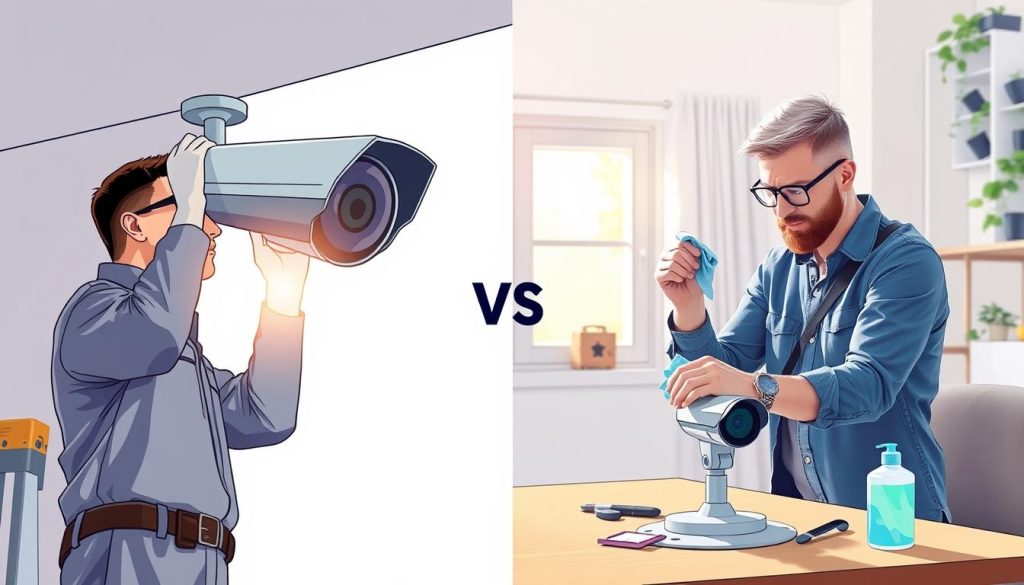
Annual Professional Servicing vs. Regular DIY Cleaning
Balancing professional expertise with routine care creates the ideal surveillance maintenance strategy. This dual approach maximizes performance while controlling operational costs. Understanding each method’s scope ensures comprehensive equipment protection.
Understanding the Scope of a Full System Service
Professional annual servicing delivers comprehensive equipment assessment beyond surface cleaning. Certified technicians examine both visible components and internal systems. This thorough evaluation identifies potential issues before they become major problems.
A complete professional service typically includes:
- Comprehensive hardware diagnostics and performance testing
- Software updates and security patch implementation
- Electrical system checks and power supply verification
- Weatherproofing integrity assessment for outdoor units
- Infrared functionality testing for night vision capability
These detailed checks require specialized tools and technical knowledge. Professionals access manufacturer-specific diagnostic software. They perform calibrations that maintain optimal surveillance performance.
How DIY and Professional Maintenance Work Together
Regular cleaning routines complement annual professional servicing perfectly. This combined approach maintains equipment between comprehensive inspections. It ensures consistent performance throughout the year.
DIY maintenance focuses on accessible components and visible issues. Property staff can handle basic lens cleaning and housing inspection. This routine care prevents minor problems from escalating.
Effective integration strategies include:
- Scheduling professional service after quarterly DIY sessions
- Documenting DIY activities for professional review
- Using professional reports to guide routine maintenance
- Training staff on proper cleaning techniques
Safety considerations limit DIY activities to non-technical tasks. Electrical components and complex diagnostics require professional handling. This division ensures both safety and optimal results.
“The most effective maintenance plan combines regular cleaning with annual professional service. This partnership delivers reliability that neither approach can achieve alone.”
Cost-effective models allocate resources based on task complexity. Simple cleaning falls to property staff. Technical diagnostics and repairs remain with professionals. This balance optimizes both performance and budget.
Documentation creates continuity between different maintenance levels. Shared records ensure professionals understand recent DIY activities. This coordination prevents redundant efforts and missed issues.
Emergency response planning clarifies responsibility boundaries. Staff handle immediate obstructions like spider webs. Professionals address electrical failures and system malfunctions. This clear division ensures prompt resolution of all issues.
Implementing Your Personalized CCTV Maintenance Strategy
Crafting a tailored maintenance plan ensures your surveillance equipment delivers peak performance. This personalized approach considers your specific environment and equipment types.
Begin by documenting current conditions and camera models. Establish a realistic implementation timeline that balances thoroughness with practicality. Proper staff training guarantees consistent execution of your customized schedule.
Budget planning should account for both professional services and DIY cleaning. Performance metrics help measure strategy effectiveness over time. Regular reviews allow adjustments for changing conditions or new requirements.
Technology integration enhances your maintenance strategy through automated monitoring. This comprehensive method protects your security investment while maximizing system longevity.
FAQ
What is the recommended cleaning frequency for CCTV cameras?
Most surveillance systems benefit from cleaning every three to six months. Adjust this based on environmental factors like dust levels, weather exposure, and location specifics.
How does regular maintenance improve CCTV performance?
Consistent upkeep ensures clear image quality, prevents system malfunctions, and extends equipment lifespan. It also reduces repair costs and keeps your security system reliable.
What signs indicate that a camera needs cleaning?
Look for blurred or fuzzy footage, poor image quality, or visible dirt on the lens. Spider webs, dust buildup, and moisture are also clear indicators.
Should indoor and outdoor cameras be maintained differently?
Yes. Outdoor units face harsher conditions and need more frequent checks. Indoor cameras generally require less maintenance but still benefit from periodic cleaning.
When should I consider professional CCTV maintenance services?
Hire experts for comprehensive inspections, complex system diagnostics, or if you notice persistent issues. Annual professional servicing complements regular DIY cleaning.
What tools are safe for cleaning CCTV camera lenses?
Use microfiber cloths and non-abrasive cleaners. Avoid harsh chemicals that could damage the lens coating or housing.
How does weather impact camera maintenance schedules?
High humidity, rain, or dust storms necessitate more frequent cleaning. Seasonal changes require adapted upkeep strategies to prevent weather-related damage.
Can remote monitoring help with maintenance planning?
Yes. Real-time alerts and remote access allow you to spot issues early, optimizing your cleaning schedule and ensuring consistent performance.


