
How much electricity does CCTV use per month?
Knowing how much CCTV electricity consumption is key for homeowners and businesses, like in Singapore. The monthly power usage of CCTV systems changes a lot. It depends on the camera type, how it works, and its features. This part will explain how much power different CCTV setups use. It helps you choose the right security system and keep energy costs of CCTV down.
Key Takeaways
- CCTV electricity consumption can vary widely based on camera type and features.
- Awareness of monthly power usage helps in budgeting for energy costs.
- Operational hours and camera features impact overall energy consumption.
- Different settings may require significantly more power.
- Deciding on a CCTV system involves considering both security and energy efficiency.
Understanding CCTV Power Needs
The power needs of CCTV systems change a lot based on the camera types and their features. Knowing these energy needs helps manage power use well. Each camera type has its own energy use, affecting the total power used.
Types of CCTV Cameras and Their Power Consumption
Different CCTV cameras use different amounts of power. For instance, analog cameras need 4 to 8 watts. IP cameras use 5 to 10 watts. This shows why it’s key to pick the right camera for energy savings.
The Role of Features in Power Usage
Features like night vision and high-definition recording use more power. This is because they need more processing power. Also, devices like DVR or NVR systems use 40 to 60 watts. Choosing the right features helps keep electricity costs down.
Factors Affecting Electricity Usage
It’s important to know how different things affect the power use of CCTV systems. Things like camera type, how long it runs, and its resolution all matter. They help figure out how much electricity a system needs.
Camera Type and Power Requirements
The type of camera you choose affects how much power it uses. PTZ cameras, with their moving parts, use more power than fixed cameras. Fixed cameras don’t change their position, so they need less energy. Knowing this helps pick the right camera for your needs.
Influence of Operational Time
How long a camera runs also matters. A camera on all the time uses more power than one that’s only on when needed. Changing when it runs can save a lot of energy without sacrificing security.
Impact of Resolution and Frame Rate
The resolution and frame rate of a camera also affect power use. Higher resolution, like 4K, means more power needed. A higher frame rate makes motion clearer but uses more power. Finding the right balance is key for saving money and keeping your system running well.
Typical Power Consumption of Common CCTV Setups
It’s key to know how much power different CCTV setups use. This helps keep an eye on energy use and cut costs. Each camera type has its own power needs, affecting the total power used in security systems. We’ll look at the power needs of basic IP cameras, bullet cameras, and PTZ cameras.
Basic IP Cameras Power Needs
Basic IP cameras are easy to use and flexible. They use between 3 and 10 watts. This means they use about 2.1 to 7.2 kWh each month, based on how much they’re used.
This info helps figure out the energy needs for bigger CCTV systems.
Bullet CCTV Cameras Consumption
Bullet cameras are known for their strong features and long life. They use 4 to 8 watts. This means they use about 2.9 to 5.8 kWh each month.
They’re good for many uses and keep energy costs down in CCTV systems.
Power Usage of PTZ Cameras
PTZ (Pan-Tilt-Zoom) cameras are more advanced and need more power. They use 8 to 15 watts. This means they use 5.8 to 10.8 kWh each month.
Even though they use more energy, their ability to cover big areas makes them worth it. Their energy use should be considered when looking at total power needs.
How much electricity does CCTV use per month?
Figuring out how much electricity CCTV systems use each month is key. It helps us understand the costs involved. We need to look at the total wattage of cameras and other gear. Then, we consider how long they run each day.
This method is vital for getting a clear picture of energy use. It helps us make accurate estimates.
Calculating Monthly Consumption
To figure out your CCTV system’s energy needs, start by finding out the wattage of each device. For instance, adding up the wattage of several cameras gives you a total. Then, multiply this total by how many hours your system runs daily.
Next, multiply that by the number of days in a month. This will give you kilowatt-hours (kWh). This step is important for making accurate estimates of energy use.
Understanding Costs Based on Local Rates
It’s important to use local rates to turn kWh into dollars. Rates can vary by area, which affects your costs. By comparing your kWh to your local rates, you can see how much your CCTV system will cost.
Practical Tips for Reducing Energy Costs
Managing energy use in CCTV systems can save a lot of money. One smart way to cut costs is by choosing energy-efficient cameras. These cameras use less power than old models, making them better for long-term security.
Choosing Energy-Efficient Cameras
When looking for CCTV systems, pick cameras that save energy. Look for ones with Power over Ethernet (PoE) to make installation easier and reduce power loss. These features help save energy and keep your security network stable. Brands like Hikvision and Dahua have energy-saving models for different needs.
Making the Most of Motion Detection Features
Motion detection technology is great for saving energy. It turns cameras on only when there’s movement, saving power when there isn’t. This cuts down on power use a lot. For more tips on saving energy, check out this guide on CCTV electricity consumption.
Comparing CCTV Cameras: Energy Efficiency
When picking the best CCTV system, energy efficiency is key. People often compare cameras based on how much energy they use. This is true when deciding between wired and wireless options.
Wired vs. Wireless Cameras
Wired cameras need a steady power source, which means they use energy consistently. They might use a bit more power, but they’re reliable and always connected. On the other hand, wireless cameras are flexible because they use rechargeable batteries.
This makes them easy to set up and move around. But, how long the battery lasts can change based on the camera’s features and how it’s used. This affects how much energy it uses overall.
Energy Ratings of CCTV Cameras
Knowing a camera’s energy rating is important for saving on electricity. Many cameras have ratings like Energy Star, which is used for household appliances. When comparing cameras, those that use less energy are cheaper to run over time.
Look for cameras that are designed to be energy-efficient. These will help you save money on your electricity bill while keeping your place safe.
Weighing Costs: Is Your Security Worth It?
Thinking about getting CCTV systems means looking at several things. You need to consider the cost of setting it up, the energy it uses, and how it affects your security. Many people also think about how it might lower their insurance costs. This helps them see if the CCTV system is worth it.
But CCTV systems offer more than just money savings. Feeling safe and secure is a big part of the decision. The value of security isn’t just about money. It’s also about feeling less worried and more confident in your safety. These feelings often make people choose security over cost.
Impact of PoE Technology on CCTV Power Consumption
Power over Ethernet (PoE) is changing how CCTV systems work. It lets power and data travel over one cable, cutting down on wiring needs. This leads to more efficient setups and lower costs over time.
Understanding Power Over Ethernet Benefits
PoE does more than make installations easier. It lets cameras be placed anywhere, without needing power outlets nearby. This makes it easier to set up cameras in spots that were hard to reach before. Plus, it helps use less power, making the network more efficient.
Considerations for Installing PoE Systems
When setting up PoE, it’s key to check if your network can handle it. Make sure your switches or injectors are compatible. Also, know how far Ethernet cables can go to keep your system running well. By focusing on these points, you can get the most out of PoE in your CCTV system.
Alternative Power Sources for CCTV Systems
Looking into different power sources for CCTV systems can make them work better and save money. With energy prices going up, using solar power and backup systems is smart. It keeps your security safe, even when power is not available.
Solar-Powered Solutions for CCTV
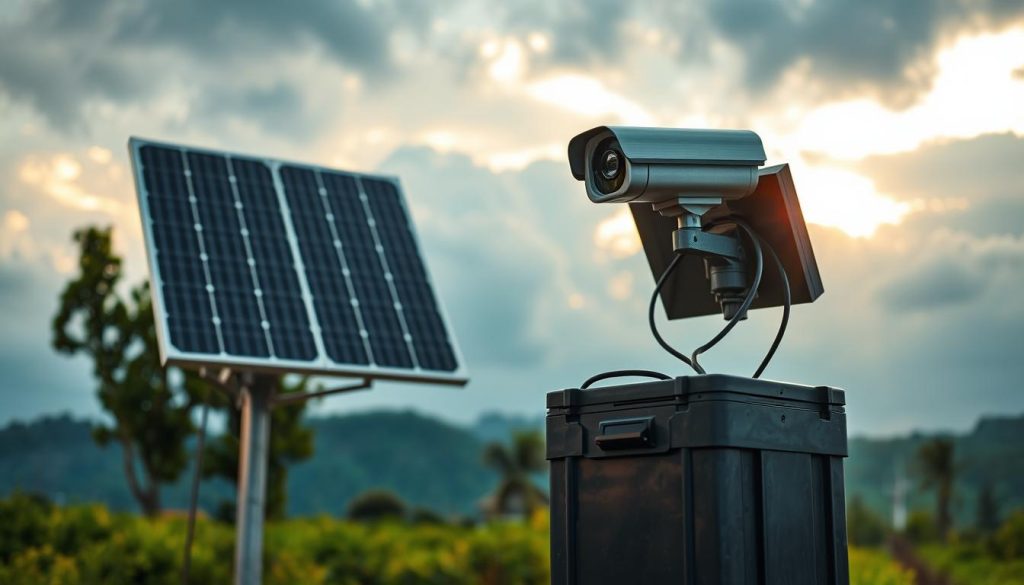
Solar-powered CCTV systems are a green choice for areas far from power or with lots of outages. They use sunlight to make electricity, giving a steady power source. Using solar power can cut down on electricity bills and is good for the planet.
UPS Systems for Backup Power
Adding Uninterruptible Power Supply (UPS) systems makes CCTV setups more reliable. These backup systems keep your cameras running during power cuts. This stops data loss and keeps monitoring steady. A UPS is key in emergencies when watching is critical.
Innovations in CCTV Power Management
New CCTV innovations focus on better energy management without losing functionality. Cutting-edge chipsets are designed to use less power. This lets cameras work well while using less energy.
Intelligent analytics algorithms are also becoming popular. They help cameras analyze traffic and behavior, saving energy. This way, users get the best surveillance while being eco-friendly.
Solar power and advanced batteries are now key in CCTV systems. They reduce carbon footprint and ensure cameras keep working, even in tough conditions. These advancements make security systems safer and more energy-efficient in Singapore.
FAQ
How much electricity does a typical CCTV camera use?
CCTV cameras use different amounts of electricity. Basic IP cameras use 3 to 10 watts. Bullet cameras use 4 to 8 watts. PTZ cameras use 8 to 15 watts.
What factors influence the power consumption of CCTV systems?
Several things affect how much electricity CCTV systems use. The type of camera, how long it runs, and the resolution all play a part. Higher resolutions mean more power needed.
How can I calculate the monthly electricity consumption of my CCTV system?
To figure out monthly use, first add up the wattage of all your cameras and gear. Then multiply by how many hours a day they run. Lastly, multiply by the number of days in a month. For example, three 10-watt cameras running all day would use about 2160 watts a month.
Are there any tips to reduce energy costs from CCTV systems?
Yes, there are ways to cut down on energy costs. Choose cameras that use less power. Use Power over Ethernet (PoE) technology. Also, turn off cameras when not in use. Regular maintenance helps them work better.
What is the difference in energy efficiency between wired and wireless CCTV cameras?
Wired cameras usually need a steady power source. Wireless cameras might use rechargeable batteries. But, wired systems might use more power depending on how they’re set up.
How do energy ratings impact the choice of CCTV cameras?
Energy ratings help you pick cameras that use less power. This means lower costs over time. It’s like choosing an Energy Star appliance.
What are the financial benefits of installing a CCTV system?
Installing a CCTV system has upfront costs and ongoing energy bills. But, you might save on insurance. Plus, the security it offers is priceless for many.
How does Power over Ethernet (PoE) technology affect CCTV power usage?
PoE lets you send power and data over one cable. This makes installations easier and can cut down on power use. It eliminates the need for extra wiring.
Can I use alternative power sources for my CCTV systems?
Yes, you can use solar power to cut down on electricity costs. Uninterruptible Power Supply (UPS) systems also provide backup power. This keeps your system running and your data safe during outages.
What innovations are being made in CCTV technology regarding power management?
New advancements include energy-saving chipsets. These reduce power use while adding features. Low power modes and smart analytics help make security systems more sustainable.


