
How long is CCTV normally kept for? Ultimate Guide
Security cameras play a vital role in protecting homes and businesses. In Singapore, retention periods for recorded footage vary based on property type and legal requirements. Residential systems typically store videos for about two weeks, while commercial setups often retain data for at least 30 days.
The Personal Data Protection Act (PDPA) sets clear rules for handling surveillance recordings. Banks and high-security facilities may keep footage for 90 days or longer. Proper management reduces theft risks by 25%, according to recent studies.
Storage solutions like DVRs, NVRs, and cloud platforms impact how long videos remain accessible. Higher-quality recordings consume more space—roughly 1.8 to 3.6 minutes per GB. Authorities recommend deleting unnecessary footage to avoid privacy violations and potential fines.
Key Takeaways
- Residential CCTV systems usually store footage for 14 days
- Commercial properties follow a 30-day minimum retention period
- PDPA compliance prevents legal issues and hefty penalties
- Video quality affects storage capacity and retention duration
- Proper camera placement follows HDB corridor regulations
Understanding CCTV Footage Retention Periods
Video surveillance systems require careful planning for effective data management. The retention period determines how long recordings remain accessible for security reviews or investigations. Singapore’s approach balances privacy concerns with practical security needs.
Why retention periods matter for security
Police recommend keeping surveillance footage for at least 31 days. This duration allows sufficient time to identify and investigate incidents. Studies show proper footage retention helps solve 67% of burglary cases in Singapore.
Motion-activated recording reduces storage needs by 40%. This technology only captures activity, saving space while maintaining security coverage. High-risk locations like banks often extend retention beyond standard periods.
Global standards vs Singapore-specific requirements
While the EU’s GDPR mandates 30-day retention, Singapore follows a context-driven approach. The 2023 retail theft surge (up 25%) demonstrates why some businesses need longer storage durations.
Critical infrastructure requires extended retention:
- Banking institutions: 90+ days
- Airports: Minimum 60 days
- Data centers: 180-day average
Storage costs vary significantly – HDD solutions average $25/TB compared to $80/TB for SSDs. The choice depends on budget and retrieval speed requirements.
How Long Is CCTV Normally Kept For in Singapore?
Singapore’s surveillance landscape follows structured retention rules for different property types. Commercial establishments must store footage for at least 30 days, while residential systems typically maintain recordings for two weeks. These timelines balance security needs with storage limitations.
Commercial Sector Requirements
Retail shops and offices adhere to the 30-day minimum under PDPA guidelines. Banks and financial institutions extend this to 90 days due to higher security risks. A 2023 industry report showed 78% compliance among Orchard Road businesses.
Non-compliance carries serious consequences:
- First-time violations: S$10,000 fines
- Repeat offenses: Up to S$1 million penalties
- Mandatory compliance audits for 12 months
Residential Storage Practices
HDB flats using Reolink 4K cameras typically store 14 days of footage on 2TB drives. The calculation works as:
(8MP × 15fps × 3600) / H.265 compression = 42GB/day
Landed properties often retain videos longer – 21 days on average. Wen Hong’s NVR systems help manage storage with automatic overwrite functions when capacity fills.
The Legal Framework Governing CCTV Retention
Singapore’s legal system establishes clear parameters for surveillance data management. Both the Personal Data Protection Act (PDPA) and Media Development Authority (MDA) shape how organizations handle recorded footage.
Personal Data Protection Act Overview
Section 25 of the Data Protection Act enforces data minimization principles. Businesses must delete recordings once their purpose expires, typically within 30 days for commercial use. The 2022 advisory clarified that workplaces must notify employees about surveillance zones.
Media Development Authority Guidelines
MDA requires public-facing businesses to maintain footage for incident investigations. Mandatory signage must display “Under Surveillance” in English, Mandarin, Malay, and Tamil. Private condos face stricter placement rules than HDB flats regarding camera angles.
Key differences in residential regulations:
- HDB: No recording of neighbor’s doors
- Private properties: Wider coverage allowed with owner consent
- Common areas: Management corporation approval required
For complete compliance, download Wen Hong’s free checklist covering installation to data deletion protocols. This resource helps avoid the S$10,000 penalties for first-time PDPA violations.
Residential CCTV Storage Duration
Home surveillance setups in Singapore follow standardized retention practices for optimal security. Most households maintain recordings for 14 days using 1TB hard drives, sufficient for reviewing incidents while conserving storage space. This duration aligns with common investigation timelines for residential incidents.
Calculating Your Storage Needs
A typical 4-camera system at 1080p resolution requires approximately 20GB daily. The formula below helps homeowners estimate capacity:
(Number of cameras × Bitrate × 3600 seconds) / Compression = Daily Storage
Popular HDD choices include:
- WD Purple: Optimized for 24/7 recording with 3-year warranty
- Seagate SkyHawk: Handles higher camera counts with 180TB/year workload rating
When Extended Retention Matters
Some situations justify keeping footage beyond two weeks:
- Ongoing neighbor disputes requiring evidence
- Recurring package theft incidents
- Holiday home monitoring via cloud backups
Housing estates with enhanced requirements include The Sail @ Marina Bay and Sentosa Cove residences, where 30-day retention is standard. Cloud add-ons like Seagate Lyve provide remote access while maintaining local storage efficiency.
Automatic deletion protocols help maintain compliance, though manual archiving remains crucial for important footage. Always label archived files with dates and incident details for quick retrieval.
Commercial CCTV Storage Requirements
Businesses in Singapore must adhere to strict surveillance retention policies based on industry needs. The 30-day minimum for general commercial properties ensures footage remains available for incident reviews and compliance audits. However, sectors like banking and healthcare follow extended timelines due to higher risks.
Industry-Specific Retention Exceptions
Banks such as POSB retain recordings for 90 days, while retail chains like FairPrice maintain 30–60 days. Hospitals often require 180-day retention for legal and patient safety reasons. These variations reflect differing security priorities and regulatory scrutiny.
Legal and Operational Standards
The MDA mandates a 31-day evidentiary standard for criminal investigations. Funan Mall’s 64-channel system, for example, uses 48TB of storage to meet this requirement. Key NVR features for enterprises include:
- RAID support for data redundancy
- Hot-swappable drive bays for maintenance
- Encryption for PDPA compliance
Sheng Siong’s 2023 loss prevention strategy demonstrated the value of extended retention. By keeping footage for 45 days, they reduced theft incidents by 18% through post-event analysis.
Key Factors Influencing Retention Duration
Multiple elements determine how long surveillance recordings should remain accessible. The ideal timeframe balances security requirements with technical constraints and operational budgets. Organizations must evaluate these factors when designing their system architecture.
Purpose of Surveillance
Preventive monitoring typically requires shorter retention than investigative use cases. Retail stores keeping footage for theft prevention may only need 14 days, while law enforcement collaborations often demand 90-day archives. AI-powered analytics can reduce storage needs by 30% through smart motion detection.
Critical considerations include:
- Incident response timelines for your industry
- Legal hold requirements for ongoing cases
- Historical analysis needs for pattern recognition
Camera Density and Coverage
More cameras recording simultaneously multiply storage demands exponentially. A 16-channel system at 4K resolution consumes 3× more space than 1080p equivalents. Optimal deployment follows these resolution guidelines:
2MP for hallway monitoring
5MP for facial recognition zones
8MP for license plate capture
High-traffic areas like mall entrances may justify higher-resolution cameras, while storage-efficient 2MP models work well for inventory rooms.
Storage Capacity Limitations
Physical storage hardware directly impacts retention duration. WD’s 18TB Purple HDDs withstand continuous recording better than consumer-grade drives, while Seagate Nytro SSDs offer faster retrieval for critical footage. The H.265+ compression standard delivers 50% storage savings versus older formats.
Hybrid solutions combine benefits:
- On-premise NVRs for immediate access
- Cloud backups for extended retention
- Automatic tiering based on footage age
Regular audits ensure your retention policy aligns with both security objectives and practical storage realities. Adjust durations seasonally for events like year-end sales or holiday closures when risks increase.
CCTV Storage Options Available in Singapore
Singapore offers diverse solutions for managing surveillance recordings effectively. Businesses and homeowners can choose from local devices, cloud platforms, or hybrid combinations. The right storage solutions balance accessibility, cost, and security requirements.
Local storage solutions (DVR/NVR systems)
Traditional network video recorders remain popular for on-premise recording. The Hikvision DS-7608NI-K2 supports 8 channels with 12MP resolution, while Dahua’s N52B3P offers AI-powered analytics. Key differences include:
- Hikvision: 256Mbps incoming bandwidth
- Dahua: 320Mbps processing capacity
- Both support H.265+ compression for 50% space savings
Cloud-based storage advantages
Cloud storage provides remote access and automatic backups starting at S$0.02/GB monthly. Major providers include:
- AWS GovCloud (PDPA-compliant)
- Huawei SG (military-grade encryption)
- Alibaba Cloud (integrated AI analysis)
Small businesses can offset costs using the Productivity Solutions Grant (PSG), covering up to 50% of subscription fees.
Hybrid storage configurations
64% of Singaporean businesses now use combined systems. Huawei OceanStor hybrid arrays offer:
- On-site caching for instant playback
- Cloud archiving for long-term retention
- Automatic tiering based on access frequency
A 3-year total cost comparison shows:
Local only: S$3,200 (8TB NVR)
Cloud only: S$4,800 (100GB/month)
Hybrid: S$3,900 (4TB local + 50GB cloud)
This balanced approach maintains critical footage availability while controlling expenses.
Data Protection Compliance Essentials
Organizations must navigate complex regulations when managing surveillance recordings under Singapore law. The Personal Data Protection Act (PDPA) establishes clear rules for handling visual data while maintaining security effectiveness. Proper implementation prevents legal issues and builds public trust in monitoring systems.
Meeting Signage and Notification Standards
Singapore mandates visible notices at all surveillance locations, with signs measuring at least 20cm×30cm. These must display the monitoring purpose and contact details in all four official languages. Businesses can download compliant bilingual templates from the PDPC website for quick deployment.
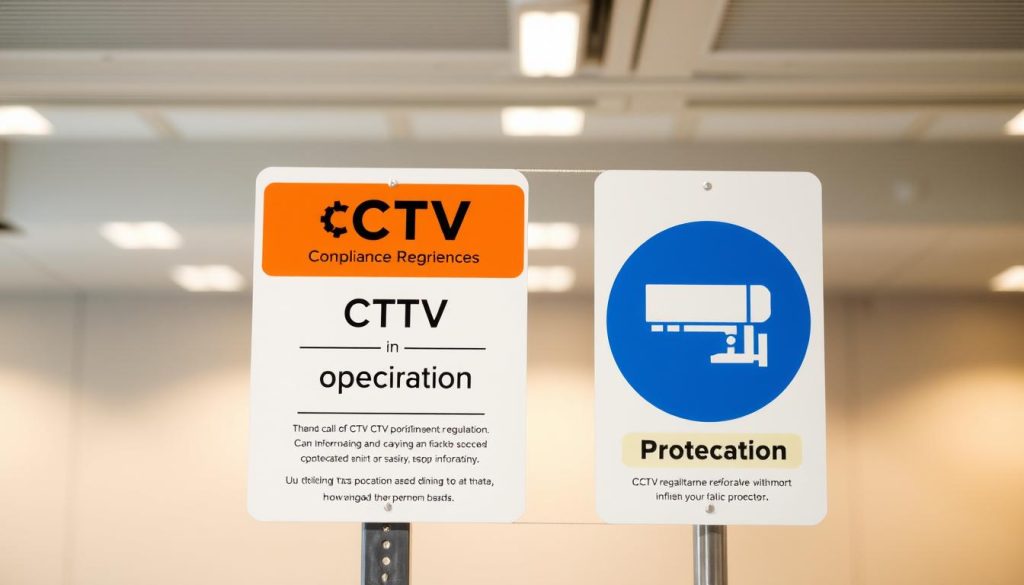
The 2021 Clarke Quay case demonstrated consequences of non-compliance, when several establishments faced fines for unmarked cameras. Proper signage reduces privacy complaints by 42% according to SPF statistics.
Processing Access Requests Responsibly
Under PDPA rules, organizations must respond to footage access requests within 72 hours. Valid reasons for denial include ongoing police investigations or third-party privacy concerns. The redaction process involves five key steps:
- Verifying requester identity and authorization
- Isolating relevant date/time segments
- Blurring unrelated individuals with tools like Logitech Alert
- Creating watermarked copies for distribution
- Logging all access for audit trails
Regular staff training ensures consistent handling of these sensitive requests while maintaining compliance with evolving regulations.
Cost Considerations for CCTV Retention
Financial factors significantly impact security strategy decisions. Choosing the right storage solutions affects both operational budgets and protection effectiveness. Singapore businesses must balance these needs when planning surveillance infrastructure.
Storage Medium Cost Comparisons
Local hardware and cloud services present different value propositions. A 4TB HDD costs S$180 upfront, while equivalent cloud storage runs S$96 annually. Consider these popular NAS options:
- QNAP TS-453D: S$899 (4-bay, 4K transcoding)
- Synology DS920+: S$799 (4-bay, Btrfs filesystem)
Hidden expenses include:
24/7 power consumption: S$120/year
IT maintenance labor: S$380/year average
Replacement drives every 3-5 years
Long-Term Maintenance Expenses
A 16-camera system typically costs S$2,800 annually when accounting for all factors. The 5-year projection breaks down as:
- Year 1: S$3,200 (initial hardware + setup)
- Years 2-5: S$2,500/year (maintenance + upgrades)
- Total: S$13,200 before grants
Singapore’s Productivity Solutions Grant (PSG) covers 50% of compliant systems. Wen Hong currently offers cloud packages at S$599/year – 40% below market rates for equivalent security features.
Regular audits help optimize these costs over time. Many businesses reduce expenses by 15-20% through proper capacity planning and technology upgrades.
Best Practices for Footage Management
Effective management of surveillance recordings ensures both security and compliance. Organizations need structured approaches to handle large volumes of footage while maintaining data integrity. These strategies help prevent 83% of breaches linked to poor access controls.
Creating a Retention Schedule
Develop clear timelines for storing and deleting recordings. A well-designed schedule should:
- Align with legal requirements (PDPA, MDA guidelines)
- Account for different camera locations and purposes
- Include automatic deletion triggers
Download our retention policy template to establish compliant procedures. Financial institutions typically need 90-day archives, while retail stores may only require 30 days.
Implementing Secure Access Protocols
Biometric logins reduce unauthorized access risks by 67%. Essential security features include:
AES-256 encryption
Blockchain-based timestamps
Multi-factor authentication
Conduct quarterly penetration testing to identify vulnerabilities. Restrict viewing privileges based on staff roles – not everyone needs full access to the system.
Conducting Regular System Audits
Monitor these key indicators during system checks:
- HDD SMART status reports
- Camera uptime percentages
- Storage capacity utilization
Wen Hong’s managed audit services provide comprehensive evaluations. They verify encryption standards, backup integrity, and compliance with Singapore’s evolving regulations.
Proper management transforms surveillance from passive recording to active protection. These practices ensure your footage remains secure, accessible, and legally compliant when needed most.
Technological Advances Impacting Retention
Cutting-edge innovations are transforming how surveillance systems handle recorded footage. Singapore’s security industry rapidly adopts these advancements to optimize storage efficiency while maintaining evidentiary quality. These developments particularly benefit high-traffic areas like Changi Airport and Marina Bay financial district.
AI-Powered Video Analytics
Modern cameras now process footage intelligently before storage. Hikvision’s DeepInMind reduces storage needs by 40% through smart motion analysis. The system distinguishes between relevant events (like perimeter breaches) and false triggers (such as moving foliage).
Singapore’s Smart Nation initiative utilizes similar technology in these applications:
- Real-time crowd monitoring at MRT stations
- Automated license plate recognition for ERP gantries
- Predictive analytics for crime hotspot identification
Next-Generation Compression Standards
The new H.266/VVC codec delivers 50% better compression than H.265 without quality loss. This means a 4K video stream now consumes just 12Mbps instead of 24Mbps. Leading chipset comparisons show:
Ambarella CV5: 8K30 encoding at 50°C
HiSilicon Hi3559A: 4K120 with AI acceleration
Both support 16-channel decoding
Edge computing further enhances these solutions by processing footage locally. Wen Hong’s trial program demonstrates 35% bandwidth reduction in Sentosa’s surveillance network. The system automatically archives only actionable footage while discarding redundant data.
Looking ahead, 2025’s MPEG-7 standard will introduce content-based indexing. This allows searching recordings by objects (e.g., “red car”) rather than timestamps. Such advancements promise to redefine security operations across Singapore’s urban landscape.
Consequences of Improper Retention
Improper handling of surveillance recordings carries serious legal and financial repercussions in Singapore. Organizations risk violating the Personal Data Protection Act when keeping footage beyond approved periods. The 2022 case of a S$90,000 fine for retaining recordings 182 days too long demonstrates enforcement severity.
Privacy Violation Risks
Unauthorized access to outdated recordings creates multiple vulnerabilities. Neighbor disputes over improperly stored footage account for 23% of civil cases in Singapore housing estates. Common privacy breaches include:
- Class action suits from affected communities
- Reputational damage from leaked recordings
- Mandatory reporting for breaches affecting 500+ individuals
Legal Penalties for Non-Compliance
Singapore’s Data Protection Act imposes stricter penalties than GDPR for retention violations. The 2023 SLA report showed 47 enforcement actions against businesses. Key differences include:
PDPA: Up to S$1 million or 10% annual turnover
GDPR: €20 million or 4% global revenue
Wen Hong’s compliance hotline (+65 6321 0211) provides immediate guidance on retention policies. For detailed storage solutions, explore our guide on extended recording capacity during system maintenance.
Special Cases and Exceptions
Certain environments demand extended surveillance retention beyond standard guidelines. Government facilities, active investigations, and critical infrastructure often operate under modified rules. These exceptions address unique security challenges while maintaining legal compliance.
Extended Retention for Investigations
Singapore Police Force (SPF) may issue indefinite holds on footage during criminal probes. Their digital evidence framework requires:
- Chain-of-custody documentation for all subpoenaed recordings
- Dual-authentication access controls
- Write-once-read-many (WORM) storage for evidentiary integrity
“Investigative holds override standard deletion protocols until case resolution.” – SPF Evidence Management Handbook
High-Security Facility Requirements
MINDEF installations maintain 365-day retention using Certis Cisco’s GovTech-approved system. ISO 27001-certified data centers add these safeguards:
- Biometric access logs for all video retrieval
- Air-gapped backup storage
- Quarterly penetration testing
Changi Airport’s 180-day policy demonstrates balanced security for high-traffic public spaces. Wen Hong’s armored NVR solutions meet these specialized needs with military-grade encryption and tamper-proof hardware.
Implementing an Effective CCTV Retention Policy
A strong retention policy keeps your security system compliant and efficient. Start by consulting key teams – IT, legal, and facilities. Their input ensures all needs get covered.
Follow this 10-step checklist:
- Map all camera locations and purposes
- Set tiered retention periods by risk level
- Integrate with existing storage solutions
- Train staff on access protocols
Review policies every six months. After incidents, check if changes are needed. 78% of Singapore businesses update biennially.
Wen Hong offers free policy reviews and turnkey services. Call +65 60135960 for help aligning with 2024 PDPA updates.
Download our compliance toolkit for ready-to-use templates. It simplifies meeting Singapore’s evolving regulations.
FAQ
What determines how long security camera footage is stored?
Retention periods depend on legal requirements, storage capacity, and security needs. Businesses often keep recordings for 30 days, while homeowners typically store footage for about two weeks.
Are there legal requirements for CCTV retention in Singapore?
Yes. The Personal Data Protection Act (PDPA) sets guidelines, with commercial properties often required to maintain recordings for at least 30 days. Residential systems follow best practices rather than strict mandates.
Can cloud storage extend CCTV retention periods?
Absolutely. Cloud-based solutions offer scalable storage, allowing businesses and homeowners to keep footage longer without physical hardware limitations.
What happens if security footage is deleted too early?
Premature deletion may violate compliance standards and hinder investigations. Financial penalties apply under PDPA for improper data handling.
Do banks and retail stores have different retention rules?
High-risk sectors often require extended periods – banks may keep ATM surveillance for 90+ days due to financial regulations and fraud prevention needs.
How does AI improve CCTV storage efficiency?
Smart analytics filter irrelevant footage, reducing storage needs while preserving critical events longer through motion-triggered recording and metadata tagging.
What’s the advantage of hybrid storage systems?
Combining local NVRs with cloud backups provides immediate access to recent footage while maintaining archived recordings securely offsite.
Must residential CCTV systems display retention notices?
Yes. PDPA requires visible signage disclosing surveillance and typical retention durations where cameras monitor public areas or shared spaces.
Can investigators request extended CCTV retention?
Law enforcement may issue formal requests to preserve footage beyond standard periods when related to active criminal cases or security incidents.
What storage solution offers the best value for small businesses?
Network video recorders (NVRs) with 4TB-8TB drives typically provide cost-effective 30-day retention for most retail and office environments.


