
How long do CCTV cameras last? Expert Guide
Investing in a surveillance system is a major decision for any home or business owner in Singapore. You want equipment that protects your property for years to come. A common and crucial question revolves around the durability of this technology.
The operational life of a security camera is not a single number. It spans a wide range, typically from three to ten years. This variation depends on several key factors.
Build quality, installation environment, and ongoing care all play massive roles. Understanding these elements helps you make a smart security investment. It ensures your system performs when you need it most.
With property security always a priority, a reliable video system is essential. This guide provides expert-backed insights. We’ll break down what influences longevity and offer practical advice to extend it.
You’ll learn about proactive maintenance, technological refresh cycles, and environmental protection. Our goal is to help you get maximum value and peace of mind from your security setup.
Key Takeaways
- Security camera lifespan is variable, generally between 3 to 10 years.
- Quality of components and construction is a primary durability factor.
- Environmental conditions, like Singapore’s harsh weather, significantly impact outdoor cameras.
- Proactive and regular maintenance is key to preventing problems and extending operational life.
- Planning for technology updates ensures your surveillance system meets future security needs.
- A well-chosen and cared-for system represents a sound long-term investment for your property.
Understanding CCTV Camera Lifespan: A Key Security Investment
Property protection demands technology that remains operational through changing conditions and threats. Viewing surveillance equipment as a long-term investment transforms your security approach. It moves beyond simple purchase to strategic planning.
Recent data highlights this need. Theft incidents in Singapore rose by over 25% in early 2023. This trend underscores the necessity for reliable monitoring solutions.
Modern CCTV systems serve as powerful crime deterrents. Their visible presence alone reduces incident likelihood. They provide continuous watch over your premises.
Technology has revolutionized these security tools. Today’s cameras offer remote live viewing via smartphones and computers. Motion detection and high-resolution imaging create active surveillance networks.
These advanced features depend entirely on equipment health. A failing unit cannot deliver clear video evidence. It cannot provide reliable remote access when needed most.
The effectiveness of your entire system ties directly to its longevity. This connection defines your security return on investment. A durable setup protects your initial capital outlay.
It also delivers continuous peace of mind. You gain confidence that your property remains monitored. This assurance represents significant value beyond equipment cost.
Neglecting maintenance invites gradual degradation. Small issues can create security blind spots over time. Emergency repairs or premature replacement often incur higher expenses.
Understanding what influences operational life empowers property owners. You can make informed choices about equipment selection. You can implement practices that enhance resilience.
This knowledge helps you build security that lasts for years. It ensures your CCTV system meets evolving protection needs. Your investment continues delivering optimal performance throughout its service life.
What Is the Average Lifespan of a CCTV Camera?
For those evaluating security options, the durability of the hardware is a key financial and functional factor. The term “average” provides a useful starting point for expectations.
Most modern surveillance setups fall within a predictable range. This benchmark helps with planning for maintenance and future upgrades.
The 3 to 5 Year Benchmark for Modern Systems
Today’s IP-based video monitoring systems commonly deliver reliable service for three to five years. This range applies to well-installed commercial and quality residential setups.
Basic care and a stable environment support this operational timeline. It represents the standard for current technology.
Budget or consumer-grade models often sit at the lower end. Their lifespan may only reach two to three years.
Inferior electronic components and housing materials are usually the cause. This shorter service life highlights the importance of quality.
How High-Quality Systems Can Last 7 to 10 Years
Investing in professional-grade equipment changes the equation dramatically. Brands like Axis, Hikvision, and Uniview engineer their products for endurance.
These cameras use superior sensors, robust circuit boards, and weather-resistant housings. Their design prioritizes continuous, trouble-free operation.
Choosing a high-tier system isn’t just about better video. It’s a commitment to long-term reliability and lower total cost.
Installation reports consistently show these premium models exceeding the average. With proper placement and simple upkeep, seven to ten years of service is an achievable goal.
This extended longevity makes them a cornerstone of permanent security infrastructure. They withstand daily operation with minimal degradation.
Modern digital systems also generally outlast older analog technology. Improved components and efficient data handling contribute to this enhanced durability.
The core takeaway is clear. The “average” lifespan is a guideline, not a guarantee. Your actual results depend heavily on the equipment tier you select from the start.
How Long Do CCTV Cameras Last? Breaking Down the Numbers
Numerical evidence provides clarity on what property owners can realistically expect from their security investments. Moving past averages reveals a stark durability divide.
This data-driven analysis compares different surveillance tiers. It shows why some units fail quickly while others protect properties for a decade.
Professional-Grade vs. Consumer-Grade Camera Longevity
The core difference lies in engineering philosophy. Professional surveillance equipment is built for mission-critical operation.
Commercial brands like Axis Communications design for endurance. Their expected operational life often exceeds ten years.
Industrial-grade sensors and robust circuit boards form the foundation. Conformal coating protects electronics from humidity and contaminants.
Metal housings withstand physical stress and environmental extremes. Higher-quality capacitors ensure stable power delivery over thousands of days.
In contrast, consumer-grade models prioritize low cost. Plastic components and basic chipsets are common.
These budget units typically deliver service for just two to four years. Rapid image deterioration and frequent glitches plague their shorter lifespans.
The failure rate for professional surveillance gear remains remarkably low. For consumer products, it can be three to five times higher within the same period.
This durability gap represents more than just time. It affects evidence quality, maintenance costs, and overall security posture.
Real-World Lifespan Reports from Users and Installers
Field data from Singapore and global markets confirms the theoretical divide. Installers encounter well-maintained professional setups operating flawlessly after eight years.
They also frequently replace failing budget systems at the two to three-year mark. This pattern appears consistently across different environments.
User community feedback highlights satisfaction with durable brands. Long-term reliability receives consistent praise in technical forums.
Frustration centers on cheaper models with poor low-light performance. Rapid functional decline forces premature upgrades.
Surveys indicate most property owners with quality gear wait over five years before considering replacement. The average reaches seven years for tier-one equipment.
Case studies from local businesses show smart investments paying off. Their surveillance infrastructure remains effective through multiple technology cycles.
This real-world evidence justifies higher initial expenditure. It transforms the purchase decision from a short-term cost to a long-term value calculation.
Critical Factors Influencing CCTV Camera Lifespan
The service life of monitoring technology isn’t random but shaped by specific, controllable factors. Three primary areas determine whether your setup reaches its maximum potential or fails prematurely.
These elements work together in every surveillance environment. Understanding their interaction helps you make better purchasing and maintenance decisions.
Factor 1: The Quality of Components and Manufacturing
Internal construction forms the foundation of any camera’s longevity. Superior parts resist electrical and environmental stress far better than budget alternatives.
The image sensor is the heart of the system. Higher-grade sensors maintain clarity over thousands of operating hours. They handle low-light conditions without excessive noise.
Circuit board robustness matters greatly. Thicker copper traces and industrial-grade capacitors prevent power-related problems. Conformal coating protects against humidity and dust infiltration.
Lens quality directly affects evidence value. Multi-element glass lenses with anti-reflective coatings outperform plastic alternatives. They resist hazing and maintain sharp focus.
Housing materials provide the first line of defense. Metal or high-grade polymer exteriors withstand physical impacts. They also manage internal heat more effectively.
Premium manufacturers invest in rigorous testing protocols. Their components undergo thermal cycling, vibration, and extended burn-in periods before shipment.
Factor 2: Environmental and Weather Conditions
Singapore’s tropical climate presents unique challenges for surveillance equipment. Constant heat and humidity accelerate wear on electronic systems.
Persistent high temperatures cause component fatigue. Internal processors and power regulators degrade faster when operating near their thermal limits.
Humidity leads to condensation inside housings. This moisture promotes corrosion on circuit boards and connector pins. Salt spray in coastal areas compounds this issue.
Dust accumulation blocks ventilation paths. Overheating becomes inevitable when heat cannot dissipate properly. Regular cleaning prevents this common failure point.
Sudden temperature changes create thermal stress. Materials expand and contract at different rates. This can crack solder joints or compromise seals over time.
Factor 3: Installation Standards and Usage Patterns
Human factors significantly impact operational lifespan. Proper setup prevents many common problems before they occur.
Correct mounting ensures adequate airflow around the unit. Tight cable connections prevent intermittent power issues. Weatherproofing seals keep moisture out of junction boxes.
Power supply quality is critical. Stable voltage prevents surges that damage sensitive electronics. Undervoltage causes similar stress on internal components.
Usage intensity varies widely between applications. A residential camera recording motion events experiences less wear than a commercial unit operating 24/7.
High-traffic areas demand more from the system. Continuous recording and processing increase thermal load. This accelerates the natural aging process of all parts.
These three factors are deeply interconnected. Premium equipment (Factor 1) withstands harsh conditions (Factor 2) especially when installed correctly (Factor 3).
Quick-Reference: Factors and Outcomes
| Primary Factor | Common Outcome |
|---|---|
| Poor Component Quality | Early Electronic Failure |
| Harsh Environmental Conditions | Corrosion and Lens Hazing |
| Inadequate Installation | Power Issues and Water Damage |
| 24/7 High-Intensity Use | Accelerated Thermal Wear |
| Superior Build + Proper Care | Maximum Service Life Achieved |
Digital and IP-based systems generally offer better durability than older analog technology. Their modern components handle data more efficiently with less heat generation.
Recognizing these factors influence helps you extend your security investment. Each represents an opportunity for proactive management and performance optimization.
The Impact of Weather and Environment on Camera Durability
The relentless elements of nature pose the most persistent threat to any outdoor surveillance setup. In Singapore’s tropical climate, your security equipment faces a daily endurance test.
Intense sun, heavy rain, and constant humidity directly challenge a camera’s construction. Understanding these threats is the first step in choosing hardware built to last.
This knowledge helps you prevent common problems before they cause permanent damage. Protecting your investment means defending it from the environment.
Sunlight, Heat, and the Risk of Overheating
Prolonged UV exposure acts like an invisible force. It degrades plastic housings, making them brittle and discolored over time.
Direct heat buildup is an even more immediate concern. Internal components can overheat, forcing the unit into thermal shutdown.
This creates dangerous gaps in your surveillance recording. Image quality also suffers as sensors struggle in extreme temperatures.
Solutions are straightforward but critical. Select cameras with wide operating temperature ranges, such as -30°C to 60°C.
Use sun shields or install units in naturally shaded areas. Always ensure the installation site has adequate airflow for passive cooling.
These simple steps protect sensitive internal parts from premature failure. They maintain optimal performance during the hottest days.
Cold Weather, Moisture, and Corrosion Protection
While less common in Singapore, moisture is a universal enemy. Rain, condensation, and coastal salt air threaten every outdoor installation.
Moisture leads to internal corrosion on circuit boards. It can cause electrical shorts and promote fungus growth on lenses.
This drastically reduces the functional lifespan of the entire system. Proactive protection is non-negotiable.
For very humid or cold environments, specialized accessories are key. Heaters and blowers for enclosures prevent internal condensation.
High-quality silicone seals around all cable entries form a vital barrier. These measures guard against the slow, corrosive effects of harsh weather.
Choosing a model rated for extreme cold, like Uniview’s -30°C capability, isn’t just about location. It signals a build quality designed to handle thermal stress and seal integrity that lesser models lack.
Why IP Ratings (IP66, IP67) Are Non-Negotiable for Outdoors
The Ingress Protection (IP) code is your definitive guide to environmental resilience. It quantifies a camera’s defense against solids and liquids.
For any outdoor cameras in Singapore, a minimum rating of IP66 is essential. This rating means the unit is completely dust-tight.
It also guarantees protection against powerful water jets from any direction. It can handle heavy monsoon rain without issue.
For cameras at greater risk—like those near pools or in flood-prone areas—IP67 is the smart choice. An IP67-rated device can survive temporary immersion in water.
Selecting a camera with the correct IP rating and temperature specification is the most critical purchasing decision you can make. It is the foundational step in defending your security investment against environmental wear and tear.
This ensures the durability of your CCTV system matches the conditions it must endure.
Maximizing Lifespan Through Proactive CCTV Maintenance
Extending the operational years of security equipment requires a shift from passive ownership to active stewardship. Consistent care practices directly influence how many years your surveillance investment remains effective.
This approach prevents minor issues from becoming major failures. It ensures your property protection operates at peak reliability.
A structured maintenance plan delivers the best results. It combines simple owner tasks with scheduled professional support.
Essential Routine: Cleaning Lenses and Housings
Clear vision is non-negotiable for effective monitoring. Dust, spider webs, and environmental grime accumulate steadily.
This buildup degrades image quality and can trap heat. A basic cleaning routine preserves optical clarity and prevents overheating.
Follow these safe steps every few months. Use a soft, dry microfiber cloth for the lens surface.
For stubborn spots, lightly dampen the cloth with distilled water or a dedicated lens cleaner. Gently wipe in a circular motion from the center outward.
Clear any debris from the housing and check that drainage holes in outdoor units remain unblocked. This prevents water accumulation that leads to internal corrosion.
Establish a cleaning schedule based on your environment. Quarterly attention works well for dusty industrial areas or locations near vegetation.
Bi-annual cleaning may suffice for cleaner residential settings. Always avoid abrasive materials, harsh chemicals, or high-pressure water jets directed at the camera body.
The Importance of Regular Firmware and Software Updates
Maintenance isn’t just physical. The digital health of your surveillance setup matters equally.
Manufacturers release firmware updates to address vulnerabilities, improve stability, and fix bugs. These updates can enhance overall system efficiency by up to 20%.
They also close security gaps that hackers might exploit. Sometimes, new features or compatibility improvements are included.
An outdated firmware version is one of the most common entry points for cyber intrusions into security networks. Regular updates are your first line of digital defense.
Checking for updates is typically straightforward. Access your camera’s or Network Video Recorder’s (NVR) web interface through a browser.
Navigate to the system management or maintenance section. Always create a configuration backup before proceeding with any update.
This simple habit ensures you can restore settings if needed. It transforms your equipment from a static device into an evolving security tool.
Scheduling Professional Inspections and System Checks
While owner maintenance is valuable, some tasks require expert eyes. A comprehensive annual inspection by a qualified technician is a wise investment.
This professional check goes beyond surface cleaning. It verifies critical operational parameters that affect long-term reliability.
Technicians test power supply stability and measure voltage levels. They examine night vision (IR) LEDs for diminished output.
Cable integrity is assessed for rodent damage, weathering, or connection corrosion. Recording continuity and storage health are validated to ensure no data loss occurs.
These regular checks catch subtle problems early. A slightly degrading power supply or early signs of moisture ingress might go unnoticed by an untrained observer.
Identifying these issues during scheduled maintenance prevents catastrophic failures later. It’s far more cost-effective than emergency repairs or total replacement.
Consistent, proactive care is the single most effective way to influence your surveillance system’s service duration. It protects both your financial investment and your property’s security.
Recognizing the Signs Your CCTV Cameras Need Replacing
Identifying clear symptoms of failure helps property owners make timely decisions about their surveillance investments. Waiting until a complete breakdown occurs can leave your property vulnerable.
Learning to diagnose these warning signs empowers you to act proactively. You can schedule replacements during planned maintenance windows rather than emergency situations.
Deteriorating Image Quality and Frequent Glitches
Visual clarity is the foundation of any effective monitoring setup. When footage becomes persistently blurry despite proper lens cleaning, internal component failure is likely.
Constant grain or noise in low-light conditions suggests a failing image sensor. Discoloration, like a persistent pink or green tint, often indicates serious electronic issues.
Distorted lines or warping in the picture signal problems with the lens assembly. These are not minor annoyances but critical failures of core hardware.
Operational instability presents another major red flag. Cameras that randomly disconnect from the network create dangerous surveillance gaps.
Frequent system freezes or playback failures point to deeper hardware or software problems. Inconsistent motion detection that misses obvious events reduces security effectiveness.
Persistent glitches might sometimes be resolved with a firmware update or power reset. When these issues return repeatedly, replacement becomes the most reliable solution.
Technological Obsolescence and Missing Modern Features
Some units continue functioning physically but fail to meet current security standards. Older analog cameras produce low-resolution footage that is useless for identification.
They lack essential capabilities like high-definition streaming or remote access. This creates a significant security gap despite the equipment still powering on.
Modern surveillance demands features like smart motion detection and encrypted data transmission. Systems without cybersecurity protocols expose your network to potential intrusion.
Incompatibility with newer recording platforms or mobile applications is another clear sign. You cannot integrate aging cameras with updated central management software.
An obsolete system provides a false sense of security. It records events but cannot deliver evidence of sufficient quality for investigation or legal purposes.
Upgrading becomes a security necessity rather than just a technical refresh. The missing features directly impact your property’s protection level.
Physical Damage and Component Failure
Visible harm to equipment leaves little room for debate about replacement needs. Cracked housings from impact compromise weather resistance immediately.
Water condensation inside a dome housing signals failed seals. This moisture will eventually cause short circuits and corrosion on internal boards.
Burnt-out infrared LEDs render night vision completely ineffective. The camera becomes blind during darkness, creating a critical vulnerability.
A unit that is completely unresponsive often suffers from power supply or mainboard failure. These are complex repairs that frequently cost more than a new camera.
Physical damage assessment should be straightforward. If the housing is breached or components are visibly damaged, continued operation is unreliable.
Replacement is usually the most economical path for unambiguous physical failures. Attempting repairs on severely damaged units rarely delivers long-term reliability.
Recognizing these signs transforms vague concerns into actionable intelligence. You gain the confidence to justify new equipment investments before security failures occur.
When to Upgrade: The 7-Year Technology Refresh Cycle
Forward-thinking property owners establish regular intervals to evaluate their surveillance infrastructure’s relevance. A seven-year review cycle serves as a practical guideline for this assessment. Even premium equipment approaches functional obsolescence within this timeframe.
Rapid innovation in video monitoring creates significant capability gaps. A unit from seven years ago lacks today’s intelligent features. Planning for periodic updates ensures your security remains current and effective.
Benefits of Upgrading to AI, Higher Resolution, and Better Integration
Modern surveillance technology transforms passive recording into active intelligence. Artificial intelligence analytics represent the most significant advancement. These systems can distinguish between people, vehicles, and animals.
They send targeted alerts instead of constant motion notifications. Facial recognition and loitering detection provide proactive security solutions. This intelligent filtering saves countless hours of review time.
Resolution improvements deliver forensic-level detail. 4K and higher megapixel cameras capture license plates and facial features from greater distances. This clarity proves invaluable during investigations.
Low-light performance has seen remarkable progress. Starlight and ColorVu sensors produce usable color video in near darkness. Older infrared models only offer grainy black-and-white footage.
Integration capabilities have expanded dramatically. New cameras connect seamlessly with access control, alarms, and smart home platforms. They create unified security ecosystems rather than isolated devices.
The transition from simple recording to intelligent scene interpretation represents the core value of modern surveillance. New technology doesn’t just capture events—it understands and prioritizes them.
Balancing Cost with Enhanced Security Capabilities
The upgrade decision requires careful financial consideration. Total Cost of Ownership (TCO) provides the proper framework for evaluation. This approach considers long-term value rather than just initial expense.
Enhanced preventive security often justifies the investment. AI-powered analytics can prevent incidents before they occur. Superior image quality ensures evidence holds up in legal proceedings.
Operational efficiency gains offset upgrade costs. Staff spend less time monitoring feeds and reviewing footage. Automated alerts direct attention to genuine threats.
Several strategies make upgrading more manageable financially. A phased rollout replaces the most critical cameras first. Hybrid systems allow new units to work with existing infrastructure.
Consider the security gaps created by aging equipment. An obsolete system provides false confidence while missing modern threats. The cost of a single security breach often exceeds upgrade expenses.
View this process as a strategic opportunity rather than equipment failure. Each refresh cycle elevates your property’s protective posture. You gain improved insight, convenience, and peace of mind.
The seven-year guideline aligns with typical technological advancement cycles. It ensures your surveillance meets contemporary security needs. This proactive approach maximizes your investment’s protective value over the last years of service.
CCTV Camera Durability: Material and Design Considerations
Material science and mechanical design are foundational elements that separate temporary security solutions from lasting protection systems. The physical construction of surveillance equipment determines its ability to withstand daily challenges and environmental stress.
Beyond electronic components, the housing and form factor play critical roles in long-term resilience. These elements work together to create equipment that survives Singapore’s demanding conditions.
Understanding these construction principles helps you select the right tools for your property. It ensures your investment delivers reliable performance year after year.
Choosing Between Dome, Bullet, and PTZ Camera Durability
Each camera form factor offers distinct advantages for different surveillance scenarios. Their physical designs directly impact maintenance needs and operational lifespan.
Dome units provide excellent vandal resistance with their tamper-proof housings. Their discreet profile makes them ideal for indoor retail spaces and public areas.
Some models may experience infrared reflection issues if not engineered properly. High-quality domes use anti-reflective coatings to prevent this problem.
Bullet cameras serve as visible deterrents with their prominent, cylindrical shape. They often feature built-in sunshades for long-range outdoor monitoring.
Their exposed design makes them more vulnerable to physical tampering than dome models. Proper mounting height and protective cages can mitigate this risk.
PTZ (Pan-Tilt-Zoom) models offer unmatched surveillance flexibility with motorized movement. This mechanical complexity introduces more potential failure points than fixed-lens designs.
Motors, gears, and slip rings experience wear during continuous operation. These moving parts generally reduce the overall durability compared to stationary units.
Fixed-lens surveillance equipment typically outlasts PTZ models by several years due to simpler mechanical construction. Choose PTZ only where active patrolling capabilities justify the trade-off in longevity.
Matching the camera type to location needs optimizes both security and durability. Vandal-proof domes excel in high-traffic public spaces.
Rugged bullet models work well along perimeter fencing and building exteriors. PTZ units should be reserved for areas requiring active monitoring and tracking.
This strategic selection process extends your system’s effective service life. It reduces maintenance frequency and replacement costs over time.
How Housing Materials Protect Against Physical and Environmental Damage
The external shell of surveillance equipment serves as its first line of defense. Superior materials and thoughtful engineering create barriers against multiple threats.
Aluminum alloy housings offer excellent heat dissipation and structural robustness. They withstand physical impacts while efficiently managing internal temperatures.
High-impact polycarbonate provides lightweight, corrosion-proof protection. This material maintains integrity despite constant exposure to moisture and UV radiation.
Stainless steel brackets and mounting hardware prevent rust formation. They ensure secure installation even in coastal environments with salt spray.
Advanced design features further enhance environmental resilience. Internal heater and blower units maintain optimal operating conditions during temperature extremes.
Hydrophobic coatings on external glass repel water droplets and minimize lens fouling. This maintains image clarity during heavy rainfall and high humidity periods.
Precision gaskets and O-rings create watertight seals at every housing joint. They prevent moisture ingress that leads to internal corrosion and electrical failure.
Durability is engineered into quality surveillance products from the initial design phase. Equipment intended for harsh environments incorporates these features as standard specifications.
Outdoor cameras rely on material combinations like polycarbonate and aluminum to combat severe weather. These material choices directly influence how long the equipment remains functional.
The quality of housing components and internal parts determines overall system resilience. Superior construction prevents premature damage from environmental stressors.
Investing in well-designed equipment pays dividends through reduced maintenance and extended service intervals. Your security infrastructure remains operational through challenging conditions.
Optimizing Storage and Power for System Longevity
Storage capacity and electrical stability form the backbone that determines whether your monitoring system endures or fails prematurely. These support components require the same strategic attention as the cameras themselves.
Proper management of these elements prevents data loss and hardware damage. It ensures continuous operation when you need evidence most.
How Data Management and Retention Policies Affect Your System
The recording hardware in your network faces constant demands. Hard disk drives in NVRs and DVRs undergo 24/7 read/write cycles.
Standard computer drives aren’t built for this relentless workload. They fail much sooner than surveillance-rated models designed for continuous operation.
Choosing the right storage media is your first defense. Look for drives specifically engineered for video recording applications.
These units feature enhanced durability and error recovery controls. They handle the thermal stress of constant activity far better than consumer-grade alternatives.
Implementing RAID configurations adds valuable redundancy. If one drive fails, your system continues recording without losing critical footage.
Regular monitoring of storage health through system tools is essential. Early warnings about degrading drives prevent unexpected failures.
Data retention policies require careful planning. Singapore’s legal framework may dictate minimum periods for keeping surveillance footage.
Setting appropriate loop recording durations balances storage limits with compliance needs. Common periods range from 30 to 90 days based on specific requirements.
Without proper policies, storage fills completely and causes errors. Critical evidence might be overwritten before you can retrieve it.
Hybrid or cloud storage offers powerful backup solutions. These options relieve strain on local hardware and provide off-site protection.
If your local recorder suffers damage or theft, cloud-stored footage remains accessible. This redundancy is invaluable for business continuity and evidence preservation.
For more details on storage considerations when equipment isn’t operational, review our guide on CCTV camera storage duration.
Preventing Failures with Uninterruptible Power Supplies (UPS)
Electrical anomalies represent silent threats to surveillance electronics. Power surges, spikes, and brownouts occur more frequently than most property owners realize.
These events gradually degrade sensitive components over time. They can also cause immediate, catastrophic failure without warning.
An Uninterruptible Power Supply isn’t optional equipment for serious security setups. It serves as essential protection for your entire investment.
The device performs two critical functions simultaneously. First, it conditions incoming power, smoothing out fluctuations that damage electronics.
Second, it provides temporary battery backup during outages. This keeps your system running through brief interruptions and allows for graceful shutdown during extended blackouts.
A quality UPS protects against more than just power loss. It filters electrical noise and regulates voltage, extending the life of every connected component.
Sizing your UPS correctly is crucial for effective protection. You must account for the total wattage of all connected devices.
Calculate the combined needs of cameras, NVR, network switches, and routers. High-definition models with advanced features demand more power than basic units.
Always include a safety margin of 20-30% above your calculated total. This accommodates future expansions and ensures the UPS isn’t constantly operating at maximum capacity.
For larger commercial or industrial installations, professional consultation is recommended. Experts can assess your specific configuration and recommend appropriately scaled solutions.
Regular checks of your power supply setup prevent system failures. Test battery health in your UPS periodically according to manufacturer guidelines.
Verify that all connections remain secure and corrosion-free. These simple maintenance steps ensure your electrical protection functions when needed most.
Protecting against data loss and power anomalies fundamentally extends operational lifespan. Your surveillance infrastructure remains reliable through various challenges.
Legal and Compliance Factors for CCTV in Singapore
Beyond technical durability, the lawful operation of your monitoring equipment is a critical factor for its sustained use. A compliant security setup avoids disruptions and builds trust.
Singapore’s Personal Data Protection Act (PDPA) governs the collection and use of personal data, which includes video footage. Adhering to these rules is essential for any business or organization.
Proper compliance influences how you design, manage, and maintain your entire surveillance infrastructure. It ensures your investment remains both effective and legally sound over time.
Understanding Singapore’s Privacy Laws and Data Retention Rules
The PDPA sets clear expectations for video monitoring. Its core principles are purpose limitation, notification, and protection.
You must collect footage only for legitimate security purposes. This means your cameras should focus on areas necessary for safety, not private spaces.
Notification is typically achieved through clear signage, which we will detail next. Protecting the recorded data is equally vital.
Footage must be stored securely to prevent unauthorized access or leaks. This requires encrypted storage and controlled access to your network video recorder (NVR).
While the PDPA doesn’t specify a fixed retention period, it states that personal data cannot be kept longer than necessary. For most businesses, a retention period of 30 days is standard practice.
Certain sectors, like finance or casinos, may require keeping footage for 90 days or more due to regulatory requirements. You must define and document your policy.
Non-compliance with the PDPA can result in significant financial penalties. More importantly, it can damage public trust and lead to legal disputes that jeopardize your entire system’s operation.
These rules directly shape your system design. You need adequate storage capacity to meet your retention policy reliably. Secure data management practices are not optional; they are a legal requirement.
The Mandatory Use of Proper CCTV Signage
Clear signage is the primary method of notifying individuals they are under video surveillance. It is a mandatory step for PDPA compliance.
Signs must be placed conspicuously at all entry points to monitored areas. This gives people a clear choice before they enter.
Effective signage should include several key elements. First, state the purpose of the monitoring, such as “For Security and Safety Purposes.”
Second, provide contact information for the organization or data controller responsible for the cameras. This allows for inquiries or feedback.
Finally, include a simple statement like “Video Surveillance in Operation” or “CCTV Recording in Progress.” The signs should be easy to read and understand at a glance.
For businesses, it’s good practice to explain your use of CCTV in a public privacy policy. Outline why you use it, how footage is used, and who has access.
This transparency fulfills the notification obligation and demonstrates responsible data stewardship. It turns a legal requirement into a mark of professional security management.
Operating within these legal boundaries is a proactive strategy. A compliant system faces fewer operational risks from disputes or enforcement actions.
This stability supports long-term planning and protects your surveillance investment. Legal compliance is, therefore, a foundational element for achieving maximum service life from your CCTV solutions.
Cost Analysis: Investing in Quality for Long-Term Savings
A smart financial perspective on security equipment looks beyond the initial price tag to consider lifetime value. The purchase decision should focus on total cost of ownership rather than just upfront expense.
This approach reveals the true economics of surveillance technology. High-quality parts can significantly extend operational lifespan.
Budget models often create a false sense of savings. Their lower purchase price masks substantial long-term expenses.
Initial Cost vs. Total Cost of Ownership: A Breakdown
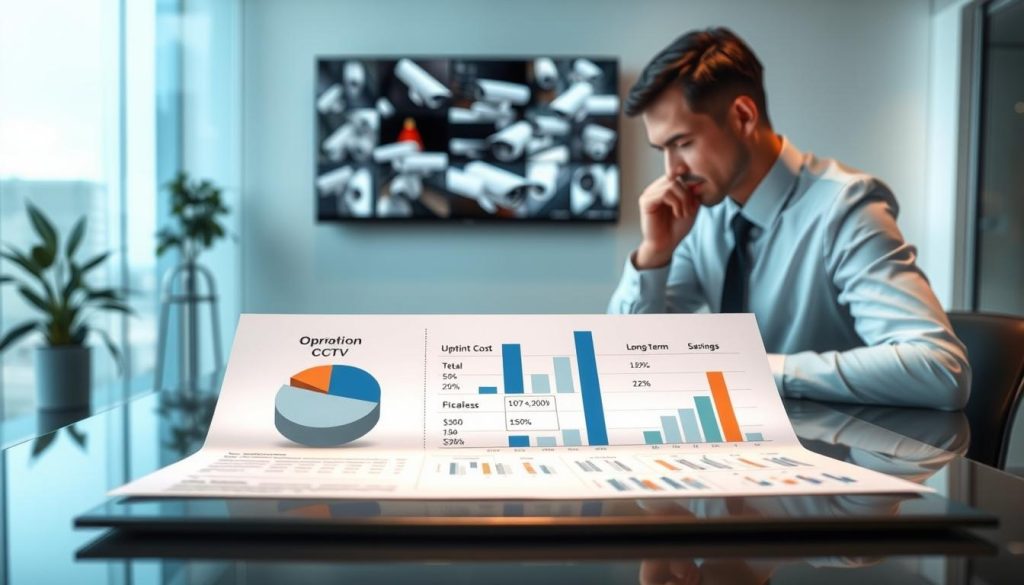
Total Cost of Ownership (TCO) provides a complete financial picture. It accounts for every expense across the equipment’s service life.
The initial purchase represents only 30-40% of TCO. Installation, energy use, and ongoing care consume the majority of funds.
Consider these essential TCO components:
- Initial Acquisition: Cameras, network video recorder, cables, and mounting hardware.
- Professional Installation: Labor costs for proper setup and configuration.
- Ongoing Maintenance: Regular cleaning, professional inspections, and system checks.
- Utilities: Power consumption for 24/7 operation of all components.
- Repairs and Replacements: Addressing failures and upgrading obsolete equipment.
- System Downtime Costs: Security breaches or evidence loss during outages.
A comparative scenario illustrates the financial reality. Premium systems command higher initial investment.
They typically deliver ten years of reliable service with minimal annual maintenance. Budget alternatives cost less upfront but fail within three years.
Their repair rates run significantly higher each year. The cumulative expense quickly surpasses the premium option’s price.
Why Budget Cameras Often Lead to Higher Long-Term Expenses
Low-cost surveillance equipment carries multiple hidden financial burdens. These expenses accumulate steadily over time.
Frequent failures demand repeated service calls. Each visit adds labor charges and replacement part costs.
Shorter replacement cycles force complete system refreshes every few years. This creates recurring capital expenditure that premium setups avoid.
Poor image quality necessitates earlier technology upgrades. Evidence becomes useless before the hardware physically fails.
Inefficient components drive up energy consumption. They generate excess heat that further shortens electronic lifespan.
Professional installers report replacing failed budget cameras two or three times. This expense easily exceeds the cost of a single reliable professional unit.
The security risk cost represents the most serious financial threat. Missing a critical event due to camera failure carries substantial consequences.
Evidence loss during investigations or legal proceedings creates liability. Business disruption from security incidents generates direct revenue impact.
Premium CCTV solutions minimize these operational problems. Their robust construction prevents most common issues.
While requiring larger initial outlay, their amortized annual cost proves lower. This delivers both financial sense and superior property protection.
The key insight is clear for critical infrastructure like security. Choosing “cheap” equipment often becomes extraordinarily expensive over time.
Investing in quality from the start represents the truly economical path. It ensures your surveillance investment delivers maximum value across its entire service life.
Selecting the Right CCTV Camera for Maximum Lifespan
A practical checklist guides you toward surveillance technology built to withstand Singapore’s demanding conditions. Moving beyond marketing claims to examine engineering specifications ensures your investment delivers extended service.
This final selection phase transforms technical details into years of reliable protection. Focus on the factors that directly correlate with operational endurance.
Key Features to Prioritize: Build Quality, IP Rating, Temperature Range
Five non-negotiable specifications form the foundation of a durable monitoring setup. Verify each one before committing to any purchase.
First, assess robust build quality. Metal housings and high-grade connectors resist physical stress better than plastic alternatives. Heavier units often indicate superior internal components.
Second, confirm the appropriate IP rating. For outdoor installations in Singapore, IP66 is the absolute minimum. This guarantees protection against dust ingress and powerful water jets.
Third, check the operating temperature range. Your equipment must handle local heat and humidity extremes. Look for specifications matching Singapore’s tropical weather.
Fourth, prioritize a quality image sensor. Superior sensors maintain clarity over thousands of operating hours. They handle challenging lighting conditions without rapid degradation.
Fifth, ensure regular firmware support from the manufacturer. Ongoing updates address security vulnerabilities and improve stability. This digital maintenance is crucial for long-term performance.
Always request the official technical datasheet, not just marketing brochures. The datasheet lists certified IP ratings and temperature specifications that marketing materials sometimes exaggerate.
If possible, physically examine potential cameras. Feel the weight and construction. Inspect cable connectors and housing seams.
These tangible features reveal much about expected durability. They separate professional-grade systems from consumer-grade alternatives.
Trusted Brands Known for Durability and Reliability
Certain manufacturers consistently deliver surveillance technology engineered for endurance. Their products represent smart long-term investments.
Axis Communications sets industry standards with an expected operational lifespan exceeding ten years. Their industrial-grade components withstand continuous use in demanding environments.
Hikvision and Dahua offer professional-grade solutions built for longevity. Both brands provide extensive model ranges suitable for various applications.
Uniview demonstrates remarkable reliability with reported failure rates below one percent. Their camera designs prioritize resilience in harsh climates.
Avigilon focuses on high-end surveillance with advanced analytics. Their systems integrate durable hardware with intelligent software.
Choosing a brand with strong local presence in Singapore offers significant advantages. You gain easier access to technical support and warranty services.
Local distributors ensure timely firmware updates and replacement parts. This support network extends your security investment’s effective service life.
Avoid no-name brands or deals that seem too good to be true. These often cut corners on the very materials and components that ensure durability.
Their lower initial cost masks higher long-term expenses from frequent failures. Professional installers frequently replace such units multiple times.
Your selection should move beyond superficial marketing claims. Base decisions on verified engineering specifications and proven brand reputation.
This approach maximizes the lifespan of your entire surveillance infrastructure. It transforms your purchase from a simple transaction into a strategic security enhancement.
Your Action Plan for a Long-Lasting CCTV Security System
Implementing a durable surveillance network requires a clear roadmap from selection through ongoing care. Begin by assessing your specific security needs and environmental conditions.
Invest in high-quality equipment from reputable brands. Ensure professional installation for optimal placement and weatherproofing.
Establish a proactive maintenance schedule with regular lens cleaning and system checks. Protect your investment with stable power supplies and proper data storage solutions.
Monitor equipment performance for early signs of issues. Plan for technology updates around the seven-year mark to maintain modern security features.
This structured approach maximizes your system’s longevity. Your surveillance setup becomes a reliable, long-term investment in property protection.
FAQ
What is the typical life expectancy for a modern surveillance system?
Most well-made security cameras function reliably for 3 to 5 years. High-end professional models from brands like Hikvision or Dahua can often exceed this, reaching 7 to 10 years with proper care. This duration depends heavily on installation quality and environmental exposure.
How does weather impact my outdoor security camera’s durability?
Weather is a major factor. Constant sunlight and heat can degrade components, while cold and moisture lead to corrosion. Always choose devices with a high IP rating, like IP66 or IP67, which certifies resistance against dust and water ingress for lasting performance.
What regular maintenance extends a CCTV system’s operational life?
Simple, proactive habits make a big difference. Regularly clean lenses and housings to ensure clear video. Schedule professional inspections to check connections and mounts. Crucially, keep firmware updated to patch bugs and improve stability, preventing many common glitches.
When should I consider replacing my surveillance equipment?
A> Consider an upgrade if you notice persistent image quality issues, physical damage, or frequent system failures. Technological obsolescence is another key sign; if your setup lacks modern features like AI analytics or high-resolution capture, a refresh can significantly boost your security capabilities.
Does investing in a more expensive system upfront save money?
Yes, absolutely. While premium systems from Axis or Bosch have a higher initial cost, their superior build quality and components lead to a lower total cost of ownership. Budget cameras often fail sooner, requiring frequent replacements and additional labor expenses, costing more over time.
How do power and data storage affect my system’s longevity?
Stable power and managed storage are critical. Using an Uninterruptible Power Supply (UPS) protects against voltage spikes and outages that can damage electronics. Efficient data management, including proper retention policies, prevents storage overload and keeps the entire security system running smoothly.


