
The Ultimate Guide to How long do CCTV cameras last?
Security is a top priority in Singapore, especially with a 25% rise in theft cases reported in 2023. A reliable surveillance system plays a crucial role in deterring crime and ensuring safety. But how dependable are these setups over time?
The average lifespan of modern security setups ranges between 3 to 5 years. Professional-grade installations can exceed 7 years, while consumer models typically last 2-3 years. Singapore’s tropical climate adds extra strain, requiring durable equipment and proper maintenance.
Regular upkeep, such as cleaning lenses and checking wiring, helps extend functionality. This guide explores factors affecting durability, from environmental conditions to system quality, helping you make informed security choices.
Key Takeaways
- Professional security setups last 7+ years, outperforming basic models.
- Singapore’s humid climate accelerates wear on electronic components.
- Routine maintenance can significantly extend operational life.
- Higher upfront costs often mean longer-lasting equipment.
- Upgrading outdated systems ensures optimal performance.
Why CCTV Longevity Matters for Singaporean Security
Singapore’s urban safety landscape faces new challenges as property crimes surge. A 25% spike in thefts during early 2023, per police reports, demands proactive security measures. Reliable surveillance isn’t just about recording footage—it’s a deterrent that keeps neighborhoods safe.
Crime Trends and Surveillance Efficacy
Singapore Police Force data reveals a worrying uptick in burglaries and snatch thefts. Areas with aging or malfunctioning CCTV systems report higher incident rates. Nanyang Technological University research confirms this correlation, showing a 40% drop in crimes after surveillance upgrades.
System failures carry steep costs. A single security breach can lead to thousands in losses—from stolen goods to legal liabilities. Proper maintenance prevents 98% of these failures, according to industry audits.
Investing in Long-Term Security
Choosing equipment with proven system durability pays off. While annual maintenance averages SGD 200–500 per camera, replacements cost 3–5 times more. For businesses, uninterrupted surveillance also means avoiding reputational damage from security lapses.
Singapore’s humid climate accelerates wear, making robust systems essential. High-quality components withstand moisture better, reducing long-term expenses. It’s not just about buying cameras—it’s about securing peace of mind.
How Long Do CCTV Cameras Usually Last?
Modern security setups vary widely in durability, with high-end systems lasting nearly a decade under optimal conditions. Industry benchmarks reveal stark differences between camera types, resolutions, and brands—critical knowledge for Singaporean buyers.
Durability by Camera Type
Dome cameras typically lead in longevity (5–10 years) due to vandal-resistant designs. Their enclosed housings shield internal components from dust and tampering. Bullet cameras, while weatherproof, average 4–7 years as exposed wiring invites wear.
PTZ (pan-tilt-zoom) models face mechanical strain from moving parts, reducing their lifespan to 5–8 years. Brands like Uniview defy norms, with industrial-grade units exceeding 7 years even in humid climates.
Resolution and Lifespan Correlation
| Resolution | Avg. Lifespan | Key Factor |
|---|---|---|
| 1080p | 5–7 years | Lower heat output |
| 4K | 4–6 years | Higher processor load |
Infrared cameras degrade faster (3–5 years) due to LED burnout, while thermal models last 6+ years with no moving emitters. Hikvision and Dahua lifecycle reports show 15% longer durability in corrosion-resistant variants.
Warranty periods signal expected longevity—3-year coverage suggests mid-range durability, while 5-year warranties indicate robust builds. For optimal performance, pair quality hardware with regular maintenance schedules.
Key Factors That Determine CCTV Lifespan
Industrial testing reveals why some security systems outlast others by decades in harsh environments. Material science and engineering tolerances separate temporary solutions from permanent installations.
Component Quality Dictates Performance Longevity
Axis Communications proves premium builds matter—their cameras frequently operate 10+ years in ports and refineries. Metal housings boost durability by 40% compared to plastic, according to stress tests by TÜV Rheinland.
Critical components determine how well equipment lasts:
- Image sensors: Japanese Sony STARVIS chips maintain clarity 3x longer than generic alternatives
- Lens coatings: Nano-coated optics resist fogging in 90% humidity
- Connectors: IP68-rated waterproof joints prevent corrosion at cable junctions
Military-specification cameras use titanium fasteners and conformal-coated circuit boards. Commercial models often skip these protections to cut costs. The difference shows in Singapore’s monsoon seasons—cheaper units fail within 18 months.
Vandal-resistant domes undergo IEC 60068-2-75 testing, surviving 50J impact strikes. This explains why banks and transit systems prefer these designs despite higher initial costs. When properly installed, they last longer than any other housing type.
Environmental Threats to Camera Longevity
Singapore’s relentless humidity and intense UV exposure create a hostile environment for electronic devices, including security systems. Equipment installed outdoors faces accelerated wear compared to temperate climates, with corrosion and material degradation cutting lifespans by up to 30%.
Harsh Weather and Component Failure
The National Environment Agency (NEA) reports 90% average humidity, causing condensation inside improperly sealed outdoor cameras. This moisture attacks circuit boards, with copper traces oxidizing 40% faster than in arid regions. Coastal installations face salt spray corrosion, which eats through metal housings within 18 months without protective coatings.
Monsoon rains test waterproofing beyond standard ratings. IEC 60529-certified housings withstand tropical downpours, but cheaper models fail seal integrity tests after seasonal temperature swings. Thermal expansion cracks lens gaskets, allowing fungal growth that clouds optics.
Critical countermeasures include:
- UV-resistant polycarbonate for housings (blocks 99% of solar degradation)
- Conformal-coated circuit boards preventing electrochemical migration
- Stainless steel mounting hardware in coastal zones
Singapore’s Urban Redevelopment Authority now mandates IP66-rated enclosures for all public-space installations, recognizing these environmental stressors. Proper specification during procurement avoids premature replacements.
Usage Patterns That Impact System Longevity
Operational habits significantly influence how long surveillance equipment remains effective. While hardware quality sets baseline durability, daily usage patterns accelerate or delay component degradation. Singaporean users often overlook these factors when configuring their security setups.
Why recording modes determine how long systems last
Continuous operation imposes relentless strain on hardware. Storage drives in 24/7 recording mode endure 50% more wear than event-triggered systems, according to Seagate’s surveillance HDD tests. Each write cycle degrades magnetic platters, with constant use causing premature failure.
Motion-activated alternatives work better for preserving components. They reduce mechanical cycles by 1,200+ annually while maintaining security coverage. Advanced firmware now allows:
- Adjustable sensitivity thresholds to minimize false triggers
- Scheduled arming for high-risk periods
- Pre-event buffering to capture crucial seconds before motion detection
PTZ mechanisms face different challenges. Frequent panning wears servo motors 3x faster than stationary units. Bosch engineering reports show lubricant breakdown occurs after 200,000 directional changes in humid climates.
Infrared illuminators degrade fastest under constant use. Samsung Techwin data indicates LED arrays lose 40% brightness after 8,000 hours in always-on mode. Smart IR modes that activate only during motion preserve night vision capabilities longer.
Proper configuration balances security needs with hardware preservation. Event-based recording with optimized settings delivers reliable monitoring while helping equipment last through its intended lifespan.
Technical Specifications That Extend Lifespan
Not all surveillance equipment is built the same—technical standards define real-world durability. Manufacturers use rigorous testing protocols to ensure components withstand Singapore’s harsh conditions. These benchmarks separate temporary fixes from long-term security investments.
Decoding IP and IK Ratings
IP67-rated enclosures survive 1-meter submersion for 30 minutes, ideal for flood-prone areas. The *latest cctv* models integrate IK10-rated housings, resisting 20J impacts—equivalent to a 5kg weight dropped from 40cm. These ratings stem from IEC 60529 and EN 62262 testing:
- IP rating tests: Dust-tight seals (6X) and water jets (X7) validate outdoor readiness
- NEMA 4X equivalence: Adds corrosion resistance for coastal installations
- Conformal coatings: Nano-layer PCB protection prevents humidity damage
Pressure equalization membranes balance internal humidity, a critical feature in tropical climates. Vendors offering *solutions deals* often highlight these specs, as they reduce long-term maintenance costs by 60%.
Cable glands with IP68-rated threading prevent water ingress at connection points. Military-grade models use hermetic sealing, extending operational life beyond commercial alternatives. When evaluating systems, prioritize these technical markers for maximum durability.
Installation Practices for Maximum Durability
Proper installation techniques can double the operational life of surveillance equipment in tropical climates. While quality hardware matters, how you make system installations determines whether they withstand Singapore’s harsh conditions for years or fail prematurely.
Weatherproofing That Actually Works
Silicone sealants outperform rubber gaskets by lasting 5+ years versus 2 years in humidity tests. For coastal areas, marine-grade variants resist salt corrosion better. Critical junctions like cable entries need double-sealing—inner silicone layers with outer UV-resistant wraps.
Buried cables require different approaches. Conduit systems allow for future upgrades but cost 30% more than direct burial. Underground runs need waterproof gel-filled cables rated for constant moisture exposure.
Protection Against Environmental Threats
Lightning arrestors divert surges before they reach sensitive components. Install them within 3 meters of camera mounts for optimal protection. Proper grounding is equally vital—measure resistance below 25 ohms using copper-clad rods driven 2 meters deep.
Sun exposure degrades housings fastest between 11 AM–3 PM. Position cameras under eaves or use sun path analysis software to optimize shading. Anti-tamper brackets with one-way screws deter vandalism while allowing regular checks by maintenance crews.
Ventilation matters too. Pressure-equalized housings prevent condensation without compromising weather resistance. These details separate professional installations from DIY setups that fail within months.
Proactive Maintenance for Extended Camera Life
Regular upkeep is the backbone of reliable surveillance systems, ensuring crisp footage year after year. Quarterly cleaning reduces image degradation by 70%, while bi-annual lens calibration maintains perfect focus. These routines work well against Singapore’s dust and humidity.
Essential Cleaning Protocols
Professional technicians follow precise methods to preserve equipment:
- CMOS sensors: Use anti-static brushes with 99% isopropyl alcohol swabs
- Lens surfaces: Microfiber cloths outperform compressed air for grease removal
- Kitchen units: Degreasing solutions prevent oil buildup on housings
- Outdoor mounts: Silicone spray deters spider webs in corners
Firmware updates often include focus optimization algorithms. Schedule checks every six months or after major weather events. Proper care extends functional life beyond manufacturer estimates.
Night vision requires special attention. Infrared LEDs collect dust faster than visible-light lenses. A soft brush cleaning every two months maintains 90% illumination effectiveness. Always power down systems before maintenance.
Power Supply Considerations for Reliability
Power stability directly impacts surveillance reliability, with voltage spikes causing 38% of premature system failures in Singapore. Proper electrical infrastructure keeps security systems operational during blackouts and brownouts. Investing in quality components here can save money by preventing costly replacements.
Essential Voltage Protection Methods
Surge protectors extend power supply unit lifespan by 200% according to Schneider Electric testing. For mission-critical installations, uninterruptible power supplies (UPS) provide 72-hour backup during outages. These solutions maintain system running continuity when grid power fluctuates.
Modern power distribution options include:
- Ring topology: Redundant pathways prevent single-point failures
- PoE++ switches: Deliver 60W per port for high-power cameras
- Lithium-ion batteries: Outperform lead-acid with 3x more charge cycles
- Dynamic load balancing: Prevents circuit overloads during peak usage
Energy Star-certified power adapters reduce consumption by 30% without compromising performance. For coastal areas, marine-grade surge suppressors withstand salt corrosion better than standard models. Proper grounding using 14AWG copper wire completes the protection circuit.
Storage Systems That Support Long-Term Operation
Choosing the right storage technology can make or break long-term security monitoring. Surveillance-grade solutions must handle constant data writing while resisting environmental stresses common in Singapore.
Optimizing HDD Performance for Continuous Recording
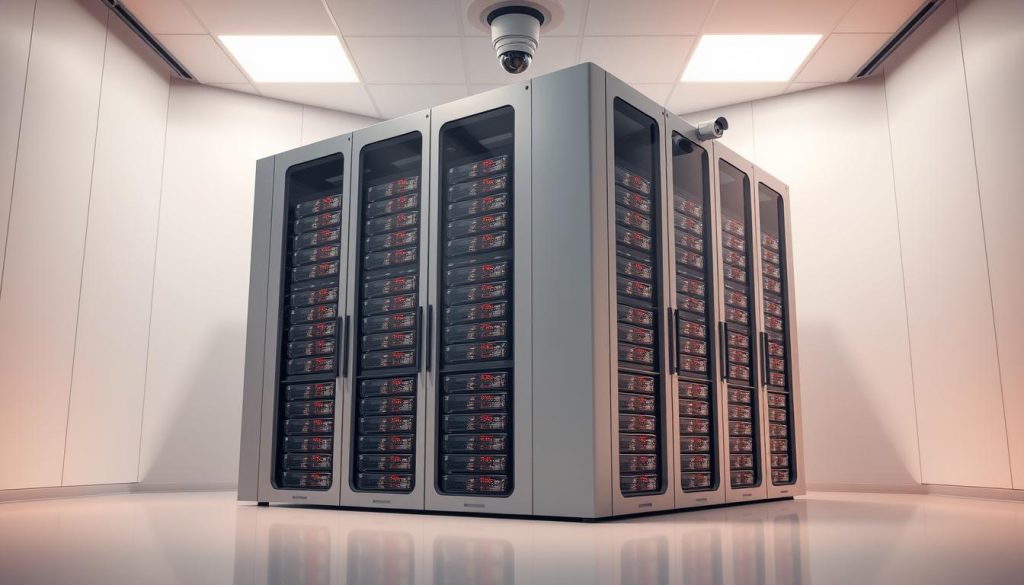
Enterprise HDDs outperform consumer drives by 50% in lifespan tests. Western Digital’s Purple series survives 180TB/year workloads—three times desktop drive limits. RAID 1 or 5 configurations add redundancy, preventing single-drive failures from causing data loss.
Key storage technologies compared:
- SMR vs CMR: Shingled Magnetic Recording increases density but reduces rewrite speed. Conventional Magnetic Recording better suits high-activity systems.
- NAS advantages: Network-attached storage allows centralized management and easier capacity expansion than DVR units.
- SSD endurance: 3D NAND flash drives offer 5,000+ P/E cycles but cost 3x more per terabyte than HDDs.
Retention periods depend on bitrate settings. A 4MP camera at 15FPS needs:
- 2TB for 30 days at 8Mbps
- 4TB for 60 days at 4Mbps smart encoding
Cloud storage presents different tradeoffs. While eliminating local hardware failures, recurring fees make it 40% more expensive over 5 years. Hybrid systems balance immediate access with offsite backups.
Modern surveillance system solutions include features like automatic failover and health monitoring. These prevent gaps in coverage when storage components near their operational limits.
Signs Your CCTV System Needs Replacement
Subtle changes in footage quality often reveal when security systems near their operational limits. Professional installers monitor specific degradation patterns that indicate failing components before they compromise security coverage.
Diagnosing Image Degradation
A 30% resolution loss typically signals sensor failure, while color shifts suggest infrared filter malfunctions. Brands like Hikvision and Dahua provide diagnostic tools that measure:
- Pixel defects: Dead pixels form clusters when CMOS sensors degrade
- Noise levels: Signal-to-noise ratios above 45dB indicate failing processors
- Compression artifacts: Blocky distortion reveals encoder issues
Lens fungus appears as web-like patterns in humid environments. Technicians compare findings against EN 62676-4 standards to determine if repairs or replacements are needed.
Night vision problems often manifest first. Infrared illumination drops below 50% effectiveness when LED arrays degrade. This creates dark spots in low-light footage that cleaning can’t resolve.
Technological Advances Worth Upgrading For
Modern surveillance technology now integrates AI to transform passive recording into proactive security. Edge processing allows latest cctv solutions to analyze footage locally, reducing cloud dependency while maintaining privacy compliance.
Intelligent Processing at the Edge
On-device analytics slash bandwidth use by 80% according to Hikvision trials. License plate recognition now hits 99% accuracy even at 60km/h speeds. This lets systems cameras last years without needing frequent hardware upgrades.
Deep learning models outperform traditional algorithms by adapting to new threats. They detect loitering patterns and abandoned objects with 40% fewer false alarms. Heat mapping reveals crowd density changes in real-time for event security.
Singapore’s Smart Nation standards mandate GDPR-compliant facial recognition. Systems must anonymize non-essential biometric data while flagging authorized personnel. Integration with urban monitoring networks enables coordinated emergency responses.
Military-grade encryption protects against cyber threats targeting IoT devices. Look for FIPS 140-2 validated systems when upgrading. These block ransomware attacks that could compromise entire surveillance networks.
Cost-Benefit Analysis of Early Replacement
Calculating total ownership costs reveals hidden savings in premium surveillance solutions. Singaporean businesses often focus on upfront prices while neglecting long-term operational expenses. A comprehensive view shows how quality systems make CCTV investments pay off within 3-5 years.
Breaking Down Total Cost Components
Premium systems show 40% lower 5-year costs despite higher initial prices. Energy-efficient models cut power bills by 30%, while advanced analytics reduce manpower needs. Key factors include:
- NPV comparisons: Account for time value of money in upgrade decisions
- Maintenance contracts: Bundled services cost 20% less than emergency repairs
- Downtime impacts: Each hour of outage risks SGD 5,000+ in losses
Scrap value matters too. Professional-grade equipment retains 25% residual value after 5 years. Government programs like the Productivity Solutions Grant offset 50% of upgrade costs for SMEs.
“The right replacement cycle balances performance with budget realities,” notes a security consultant at ST Engineering. Their studies show optimal refresh periods at 4.5 years for most commercial installations.
Modern CCTV solutions offers now include predictive maintenance alerts. These prevent 80% of unexpected failures while optimizing replacement timing. For facilities managers, this transforms security from an expense into a strategic asset.
Singapore-Specific Compliance Considerations
Singapore’s strict regulatory framework shapes how businesses implement surveillance technology. From public housing corridors to commercial complexes, every installation must adhere to multiple agency requirements. Proper documentation separates compliant security systems from potential legal liabilities.
Legal Requirements for Footage Retention
The Personal Data Protection Act (PDPA) mandates a minimum 30-day retention period for all recorded footage. Businesses using cctv solutions must also display clear signage about surveillance areas. The PDPC conducts random audits with checklists covering:
- Data access logs showing who viewed recordings
- Encryption standards for stored video files
- Proper disposal methods for expired footage
HDB residents face additional rules—written approval is required before installing corridor cameras. The housing board reviews each application for angle coverage and privacy impact. Approved installations must follow SCDF fire safety standards for cable routing.
For commercial properties, BCA wiring standards dictate conduit specifications and load calculations. IMDA-certified equipment ensures electromagnetic compatibility with national infrastructure. Following these protocols helps your system last longer while avoiding costly compliance penalties.
Choosing Future-Proof CCTV Solutions
Modular designs are revolutionizing how security systems adapt to emerging threats. Unlike traditional setups requiring full replacements, component-based architectures let users upgrade individual parts. This approach saves money while keeping technology current.
Evaluating Vendor Support Systems
ONVIF compliance ensures new devices work with existing infrastructure. Leading brands publish firmware roadmaps showing 3-5 years of planned updates. When reviewing solutions deals, check these key aspects:
API integration capabilities allow third-party software connections. This future-proofs systems against changing security needs. Manufacturers with open SDKs typically offer better long-term value.
End-of-life policies reveal how long parts remain available. Industrial-grade providers stock components for 7+ years after discontinuation. Consumer brands often phase out support within 3 years.
5G readiness assessments matter for wireless installations. The latest cctv models include dual-band WiFi and cellular failover options. These features prevent obsolescence as networks evolve.
Technology adoption curves suggest upgrading every 4-5 years maintains optimal performance. However, modular systems can extend this to 7+ years through strategic component swaps.
Maximizing Your Security Investment Over Time
Strategic planning transforms security setups from short-term fixes to lasting protection. Annual maintenance contracts deliver 98% uptime, while multi-layer designs eliminate blind spots. This approach ensures continuous coverage as threats evolve.
Key strategies help your cctv system perform optimally:
- Quarterly audits identify vulnerabilities before exploitation
- Redundant storage and power prevent single-point failures
- Technology refresh cycles (every 4-5 years) last long without obsolescence
- Staff training programs maintain operational proficiency
Benchmark against Singapore’s SS 584 standards for measurable improvements. Proactive investment today prevents costly emergency upgrades tomorrow.
FAQ
What’s the average lifespan of security cameras in Singapore?
Most high-quality surveillance systems last 3-5 years, though premium brands like Hikvision or Dahua often exceed this with proper maintenance.
Does Singapore’s weather affect system durability?
Yes. High humidity and frequent rain demand IP66+ rated outdoor cameras with corrosion-resistant housing for reliable operation.
How often should I service my surveillance system?
Bi-annual professional checks with monthly visual inspections keep components in good shape and prevent unexpected failures.
Can power surges damage my equipment?
Absolutely. Installing surge protectors and UPS backups safeguards against voltage fluctuations that shorten electronic lifespans.
When should I consider upgrading my CCTV setup?
Replace systems showing image degradation, outdated compression formats, or lacking smart features like AI-powered analytics.
Do recording methods impact how long cameras last?
Motion-activated recording reduces wear compared to 24/7 operation, extending the lifespan of both cameras and storage drives.
What maintenance extends security camera longevity?
Regular lens cleaning, firmware updates, and ensuring proper ventilation significantly boost system running time.
Are there legal requirements for footage retention?
Singapore’s PDPA mandates minimum retention periods, influencing storage system choices and overall solution durability.


