
How do you service a camera?
Keeping your photography gear in top shape is key for any photographer. Regular camera service is vital to keep your device working well and delivering great results. This guide will cover important camera maintenance topics, from why routine checks are important to simple at-home tasks.
By taking care of your camera, you can make it last longer and work better. This lets you take amazing photos with confidence.
Key Takeaways
- Regular camera service is essential for optimal performance.
- Routine camera maintenance prevents common issues.
- Understanding basic maintenance can enhance equipment longevity.
- Utilizing the right tools is critical for effective care.
- Taking proactive measures can reduce repair costs.
- Professional servicing offers thorough checks and repairs.
Importance of Camera Maintenance
Regular camera maintenance is key to keeping your gear in top shape. Many photographers overlook the need for routine care, thinking their camera is fine if it works. But neglecting maintenance can lead to sudden breakdowns, ruining special moments.
By focusing on camera care, you can keep your equipment in great condition. This ensures it stays a reliable tool for your creative work.
Preserving Quality and Longevity
Keeping your camera in good shape means understanding its needs. A regular maintenance routine is essential. Simple steps like cleaning the lens and checking the body can prevent damage.
These actions help maintain image quality. They show why camera maintenance is so important.
Preventing Issues Before They Arise
It’s vital to tackle problems early to avoid bigger issues later. Tasks like dust removal and checking for loose parts are critical. Regular inspections help spot small problems before they become big repairs.
By focusing on prevention, your camera stays in excellent condition. This avoids unexpected problems that can interrupt your creative flow.
When Should I Send My Camera for Service?
Knowing when to send your camera for service is key to keeping it in top shape. Both hobbyists and pros should stick to a camera service schedule. Regular checks can make your gear last longer and work better.
Annual Maintenance Schedule
It’s smart to get your camera serviced at least once a year. A regular service schedule helps catch problems early. If you’re a pro, you might need to service your camera more often. Traveling a lot or facing harsh weather can mean you need extra checks.
Signs Your Camera Needs Immediate Attention
Watching for signs that your camera needs repair can prevent big problems. Keep an eye out for these signs:
- Flashing error messages on the display screen
- Visible discrepancies in image quality
- Slow or unresponsive shutter speeds
- Physical damage noted during inspection
What Happens When My Camera Is Serviced?
When you send your camera for service, it goes through a detailed process. This camera servicing process includes many important checks and cleanings. It’s good to know what happens to understand the importance of professional care.
Many parts are checked to make sure your camera works its best. This ensures your photos come out great.
Overview of General Maintenance Procedures
General maintenance covers several key steps to boost camera performance:
- Checking the functionality of buttons and dials
- Cleaning internal components, such as the sensor and mirror
- Assessing the focusing system for precision
These steps are key to keeping your camera in top shape. They help prevent problems and let you keep capturing moments without a hitch.
Understanding Service Packages
Different maintenance packages offer various services. They cater to different needs. Some packages include:
- Firmware updates to improve functionality
- Performance checks to identify any issues
- Pixel mapping to improve image quality
Choosing the right package depends on how you use your camera. For more on repair options, check out this resource.
How do you service a camera?
Regular maintenance of your home camera is key to its longevity. Basic care ensures your camera stays in top shape. By following simple steps, you can avoid small problems from becoming big ones.
Basic Maintenance Procedures at Home
Doing routine tasks at home keeps your camera running well. Here are important steps to take:
- Use UV filters for lenses to protect against scratches and dust.
- Clean the sensor every six months to maintain image quality.
- Calibrate the lenses periodically to ensure accurate focus.
- Organize your gear to prevent accidents and loss of important equipment.
- Utilize gentle cleaning methods to avoid damaging sensitive components.
These basic care steps help your gear last longer and perform better. Being proactive with maintenance boosts your shooting experience. It also builds trust in your equipment when it matters most.
Essential Tools for Camera Maintenance
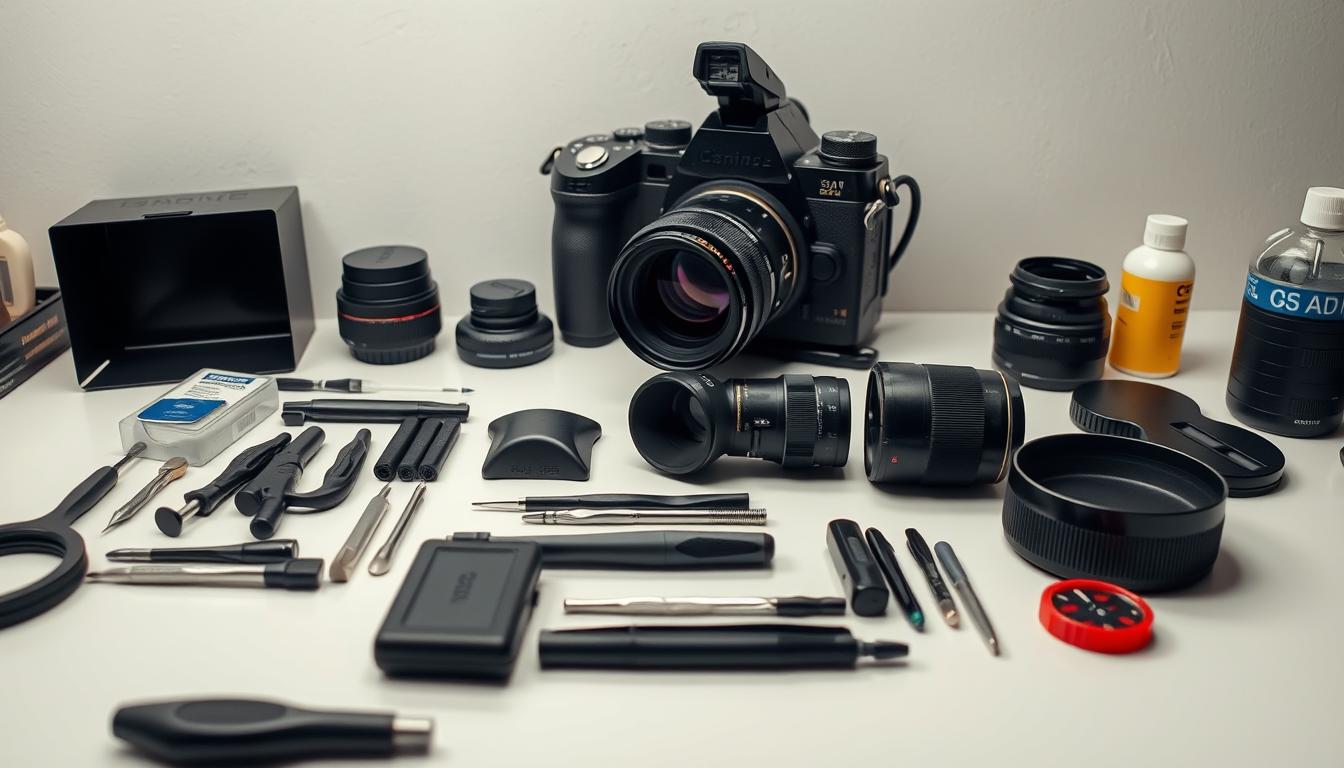
Camera maintenance needs specific tools for different tasks. The right tools help photographers keep their gear in top shape. They fix small problems before they get big. Each tool is important for keeping a camera working well.
Basic Tools for Light Repairs
Everyday maintenance needs basic tools. These tools help with light repairs and cleaning. Here are some must-haves:
- Micro screwdrivers for small adjustments
- Puffers to clean dust from sensitive spots
- Microfiber cloths for gentle lens cleaning
- Lens cleaning solutions to remove smudges
Intermediate and Advanced Tools
For more complex repairs, you need intermediate and advanced tools. These tools help with deeper maintenance tasks. Here are some key tools:
- Small pliers for handling small parts
- Point lubricants for smooth gear operation
- Lens spanners for lens adjustments
- Soldering irons for detailed electrical fixes
Common Camera Issues and Their Solutions
Fixing common camera problems can make your photography better and your gear last longer. Shutter speed issues and dust buildup are big problems for many photographers.
Diagnosing Slow or Sticky Shutter Speeds
Shutter speed problems can make your camera slow or sticky, which is common in older models. These issues can ruin your photos’ quality. Here’s how to check:
- Try moving the shutter gears to see if it helps.
- Look for too much lubricant that might slow it down.
- See if the environment is causing the problem.
Handling Dust and Debris
Dust and dirt can really mess up your photos. Keeping your camera clean is key. Here are some ways to do it:
- Use a blower to gently remove dust.
- Make cleaning your sensor a regular thing.
- Get protective filters to keep dust out.
Basic Camera Maintenance Tips
Regular camera maintenance is key to keeping your gear in top shape. Simple cleaning and organizing tips can make a big difference. They help you enjoy your photography more and keep your equipment running smoothly.
Cleaning the Lens and Camera Body
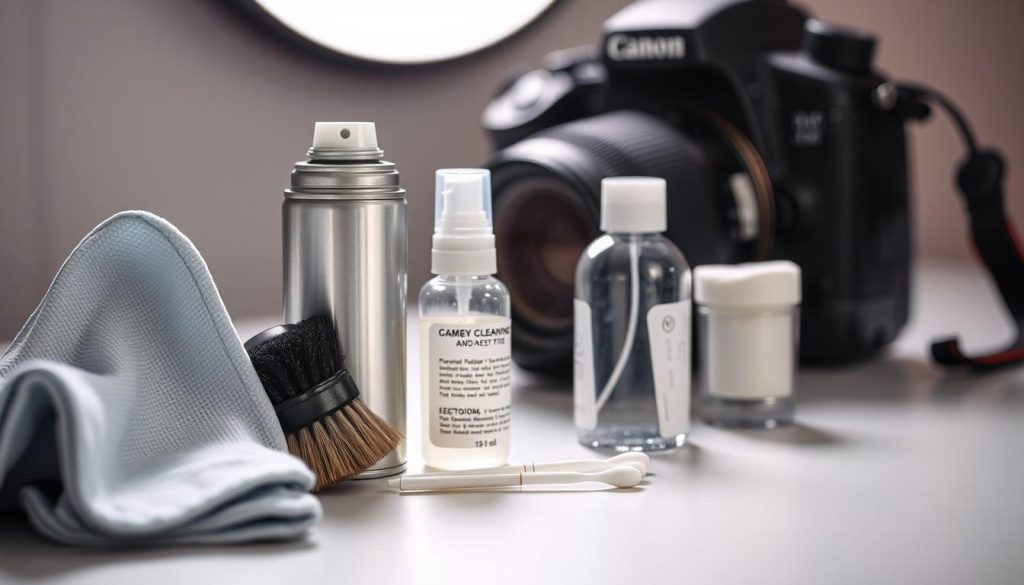
Cleaning your camera is important for clear images. Use special lens cleaners and a microfiber cloth for the lens. Avoid harsh chemicals that can harm the lens’s coatings.
For the camera body, a soft brush or cloth works well. It removes dust and smudges without scratching. Regular cleaning keeps your camera looking and working great.
Organizing Your Photography Gear
Being organized is essential for photographers. A tidy bag means you can find what you need fast. This reduces the risk of forgetting important items.
Use dividers or pouches in your bag to keep things sorted. This makes getting ready for a shoot easier. It also helps you stay focused and creative during your work.
Storing Your Camera Properly
Storing your camera right is key to keeping it in top shape, even when it’s not in use. Good storage tips help your camera stay ready to go at a moment’s notice. This way, it’s always ready for action.
Choosing the Right Environment
Finding the right spot for your camera is vital. It should be cool and dry, away from damp air and big temperature swings. Too much moisture can lead to mold, which is bad for lenses and inside parts.
Try to keep your camera in a stable, controlled area. This helps keep it in good working order and reliable for when you need it.
Long-term Storage Tips
For keeping your camera stored for a long time, use silica gel bags or dry cabinets. These tools soak up extra moisture, making a better space for your camera. Also, steer clear of places where the temperature keeps changing. Keeping the environment steady is important for protecting your camera.
Professional vs. DIY Servicing
Keeping a camera in top shape is a mix of professional help and DIY efforts. While you can handle simple tasks, some problems need a pro’s touch. Knowing when to use each approach helps you care for your camera better.
When to Seek Professional Help
Some repairs are too complex for DIY. They require the know-how of a camera expert. Look out for these signs that it’s time to call a pro:
- Complex mechanical failures that alter performance.
- Severe electronic issues affecting functionality.
- Damage that risks further impairment if mishandled.
DIY Maintenance Best Practices
For everyday upkeep, DIY can be a great choice. It lets you keep your camera running smoothly. Here are some tips to follow:
- Regular lens cleaning to prevent dirt buildup.
- Sensor checks for dust and grime removal.
- Battery maintenance to ensure optimal performance.
Impact of Weather on Camera Maintenance
The weather can greatly affect your camera’s performance and lifespan. Extreme temperatures can shorten battery life and harm the sensor. High humidity can cause moisture to build up inside, damaging parts and leading to mold on glass surfaces.
To protect your camera, using weather-sealed lenses and bodies is a good idea. They help keep out rain, dust, and snow. Also, protective cases can shield your equipment from harsh weather when you’re shooting outdoors.
Using your camera outside regularly is important for maintenance. It helps prevent moisture from building up and ensures humidity can evaporate. By taking care of your camera, you can avoid weather-related problems and keep it working well for longer.
FAQ
How often should I service my camera?
It’s wise to get your camera serviced by a pro at least once a year. If you’re a pro photographer, you might need to do it more often. This is true, after you’ve been traveling a lot or if the weather has been tough.
What are the signs that my camera needs immediate service?
Watch out for flashing error messages, if your photos don’t look right, or if your shutter speed is slow. Also, any visible damage means your camera needs help fast.
What does a typical camera service include?
A standard service checks if everything works, cleans your camera, and looks at the focusing system. Some services might also update your camera’s software and check its performance.
Can I perform camera maintenance at home?
Yes, you can do some basic upkeep at home. Clean your sensor every six months and use UV filters on your lenses. Keeping your gear organized helps too.
What tools do I need for basic camera maintenance?
You’ll need micro screwdrivers, puffers, and microfiber cloths for basic cleaning. For more, you might need small pliers and lubricants. Advanced tasks might require special tools like lens spanners.
How do I diagnose slow or sticky shutter speeds?
Check for too much lubricant and try moving the shutter gears. Regular care can stop problems and make your camera work better.
What are effective methods for cleaning my camera?
Use soft cloths and gentle cleaners to clean your camera. Avoid harsh chemicals. Keeping your lens and camera body clean helps your photos look their best.
How should I store my camera when not in use?
Keep your camera in a dry, cool spot away from humidity and temperature changes. For long storage, use silica gel bags or dry cabinets to keep moisture out.
When is it necessary to seek professional help for my camera?
If you face tricky mechanical or electronic issues, get a pro. Knowing when to ask for help is key to keeping your camera in top shape.
How does weather affect my camera’s maintenance?
Extreme weather can damage your camera. Use weather-sealed gear and store it right to protect it from the elements.


