
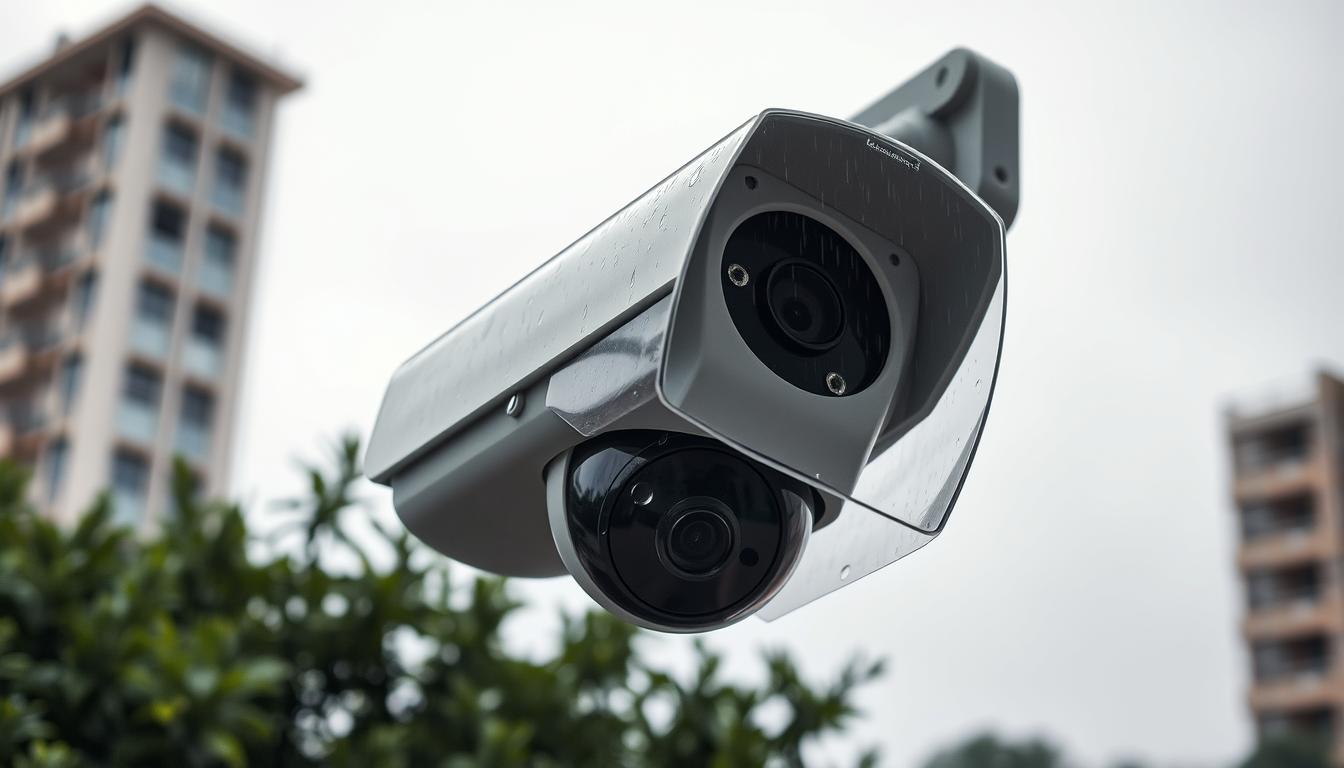
How do I stop my CCTV camera from raining? Solutions
Singapore’s tropical climate brings heavy rainfall that can seriously impact outdoor surveillance systems. Water damage causes cameras to malfunction, leading to blurry images and system failures. These issues result in costly repairs and compromised security coverage.
Protecting your security investment requires understanding environmental challenges. Proper camera placement, weather-resistant equipment, and regular maintenance are essential. These measures ensure your surveillance system performs optimally despite rainy conditions.
This guide provides practical solutions to combat moisture and rainfall problems. You’ll learn about protective housings, installation techniques, and maintenance tips. Implementing these strategies helps maintain clear visibility and system reliability.
Key Takeaways
- Singapore’s heavy rainfall presents significant challenges for outdoor security cameras
- Water damage can lead to expensive repairs and compromised surveillance coverage
- Strategic placement and proper installation are crucial for weather protection
- Understanding IP ratings helps select appropriate weather-resistant equipment
- Regular maintenance prevents moisture buildup and ensures optimal performance
- Investing in quality protective housing extends camera lifespan in wet conditions
- Proactive measures maintain clear image quality during adverse weather
Understanding the Threat of Rain to Your CCTV System
Singapore’s persistent humidity creates invisible threats to outdoor surveillance equipment that many owners overlook. Moisture-related problems develop gradually, often going unnoticed until serious damage occurs. Recognizing these environmental challenges early prevents costly repairs and maintains reliable security coverage.
How Moisture and Humidity Compromise Camera Performance
High humidity levels cause condensation inside camera housings and lenses. This moisture buildup creates fogging that distorts images and reduces visibility. The problem worsens during temperature changes between day and night.
Electronic components suffer from prolonged moisture exposure. Circuit boards develop corrosion that leads to permanent malfunctions. Connectors and cables deteriorate faster in humid conditions.
Image quality degrades significantly when water infiltrates the system. Footage becomes blurry or completely unusable during critical moments. Regular maintenance helps prevent these performance issues.
Common Failure Points During Singapore’s Heavy Rainfall
Singapore’s frequent downpours test even weather-resistant equipment. Several vulnerable areas require particular attention during installation and maintenance.
Housing seals represent the first line of defense against water intrusion. Poorly fitted or aged seals allow moisture to seep into critical components. Regular inspection ensures these protective barriers remain effective.
External connectors and cable junctions often develop problems. Water accumulates at these points during heavy rainfall. Proper waterproofing during installation prevents most connection issues.
Drainage systems can become overwhelmed during intense rain events. Blocked drainage channels cause water pooling around equipment mounts. This leads to accelerated corrosion and component failure.
Coastal installations face additional challenges from salt spray and higher humidity. These environmental factors accelerate wear on all external components. Special protective measures become necessary for coastal security systems.
Recognizing these vulnerable points early helps maintain optimal surveillance performance. Proactive inspection identifies problems before they cause complete system failure.
The Real Cost of Ignoring Water Damage Risks
Many security system owners underestimate the financial impact of weather-related damage until they face expensive repairs. What begins as minor moisture issues can quickly escalate into complete system failures.
Water damage creates both immediate and long-term financial burdens. Repair costs often exceed preventive maintenance expenses by three to five times. Complete equipment replacement becomes necessary when corrosion spreads through internal components.
Consider these financial consequences of neglected weather protection:
- Emergency service calls during system failures
- Premature equipment replacement costs
- Increased insurance premiums due to security gaps
- Legal expenses from unusable surveillance footage
Coastal installations demonstrate the accelerated damage pattern. Salt spray combines with rain moisture to create highly corrosive conditions. One marina security system required full replacement after just eighteen months of exposure.
“The evidence became useless when we needed it most. Water damage had corrupted the entire recording system during the storm event.”
Surveillance effectiveness suffers dramatically during weather events. Blurry footage fails to identify crucial details. Motion detection triggers false alarms from rain streaks rather than actual security threats.
Legal implications add another layer of risk. Courts may dismiss unclear footage as evidence. This potentially compromises insurance claims and criminal investigations.
Proactive protection measures prove far more cost-effective than reactive repairs. Quality housings and proper installation prevent most weather-related problems. Regular maintenance checks catch minor issues before they become major expenses.
Investing in proper weather protection ultimately preserves both security coverage and financial resources. Reliable surveillance requires maintaining equipment in optimal condition despite environmental challenges.
How do I stop my CCTV camera from raining? Core Protective Strategies
Effective rain protection begins with two fundamental approaches. Strategic placement and quality equipment form the foundation of reliable outdoor surveillance. These core strategies prevent most weather-related issues before they occur.
The Critical Role of Strategic Camera Placement
Location decisions significantly impact equipment longevity. Positioning units under building eaves or canopies provides natural shelter. This simple step reduces direct water exposure during heavy downpours.
Consider these placement factors for optimal protection:
- Install cameras at least 10 feet above ground level
- Choose spots with existing overhead coverage
- Avoid areas where water tends to pool or accumulate
- Position units facing slightly downward to shed water
- Ensure clear sightlines while maintaining weather protection
Proper installation angles help moisture roll off surfaces naturally. This prevents water from collecting on lenses or housing seams. The right placement reduces maintenance needs and extends equipment life.
Investing in Weather-Resistant Equipment from the Start
Quality construction matters most in challenging environments. Cameras with IP66 or higher ratings withstand Singapore’s humid conditions. These ratings guarantee protection against powerful water jets and dust ingress.
Look for these essential features in outdoor security cameras:
- Stainless steel or corrosion-resistant materials
- Double-sealed gaskets around all openings
- Heated lenses for fog prevention
- UV-resistant housing materials
- Weatherproof cable connectors
Premium equipment maintains performance during severe weather events. High-quality cameras continue working well when cheaper models fail. This reliability ensures uninterrupted security coverage.
Initial investment in robust systems pays long-term dividends. You’ll avoid frequent replacements and emergency repairs. For more detailed information about water damage risks, visit our guide on can water destroy CCTV camera.
These foundational strategies create resilient surveillance systems. They work together to protect your security investment through Singapore’s rainy seasons. Proper implementation ensures cameras deliver clear images regardless of weather conditions.
Mastering Camera Positioning to Deflect Rain
Strategic placement transforms ordinary security cameras into weather-resistant guardians. Proper positioning leverages natural elements to shield equipment from Singapore’s frequent downpours. This approach significantly reduces moisture-related issues without additional costs.
Utilizing Building Eaves and Canopies for Natural Shelter
Existing structures provide excellent rain protection for outdoor surveillance systems. Building eaves create natural overhangs that deflect rainfall away from equipment. This simple solution keeps cameras dry during heavy storms.
Canopies and awnings offer similar protective benefits. These structures block direct water exposure while maintaining clear sightlines. Positioning units under coverage extends their lifespan in humid conditions.
Effective placement considerations include:
- Maintain at least 6 inches clearance from overhead surfaces
- Ensure coverage extends beyond the camera’s housing
- Verify sightlines remain unobstructed by protective structures
- Check for proper drainage around installation points
Identifying the Optimal Angles to Minimize Water Exposure
Camera angling plays a crucial role in weather protection. The right tilt prevents water accumulation on lens surfaces. This maintains clear image quality during rainy weather.
A downward angle of 15-30 degrees works best for most installations. This position allows water to run off naturally while maintaining surveillance coverage. It also reduces lens glare from wet surfaces.
Advanced positioning techniques include:
- Angle cameras away from prevailing wind directions
- Position units to avoid water runoff paths
- Use mounting brackets that allow precise angle adjustments
- Test different positions during actual rainfall conditions
Proper installation prevents common moisture problems before they begin. These positioning strategies work with other protective measures for complete weather resistance. Your security system maintains optimal performance through Singapore’s challenging climate.
Implementing Physical Protection: Covers and Enclosures
Physical barriers provide the most direct defense against Singapore’s frequent downpours. Quality enclosures create a sealed environment that blocks moisture intrusion. These protective solutions maintain optimal performance during challenging weather conditions.
Proper housing selection prevents common water damage issues. It ensures your surveillance equipment continues working well despite heavy rainfall. This investment extends the lifespan of your security system significantly.
Selecting the Right Waterproof Housing for Your Camera Model
Compatibility matters most when choosing protective enclosures. Measure your camera dimensions carefully before purchasing any housing. The right fit prevents gaps where moisture could enter.
Look for these essential features in quality housings:
- UV-resistant polycarbonate construction
- Double-sealed gasket systems around all openings
- Precision-molded shapes matching your camera model
- Built-in drainage channels for accumulated moisture
- Heating elements for fog prevention in humid conditions
Material quality determines long-term performance. Premium housings maintain clarity despite constant sun exposure. They resist yellowing and cracking over time.
Installation techniques affect waterproof effectiveness. Follow manufacturer guidelines for sealing all connection points. Proper mounting ensures complete environmental protection.
Benefits of Installing Dedicated Rain Shields and Domes
Additional protective layers enhance weather resistance dramatically. Rain shields deflect water away from critical lens areas. This maintains clear image quality during heavy storms.
Protective domes offer comprehensive coverage for outdoor surveillance. Their curved design helps water run off quickly. This prevents accumulation on flat surfaces.
Key advantages include:
- Continuous protection during Singapore’s rainy seasons
- Reduced maintenance needs and cleaning frequency
- Enhanced durability against environmental damage
- Consistent performance in bad weather conditions
- Improved aesthetic integration with building architecture
“Our dome-protected cameras survived the monsoon season without any moisture issues. The investment paid for itself in avoided repairs.”
These solutions work particularly well for coastal installations. They provide extra defense against salt spray and high humidity. Your security system maintains reliability in challenging environments.
Combining proper housing with additional shields creates optimal protection. This layered approach ensures your equipment functions perfectly. It delivers peace of mind during Singapore’s wettest months.
Essential Regular Maintenance to Prevent Water Intrusion
Consistent upkeep forms the backbone of reliable outdoor surveillance. Proper maintenance routines protect your investment against Singapore’s challenging climate. These practices ensure clear visibility and prevent moisture-related failures.
Regular checks identify problems before they escalate. Quarterly inspections catch early signs of trouble. This proactive approach saves money and maintains security coverage.
Step-by-Step Guide to Checking for Moisture and Corrosion
Begin with visual inspections of all external components. Look for water spots on lenses and housing surfaces. Check for condensation inside protective coverings.
Examine cable connections and junction points carefully. Corrosion often starts at these vulnerable locations. Green or white powder indicates early stage damage.
Follow this systematic inspection routine:
- Check housing seals for cracks or deterioration
- Inspect mounting brackets for rust formation
- Verify drainage channels remain clear and functional
- Test waterproof connectors for secure fit
- Look for moisture accumulation around lens edges
Document findings during each inspection. Comparison over time reveals developing issues. This records system helps prioritize maintenance tasks.
Cleaning Protocols for Lenses and Housings in Humid Conditions
Proper cleaning maintains optimal image quality in damp environments. Use microfiber cloths to avoid scratching delicate surfaces. Gentle circular motions remove debris without damage.
For stubborn spots, use lens-safe cleaning solutions. Apply spray to the cloth first, not directly on equipment. This prevents liquid seepage into sensitive components.
Consider these maintenance tips for humid conditions:
- Clean lenses every three months or after heavy storms
- Use silica gel packets inside housings to control humidity
- Apply anti-fog treatments to maintain clear visibility
- Check and replace protective gaskets annually
- Verify housing seals remain tight after cleaning
“Our quarterly maintenance routine caught early corrosion before it spread. The small repair cost saved us from complete system replacement.”
Consistent care ensures your security system performs reliably. These practices extend equipment lifespan significantly. They maintain surveillance effectiveness through Singapore’s wettest seasons.
Choosing a Camera: Understanding IP Weatherproof Ratings
Selecting the right surveillance equipment requires understanding industry protection standards. IP ratings provide clear guidance on environmental durability. These codes help identify cameras that withstand Singapore’s challenging climate conditions.
IP stands for Ingress Protection, an international classification system. The rating consists of two digits that indicate specific protection levels. The first number shows dust resistance while the second addresses water protection.
Higher numbers mean better environmental protection. For outdoor security cameras in tropical climates, minimum IP66 rating is essential. This ensures reliable performance during heavy rainfall and high humidity.
Decoding the IP Rating System
The first digit ranges from 0 to 6 for solid particle protection. IP6X indicates complete dust-tight construction. This prevents fine particles from entering sensitive internal components.
The second digit measures liquid ingress protection from 0 to 9K. Common ratings for outdoor surveillance include:
- IP65: Protected against water jets from any direction
- IP66: Resistance against powerful water jets and heavy seas
- IP67: Temporary immersion protection up to 1 meter for 30 minutes
- IP68: Continuous immersion under specified conditions
- IP69K: Protected against high-pressure, high-temperature jet cleaning
Singapore’s weather demands at least IP66 rating for reliable outdoor operation. This level handles tropical downpours and maintains clear visibility.
Why Proper IP Ratings Matter in Tropical Climates
Equipment with insufficient protection fails quickly in humid environments. Moisture intrusion causes lens fogging and electrical damage. Proper ratings prevent these common problems before they start.
High-quality security cameras with appropriate IP ratings work better in challenging conditions. They maintain image clarity during storms and resist corrosion over time. This reliability ensures continuous surveillance coverage.
“Our IP67-rated cameras have operated flawlessly through three monsoon seasons. The investment in proper ratings eliminated weather-related service calls.”
Consider these benefits when selecting rated equipment:
- Reduced maintenance needs and longer equipment lifespan
- Consistent performance during extreme weather events
- Lower total cost of ownership through avoided repairs
- Reliable security coverage during critical situations
- Better image quality despite environmental challenges
Understanding IP ratings helps make informed purchasing decisions. This knowledge ensures your security system matches local weather demands. Proper selection prevents moisture issues and maintains optimal performance.
Always verify IP ratings before installing outdoor surveillance equipment. This simple step protects your investment and ensures reliable operation. Your security system will work well through Singapore’s rainiest seasons.
Leveraging Technology for Smarter Detection in Rain
Modern surveillance technology offers intelligent solutions for maintaining security during wet weather. Advanced features help distinguish between actual threats and environmental interference. These innovations ensure your system remains effective despite challenging conditions.
Enabling AI Object Classification to Filter Out Rain Alerts
Artificial intelligence transforms how security cameras interpret movement. Smart algorithms analyze shapes and patterns in real-time. They differentiate between people, vehicles, and falling rain.
This technology significantly reduces false alarms during storms. Your security system ignores rain streaks and water droplets. It focuses only on genuine security concerns.
Enabling these features is straightforward through device apps. Most modern systems offer customizable sensitivity settings. You can adjust parameters to match your specific environment.
Singapore installations benefit particularly from this tech. The system learns to recognize local weather patterns. It becomes more accurate over time through continuous analysis.
“Our false alerts dropped by 80% after enabling AI classification. The system now only notifies us about actual security events during heavy rain.”
The Advantage of PIR Sensors Over Standard Motion Detection
Passive Infrared sensors detect heat signatures rather than visual changes. This approach makes them immune to weather-related triggers. Rain, wind-blown debris, and lighting changes don’t activate these sensors.
PIR technology focuses on body heat and movement patterns. It ignores environmental factors that cause false alarms. This results in more reliable security monitoring.
These sensors work exceptionally well in tropical climates. They maintain accuracy despite high humidity and temperature fluctuations. Your security system remains dependable through various weather conditions.
Integration with existing security cameras is usually simple. Many outdoor security models now include built-in PIR sensors. They provide an extra layer of smart detection capability.
Combining AI classification with PIR sensors creates robust protection. This dual approach ensures only relevant events trigger alerts. Your security system works smarter, not harder, during rainy weather.
Recognizing the Early Signs of Water Damage
Vigilant monitoring helps identify moisture issues before they become major problems. Early detection preserves your equipment’s functionality and prevents security gaps. Regular visual inspections form the foundation of effective maintenance.
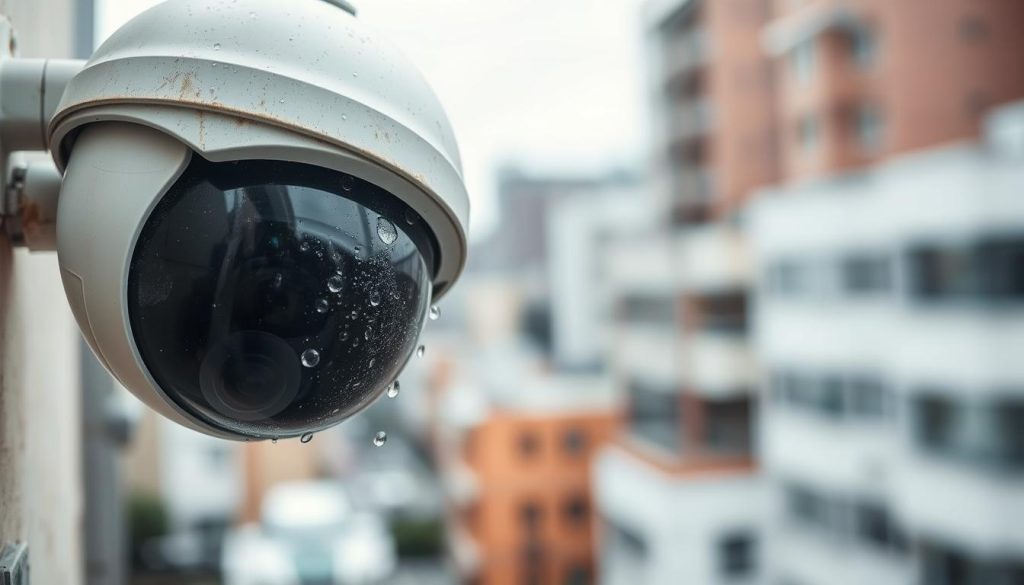
Subtle changes in performance often indicate developing moisture issues. These warning signs appear gradually but demand immediate attention. Addressing them quickly prevents complete system failures.
Identifying Lens Fogging and Image Distortion
Condensation inside the lens housing creates persistent fogging. This moisture buildup distorts images and reduces visibility. The problem typically worsens during temperature fluctuations.
Look for these specific visual indicators:
- Consistent blurriness in specific areas of the frame
- Circular patterns that resemble breath on glass
- Streaks that remain visible after cleaning attempts
- Color distortion or unusual light refraction
Fogging often appears during Singapore’s humid mornings. It may temporarily clear as temperatures rise. This pattern indicates seal compromise rather than permanent damage.
“We noticed slight morning fogging that cleared by afternoon. By addressing it immediately, we prevented complete lens failure during the next heavy storm.”
Spotting Corrosion on Connectors and External Components
Metal components show the first visible signs of moisture damage. Connectors and mounting brackets develop discoloration. This corrosion spreads to internal parts if left untreated.
Inspection should focus on these critical areas:
- Cable connection points and junction boxes
- Mounting screws and bracket hardware
- Housing seams and seal contact points
- Grounding wires and electrical contacts
Early corrosion appears as white or green powder on metal surfaces. Advanced stages show pitting and material degradation. Coastal installations require more frequent checks due to salt exposure.
Regular maintenance includes cleaning affected areas with appropriate solutions. Severely corroded components need replacement to maintain system integrity. This proactive approach preserves your security investment.
For comprehensive protection strategies, explore our guide on effective moisture prevention techniques. These solutions help maintain optimal surveillance performance in challenging conditions.
When to Call a Professional for Your CCTV Solutions
There comes a point in every security system’s lifecycle where specialized knowledge delivers superior protection. Complex installations or persistent weather issues often require expert intervention. Professional technicians bring experience that DIY approaches cannot match.
Singapore’s unique climate demands customized solutions. High humidity and frequent rainfall create challenging conditions for outdoor surveillance. Technical expertise ensures your equipment performs optimally through all weather patterns.
Benefits of Expert Installation for Long-Term Weatherproofing
Professional installers understand precise positioning techniques. They know how to angle equipment for maximum weather protection. This expertise prevents common moisture problems before they begin.
Technical teams use specialized tools and materials. They ensure complete sealing around all connection points. This attention to detail extends equipment lifespan significantly.
Expert services provide comprehensive weatherproofing solutions that DIY efforts often miss. Professionals assess your specific environment and installation challenges. They recommend the optimal equipment and placement for your situation.
Key advantages include:
- Precision mounting that optimizes natural weather protection
- Professional-grade sealing materials for complete moisture barrier
- Advanced cable management that prevents water ingress
- Proper grounding and electrical protection systems
- Comprehensive testing under simulated weather conditions
“The professional installation eliminated our persistent fogging issues. Their weatherproofing techniques worked perfectly through the monsoon season.”
Getting a Custom Solution for Singapore’s Climate Challenges
Singapore’s tropical environment requires tailored surveillance approaches. Professionals design systems specifically for local humidity and rainfall patterns. These custom solutions address unique regional challenges effectively.
Expert technicians consider multiple environmental factors. They evaluate building orientation, prevailing winds, and drainage patterns. This comprehensive assessment ensures optimal camera performance.
Custom solutions often include specialized protective features. These might include enhanced ventilation systems for humidity control. Advanced heating elements prevent lens fogging during temperature changes.
Coastal installations benefit from extra corrosion protection. Professionals use marine-grade materials and specialized coatings. These measures combat salt spray and high humidity effectively.
Investing in professional services ensures long-term reliability. Your security system maintains clear visibility during challenging weather. This peace of mind justifies the investment in expert installation.
Investing in Reliable Surveillance Technology for Lasting Security
Smart investments in quality surveillance equipment deliver long-term value and peace of mind. Weather-resistant cameras from trusted brands perform consistently through Singapore’s challenging climate. These systems maintain clear visibility during heavy rainfall and high humidity.
Premium features like high IP ratings and AI detection enhance performance. They reduce false alarms and prevent moisture-related issues. Proper installation by professionals ensures optimal weather protection.
Regular maintenance preserves your security investment over time. It prevents costly repairs and system downtime. Your surveillance remains reliable through all weather conditions.
Durable security cameras work better in outdoor environments. They provide uninterrupted protection for your property. This approach ensures your security system performs well for years.
FAQ
Why is rain a problem for security cameras?
Rain introduces moisture that can seep into camera housings, causing internal damage, lens fogging, and electrical shorts. This leads to poor image quality, false alerts, and potential system failure.
What is the best way to protect outdoor security cameras from rain?
Use weatherproof camera housings or domes designed for outdoor use. Position cameras under eaves or canopies to minimize direct exposure. Regular maintenance checks also help keep your surveillance system working well.
How do IP weatherproof ratings work for CCTV systems?
IP ratings indicate a device’s resistance to solids and liquids. For outdoor security cameras, look for a rating of IP66 or higher, which ensures protection against heavy rain and dust.
Can camera placement reduce rain-related issues?
Yes. Mounting cameras under sheltered areas and angling them downward helps avoid water buildup on the lens and housing, maintaining clear visibility during bad weather.
What maintenance helps prevent water damage to cameras?
Inspect seals and housings regularly for cracks or wear. Clean lenses and check for moisture or corrosion, especially after heavy rain, to ensure long-term performance.
Are there tech features that help cameras work better in rain?
Advanced features like AI object filtering can distinguish between rain and real threats, reducing false alarms. PIR sensors also improve detection accuracy during rainy conditions.
When should I seek professional help for my CCTV system?
If you notice persistent fogging, corrosion, or system malfunctions, consult a professional. Expert installation and custom solutions can enhance weather resistance and reliability.


