

DVR vs NVR: Key Differences Explained
Ever wondered why some surveillance systems show clear images while others look grainy? It often comes down to whether they use Digital Video Recorders (DVRs) or Network Video Recorders (NVRs). Knowing the difference is key, as video surveillance is more important than ever. We’ll look at how DVRs and NVRs work, how they send video, and what each offers.
DVRs and NVRs differ mainly in how they handle data and which cameras they work with. DVRs use analog cameras and coaxial cables, which can limit video quality. NVRs, on the other hand, use IP cameras and Ethernet cables or WiFi for better image quality and more flexibility. When picking a surveillance system, choosing between DVR and NVR can affect how well it works and how efficient it is.
Key Takeaways
- The main difference between DVR vs NVR is in video data processing and camera compatibility.
- DVR systems mainly work with analog cameras, while NVR systems use IP cameras for better functionality.
- NVR systems offer higher video quality and advanced features like audio recording.
- DVR installation is often cheaper, but it may not grow as much as NVR systems.
- NVR systems allow remote access, letting users manage footage from anywhere.
- NVR systems are easier to install with Power over Ethernet (PoE) technology, making wiring simpler.
- For expert advice and top surveillance solutions, contact CCTV Maintenance today at +65 60135960.
Understanding Surveillance Technology
Surveillance technology is key in today’s security. It includes systems that watch and record video, keeping places safe. Security cameras are at the heart of this, divided into analog and digital types.
CCTV systems have been around for years. They let us watch areas with cameras and send signals to a monitor. They use DVRs to record video, but they can be limited in quality and flexibility.
NVR systems are a big step up. They use IP cameras for better video and audio. They also offer cloud storage for more space and flexibility. Plus, they make installing easier with PoE technology.
Understanding the difference between analog and digital is important. DVR systems use coaxial cables, while NVR systems use Ethernet. This makes NVR systems more adaptable and flexible.
As tech gets better, features like facial recognition and smart alerts improve security cameras. DVR and NVR systems meet different security needs. Knowing how surveillance works helps make better choices.
Contact CCTV Maintenance today at +65 60135960 for the latest in CCTV solutions. Your safety and security are worth the best technology.
DVR Explained
Understanding DVRs means looking at their key features and parts. Digital Video Recorders are key in surveillance tech. They help record video from analog cameras. They offer a solid way to manage and store video.
DVR System Components
Key parts of a DVR system include:
- Analog Cameras: Capture video footage essential for surveillance.
- Coaxial Cables: Facilitate video transmission from cameras to the DVR unit.
- AD Encoders: Convert the analog video signals into digital format for storage.
- Hard Disks: Store the recorded footage, traditionally limiting data capacity compared to modern systems.
How DVRs Work
To understand DVRs, it’s important to know how they process video. Analog cameras capture footage, which the DVR converts into digital videos. The coaxial cables connect cameras to the DVR, ensuring stable data transmission. Essential connections for data and power are established to facilitate seamless operation.
Advantages and Disadvantages of DVRs
Exploring DVR advantages shows their main benefits:
- Cost-Effectiveness: More budget-friendly than newer technologies.
- Minimal Bandwidth Usage: Ideal for smaller applications where data transmission is limited.
- Signal Stability: Provides a reliable connection, even in fixed environments.
There are notable disadvantages as well:
- Lower Image Quality: Typically supports lower resolutions compared to NVR systems.
- Limited Scalability: Difficult to expand beyond a certain number of cameras.
- Audio Recording Limitations: Often requires additional audio cables, which complicates installation.
For more information or to explore the latest CCTV solutions, contact CCTV Maintenance at +65 60135960.
NVR Explained
The NVR (Network Video Recorder) is a modern way to watch over places using advanced tech. It records and manages video. Knowing what an NVR is means understanding its parts, how it works, and its good and bad points compared to old DVR systems. We’ll look at the key parts, how it works, and its pros and cons.
NVR System Components
Key parts of an NVR system are:
- IP Cameras: Capture high-quality video streams.
- Ethernet Cables: Used for connecting the cameras to the NVR.
- NVR Recorder: The central device for processing and storing video footage.
- PoE Switch: Powers cameras and facilitates network connections for enhanced setup flexibility.
How NVRs Work
NVRs get video from IP cameras over a network. Unlike DVRs, NVRs use Ethernet cables, not coaxial. This lets them handle high-quality video better, like 5MP or 4K.
Advantages and Disadvantages of NVRs
The good things about NVRs are:
- Superior Image Quality: NVRs record in high resolution, better than DVRs.
- Scalability: You can add more cameras easily without rewiring.
- Flexible Storage Options: They support cloud storage, making data management easier.
The not-so-good things about NVRs are:
- Higher Initial Costs: NVRs, like the NSN-608(4K)-8P, cost more to set up.
- Dependence on Network Stability: NVRs need a stable network, which can be a problem.
Choosing between NVRs and DVRs depends on what you need. Costs and features vary. For the best CCTV solutions, call CCTV Maintenance at +65 60135960 to find out more.
What is the difference between DVR and NVR?
It’s important to know the difference between DVR (Digital Video Recorder) and NVR (Network Video Recorder) systems. These differences affect how video data is handled and the types of cameras that can be used.
Processing of Video Data
The DVR vs NVR differences begin with how each system processes video. DVR systems handle raw footage directly at the recorder. On the other hand, NVR systems encode data at the camera itself.
NVR systems offer better performance, with resolution ranging from 2MP to 12MP or more. This means they provide clearer images. DVR systems might be cheaper upfront, but NVR systems save money in the long run with their advanced tools.
NVR systems are also more flexible and scalable. They’re great for modern surveillance needs because they’re easy to manage.
Camera Compatibility
Camera compatibility is another key difference. DVR systems mainly support analog cameras like TVI, CVI, and AHD. NVR systems, on the other hand, work with IP cameras.
This makes NVR systems more versatile. They can use high-resolution footage and advanced features like audio capture without extra gear. For example, the NSDV-208QK DVR supports up to 10 channels. NVR models like the NSN-608(4K)-8P optimize camera connections over a local network.
Organizations looking for advanced surveillance will find NVR systems more suitable. They’re better equipped to handle future technology needs.
Want to learn more about CCTV solutions and offers? Contact CCTV Maintenance today at +65 60135960. They offer expert advice to help you choose the right system for your needs.
DVR vs NVR: Features Comparison
Choosing between DVR and NVR systems depends on features like image and audio quality. It also depends on how easy they are to install. Knowing these differences helps you decide based on your surveillance needs.
Image and Audio Quality
NVR systems usually have better image quality, supporting up to 4K resolution. This means clearer video compared to DVR systems. NVRs also often record audio by default, while DVRs might need extra connections for sound.
Installation and Wiring Differences
Installation is a key difference in the DVR vs NVR comparison. NVRs need a more complex network setup with Ethernet cables that carry both data and power. DVRs use coaxial cables, which limit where you can place them and how far apart. This makes DVRs easier for those who aren’t tech-savvy.
| Features | DVR Systems | NVR Systems |
|---|---|---|
| Image Quality | Lower resolution, less clarity | Higher resolution (5MP to 4K), superior clarity |
| Audio Quality | Requires additional connections | Built-in audio recording |
| Installation Complexity | Simple, less technical know-how required | Complex, requiring network setup |
| Wiring Type | Coaxial cables | Ethernet cables (PoE) |
If you’re thinking about changing or upgrading your surveillance, call CCTV Maintenance at +65 60135960. They can help with the latest CCTV solutions and offers.
DVR vs NVR Differences in Scalability
When looking at video surveillance systems, DVR vs NVR scalability is key. NVR systems are great for growing because they use IP cameras. These cameras easily fit into networks without big changes. This makes NVR systems perfect for places that need to grow.
DVR systems, on the other hand, are hard to scale up. They can’t handle many cameras well. This makes them less good for places that need to change a lot.
NVR systems can handle high resolutions like 4K and 8K. DVR systems only go up to 1080p. This means NVR images are clearer and better for watching.
But, NVR systems cost more. This is because IP cameras are pricier.
NVR systems can be up to 328 feet away from the NVR with Ethernet cables. DVR systems can only be about 300 feet away with coaxial cables. This lets NVR systems be placed further away.
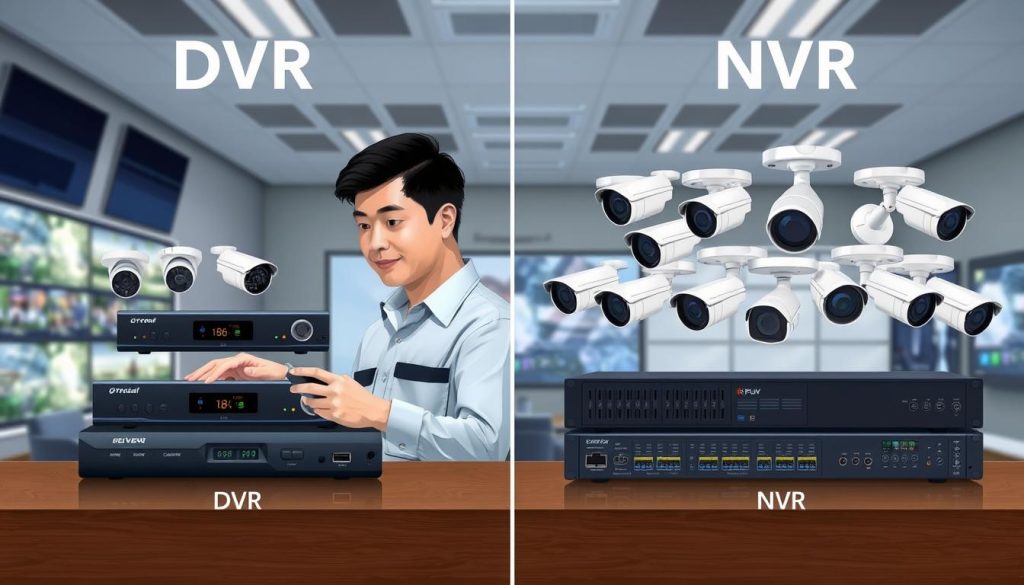
NVR systems are seen as more future-proof. They work well with new tech like AI analytics. DVR systems can’t do this because they only work with wired cameras.
DVR systems are cheaper, which is good for saving money. But, they can’t grow as much as NVR systems. This is because DVR systems have fixed spots for cameras and use old connections.
For more info on video surveillance, contact CCTV Maintenance at +65 60135960. They can show you the latest in this field.
DVR vs NVR Cost Analysis
Understanding the costs of surveillance systems is key to making smart choices. When looking at DVR vs NVR costs, we must think about both the upfront and long-term expenses. Each system has its own benefits, which can greatly affect the total cost.
Initial Setup Costs
Initial costs differ between DVR and NVR systems. DVRs are often cheaper upfront, which is good for those watching their budget. NVRs, on the other hand, require a bigger initial investment. This is because they need more expensive IP cameras and network setup.
The extra bandwidth needed for NVRs can also raise these costs. This might make NVRs less affordable for those with smaller budgets.
Long-term Cost Considerations
Looking at long-term costs shows a different story. NVRs might cost more at first, but they can save money in the long run. They offer more flexible storage options, including cloud storage, which can cut down on physical storage needs.
NVRs also support higher resolutions, providing better video quality. This means you might not need to upgrade as often as you would with DVRs. DVRs might seem cheaper at first but can cost more over time due to maintenance and scalability issues.
In summary, choosing between DVR and NVR involves both short-term and long-term financial considerations. Making a smart choice now can lead to more efficiency and savings later.
For more information on security systems, contact CCTV Maintenance today at +65 60135960. Learn about the latest CCTV solutions and offers.
Remote Access and Security
Surveillance technology keeps getting better. The choice between DVR and NVR systems affects how you access your cameras. It also has different security levels. Knowing these differences helps you make the best choice for your property.
Remote Access Capabilities
NVR systems are great for remote access. They connect to the internet, so you can watch live feeds and control your cameras from anywhere. This is super helpful for big businesses that need to watch their cameras all the time.
DVR systems don’t have the same remote access features. They are mainly for use in one place. So, DVRs keep your footage safe from the internet but make it harder to access from afar.
Security Implications
NVRs make it easier to use your cameras, but they also bring risks. With more internet use, there’s a bigger chance of hacking. Companies need strong security to keep their footage safe.
DVRs are safer from cyber threats because they don’t use the internet as much. But, they can’t adapt to new security problems as well. It’s important to find a balance between security and how you use your cameras.
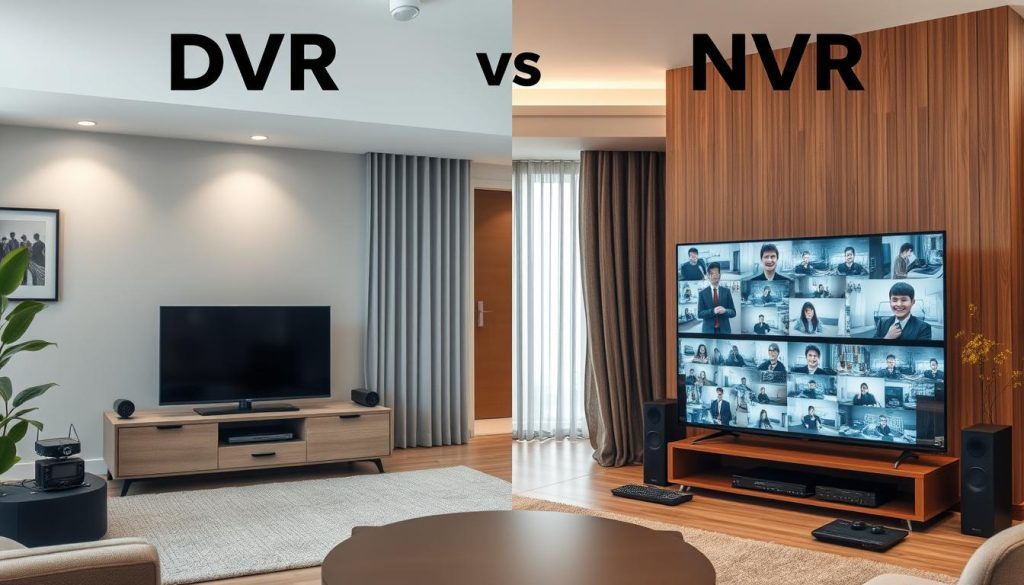
If you need help choosing the right surveillance system, call CCTV Maintenance at +65 60135960. They can help you find the best CCTV solutions and offers for your needs.
Choosing the Right System for Your Needs
Choosing the right surveillance system involves several key factors. Your current setup is a big part of the DVR vs NVR selection guidance. For example, if you already have analog cameras, a DVR might be better. This is because DVRs work well with analog cameras.
If you want high-resolution cameras, an NVR system is a better choice. NVRs support high resolutions like 5MP and 4K. This means you get clearer images for better surveillance.
The use of your surveillance system also matters. DVRs are great for low bandwidth and stable signals. NVRs offer more flexibility in installation and have cool features like PTZ and smart motion detection. But, they cost more.
Cost is another big factor. DVRs are cheaper and easier to set up. But, NVRs have advanced features that might be worth the extra cost. Think about the long-term costs, including maintenance and upgrades.
Scalability is also important. NVRs don’t have cable length limits, making them better for big areas. A good surveillance setup makes future upgrades easy.
If you need help choosing, contact CCTV Maintenance at +65 60135960. They can help you find the best solution for your needs.
Conclusion
When comparing DVR vs NVR, it’s key to know the differences. DVR systems are often cheaper and work well with analog cameras. But, they don’t have the advanced features and high resolution of NVR systems.
NVR systems, on the other hand, are great with high-resolution IP cameras and cloud storage. They offer better image quality and are ready for the future.
Thinking about your needs is important. Do you need something simple or advanced security? Your choice between DVR or NVR depends on camera type, ease of setup, and if you might need more in the future.
If you want the latest in CCTV tech, reach out to CCTV Maintenance at +65 60135960. They can help you find the perfect system for your security needs.
FAQ
What is the main difference between DVR and NVR?
DVRs handle analog signals and process footage at the recorder. NVRs, on the other hand, work with digital video data. They process it at the camera itself.
What types of cameras are compatible with DVR and NVR systems?
DVRs work well with analog cameras. NVRs, though, can handle various IP cameras. This makes NVRs more flexible.
How does the installation process differ between DVR and NVR?
NVRs are easier to install. They often use a single Ethernet cable with Power over Ethernet (PoE). DVRs need separate cables for power and data. This makes wiring for DVRs more complicated.
Which system offers better video quality: DVR or NVR?
NVRs usually offer better video quality. They have higher resolution and can record audio. DVRs often have lower quality output.
Are DVR systems more affordable than NVR systems?
Yes, DVRs are cheaper upfront. But, NVRs might be more cost-effective in the long run. They can be more efficient and need less maintenance.
Can DVR and NVR systems be accessed remotely?
NVRs offer strong remote access via the internet. This lets users manage their systems from anywhere. DVRs don’t support remote viewing. This makes them less vulnerable to threats but less versatile.
How scalable are DVR and NVR systems?
NVRs are more scalable. They use IP cameras that can easily be added to the network. DVRs face more challenges when adding cameras.
What should I consider when choosing between DVR and NVR?
Think about your current setup, camera needs, desired features, budget, and future growth. Each system has its own benefits. Your specific needs will guide your choice.
Source Links
- https://solink.com/resources/dvr-vs-nvr-which-is-better/
- https://www.nordencommunication.com/en/blog/difference-between-nvr-and-dvr-systems
- https://info.verkada.com/compare/dvr-vs-nvr/
- https://blog.swann.com/dvr-vs-nvr-whats-the-difference/
- https://www.versitron.com/blogs/post/nvr-or-dvr-which-video-surveillance-system-is-right-for-you?srsltid=AfmBOorP8vxtosDNJu23UwuFC4Z_Yxr2JMr4BO9W3Dv5OrQ5OOOeU8JQ
- https://reolink.com/blog/dvr-vs-nvr-which-one-is-better/?srsltid=AfmBOooDWY3hxWKiVH182pn0jvIe6yUP2Xo-eJGtqg6wtjmyqG3jxErL
- https://nellyssecurity.com/blogs/articles/whats-the-difference-between-an-nvr-and-a-dvr?srsltid=AfmBOorewl7YbitFhWMIkC2FLAV5wOEo50c0hiKWfU1VSVa51LzuLEWT
- https://reolink.com/blog/dvr-vs-nvr-which-one-is-better/?srsltid=AfmBOoozK7D0ICe0DmEuc_ixkh7BeeC6gZ1Qrq7V9J9tuwAhKVSFXQOk
- https://mammothsecurity.com/blog/nvr-vs-dvr
- https://nellyssecurity.com/blogs/articles/whats-the-difference-between-an-nvr-and-a-dvr?srsltid=AfmBOooTntoEuiDKpe5C2EegDjdZWnftMokntzXsxMPzfmPMPWIdawgg
- https://reolink.com/blog/dvr-vs-nvr-which-one-is-better/?srsltid=AfmBOoqVhu4doAnyTBDDEACZU78tw-pbsz9c5TwsWBVa7uWsUiiU-XTz
- https://www.versitron.com/blogs/post/nvr-or-dvr-which-video-surveillance-system-is-right-for-you?srsltid=AfmBOopJMf60TqRM6ZCd3pvU8xbGun02E7xp97dkz20ClhY6bRYmc6AG
- https://www.coram.ai/post/dvr-vs-nvr-key-difference
- https://reolink.com/blog/dvr-vs-nvr-which-one-is-better/?srsltid=AfmBOopEp00Vl50nVf5PJS8vGwY-4gmiYzzV4yZ3xpW3g-Skwb8aFuwU
- https://www.videoexpertsgroup.com/nvr-vs-dvr/
- https://sesproducts.com/dvr-vs-nvr/
- https://www.versitron.com/blogs/post/nvr-or-dvr-which-video-surveillance-system-is-right-for-you?srsltid=AfmBOop4k-IrgY2Yj7N3BQZpLfsVbrzjxoZcYihtCTrWSK6wGi2hrPFy
- https://www.spot.ai/articles/nvr-vs-dvr
- https://www.firstsolution.com.sg/blog/dvr-vs-nvr-which-is-better-for-cctv-surveillance/
- https://www.versitron.com/blogs/post/nvr-or-dvr-which-video-surveillance-system-is-right-for-you?srsltid=AfmBOop2k9fSOIYp-DqYvb2l_OPOcY4D6BFgHlrs15Sa55yidcpXB05Z
- https://www.pelco.com/blog/nvr-dvr-guide
- https://www.smartsecures.com/blog/what-is-the-difference-between-dvr-and-nvr
- https://www.versitron.com/blogs/post/nvr-or-dvr-which-video-surveillance-system-is-right-for-you?srsltid=AfmBOoo2ZcA1QOfDO9SrnhwgNPt9NBViTMQqdGlNzuCJCcfI2zOnj8vS
- https://blog.zositech.com/whats-the-difference-between-nvr-and-dvr/
- https://reolink.com/blog/dvr-vs-nvr-which-one-is-better/?srsltid=AfmBOoq2r7nkqZwbTg-Q1iZ8HpoP8oAhE-sfGHEbJ2tHdiRQRzQ4GYls
- https://alfred.camera/blog/dvr-vs-nvr/


