
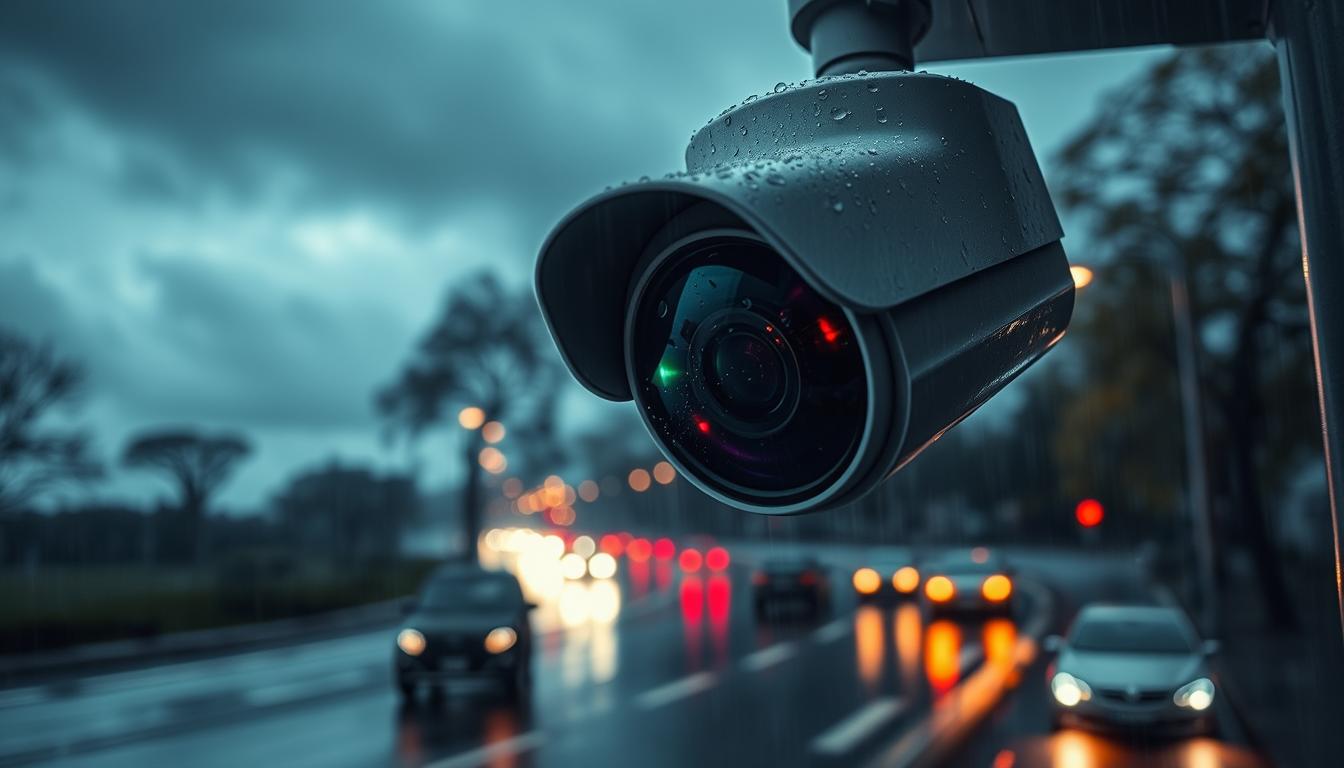
Comprehensive Guide: Does Rain Affect CCTV Cameras?
Keeping your property secure means having surveillance that works in all conditions. For residents and business owners in Singapore, this includes during heavy downpours. Precipitation can challenge even the best security setups.
Water on the lens creates blurry images. It can also trigger unnecessary motion detection alerts. This reduces the effectiveness of your monitoring when you need it most.
Understanding how weather interacts with your equipment is crucial. It’s the first step toward maintaining reliable protection. This guide explores practical solutions to common wet-weather problems.
We’ll cover camera placement, protective features, and smart settings. These strategies help ensure clear footage and minimize false alarms. With proper planning, your security can remain strong despite the elements.
Key Takeaways
- Precipitation significantly impacts surveillance clarity and reliability.
- Water on lenses causes blurred images and reduced visibility.
- Wet conditions often trigger false motion detection alerts.
- Proper placement and housing protect equipment from the elements.
- Adjusting settings can minimize weather-related interruptions.
- Regular maintenance ensures cameras perform well in all weather.
- Choosing weather-resistant models provides long-term security benefits.
Does Rain Affect CCTV? Understanding the Core Challenge
Surveillance reliability faces its toughest test when storm clouds gather over Singapore. The core challenge extends beyond simple visibility problems. It involves how precipitation fundamentally alters the operation of monitoring technology.
Understanding this requires looking at both physical and digital interference. Water interacts with equipment in multiple disruptive ways. These interactions create a cascade of issues that undermine security effectiveness.
How Precipitation Disrupts Image Clarity and Detection
Individual raindrops on a lens act as tiny, distorting prisms. They refract incoming light in unpredictable patterns. This fragmentation turns clear details into blurred, pixelated images.
The problem intensifies during heavy downpours. Multiple droplets create overlapping distortion zones. Important visual information gets lost in this visual noise.
Modern security cameras rely on sophisticated motion detection algorithms. These systems analyze frame-by-frame changes in the video feed. When raindrops create constant visual movement, the software interprets this as activity.
This creates a fundamental conflict for the surveillance system. It cannot naturally distinguish between environmental precipitation and genuine security threats. The result is compromised monitoring reliability during wet conditions.
Common Rain-Induced Issues: From False Alarms to System Failure
Persistent false alerts represent the most frequent complaint. Each falling droplet or swaying branch can trigger unnecessary notifications. Users may eventually ignore alerts, potentially missing real incidents.
Night vision capabilities suffer significantly during rainfall. Infrared illumination reflects off water particles in the air. This creates bright streaks and spots that obscure the actual scene.
Moisture presents a long-term threat to electronic components. Even with protective housing, gradual seepage can occur. This leads to corrosion that may cause complete system failure over time.
Environmental movement like foliage adds another layer of complexity. Security cameras struggle with object classification in bad weather. They cannot reliably differentiate between a person and moving leaves.
The combined effect reduces overall CCTV performance when it’s needed most. During storms, visibility decreases while potential security risks may increase. This creates a critical vulnerability in property protection systems.
Addressing these challenges requires understanding their interconnected nature. Solutions must tackle both immediate visibility issues and long-term equipment protection. The following sections explore practical strategies for maintaining surveillance integrity.
The Science of Water Damage in Singapore’s Tropical Climate
The tropical environment in Singapore presents unique challenges that can silently destroy even the most robust surveillance equipment. Constant heat and high humidity work together against electronic components. Understanding these scientific processes is key to long-term security.
Two main forces attack outdoor monitoring systems here. Persistent moisture leads to chemical corrosion inside devices. Rapid temperature changes cause physical stress on materials.
Corrosion and Moisture: Silent Killers of Electronic Components
Corrosion begins when water vapor meets metal contacts. This creates electrochemical reactions on circuit boards. The process forms conductive paths where they shouldn’t exist.
These microscopic bridges cause short circuits. They can completely disable a camera’s internal electronics. The damage often happens gradually over months.
Moisture finds entry through several weak points. Cable connection points often have imperfect seals. Housing seams can develop tiny gaps over time.
Condensation forms inside units during temperature swings. This internal fogging is particularly damaging. It directly coats sensitive components with water.
Each intrusion point accelerates the degradation process. What begins as minor moisture exposure becomes major system failure. Regular inspection of these areas is crucial.
Why Humidity and Thermal Shock Accelerate Wear
Singapore’s average humidity exceeds 80% year-round. This creates a perpetually moisture-laden atmosphere. Protective seals and gaskets constantly battle this environment.
Rubber and plastic components degrade faster under these conditions. They become brittle and lose their sealing properties. Lens coatings can also develop haze from prolonged exposure.
Thermal shock occurs during sudden weather changes. Cameras heat up under intense sunlight. They then cool rapidly when storms arrive.
This expansion and contraction stresses materials. Housing plastics can develop hairline cracks. These tiny fractures become pathways for water intrusion.
Metal components expand at different rates than plastics. This mismatch can break solder joints on circuit boards. Connections fail even without direct water contact.
In coastal installations, saltwater spray can accelerate corrosion up to five times faster than freshwater exposure alone.
The combination creates a perfect storm for equipment failure. High humidity keeps materials constantly damp. Thermal cycling then mechanically stresses weakened components.
Understanding this science informs better protection strategies. Selecting proper housing with adequate IP ratings is essential. Regular maintenance becomes non-negotiable rather than optional.
Without addressing these environmental factors, cameras deteriorate prematurely. What appears working well today may fail unexpectedly tomorrow. Proactive measures ensure your security investment delivers lasting value.
How Rain Severely Impacts CCTV Image Quality
Video quality is one of the first casualties when water interacts with outdoor monitoring equipment. The visual degradation happens through multiple physical mechanisms. Each one contributes to making footage less useful for identification and evidence.
Understanding these specific effects helps in selecting the right countermeasures. It also explains why certain camera designs perform better in wet conditions. This analysis focuses on the direct optical consequences.
Visual Distortion Caused by Raindrops on the Lens
Individual water droplets clinging to the glass act as tiny lenses. They refract incoming light in chaotic patterns. This scattering obscures critical details in the scene.
The problem is especially pronounced with infrared illumination. Security systems use IR for night monitoring. Raindrops bend these wavelengths unpredictably.
This creates false colors and strange artifacts in the footage. The result is blurry, pixelated video that lacks definition. Important features like faces or license plates become unrecognizable.
Camera form factor influences how water accumulates. Dome housings often suffer from streaking. Water sheets run down the curved surface, creating persistent blur zones.
Bullet-style designs may shed droplets more effectively. Their angled surfaces encourage water to run off. However, neither design is immune to the core optical problem.
Surface tension causes droplets to cling stubbornly to the lens. Internal fogging from thermal shifts adds another layer of haze. The combined effect severely compromises daytime recording.
Compromised Night Vision During Rainfall and Storms
Infrared surveillance faces unique challenges in precipitation. The camera’s own IR LEDs illuminate falling water particles. Each raindrop reflects this light back to the sensor.
This creates a “snowy” wall of bright specks in the footage. The effect masks all background activity completely. Effective monitoring range drops dramatically.
During Singapore’s monsoon conditions, the reduction can exceed 50%. What was a clear 30-meter view becomes a 15-meter blur. This creates dangerous blind spots in your security coverage.
Field tests show night vision effectiveness can decrease by over 60% during heavy rainfall, turning clear zones into visual noise.
Humid air compounds the issue by scattering more IR light. The atmosphere itself becomes a diffusing filter. This further reduces contrast and detail in the video.
The system’s motion detection algorithms struggle with this visual noise. They cannot distinguish between falling water and genuine movement. This leads to the notification fatigue mentioned earlier.
These visual challenges create urgent needs for corrective measures. The following sections explore settings adjustments and hardware solutions. Proper implementation can restore much of your surveillance effectiveness.
Optimizing Camera Settings to Combat Rain Interference
The battle for clear footage continues in your camera’s settings menu, where strategic adjustments filter out environmental interference. Modern surveillance software provides powerful tools to distinguish between security threats and weather events. Proper configuration transforms how your equipment responds to challenging conditions.
This approach addresses the problem at its source—the software interpretation of visual data. Instead of trying to prevent all water contact, you teach the system to ignore precipitation’s effects. The result is fewer disruptions and more reliable monitoring.
Fine-Tuning Motion Detection Sensitivity for Wet Weather
Motion detection algorithms work by analyzing pixel changes between video frames. During storms, falling water creates constant minor fluctuations. The system mistakenly interprets these as meaningful movement.
Lowering the sensitivity setting raises the threshold for what counts as activity. This filters out the visual noise caused by precipitation. Most modern cctv systems allow granular control over these parameters.
Access your camera’s configuration menu through its mobile app or web interface. Look for “Motion Detection” or “Alert Settings.” You’ll typically find a slider or numerical value for sensitivity.
For wet weather, start by reducing this value by 25-30%. This creates a buffer against false alarms triggered by rain streaks. Test the adjustment during actual precipitation to verify effectiveness.
Finding the right balance is crucial. Set sensitivity too low, and you might miss genuine security events. Monitor the system for a few days after changes. Make incremental adjustments until notifications become meaningful again.
Implementing and Calibrating Rain Detection Alerts
Advanced surveillance platforms include specialized weather filters. These features use different algorithms to identify precipitation patterns. They can automatically suppress alerts during specific weather conditions.
Look for options labeled “Rain Detection,” “Weather Filter,” or “Environmental Ignore.” Enabling this tells your cctv system to analyze the scene differently. It learns to recognize the unique signature of falling water.
Calibration involves setting intensity levels that match local weather patterns. Singapore’s sudden downpours require a different setting than light drizzle. Many systems allow scheduling—activate the filter only during expected storm hours.
These rain alerts work alongside traditional motion detection. They create a layered verification system that improves accuracy. Your overall cctv performance becomes more consistent regardless of weather.
Regular firmware updates enhance these software features. Manufacturers constantly refine their weather-related algorithms. New versions often include better object classification to distinguish between people and environmental movement.
Combine these settings with other strategies for maximum effect. Activity zones and pir sensors create additional layers of verification. This multi-pronged approach ensures your security remains working well through any storm.
Strategic Camera Placement to Minimize Rain Exposure
Maximizing your property’s natural architecture can provide superior protection for monitoring equipment. This physical strategy is often more reliable than software fixes alone. Proper positioning dramatically reduces water contact and extends hardware life.
Think of placement as creating a permanent umbrella for your camera. A well-planned installation keeps lenses clear and electronics dry. This foundational step ensures your entire system remains working well.
Choosing the Right Angle and Height for Installation
The tilt of your camera is crucial for shedding water. Mount units with a 15 to 45-degree downward angle. This slope encourages droplets to roll off the housing instead of pooling.
Height is equally important for protection. Install cameras at least 3 meters above ground level. This elevation helps avoid rain splash from soil and pavements.
It also places them out of easy reach. This deters tampering and vandalism. Your field of view remains broad and unobstructed.
Always survey the sightlines during your planning. Point lenses away from roads and other areas prone to heavy splashback. This simple step prevents a major source of lens obstruction.
Utilizing Eaves, Overhangs, and Architectural Features
Your building’s design offers the best natural defense. Install units deep under eaves, awnings, or soffits. These features act as a roof for your security hardware.
For optimal coverage, the overhang should extend at least 60cm. This depth can reduce direct water exposure by up to 80%. It’s a simple metric with a massive impact on cctv performance.
Positioning under a sufficient eave is the single most effective placement tactic to avoid rain and prevent the kind of water damage that can destroy CCTV camera electronics over time.
Corners of buildings are particularly valuable. They often provide shelter from two sides. This gives you coverage while keeping the unit itself dry.
Be cautious of placements that seem sheltered. Avoid spots beneath roof runoff paths or gutters. Wind can also drive precipitation under shallow overhangs.
A thorough property survey is essential before mounting anything. Identify these protective features during the planning stage. This proactive approach makes your weatherproof cctv work better from day one.
Strategic placement reduces lens wetness and moisture intrusion. This directly leads to fewer false alarms triggered by water streaks. Your security remains reliable even in bad weather.
Leveraging Advanced Features: Object Classification and AI
The next frontier in reliable surveillance involves teaching your system to understand what it sees, not just that it sees movement. Modern security cameras now include intelligent software that analyzes shapes and patterns.
This technology goes far beyond basic motion detection. It can tell the difference between a person, a car, and environmental things like swaying branches.
How Smart Classification Filters Out Rain and Foliage
Object classification uses algorithmic analysis to categorize moving objects in real-time. It examines the size, shape, and movement pattern of each detected item.
The software is trained to recognize human and vehicle silhouettes. Falling water or moving leaves don’t match these predefined categories.
Your cctv system can then ignore these irrelevant triggers. This directly addresses the core issue of precipitation causing visual noise.
To enable this, navigate to your camera’s settings menu. Look for options labeled “Smart Features,” “AI Detection,” or “Object classification.”
Activating this filter is a major upgrade. It instructs the system to focus only on genuine security threats.
Setting Up AI-Powered Recognition to Ignore Precipitation
More advanced cctv systems use neural networks trained on thousands of weather scenarios. This object classification is powered by deep learning.
The AI model learns the unique visual signature of streaking water. It can differentiate between a raindrop’s distortion and a human shape.
Platforms like Hikvision AcuSense are built for this purpose. They excel in challenging environments with high accuracy.
Implementing AI recognition can reduce weather-related false alarms by 80-90%, according to field tests in monsoon conditions.
Setup usually involves enabling the feature and defining detection areas. The AI then works autonomously to filter out precipitation artifacts.
This smart filtering works alongside other tools like pir sensors for verification. The outcome is a drastic reduction in nuisance rain alerts.
It allows your security to remain focused during storms. This technology is key to stop your CCTV from being overwhelmed by bad weather.
Adopting these features creates a smarter, more efficient security operation. Your monitoring becomes threat-centric, not just motion-activated.
Defining Activity Zones for Targeted and Accurate Monitoring
Precision monitoring begins with defining exactly where your camera should look for activity, not just detecting any movement. Activity zones transform your security from a broad net into a surgical tool. This spatial control is particularly valuable during wet weather when environmental triggers are frequent.
Most modern security platforms include this feature in their configuration menus. It allows you to draw virtual boundaries directly on the live video feed. The system then only analyzes motion within these designated zones.
Step-by-Step Guide to Setting Detection Boundaries
Accessing this feature requires opening your camera’s app or web interface. Navigate to the motion detection or alert settings section. Look for options labeled “Activity Zones,” “Detection Areas,” or “Motion Masking.”
The configuration process typically follows these steps:
- Select the “Add Zone” or “Draw Area” function within the software.
- Use your finger or mouse to create a polygon shape over the live view.
- Adjust the boundary points to precisely cover the target area.
- Save the zone and name it for easy identification later.
You can create multiple zones with different priority levels. Some systems allow scheduling when each zone is active. This granular control prevents alerts from non-critical areas during specific hours.
Using Zone Customization to Avoid Splash Zones and Busy Areas
Strategic exclusion is as important as inclusion when defining zones. Identify problem spots where precipitation consistently causes issues. These include pavement sections that form puddles or reflect vehicle headlights.
Also consider locations near downspouts or roof edges. These become “splash zones” during heavy downpours. Excluding them helps avoid rain-induced triggers completely.
Here are key areas to typically exclude from your detection zones:
- Public roads or sidewalks with constant traffic flow
- Gardens with foliage that sways in wind
- Reflective surfaces like windows or metal panels
- Pooling water locations on driveways
- Areas under trees that drip long after storms
Focus your active zones on strategic entry points instead. These include gates, doors, windows, and pathways to valuable assets. This approach ensures alerts correspond to genuine security events.
Zone customization works powerfully with other features. Combine it with adjusted sensitivity levels and object classification filters. This creates a multi-layered verification system that dramatically reduces false positives.
Well-defined activity zones are among the most effective manual methods to stop cctv from generating unnecessary rain alerts. They maintain your system’s credibility by ensuring users pay attention to genuine warnings. When configured thoughtfully, your surveillance remains working well regardless of weather conditions.
Essential Weatherproofing Techniques for Outdoor Cameras
Material science and design engineering combine to create protective solutions for exposed installations. The right physical barriers determine if your security investment survives Singapore’s climate. This foundation is non-negotiable for any reliable outdoor monitoring system.
Understanding industry standards helps you evaluate hardware durability. Proper selection prevents moisture damage before it happens. These techniques ensure your surveillance remains operational through seasonal changes.
Selecting IP-Rated Housings: Understanding IP66, IP67, and IP68
Ingress Protection ratings provide clear benchmarks for weather resistance. The IP code has two digits that indicate specific protection levels. The first digit shows solid particle protection, while the second indicates liquid ingress defense.
For Singapore’s heavy downpours, focus on the second digit. IP66 means protection against powerful water jets from any direction. This rating is suitable for most outdoor installations facing direct exposure.
IP67 offers temporary immersion protection up to 1 meter depth. IP68 provides continuous immersion under specified conditions. These higher ratings are ideal for coastal areas or flood-prone locations.
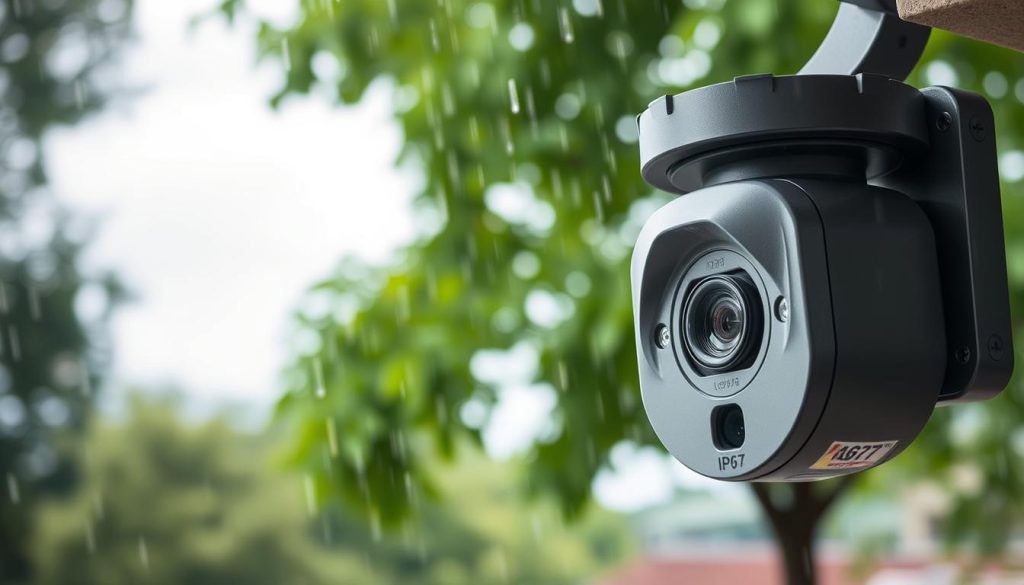
Always verify both digits when selecting housings. A complete IP67 rating ensures complete dust protection and temporary water immersion resistance. This dual protection is crucial for long-term reliability.
Comparing Protective Housing: Domes vs. Bullet Designs
Housing shape significantly affects water management. Dome housings feature curved surfaces that shed moisture evenly. Their design minimizes flat areas where water can pool and accumulate.
Bullet-style housings often have angled hoods for better runoff. However, their multiple seams and joints can trap moisture over time. Regular inspection of these seams prevents gradual water ingress.
Material quality matters as much as design. UV-resistant polycarbonate prevents yellowing and brittleness. Marine-grade stainless steel fasteners resist corrosion in humid, salty air.
Consider these supplementary enhancements for maximum protection:
- Hydrophobic nano-coatings applied to lenses repel water droplets
- Heated housings prevent internal condensation during temperature swings
- Silica gel compartments absorb residual moisture within the enclosure
- Enhanced gasket materials maintain seal integrity through thermal expansion
Third-party testing shows housings with hydrophobic coatings maintain 95% lens clarity during heavy precipitation, compared to 65% for standard units.
These features help your weatherproof cctv work better in challenging conditions. They reduce maintenance needs and extend equipment lifespan significantly.
Proper housing installation completes the protection strategy. Ensure all cable entry points use waterproof connectors. Position housings to avoid direct spray from drainage systems.
This physical foundation supports all other weatherproofing efforts. It keeps your security cameras working well through Singapore’s tropical climate. Combined with smart settings, it creates a resilient monitoring solution.
The Critical Role of PIR Sensors in Weather-Resistant Surveillance
For consistent performance in challenging conditions, the most effective sensors ignore what they see and feel warmth instead. Passive Infrared (PIR) technology represents this fundamental shift. It provides a reliable detection layer that remains accurate when visual systems fail.
This approach moves beyond analyzing pixel changes on a screen. It focuses on the biological signatures of living beings. The result is near-perfect immunity to environmental distractions.
How Thermal Detection Differs from Visual Motion Tracking
Standard motion detection in most security cameras works by comparing video frames. It looks for pixel changes that suggest movement. Falling water or moving leaves create constant visual noise.
PIR technology operates on a completely different principle. These pir sensors detect changes in infrared radiation, or heat. They sense the warmth emitted by people, animals, and vehicles.
This makes them largely blind to precipitation, swaying branches, or shifting shadows. Your cctv system won’t alert you to a gust of wind. It will only trigger for warm-bodied targets moving through its field.
The benefits for outdoor use are substantial. You get dramatically fewer false alarms during storms. Detection accuracy remains high even in total darkness or bad weather.
Top PIR-Equipped Camera Models for Reliable Performance
Several manufacturers produce cameras with robust PIR capabilities. These models are engineered for high-humidity environments like Singapore. They maintain sensitivity and accuracy over time.
The Dahua DH-IPC-HDW5849T-ASE is a standout example. It features advanced thermal sensing that filters out environmental triggers. This model is designed specifically for tropical climates.
Other brands like Hikvision and Uniview offer similar options. Look for terms like “AcuSense” or “Smart Detection” in product descriptions. These often indicate integrated PIR technology.
Independent testing shows PIR-equipped cctv systems can reduce weather-related false alerts by over 95% compared to standard visual motion detection.
Proper installation ensures your pir sensors work better. Mount the camera 2.1 to 2.5 meters high. Angle it slightly downward to avoid interference from the sky or hot surfaces.
This positioning optimizes the sensor’s detection zone. It focuses on ground-level activity where security matters most. The system remains working well through monsoon seasons.
For critical monitoring areas, investing in a camera with reliable pir sensors is essential. It transforms your surveillance from reactive to intelligent. You gain peace of mind knowing alerts signal genuine security events, not just passing weather.
Proactive Maintenance Schedule for Monsoon Readiness
Proactive care schedules are the unsung hero of long-term surveillance reliability in tropical climates. Proper installation and smart settings are not a “set and forget” solution.
Ongoing upkeep is the final, critical layer for resilience. A structured routine prevents small issues from becoming major failures. This diligence is a cost-saving habit that ensures your security investment pays off.
This schedule is tailored for Singapore’s high humidity and intense weather. It breaks tasks into weekly, quarterly, and bi-annual actions. Following it keeps your cameras working well through multiple monsoon seasons.
Weekly and Quarterly Inspection Checklists
A quick weekly visual check takes only minutes but catches problems early. Focus on the most exposed components during this inspection.
Your weekly checklist should include these key areas:
- Lens Clarity: Look for water spots, streaks, or internal fogging.
- Housing Integrity: Check for new cracks, loose screws, or misaligned seams.
- Drainage Ports: Ensure small holes at the bottom of housings are clear of debris.
- General Condition: Note any spider webs, nests, or unusual condensation.
For cleaning, use a microfiber cloth and isopropyl alcohol. This safely removes grime without damaging lens coatings. Avoid household cleaners that can degrade materials.
Quarterly inspections are more thorough. They target the gradual wear that weekly checks might miss. Schedule these before and after the peak monsoon periods.
The quarterly protocol involves a hands-on review. Power down the system safely before starting. Inspect cable connection points for any green or white powder—a sign of corrosion.
Check all mounting brackets for stability. Tighten any screws that have loosened from thermal expansion. This prevents housings from shifting and breaking their seals.
Gasket, Seal, and Desiccant Maintenance Protocols
These components are your first line of defense against moisture. Their degradation is slow but certain. Proactive replacement stops water intrusion before it happens.
Inspect rubber gaskets and O-rings every three months. Look for hardening, cracking, or flattening. A healthy seal should be supple and spring back when pressed.
To maintain them, apply a thin layer of dielectric grease. This lubricates the rubber, keeping it pliable. It also fills microscopic gaps to improve the seal.
UV-resistant silicone gaskets typically need replacement every 18-24 months in Singapore’s climate. Proactive replacement during a bi-annual service prevents failure.
Desiccant packs inside housings absorb residual moisture. They protect internal electronics from humidity. These silica gel packs saturate over time and need reactivation or replacement.
Check them quarterly. If the beads have changed from orange to green, or feel damp, they are saturated. You can reactivate them by baking in a standard oven on low heat.
For a more reliable approach, replace the packs every six months. This small cost ensures continuous protection for sensitive circuitry. It is a key step to stop your CCTV camera from being by internal condensation.
Following these protocols makes your entire cctv system work better. It minimizes lens obstructions that cause false alarms. More importantly, it prevents the corrosion that leads to permanent damage.
This disciplined approach guarantees your surveillance remains working well. It delivers clear footage and reliable alerts, even during bad weather. Regular maintenance is the definitive habit for enduring security.
Choosing the Right Hardware: Waterproof CCTV Models and Features
Product specifications and brand comparisons guide you toward surveillance that withstands Singapore’s climate. This final piece consolidates all previous advice into practical buying criteria. Your investment deserves hardware built for the environment it will face.
The right choice balances weatherproofing with intelligent features. It ensures your monitoring remains effective through monsoon seasons. Consider this section your roadmap to durable, reliable security.
Key Specifications for Singapore’s Climate: IP Ratings and Build Quality
Ingress Protection ratings form the non-negotiable foundation for any outdoor camera here. An IP66 certification is the absolute minimum starting point. This guarantees protection against powerful water jets from any direction.
For coastal areas or flood-prone locations, consider IP67 or IP68 ratings. These offer temporary or continuous immersion protection. They provide an extra safety margin during extreme weather events.
Build quality extends beyond the IP code alone. Examine housing materials for UV resistance. Singapore’s intense sunlight can degrade plastics quickly.
Look for polycarbonate or aluminum alloys in the construction. These materials withstand thermal expansion better. They maintain seal integrity through temperature swings.
Beyond basic ratings, seek additional climate certifications. Some manufacturers test specifically for tropical conditions. These evaluations simulate high humidity and salt spray environments.
Military-grade MIL-STD compliance indicates exceptional ruggedness. While not essential for residential use, it signals superior durability. Such certifications ensure your cctv system keeps working well for years.
Comparing Brands and Models: VIGI vs. Tapo and Other Leading Options
TP-Link offers two distinct product families suited for different needs. The VIGI line targets professional and robust applications. Models like the C340HPWSM emphasize durability and advanced features.
In contrast, the Tapo series focuses on user-friendliness and smart home integration. The C200 model provides accessible weather resistance for consumers. Your choice depends on your technical comfort and security priorities.
Evaluate any model using this three-part framework:
- Weatherproofing: Verify the IP rating matches your installation site. Check housing material quality and seal design.
- Intelligent Features: Look for object classification and AI analytics. These reduce false alarms during bad weather. Pir sensors add reliable thermal detection.
- Site Suitability: Ensure the camera’s form factor fits your planned location. Consider cable management and power requirements.
Other reputable brands offer specialized tropical solutions. Dahua and Hikvision produce models with robust environmental testing. Their AI-powered security cameras excel in challenging conditions.
Independent reviews consistently highlight that models with dedicated tropical certifications suffer 40% fewer weather-related failures in Singapore’s climate compared to standard IP-rated units.
When comparing, prioritize image quality specifications alongside weatherproofing. A 4MP or higher resolution captures clearer details. Good low-light night performance remains crucial.
Examine the manufacturer’s local support and warranty terms. Reliable service matters when addressing any issues. This completes your evaluation of cctv performance and longevity.
Your final selection should feel like a tailored solution, not a compromise. The right weatherproof cctv transforms vulnerability into confidence. It delivers peace of mind through every seasonal change.
Securing Your Property with Weather-Resilient Surveillance
True weatherproof surveillance emerges from integrating intelligent software, strategic hardware placement, and consistent upkeep. This multi-layered approach defeats precipitation interference effectively.
Combine smart object classification with adjusted motion detection sensitivity. Add reliable PIR sensors for thermal confirmation. Strategic placement under eaves provides physical protection.
Invest in quality weatherproof CCTV hardware with proper IP ratings. Commit to regular maintenance checks. This ensures your security cameras keep working well.
Audit your current setup against these guidelines. Implement changes step by step. Your CCTV system will then deliver reliable cctv performance through any bad weather, providing year-round peace of mind.
FAQ
Can wet weather cause my security cameras to trigger false alerts?
Yes, this is a common issue. Heavy precipitation can cause moving raindrops or water streaks on the lens to be mistaken for motion. This leads to unnecessary notifications. Adjusting your system’s motion detection sensitivity and using features like object classification can significantly reduce these false alarms.
What is the best type of protective housing for an outdoor installation?
For reliable performance, look for units with a high IP rating like IP66 or IP67. These ratings confirm protection against powerful water jets and temporary immersion. Dome cameras often offer better protection from direct rainfall and lens splashes compared to some bullet designs.
How does humidity in a tropical climate impact my surveillance equipment?
Constant high moisture levels can lead to internal condensation and corrosion of electronic components over time. This gradual damage can degrade video quality and eventually cause system failure. Using cameras with proper seals and built-in desiccants is crucial.
Will my camera’s night vision work during a storm?
Night vision performance often drops in bad weather. Rain can reflect and scatter the camera’s own infrared light, creating a “foggy” or hazy image. Ensuring the lens is clean and the camera is positioned under an overhang can help maintain quality.
What are PIR sensors, and why are they helpful in the rain?
PIR sensors detect changes in heat (infrared energy) from moving objects, like people or vehicles. Since raindrops don’t emit heat, these sensors ignore them, providing more reliable motion tracking and fewer false triggers during rainfall compared to standard pixel-based detection.
How often should I perform maintenance on my outdoor CCTV cameras?
A proactive schedule is key. Check lens cleanliness and housing seals weekly. Perform a detailed quarterly inspection of all gaskets and seals for cracks or wear. This regular care prevents water ingress and ensures your security cameras are always working well.


