

How CCTV Cameras Work in Dark: Night Vision Guide
Modern surveillance has come a long way. Today’s systems provide reliable monitoring even when the sun goes down. This evolution is crucial for round-the-clock protection.
In places like Singapore, effective security is non-negotiable. The urban environment demands constant vigilance. Understanding how these devices function in low-light conditions is essential for both homes and businesses.
Specialized technology makes this possible. Night vision capabilities transform invisible light or heat into clear images. This allows for detailed observation during nighttime hours.
This guide explores the advancements that enable after-dark monitoring. We will look at different methods, from infrared illumination to thermal imaging. You will learn why a system that performs in darkness is a powerful security asset.
Key Takeaways
- Modern surveillance systems are designed to operate effectively in complete darkness.
- Night vision technology is the key component that enables clear monitoring after sunset.
- Continuous security coverage is especially important in urban centers like Singapore.
- Different technologies, such as infrared and thermal imaging, serve this purpose.
- A reliable system provides peace of mind by securing your property 24 hours a day.
- Understanding these capabilities helps in choosing the right security setup.
Does CCTV Camera Work in Dark? Understanding the Core Technology
A common question in security planning is how surveillance equipment performs when natural light fades. The answer lies in specialized engineering designed for low-light conditions. Modern security systems are built to deliver clear images even in total darkness.
This capability is not magic. It is the result of precise technology that either amplifies minimal available light or creates its own invisible illumination. Understanding this core tech is key to choosing an effective setup for your property.
The Role of Infrared (IR) Illumination
Infrared technology is the primary engine for after-dark monitoring. It allows cameras to function in complete pitch-black environments. How does it achieve this?
These cctv units have clusters of small IR LEDs positioned around the lens. When ambient light drops below a certain level, these LEDs automatically activate. They flood the scene with infrared radiation, which is invisible to our eyes.
The camera’s specialized sensor can detect this IR light. It then translates the reflected infrared waves into a visible picture. The result is a sharp, monochromatic image—typically black and white or grayscale.
This automatic switch between day color mode and night vision mode is seamless. It ensures uninterrupted security coverage from sunset to sunrise. In Singapore’s varied urban areas, from well-lit streets to shadowy alleys, this reliability is non-negotiable.
Sensor Technology: CMOS and CCD in Low Light
The sensor is the component that actually “sees” the IR illumination. Its sensitivity dictates the clarity of your nighttime footage. Two main sensor types are used: CMOS and CCD.
CMOS sensors are common in many modern cameras. They are cost-effective and power-efficient. In low-light, they perform adequately, especially when paired with strong IR illuminators. Their imaging quality has improved significantly.
CCD sensors have traditionally offered superior performance in dark conditions. They generally provide better light sensitivity and produce less visual “noise” in the images. This can mean clearer details in very challenging lighting.
However, relying solely on active IR has limits. The effective range is bound by the power of the LEDs. Very strong light sources, like car headlights, can cause temporary blinding. Also, IR light does not penetrate glass effectively.
This introduces the need for other vision solutions, like thermal imaging. These alternatives will be explored next, building on this foundation of core surveillance technology.
Types of Night Vision Technology in Security Cameras
The effectiveness of after-dark surveillance depends heavily on the specific vision technology employed. Not all systems perform equally when natural illumination disappears. Property owners and security managers must understand their options.
Three primary approaches dominate modern low-light monitoring. Each offers distinct capabilities for different environments and budgets. Knowing these differences ensures you select the right tool for your security needs.
Infrared (IR) Night Vision: The Standard for Darkness
Infrared technology represents the most common solution for nighttime monitoring. These security cameras use built-in LED arrays to project invisible light. This illumination reflects off objects, allowing the sensor to capture clear pictures.
The resulting footage typically appears in monochrome. Black-and-white or grayscale images provide excellent contrast and detail. This makes identification possible even in challenging conditions.
Most residential and commercial installations in Singapore rely on IR systems. They offer reliable performance at accessible price points. Their automatic activation ensures seamless transition from day to night operation.
- Cost-effective protection for most properties
- Effective ranges up to 100 feet or more with quality units
- Minimal power consumption compared to other technologies
- Wide availability and easy integration with existing systems
For general perimeter security, IR remains the practical choice. It delivers the visibility needed to monitor entry points and vulnerable areas after sunset.
Thermal Imaging Cameras: Seeing Heat, Not Light
Thermal imaging represents a fundamentally different approach to nighttime monitoring. These specialized devices detect infrared radiation emitted as heat by all objects. They create pictures based on temperature differences rather than reflected light.
This technology excels where conventional systems struggle. It can see dark areas completely devoid of ambient light. Thermal sensors also penetrate visual obstacles like smoke, light fog, and foliage.
“Thermal cameras don’t rely on visible or infrared light. They detect the heat signatures of people, vehicles, and animals. This makes them exceptionally reliable for critical detection applications.”
The visual output differs significantly from standard night vision cameras. Thermal units display color-coded heat maps. Warmer objects appear brighter against cooler backgrounds, providing instant situational awareness.
In Singapore’s security landscape, thermal imaging serves specialized roles:
- Critical infrastructure protection for ports and utilities
- Perimeter detection in heavily wooded or obstructed areas
- Search and rescue operations in challenging environments
- High-value commercial and industrial site monitoring
While representing a premium investment, thermal systems offer unmatched detection capability. They provide an additional layer of security where absolute reliability matters most.
Low-Light Cameras vs. True Night Vision
Understanding this distinction prevents disappointment with system performance. Not all devices marketed for low-light use offer genuine after-dark capability.
Low-light cameras amplify whatever ambient illumination exists. They use sensitive sensors and advanced processing to brighten moonlit or starlit scenes. However, they cannot function in total darkness.
True night vision systems create their own illumination. Either through active IR LEDs or thermal detection, they generate visibility independently. This ensures consistent performance regardless of environmental lighting.
The table below highlights key differences:
- Performance in Darkness: Low-light cameras fail in pitch-black conditions; true systems operate reliably
- Visual Output: Low-light may retain some color; true night vision typically produces monochrome or thermal images
- Cost Factor: Low-light technology can be less expensive; true night vision represents a more complete solution
For comprehensive 24-hour security, true vision technology is essential. It guarantees that your surveillance doesn’t blind spots when the sun goes down. This is particularly important for Singapore properties requiring uninterrupted monitoring.
When evaluating options, look for specific features like infrared illuminators or thermal sensors. These indicate genuine after-dark capability rather than mere light amplification. Your investment should deliver peace of mind through every hour of the night.
How Infrared Night Vision Cameras Operate
Active infrared technology operates on a simple yet brilliant principle: illuminating a scene with light the human eye cannot see. This process turns total darkness into a monitor filled with actionable details. It’s a reliable method that powers most residential and commercial after-dark security systems.
The sequence from darkness to a clear picture involves specific components working in harmony. Each part plays a critical role in the imaging chain. Let’s break down this technological transformation step by step.
The Function of Infrared LEDs
Infrared LEDs are the light source for this form of night vision. They emit electromagnetic radiation at wavelengths between 700nm and 1000nm. For security applications, 850nm is a common standard.
This wavelength is completely invisible to humans. It allows the area to be lit up without causing visible light pollution or glare. The LEDs are typically arranged in a ring formation around the camera lens.
Their activation is automatic. A built-in light sensor constantly measures ambient light. When levels drop below a set threshold, the IR LED array switches on instantly. This ensures continuous surveillance coverage.
The quality of illumination depends on the LED configuration:
- Quantity and Power: More and higher-powered LEDs provide a longer effective range.
- Arrangement: A well-designed ring ensures even coverage without dark spots.
- Beam Angle: This must match the lens’s field of view for optimal efficiency.
From Invisible Light to Visible Image
Once the scene is bathed in infrared, the camera sensor takes over. Specialized CMOS or CCD sensors are sensitive to this specific wavelength of light. They detect the IR radiation reflected off objects in the area.
This detection is the first step in a conversion process. Photons of infrared light hit the sensor pixels, generating tiny electronic signals. These analog signals are then converted into digital data.
Sophisticated image processors enhance this raw data. They apply algorithms for noise reduction, contrast adjustment, and edge enhancement. The goal is to produce a clean, detailed monochromatic image.
The final video output is typically sharp black-and-white footage. This format offers excellent contrast in low-light conditions. It makes identifying shapes, movements, and details remarkably clear.
Identifying Cameras with Active IR Technology
Spotting these systems is straightforward when they are active. Look for a subtle red glow around the lens in a dark environment. Those small red dots are the infrared LEDs at work.
This visible red hue, especially at 850nm, is a side effect of the technology. It serves as a simple field check for functional night vision. Modern optics often use coated lenses to minimize this glow and reduce the “red-eye” effect on subjects.
In Singapore’s urban landscape, this technology proves highly effective. The consistent warm climate doesn’t hinder IR performance. However, heavy tropical rain can scatter the infrared light, slightly reducing clarity during downpours.
Understanding this operation empowers you to evaluate security cameras effectively. You can now assess the potential of an IR illuminator and the quality of the image processing. This knowledge is key for implementing reliable after-dark surveillance.
Key Factors Affecting Nighttime CCTV Performance
Achieving optimal after-dark monitoring requires understanding the interplay between hardware specifications and installation conditions. Several technical variables determine how well your security setup performs when natural illumination disappears. Evaluating these factors helps you maximize surveillance effectiveness.
From infrared power to weather resistance, each element contributes to final image quality. Smart selection and placement based on these parameters ensure reliable night vision. This knowledge is particularly valuable for properties in Singapore’s varied urban landscape.
Infrared Range and Illuminator Strength
The distance your cameras can see in total darkness depends on infrared illuminator capability. This range typically spans from 30 to over 100 feet. Higher-powered LED arrays project invisible light farther.
Illuminator configuration also affects coverage. A ring of LEDs around the lens provides even distribution. The beam angle must match the lens’s field of view for consistent illumination.
- IR Range Rating: Manufacturers specify maximum effective distance
- LED Count and Power: More and stronger LEDs increase illumination
- Beam Pattern: Wide-angle versus spotlight configurations
- Automatic Adjustment: Smart IR that adapts to scene conditions
For larger properties, extended range becomes essential. A driveway or backyard may require 50+ feet of clear vision. Always verify real-world performance, not just advertised specifications.
Camera Resolution and Sensor Sensitivity
Megapixel count determines how much detail your footage retains. Higher resolution allows identification at greater distances. This becomes crucial when reviewing events after sunset.
Sensor sensitivity, measured in lux, indicates minimum light requirements. Lower lux values mean better performance in dim conditions. A rating of 0.01 lux or lower is excellent for night operation.
Modern cameras combine these features for superior results. A 4MP or 5MP sensor with high sensitivity captures crisp images. Advanced processing reduces noise while preserving details.
Key metrics to compare include:
- Resolution: 2MP, 4MP, 5MP, or 8MP options
- Minimum Illumination: Lux rating for low-light capability
- Sensor Type: CMOS with enhanced low-light algorithms
- Wide Dynamic Range (WDR): Balances bright and dark areas
Singapore’s security applications benefit from this technical quality. Clear identification supports both prevention and investigation efforts.
Environmental Obstructions and Weather
Physical barriers and climate conditions directly impact night vision effectiveness. Rain, fog, or foliage can scatter infrared light. This reduces clarity and effective range.
Weatherproof ratings ensure durability in Singapore’s tropical climate. IP65, IP66, and IP67 certifications indicate resistance to dust and water. These ratings are non-negotiable for outdoor installations.
Common environmental challenges include:
- Heavy Rainfall: Water droplets diffuse IR illumination
- High Humidity: Moisture in air affects light transmission
- Physical Obstructions: Walls, plants, or decorations create shadows
- Reflective Surfaces: Glass or metal can cause glare or hotspots
Strategic placement minimizes these issues. Position cameras under eaves for rain protection. Ensure a clear line of sight to monitored areas. Regular maintenance keeps lenses clean for optimal performance.
Understanding these factors empowers you to build a robust surveillance solution. Your security investment should deliver consistent results through every night.
Enhancing Your CCTV’s Night Vision: External Solutions
The strategic deployment of external illumination represents a powerful yet often overlooked method for optimizing nighttime security monitoring. While advanced internal technology forms the foundation, integrating smart lighting solutions can dramatically improve night vision clarity and detail.
This approach creates a synergistic relationship between your surveillance equipment and the environment. Properly implemented, it transforms challenging low-light conditions into well-monitored areas. The result is superior footage quality for both prevention and investigation purposes.
Strategic Use of Ambient and Supplementary Lighting
Leveraging existing ambient light sources provides immediate enhancement without major infrastructure changes. Street lamps, building facade illumination, and neighboring property lighting all contribute valuable background illumination. These sources help your cameras capture clearer images with better color rendition.
For areas lacking sufficient ambient light, supplementary systems offer targeted solutions. Motion-activated floodlights represent an energy-efficient option. They provide bright illumination precisely when activity is detected, conserving power during quiet periods.
In Singapore’s urban landscape, this strategy proves particularly effective. Many HDB estates and commercial districts feature consistent public lighting. Aligning your surveillance systems with these existing patterns maximizes coverage.
Energy efficiency remains a key consideration. LED-based security lights consume minimal electricity while delivering bright, consistent output. Their long lifespan reduces maintenance needs, making them ideal for 24/7 security applications.
Positioning requires careful planning. Lights should illuminate the same view as your monitoring devices. This coordinated approach eliminates dark spots where subjects could disappear from vision.
“Integrating external lighting isn’t just about adding brightness—it’s about creating an environment where surveillance technology can perform at its peak. The right illumination turns nighttime monitoring from detection to identification.”
Overcoming Challenges: Glare, Shadows, and Over-illumination
While external lighting enhances performance, it introduces specific technical challenges. Direct glare from light sources can temporarily blind camera sensors, creating washed-out images. Deep shadows in adjacent unlit areas may conceal important details.
Strategic placement mitigates these issues. Position lights at angles that illuminate subjects without shining directly into lens view. Use multiple lower-intensity fixtures rather than single bright sources to distribute illumination evenly.
Color temperature compatibility affects image quality. Match your supplementary lights with your camera‘s sensor characteristics. Most modern security cameras perform best with daylight-balanced LEDs (5000-6500K).
Singapore’s regulatory environment requires consideration. The Urban Redevelopment Authority provides guidelines for external lighting installations. These address light pollution concerns and neighbor relations while supporting security needs.
Over-illumination presents another common issue. Excessive brightness can wash out details and reduce contrast in footage. Adjustable intensity controls allow fine-tuning based on specific conditions and time of night.
Regular maintenance ensures continued effectiveness. Clean light fixtures and lenses monthly to prevent dust accumulation. Check alignment periodically as fixtures may shift over time. Verify motion sensor sensitivity to prevent false triggers or missed detections.
Successful implementations across Singapore demonstrate these principles. From residential gateways to commercial loading docks, integrated light and camera systems deliver reliable after-dark monitoring. They provide the visual clarity needed for confident security management through every hour of darkness.
Best Practices for Installing Night Vision CCTV Systems
The difference between adequate and exceptional nighttime security often comes down to thoughtful placement and setup. Proper installation transforms advanced technology into reliable, real-world protection. Following these guidelines ensures your surveillance investment delivers maximum value.
Strategic implementation considers both technical requirements and environmental factors. Each decision affects how well your systems perform after sunset. This approach is particularly important in Singapore’s dense urban landscape.
Strategic Camera Placement for Maximum Coverage
Optimal positioning begins with identifying vulnerable entry points. These include gates, doors, windows, and perimeter boundaries. Consider both human traffic patterns and potential blind spots.
Mounting height significantly impacts monitoring effectiveness. A position between 8 to 10 feet offers the best balance. This elevation provides broad coverage while protecting equipment from tampering.
Lighting conditions require careful assessment during planning. Note existing ambient sources and potential shadows. Your placement should complement rather than conflict with these elements.
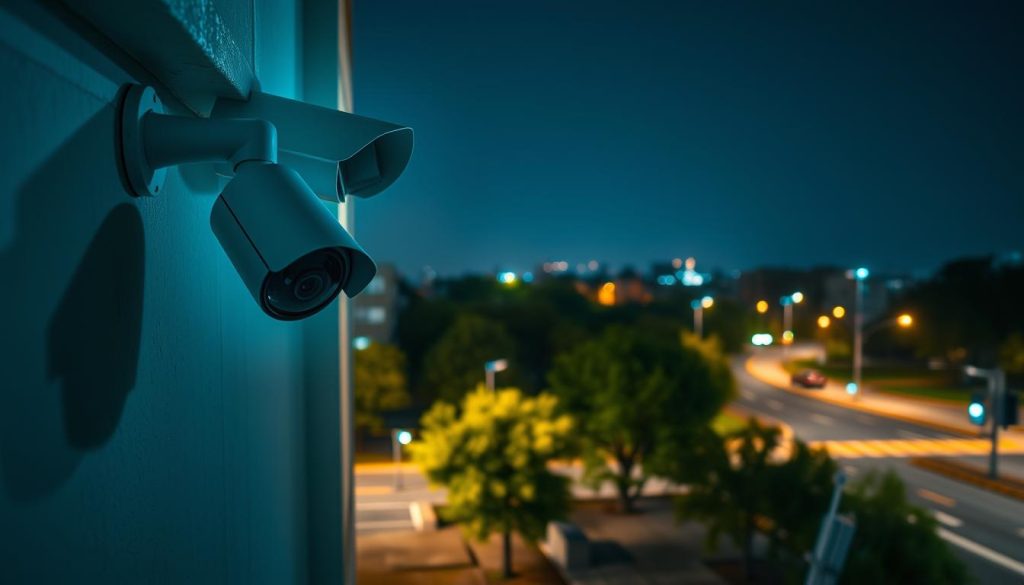
Angling is another critical factor. Tilt the unit slightly downward for optimal ground coverage. Avoid pointing directly at bright light sources that could cause glare.
For residential applications, focus on primary access points. Commercial installations may require broader perimeter coverage. Always test different positions before final mounting.
Ensuring an Unobstructed Field of View
Clear lines of sight are essential for reliable night vision performance. Even minor obstructions can degrade images after sunset. Regular maintenance prevents gradual coverage loss.
Vegetation presents a common challenge in tropical climates. Fast-growing plants can quickly block cameras. Schedule monthly inspections to trim branches and clear foliage.
Lens cleanliness directly affects footage quality. Dust, rain spots, and insect webs accumulate over time. Use a soft, lint-free cloth with appropriate cleaning solution weekly.
“An unobstructed view isn’t just about what’s in front of the lens—it’s about maintaining that clarity through changing seasons and weather conditions. Regular upkeep is the price of consistent performance.”
Consider seasonal changes when planning your view. What’s clear during dry months may become obstructed during rainy seasons. Anticipate these patterns in your maintenance schedule.
New construction or landscaping on neighboring properties can create unexpected blockages. Maintain open communication with adjacent property owners. This proactive approach prevents future coverage issues.
Utilizing Reflective Surfaces to Your Advantage
Strategic use of reflection can enhance infrared illumination effectiveness. Light-colored walls and surfaces bounce IR light back into monitored areas. This natural amplification improves overall scene brightness.
Position units to leverage existing architectural features. White exterior walls, light-colored fences, and paved surfaces all serve as natural reflectors. This technique is particularly effective in Singapore’s urban environment.
For locations lacking natural reflectors, consider adding strategic surfaces. Light-colored panels or specialized reflective materials can be installed. Place these elements to maximize infrared distribution.
Be mindful of potential drawbacks from reflective surfaces. Glass windows and metallic objects can create hotspots or glare. Adjust angles to minimize these interference patterns.
Professional installers often use light meters during setup. They measure how different surfaces affect illumination levels. This data-driven approach optimizes placement for specific environments.
Singapore-specific considerations require additional attention. Building regulations may limit mounting locations and equipment types. Always check with relevant authorities before installation.
Respect neighbor privacy when positioning security cameras. Ensure your monitoring focuses on your property boundaries. This consideration maintains good community relations.
Tropical weather patterns demand robust installation methods. Use weatherproof enclosures and corrosion-resistant hardware. Proper sealing prevents moisture damage during heavy rainfall.
Cable management deserves special consideration for night vision systems. Active IR illumination may require additional power capacity. Use waterproof connectors and conduit for outdoor runs.
Integration with existing security infrastructure ensures seamless operation. Test compatibility with alarms, recording devices, and monitoring stations. This holistic approach creates a unified protection system.
Professional installation often yields superior results for complex setups. Certified technicians understand local regulations and technical requirements. Their expertise prevents common installation mistakes.
For DIY enthusiasts, follow manufacturer guidelines precisely. Use the provided mounting templates and hardware. Test system performance thoroughly before considering the job complete.
A practical installation checklist helps implement these best practices systematically:
- Survey all entry points and vulnerable areas
- Test multiple mounting positions before final installation
- Ensure clear lines of sight free from obstructions
- Utilize natural reflective surfaces to enhance illumination
- Verify compliance with local building regulations
- Implement proper weatherproofing for tropical conditions
- Test full system integration before finalizing setup
These implementation strategies transform technical specifications into reliable protection. Your security investment deserves this careful attention to detail. Proper installation ensures peace of mind through every hour of darkness.
Choosing the Right Night Vision CCTV System for Your Needs
The journey to finding the perfect low-light security system begins with a thorough assessment of your property’s unique characteristics. Every home, business, and facility presents different challenges after sunset. Your selection must address these specific conditions while fitting within practical constraints.
Singapore’s urban landscape adds particular considerations. Tropical weather, dense architecture, and varied lighting all influence performance. A methodical approach to evaluation ensures your investment delivers reliable protection.
Critical Features to Evaluate: IR Range, Resolution, and Durability
Technical specifications form the foundation of any capable night vision setup. Three core metrics determine how well security cameras will perform in your environment. Understanding these numbers prevents disappointment.
Infrared illumination range dictates viewing distance in total darkness. Most quality units offer between 30 to 100 feet of effective coverage. Higher-powered LED arrays extend this capability for larger properties.
Consider your actual monitoring needs. A residential gate might only require 40 feet. A commercial warehouse perimeter could need the full 100-foot specification. Always verify real-world performance, not just advertised numbers.
Resolution determines the detail level in your footage. Modern systems range from 1080p to 4K ultra-high definition. Higher megapixel counts allow identification at greater distances.
For nighttime applications, resolution works with sensor sensitivity. A 4MP camera with excellent low-light performance often outperforms an 8MP model with poor light gathering. Balance is key.
Durability ratings are non-negotiable in Singapore’s climate. Look for weatherproof certifications of IP65 or higher. These ensure resistance to heavy rain, dust, and high humidity.
“The best specifications mean nothing if the equipment fails during a monsoon. Environmental durability is as crucial as optical performance for reliable year-round security.”
Additional technical factors include:
- Sensor Type: Enhanced CMOS sensors offer good low-light sensitivity
- Wide Dynamic Range: Balances bright and dark areas in challenging lighting
- Frame Rate: Higher rates provide smoother motion capture
- Storage Options: Local versus cloud-based recording solutions
Matching Camera Type to Your Environment (Residential vs. Commercial)
Different settings demand distinct feature sets and performance levels. What works perfectly for a home might prove inadequate for business applications. This distinction guides your entire selection process.
Residential systems often prioritize discreet design and user-friendly operation. Homeowners typically want reliable monitoring without complex setup. Integration with smart home platforms adds convenience.
These cameras should blend with architectural aesthetics. Bullet-style or dome security cameras offer different visual profiles. Consider both visibility for deterrence and subtlety for neighborhood harmony.
Commercial installations require higher durability and extended capabilities. Longer infrared range, industrial-grade construction, and advanced analytics become essential. These systems often integrate with existing security infrastructure.
Thermal imaging represents a premium option for specialized applications. These vision cameras detect heat signatures rather than relying on light. They excel where traditional infrared may struggle.
In Singapore, reputable brands like Hikvision, Dahua, and Axis provide reliable options across both categories. Each offers models tailored to specific environmental challenges. Local technical support availability should influence your brand selection.
Environmental matching considerations include:
- Urban vs. Suburban: Different lighting conditions and space constraints
- Indoor vs. Outdoor: Varying weather exposure and temperature ranges
- High-Traffic vs. Low-Traffic: Different motion detection requirements
- Value Protection Level: Basic monitoring versus high-security needs
Considering Integration and Smart Features
Modern surveillance technology extends far beyond basic recording. Intelligent features transform passive monitoring into active protection. These capabilities justify investment in more advanced systems.
Smart detection algorithms represent a significant advancement. AI-powered analytics can distinguish between people, vehicles, and animals. This reduces false alarms while ensuring genuine threats receive attention.
Mobile connectivity keeps you informed wherever you are. Instant alerts and remote viewing provide real-time awareness. Cloud storage options offer secure backup beyond local recording devices.
Integration capabilities determine how well new equipment works with existing security infrastructure. Compatibility with alarms, access control, and monitoring stations creates unified protection. This holistic approach maximizes your overall security posture.
Future-proofing deserves careful consideration. Select systems with upgrade paths and scalability options. Emerging vision technology should be compatible with your initial investment.
Singapore-specific factors include regulatory compliance and tropical suitability. Ensure your chosen cctv setup meets local installation guidelines. Professional assessment often identifies requirements you might overlook.
Practical verification of system operation provides peace of mind. Understanding how to confirm your surveillance is active after ensures continuous protection. This knowledge completes your selection journey.
Advanced features worth evaluating include:
- Color Night Vision: Some models maintain color information in low light
- Two-Way Audio: Communication capability through the camera
- Geofencing: Automatic mode changes based on your location
- Power over Ethernet: Simplified installation with single-cable solutions
- Cybersecurity: Protection against digital intrusion attempts
Your final selection should balance immediate needs with long-term flexibility. The right night vision cameras become a lasting foundation for property protection. They provide the clarity and reliability needed for true peace of mind after sunset.
Maintaining Optimal Night Vision Performance
To preserve the clarity and effectiveness of your surveillance investment, proactive upkeep is non-negotiable. Consistent maintenance ensures your security setup delivers reliable monitoring year after year. This is especially true for cctv equipment operating in challenging environments.
Singapore’s tropical climate presents unique challenges for night vision systems. High humidity, frequent rainfall, and consistent warmth all affect equipment longevity. A structured maintenance routine addresses these specific conditions.
Regular Cleaning and Physical Inspection Routines
Lens cleanliness directly impacts image quality. Dust, water spots, and insect residue scatter infrared light. This creates hazy footage that compromises identification capability.
Establish a monthly cleaning schedule for all outdoor cameras. Use a soft microfiber cloth and lens-safe cleaning solution. Avoid abrasive materials that could scratch delicate coatings.
- Housing integrity: Look for cracks, moisture ingress, or corrosion
- Mounting stability: Ensure brackets remain secure and properly aligned
- Cable condition: Check for fraying, animal damage, or loose connections
- IR LED functionality: Verify all infrared illuminators are operational
During monsoon season, increase inspection frequency. Heavy rains can accelerate wear on weather seals. Look for water accumulation around housing seams.
Vegetation management is crucial in Singapore’s lush environment. Trim branches and foliage that could obstruct the field of view. Fast-growing plants may require attention every few weeks.
The Importance of Firmware Updates and Software Checks
Manufacturers continuously improve their night vision algorithms through firmware updates. These digital enhancements can significantly boost performance. They often include better noise reduction and image processing.
Regular updates keep your systems protected against security vulnerabilities. They also ensure compatibility with newer recording devices. Schedule quarterly checks for available firmware releases.
“Firmware updates represent free performance enhancements directly from the manufacturer. Skipping them means leaving improved night vision capability unused.”
Software maintenance involves several key tasks:
- Verify recording schedules are active and capturing footage
- Check storage capacity and implement automatic overwrite rules
- Test alert systems to ensure notifications reach designated contacts
- Review access logs for unauthorized configuration changes
For complex or large-scale cctv installations, professional maintenance services offer advantages. Technicians can perform comprehensive diagnostics. They identify issues before they affect security coverage.
Maintain detailed records of all maintenance activities. This history helps diagnose recurring problems. It also informs decisions about equipment upgrades or replacements.
Your surveillance investment deserves this level of care. Proper maintenance ensures clear vision through every night.
The Evolving Future of Low-Light Surveillance
The frontier of nighttime security is being reshaped by intelligent algorithms and smarter sensors. Artificial intelligence now enhances image processing, creating clearer pictures from minimal data. Advanced sensor technology offers near-color images in moonlight.
Thermal imaging is becoming affordable for mainstream use. This expands security options beyond traditional infrared. Integration with smart city infrastructure creates networked intelligence platforms.
Singapore leads in adopting these surveillance advances. The nation’s smart initiatives test multispectral systems. These combine visible, infrared, and thermal data for complete awareness.
Tomorrow’s night vision cameras will offer unprecedented quality. They ensure properties remain protected through every night. For current capabilities, explore how modern systems handle darkness.
The evolution continues toward seamless 24-hour monitoring. Security systems adapt to our needs. They provide peace of mind when light fades.
FAQ
Can security cameras record clear video at night?
Yes, modern surveillance systems are designed for nighttime monitoring. They use specialized technology like infrared LEDs or thermal sensors to capture footage in total darkness. The quality of the images depends on the camera’s features, such as its IR range and sensor sensitivity.
What is the difference between infrared and thermal imaging?
Infrared vision cameras use built-in LED lights to illuminate a scene with light invisible to the human eye. Thermal imaging systems, however, detect the heat emitted by objects and people, creating a picture based on temperature differences. This allows thermal models to see in complete darkness and through some obstructions like light fog.
How far can a typical night vision camera see?
The effective viewing range in the dark varies by model. Consumer-grade security cameras often have an infrared range between 30 to 100 feet. Professional-grade systems with powerful illuminators can see much farther. Always check the manufacturer’s specified IR range for performance in low-light conditions.
Do I need to install special lighting for my cameras to work at night?
A> Not necessarily. Most contemporary models have built-in infrared illuminators for darkness. However, adding strategic ambient lighting can improve color image quality and extend the effective range of your surveillance. It also helps reduce potential over-illumination from the camera’s own IR LEDs on nearby objects.
Why does my camera’s footage look blurry or white at night?
This is often caused by glare or “infrared bounce” from a nearby surface like a wall or window. Insects, spider webs, or lenses dirty with dust can also scatter light and blur images. Ensuring the lens is clean and positioning the unit away from reflective surfaces greatly improves nighttime performance.
What features are most important for a camera used in low-light areas?
A> Key features to evaluate include a wide dynamic range (WDR) to handle challenging lighting, a high sensor sensitivity rating (measured in lux), and a sufficient infrared range. For areas with some ambient light, a model with good low-light capabilities and a sturdy weatherproof rating is crucial for reliable security.


