
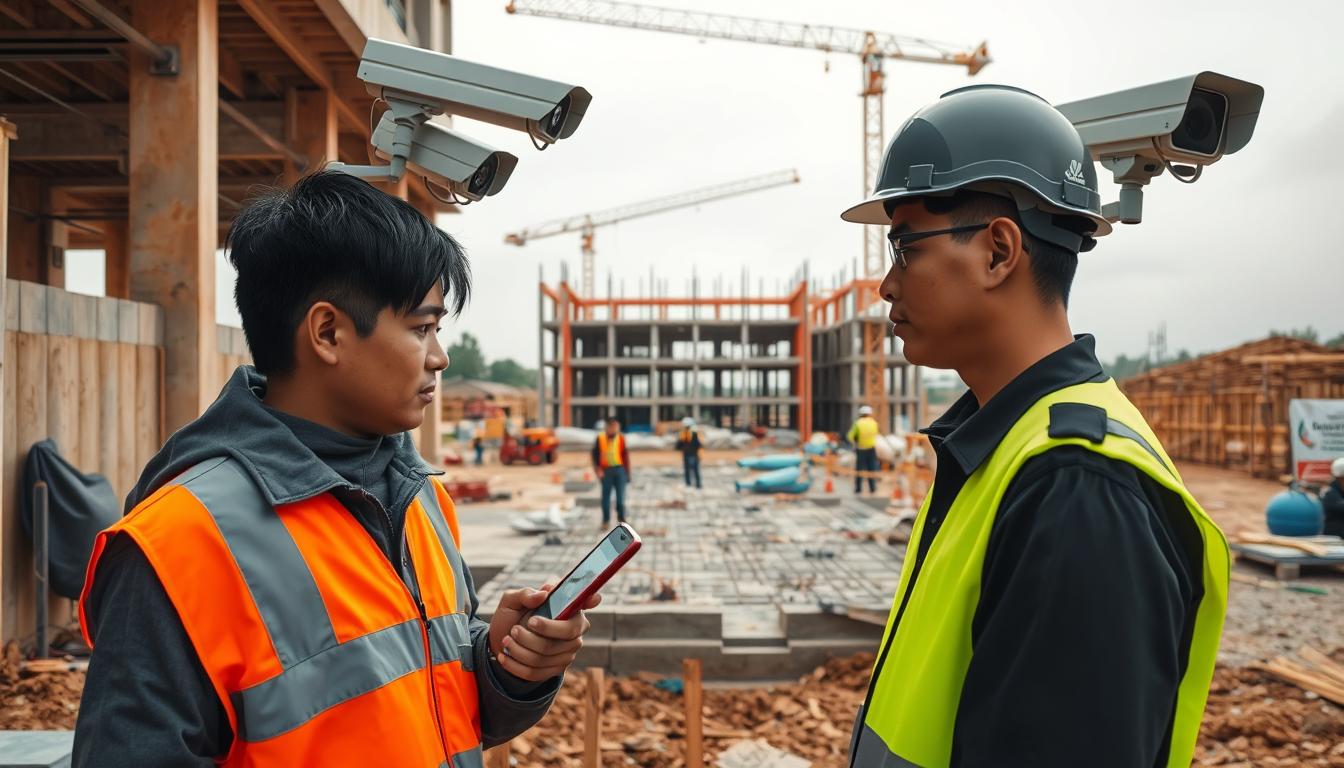
Secure Sites with Construction Video Surveillance
Construction projects in Singapore are getting more complex and valuable. This makes good security even more important. The Ministry of Manpower is soon making it mandatory for big construction sites to use Video Surveillance Systems (VSS).
This rule starts on June 1, 2024, for sites with contracts over SGD 5 million. These systems help prevent theft and damage, which cost the industry a lot each year. They also make worksites safer by improving safety rules.
With cameras visible on site, crime can drop by up to 65%. This brings peace of mind and meets the rules for construction projects. This article will explore how CCTV helps make construction sites safer and more secure.
Key Takeaways
- The Ministry of Manpower in Singapore requires VSS for large construction sites.
- Construction video surveillance can reduce theft and vandalism by up to 80%.
- High-definition cameras improve evidence collection and safety monitoring.
- Visible cameras contribute to a significant decrease in crime incidents.
- Real-time monitoring enables quick responses to suspicious activities.
Understanding the Importance of Surveillance in Construction
Construction sites face a lot of theft and vandalism, causing huge losses. These losses can range from $300 million to $1 billion each year. Using video surveillance systems is key to protecting these areas. It acts as a warning to criminals, making them feel like they’re being watched.
This awareness helps prevent crimes and makes the workplace safer. It’s a big step in keeping everyone safe.
24/7 video monitoring keeps construction sites under watch at all times. This is very important during hours when no one is around. It helps prevent risks.
Having surveillance can also save money. Insurance companies might give discounts, which can lead to savings. Adding video surveillance to other security measures makes the site even safer.
These systems also help keep workers safe by stopping dangerous actions. They help spot risks early. For sites worth $5 million or more, surveillance is required to ensure safety and follow rules.
They must store video for at least 30 days. They need to record in color at 1080p or better. And they must include date and time stamps for full monitoring.
Surveillance cameras also encourage workers to behave responsibly. This makes the workplace safer for everyone. It’s important to watch areas like scaffolding and excavation sites closely to avoid accidents.
After an incident, footage must be kept for up to 180 days. This helps with investigations and keeps sites in line with rules.
Regulatory Requirements for Construction Video Surveillance
Starting June 1, 2024, Singapore will require all construction sites worth $5 million or more to have video surveillance. This rule is to reduce workplace injuries and ensure safety. Temporary setups must cover areas with high risks, like heights over two meters and heavy machinery use.
Video surveillance is meant to prevent unsafe actions, spot safety risks, and aid in investigations. Companies will pay for the camera installation. Feedback shows a positive change in safety over the past two years.
These rules focus on “construction work,” which includes building and engineering tasks. The size of projects is key, as most serious incidents happen in large ones. Surveillance systems must record in HD 1080 resolution and keep footage for at least 30 days. This can be extended to 180 days if there’s a reportable incident. Not following these rules can result in fines up to $20,000 or jail time.
What is Video Surveillance Systems (VSS)?
Video Surveillance Systems, or VSS, are complex networks with cameras, recording units, and monitors. They help keep an eye on things all the time. This video surveillance technology is key in spotting safety risks, helping with investigations, and stopping unsafe actions on construction sites.
Good surveillance technology for construction sites records in HD 1080p quality at 12 frames per second. It must keep this footage for at least 30 days. For reportable incidents, it keeps it for 180 days. This makes sure evidence is there for inspections or assessments.
Features like real-time alerts for safety issues and predictive analysis for safer work make these systems reliable. They can work with existing CCTV systems for better monitoring. With over 100 AI modules, safety breaches can drop by up to 90%.
This technology has been around for 7 years and has worked on over 30 projects with HDB and A1 contractors. It prevents about 4 million unsafe acts each year. This shows how vital it is to have good surveillance on construction sites.
Benefits of Construction Video Surveillance
Construction video surveillance offers many benefits beyond just security. It helps prevent theft and boosts productivity. It also ensures sites follow the law. By using video surveillance, construction sites can see crime rates drop and worker safety improve.
Crime Prevention
Having CCTV at construction sites deters theft and vandalism. Crime rates can fall by up to 65% with video surveillance. Features like facial recognition and automated threat detection make sites safer.
High-resolution footage can cut theft and vandalism losses by 80%. This makes work environments safer.
Enhancing Worker Safety
Monitoring safety is key in construction, where injuries and deaths are rising. Video surveillance systems use advanced tech for real-time hazard detection. This approach cuts safety breaches by 90%.
Footage is vital for investigations, promoting accountability. It shows the importance of following safety rules.
Compliance with Regulatory Standards
New rules require video surveillance on sites worth $5 million or more. These systems help meet these rules. They also help show compliance during audits.
Following these rules helps avoid penalties. It also ensures worker safety by monitoring risky areas.
Types of Construction Security Camera Systems
Construction sites need different types of security camera systems to stay safe. Knowing the differences helps pick the right one for your site.
Fixed Cameras
Fixed cameras watch specific spots, like where people enter or where things of value are kept. They are reliable and easy to set up. This makes them great for keeping an eye on important areas.
PTZ Cameras
PTZ cameras can move and zoom in and out. This lets people control them from a distance. They come in high-definition, like 1080p or 4K, for clear views of big areas.
Wireless Cameras
Wireless cameras are perfect for quick setups and hard-to-reach places. They don’t need cables, making them easy to move around. They’re also built to last in bad weather.
| Camera Type | Key Features | Ideal Use Case |
|---|---|---|
| Fixed Cameras | Continuous monitoring, stable connections | Monitoring entry points and valuable assets |
| PTZ Cameras | Pan-Tilt-Zoom functionality, high-definition video quality | Large area monitoring with adjustable focus |
| Wireless Cameras | Easy installation, weatherproof design | Temporary setups and locations without cabling |
Features to Look for in Construction Video Surveillance Systems
Choosing the right construction video surveillance system is key. Look for features that boost security and efficiency. High-definition video, night vision, and remote monitoring are must-haves. They keep your site safe from theft and accidents.
High Definition Video Quality
High-definition surveillance is vital for construction site security. Cameras with at least 1080p resolution are a good start. For bigger sites, 4K resolution offers even clearer images. This makes it easier to document incidents and gather evidence.
Night Vision Capabilities
Night vision cameras with infrared (IR) tech are a must for low-light monitoring. Choose cameras with adjustable IR sensitivity and built-in IR LEDs. This ensures constant surveillance, even at night, helping prevent unauthorized access.
Remote Monitoring Options
Remote monitoring is now essential in today’s fast world. A good system should have mobile apps or web portals for real-time access. This lets you respond quickly to security issues, giving you peace of mind.
- High-definition surveillance ensures clear imaging for incident documentation.
- Night vision cameras are essential for effective after-hours monitoring.
- Remote monitoring options enable management from various locations.
| Feature | Importance | Specifications |
|---|---|---|
| High-Definition Video Quality | Clear imaging for accurate incident documentation | At least 1080p, ideally 4K for larger sites |
| Night Vision Capabilities | Continuous monitoring in low-light environments | IR LEDs with adjustable sensitivity |
| Remote Monitoring Options | Real-time monitoring from anywhere | Mobile apps or web portals for access |
Installation and Integration of Construction Surveillance Systems
Effective construction security camera installation is key for site safety and monitoring. Knowing each site’s layout is vital for camera placement. Areas like work at height and loading zones need special attention during setup.
Hiring experienced installers ensures cameras are placed right. They also help integrate the system with other security measures. AI boosts monitoring and offers detailed analytics, making the system more effective.
For sites over $5 million, high-definition cameras and a 30-day recording policy are required. This prepares for audits and saves money. Surveillance can cut theft costs by 65% and monitoring by 80% with remote options.
Surveillance has cut safety breaches by 90%. Proper installation and integration improve security and efficiency. They make construction projects safer and more efficient.
Real-Time Monitoring and Its Impact on Site Security
Real-time monitoring boosts security on construction sites. It uses advanced surveillance to alert site managers about unusual activities or risks. This allows for fast action, making the site safer.
It also helps follow safety rules better. This leads to fewer accidents and safety issues, cutting them by 20%. High-definition cameras help spot incidents and gather evidence. This cuts down theft and vandalism by up to 70%.
Technologies like AI and video analytics improve site safety. They spot unsafe actions and threats early. This makes the site more secure. It also helps follow safety rules and reduces unauthorized access by up to 40%.
Continuous monitoring also reduces theft by up to 50%. It keeps assets safe and encourages workers to be responsible. With new rules starting in June 2024, using real-time monitoring is key for big construction projects.
Cost-Effectiveness of Construction Video Surveillance
Investing in construction video surveillance is a wise choice for businesses. It protects valuable equipment and offers long-term benefits. These systems improve the return on investment in security systems.
Long-Term Savings
Construction site theft can cause huge financial losses, often in the billions annually. Surveillance cameras can greatly reduce these risks. A good security system can cut theft and vandalism by up to 30%.
This leads to big savings, considering replacement costs and project delays. The initial cost of setting up varies from $300 to $6,500. This depends on features like AI and night vision. Choosing video surveillance is often cheaper than hiring guards for ongoing site monitoring.
Reducing Labor Costs
Video surveillance can reduce the need for on-site security, saving on labor costs. Remote video monitoring services allow for 24/7 surveillance without the high cost of guards. Some operations see lower insurance premiums with strong security systems.
Flexible financial models, like subscriptions or pay-as-you-go, fit project needs. This shift to video surveillance is a smart way to manage costs while staying proactive in security.
Conclusion
In Singapore’s lively construction scene, using video surveillance is a must, not just a choice. It’s key for keeping everyone safe, stopping unauthorized entry, and helping solve problems. It also helps protect valuable things and builds a culture of responsibility, making sites safer overall.
Being able to watch what’s happening in real-time is super helpful. It lets teams quickly fix problems, keeping projects on track and work flowing smoothly. Also, video evidence helps fight off false claims and supports in disputes. With rules from the Ministry of Manpower, following these rules is critical for protecting workers and projects.
As tech gets better, using new tools like AI in surveillance will make things even safer and more efficient. These new tools help prevent crimes, improve how we handle emergencies, and cut down on costs from accidents and theft. By focusing on site security with the latest surveillance, everyone works in a safer, more productive place that follows the rules and grows.
FAQ
What are the main benefits of using construction video surveillance systems?
Construction video surveillance systems boost site security by preventing theft and vandalism. They also improve worker safety and ensure compliance with regulations. Plus, they offer real-time monitoring, which is key for protecting assets and promoting accountability.
What are the regulatory requirements for video surveillance on construction sites in Singapore?
From June 1, 2024, all construction sites in Singapore with a contract value over million must have Video Surveillance Systems (VSS). These systems must be in high-risk areas. Not following these rules can lead to fines up to ,000.
What types of cameras are commonly used for construction site security?
Construction sites use various cameras for security. Fixed cameras cover specific areas, PTZ cameras are for larger sites, and wireless cameras are for temporary setups. Each type is important for site security.
What features should I look for in a construction surveillance system?
When choosing a construction video surveillance system, look for high-definition video quality and night vision. Also, remote monitoring options are essential for real-time oversight from anywhere. These features are vital for effective site management.
How can proper installation and integration improve video surveillance effectiveness?
Proper installation ensures cameras are placed right to avoid blind spots. Integrating with other security measures boosts safety. Working with experienced professionals maximizes the system’s effectiveness.
Can real-time monitoring really make a difference in construction site security?
Yes, real-time monitoring greatly enhances security. It gives site managers quick alerts about unusual activities or hazards. This allows for fast action and promotes a safe, accountable work environment.
Are construction video surveillance systems cost-effective?
Yes, investing in construction video surveillance systems can save money in the long run. It can lower insurance costs and reduce theft and vandalism expenses. Plus, it can cut labor costs by reducing the need for on-site security.


