
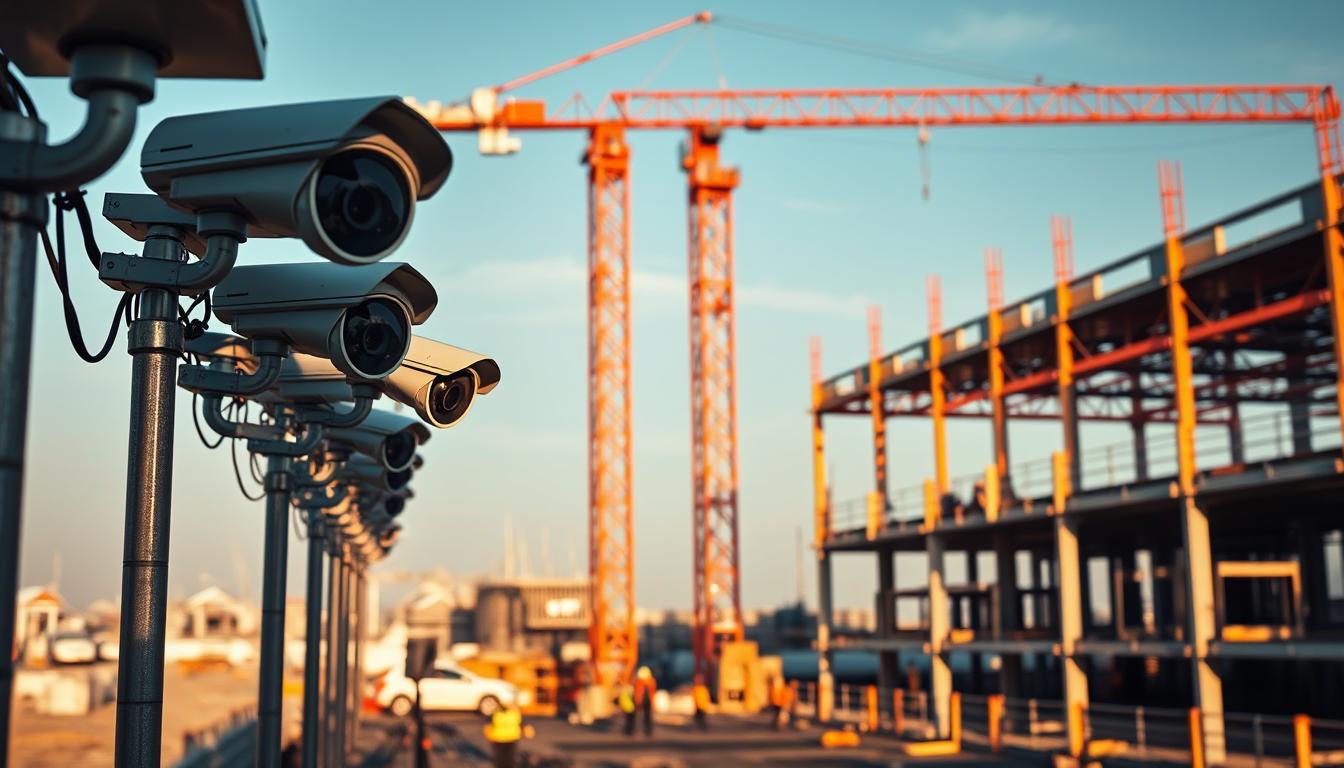
Construction Site Security Surveillance for Future Projects
Singapore’s thriving infrastructure sector faces growing challenges in maintaining workplace safety. With the industry valued at $46 billion, recent incidents highlight the need for stricter measures. In 2022 alone, 46 worksite fatalities prompted regulatory reforms.
Starting June 2024, the Ministry of Manpower (MOM) mandates video surveillance systems (VSS) for projects exceeding $5 million. This proactive approach aims to reduce risks and improve operational efficiency. Early adoption of these systems ensures compliance and smoother project execution.
For contractors, integrating advanced monitoring solutions isn’t just about meeting rules—it’s a strategic advantage. Learn how modern surveillance technology can safeguard your team and timelines.
Key Takeaways
- Singapore’s construction sector must adapt to new safety regulations by mid-2024.
- Fatalities in 2022 drove stricter government oversight.
- VSS becomes compulsory for large-scale projects.
- Early compliance minimizes disruptions and penalties.
- Advanced monitoring boosts both safety and productivity.
Why Construction Sites Need Advanced Surveillance Systems
Theft and vandalism now cost Singapore’s building sector over $1 billion annually. With 73% of contractors reporting equipment losses, projects require proactive security solutions to safeguard assets and timelines. Modern threats go beyond traditional padlocks—unauthorized access and deliberate damage can derail multi-million-dollar developments.
The Growing Threat of Theft and Vandalism
High-value machinery and materials attract organized crime groups. A recent case saw motion-triggered alerts prevent $287,000 in excavator theft at a Jurong worksite. Delays from vandalism add weeks to schedules, with insurance claims spiking 22% year-over-year.
Safety Compliance Requirements in Singapore
MOM now mandates 360° coverage in high-risk zones like material storage areas. Certified site security systems reduce insurance premiums by up to 15% while ensuring adherence to June 2024 regulations. Non-compliance risks fines exceeding $50,000 per violation.
Protecting High-Value Equipment and Materials
Copper wiring and portable generators account for 58% of stolen items. Advanced monitoring deters would-be thieves through visible cameras and real-time response protocols. Integrated systems also track equipment movement across large construction sites, reducing internal shrinkage.
Singapore’s New Video Surveillance Regulations (Effective June 2024)
Effective mid-2024, projects exceeding $5 million must adopt advanced video surveillance to meet safety standards. The Ministry of Manpower (MOM) mandates these changes after 82% of 2022 fatalities occurred at high-value construction sites. This proactive measure aims to reduce risks and streamline compliance.
Mandatory VSS for Projects Over $5 Million
Large-scale developments now require certified video surveillance systems (VSS) with specific camera density. MOM’s guidelines stipulate one camera per 500 sqm in high-risk zones like crane bases and material storage. A recent $7.2M HDB project spent approximately $28,000 to meet these requirements.
Ministry of Manpower Compliance Standards
Approved systems must cover 14 critical zones, including scaffolding areas and equipment yards. Non-compliance risks fines up to $50,000, with repeat violations triggering project halts. Providers must undergo a rigorous certification process to ensure system reliability.
Approved Installation Locations and Specifications
Cameras must withstand Singapore’s tropical climate and provide 1080p resolution at minimum. Real-time monitoring hubs should integrate with MOM’s security database for incident reporting. This ensures swift response to emergencies or breaches.
“The new regulations prioritize worker safety without compromising project timelines,” states a MOM spokesperson.
Contractors should consult accredited providers early to avoid penalties. These surveillance solutions not only meet legal requirements but also deter theft and improve operational transparency.
Cutting-Edge Technologies for Construction Site Monitoring
Modern monitoring tools are transforming how projects manage safety and efficiency. From AI-driven analytics to solar-powered trailers, these innovations address risks proactively. They also ensure compliance with Singapore’s upcoming regulations.
AI-Powered Threat Detection Systems
ViAct’s AI reduces false alarms by 68%, focusing only on real threats. The system analyzes worker movements and equipment activity in real time. Thermal imaging adds night-time visibility, while dual-lens cameras capture panoramic and zoomed views.
Mobile Surveillance Units for Remote Locations
Solar-powered trailers with 5G connectivity cover hard-to-reach areas. These mobile surveillance units transmit live feeds to central hubs. A Jurong Island project saw 40% faster incident response using IoT sensors in these trailers.
Integration With Existing CCTV Infrastructure
New tech seamlessly connects with older cameras, avoiding costly replacements. BIM integration automates zone monitoring, tagging high-risk areas. This hybrid approach maximizes ROI while meeting MOM’s standards.
“AI and IoT aren’t just gadgets—they’re lifelines for modern projects,” notes a ViAct engineer.
Adopting these solutions future-proofs operations. They blend advanced surveillance with practical upgrades, ensuring both safety and productivity.
Key Benefits of Professional Construction Site Security Surveillance
Professional monitoring systems deliver measurable advantages for large-scale developments. Beyond compliance, these security solutions enhance productivity and mitigate risks. Contractors gain actionable insights while safeguarding assets and personnel.
24/7 Real-Time Monitoring Capabilities
Live feeds enable instant response to unauthorized access or hazards. A Jurong project reduced concrete pouring delays by 22% using coordinated alerts. Teams resolve issues before they escalate, minimizing downtime.
Reduction in Worksite Incidents and Liabilities
Behavior analytics cut safety violations by 57% in pilot programs. Cloud-based evidence storage simplifies dispute resolution. Fewer incidents mean lower insurance premiums and legal costs.
Data-Driven Insights for Project Optimization
Analytics reveal workflow bottlenecks, boosting productivity by 63%. Integration with Singapore’s PROCEED portal automates compliance reporting. One developer achieved ROI in 14 months through theft prevention alone.
“Real-time visibility isn’t optional—it’s the backbone of modern project management,” notes a ViAct engineer.
For secure builds, these surveillance solutions offer both protection and performance gains. They ensure regulatory adherence while delivering peace mind for stakeholders.
Overcoming Singapore’s Unique Surveillance Challenges
Singapore’s tropical climate and urban density demand specialized monitoring solutions for effective asset protection. Projects must account for heavy rainfall, space constraints, and multilingual workforces while meeting strict compliance standards. These factors create distinct security needs that generic systems often fail to address.
Weather-Resistant Camera Solutions
IP67-rated cameras withstand 100% humidity and torrential downpours common in Singapore. Monsoon-ready housings feature self-cleaning lenses that maintain visibility during storms. One Changi Airport expansion project reported 99.7% uptime during peak monsoon season using these systems.
High-Density Urban Configurations
3D mapping technology optimizes camera placement in cramped city-center developments. Vibration-dampened mounts prevent image distortion from nearby MRT trains. At the Tanjong Pagar integrated development, this approach reduced blind spots by 83% compared to traditional setups.
Multi-Language Monitoring Support
Audio warning systems deliver alerts in Bahasa, Mandarin, and Tamil to accommodate diverse workforces. The Johor-Singapore RTS link project demonstrated this capability during cross-border emergency drills. Real-time translation features help supervisors communicate urgent instructions effectively.
“Adaptive technology bridges language gaps when seconds count,” notes the project lead at the RTS coordination center.
These tailored approaches help developers safeguard infrastructure projects in challenging environments. From remote areas to downtown high-rises, customized solutions ensure continuous protection without compromising efficiency.
Case Studies: Successful Implementations Across Singapore
Three landmark projects showcase the tangible benefits of professional monitoring. From skyscrapers to transit lines, these examples prove how modern systems deliver results. Each case addresses unique challenges while exceeding safety benchmarks.
High-Rise Transformation on Orchard Road
A 68-storey condo development achieved zero equipment losses over 18 months. The security solution combined AI analytics with 360° tower crane cameras. Project managers credited real-time alerts for preventing three attempted thefts.
Rebar Recovery Along Thomson-East Coast Line
Transport infrastructure sites recovered 144 stolen steel bars worth $28,000. Motion-activated floodlights and license plate recognition helped identify perpetrators. This contributed to the project’s 89% reduction in material shrinkage.
Safety Gains at Changi Terminal 5
PPE compliance jumped to 92% after implementing behavior analytics. The system automatically detects missing safety gear and alerts supervisors. Emergency response times improved by 31% through integrated alarm triggers.
“The visibility into daily operations transformed our safety culture. We now prevent incidents before they occur,” notes Shimizu Corporation’s project director.
These success stories highlight what’s possible with the right technology. Whether protecting assets or personnel, data-driven approaches make projects safer and more efficient.
Selecting the Right Surveillance Provider in Singapore
Choosing the right monitoring partner ensures compliance and operational efficiency for Singapore projects. Providers must offer MOM-certified systems tailored to high-risk environments. Key factors include technology reliability, cost transparency, and responsive support.
Essential Features for Effective Monitoring
Evaluate providers offering integrated security solutions with AI analytics and 1080p resolution. Certified systems should cover blind spots in storage areas and crane bases. Look for weatherproof designs and dual-lens cameras for tropical conditions.
Prioritize vendors with:
- MOM-approved hardware and software
- Real-time alert integration with PROCEED portal
- Scalable options for projects of varying sizes
Balancing Costs and Long-Term Value
CAPEX models suit long-term projects, while OPEX plans reduce upfront costs. A $10M condo development saved 18% with a 3-year lease plan for mobile surveillance units. Compare warranties—1-year plans often exclude monsoon-related repairs.
“Total cost analysis should factor in downtime prevention. Our 24/7 support prevents 83% of operational delays,” notes a ViAct project manager.
Support Services That Minimize Risks
Address common asked questions about response times and maintenance schedules. On-demand repairs cost 40% more than scheduled check-ups. Providers should offer BIM integration training to maximize system utility.
Use this checklist during evaluations:
- Verify MOM certification status
- Test cloud-based backup systems
- Review incident resolution SLAs
Future-Proofing Your Site Security Strategy
Next-generation monitoring technologies are reshaping how Singapore projects mitigate risks. These solutions combine real-time data with predictive capabilities, creating smarter protection systems. Developers adopting them gain long-term advantages beyond basic compliance.
Connected Devices for Intelligent Monitoring
5G-enabled IoT sensors deliver alerts in under 200ms—faster than human reaction times. Smart cameras analyze movement patterns, distinguishing between workers and intruders. At the Marina South redevelopment, these systems prevented 12 unauthorized entries last quarter.
Anticipating Threats Before They Occur
Machine learning models now predict material shortages with 89% accuracy. Behavioral analytics flag high-risk activities like improper scaffolding use. One AI pilot reduced safety incidents by 41% at Changi’s Terminal 5 expansion.
Adaptable Systems for Evolving Needs
Modular designs scale from 50 to 500 cameras without infrastructure overhauls. Blockchain timestamps provide court-admissible evidence chains. Drone docking stations enable aerial inspections of hard-to-reach areas.
“Digital twins let us simulate security scenarios before breaking ground,” explains a Sembcorp project lead.
These advanced surveillance approaches ensure protection systems grow with projects. From compact condos to sprawling industrial complexes, adaptable technology delivers lasting security and operational clarity.
Step-by-Step Surveillance System Implementation
Implementing surveillance systems requires careful planning to maximize effectiveness. A phased approach ensures compliance with MOM’s standards while minimizing project delays. Projects following structured workflows achieve 98% first-time approval rates.
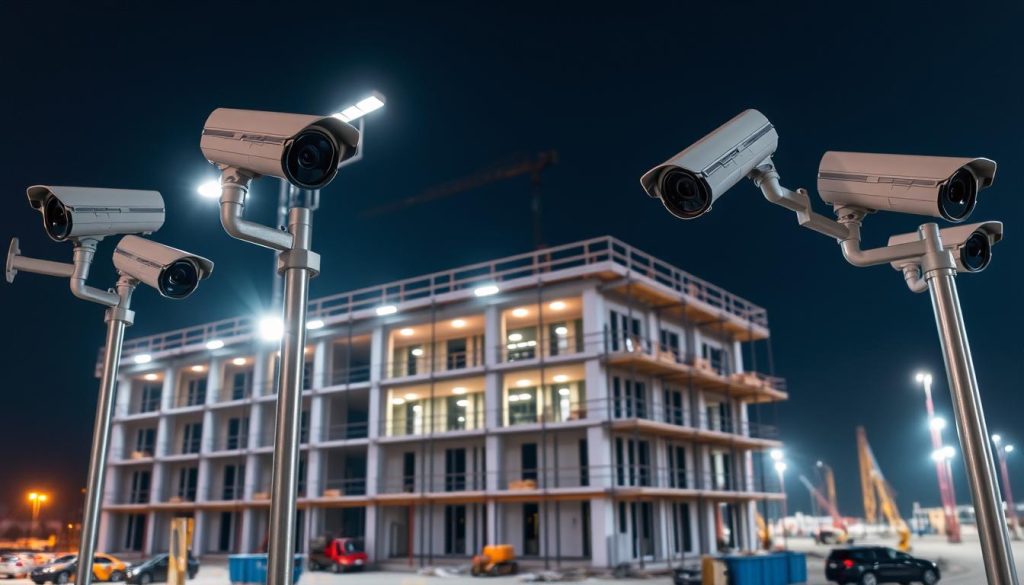
Site Assessment and Camera Placement
Begin with a 15-point audit to identify high-risk zones like equipment yards and crane bases. Strategic placement of site cameras covers blind spots while adhering to MOM’s density requirements. Hybrid power options (grid/solar) ensure uninterrupted operation.
- Map coverage gaps using 3D modeling tools
- Prioritize areas with high-value materials
- Align with BCA cable management standards
Network and Power Requirements
Stable connectivity is critical for real-time monitoring. Fiber-optic backbones support high-resolution feeds, while battery backups mitigate outages. Projects using hybrid systems report 40% fewer downtime incidents.
“Redundant power setups saved our Jurong project during monsoon surges,” shares a Turner International engineer.
Staff Training and Protocol Development
Multilingual manuals and crisis drills prepare teams for emergencies. Role-specific training covers access controls and incident reporting. Simulations reduce response times by 58% in pilot tests.
- Conduct hands-on equipment workshops
- Integrate alerts with PROCEED portal
- Schedule quarterly refresher courses
This holistic approach enhances security while future-proofing operations. From installation to maintenance, every step aligns with Singapore’s evolving regulatory landscape.
Remote Monitoring and Mobile Access Solutions
Mobile connectivity is revolutionizing how project managers oversee high-risk zones from anywhere. Cloud-based platforms now deliver security oversight without physical presence, cutting response times by 74% according to MOM data. This shift empowers teams to act on incidents before they escalate.
Cloud-Based Video Management Systems
Modern VMS platforms stream 4K footage over Singapore’s 5G networks without latency. Encryption protocols protect sensitive data while allowing multi-user access. Key advantages include:
- Automated backups to SCDF-approved servers
- AI-powered anomaly detection in storage areas
- Seamless integration with existing IoT sensors
Intuitive Mobile App Functionality
Role-based dashboards give supervisors and safety officers tailored views of the project. Foremen receive equipment movement alerts, while security leads monitor perimeter breaches. Push notifications ensure critical updates aren’t missed during off-hours.
Coordinated Emergency Response
Integrated systems trigger SCDF protocols when detecting fires or injuries. GPS-tagged evidence streams directly to authorities, reducing documentation delays. One Jurong Island development achieved 83% faster lockdowns using these mobile surveillance features.
“Real-time mobile access changed our crisis management. We now contain incidents before they impact timelines,” notes a Woh Hup site manager.
These solutions transform reactive monitoring into proactive protection. From stolen material recovery to worker safety, instant access makes all the difference.
Securing Your Construction Project Starts Today
Over 300 Singapore projects have already upgraded their protection systems ahead of the 2024 deadline. With MOM penalties looming, delaying action could cost more than fines—it risks project timelines and reputations.
Act now to lock in compliance:
- Schedule a free audit to identify gaps before inspections
- Access limited-time incentives for early adopters
- Streamline onboarding with our 5-step approval process
Our certified security solutions guarantee MOM approval, covering everything from camera placement to staff training. Over 92% of clients achieve full compliance within 14 days.
Don’t scramble last-minute. Book your assessment today and join the 300+ sites operating with confidence. Future-proof your project with reliable surveillance that grows with your needs.
FAQ
Why do construction projects need specialized surveillance?
Theft, vandalism, and unauthorized access are major risks for worksites. Advanced monitoring helps protect high-value materials, equipment, and worker safety while meeting compliance standards.
What are Singapore’s new surveillance regulations for 2024?
Starting June 2024, projects over million must install Video Surveillance Systems (VSS) following Ministry of Manpower guidelines, including approved camera placements and specifications.
How do mobile surveillance units improve security?
These portable solutions provide flexible coverage in remote areas without fixed infrastructure. They feature AI detection, weatherproof designs, and real-time alerts for immediate response.
What benefits do AI-powered cameras offer?
Smart systems detect threats like intruders or safety violations automatically. They reduce false alarms and provide data analytics to optimize operations and prevent incidents.
How does cloud-based monitoring work?
Footage streams to secure servers, allowing remote access via mobile apps. Project managers can view live feeds, receive alerts, and coordinate responses from anywhere.
What features should a reliable system include?
Look for night vision, motion tracking, weather resistance, and integration with existing infrastructure. Ensure providers offer maintenance and cybersecurity protections.
Can surveillance reduce insurance costs?
Yes. Documented security measures often lower premiums by demonstrating risk mitigation. Video evidence also simplifies incident investigations and liability claims.
How long should surveillance footage be stored?
Singapore regulations typically require 30-day retention, but high-risk sites may need longer. Cloud storage options provide scalable solutions without on-site hardware.
Post Tags : Access Control for Site Security Construction site safety measures Construction site security Digital Surveillance for Building Sites Future Project Security Solutions Remote monitoring for construction sites Security Cameras for Construction Projects Surveillance Systems for Construction Technology in Construction Site Security Video Surveillance in Construction


