
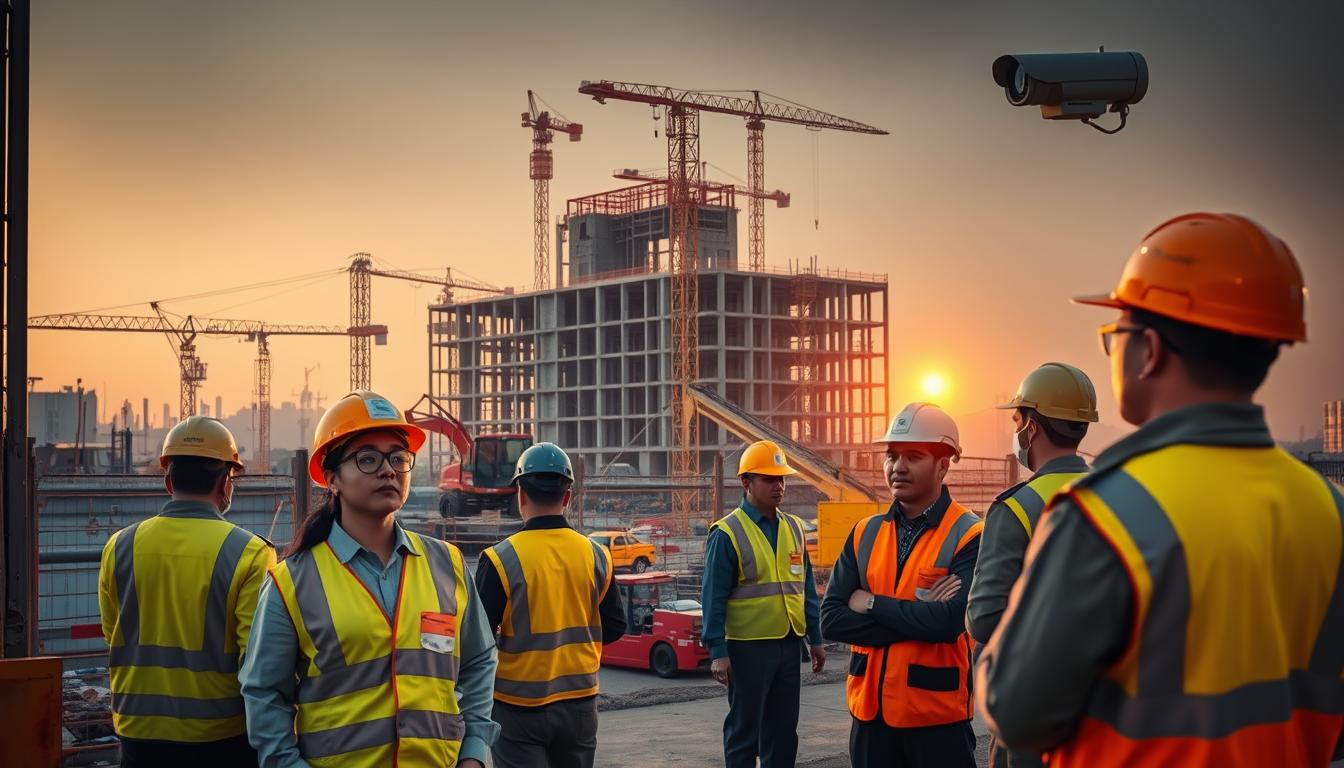
Construction Job Site Security: How to Ensure Safety and Protection
Protecting assets and ensuring safety in construction environments is critical. Theft and accidents can lead to significant financial losses and delays. In the U.S., 1 in 10 equipment pieces is stolen annually, costing the industry over $1 billion each year.
Proactive measures are essential to safeguard both workers and resources. Modern solutions, such as CCTV systems, play a vital role in monitoring and deterring theft. For example, Wen Hong Engineering offers advanced surveillance options tailored to Singapore’s tropical climate.
This guide will explore practical steps to enhance protection. From integrating technology to addressing environmental challenges, every aspect is covered. Stay ahead by adopting proactive strategies that ensure smooth project timelines and budgets.
Key Takeaways
- Theft costs the construction industry $1 billion annually.
- Proactive measures are crucial for safety and asset protection.
- Modern solutions like CCTV systems enhance monitoring.
- Singapore’s tropical climate requires specialized security considerations.
- Effective security helps avoid costly delays and budget overruns.
Why Construction Job Site Security is Essential
Theft and vandalism can disrupt progress and inflate costs significantly. With 20% of sites experiencing theft, the financial impact is staggering. On average, stolen equipment costs around $30,000 per incident. These losses extend beyond monetary value, causing delays and reputational damage.
The Cost of Neglecting Security
Ignoring protection measures can lead to severe consequences. Stolen tools and machinery often result in project delays of 2-3 days per incident. Insurance premiums may rise after multiple claims, adding to the financial burden. For example, copper wire theft once halted electrical work for weeks, causing significant setbacks.
Vandalism also depreciates asset value and increases repair costs. In Singapore, a robbery at an HDB site resulted in a loss of S$50,000 in tools. Such incidents not only disrupt timelines but also harm a company’s reputation, potentially disqualifying them from future bids.
Protecting Assets and Ensuring Project Continuity
Safeguarding materials and equipment is crucial for maintaining project continuity. Small thefts, though seemingly minor, can cumulatively erode profit margins. Legal liabilities may arise if stolen equipment is misused, further complicating matters.
Proactive measures, such as advanced monitoring systems, can mitigate these risks. By investing in robust protection strategies, companies can avoid costly delays, penalties, and reputational damage. Ensuring the safety of assets is not just about preventing losses—it’s about securing the future of every project.
Understanding the Unique Security Needs of Construction Sites
Every project faces unique challenges that demand tailored solutions. From theft to environmental risks, understanding these threats is the first step toward effective protection. A single oversight can lead to significant losses, making it essential to address vulnerabilities proactively.
Common Threats: Theft, Vandalism, and Unauthorized Access
High-value items like copper wiring, generators, and power tools are prime targets for theft. In Singapore, 65% of thefts occur on weekends when sites are less monitored. Vandalism and unauthorized access also pose significant risks, often leading to costly repairs and delays.
Internal threats are equally concerning. Statistics show that 38% of losses stem from worker theft. Nighttime operations are particularly vulnerable, with fewer personnel on-site to deter crime.
Assessing Vulnerabilities on Your Site
Identifying weak points is crucial for enhancing protection. Start with a perimeter walk to check for gaps or breaches. Lighting audits can reveal dark areas that need improvement. Review access control measures to ensure only authorized personnel can enter sensitive zones.
Storage checks are equally important. Materials left in staging areas are often targeted. In Singapore, monsoon season adds another layer of complexity, with water damage posing a risk to equipment and documents.
- Conduct a perimeter walk to identify weak points.
- Perform a lighting audit to eliminate dark zones.
- Review access control systems for unauthorized entry.
- Inspect storage areas for vulnerabilities.
By following this 4-step process, you can create a comprehensive vulnerability assessment tailored to your site’s needs.
Building a Multi-Layered Security Strategy
Effective strategies combine physical and technological solutions for maximum safety. A multi-layered approach ensures that vulnerabilities are addressed from multiple angles, reducing the risk of theft and unauthorized access. This method not only deters potential threats but also provides real-time monitoring and quick response capabilities.
Physical Barriers: Fencing, Gates, and Lighting
Physical barriers are the first line of defense. Fencing should be at least 2.4 meters high with anti-climb features to prevent intrusions. Studies show that 8ft fencing reduces intrusion attempts by 70%. Gates must be sturdy and equipped with secure locking systems.
Lighting plays a crucial role in deterring unauthorized access. Ground-level lighting should meet a minimum standard of 50 lux to eliminate dark zones. Temporary lighting solutions are essential for early-phase projects, ensuring consistent visibility.
Technology-Driven Solutions: Cameras and Alarms
Advanced surveillance systems, such as high-definition cameras, are vital for monitoring. Sites with cameras experience 65% less theft. Placement is critical—focus on entry/exit points and equipment yards for maximum coverage.
Alarms should be integrated with SCDF monitoring centers for immediate response. Dual verification systems can enhance security for high-value storage areas. Weatherproofing is essential in Singapore’s tropical climate to ensure durability.
Types of Construction Site Security Monitoring
Ensuring safety and protection on work zones requires a mix of traditional and modern approaches. Both conventional methods and advanced solutions play a crucial role in maintaining safety and preventing losses. By combining these strategies, you can create a robust monitoring system tailored to your specific needs.
Conventional Security Measures
Guard patrols remain a reliable option for deterring theft. Studies show that regular patrols can reduce incidents by up to 40%. Implementing rotation schedules and checkpoint systems ensures consistent coverage, especially on large-scale projects.
Mobile patrols offer flexibility, allowing guards to cover vast areas efficiently. This approach is particularly effective in Singapore, where sites often span multiple zones. Additionally, thermal imaging cameras can enhance detection in foliage-heavy areas, providing an extra layer of security.
Advanced Technology Solutions
Modern solutions like 4G-enabled cameras provide real-time alerts, significantly improving response times. These cameras can be integrated with access control systems to monitor entry and exit points effectively. Cloud storage options ensure compliance with Singapore’s PDPA regulations, offering secure data management.
RFID tag tracking is another innovative method for monitoring equipment movement. Drones can be programmed for surveillance, covering hard-to-reach areas. Backup power systems ensure uninterrupted monitoring, even during outages.
- Two-way audio systems allow remote challenges to intruders.
- Smart sensor networks monitor environmental conditions, adding another layer of protection.
- Integrated dashboards provide a centralized view of all security measures.
By leveraging both conventional and advanced solutions, you can create a comprehensive monitoring strategy that safeguards your assets and ensures project continuity.
The Role of Surveillance Cameras in Construction Site Security
Surveillance cameras are a cornerstone of modern protection strategies. They provide real-time monitoring and deter potential threats effectively. With advancements in technology, these systems have become indispensable for ensuring safety and reducing risks.
Benefits of High-Definition Cameras
High-definition cameras offer unparalleled clarity, making them ideal for identifying intruders. For instance, HD systems can recognize license plates from up to 30 meters away. This level of detail is crucial for gathering evidence and resolving incidents quickly.
4K cameras take this a step further, reducing false alarms by 40%. Their superior resolution ensures that even the smallest details are captured, providing valuable footage for investigations. Whether it’s 1080p or 4K, the choice depends on the specific needs of the project.
Night Vision and Motion Detection Features
Night vision capabilities are essential for 24/7 monitoring. Infrared illumination allows cameras to capture clear footage even in complete darkness. This feature is particularly useful for areas with limited lighting.
Motion detection adds another layer of security. Smart zoning configurations ensure that alerts are triggered only by relevant movements, minimizing false notifications. These features work together to provide comprehensive coverage, day and night.
- IR illumination distances vary by model, ensuring optimal coverage.
- Vandal-proof housing protects cameras from tampering.
- Time-lapse documentation aids in project tracking.
- Integration with BIM systems enhances coordination.
- Mobile apps allow remote viewing and control.
For example, a case study in Ang Mo Kio demonstrated how camera evidence led to a successful theft conviction. This highlights the importance of investing in advanced surveillance systems.
Remote Monitoring: A Game-Changer for Construction Sites
Remote monitoring has revolutionized how industries manage safety and efficiency. By leveraging advanced technology, businesses can now oversee operations in real-time, ensuring continuous protection and quick response to incidents. This approach is particularly effective in high-risk environments where immediate action is crucial.
24/7 Surveillance and Real-Time Alerts
One of the standout features of remote monitoring is its ability to provide 24/7 surveillance. With systems like those offered by advanced monitoring solutions, alerts are sent instantly when unusual activity is detected. This reduces response times to as little as two minutes, ensuring swift action to prevent theft or vandalism.
Integration with GPS trackers and centralized dashboards enhances oversight. For example, multi-site management tools allow operators to monitor several locations simultaneously. This capability is invaluable for large-scale projects where resources are spread across vast areas.
How Remote Monitoring Reduces Theft and Vandalism
Remote monitoring significantly lowers the risk of theft and vandalism. Sites using this technology report an 80% faster police response rate. Escalation protocols ensure that alerts are acted upon immediately, from SMS notifications to on-site interventions.
Power solutions, such as solar or battery backups, ensure uninterrupted operation even during outages. Weather impact mitigation strategies further enhance reliability, making these systems ideal for Singapore’s tropical climate. By reducing false alarms and improving uptime, remote monitoring offers a cost-effective alternative to traditional on-site guards.
Integrating Access Control Systems
Modern access control solutions offer unparalleled protection against unauthorized entry. These systems ensure that only authorized personnel can enter sensitive areas, reducing risks and enhancing oversight. With 63% of sites still relying on manual sign-ins, upgrading to advanced systems is a game-changer.
Key Cards, Biometrics, and Electronic Locks
Key cards and electronic locks are foundational to any access control strategy. They provide a secure way to manage entry points while maintaining flexibility. Biometric systems, such as fingerprint or facial recognition, take this a step further. Studies show that biometrics reduce unauthorized entry by 92%, making them a reliable choice for high-security areas.
Multi-factor authentication adds an extra layer of protection. For example, combining a key card with a PIN ensures that even lost cards don’t compromise security. Visitor management software can also integrate with these systems, streamlining access for temporary personnel.
Limiting Access to Authorized Personnel Only
Restricting access to authorized individuals is crucial for maintaining safety. Time-based permissions ensure that workers can only enter during designated hours. This is particularly useful for subcontractors who may not need 24/7 access.
Audit trails generated by these systems provide valuable data for compliance and incident investigations. In Singapore, the Changi site successfully implemented facial recognition to monitor access, setting a benchmark for others to follow.
- Implement multi-factor authentication for enhanced security.
- Use visitor management software to track temporary access.
- Set time-based permissions to limit entry during off-hours.
- Deactivate lost cards immediately to prevent misuse.
- Ensure biometric template storage is secure and compliant.
- Compare turnstile and gate access for optimal control.
- Limit subcontractor access to essential areas only.
- Generate audit trails for compliance and reporting.
- Establish emergency override procedures for critical situations.
By integrating these advanced access control systems, you can create a safer and more efficient environment. These solutions not only deter unauthorized access but also provide the tools needed to respond quickly to any incidents.
Securing Equipment and Materials
Effective management of equipment and materials is essential for maintaining project efficiency and safety. Proper storage and tracking systems can significantly reduce risks like theft and damage. By implementing best practices, you can ensure that resources are protected and readily available when needed.
Best Practices for Storing Tools and Machinery
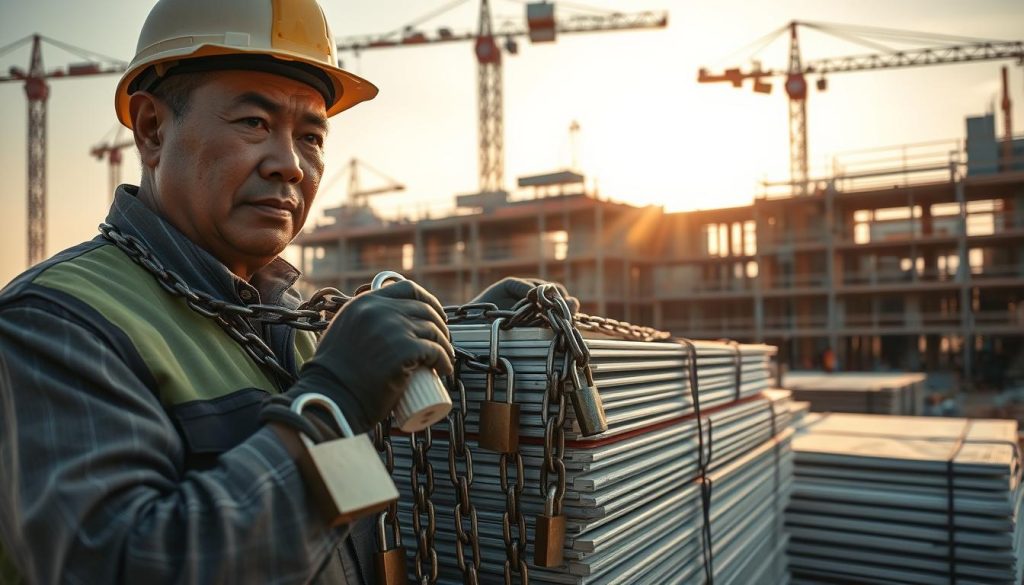
Organized storage is the first step toward safeguarding your assets. Use tool crib management systems to keep track of inventory and reduce losses. RFID tagging is another effective method, as marked tools are 50% less likely to be stolen.
Heavy equipment should be equipped with immobilizer devices to prevent unauthorized use. Material storage zoning strategies ensure that items are stored in designated areas, minimizing confusion and loss. Weatherproof storage solutions are particularly important in Singapore’s tropical climate to protect against moisture and corrosion.
Using GPS Tracking for High-Value Assets
GPS tracking has become a game-changer for asset protection. Studies show that this technology enables the recovery of 67% of stolen equipment. Geofencing alert parameters can notify you immediately if an asset moves outside a designated area.
Battery life management for trackers ensures continuous monitoring, even in remote locations. Collaborating with local police can enhance recovery efforts, while insurance companies often offer premium discounts for tracked assets. These measures not only deter theft but also provide peace of mind.
- Implement tool crib management systems for better inventory control.
- Use RFID tagging to mark and track tools effectively.
- Install heavy equipment immobilizers to prevent misuse.
- Apply material storage zoning strategies for organized placement.
- Invest in weatherproof storage solutions for durability.
- Conduct regular inventory audits to identify discrepancies.
- Set up GPS geofencing alerts for real-time monitoring.
- Manage tracker battery life to ensure uninterrupted operation.
- Establish police collaboration protocols for faster recovery.
- Leverage insurance discounts for tracked assets.
Training Your Team for Enhanced Security
Empowering your team with the right knowledge and tools is key to maintaining a secure environment. Studies show that trained teams report 58% fewer security lapses, highlighting the importance of continuous education and awareness. A well-informed workforce is your first line of defense against potential threats.
Creating a Security-Conscious Workforce
Start with a comprehensive security induction program. This should cover essential topics like identifying risks, reporting procedures, and emergency response. Multilingual training materials ensure inclusivity, especially in diverse teams.
Mock breach response drills are another effective way to prepare your team. These exercises simulate real-life scenarios, helping employees understand their roles during incidents. Incentive programs can also encourage vigilance, rewarding those who actively contribute to maintaining safety.
Implementing Daily Security Protocols
Daily checklists are a simple yet powerful tool. They reduce vulnerabilities by 74%, ensuring that no critical steps are overlooked. Shift handover briefings are equally important, providing a seamless transition of responsibilities.
Digital documentation tools streamline reporting and tracking. Near-miss reporting systems allow teams to identify potential risks before they escalate. Integrating safety and security models ensures a holistic approach to project protection.
- Security induction program components
- Multilingual training materials
- Mock breach response drills
- Incentive programs for vigilance
- Subcontractor compliance requirements
- Shift handover security briefings
- Digital documentation tools
- Near-miss reporting systems
- Safety-security integration models
- Quarterly refresher course outlines
By investing in team training and daily protocols, you create a culture of awareness and responsibility. This not only enhances security but also ensures the smooth progress of your project.
Documenting and Responding to Security Incidents
Handling incidents effectively is crucial for minimizing losses and maintaining trust. Proper documentation ensures accountability and aids in recovery efforts. With 42% of claims denied due to poor records, a structured approach is essential to avoid financial setbacks.
How to Log and Report Theft or Vandalism
Start by creating a detailed incident report. Include the date, time, location, and description of the event. Digital templates streamline this process, ensuring consistency and accuracy. Witness statements should be collected promptly to preserve details.
Preserve evidence such as footage from surveillance systems. Exporting this data correctly ensures it remains admissible for investigations. Filing a police report is also critical, as it provides an official record of the incident.
Using Documentation for Insurance and Legal Purposes
Proper documentation increases insurance recovery by 89%. Submit claims within the required timelines, attaching all relevant records. Chain of custody documentation ensures evidence integrity, which is vital for legal proceedings.
Notify clients promptly, maintaining transparency and trust. Post-incident reviews help identify gaps in security systems, enabling improvements for future protection. By following these steps, you can turn a challenging situation into an opportunity for growth.
Future Trends in Construction Site Security
Innovations in technology are reshaping how industries approach safety and efficiency. From artificial intelligence to wearable devices, these advancements are transforming the way projects are monitored and protected. Staying ahead of these trends ensures better outcomes and reduced risks.
The Rise of AI and IoT in Site Monitoring
Artificial intelligence (AI) and the Internet of Things (IoT) are revolutionizing monitoring systems. AI reduces false alarms by 60%, making it a reliable tool for threat detection. IoT devices, such as smart sensors, provide real-time data, enabling quicker responses to potential issues.
Predictive analytics is another game-changer. By analyzing patterns, these systems can forecast threats before they occur. For example, noise pattern recognition can identify unusual activity, alerting teams immediately. These solutions not only enhance safety but also improve operational efficiency.
How Drones and Wearable Tech are Changing the Game
Drones are becoming indispensable for large-scale projects. They can cover areas 10 times faster than traditional patrols, providing comprehensive aerial surveillance. Equipped with high-definition cameras, drones offer detailed insights into hard-to-reach zones.
Wearable technology, such as smart helmets and panic buttons, is also gaining traction. These devices enhance worker safety by enabling instant communication and emergency alerts. For instance, smart helmets can monitor vital signs, ensuring workers are in optimal condition.
- Predictive analytics for threat forecasting
- Smart helmet integration examples
- Autonomous security robot deployments
- 5G-enabled real-time data streaming
- BIM-integrated security planning
- Wearable panic button systems
- Blockchain equipment ledgers
- AR-powered security overlays
- Noise pattern recognition systems
- Singapore’s Smart Nation initiatives
These features are setting new standards for safety and efficiency. By adopting these solutions, industries can ensure a safer and more productive future.
Building a Safer Future for Construction Sites
Investing in robust safety measures ensures smoother project timelines and reduced risks. Comprehensive strategies not only cut losses by 83% but also help 94% of secured projects finish on time. By adopting ROI calculation models, businesses can justify their investments in advanced systems.
Continuous improvement frameworks and workforce upskilling programs are essential for staying ahead. Collaborating with industry leaders and leveraging Singapore’s tech ecosystem can further enhance outcomes. These efforts create a culture of awareness and responsibility, ensuring long-term success.
For tailored solutions, consider consulting with Wen Hong Engineering. Their expertise can help you implement effective strategies that align with your project needs. Call +65 6013 5960 today for a detailed audit and start building a safer future.
FAQ
Why is security crucial for project sites?
Proper measures prevent theft, vandalism, and unauthorized access, ensuring project continuity and protecting valuable assets.
What are the most common threats to project areas?
Theft of tools and materials, vandalism, and unauthorized entry are the primary concerns that can disrupt progress.
How can technology improve safety on project locations?
High-definition cameras, motion detection, and remote monitoring provide real-time alerts and deter criminal activity effectively.
What role does access control play in safeguarding areas?
Systems like key cards and biometrics limit entry to authorized personnel, reducing the risk of unauthorized access and incidents.
How can equipment and materials be better protected?
Storing tools securely and using GPS tracking for high-value items helps minimize losses and ensures accountability.
What are the benefits of remote monitoring?
It offers 24/7 surveillance, immediate alerts, and reduces the likelihood of theft or vandalism by keeping a constant watch.
How can teams contribute to improved safety?
Training staff to follow daily protocols and fostering a security-conscious mindset enhances overall protection.
What should be done in case of a security incident?
Log and report the event promptly, and use documentation for insurance claims or legal purposes if necessary.
What future trends are shaping safety measures?
AI, IoT, drones, and wearable tech are revolutionizing monitoring and response capabilities for better protection.


