
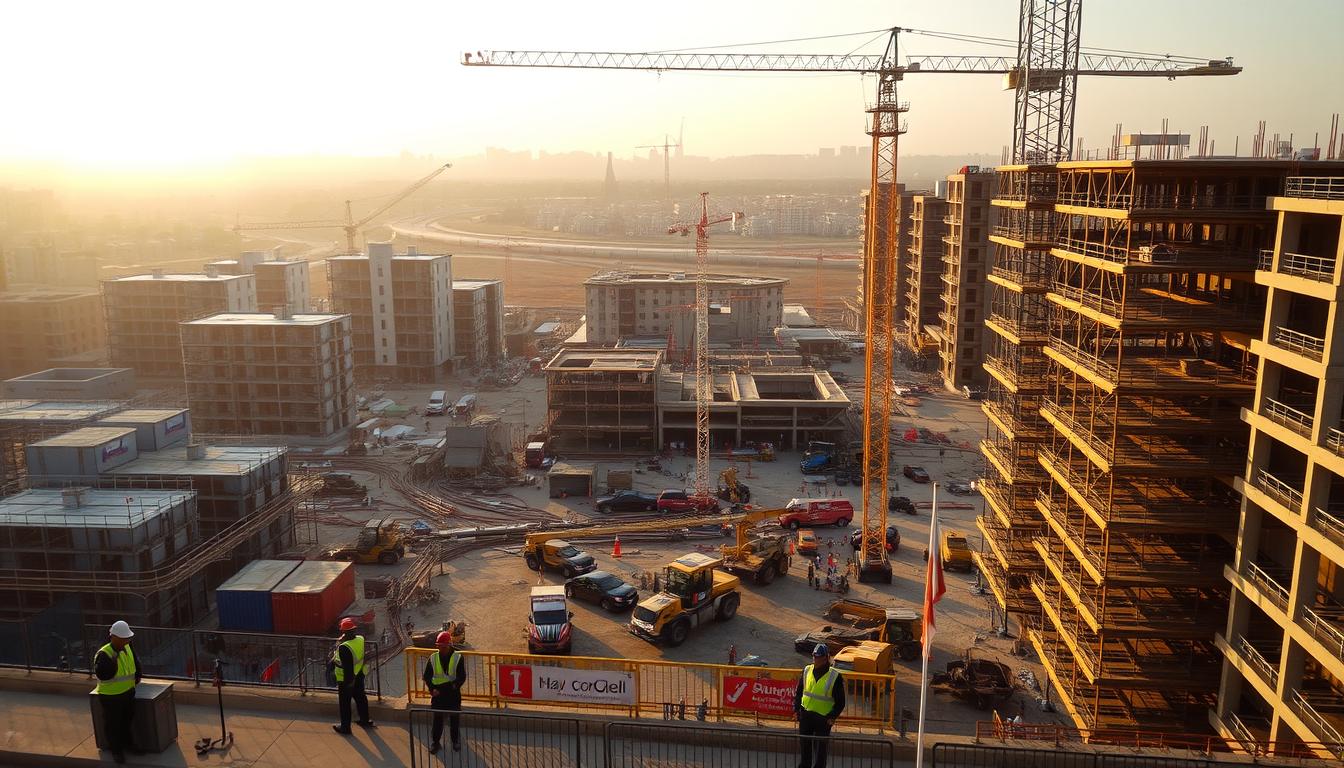
Construction Job Site Security: Best Practices and Tips
Building locations are dynamic environments filled with valuable assets. Heavy machinery, copper wiring, and power tools attract criminal attention. These areas often operate on tight schedules with limited supervision after hours.
Recent incidents highlight the severity of this challenge. A Melbourne company suffered two robberies within ten days, losing AUD 100,000. Across the industry, equipment and material theft costs approximately $1 billion annually.
Law enforcement agencies regularly recover stolen property worth millions. Howard County Police found $5 million in tools, while Gwinnett Police recovered over $500,000 in equipment. These losses create massive budget overruns and project delays.
Proper protection requires a multi-layered approach. Physical barriers, surveillance systems, and human oversight work together. Regular risk assessments help address evolving threats specific to each location.
Key Takeaways
- Building locations face significant theft risks costing billions annually
- Equipment and material losses create substantial financial impacts
- Security breaches cause project delays and budget overruns
- Organized crime targets these areas during economic downturns
- Comprehensive protection requires physical and digital measures
- Regular risk assessments help address evolving threats
- Multi-layered approaches provide the most effective security
Why Construction Job Site Security is Non-Negotiable in Singapore
Singapore’s urban landscape constantly evolves with new developments, making protection essential. The city-state’s dense environment presents unique challenges for asset safety. Proper measures become critical for successful project completion.
The Staggering Financial Cost of Theft and Vandalism
Financial losses extend far beyond stolen item values. Each stolen machine costs companies $35,000-$45,000 directly. Replacement expenses and insurance increases add substantial hidden costs.
Vandalism incidents create massive repair bills. One Silverdale location suffered $2-3 million in damages. These unexpected expenses devastate project budgets.
Occupational fraud adds another financial layer. Companies lose approximately $250,000 per fraud case. These cumulative losses impact overall profitability.
How Security Breaches Cause Project Delays and Budget Overruns
Equipment replacement creates immediate timeline disruptions. Lead times often exceed 20 weeks for new machinery. Project schedules face significant extensions.
Labor costs increase during extended timelines. Workers remain on payroll while awaiting replacements. Contractual penalties may apply for missed deadlines.
Budget overruns become inevitable with security incidents. Additional spending on repairs and enhanced measures strains finances. These unplanned expenses reduce project margins.
Mitigating Legal Liabilities and Ensuring Insurance Compliance
Singapore regulations mandate specific protection requirements. These rules safeguard workers, public safety, and adjacent properties. Non-compliance results in substantial fines.
Insurance policies require documented protocols and physical controls. Inadequate measures can void coverage or claims. Proper documentation ensures claim approval.
Comprehensive planning demonstrates due diligence. This reduces legal exposure during incidents. Investments in protection provide financial safeguards against various risks.
Understanding Why Construction Sites Are Prime Targets for Crime
Building areas present unique challenges that make them attractive to criminals. These locations contain valuable assets with minimal protection. The temporary nature of these work zones creates inherent vulnerabilities.
Unattended High-Value Equipment and Materials
Expensive machinery and tools remain on location after hours. Excavators, generators, and power tools attract criminal attention. These items command high prices on black markets.
Copper wiring and metal components offer quick resale opportunities. Thieves target materials that are easy to transport. Roughly 80% of equipment theft involves construction machines.
Mobility becomes a double-edged sword for project managers. Equipment must move freely during work hours. This same mobility helps thieves quickly remove items.
The Challenge of Securing Large, Open Perimeters
Multiple entry points create access control difficulties. Workers need various gates for efficient operations. Criminals exploit these vulnerabilities for unauthorized entry.
Fencing often provides limited protection against determined intruders. Temporary barriers cannot match permanent facility security. Large areas require comprehensive monitoring systems.
Surveillance cameras struggle to cover expansive zones completely. Blind spots emerge in complex layouts. Thieves study these weaknesses before striking.
Low Overnight Presence and Visibility
Most theft incidents occur during darkness hours. Limited staffing reduces detection capabilities. Shadows provide cover for criminal activities.
Poor lighting conditions hamper camera effectiveness. Motion-activated systems help but have limitations. Urban Singapore locations face additional risks from population density.
Seasonal factors influence crime rates targeting these areas. Economic conditions drive theft frequency. Adaptive security strategies become essential for protection.
Core Principles for a Foolproof Singapore Construction Security Plan
Effective protection for building zones relies on fundamental principles that work together. These core concepts form the backbone of any successful protection strategy. They address both prevention and response aspects comprehensively.
Singapore’s unique urban environment demands specialized approaches. The principles outlined here provide adaptable frameworks for various project types. They ensure comprehensive coverage against multiple threat vectors.
The Power of Visible Deterrence
Visible protection elements discourage criminal activity before it begins. Potential intruders reconsider their plans when they see robust measures. This psychological barrier proves highly effective in urban settings.
Surveillance cameras serve as powerful visual warnings. Their presence alone reduces trespassing attempts significantly. Bright lighting eliminates shadows where unauthorized activities could occur.
Warning signs communicate zero-tolerance policies clearly. They inform everyone about monitoring and consequences. Security personnel presence reinforces these visual messages effectively.
Strictly Controlling and Monitoring Access
Access management forms the critical first line of defense. Proper systems ensure only authorized individuals enter work zones. They prevent unauthorized entry while tracking legitimate movement.
Modern systems combine physical barriers with electronic verification. Turnstiles and gates integrate with credential scanning devices. These systems connect to central monitoring platforms for real-time oversight.
Multi-layered verification provides enhanced protection. It combines physical tokens, biometric data, and personnel screening. This approach prevents credential sharing or theft attempts.
Ensuring Rapid Response to Incidents
Immediate action minimizes damage when incidents occur. Well-defined protocols enable swift reactions to various scenarios. They ensure appropriate measures activate without delay.
Professional monitoring services provide constant oversight. Trained experts watch video feeds and sensor data continuously. They initiate responses according to established escalation procedures.
Coordination with local authorities enhances response effectiveness. Emergency contacts and clear communication channels prove vital. These relationships ensure prompt assistance when needed most.
Documented procedures guide everyone through incident management. They cover evidence preservation, reporting requirements, and recovery operations. Regular testing validates these protocols against evolving threats.
Top Construction Site Security Measures to Implement Immediately
Protecting valuable assets requires immediate action with proven methods. These practical solutions deliver rapid results while establishing long-term protection frameworks. Every project benefits from implementing these essential safeguards.
Surveillance Systems: CCTV, Drones, and Remote Monitoring
Modern video monitoring provides comprehensive oversight across entire work zones. High-resolution cameras capture clear footage day and night. Strategic placement covers all entry points and high-value storage areas.
Advanced systems feature cloud connectivity and night vision capabilities. The eufy 4G LTE Cam S330 offers exceptional off-grid performance. Its solar panel and large battery ensure continuous operation without external power.
Drone technology revolutionizes monitoring for large areas. Aerial views cover hard-to-reach locations efficiently. These systems provide flexible oversight options that adapt to changing project needs.
Remote monitoring services add professional oversight layers. Trained experts watch feeds continuously from off-site locations. They coordinate immediate responses with local authorities when incidents occur.
Physical Access Control: Badges, Keypads, and Biometric Gates
Restricting entry forms the foundation of effective protection strategies. Multi-factor authentication systems prevent unauthorized access attempts. They combine physical tokens with electronic verification methods.
ID badges and swipe cards provide basic credential verification. Electronic keypads add numerical code requirements. Biometric scanners offer the highest verification level using unique physical characteristics.
These integrated systems track all movement through controlled points. They create detailed access logs for accountability purposes. Modern platforms connect to central monitoring stations for real-time oversight.
Robust Perimeter Protection: Fencing, Barriers, and Bollards
Physical barriers establish clear boundaries around work zones. Chain-link fencing at least eight feet tall deters casual trespassing. Anti-climb features prevent scaling attempts by determined intruders.
Secure gates control vehicle and pedestrian access points. Heavy-duty locks and access systems protect these critical openings. Concrete barriers and bollards prevent forced vehicle entry attempts.
Additional barriers protect high-value equipment storage areas. These layered physical measures work together seamlessly. They create visible deterrents while providing actual protection.
The Role of On-Site Security Guards and Patrols
Human presence remains invaluable for comprehensive protection strategies. Trained personnel provide visible deterrence and rapid response capabilities. Their judgment handles situations that automated systems cannot address.
Strategic deployment maximizes visibility across entire work zones. Regular patrols cover all areas systematically. Clear roles and responsibilities ensure efficient operation during all shifts.
Security teams coordinate with monitoring systems and local authorities. They serve as first responders during incidents. Their presence reassures workers and deters potential criminal activity.
Alarm and Motion Detection Systems for Instant Alerts
Immediate notification systems provide critical response time advantages. Motion sensors detect unauthorized movement in protected areas. Perimeter breach sensors alert teams to boundary violations.
Glass break detectors protect office structures and storage containers. These systems connect to audible alarms and silent alert networks. Professional monitoring services receive notifications simultaneously.
Integrated systems create cohesive protection networks. Centralized control allows coordinated response activation. Regular testing ensures continuous reliability and functionality.
“Modern security isn’t about choosing between technology and human presence—it’s about integrating both for maximum protection.”
Effective measures must match specific project characteristics. Consider size, location, asset values, and duration when planning. Tailored approaches deliver optimal results for each unique situation.
Advanced Technological Solutions for Modern Site Protection
Technology revolutionizes how we protect valuable assets in dynamic work environments. Modern systems provide unprecedented visibility and control over entire operations. These innovations transform traditional approaches into intelligent, connected ecosystems.
Singapore’s advanced infrastructure supports cutting-edge protection technologies. The integration of multiple systems creates comprehensive coverage networks. These solutions address both prevention and response capabilities effectively.
Leveraging IoT and Smart Sensors for Real-Time Data
Internet of Things devices create interconnected monitoring networks throughout work zones. Smart sensors track equipment movement, environmental conditions, and access patterns continuously. This constant data flow enables immediate detection of unusual activities.
Environmental monitors alert teams to potential hazards before they escalate. Temperature and humidity sensors protect sensitive materials from damage. Motion detectors identify unauthorized presence in restricted areas after hours.
Smart locks integrate with access control systems for enhanced verification. These devices log every entry attempt with timestamped records. Remote management capabilities allow instant permission changes from any location.
GPS and RFID Equipment Tracking for Asset Management
Global Positioning System technology provides precise location data for high-value equipment. Hidden trackers enable rapid recovery when theft occurs. Geofencing alerts notify managers when assets move beyond designated boundaries.
Radio Frequency Identification systems automate inventory management processes. Tagged tools and materials register automatically when moving through checkpoint readers. This eliminates manual counting errors and provides accurate real-time inventories.
Barcode scanning complements RFID for comprehensive asset tracking. Combined systems create multiple verification layers for valuable items. Automated alerts notify teams when scheduled equipment movements don’t occur.
The Integration of Centralized Security Software Platforms
Unified platforms bring together diverse protection systems into single interfaces. Surveillance feeds, access logs, and sensor data appear on consolidated dashboards. This integration enables comprehensive situational awareness for decision-makers.
Artificial intelligence algorithms analyze patterns across multiple data sources. Machine learning identifies subtle anomalies that might indicate emerging threats. These systems become more effective over time through continuous learning.
Cloud-based management enables remote oversight from any internet-connected device. Mobile applications deliver real-time alerts and control capabilities to managers’ smartphones. Automated reporting generates compliance documentation and incident records without manual effort.
“Integrated technology platforms don’t just monitor threats—they predict and prevent them through intelligent data analysis.”
Building Information Modeling integration allows security planning during design phases. This proactive approach identifies potential vulnerabilities before physical work begins. The result is more effective protection built into projects from their inception.
The Critical Role of Lighting and Visibility in Deterring Intruders
Proper illumination transforms vulnerable outdoor spaces into well-protected zones. Bright lighting serves as both a psychological barrier and practical safeguard. It dramatically reduces opportunities for unauthorized activities after dark.
Strategic illumination planning addresses multiple protection challenges simultaneously. It enhances camera performance while creating visible deterrents. Well-designed systems also support operational safety during nighttime work.
Strategic Placement of Motion-Activated Floodlights
Motion-activated systems provide intelligent illumination management. These lights remain off until detecting movement within their range. This approach conserves energy while delivering immediate response to potential threats.
Floodlights should cover all perimeter access points thoroughly. Equipment storage areas require particular attention with overlapping coverage. High-value material zones need multiple lighting angles to eliminate shadows.
Solar-powered options offer excellent solutions for remote locations. They operate independently from main power sources. This ensures continuous operation even during grid failures.
Ensuring Camera Effectiveness with Proper Illumination
Surveillance cameras depend entirely on adequate lighting for clear footage. Low-light conditions produce grainy, unusable images. Proper illumination ensures high-quality video evidence for identification purposes.
Infrared-capable cameras work alongside visible light systems. They provide additional coverage during complete darkness. Combined systems deliver comprehensive monitoring capabilities.
Lighting must match camera specifications and placement. Technical coordination between these systems maximizes their effectiveness. Regular testing verifies both components work harmoniously.
Using Lighting to Eliminate Blind Spots and Shadows
Comprehensive lighting plans address all potential hiding spots. Dark corners and obscured areas invite unauthorized activities. Overlapping light patterns ensure complete coverage without gaps.
Height-adjustable fixtures allow customized illumination angles. They can be repositioned as project layouts evolve. This flexibility maintains consistent protection throughout project phases.
Weather-resistant fixtures withstand Singapore’s tropical climate conditions. Regular maintenance ensures bulbs remain functional and clean. Backup systems provide redundancy during primary system failures.
“Lighting represents one of the most cost-effective security measures available—it works continuously without requiring human intervention.”
Energy-efficient LED technology reduces operational costs significantly. Automated controls adjust lighting based on schedules and detection patterns. These smart systems optimize both protection and efficiency.
Implementing Effective Policies and Human Factor Protocols
Human behavior and organizational culture form the backbone of any protection strategy. While technology provides tools, people determine their effectiveness. Establishing clear guidelines ensures everyone understands their role in maintaining safety.
Clear Anti-Theft Policies and Zero-Tolerance Signage
Visible warnings serve as powerful psychological barriers against unauthorized entry. Strategically placed signs communicate constant monitoring and serious consequences. Messages like “24/7 Surveillance Active” make potential intruders reconsider their actions.
These visual deterrents work best when combined with physical evidence of protection measures. Signs should appear at all entry points and along perimeter fencing. Consistency in messaging reinforces the organization’s commitment to safety.
Documented policies must outline specific consequences for violations. These guidelines should cover trespassing, theft attempts, and safety breaches. All personnel receive copies during orientation and regular refreshers.
Workforce Education and Creating a Culture of Security
Training programs transform employees from potential vulnerabilities into active protection participants. Regular sessions cover recognition of suspicious activities and proper reporting procedures. Workers learn how their daily actions contribute to overall safety.
Leadership commitment demonstrates the importance of these protocols. Managers should recognize and reward security-conscious behavior among team members. This positive reinforcement builds a culture where everyone feels responsible for protection.
Contractor agreements must include specific compliance requirements. Subcontractors and their staff should undergo the same training as direct employees. This ensures consistent standards across all project participants.
Inventory Management and Asset Marking Strategies
Unique identification methods enable quick verification of equipment ownership. Engraving personalized numbers on tools and machinery facilitates recovery if items go missing. Multiple marking locations on each piece prevent complete removal by thieves.
Radio Frequency Identification tags offer automated tracking capabilities. These systems alert managers when tagged items move through controlled access points. Regular audits compare physical inventory against digital records.
Updated equipment lists help supervisors monitor valuable assets daily. Digital platforms allow real-time tracking from mobile devices. This immediate visibility prevents small losses from becoming significant problems.
“The most sophisticated security system fails without engaged people following consistent protocols.”
Reporting mechanisms should make it easy for workers to voice concerns. Anonymous options encourage reporting without fear of reprisal. Regular policy reviews ensure procedures remain effective against evolving threats.
Thorough documentation supports insurance claims and investigations. Detailed records demonstrate due diligence to authorities and stakeholders. This evidence becomes crucial during incident resolution processes.
Conducting a Comprehensive Site Risk Assessment
Every successful protection strategy begins with a thorough evaluation of potential weaknesses. This process examines physical layouts, operational procedures, and environmental factors. It forms the foundation for all subsequent safety decisions and investments.
Regular evaluations should occur during initial planning phases and after major changes. They help identify emerging threats before incidents happen. Proper documentation supports budgeting and implementation timelines.
Identifying Vulnerabilities specific to Singaporean Sites
Singapore’s tropical climate presents unique challenges for outdoor operations. Heavy rainfall can damage electronic systems and reduce visibility. High humidity accelerates equipment deterioration and affects sensor performance.
Urban density creates additional considerations for perimeter management. Close proximity to public areas increases unauthorized access risks. Noise pollution may mask suspicious activities during nighttime hours.
Regulatory requirements demand specific compliance measures. Local ordinances govern fencing heights and lighting specifications. Emergency response protocols must align with municipal guidelines.
Prioritizing Risks Based on Impact and Likelihood
Effective risk management requires systematic evaluation of potential threats. Quantitative methods assess both severity of consequences and probability of occurrence. This approach ensures resources address the most critical vulnerabilities first.
High-impact risks include theft of major machinery and safety breaches. These incidents cause significant financial losses and project delays. They demand immediate attention and robust countermeasures.
Medium-priority issues might involve trespassing or minor vandalism. While less severe individually, repeated occurrences indicate systemic weaknesses. These require consistent monitoring and procedural adjustments.
Developing a Tailored and Scalable Security Checklist
Customized checklists ensure all critical areas receive proper attention. They should address perimeter integrity, access control, and surveillance coverage. Each item must include verification methods and responsibility assignments.
Scalable designs accommodate projects of different sizes and durations. Temporary installations need different approaches than long-term developments. Flexible frameworks allow adjustments as work progresses through various phases.
Comprehensive lists typically include these essential components:
- Physical barrier integrity and maintenance schedules
- Lighting system functionality and coverage areas
- Access control verification and audit trails
- Surveillance system operation and recording quality
- Equipment storage procedures and inventory management
- Emergency response capabilities and communication systems
Regular reviews keep checklists relevant to evolving threats. Stakeholder feedback improves practical implementation. Benchmarking against industry standards ensures best practice adoption.
“A risk assessment isn’t about eliminating all dangers—it’s about understanding them well enough to manage effectively.”
Action plans derived from assessments should include clear timelines. Measurable objectives allow progress tracking and effectiveness evaluation. Continuous improvement cycles ensure protection measures remain current and effective.
Selecting and Partnering with Professional Security Experts
Choosing the right protection partner makes all the difference for your project’s safety. Professional experts bring specialized knowledge and resources that internal teams often lack. They understand local regulations and criminal patterns unique to Singapore.

These partnerships provide comprehensive coverage without straining your internal resources. Experts handle everything from system installation to emergency response. This allows your team to focus on core construction activities.
What to Look for in a Singapore-Based Security Vendor
Experience matters when selecting protection providers. Look for companies with proven track records in similar environments. They should understand the unique challenges of temporary work zones.
Technical capabilities are equally important. Vendors must offer modern surveillance systems and access control solutions. Their equipment should withstand Singapore’s tropical climate conditions.
Response times demonstrate commitment to client safety. Ask for documented average response rates during emergencies. Local knowledge enhances coordination with Singapore authorities.
Check references from previous clients in the industry. Verify their satisfaction with service quality and reliability. Training standards for personnel should meet international benchmarks.
The Benefits of 24/7 Managed Security Services
Round-the-clock monitoring provides peace of mind during off-hours. Professional teams watch your assets when nobody else is present. They detect potential threats before they become actual incidents.
Managed services handle maintenance and system updates automatically. This ensures your protection measures remain current and effective. Technical issues get resolved without project delays.
Real-time reporting dashboards keep you informed about site conditions. You receive immediate alerts about any unusual activities. Emergency protocols activate instantly when needed.
These services reduce your internal management burden significantly. You avoid hiring and training dedicated security staff. The provider handles all personnel-related responsibilities.
Customizing Solutions for Your Project’s Scale and Location
Every development has unique protection requirements based on its characteristics. Urban projects need different approaches than suburban locations. Terrain and surrounding traffic patterns influence security planning.
Work schedules determine when maximum protection is necessary. Some projects require intensive coverage during specific phases. Others need consistent monitoring throughout their duration.
Scalability ensures your investment grows with project needs. Systems should adapt to changing layouts and new access points. Temporary installations might evolve into permanent solutions.
Service level agreements define performance expectations clearly. They establish accountability measures and response time guarantees. These contracts protect your interests throughout the partnership.
“The right security partner doesn’t just provide services—they become an extension of your project team, understanding your unique needs and responding accordingly.”
Integration capabilities ensure smooth operation with existing management systems. Providers should work seamlessly with your project coordination tools. This creates a cohesive operational environment.
Technology partnerships give access to cutting-edge protection innovations. You benefit from ongoing research and development investments. This keeps your safety measures ahead of emerging threats.
Performance monitoring provides transparency about service effectiveness. Regular reports demonstrate value and identify improvement opportunities. This data-driven approach ensures continuous enhancement.
Building a Resilient and Secure Future for Your Construction Projects
Protecting your project requires a smart, layered approach. It combines technology, physical barriers, and team awareness. This strategy keeps assets safe and work on schedule.
Good protection prevents theft and damage. It also keeps workers safe from harm. Strong protocols stop unauthorized entry before problems start.
Investing in proper measures brings peace of mind. It saves money by avoiding costly delays. Your reputation grows when projects finish smoothly.
Continuous improvement keeps your defenses strong. Regular reviews adapt to new risks. Partnering with experts adds specialized knowledge and resources.
Everyone shares responsibility for safety. Training creates a culture of vigilance. Together, these steps build projects that succeed from start to finish.
FAQ
What makes these locations such attractive targets for criminals?
These areas often contain high-value equipment and materials left unattended. Their large, open perimeters and low overnight presence create significant vulnerabilities that thieves exploit.
How does a serious breach impact a project’s timeline and budget?
Security incidents cause major delays and budget overruns. Theft of tools or materials halts work, while vandalism requires costly repairs. These setbacks strain finances and push completion dates further out.
What are the most effective immediate measures to enhance protection?
Implement robust surveillance systems, strict access control, and strong perimeter fencing. Adding alarm systems, proper lighting, and on-site patrols creates multiple layers of defense that deter intruders effectively.
Why is proper lighting so crucial for deterring unauthorized access?
Well-placed lighting eliminates shadows and blind spots where intruders could hide. Motion-activated floodlights startle trespassers and ensure cameras capture clear footage, significantly enhancing overall visibility and safety.
How can technology improve asset management and theft prevention?
GPS and RFID tracking provide real-time location data for valuable equipment. Smart sensors and centralized platforms offer instant alerts, enabling quick response to any unauthorized movement of assets.
What should we look for when choosing a professional security partner?
Select vendors with strong local experience and 24/7 monitoring capabilities. Look for providers offering customized solutions that scale with your project’s specific needs and location risks.
How do worker protocols contribute to overall site safety?
Educating the workforce creates a culture of vigilance where everyone participates in protection. Clear policies, inventory management, and asset marking strategies turn your team into an active layer of defense.


