
Commercial Security Camera System Installation: A Buyer’s Guide
In Singapore, businesses face increasing challenges in protecting their assets. Surprisingly, 60% of local businesses still operate without CCTV systems, leaving them vulnerable to risks. This gap highlights the need for reliable solutions tailored to modern demands.
Professional setup is not just about placing devices. It ensures compliance with regulations and seamless integration with access control or alarm systems. Companies like Wen Hong Engineering, with over 13 years of experience, offer customized solutions to meet these needs.
Studies show that monitored areas experience a 51% reduction in crime. Additionally, businesses with CCTV systems can benefit from up to 20% discounts on insurance premiums. These advantages make investing in modern systems a smart choice for long-term protection.
Key Takeaways
- 60% of Singapore businesses lack CCTV systems despite rising security needs.
- Professional installation ensures legal compliance and asset protection.
- Wen Hong Engineering offers tailored solutions with over 13 years of expertise.
- Modern systems integrate with access control and alarm systems.
- Monitored areas see a 51% reduction in crime rates.
- Businesses with CCTV systems may receive up to 20% insurance premium discounts.
Why Your Business Needs a Commercial Security Camera System
Modern challenges demand advanced tools to protect your business effectively. With risks on the rise, having the right solutions in place is no longer optional—it’s essential. A well-designed setup not only deters threats but also provides valuable evidence when needed.
The Growing Importance of Business Safety
In Singapore, businesses face increasing risks, from theft to vandalism. Studies show that areas with monitored systems experience an 80% reduction in crime. This makes investing in reliable tools a smart move for long-term protection.
Advanced features like 4K resolution ensure that even the smallest details, such as license plates or facial features, are captured clearly. This level of detail is crucial for legal proceedings, as CCTV footage is admissible in Singapore courts.
How CCTV Systems Protect Your Assets
Infrared technology allows for 24/7 monitoring, even in low-light conditions. This is especially useful for warehouses or outdoor spaces. Additionally, cloud storage ensures that footage is securely stored and maintains a chain-of-custody, which is vital for legal evidence.
For example, a recent case saw a business successfully claim $200,000 in insurance thanks to clear footage. Anti-tamper features like emergency backup recording further enhance reliability, ensuring that your system works well even during unexpected events.
Understanding the Benefits of Commercial Security Camera Systems
Businesses in Singapore are increasingly recognizing the value of advanced monitoring tools. These solutions not only deter crime but also enhance safety and operational efficiency. With the right setup, companies can create a secure environment for employees and customers alike.
Crime Deterrence and Prevention
Visible monitoring tools act as a strong deterrent to potential threats. Studies show that workplaces with such systems experience a 70% productivity boost. This is because employees feel safer and more focused in monitored environments.
Properly placed cameras can also prevent accidents. For instance, strategic placement in high-risk areas like lobbies or warehouses can reduce slip-and-fall incidents by 40%. This not only protects people but also minimizes liability risks for businesses.
Enhanced Employee and Customer Safety
Integrating features like panic buttons in high-risk zones ensures quick responses during emergencies. A hotel in Singapore, for example, achieved a 35% faster emergency response time after upgrading its setup. This level of efficiency can save lives and protect assets.
360° coverage in lobbies improves visitor management and reduces blind spots. Additionally, using incident footage for staff training helps teams understand safety protocols better. These tools work well to create a safer and more efficient workplace.
Legal Considerations for CCTV Installation in Singapore
Understanding the legal framework is crucial for businesses using monitoring tools in Singapore. Compliance ensures your setup is both effective and aligned with local regulations. This not only protects your assets but also safeguards against potential liabilities.
Complying with the Personal Data Protection Act (PDPA)
The PDPA governs how businesses collect, use, and store personal data. For monitoring tools, this means proper signage must be displayed at all entry points. Signs should be at least 60cm in size and include multilingual notices to accommodate foreign workers.
Staff training is equally important. Employees must understand how to handle data requests and ensure compliance. For example, if someone requests footage, your team should know the correct procedures to follow.
Notification and Consent Requirements
Businesses must notify individuals about the presence of monitoring tools. This can be done through clear signage and consent forms. For employees, it’s essential to include monitoring clauses in their agreements.
There are exceptions for covert surveillance, but these are strictly regulated. Make sure to consult legal experts before implementing such measures. Proper documentation and adherence to guidelines are key to avoiding penalties.
- Use exact wording for compliant signage, such as “CCTV in Operation.”
- Place signs at all entry points to ensure visibility.
- Train staff on handling data requests and PDPA compliance.
- Include monitoring clauses in employee agreements.
- Consult legal experts for covert surveillance exceptions.
Types of Commercial Security Cameras
Choosing the right monitoring tools can significantly enhance your business’s safety. With various options available, understanding their unique features helps you make an informed decision. Each type of device serves specific purposes, ensuring comprehensive coverage for your needs.
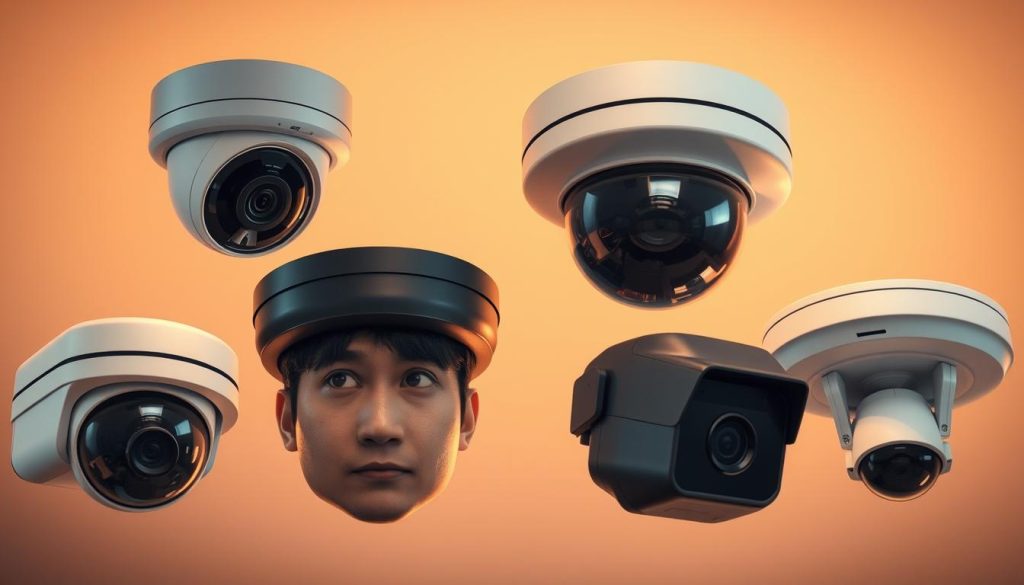
Dome Cameras: Versatile and Discreet
Dome cameras are popular for their sleek design and wide-angle coverage. They blend seamlessly into indoor environments, making them ideal for retail spaces or offices. Their 360° pan and 90° tilt capabilities ensure no corner is left unmonitored.
These devices often integrate with VMS software, allowing for real-time monitoring and playback. Their discreet appearance also acts as a deterrent, as potential threats cannot easily determine the camera’s direction.
Bullet Cameras: Ideal for Outdoor Use
Bullet cameras are designed for outdoor environments, offering durability and long-range visibility. They are commonly wall-mounted or pole-mounted, providing clear views of parking lots or building perimeters.
With features like auto-tracking, these cameras can follow moving objects, enhancing perimeter security. Their power consumption is minimal, making them a cost-effective choice for continuous monitoring.
PTZ Cameras: Flexible and Wide-Angle Coverage
PTZ (Pan-Tilt-Zoom) cameras offer unmatched flexibility, with 30x optical zoom capabilities. They are perfect for large areas like warehouses or open spaces, where detailed coverage is essential.
These cameras can be programmed with preset patrol patterns, ensuring consistent monitoring of high-risk zones. Their ability to integrate with existing systems ensures seamless operation, making them a reliable choice for businesses.
Key Features to Look for in a Security Camera System
Selecting the right features for your monitoring setup can make a significant difference in its effectiveness. From image clarity to remote access, each feature plays a vital role in ensuring your tools perform optimally. Here are the key aspects to consider when evaluating your options.
High-Resolution Imaging
High-resolution imaging ensures that every detail is captured clearly. With 4K or higher resolution, you can identify faces, license plates, and other critical details. This level of clarity is essential for legal evidence and operational efficiency.
Night Vision Capabilities
Night vision is crucial for 24/7 monitoring. Infrared technology allows your system works seamlessly in low-light conditions. This feature is particularly useful for outdoor areas or poorly lit spaces, ensuring no blind spots are left unmonitored.
Remote Access and Monitoring
Remote access lets you monitor your setup from anywhere. Whether through an app or browser, make sure your system supports multi-site management. Features like push notifications and cloud storage enhance convenience and security. Additionally, 256-bit encryption and two-factor authentication ensure your data remains protected.
- Compare app vs. browser access for flexibility.
- Discuss bandwidth requirements for smooth operation.
- Present multi-site management interfaces for scalability.
- Explain push notification configurations for real-time alerts.
- Include a security audit checklist for remote access.
Planning Your Commercial Security Camera System Installation
Effective planning is the cornerstone of a reliable monitoring setup for businesses. Understanding your specific needs ensures that your tools provide maximum coverage and efficiency. This process involves assessing risks and identifying areas that require special attention.
Assessing Your Needs
Start by analyzing your business’s unique requirements. For example, 68% of thefts occur at loading docks, making these areas a priority. Heat map analysis of incident reports can help pinpoint where risks are highest.
Consider factors like operating hours, as 24% of incidents happen after hours. This data helps tailor your setup to address specific vulnerabilities. Proper planning ensures your tools work seamlessly to boost security.
Identifying High-Risk Areas
High-risk zones, such as cash handling areas or queue lines, require focused monitoring. Blind spot identification is crucial to ensure no area is left unmonitored. For warehouses, stock rotation patterns can highlight where theft is most likely.
Strategically placing tools in these areas minimizes risks and enhances overall safety. By addressing these factors, you can create a setup that effectively protects your business.
Strategic Placement of CCTV Cameras
Proper placement of monitoring tools ensures maximum coverage and efficiency for your business. By focusing on key areas, you can enhance safety and reduce risks effectively.
Entrances and Exits
Start by placing devices at all entry and exit points. These areas are critical for tracking movement and deterring unauthorized access. Ensure the system working seamlessly to capture clear footage, even in low-light conditions.
Warehouses and Storage Facilities
For warehouses, align devices with racking systems to cover aisles thoroughly. Use ATEX-certified models in hazardous zones to ensure safety. Regular checks are essential to maintain optimal performance and prevent blind spots.
In storage areas, monitor humidity levels and track pallet movements. This helps prevent damage and theft. Additionally, position tools to avoid forklift collisions, ensuring a safer environment for employees.
FAQ
Why is a CCTV system important for businesses?
A CCTV system helps deter crime, protects assets, and enhances safety for employees and customers. It provides peace of mind by monitoring high-risk areas effectively.
What are the legal requirements for installing CCTV in Singapore?
In Singapore, you must comply with the Personal Data Protection Act (PDPA). This includes notifying individuals and obtaining consent where necessary.
What types of cameras are best for outdoor use?
Bullet cameras are ideal for outdoor use due to their weatherproof design and long-range capabilities. Dome cameras also work well for versatile placement.
What features should I look for in a security camera system?
Look for high-resolution imaging, night vision, and remote access. These features ensure clear footage, visibility in low light, and real-time monitoring.
How do I determine the right number of cameras for my business?
Assess your security needs by identifying high-risk areas like entrances, exits, and storage facilities. This helps determine the optimal number of cameras.
What is the cost of installing a CCTV system?
Costs vary based on the number of cameras and features. On average, it might cost around 0 per camera, including installation and storage solutions.
How can I ensure my CCTV system works well?
Regular checks and maintenance are key. Keep cameras clean, update software, and test features like night vision and remote access periodically.
What are the benefits of cloud storage for CCTV systems?
Cloud storage offers secure, remote access to footage. It’s scalable and ensures data is safe even if the physical system is compromised.


