
CCTV Power Usage: Is It High in Singapore?
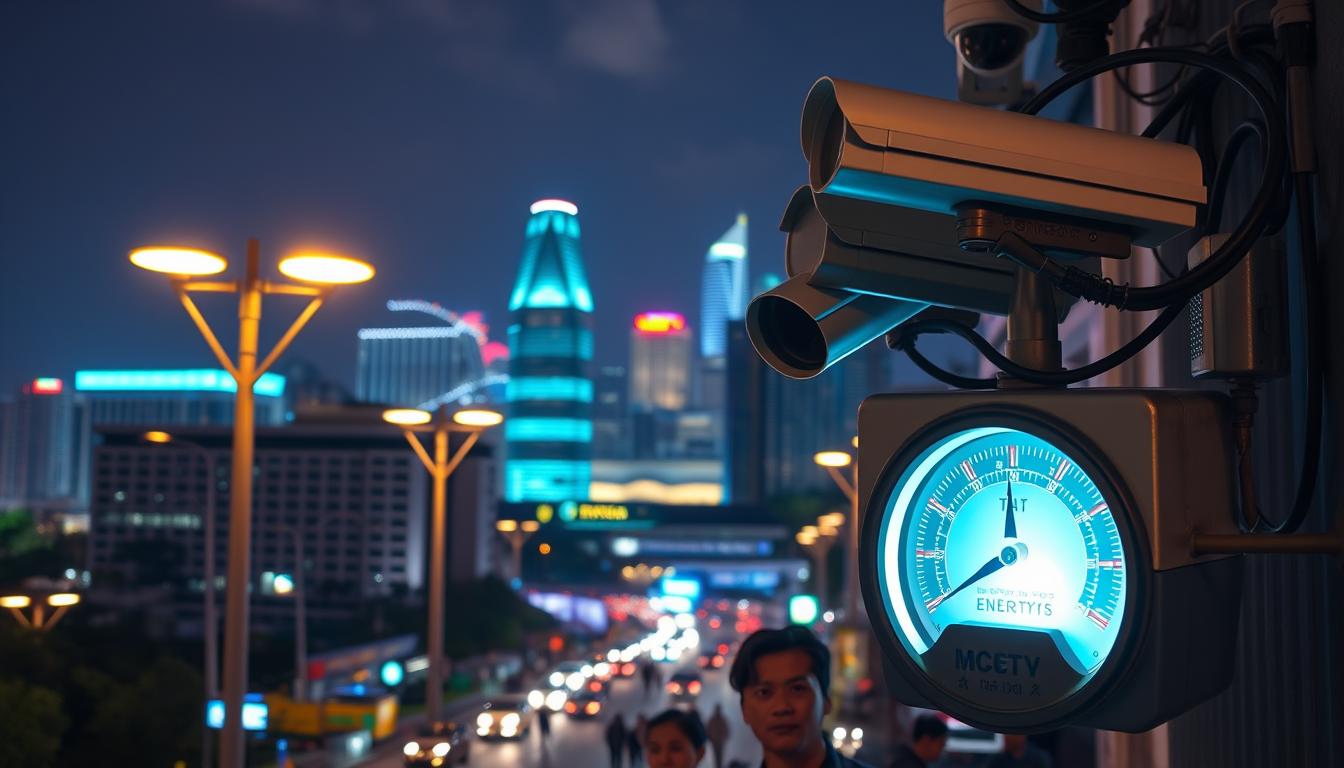
In Singapore, the use of CCTV is growing. People wonder if does CCTV consume a lot of electricity. We will look into the CCTV power consumption in Singapore. We’ll see how common these systems are and their effect on energy use.
More CCTV cameras are being installed in buildings. This has made people curious about their energy use. We will examine the current situation, industry views, and important data. This will help us understand if CCTV cameras use a lot of power or not.
Knowing how energy usage of CCTV systems works helps everyone make better choices. We will dive into this important topic. We will share expert insights that change how we see the energy needs of security systems.
If you want to improve your CCTV setup or find energy-saving models, contact CCTV Maintenance today. Call +65 60135960 to learn about the latest CCTV solutions & offers!
Key Takeaways
- 12V DC is the typical power supply voltage for security cameras.
- Calculating power needs involves multiplying the rated power by 1.3.
- Power distribution boxes are essential for installations with multiple cameras.
- Solar CCTV options can significantly reduce electricity consumption.
- Quality power supplies enhance the longevity and efficiency of CCTV systems.
Introduction to CCTV Power Consumption
It’s important to know how much energy CCTV systems use. This is true for both homes and businesses in Singapore. A typical CCTV camera uses about 4.8W of power. Some can use up to 9.5W.
This shows why it’s key to understand how these systems work. And how they can affect your electricity bills.
A standard CCTV camera uses about 0.1152 kWh of power each day. This adds up to 3.456 kWh a month or 41.472 kWh a year. The power, voltage, and current of CCTV systems are important. Knowing these helps make them work better and use less power.
When setting up CCTV, you can use different power sources. You can choose from Individual Plug-In Adapters, Multi-Camera Power Supply Boxes, or Power over Ethernet (PoE). PoE is special because it lets network cables carry both data and power. This makes installations cleaner and more reliable.
But, it’s important to make sure your cameras work with PoE. And that you have the right setup for it.
Knowing about CCTV power consumption helps you understand energy needs. It also helps you make choices that save money. If you want to learn more, call CCTV Maintenance at +65 60135960. They can tell you about the latest CCTV solutions and offers.
Understanding CCTV Systems and Their Power Needs
CCTV systems are key for home and business security. Knowing the different power supply types is vital for their efficient use. There are many options, from big systems to small units for each camera. Each has its own benefits, depending on the surveillance needs.
Power Supply Types for CCTV
There are several power supply choices for CCTV systems:
- 12V DC: This is the most common supply voltage, widely used in various camera models.
- 24V AC: Primarily used for network video recorders (NVR) and digital video recorders (DVR).
- Power over Ethernet (PoE): This solution simplifies cabling by delivering power and data through a single cable.
- Solar-powered systems: Utilizing renewable energy, these cameras minimize reliance on traditional power sources.
Components That Affect Energy Usage
Energy usage in CCTV systems changes due to different parts:
- Camera type: Security cameras typically consume less than 12W, with simpler models using only 2-4W.
- DVR/NVR systems: These systems may require between 40-60 watts, depending on the specific model.
- Features: Cameras equipped with LEDs or motorized components may demand higher power inputs.
- Installation specifics: Long wire runs may cause voltage drops, which can impact overall power efficiency.
For the best setup, pick reliable cameras and quality wiring. This helps manage energy well. Experienced installers should follow the 80% Rule to avoid overloading power supplies. To see the latest CCTV solutions and offers, contact CCTV Maintenance today at +65 60135960.
Current Landscape of CCTV in Singapore
The surveillance scene in Singapore has changed a lot. It now focuses more on keeping people safe and using new tech. The government has pushed for more CCTV cameras. This has led to a big increase in CCTV installation statistics.
Statistics on CCTV Installation
Singapore has over 100,000 cameras for public safety. This network watches over public spots and helps improve security. The Police Cameras (PolCam) project has put over 62,000 cameras in about 10,000 housing blocks.
The goal is to have almost 180,000 CCTV cameras by 2030. This growth matches the government’s plan to use tech for safety. New systems like Hawk Eye Remote Observatory System help capture important info, like car plates and faces, for police.
Government Policies and Support for CCTV Expansion
The Singapore government helps CCTV use a lot through safety-focused policies. The Ministry of Home Affairs backs smart CCTV systems with AI and Machine Learning. These systems help process lots of footage, making up for the lack of people.
This tech push makes police work better and helps Singapore become a smart city. It shows the government’s dedication to finding new ways to keep cities safe.
If you want to boost your security, call CCTV Maintenance at +65 60135960. They can tell you about the newest CCTV tech and deals.
Does CCTV consume a lot of electricity?
It’s important to know how much power CCTV systems use. This helps figure out their effect on your energy bills. The answer depends on the camera type and its features. By looking at the power needs of different CCTV cameras, you can decide if they’re right for you.
Average Power Requirements of CCTV Cameras
CCTV cameras use different amounts of power. For example, the Reolink RLC-810A PoE IP 4K HD security camera uses less than 12W. Cameras with infrared and pan-tilt features use about 2-4 watts more. Also, Power over Ethernet (PoE) cameras might need a PoE switch, which adds to the energy use.
Comparison with Other Household Appliances
To understand CCTV power use better, compare it with common household items. Here’s a table showing the power use of various devices and CCTV systems.
| Device | Average Power Consumption (W) |
|---|---|
| CCTV Camera (Standard) | 10-16W |
| DVR/NVR Device | 40W |
| LED Light Bulb (10W) | 10W |
| Refrigerator | 100-800W |
| Air Conditioner | 1,000-3,000W |
Battery-powered cameras, like the Reolink Altas PT Ultra, can last up to 8 days. Solar-powered models, like the Reolink Argus 3 Pro, are great for those who want to save energy. These options show that CCTV systems don’t have to raise your power bills a lot, if you choose wisely.
For more info on CCTV systems and special offers, call CCTV Maintenance at +65 60135960.
Electricity Consumption of Surveillance Cameras
The power use of surveillance cameras is key to their efficiency and cost. Knowing what makes them use more power helps save energy without losing security. Different cameras need different amounts of power, affecting both setup costs and ongoing expenses.
Factors Contributing to Higher Power Usage
Several things can make surveillance cameras use more electricity. Important factors include:
- Camera Type: Analog cameras use 4-8 watts, while IP cameras use 5-10 watts per hour.
- Resolution: Cameras with higher resolution need more power for processing, using more energy.
- Features: Cameras with night vision and pan-tilt use 2-4 watts more than basic models.
- PoE Systems: Power over Ethernet (PoE) cuts down power needs, with most PoE cameras using 10-12 watts.
- DVR/NVR Systems: These systems use a lot more, with some using up to 60 watts.
Energy-Efficient Models
New energy-saving models are popular for those wanting to cut down on power use. Advances in tech, like solar cameras and smart chipsets, help save energy. Adding smart features, like motion detection and power-saving settings, also helps.
Keeping cameras well-maintained and using quality parts can lower power use over time. For the latest in energy-saving tech, reach out to CCTV Maintenance at +65 60135960. They offer insights and deals tailored to your needs.
CCTV Energy Efficiency
Modern technologies play a big role in making CCTV systems more energy-efficient. These advancements help lower power use without sacrificing security. Features like motion detection and adjustable settings help cut down energy costs.
Modern Technologies Improving Efficiency
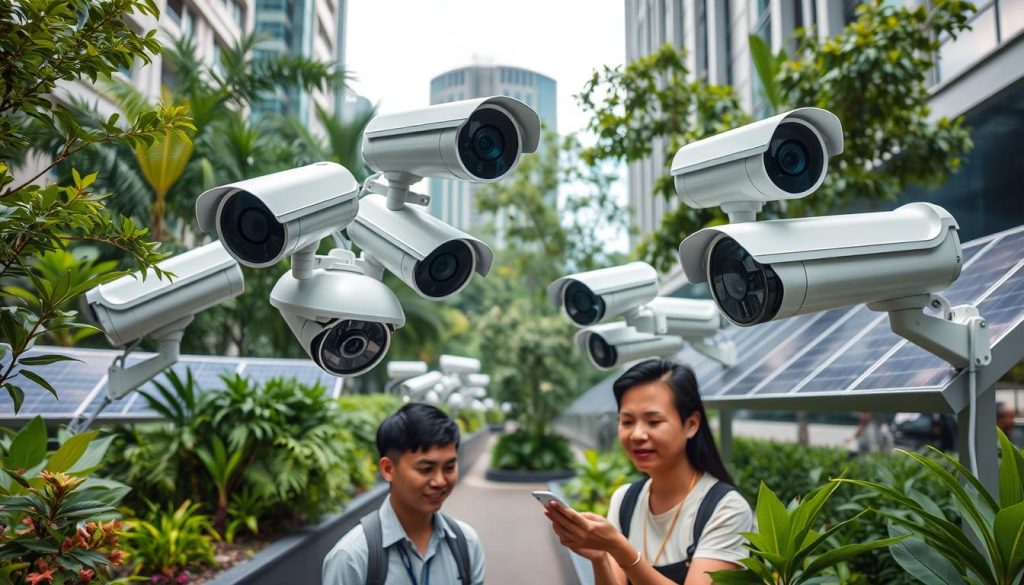
Today’s CCTV systems use new tech to cut down energy use. For example, some cameras, like the Reolink RLC-810A, use less than 12W of power. Cameras with night vision might use a bit more, 2-4 watts.
Using PoE (Power over Ethernet) cameras can also save power. But, you might need a PoE switch or injector, which can slightly increase energy use. Solar-powered cameras, like the Reolink Argus 3 Pro, are great for saving energy.
Choosing the Right Camera System
Choosing the right camera system is key to saving energy. The number of cameras, motion sensors, and recording devices matter. A typical home system with four cameras, two sensors, and a recorder uses 52.02 Watts.
Good installation and quality parts are also important. They help lower the energy use of your system.
If you’re looking to upgrade or install a new system, consider these technologies. For more info, contact CCTV Maintenance at +65 60135960. They can help you find energy-efficient CCTV solutions.
Impact of CCTV on Electricity Bills
CCTV systems can greatly affect your electricity bills. It’s important to understand how they impact your costs. This includes looking at the energy they use and the equipment needed.
Calculating Overall Costs
When looking at the costs of CCTV systems, think about how much power they use and for how long. For example, many cameras use less than 12 watts. The Reolink RLC-810A PoE IP 4K HD security camera is a good example of an efficient option.
Cameras might use a bit more power, about 2 to 4 watts, when they have features like infrared or night vision.
| Device | Power Consumption (Watts) |
|---|---|
| Reolink RLC-810A | 12 |
| Typical IR/Night Vision Camera | 14-16 |
| Hikvision DVR | 40 |
| Dahua DVR | 60 |
Using energy-efficient cameras and PoE systems wisely can help save money. Choosing the right DVRs or NVRs is also key, as they use a lot more power than cameras. Keeping your equipment in good shape also helps keep your electricity usage low.
Long-Term Financial Benefits
Investing in reliable CCTV systems can save you money in the long run. A good CCTV system can help prevent theft and vandalism. This can lower your insurance costs.
Solar-powered security cameras, like the ZOSI 1NC-291, can also cut down on energy costs. They use less grid electricity, which is better for the environment.
Using sustainable technologies can help lower your electricity bills while keeping you safe. By monitoring and managing your system well, you can find a good balance between cost and security.
To learn more about CCTV solutions and offers, call CCTV Maintenance at +65 60135960.
Cost of Running CCTV Cameras
Understanding the cost of running CCTV cameras is key. It involves looking at both the initial setup and ongoing costs. Knowing these costs helps make better decisions.
Initial costs include buying equipment, installation fees, and technology like PoE switches. Ongoing costs cover energy use, maintenance, and upgrades.
Initial Setup vs. Ongoing Operational Costs
When budgeting for CCTV, consider both initial and ongoing costs. Cameras like the Reolink RLC-810A use less than 12 watts. But, features like IR illumination and pan-tilt can increase energy use by 2 to 4 watts.
DVRs and NVRs, like Hikvision or Dahua models, also raise energy needs. It’s important to assess these costs carefully at the start.
How to Estimate Annual Expenses
To estimate annual CCTV costs, look at energy and other recurring fees. The number and type of cameras, monitoring time, and features affect costs. For example, battery-operated models like the Reolink Altas PT Ultra offer flexibility.
Choosing energy-efficient systems can lower costs over time. This can make a big difference in the long run.
| Camera Type | Power Consumption (Watts) | Estimated Monthly Energy Cost (SGD) |
|---|---|---|
| Reolink RLC-810A | 12 | X |
| Hikvision DVR | 40 | X |
| Dahua DVR | 60 | X |
| Reolink Go Plus | Variable (Solar Assisted) | X |
Choosing CCTV solutions that fit your needs can help. For more advice, contact CCTV Maintenance at +65 60135960.
CCTV Energy Consumption Analysis
Understanding CCTV systems’ energy use needs a close look at case studies. Different security cameras use energy in various ways. This depends on their design and features.
Case Studies on Energy Usage
The Reolink RLC-511WA is a high-resolution 5MP wireless camera. It works well where electric outlets are easy to find. The Reolink Argus 4 Pro, with its 30% longer battery life, shows battery-powered systems can be useful in many places.
The Reolink Argus 3 Pro Ultra uses solar power with a 4K camera. This shows a green way to use energy. Each model affects CCTV energy use differently. Cameras need energy, whether from electricity, batteries, or solar power, to work well.
Visual Representation of Power Needs
To show how different CCTV systems use energy, here’s a table with real-world data:
| Camera Model | Resolution | Power Source | Energy Consumption (kWh/year) |
|---|---|---|---|
| Reolink RLC-511WA | 5MP | Electric | 75 |
| Reolink Argus 4 Pro | 4MP | Battery | 50 |
| Reolink Argus 3 Pro Ultra | 4K | Solar/Battery | 60 |
| Reolink RLC-810A | 4K | PoE | 80 |
| Reolink Go Plus | 1080p | 4G/Battery | 45 |
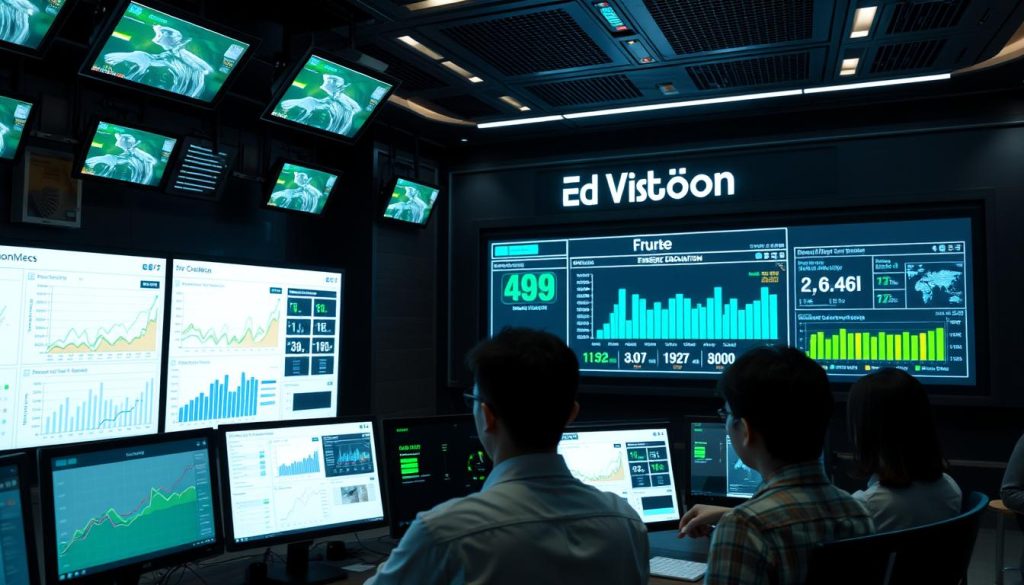
This table shows a side-by-side comparison of different cameras. It highlights their power needs and the wide range of options available. Each system’s unique features affect its energy use, showing the importance of understanding CCTV energy consumption.
For help managing your CCTV system and cutting energy costs, contact CCTV Maintenance at +65 60135960. They offer the latest solutions and deals tailored to your needs.
Ways to Reduce CCTV Electricity Usage
In today’s world, saving energy is key for both saving money and protecting the environment. Using energy-saving tips can make CCTV systems more efficient. This supports the use of green technologies. Here are some easy ways to do this.
Energy-Saving Practices and Tips
There are several ways to cut down on CCTV energy use:
- Adjust Resolution Settings: Changing from Full HD to HD can cut bandwidth by up to 60%.
- Frame Rate Optimization: Lowering FPS from 25 to 8 while keeping resolution can reduce bandwidth and storage by 70%.
- Switch to Efficient Codecs: Using H265 instead of H264 for the same quality can save about 40% in bandwidth, leading to big energy savings.
- Implement Variable Bitrate: Cameras with variable bitrate adjust bandwidth based on activity, saving energy when not needed.
- Smart Power Supply: Using an 8 channel power supply for multiple cameras saves energy, reduces clutter, and makes maintenance easier.
Investment in Sustainable Technologies
Choosing sustainable technologies can help cut down energy use even more:
- Energy-Efficient Hardware: Buying energy-efficient models saves money in the long run and is good for the planet.
- Regular Maintenance: Keeping power supplies clean and checking voltage helps avoid malfunctions and extends equipment life, ensuring better energy use.
- Surge Protection: Using surge protectors or UPS keeps power systems stable, preventing energy waste from surges and overheating.
By using these energy-saving tips and investing in green technologies, we can use less electricity. This helps make our future more sustainable. For expert advice and ways to improve your CCTV system, call CCTV Maintenance today at +65 60135960. They offer the latest solutions and deals.
CCTV Trends and Their Impact on Usage
CCTV technology is changing fast, with big trends affecting how we watch and use surveillance. Smart systems are becoming popular, helping businesses use less energy. With the help of AI, we might see even more energy savings in the future.
Smart CCTV Systems and Their Advantages
Smart systems bring many benefits to CCTV technology. They include:
- Object recognition: Using AI and deep learning for better security.
- 5G connectivity: Making video quality better and responses faster.
- Integration with IoT: Helping make smarter decisions with more data.
- Edge computing: Cutting down on delays and saving bandwidth.
These new features make CCTV systems more efficient. They let businesses watch over their areas using less energy than before. As technology gets smarter, these systems will be key for good security.
Future Outlook for CCTV Power Consumption
The future of CCTV power use looks greener. Trends like:
- Cloud-native solutions for better scaling and cost savings.
- More focus on energy efficiency to reduce carbon footprints.
- Deep learning for quicker data processing and less energy waste.
As these technologies grow, we’ll see more energy-saving surveillance. This will help the planet and save money for businesses. We can expect a future with smarter, greener CCTV options.
For the latest on CCTV solutions and deals, call CCTV Maintenance at +65 60135960.
Conclusion
Understanding CCTV power consumption is key in Singapore. Different security cameras use different amounts of power. Some use as little as 2-4 watts, while others use up to 60 watts.
Using energy-saving tech like PoE devices and solar cameras can cut down on power use. This doesn’t mean you have to sacrifice your security needs.
Choosing the right cameras and setting them up wisely is important. This includes using high-quality wires and adjusting settings for motion detection. Even features like those in the Reolink RLC-810A help make your system more efficient.
Looking into energy-saving options is vital. It boosts security and cuts down on energy costs and carbon emissions over time.
If you’re thinking about improving your CCTV system, reach out to CCTV Maintenance at +65 60135960. They offer the latest solutions and custom plans for your security needs. This ensures your system is both secure and energy-efficient.
FAQ
Does CCTV consume a lot of electricity?
CCTV cameras use different amounts of electricity. Most systems use as much as big appliances. But, there are energy-saving models that can lower your bills.
What are the typical power requirements for CCTV cameras?
CCTV cameras usually need 5 to 15 watts. This depends on the camera’s type and features. For example, high-resolution cameras use more power than standard ones.
How can I calculate the overall costs of running CCTV?
First, find out how much power your cameras need. Then, multiply that by how many hours they run each day. Add your electricity rate to get your total cost.
What factors contribute to higher power usage in CCTV systems?
Several things can make CCTV systems use more power. These include the camera type, resolution, night vision, and software needs.
Are there energy-efficient options available for CCTV systems?
Yes, there are models made to use less electricity. They often have features like motion detection and timers to save power.
What steps can be taken to reduce electricity usage from CCTV?
To use less power, place cameras wisely. Use energy-saving models and turn off cameras when not needed. Use sleep modes and timers too.
How do modern technologies contribute to CCTV energy efficiency?
New tech like AI and smart systems help CCTV systems use less energy. They can detect motion and only work when needed.
What is the expected trend for CCTV installations in Singapore?
Singapore expects more CCTV cameras, with nearly 180,000 by 2030. The government supports this to improve safety.
How do government policies support CCTV expansion?
The Singapore government supports more CCTV cameras to make public spaces safer. They encourage their use in homes and businesses.
What are the cost implications of setting up a CCTV system?
Setting up a CCTV system can cost a lot at first. It depends on the camera quality and how hard it is to install. You also have to think about ongoing costs like electricity and maintenance. It’s important to plan your budget carefully.
Source Links
- https://www.firstsolution.com.sg/everything-you-need-to-know-about-cctv-power-supplies/
- https://cctvmaintenance.com.sg/solar-cctv-cameras-guard-your-home-in-singapore/
- https://edgewaretech.com/how-much-power-does-cctv-use/.html
- https://bas-ip.com/articles/cctv-power-supply/
- https://reolink.com/blog/cctv-ip-security-camera-power-consumption/?srsltid=AfmBOorBPOpTXNuckhVuHFKXoZpWRTrrjm_Q01hGfAvb4dbg2ap2kGme
- https://www.clintonelectronics.com/cctv-101-camera-power-explained/
- https://ethz.ch/content/dam/ethz/special-interest/gess/cis/center-for-securities-studies/resources/docs/RSIS-Smart CCTVs for Secure Cities, Potential and Challenges.pdf
- https://www.novatr.com/blog/singapore-world-smartest-city
- https://geographical.co.uk/science-environment/whos-watching-the-cities-with-the-most-cctv-cameras
- https://reolink.com/blog/cctv-ip-security-camera-power-consumption/?srsltid=AfmBOoqisxk8strTkfMQMo5INguoNfE7wOZap8d_YqAIKuby57N5785x
- https://network-data-cabling.co.uk/blog/12-cctv-problems-and-fixes/
- https://reolink.com/blog/cctv-ip-security-camera-power-consumption/?srsltid=AfmBOookL1D9M6R-95b0A7qCR_nhD3eXcDO3o8SALen-Ku_cj_2soFKx
- https://blog.ecoflow.com/us/how-many-watts-does-camera-use/
- https://www.vaultelectricity.com/unlocking-the-secrets-of-cctv-power-consumption/
- https://reolink.com/blog/cctv-ip-security-camera-power-consumption/?srsltid=AfmBOooIEepfOKXf_QG6vC0NtLHWwD4TtAhQkomM-bwg-f5iBk936Oen
- https://aucklandcctv.co.nz/energy-efficient-safety-home-security-power-consumption/
- https://panthersecurity.co.uk/2024/07/30/does-a-house-alarm-use-a-lot-of-electricity/
- https://reolink.com/blog/cctv-ip-security-camera-power-consumption/?srsltid=AfmBOooLEeEspNE2sv_yp0lmwB8L9xvSjaa_EWbqbgrcV_nP9ZU-NV3Q
- https://blog.zositech.com/cctv-ip-security-camera-power-consumption/
- https://technical-24.com/en/solar-cctv-cameras-vs-traditional-cctv-cameras/
- https://reolink.com/blog/cctv-ip-security-camera-power-consumption/?srsltid=AfmBOop1v84bBz-JHB1lHuNHbnXIZT-tjG4TNCn4GLDyf537NEY9SrIH
- https://forums.digitalspy.com/discussion/2153716/cost-of-running-cctv-cameras
- https://reolink.com/blog/how-do-security-cameras-get-power/?srsltid=AfmBOoqCFumvMoPRKbkkG9kD-QHfzweogMi2xizDTZrBeHz_ppcyaL7D
- https://www.linkedin.com/pulse/despacito-streaming-energy-consumption-rabih-bashroush
- https://www.intenseye.com/blog/how-to-reduce-cctv-video-streaming-bandwidth-usage
- https://issuu.com/powerpluscctvpowersupply/docs/8_channel_cctv_power_supply_blog.docx/s/27858135
- https://www.fyma.ai/blog/10-cctv-trends-for-2024
- https://www.pelco.com/blog/cctv-and-video-security-camera-trends
- https://www.a1securitycameras.com/blog/advantages-and-disadvantages-of-using-security-cameras/?srsltid=AfmBOor0I7Cs4hl4LTRMjS9HdEbMoimGdLSa05zaE5ypKLV6bcdBGXMw
- https://reolink.com/blog/cctv-ip-security-camera-power-consumption/?srsltid=AfmBOorYRfb3zlJVk9xQFcchJ9in_7Pe2yE4xjWQHccntrbOaSS5YD_d
- https://reolink.com/blog/how-do-security-cameras-get-power/?srsltid=AfmBOorfmfB4j4Q42apbYT_wzL7W7YU_Kp-0uG-3UdEGLcE0coJmU3Ao


