
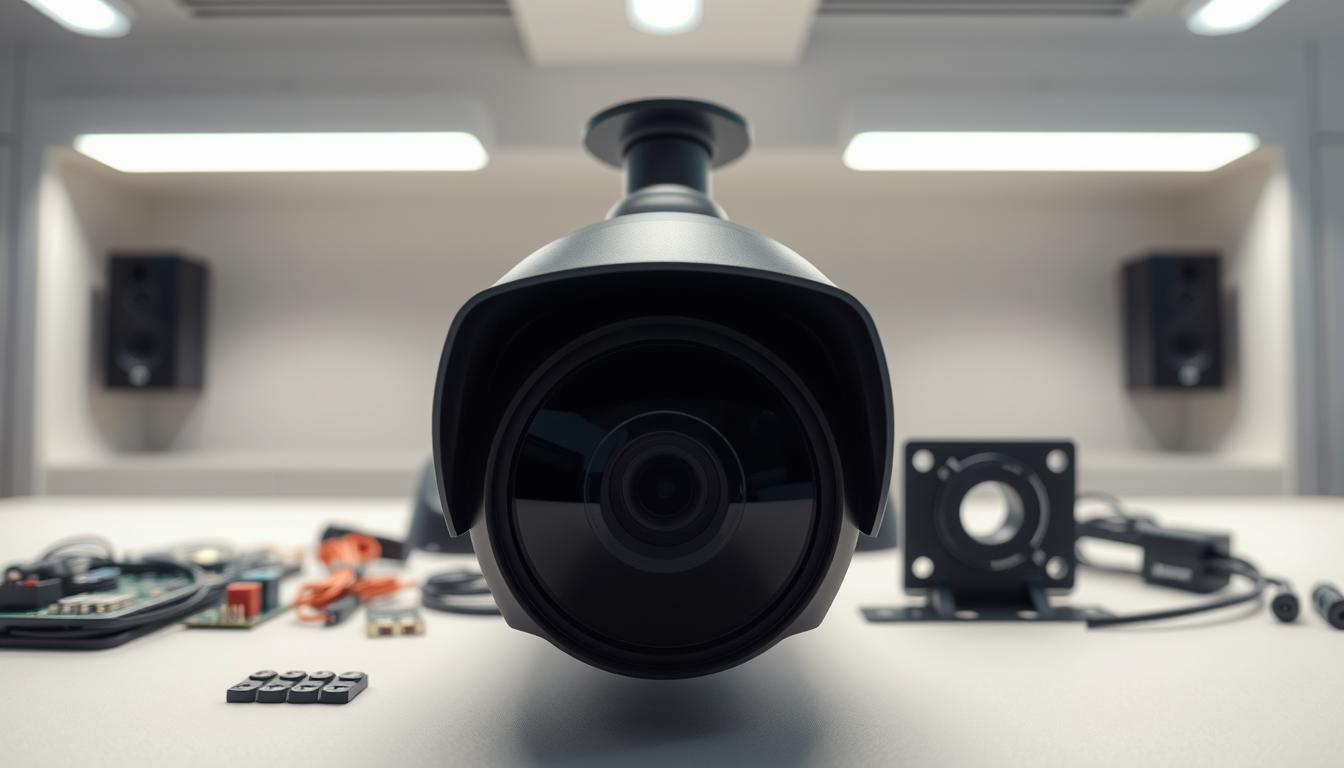
CCTV Camera Assembling Business: A Comprehensive How-To Guide
Singapore’s security industry is booming, with a market value of S$1.2 billion in 2023. Over 78% of local businesses rely on surveillance solutions, creating strong demand for reliable providers. This guide explores how to build a successful operation in this growing sector.
Quality matters most in this field. Top manufacturers test components for 15,000+ simulated hours and follow 25+ quality checkpoints. These standards help ensure long-lasting performance in Singapore’s humid climate.
Local production offers key benefits over imports. Faster delivery times and better customization options give homegrown businesses an edge. Proper certifications and testing protocols help build trust with clients.
Key Takeaways
- Singapore’s security market reached S$1.2 billion in 2023
- 78% of businesses use surveillance systems
- Rigorous testing ensures product reliability
- Local manufacturing provides competitive advantages
- Proper certifications build customer confidence
Understanding the Basics of CCTV Camera Assembly
Modern surveillance technology combines advanced sensors with robust construction. To build systems that withstand Singapore’s humid climate, you’ll need quality parts and the right tools. Here’s how to start.
Key Components of a Security System
Every device relies on five core elements:
- Image sensors: CMOS types offer sharper details, ideal for high-traffic areas.
- Lenses: Adjustable options adapt to low-light conditions.
- PCB: The brain that processes signals and manages power.
- IR LEDs: Enable night vision up to 100 feet.
- Housing: IP67-rated materials resist moisture and dust.
“Impulse CCTV’s testing proved CMOS sensors outperform competitors in tropical environments.”
Essential Tools for Assembly
Precision is non-negotiable. Invest in:
- 40W soldering stations (Hakko or Weller brands recommended).
- ESD-safe workstations to protect sensitive electronics.
- Testing kits for humidity and temperature resistance.
For Singapore’s climate, prioritize IP67-rated seals. Local suppliers often provide faster delivery and better humidity specs than overseas vendors.
Starting Your CCTV Camera Assembling Business
Launching a security equipment venture in Singapore requires careful planning and compliance. Proper licensing and workspace design ensure smooth operations and regulatory adherence.
Legal and Regulatory Requirements in Singapore
Register your business with ACRA and secure EMA approval for power supplies. IMDA certification is mandatory for electronic devices, while NDAA compliance is critical for government contracts.
Key steps include:
- Submitting technical specifications to IMDA for testing.
- Ensuring power supplies meet EMA’s safety standards.
- Maintaining records for SCDF fire safety audits.
“NDAA-compliant components reduce procurement hurdles for public-sector projects.”
Setting Up Your Workspace
Optimize your facility for a 5-stage assembly line. Use ESD-safe mats and grounded workstations to protect sensitive electronics. Install industrial ventilation for soldering areas.
Additional requirements:
- Fire extinguishers accessible per SCDF guidelines.
- Equipment insurance covering humidity-related damage.
- Modular layouts for easy reconfiguration.
Sourcing High-Quality Components
Component selection separates amateur setups from professional security solutions. The difference between systems that fail in Singapore’s humidity and those lasting years often comes down to supplier choices. Partnering with certified vendors ensures consistent performance across all installations.
Local procurement offers tangible benefits, with Singapore-based suppliers improving production efficiency by 40% compared to overseas options. Faster lead times and climate-specific specifications reduce project delays. Always verify vendor certifications before committing to bulk orders.
Implementing a 25-point quality inspection process prevents defective parts from entering your workflow. This includes verifying moisture resistance ratings and electrical tolerances. Such diligence pays off through fewer warranty claims and higher client satisfaction.
Identifying Reliable Suppliers
Five Singapore distributors dominate the components market for professional-grade security cameras. These include established electronics wholesalers and specialized optical equipment providers. Prioritize vendors offering sample testing before purchase.
Minimum order quantities (MOQs) often challenge new manufacturers. Negotiate tiered pricing structures where possible – many suppliers reduce rates after your first three orders. Building long-term relationships unlocks better terms over time.
“Our partnership with local PCB manufacturers cut component defects by 62% compared to imported alternatives.”
Evaluating Component Quality
Image sensors require lux rating verification under controlled lighting conditions. For lenses, measure F-stop consistency across multiple samples. These tests reveal performance variations that specs sheets might not show.
Printed circuit boards need trace continuity testing before assembly. Use magnified inspection for solder pad alignment and copper thickness. Document all findings to compare suppliers objectively.
When choosing between OEM and ODM models, consider your technical capabilities. Custom designs offer branding advantages but require more quality control. Standardized parts simplify manufacturing but limit differentiation.
The CCTV Camera Assembly Process
Building high-performance surveillance devices requires methodical attention to detail. Each stage—from PCB population to final sealing—demands precision to ensure reliability in Singapore’s humid climate. Advanced tools and tested protocols streamline the workflow while maintaining quality.
Step-by-Step PCB Assembly
SMT machines achieve 99.98% placement accuracy, critical for error-free circuitry. Follow this sequence for optimal results:
- Apply solder paste to the board using stencils.
- Place components with pick-and-place machines.
- Reflow solder at controlled temperatures (220–250°C).
Thermal imaging tests verify heat dissipation, preventing failures in tropical conditions. Conformal coating adds moisture protection, extending PCB lifespan.
Integrating Sensors and Lenses
Calibrating sensors ensures sharp imaging in varying light levels. Key steps include:
- Lux rating verification under controlled lighting.
- Lens alignment within 0.01mm tolerance for focus.
- IR cut filter testing for night-vision performance.
“Precision lens alignment reduces motion blur by 40% in low-light environments.”
Final Housing and Weatherproofing
IP67-rated housing safeguards components. Silicone gaskets and ultrasonic welding create airtight seals. Quality gates inspect:
- Seam integrity under water pressure tests.
- UV resistance for outdoor durability.
- Gasket compression for long-term flexibility.
JIT manufacturing minimizes storage time, reducing humidity exposure risks.
Quality Control and Testing
Superior performance starts with meticulous testing at every production stage. In Singapore’s humid climate, rigorous protocols ensure systems meet SS 584:2020 standards. A 15,000-hour accelerated lifespan test simulates years of use in just months.
In-Process Quality Checks
Seven inspection stages catch defects early. Thermal imaging verifies heat dissipation, while humidity chambers test seals under extreme conditions. Key focus areas include:
- PCB integrity: Microscope checks for solder bridges or misaligned traces.
- Lens calibration: ANSI/ISO 12233 charts measure sharpness and distortion.
- Power management: Voltage spikes simulate Singapore’s unstable grid fluctuations.
Final Product Testing Procedures
Every unit undergoes reliability validation before shipping. Cybersecurity scans protect networked models from breaches. Environmental tests confirm operation from -20°C to +60°C—critical for outdoor durability.
“Our MTBF calculations show a 98.7% uptime over 5 years for properly tested units.”
Failure mode analysis documents each fault, refining future designs. This control process builds trust with clients needing Singapore-certified solutions.
Software Integration and Configuration
Advanced software transforms basic surveillance into intelligent monitoring solutions. Modern platforms combine AI analytics with edge computing, achieving under 200ms response times. Proper configuration ensures reliable performance across Singapore’s diverse security needs.
Installing Firmware and Analytics
Always verify firmware compatibility before deployment. AI-powered detection reduces false alarms by 90% compared to traditional systems. Follow these protocols:
- Schedule automated updates during low-activity periods
- Validate checksums to prevent corrupted installations
- Maintain version logs for all field devices
Edge computing capabilities process footage locally for faster alerts. AES-256 encryption protects data during transmission. Cloud configurations should match the client’s storage requirements.
“Our AI analytics platform identifies real threats 8x faster than human monitoring alone.”
Customizing Software for Client Needs
Tailor interfaces for different user groups – from security teams to facility managers. API integration connects new devices with existing infrastructure seamlessly.
Key customization areas include:
- Adjusting motion sensitivity zones per camera location
- Creating role-based dashboard views
- Configuring mobile alerts for critical events
Regular testing ensures the system adapts to changing operational needs. Document all custom configurations for future reference.
Packaging and Branding Your Products
Professional packaging transforms security products into premium solutions. In Singapore’s competitive market, presentation impacts perceived value as much as technical specs. A three-layer protection system reduces shipping damage by 65%, while strong branding boosts customer retention by 33%.
Choosing Durable Packaging Materials
Humidity-resistant materials prevent corrosion during storage. Use these selection criteria:
- Impact-resistant foam: Minimum 25psi compression strength
- Weatherproof labels: Synthetic paper withstands 90% humidity
- Sealed housing materials: IP54-rated for warehouse conditions
Test packaging durability with:
- Drop tests from 1.5m height
- 72-hour humidity chamber exposure
- Vibration simulations for freight transport
“Our climate-specific packaging reduced RMA rates by 41% year-over-year.”
Creating a Professional Brand Identity
Differentiate your products through strategic design:
- B2B branding: Focus on technical certifications
- B2C approach: Highlight ease of use
- QR codes: Link to multilingual manuals
Retail-ready options should include:
- Hanging tabs for store displays
- Clear warranty registration instructions
- Sustainable materials where possible
Effective brand management ensures consistency across all touchpoints. Document color codes, fonts, and messaging guidelines for your team.
Marketing Your CCTV Camera Assembling Business
64% of Singapore businesses prioritize suppliers with strong digital presence. This creates opportunities for providers who master targeted outreach. Both commercial and residential markets require distinct approaches to messaging and channel selection.
Reaching Commercial and Residential Buyers
Property managers need different value propositions than homeowners. For B2B clients, emphasize:
- Cost savings: Case studies showing 30% reductions in maintenance
- Integration: Compatibility with existing access control systems
- Scalability: Modular designs for future expansion
Residential marketing should highlight:
- Ease of installation with DIY options
- Smart home compatibility via mobile apps
- Neighborhood crime deterrence statistics
“Our LinkedIn outreach converted 22% of facility managers who saw demo videos of our motion detection accuracy.”
Digital Marketing That Converts
SEO-optimized content increases leads by 150%. Focus on:
- Localized keywords like “Singapore security camera experts”
- Behind-the-scenes videos of quality testing
- Comparison guides against imported alternatives
Google Ads perform best when targeting:
- Commercial property ZIP codes
- Retail security pain points
- New construction project timelines
Regular competitor analysis ensures your systems remain competitively positioned. Track pricing, features, and warranty terms across three local rivals quarterly.
Pricing Strategies for Profitability
Strategic pricing separates profitable security ventures from struggling startups in Singapore’s competitive market. Component costs typically consume 55-60% of retail prices, leaving slim margins for local assemblers. Smart financial management can push gross margins to 28-35% through strategic sourcing and value positioning.

Activity-based costing models prove essential for custom orders. They account for labor hours, specialized parts, and testing requirements that standard pricing overlooks. Bulk purchase discounts from suppliers further improve profitability when aligned with sales forecasts.
Calculating Sustainable Margins
Successful manufacturers use three financial control methods:
- Price positioning matrices comparing features against competitors
- Value-added service bundles (installation, maintenance)
- Government tender pricing with 15-20% contingency buffers
Minimum Advertised Price (MAP) policies maintain brand value across distribution channels. They prevent discount wars while allowing installers reasonable profits. Cash flow projections should account for component lead times to avoid costly rush orders.
Winning Singapore’s Competitive Market
Local buyers prioritize quality assurance and fast response times over rock-bottom pricing. Highlight these advantages:
- SS 584:2020 compliance certifications
- Faster warranty service than imported alternatives
- Climate-specific durability testing results
“Our tiered pricing structure increased commercial client retention by 40% while maintaining 32% margins.”
For residential systems, emphasize total cost of ownership. Package deals with cloud storage or smart home integration justify premium pricing while solving multiple security needs.
Scaling Your Business for Growth
Growing a security solutions provider requires strategic planning and smart investments. Product line expansion can increase average revenue per user by 40%, while installer networks cut service costs by 25%. Focus on these key areas to build sustainable momentum.
Expanding Your Product Line
Identify niche markets like Smart City projects that need specialized technology. These often command higher margins than standard surveillance systems. OEM partnerships help accelerate development while sharing R&D costs.
Consider these expansion tactics:
- Add AI-powered analytics for traffic monitoring
- Develop solar-powered options for remote locations
- Create modular designs for easy upgrades
“Our thermal imaging add-on generated 28% higher margins than basic camera models.”
Building Partnerships with Installers
Certified installer networks extend your market reach without heavy capital investment. Develop training programs covering:
- Proper assembly techniques
- Troubleshooting common issues
- Software integration best practices
Strategic alliances with security firms create referral pipelines. Offer joint marketing initiatives and revenue-sharing models. This builds loyalty while expanding your customer base.
For international growth, research export certification requirements early. Automation investments show ROI within 18-24 months for manufacturers scaling beyond local markets.
The Future of CCTV Camera Manufacturing and Assembly
Emerging technologies are reshaping how security solutions operate in smart cities. The AI market for these devices will grow at 22.6% annually, while 5G reduces latency to under 50ms. These advancements enable real-time analytics and faster threat detection.
Innovations like thermal imaging and 3D-printed housings enhance capabilities. Sustainable practices, such as energy-efficient manufacturing, gain traction. Blockchain ensures transparent supply chains, and IoT sensors enable predictive maintenance.
Cybersecurity remains critical as edge computing expands. Workforce training for AI integration will separate leaders from competitors. Singapore’s tech-ready infrastructure positions it to adopt these trends swiftly.
FAQ
What are the essential components needed for assembling a security camera?
Key parts include a PCB, image sensor, lenses, infrared LEDs for night vision, housing for weatherproofing, and wiring. High-quality components ensure better performance and durability.
How do I test the video quality of my assembled units?
Conduct resolution checks in different lighting conditions. Use motion detection tests and analytics software to verify clarity and reliability under various scenarios.
Where can I find reliable suppliers for manufacturing parts?
Look for certified distributors specializing in surveillance technology. Check reviews, request samples, and verify certifications before bulk purchasing.
What software is needed for configuring security systems?
Most devices require firmware for basic functions. Advanced models may need third-party analytics or management software for motion tracking and remote access.
How important is weatherproofing in camera assembly?
Critical. Proper housing and sealing protect against rain, dust, and extreme temperatures, ensuring long-term performance in outdoor installations.
What’s the best way to market my products to potential buyers?
Highlight features like high resolution, night vision, and motion detection. Use digital marketing, trade shows, and partnerships with installers to reach commercial and residential clients.
How do I price my assembled units competitively?
Calculate material costs, labor, and overhead. Research competitors in Singapore and offer value-added features like extended warranties or superior sensors.
Can I integrate smart home systems with my security devices?
Yes. Many modern units support IoT integration, allowing control via mobile apps and compatibility with platforms like Google Home or Amazon Alexa.


