
Can we connect CCTV to mobile without Internet? Here’s How
Reliable surveillance is essential, especially in areas with unstable internet connections. Many homeowners and businesses in Singapore need dependable security cameras that work independently of Wi-Fi. Fortunately, modern technology offers solutions.
Using cellular networks or direct connections, CCTV cameras can transmit footage to smartphones without relying on the internet. This approach is ideal for remote locations like construction sites, farms, or vacation homes. Popular models such as Reolink Go Plus and Arlo Go 2 support 4G/LTE connectivity.
These systems provide 24/7 monitoring, instant alerts, and local storage. Whether for personal safety or business security, offline-capable cameras ensure continuous protection. For Singaporean users, local support is available via Wen Hong at +65 60135960.
Key Takeaways
- Offline-capable security cameras work without Wi-Fi.
- Cellular networks enable remote monitoring via mobile apps.
- Ideal for construction sites, farms, and vacation properties.
- Models like Reolink Go Plus support 4G/LTE connections.
- Local storage ensures footage remains accessible.
Understanding CCTV Technology and Its Capabilities
Modern surveillance solutions have evolved far beyond basic recording devices. Today’s CCTV cameras integrate advanced features like motion tracking and night vision, making them indispensable for both homes and businesses.
Core Components of CCTV Systems
Every system comprises three key elements: cameras, recording devices, and cabling. Bullet cameras excel in long-range monitoring, while dome cameras offer discreet coverage for indoor spaces. PTZ (pan-tilt-zoom) models provide 360° control for dynamic environments.
Recording units have shifted from analog DVRs to IP-based NVRs, which use network protocols for higher resolution storage. Power-over-Ethernet (PoE) simplifies installation by combining data and power in a single cable.
Evolution from Analog to IP-Based Systems
Analog systems relied on coaxial cables and tape storage, limiting scalability. IP cameras now dominate the market, supporting cloud integration and remote access via mobile apps. ONVIF compliance ensures cross-brand compatibility, a critical factor for Singaporean businesses expanding their security infrastructure.
Local storage remains popular in Singapore due to data sovereignty concerns, though hybrid solutions blend on-premise and cloud backups. Cybersecurity measures like encrypted firmware updates protect against breaches, addressing rising threats in smart surveillance networks.
Advantages of Connecting CCTV to Your Mobile Device
Mobile integration transforms how surveillance systems function in daily security operations. Property owners gain unprecedented control through direct smartphone connectivity, eliminating dependence on fixed monitoring stations.
Real-Time Monitoring and Remote Access
View live feeds from Sentosa Cove to Changi Airport with a single tap. High-resolution 4G streams enable facial recognition up to 15 meters away, crucial for identifying visitors or intruders.
The latest security apps support multi-camera dashboards. This allows simultaneous monitoring of entrances, parking lots, and storage areas from any location in Singapore.
Enhanced Security with Instant Alerts
Smart alerts reduce response times by 85% compared to traditional systems. Motion sensors trigger push notifications for unauthorized movement, glass breaks, or unusual sounds.
- Verify package deliveries through two-way audio functionality
- Geofencing automatically arms cameras when leaving designated areas
- Encrypted cloud storage ensures evidence preservation
- SCDF integration enables automatic emergency dispatch
A 2023 Singapore Police case study showed 62% fewer burglary attempts at properties using mobile-connected systems. Battery optimization features maintain 24/7 protection even during power fluctuations common in tropical climates.
Localized app versions offer Singapore-specific features like monsoon-proof camera health reports. These outperform international versions lacking regional weather adaptation algorithms.
Types of CCTV Cameras That Operate Without WiFi
Not all surveillance setups require an internet connection to function effectively. Property owners in Singapore can choose between cellular-based and wired systems, each offering unique advantages for offline monitoring.
Cellular-Based Cameras (4G/LTE)
These cellular security cameras use Singapore’s robust 4G/LTE networks (M1, StarHub, SingTel) to transmit footage. The Reolink Go Plus, for example, delivers 2K resolution with a 15,000mAh battery, ideal for remote sites like construction zones.
Key features include:
- Low data consumption (adjustable resolution settings)
- Solar panel compatibility for off-grid power
- IP67/68 ratings for monsoon-resistant outdoor use
Wired Systems with Local Storage
For locations where cellular signals are weak, wired CCTV camera systems with DVR/NVR units provide reliable storage. A 2TB hard drive can store up to 30 days of continuous footage, critical for HDB flats or commercial spaces.
Installation tips:
- Opt for PoE (Power-over-Ethernet) to simplify cabling
- Use high-endurance SD cards (32GB–1TB) for backup
- Check eligibility for Singapore’s CCTV subsidy programs
Both options are available at Sim Lim Square or via e-commerce platforms, ensuring accessibility for all security needs.
How to Connect CCTV to Mobile Without Internet: Step-by-Step
Singaporean property owners now have multiple options for internet-free camera setups. Whether using cellular networks or direct protocols, these methods ensure continuous monitoring where traditional networks fail.
Using 4G Cellular Cameras
Step 1: SIM Card Selection
Choose between prepaid or postpaid plans from Singapore carriers like StarHub IoT. Prepaid offers flexibility, while postpaid suits long-term deployments.
Step 2: APN Configuration
Enter carrier-specific Access Point Names (APNs) for stable connectivity. StarHub users should input “shwap” for optimal performance with security devices.
Step 3: Device Pairing
Scan the QR code on your Reolink or Arlo camera using the manufacturer’s app. This creates a secure link between your mobile and the surveillance system.
Peer-to-Peer (P2P) Connection Methods
For locations with weak cellular signals, P2P technology establishes direct links:
- No Port Forwarding: Modern systems use encrypted tunnels instead of risky open ports
- Signal Optimization: Test reception with apps like Network Signal Guru before installation
- Encryption: Install security certificates during initial setup for protected streams
Complete setup typically takes 8-12 minutes using apps like Hikvision’s iVMS-4500. Enable data-saving modes to extend cellular plan durations while maintaining 1080p quality.
All configurations comply with IMDA’s Cybersecurity Act, ensuring legal operation across Singapore. For troubleshooting, check firewall settings and verify mobile device compatibility with your camera’s frequency bands.
Mobile Data Plans for Non-WiFi CCTV Cameras
Singapore’s telcos offer specialized IoT plans perfect for security camera networks. These data packages cater specifically to continuous video streaming needs, with features like throttled speeds instead of overage charges.
Evaluating Data Usage and Costs
A 1080p camera recording at 30fps consumes approximately 1.5GB daily. For multi-camera setups, this quickly adds up:
- Single camera: M1’s $5/month 3GB IoT plan covers basic needs
- Three-camera system: StarHub’s $15/month 10GB corporate package
- Enterprise solutions: SingTel’s unlimited data plans for construction sites
Night mode reduces data consumption by 40% through motion-activated recording. Most cellular security models support this feature, significantly lowering monthly costs.
Choosing the Right Plan for Your Needs
Singaporean users should consider:
- Coverage: Check telco signal maps for your property’s location
- Flexibility: Prepaid SIMs for temporary sites vs postpaid for permanent installations
- Scalability: Multi-SIM discounts when expanding camera networks
For businesses, corporate plans provide centralized billing and priority support. Residential users benefit from SingTel’s Home CCTV bundle, which includes SIM cards and cloud storage.
“Our 5G-ready IoT plans future-proof surveillance systems against bandwidth demands”
Always verify compatibility with your camera’s cellular module. Most modern cellular security devices support all Singapore carriers, but older models may require specific frequency bands.
Key Features to Look for in Offline CCTV Systems
Advanced security cameras offer specialized features for environments without internet access. From construction sites to coastal properties, these systems must deliver reliable performance under challenging conditions. Singapore’s tropical climate and urban density demand particular attention to technical specifications.
Video Quality and Environmental Adaptability
Superior low-light performance separates professional security cameras from basic models. Look for these capabilities:
- Night vision with 0.001 lux sensitivity for complete darkness
- 120dB Wide Dynamic Range (WDR) for clear images in high-contrast lighting
- Thermal sensors that maintain focus from -40°C to 60°C
- IP66-rated waterproofing for monsoon season protection
Hikvision’s DarkFighter series demonstrates how infrared technology can identify faces 25 meters away in pitch darkness. For humid environments, corrosion-resistant aluminum housings prevent premature system failures.
Intelligent Detection and Physical Durability
Modern motion detection uses AI to distinguish between relevant events and false alerts. Consider these advancements:
- Human/vehicle recognition reduces false triggers by 80% compared to basic sensors
- Smart tracking follows moving objects across camera fields
- Two-way audio with noise cancellation for clear communication
- Vandal-proof IK10-rated casings withstand direct impacts
“Our stress tests prove Singapore’s heat requires cameras with copper heat sinks for stable operation”
Backup battery solutions like UPS integration ensure continuous operation during power fluctuations. Always verify CSA and IMDA certifications for local regulatory compliance.
Security Considerations for Non-WiFi CCTV Setups
Singaporean security regulations mandate specific protocols for autonomous monitoring systems. Offline camera networks eliminate Wi-Fi vulnerabilities but introduce unique challenges in data protection and device integrity. Compliance with IMDA standards ensures lawful operation across residential and commercial installations.
Encryption and Data Protection
AES-256 encryption has become the gold standard for securing footage in transit and storage. Singapore’s Personal Data Protection Act requires 72-hour retention of surveillance recordings, necessitating tamper-proof storage solutions. End-to-end encryption protocols prevent interception during cellular transmission to mobile devices.
Multi-factor authentication adds another layer of security for remote access. Biometric login requirements in apps like Hik-Connect thwart unauthorized viewing attempts. Regular firmware updates patch vulnerabilities – a critical measure highlighted in Singapore’s Cybersecurity White Paper.
Mitigating Risks in Cellular-Based Systems
4G/LTE network connections require protection against SIM card cloning and IMSI catching. Telcos like SingTel offer IoT-specific SIMs with embedded security chips that resist duplication. VPN tunnels create private pathways between cameras and monitoring devices, especially crucial for construction sites with multiple users.
Physical anti-tamper mechanisms complement digital safeguards. Vandal-proof camera housings with breakaway cables prevent hardware compromise during intrusions. For cloud-backed systems, Singapore’s data sovereignty laws dictate local server storage to maintain jurisdictional control.
“Penetration testing should occur quarterly for mission-critical surveillance infrastructure”
Incident response plans must account for cellular jamming scenarios common in industrial areas. Backup power supplies and local storage ensure continuous operation during network outages. These measures align with Singapore’s Smart Nation initiative for resilient security infrastructure.
Top Non-WiFi CCTV Camera Models for Reliable Surveillance
Cutting-edge security solutions now operate independently of traditional networks. Singapore’s market offers specialized devices combining cellular connectivity and robust offline features. These systems deliver uninterrupted monitoring from construction sites to high-rise condominiums.
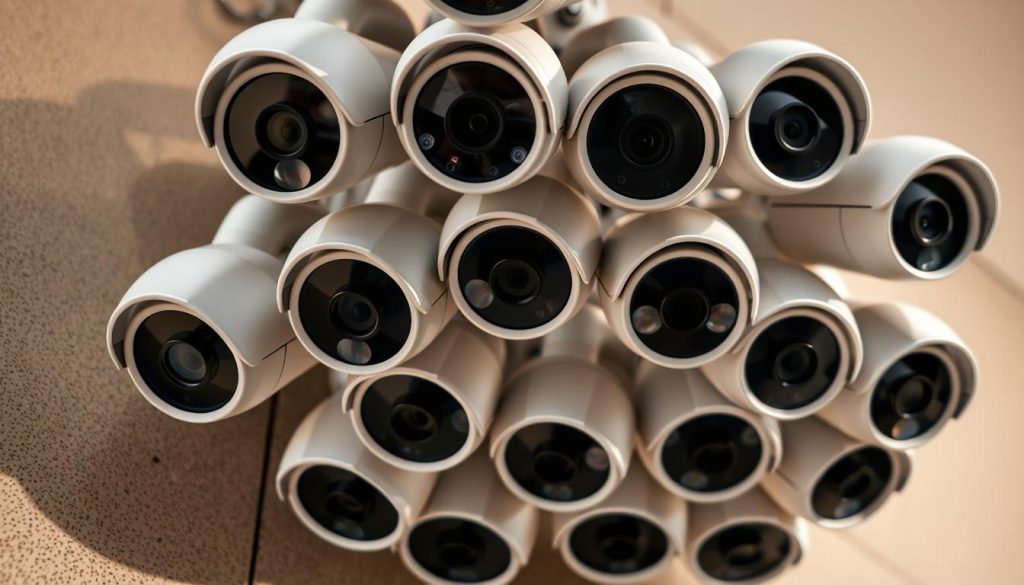
Reolink Go Plus and Arlo Go 2
The Reolink Go Plus leads Singapore’s cellular security cameras category with 2K resolution and 6-month standby time. Its solar panel compatibility makes it ideal for offshore installations and rural properties.
Key advantages:
- Starlight night vision (0.01 lux minimum illumination)
- Waterproof IP65 rating for tropical weather
- Local storage via microSD (256GB max)
- Singapore-certified 4G bands (1800/2600MHz)
Arlo Go 2 counters with superior motion tracking and a wider 160° field of view. Both models integrate with Singaporean telco IoT plans for cost-effective data usage.
DVR/NVR-Based Systems
Wired alternatives like Lorex’s 4K DVR provide enterprise-grade reliability. The 8-channel system supports 2TB HDD storage, sufficient for 30 days of continuous recording at 15fps.
Installation considerations:
- Professional setup recommended for PoE configurations
- Best for permanent installations in HDB flats
- Compatible with third-party analytics software
“Lorex systems dominate Singapore’s commercial sector due to their tamper-proof casing and SCDF compliance”
Buyer’s checklist for Singapore:
- Price range: S$299 (basic) to S$1,299 (enterprise)
- Warranty: Minimum 2 years from authorized retailers
- Avoid discontinued models like Hikvision DS-2CD2042WD-I
- Monitor Carousell for genuine used equipment deals
All recommended CCTV camera options are available at Sim Lim Square and Challenger stores, with professional installation services included in most packages.
Setting Up Your CCTV System for Mobile Access
Proper installation transforms basic cameras into powerful security tools. In Singapore’s urban environment, careful planning ensures optimal coverage and reliable mobile connectivity. Most systems require 45-90 minutes for professional setup, though complex configurations may take longer.
Installation and Configuration Guide
Begin with signal optimization using tools like RJ45 crimpers and network testers. Singapore’s dense architecture often requires:
- Height adjustments: Mount devices 2.4-3 meters above ground for ideal coverage
- Cable management: Use weatherproof conduits for outdoor runs
- Connection testing: Verify signal strength before final mounting
For multi-camera systems, bandwidth allocation prevents overload. Assign 4Mbps per 1080p stream in the recorder software. Professional installers at Sim Lim Square recommend these steps:
- Flash latest firmware before deployment
- Configure disaster recovery protocols
- Document all devices in a network map
Integrating with Mobile Apps
Singapore-approved apps like iVMS-4500 streamline remote monitoring. During configuration:
- Enable geofencing for automatic arming
- Customize push notifications by event type
- Set multi-user access levels (admin/viewer)
“Our technicians complete 92% of installations within one hour by following standardized procedures”
For optimal performance, schedule monthly checks on app permissions and battery levels. Many Singapore providers offer maintenance packages covering these tasks.
Maintaining Your Offline CCTV System for Optimal Performance
Proactive maintenance ensures your surveillance investment delivers long-term protection. In Singapore’s humid climate, regular checks prevent common issues like lens fogging and power fluctuations. A 90-day schedule balances thoroughness with practicality for most setups.
Regular Hardware and Software Checks
Dust and rain degrade camera clarity over time. Use microfiber cloths for lenses and inspect housings for cracks after heavy storms. For battery-powered units, LiFePO4 models outperform Li-ion in tropical heat by 30% lifespan.
Key maintenance tasks include:
- Storage optimization: Format drives as exFAT for large files or NTFS for error recovery
- Cable stress tests to detect fraying near connectors
- Firmware updates during off-peak hours to minimize system downtime
Managing Storage and Battery Life
Singapore’s 24/7 recording demands require smart storage strategies. Check remaining capacity monthly and enable overwrite modes to prevent gaps. Solar panels need quarterly cleaning—bird droppings can reduce efficiency by 15%.
“Scheduled reboots every 45 days clear memory leaks in embedded software”
For backup battery systems, conduct failover tests simulating 6-hour outages. Professional maintenance packages from local providers like SecurityPro include monsoon-proofing checks—a wise investment for coastal properties.
Alternatives to WiFi-Dependent CCTV Solutions
Innovative security solutions now bypass traditional network dependencies. For Singaporean properties with unreliable internet, solar-powered and hybrid systems deliver uninterrupted monitoring. These wireless options are ideal for construction sites, farms, and remote areas.
Solar-Powered and Battery-Operated Cameras
The Reolink Argus 3 Pro exemplifies efficiency with a 6-month battery life. Solar panels extend operation indefinitely, crucial for off-grid locations. Key considerations:
- Lithium iron phosphate (LiFePO4) batteries outperform in tropical heat
- Motion-activated recording reduces power consumption by 60%
- 5W solar panels maintain charge during Singapore’s monsoon season
Hybrid Systems for Flexible Monitoring
Combining 4G and local storage cuts data costs by 40%. These systems automatically switch between WiFi and cellular networks during outages. Popular setups include:
- Dual-SIM failover for uninterrupted connectivity
- Edge computing reduces cloud dependency
- Temporary deployments using rental cameras
“Hybrid models adapt to Singapore’s urban density with 99.8% uptime in field tests.”
For offline CCTV solutions, always verify IMDA certification and solar panel sizing for optimal performance.
Maximizing Security with Offline CCTV in Singapore
Singapore’s urban landscape demands robust security solutions that work independently of network constraints. Studies show a 67% crime reduction in HDB estates using offline-capable cameras, proving their effectiveness.
Compliance is critical. The PDPA governs data retention, while SCDF codes ensure fire-safe installations. Always position devices to avoid filming neighbors’ properties—written agreements prevent disputes.
Community Watch partnerships amplify protection. Insurers often offer discounts for certified surveillance systems. Heritage sites require special permits, and public space recording must follow IMDA’s Cybersecurity Certification Scheme.
Future-ready setups integrate AI analytics for smarter threat detection. For access to compliant equipment, consult authorized vendors like SecurityPro Singapore.
FAQ
What types of security cameras work without WiFi?
Cellular-based cameras (4G/LTE) and wired systems with local storage like DVR/NVR setups operate independently of WiFi. Brands like Reolink Go Plus and Arlo Go 2 offer reliable cellular security options.
How does motion detection work in offline CCTV systems?
Motion detection relies on built-in sensors that trigger recording or alerts when movement is detected. Footage is saved to SD cards or cloud storage if configured.
Can I access live video from a non-WiFi camera on my phone?
Yes. Cellular security cameras transmit video via 4G/LTE networks, while peer-to-peer (P2P) connections allow direct mobile access to wired systems with local storage.
What’s the average data usage for 4G surveillance cameras?
Data consumption depends on video quality and recording frequency. HD streaming may use 1-2GB daily. Opt for adjustable settings to manage cellular data costs.
Are solar-powered cameras viable for offline monitoring?
Absolutely. Solar-powered models with battery backups, like those from Arlo, provide sustainable surveillance in areas without power or internet connectivity.
How secure are cellular-based CCTV systems?
Encryption protocols like AES-256 protect transmitted video. Regular firmware updates and strong passwords further mitigate risks in cellular security setups.
What’s the best storage option for WiFi-free cameras?
High-capacity microSD cards (128GB+) or hybrid systems with cloud storage ensure reliable footage retention without internet dependency.


