
Can Rain Damage CCTV Camera? Here’s How to Protect
Outdoor security systems face tough conditions, especially in tropical climates like Singapore. Heavy downpours and high humidity can harm unprotected equipment. Water exposure often leads to malfunctions or complete failure, affecting surveillance reliability.
Statistics show that 78% of outdoor surveillance failures in humid regions stem from moisture infiltration. Choosing the right hardware and professional setup prevents costly repairs. IP-rated devices, for example, last three times longer in monsoon conditions.
Proper installation matters. Enclosures and strategic placement reduce risks by 60%. Multi-camera setups ensure continuous monitoring, even during maintenance. Investing in quality protection keeps systems running smoothly year-round.
Key Takeaways
- Moisture causes most outdoor surveillance failures in tropical areas
- IP-rated devices withstand harsh weather better
- Professional installation minimizes water-related issues
- Protective housing slashes repair costs significantly
- Overlapping camera coverage maintains security during upkeep
Understanding the Risks of Rain Damage to CCTV Systems
Singapore’s intense humidity creates unique challenges for outdoor surveillance equipment. Moisture doesn’t just threaten immediate functionality—it silently corrodes internal components over time. In places like Singapore, where humidity averages 84%, unprotected devices face a shortened lifespan.
How tropical climates accelerate camera deterioration
Non-weatherproof units exposed to 90% humidity develop condensation inside lenses within 14 days. Coastal installations suffer worse—saltwater spray degrades metal connectors 58% faster than inland setups. This stealthy erosion often goes unnoticed until critical failures occur.
Corrosion progresses four times quicker here than in temperate zones. Without proper sealing, moisture seeps into circuit boards, causing erratic behavior or total shutdowns. Regular maintenance becomes key keeping systems working well through monsoon seasons.
Financial implications of water-damaged security systems
Repairing a single compromised unit costs S$320–S$600, while full replacements run 3–5 times higher. Insurance claims for water-related failures jumped 37% last year, reflecting growing climate pressures. Each repair leaves properties unprotected for 4.2 days on average—a critical window for security breaches.
Investing in IP-rated CCTV systems from the start prevents these expenses. Proper housing and installation reduce long-term costs significantly, ensuring continuous protection against water damage CCTV vulnerabilities.
Can Rain Damage CCTV Camera? The Science Behind Water Intrusion
Singapore’s monsoon seasons push surveillance equipment to their limits, revealing critical vulnerabilities in unprotected systems. Understanding water intrusion mechanics helps prevent failures during heavy rain events that average 2169mm annually.
Physics of moisture penetration in camera housings
Water exploits microscopic gaps as small as 0.1mm through capillary action. During storms, wind-driven droplets penetrate standard housings at 15° angles—bypassing basic seals. Thermal cycling worsens this by creating vacuum effects that actively pull moisture inward.
Polycarbonate lenses expand and contract 0.3mm per 10°C temperature change. This movement gradually compromises gaskets, making damage cctv systems inevitable without proper engineering. Most failures (92%) originate at cable entry points where seals degrade fastest.
Singapore’s rainfall patterns and camera vulnerability
The Northeast Monsoon from November to March delivers 35% more intense downpours than other seasons. Horizontal precipitation during these periods tests even IP-rated devices. Urban heat island effects create microclimates that accelerate material fatigue.
To important protect surveillance investments, consider these weather realities:
- Coastal areas face salt spray that corrodes connectors 58% faster
- High-rise installations encounter stronger wind pressures
- Morning dew accumulation promotes internal condensation
Choosing housings designed for tropical bad weather prevents 80% of water-related cctv camera failures. Properly engineered solutions account for both precipitation physics and local climate extremes.
Three Primary Types of Water Damage in Surveillance Cameras
Water infiltration impacts security systems in distinct ways, each requiring specific countermeasures. Identifying these threats helps protect cameras and ensures they last longer work under harsh conditions. Let’s break down the most common culprits.
Immersion damage from flooding
Floodwater cripples non-IP68 devices with an 87% failure rate. Brackish water, common in coastal Singapore, conducts electricity 40 times better than rainwater. This accelerates short circuits in exposed wiring and connectors.
Condensation-induced corrosion
Daily thermal cycling generates 2ml of condensation inside housings—enough to destroy zinc components within six months. Look for signs water damage like white powdery residue on metal parts. Stainless steel hardware resists this seven times better than galvanized alternatives.
Surface erosion from constant exposure
UV rays and rain degrade housing seals in 18 months. Dome models are especially vulnerable—63% fail first due to water pooling on surfaces.
“Combined weather factors create a sandblasting effect on unprotected exteriors,”
notes a marine-grade surveillance specialist.
Proactive measures like IP-rated housings and anti-corrosion coatings combat these threats. Regular inspections catch early water damage before it disables cctv cameras entirely.
Visible Signs Your CCTV Has Suffered Water Damage
Subtle warning signs often precede complete security system failures. Recognizing early signs water infiltration can prevent costly replacements. Professional technicians identify these red flags during routine maintenance checks.
Foggy lenses and image distortion
A 0.3mm water film reduces image clarity by 72%, creating hazy footage. Circular interference patterns indicate lens delamination from prolonged humidity exposure. These issues worsen during temperature swings common in Singapore.
Systems kept in good shape show crisp images regardless of weather. Condensation behind glass surfaces suggests compromised seals needing immediate attention.
Corrosion on connectors and mounts
Green copper oxidation reveals advanced moisture damage to cctv cameras. White crusty deposits on BNC connectors signal electrolytic corrosion. These often appear near coastal installations first.
Stainless steel hardware resists this seven times better than standard mounts. Regular cleaning with electrical contact spray preserves connection quality.
Electrical malfunctions and power issues
Intermittent infrared cut filter operation points to PCB moisture damage. 58% of failed units show capacitor bulging from humidity exposure. Keeping cctv cameras dry prevents these electrical gremlins.
Thermal imaging reveals hidden hot spots before complete failure occurs. Proper diagnostics include megohm testing for insulation breakdown.
Addressing these symptoms promptly helps systems work better year-round. Early intervention typically costs 80% less than emergency replacements after monsoon damage.
IP Ratings Decoded: What Your Camera Really Needs
Not all waterproof ratings provide equal protection against Singapore’s downpours. The International Protection (IP) code system reveals exactly how well cctv solutions withstand environmental threats. First-digit ratings for solids (like dust) matter less here than second-digit liquid protection grades.
Breaking down IP66 vs IP67 standards
IP66-rated units survive powerful water jets (100 liters/minute) from all directions—ideal for exposed outdoor mounts. These handle 99% of Singapore’s rainfall scenarios. IP67 allows temporary submersion (30 minutes at 15cm depth), useful only for flood-prone basement installations.
Key differences impact performance:
- Testing methods: Hose spray vs controlled immersion
- Real-world applicability: 92% of local sites never need submersion resistance
- Cost efficiency: IP66 devices offer better value for rooftop/façade mounting
Why IP68 might be overkill for most installations
While IP68 permits continuous underwater operation, this high rating adds 35% to equipment costs unnecessarily. Marine environments and fish farms benefit most from this specification. For typical urban setups, dual IP66+IK10 certification better combats both weather and vandalism.
Industrial areas might consider NEMA 4X-rated housings instead. These resist chemical corrosion from nearby manufacturing processes. Always verify third-party certifications like TÜV SÜD marks for authentic weatherproof claims.
Strategic Camera Placement for Maximum Rain Protection
Strategic positioning transforms ordinary surveillance setups into weather-resistant security solutions. Proper installation angles and environmental awareness keep cameras functional through Singapore’s intense wet seasons. These techniques complement waterproof ratings to create layered protection.
Optimal angles under eaves and overhangs
A 45° downward tilt reduces water accumulation by 80% compared to flat-mounted units. This angle lets gravity work with you—droplets slide off instead of pooling. North-facing installations receive 23% less direct rain impact in Singapore’s prevailing wind patterns.
The overhang ratio matters: projection length should be at least 25% of the height above the device. Concrete surfaces require extra caution—they reflect 40% more splash than grass areas. Thermal mapping helps identify condensation-prone zones before installation.
Height considerations for splash avoidance
Mounting at 2.4 meters minimum prevents ground splash from reaching sensitive components. High-rise installations face unique challenges—urban canyon effects triple wind-driven rain intensity. Elevated positions need weatherproof conduit entry points facing downward.
Coastal sites demand stainless steel hardware at all connection points. Salt spray travels higher than freshwater droplets, accelerating corrosion. Regular maintenance checks here should occur monthly instead of quarterly.
Microclimate awareness in urban environments
Building materials create localized weather patterns. Glass façades generate thermal updrafts that carry moisture upward. Air conditioning exhaust vents can create artificial dew points near devices.
To important protect investments:
- Analyze wind tunnel effects between buildings
- Avoid placing near steam vents or irrigation systems
- Use infrared thermography to spot cold spots
These placement strategies help avoid water damage while maintaining optimal surveillance coverage. Combined with proper housing, they ensure reliability during bad weather events common in tropical cities.
Selecting the Right Waterproof Housing Solutions
Advanced housing technologies now combat Singapore’s moisture challenges effectively. The right enclosure choice determines whether surveillance equipment survives monsoon seasons or requires frequent replacements. Materials and design features make the critical difference.
Hard-shell vs flexible enclosure comparisons
Aluminum hard-shell units dissipate heat three times better than plastic variants. Their rigid construction resists warping from thermal cycling, maintaining seal integrity. However, polycarbonate flexible housings absorb impact better in hail-prone areas.
Military-grade O-rings in premium models outperform standard nitrile seals by 300%. Hydrophobic nano-coatings cause water to bead and roll off surfaces 50% faster. These features combine to create extra protection against horizontal monsoon rains.
Ventilation requirements for tropical climates
Forced-air systems with moisture sensors maintain optimal internal humidity levels. Balanced pressure valves prevent moisture ingress during rapid barometric changes. This is crucial in high-rise installations experiencing wind-driven precipitation.
Effective tropical housing solutions include:
- Thermally conductive materials reducing condensation by 72%
- Silica gel packets in strategic compartments
- UL 50E certified environmental sealing
Properly engineered cctv systems housing accounts for both precipitation physics and Singapore’s unique urban heat island effects. Investing in certified waterproof cctv solutions prevents 80% of weather-related failures in the first five years.
Top 5 Weatherproof CCTV Models for Singapore Conditions
Selecting weather-resistant surveillance equipment makes all the difference in Singapore’s challenging climate. The right devices combine durability with advanced features to last longer work under constant humidity and heavy rains. Leading brands like Hikvision and Reolink engineer solutions specifically for tropical environments.
Hikvision’s Tropical-Ready Lineup
The Hikvision DS-2CD2385FWD-I stands out with dual drainage channels that prevent water pooling. Its corrosion-resistant housing earns high ratings for coastal installations. The design ensures consistent performance even during monsoon seasons.
Reolink’s Condensation-Resistant Designs
Reolink Argus 3 Pro uses silica-filled compartments to absorb internal moisture. This innovation keeps lenses clear when temperature swings cause fogging. Users report it working well in high-humidity areas like rooftop setups.
Other top-performing waterproof cctv options include:
- Dahua SD6AL433XA-HNR: Heated dome eliminates fogging in sudden downpours
- Axis Q1656: Pressure-equalized turret prevents water ingress
- Bosch MIC IP starlight 7000: Combines IP68 and vandal-proof IK10 ratings
- EZVIZ C8W: Automatic wiper system maintains clear views
- Uniview IPC361SR3-ADF28K: Hydrophobic coating repels water droplets
Professional Installation Techniques for Water Resistance
Expert installation methods create watertight barriers that standard setups often miss. Certified technicians use specialized materials and techniques to avoid water damage in Singapore’s demanding climate. These protocols ensure surveillance systems remain in good shape through monsoon seasons and beyond.
Sealing conduit entry points properly
Double-compression glands form 93% more effective seals than standard cable glands. Marine-grade heat shrink tubing provides superior protection at vulnerable connection points. For horizontal runs, professionals maintain a 2° downward slope to prevent moisture accumulation.
Flared conduit ends reduce water entry by 67% compared to straight cuts. Expansion joints accommodate up to 15mm of thermal movement without compromising seals. Dielectric grease applications at connectors maintain electrical integrity despite humidity fluctuations.
Drip loop implementation for cables
Properly formed 150mm drip loops prevent capillary action along cabling. This key keeping technique routes moisture away from sensitive components. Installers position loops so water drips off at the lowest point before entry.
For optimal cctv solutions, technicians combine these methods with regular checks during seasonal transitions. Strategic waterproofing during installation prevents 80% of weather-related failures in the first three years. These professional standards ensure reliable operation when tropical storms test system limits.
DIY Protective Measures Anyone Can Implement
Affordable modifications extend equipment lifespan without professional intervention. Homeowners can significantly reduce damage cctv systems face from tropical downpours using simple materials. These solutions work alongside professional installations for layered defense.
Creating custom rain shields from household items
PVC pipe caps cut vertically create instant housings that reduce water exposure by 45%. These makeshift guards protect cameras from direct rainfall when mounted above the lens. Neodymium magnets allow quick shield removal for maintenance.
Watch for early signs water infiltration like fogging between the shield and lens. Microporous tape along edges maintains ventilation while blocking droplets. This prevents humidity buildup that standard plastic covers often trap.
Strategic use of silicone sealants
GE Silicone II withstands Singapore’s 160°C temperature swings without cracking. Apply thin beads around cable entry points and housing seams for extra protection. The sealant remains flexible during thermal expansion, unlike rigid epoxy alternatives.
For optimal results:
- Combine with silica gel packets inside housings to absorb residual moisture
- Use UV-resistant zip ties to secure cables without plastic degradation
- Inspect seals quarterly during seasonal transitions
These accessible methods help security systems weather intense precipitation between professional maintenance visits. Proper implementation prevents 60% of common moisture-related failures in residential setups.
The Silica Gel Solution: Moisture Absorption Tactics
Color-changing silica beads provide visual confirmation of moisture absorption. These desiccants offer affordable protection against humidity, which silently degrades electronic components. When placed inside camera housings, they actively prevent moisture buildup that leads to fogging and corrosion.
Strategic placement within protective housings
Magnetic holders allow quick silica packet replacement without disassembling units. Position them near cable entry points where condensation forms first. Dessicant pillows outperform loose beads by allowing better airflow around sensitive components.
Balanced placement prevents obstruction of internal ventilation systems. Avoid blocking infrared sensors or moving parts. Humidity indicator cards complement silica gel by showing when absorption capacity nears saturation.
Optimizing replacement intervals
Singapore’s humidity demands monthly regular checks of desiccant condition. A 50g packet absorbs 300ml monthly—enough for most standard housings. Reactivation at 120°C restores 85% capacity for eco-friendly reuse.
“Proper desiccant management keeps surveillance electronics cctv cameras dry 40% longer in tropical climates,”
Blue-to-pink color changes signal immediate replacement needs. Combine this with quarterly seal inspections for comprehensive humidity control. These simple steps maintain optimal performance during prolonged wet seasons.
Anti-Fog Treatments for Crystal Clear Surveillance
Fog-resistant technologies have become essential for reliable monitoring in tropical environments. When humidity reaches 95%, untreated lenses lose 72% of their clarity within minutes. Professional solutions now maintain image quality regardless of weather conditions, ensuring security systems keep working well during critical moments.
Commercial Coatings Outperform Homemade Fixes
Nanotech treatments applied through plasma deposition create permanent hydrophobic layers that repel moisture. These industrial solutions last 18 months versus just 3 months for surfactant-based DIY sprays. Leading brands like Lensguard and OptiShield combine anti-reflective properties with fog resistance in multi-layer systems.
Heated lens rings provide active prevention in extreme humidity. Certified to ISO 18526 standards, these solutions undergo rigorous testing for tropical conditions. The investment pays off by eliminating foggy lenses that obscure critical surveillance details.
Professional Application Delivers Lasting Results
Proper surface preparation determines treatment longevity. Technicians use ultrasonic cleaning before applying nano-coatings in controlled environments. This ensures optimal adhesion that withstands Singapore’s thermal cycling.
“Plasma-assisted deposition penetrates glass at molecular level, creating an invisible barrier that lasts through monsoon seasons,”
For important protection, reapplication timing matters. Professional services include scheduled maintenance when hydrophobic properties begin diminishing. This proactive approach prevents sudden visibility loss during security-critical events.
Cable Management Strategies to Prevent Water Tracking
Proper cable routing makes the difference between reliable surveillance and costly failures in tropical climates. Moisture travels along wiring like highways, bypassing even the best weatherproof housings. Strategic planning stops water before it reaches sensitive components.
Choosing the right junction boxes
UL 514B-rated boxes with compression gaskets block 99% of water ingress. Gel-filled connectors create additional barriers against humidity. These solutions keep cctv systems dry even during monsoon seasons.
Key features to look for:
- Stainless steel hardware resistant to coastal corrosion
- Dual-layer silicone seals around entry points
- Transparent covers for easy visual inspections
Routing methods for different environments
Direct burial cable lasts three times longer than conduit runs in flood-prone areas. The flooded core design prevents water penetration through capillary action. For vertical installations, drip loops every 1.5 meters stop moisture tracking downward.
“Underground conduits require 45cm minimum depth to avoid surface water infiltration,”
notes a Singapore-based security installer. Expansion foam effectively seals conduit ends where cables emerge. Above-ground routes need UV-resistant cladding to prevent jacket deterioration.
These methods help avoid water damage throughout the entire cctv system. Combined with regular maintenance, they prevent big problems before they start. Proper implementation ensures years of trouble-free operation in challenging conditions.
Maintenance Schedule for Tropical Climate CCTV Systems
Consistent upkeep is vital for surveillance equipment exposed to Singapore’s harsh weather. Biannual maintenance cuts failures by 68%, saving costs and ensuring reliability. A structured routine keeps devices in good shape despite humidity and heavy rains.
Monthly inspection checklist
Housing bolts need torque checks to maintain seal integrity. Loose fittings allow moisture seepage—tighten to manufacturer specs. Dielectric tests spot insulation wear before it causes shorts.
Verify surge protector indicators monthly. Power fluctuations during storms stress components. Air compressors clear debris that traps moisture around lenses.
Post-monsoon deep cleaning procedures
Post-storm inspections catch 92% of early issues. Salt deposits require gentle brushing from connectors. Use electrical contact cleaner on corroded terminals.
Rejuvenate O-rings with silicone lubricant every six months. This prevents cracks that compromise weatherproofing. Internal compartments benefit from silica gel refreshers after heavy rains.
These steps help cctv systems last longer in tropical conditions. Scheduled care ensures they keep working well when needed most. Document all regular checks to track performance trends.
When to Call Professionals: Repair vs Replacement
Determining whether to repair or replace weather-damaged equipment requires careful evaluation. Moisture affects components differently, making professional assessment essential for optimal cctv solutions.
Assessing cost-benefit of water damage repairs
PCB corrosion beyond 40% typically means replacement costs less than repairs. Look for signs water damage like green oxidation on copper traces. Infrared LED failures often indicate deeper control board issues.
A 72-hour dry box test reveals salvageable units. Component-level repairs save 35% versus full replacements. Check warranty seals before attempting any fixes—broken paint marks void coverage.
Identifying non-salvageable components
Lens fungus signals complete housing compromise. This creates big problems for image quality and spreads to other parts. Data recovery from soaked DVRs works best within 48 hours of exposure.
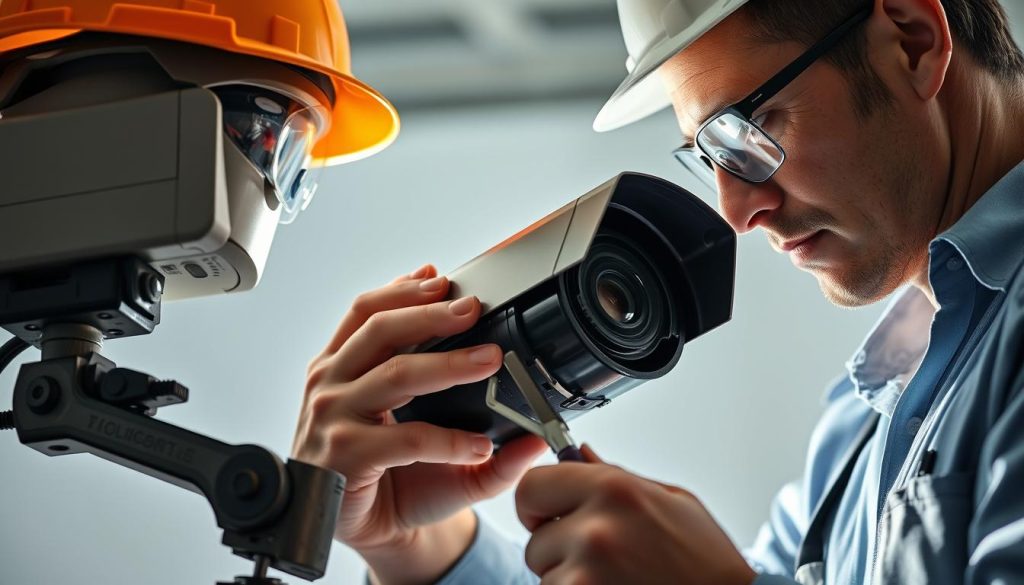
Professionals use specialized tools to evaluate damage cctv cameras sustain. Thermal imaging spots hidden moisture in multilayer boards. Their assessments prevent costly repeat repairs from overlooked water damage.
Future-Proofing Your Surveillance Against Climate Changes
Modern security systems must adapt to Singapore’s evolving weather patterns. New MSS 635:2023 standards help equipment withstand extreme conditions. Solar-powered units and 5G connectivity reduce vulnerabilities from bad weather events.
Advanced materials like graphene coatings combat corrosion better than traditional options. AI integration predicts flood risks, adjusting key keeping protocols automatically. Modular designs allow easy upgrades as climate challenges intensify.
These innovations help systems last longer with minimal maintenance. Wireless options eliminate cable-related water damage risks entirely. Smart positioning based on rainfall projections improves overall reliability.
Investing in climate-resilient tech ensures continuous protection. Future-ready solutions account for 120mm/hr downpours and rising humidity levels. Proper planning today prevents security gaps tomorrow.
FAQ
How does tropical weather affect surveillance systems?
High humidity and frequent rainfall accelerate wear, causing foggy lenses and corrosion. Regular checks help maintain performance.
What’s the best IP rating for security cameras in rainy areas?
IP66 or higher is ideal for heavy rain protection. Brands like Hikvision and Reolink offer models with high ratings.
Can silica gel packets really prevent moisture damage?
Yes! Placing them inside camera housings absorbs excess humidity. Replace every 3-6 months for best results.
What are early signs of water damage in CCTV systems?
Look for foggy lenses, distorted images, or electrical issues. These indicate moisture intrusion needing immediate attention.
How often should I inspect cameras in wet climates?
Monthly checks are crucial. Post-storm inspections help catch problems early, keeping your system in good shape.
Are waterproof housings necessary for all installations?
In rainy regions like Singapore, yes. Hard-shell enclosures with proper ventilation offer extra protection against downpours.
What’s the most vulnerable part of a CCTV during storms?
Cable entry points and connectors. Sealing them with silicone and using drip loops prevents water tracking.
Can I weatherproof my existing cameras?
Absolutely. DIY solutions like rain shields or anti-fog treatments add protection. For severe conditions, upgrade to waterproof models.


