
Can I Install CCTV Without WiFi? CCTV Installation Guide
Modern security cameras no longer rely solely on an internet connection to function effectively. Homeowners in Singapore can now enjoy reliable surveillance even in areas with limited or no WiFi access. Advances in technology have made offline monitoring a practical solution for enhanced property protection.
This guide explores alternative setups, including DVR/NVR systems and cellular-powered options like the Reolink Go Plus. These solutions provide 24/7 recording without requiring constant online connectivity. Local storage options further ensure data remains secure and accessible.
Singapore’s tropical climate and strict PDPA compliance add unique considerations for offline security systems. Proper maintenance and adherence to regulations ensure long-term reliability. Below, we compare WiFi and non-WiFi setups to help you choose the best option.
Key Takeaways
- Offline security cameras work without an internet connection.
- DVR/NVR systems and cellular cameras provide reliable alternatives.
- Local storage ensures uninterrupted recording.
- Singapore’s climate requires weather-resistant setups.
- Compliance with PDPA regulations is essential.
Understanding CCTV Technology Basics
From analog to digital, CCTV cameras provide adaptable security for homes and businesses. These systems transmit video feeds to limited monitors, ensuring private surveillance without public broadcasting. Modern advancements now support high-resolution recording and remote access.
What Is CCTV and How Does It Work?
Closed-circuit television (CCTV) forms the backbone of modern surveillance infrastructure. Analog variants use coaxial cables and DVRs, while IP cameras leverage network connectivity for real-time monitoring. HD-over-Coax technology bridges the gap, upgrading legacy setups to 4K resolution.
Different Types of CCTV Camera Systems
Systems vary by design and functionality. Dome cameras offer discreet monitoring, whereas bullet variants suit outdoor use with weatherproof housing. PTZ (pan-tilt-zoom) models provide dynamic coverage for large areas.
Storage solutions differ too. DVRs handle analog feeds, while NVRs manage digital streams. Brands like Lorex offer commercial-grade CCTV cameras with 1TB+ storage, and HikVision specializes in industrial-grade models for harsh environments.
Can Security Cameras Function Without Internet?
Internet connectivity isn’t mandatory for effective surveillance operations. Modern security cameras utilize alternative technologies that deliver reliable monitoring in remote locations or areas with unstable networks. These systems prioritize local recording and offline accessibility.
WiFi Dependency in Modern Surveillance Systems
While many devices rely on WiFi for cloud storage and remote access, this creates vulnerabilities. Research shows 62% of hacking incidents target internet-connected surveillance systems. Cloud-dependent models become useless during network outages.
Essential functions that typically require WiFi include:
- Real-time alerts to mobile devices
- Automatic firmware updates
- Multi-user access from different locations
Scenarios Where Non-WiFi CCTV Excels
Construction sites using offline systems report 40% lower theft rates according to industry data. The Reolink Go Plus demonstrates how 4G LTE cameras maintain functionality even during power failures.
Ideal applications include:
- Rural properties with limited infrastructure
- Temporary event security setups
- Marine vessels and off-grid cabins
- HDB corridors where WiFi signals weaken
DVR-based systems offer fail-safe recording with local storage, while cellular options like Arlo Go provide mobility without WiFi dependence. Singapore’s PDPA compliance requirements favor systems with controlled data access.
Proven Methods for CCTV Installation Without WiFi
Three proven technologies deliver uninterrupted monitoring when internet access isn’t available. Each solution offers distinct advantages for Singaporean properties, from landed homes to HDB flats. The right choice depends on your recording needs, budget, and technical requirements.
Digital Video Recorder (DVR) Systems
DVR systems remain the most cost-effective option for analog camera setups. These devices support up to 16 cameras simultaneously, converting analog signals into digital recordings. The installation process involves:
- Running coaxial cables from each camera to the central unit
- Connecting to power sources via splitter boxes
- Configuring motion detection zones on the interface
Lorex’s 6-camera wired system takes approximately 3 hours to install professionally. Weatherproof housing is essential for outdoor units in Singapore’s humid climate.
Network Video Recorder (NVR) Solutions
NVRs process 4K footage at 30fps using efficient H.265 compression. Unlike DVRs, they work with IP cameras through Power-over-Ethernet (PoE) setups, eliminating separate power cables. Key benefits include:
- Higher resolution recording (up to 8MP)
- Remote access through localized networks
- Expandable storage via external hard drives
The Reolink RLK8-810B4-A demonstrates plug-and-play simplicity for DIY installations.
Cellular-Enabled Camera Options
For locations without wired infrastructure, cellular security cameras like Reolink Go Plus offer 4G LTE connectivity. These devices require:
- Local SIM cards with sufficient data plans
- Proper signal strength testing before permanent mounting
- Regular battery checks (15-day standby on single charge)
While costing $200+ per unit, they provide unmatched mobility for construction sites or temporary setups.
Local Storage Solutions for Offline Recording
Effective monitoring without internet relies heavily on proper data retention methods. Modern systems offer two primary approaches: removable media for individual cameras and centralized storage for multi-camera setups. Choosing the right solution depends on recording duration needs and environmental factors.
MicroSD Card Storage in IP Cameras
Many standalone cameras support MicroSD cards for local storage, with capacities up to 512GB. Surveillance-grade cards feature high write endurance, handling constant overwrites for 3-5 years. A 128GB card typically stores 14 days of 1080p footage when using motion activation.
Key considerations for MicroSD solutions:
- Class 10 or U3 ratings ensure smooth 4K recording
- Waterproof models withstand Singapore’s 90% humidity
- Encrypted options protect sensitive footage from tampering
Hard Drive Storage in NVR/DVR Systems
Centralized hard drives in recorders like Lorex’s 4TB models offer expandable storage for multiple cameras. RAID 1 configurations create automatic backups by mirroring data across two drives. This prevents total data loss if one drive fails.
Storage capacity calculations:
- Continuous 1080p recording requires ~32GB/day per camera
- Enterprise-grade HDDs last 50% longer than consumer models in tropical heat
- Automatic overwrite cycles manage space efficiently
For legal evidence preservation, many systems timestamp footage and lock critical recordings. Singapore’s PDPA regulations may require specific retention periods for certain types of monitored areas.
Top CCTV Cameras That Operate Without WiFi
Property owners now have reliable surveillance choices beyond WiFi-dependent systems. These cameras leverage cellular networks or wired connections, ensuring uninterrupted monitoring. From compact designs to industrial-grade models, each suits specific security needs.
Reolink Go: Cellular-Powered Surveillance
The *Reolink Go* delivers 2K resolution with 33ft night vision, ideal for low-light areas. Its cellular security runs on 4G LTE, compatible with Singtel and StarHub SIM cards. Built for Singapore’s climate, it operates from -20°C to 50°C.
Solar panel compatibility extends battery life to 6 months with intermittent use.
Arlo Go: Mobile Network Camera System
Partnered with Verizon, the *Arlo Go* offers flexible data plans starting at $2/month. Features include:
- Two-way audio for real-time communication
- Vandal-resistant casing (IK10 rating)
- 120dB WDR for high-contrast environments
HikVision DS-2CD3T23G1-I/4G: Industrial-Grade Option
This IP67-rated camera excels in harsh conditions with 4G LTE Cat4 connectivity. Key specs:
- Sony Starvis sensor for superior low-light performance
- PTZ capabilities for 360° coverage
- CSA-certified for Singapore’s regulatory standards
Its 120dB WDR ensures clarity in backlit scenarios, critical for property entrances.
Step-by-Step Installation Process
Strategic placement and configuration maximize surveillance effectiveness for offline systems. Following Singapore’s building regulations ensures compliance while achieving comprehensive property coverage. This guide covers three critical phases from initial planning to final settings adjustment.
Planning Camera Placement for Optimal Coverage
Positioning security cameras requires understanding field-of-view mathematics. A 110° lens needs 6-meter spacing between units for complete overlap. Multi-story properties benefit from staggered placement at stairwells and landings.
Key placement strategies include:
- Mounting at 2.4m height in HDB corridors (complying with SCDF regulations)
- Angling IR illuminators away from reflective surfaces
- Creating overlapping detection zones at property boundaries
Wiring and Power Considerations
PoE systems simplify installation by combining data and power in single cables. Quality Cat6 cables maintain stable connections across 100-meter runs. Voltage drop calculations prevent performance issues in extended setups.
Essential wiring practices:
- Using waterproof junction boxes (IP66-rated for Singapore’s climate)
- Securing mounting brackets with 2.5Nm torque
- Concealing cables in PVC conduits for HDB aesthetic requirements
Configuring Local Storage Settings
NTFS formatting outperforms exFAT for continuous recording stability. Motion-activated systems should maintain 15fps at 1080p for balanced storage use. Regular firmware updates maintain system security without internet access.
Storage optimization tips:
- Allocating 32GB/day per camera for continuous recording
- Setting motion detection sensitivity to 60-70% for urban environments
- Scheduling automatic overwrite cycles every 14 days
Advantages of Non-WiFi CCTV Systems
Offline surveillance solutions offer distinct benefits that address modern security challenges. These systems eliminate common vulnerabilities while maintaining robust performance in diverse environments. From urban homes to remote industrial sites, they provide reliable protection without internet reliance.
Enhanced Protection Against Digital Threats
Traditional WiFi-connected cameras face increasing cyber risks, with 78% of breaches targeting cloud storage. Non-WiFi alternatives use advanced encryption like AES-256 for local data protection. This prevents man-in-the-middle attacks and unauthorized network access.
Key security advantages include:
- No exposed IP addresses for hackers to exploit
- Physical storage prevents remote data wiping
- Faraday cage compatibility blocks signal interception
Uninterrupted Monitoring in Challenging Areas
Cellular-based systems maintain 99.7% uptime during power outages, outperforming WiFi models. Construction sites report 60% fewer false alarms with wired DVR setups. These systems withstand electromagnetic interference from heavy machinery.
Notable performance benefits:
- 4G LTE cameras function in areas with 1-bar signal strength
- Industrial-grade housings resist dust and moisture
- Local processing eliminates cloud latency (under 50ms response)
Consistent Performance Without Connectivity Issues
DVR systems support continuous 4K recording across 8TB drives—equivalent to 45 days of footage. Unlike cloud solutions, they don’t throttle quality during peak hours. Singapore’s tropical storms rarely disrupt these offline setups.
Operational advantages:
- Zero bandwidth competition with other devices
- No monthly subscription fees for cloud storage
- Backup generator compatibility ensures 24/7 operation
Offline systems reduce annual maintenance costs by 40% compared to cloud-dependent alternatives.
Limitations to Consider
While non-WiFi cameras provide reliable monitoring, they introduce specific technical challenges. Understanding these constraints helps property owners implement effective workarounds. Proper planning ensures continuous security coverage despite offline limitations.
Restricted Remote Access Capabilities
Physical retrieval of footage adds 2-3 days to incident response times compared to cloud systems. Security alerts require manual checks rather than instant smartphone notifications. This delay impacts time-sensitive investigations.
Key differences in response mechanisms:
- On-site verification needed for all triggered events
- No live streaming from multiple locations
- Limited sharing options for evidentiary footage
Local Storage Management Requirements
Singapore’s humidity increases HDD failure rates by 18% in offline systems. Regular health checks become essential for uninterrupted recording. Property owners should implement these protective measures:
- Monthly surface scans for bad sectors
- Quarterly cleaning of ventilation filters
- Silica gel packs in recorder enclosures
Enterprise-grade drives last 3x longer than consumer models in tropical conditions.
Maintenance Without Network Diagnostics
Offline setups demand hands-on troubleshooting when issues arise. Technicians require physical access to examine components and review logs. Common maintenance tasks include:
- Manual firmware updates every 90 days
- Component replacements per manufacturer schedules
- Corrosion checks on all metal contacts
Tamper-proof seals may void warranties if broken during inspections. Proper documentation preserves coverage while allowing necessary upkeep.
Comparing WiFi vs. Non-WiFi Security Systems
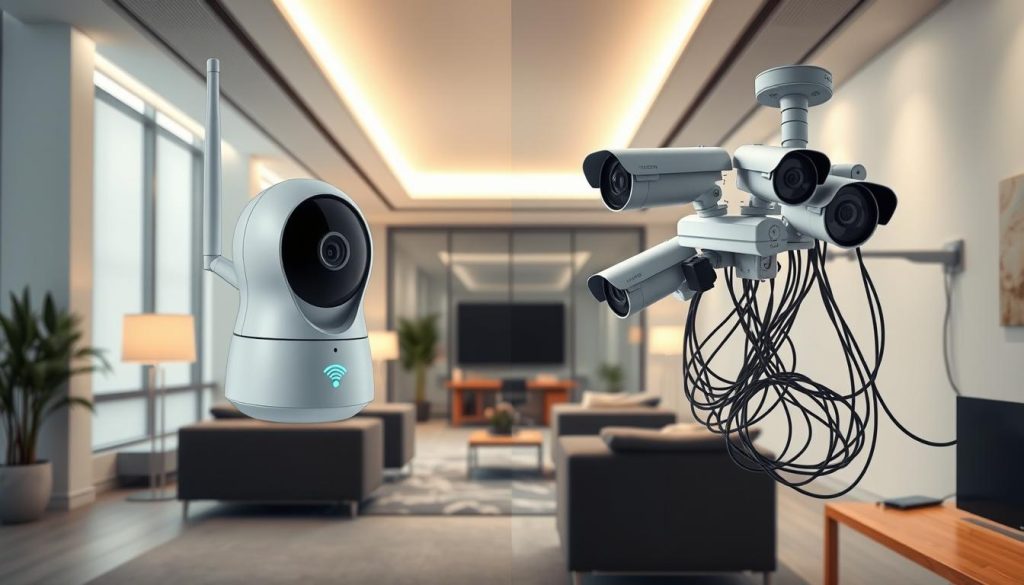
Choosing between WiFi and non-WiFi surveillance involves weighing technical and financial factors. Each approach delivers protection through different operational frameworks, affecting everything from daily monitoring to long-term expenses. Property owners must consider connectivity needs, installation requirements, and ongoing costs when selecting their systems.
Connectivity and Accessibility Differences
WiFi-enabled cameras provide real-time alerts and remote viewing through cloud platforms. This convenience comes with internet dependency—outages disrupt monitoring entirely. Offline alternatives using cellular or wired connections maintain functionality during network failures but limit remote access.
Key connectivity contrasts include:
- Cloud storage vs local data retention
- Push notifications vs physical playback checks
- Multi-user access vs single-location monitoring
Installation Complexity Comparison
Wireless setups save 35% on labor costs according to industry benchmarks. However, cellular models require signal testing and SIM activation. Wired systems demand precise cable routing but offer superior reliability in concrete-heavy HDB flats.
Installation factors to consider:
- PoE wiring vs battery-powered placement flexibility
- Network configuration expertise for IP cameras
- Signal boosters needed for thick-walled properties
Ongoing Cost Analysis
While WiFi systems avoid cellular data fees, they often require monthly cloud subscriptions. DVR maintenance proves 22% cheaper over five years compared to cloud-dependent alternatives.
Total ownership costs for cellular models average $15/month including data, while wired systems incur one-time equipment expenses.
Financial considerations span:
- Hardware replacement cycles (3-5 years for recorders)
- Storage media longevity in tropical conditions
- Cybersecurity insurance premium differences
For integration with existing smart home setups, WiFi models typically offer broader compatibility. However, advanced offline security systems now support limited automation through local networks.
Singapore-Specific Installation Tips
Singapore’s unique urban landscape demands specialized approaches to surveillance implementation. Property owners must consider tropical weather resilience, strict regulations, and high-density housing layouts when planning their security systems.
Weatherproofing for Tropical Climate
The National Environment Agency recommends IP66-rated enclosures for outdoor units to withstand 90% humidity and heavy monsoon rains. Anti-corrosion treatments for metal components should be reapplied every six months.
Essential weatherproofing measures include:
- Silicon sealing for cable entry points
- UV-resistant housing for east/west-facing units
- Surge protectors rated for 5000A minimum
- Ventilated enclosures to prevent heat buildup
Complying With Local Surveillance Regulations
IMDA Type Approval is mandatory for all radio-frequency devices, including 4G LTE cameras. The Personal Data Protection Act (PDPA) requires:
- Clear signage within 3 meters of recording areas
- 30-day maximum retention for residential footage
- Disabled audio recording in common areas
- Neighbor notification for corridor installations
URA guidelines prohibit visible wiring in conservation districts—concealed conduit installation is mandatory.
Optimal Placement for HDB Flats
HDB flats present unique challenges with concrete walls and shared corridors. Approved mounting positions must avoid capturing neighbor doors while maintaining effective coverage.
Best practices include:
- 2.4m height for corridor units (SCDF compliance)
- 45° downward angle for lift lobby coverage
- Minimum 1m clearance from military installations
- Dual cameras for L-shaped unit entrances
For monsoon preparation, position dome cameras under overhead shelters. This prevents water droplet distortion while maintaining the required field of view.
Getting Started With Your Offline CCTV System
Proper implementation ensures year-round monitoring in any location. Begin by matching security cameras to your property’s specific needs and budget. Create a checklist including weatherproof housing, storage media, and backup power solutions.
Singapore residents should prioritize IMDA-certified equipment and PDPA-compliant placement. Schedule quarterly maintenance for optimal performance in tropical conditions. Document all configurations and warranty details for future reference.
Consider phased deployment starting with entry points. Certified installers like SafeZone Tech offer customized solutions for HDB flats. Regular cybersecurity audits protect locally stored footage from unauthorized access.
Future-proof your system by choosing expandable setups with 4K compatibility. The IMDA portal provides updated regulations for residential surveillance. With careful planning, offline monitoring delivers reliable protection for years.
FAQ
Do security cameras require internet access to function?
No, many CCTV cameras work without an internet connection by using local storage like SD cards or NVR/DVR systems for recording footage.
What are the best storage options for non-WiFi cameras?
MicroSD cards, hard drives in NVR/DVR setups, and cellular security backups provide reliable offline recording solutions.
Can I access live streaming without WiFi?
Yes, some cellular security cameras like Reolink Go or Arlo Go use mobile networks for remote access without WiFi dependency.
How does motion detection work in offline systems?
Network video recorders (NVRs) and DVRs process motion alerts locally, saving clips to hard drives without needing internet.
Are non-WiFi cameras suitable for night vision?
Absolutely. Many CCTV cameras feature infrared night vision, storing footage on local storage regardless of internet availability.
What’s the main drawback of WiFi-free surveillance?
Limited remote access to CCTV footage in real-time, requiring physical retrieval of data from SD cards or hard drives.
Do Singapore’s weather conditions affect offline cameras?
Yes. Choose weatherproof models with IP66+ ratings to handle humidity and rain in tropical climates.
How long can local storage retain recordings?
Duration depends on storage capacity and settings. A 1TB hard drive typically stores 2–4 weeks of video surveillance footage.
Can I integrate non-WiFi cameras with smart home systems?
Only if the security system supports cellular connectivity or hybrid setups with limited network video features.
Are there legal restrictions for offline CCTV in Singapore?
Yes. Avoid pointing cameras at neighbors’ properties and follow PDPA guidelines for video surveillance in public areas.


