
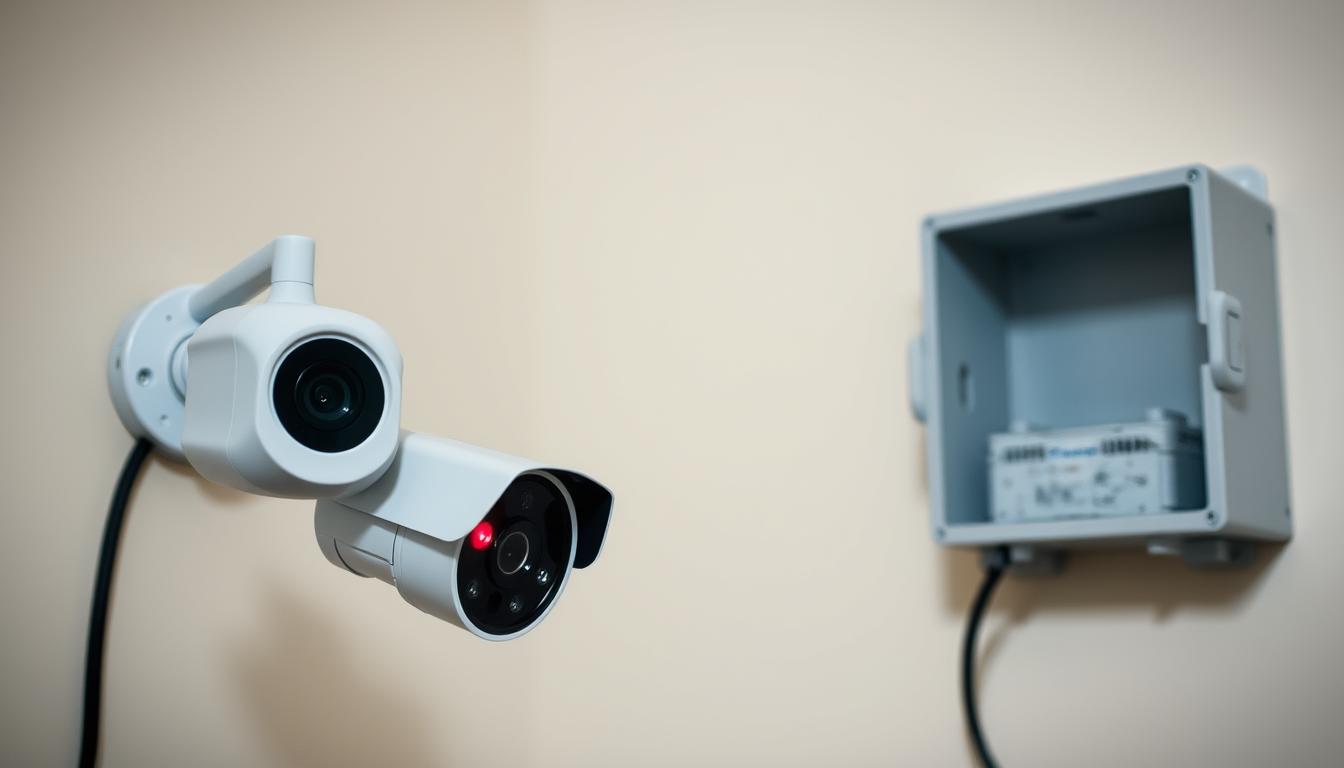
Can I install CCTV without WiFi?
Security is more important than ever, in Singapore and everywhere. People want good surveillance for their homes and businesses. Many wonder if they can install CCTV without WiFi. The answer is yes, thanks to new tech that lets us watch without the internet.
This article will look into installing security cameras without WiFi. We’ll see how new tech makes it easy and effective.
Key Takeaways
- CCTV installation without WiFi is feasible using alternative technologies.
- Advancements enable effective surveillance without internet connectivity.
- Security cameras without WiFi can provide reliable monitoring.
- Exploring non-WiFi options is vital for enhanced security in various settings.
- Understanding the technology behind CCTV can aid in optimal installation choices.
Understanding CCTV Technology
CCTV technology, or closed-circuit television, is key in today’s surveillance systems. It offers security for many places. It captures video and sends it to monitors, making it vital for businesses, public areas, and homes. Knowing how CCTV works is important for those looking for a good surveillance system.
What is CCTV?
Closed-circuit television means the video feed goes straight to a few monitors, not on the open network. This makes it secure and controlled. It’s used in places like malls, banks, and homes to keep people safe and prevent crime.
Different Types of CCTV Cameras
There are many types of CCTV cameras, each with its own features:
- Analog Cameras: These are the old-school cameras that send standard-definition video to a DVR for recording.
- HD-over-Coax: These cameras use old coaxial cables to send high-definition video. They’re easy to set up without the need for IP systems.
- IP Cameras: These cameras connect to a network. They offer high resolution and advanced features like remote access and analytics.
Knowing about these CCTV camera types helps users pick the best system for their security needs. This could be based on quality, ease of use, or how much data they can store.
Can I install CCTV without WiFi?
In today’s world, many surveillance systems need WiFi to work well. They use WiFi for live streaming, remote access, and quick alerts. But, there are *CCTV without internet* options for those who don’t need constant online access.
Knowing how much WiFi a system needs is important for everyone. People in areas with bad internet might not find WiFi-based systems good enough. So, they look for other ways to secure their places without needing the internet.
Options for CCTV Installation without WiFi
Looking into CCTV options without WiFi reveals many ways to protect your property. Digital Video Recorders (DVR) and Network Video Recorders (NVR) are key parts of a solid surveillance system. They record footage locally, without needing the internet. Also, cellular security cameras use mobile networks for data, keeping your place monitored, even far away.
Direct Video Recording to DVR/NVR
DVR and NVR systems meet different surveillance needs well. DVRs are for analog cameras, saving footage on a hard drive. NVRs, on the other hand, are for IP cameras, giving better video quality and storage. Both don’t need WiFi, making them great for those who value strong local storage.
Using Cellular Security Cameras
Cellular security cameras, like the Arlo Go and Reolink Go, work on their own. They need only a mobile LTE subscription. These cameras are great for those without WiFi, sending alerts and letting you watch live video from anywhere. With a SIM card built-in, you can keep an eye on your property from anywhere, without needing the internet.
Local Storage Solutions
Looking for a reliable surveillance system without WiFi? Local storage options are a great choice. They ensure continuous recording and easy access to footage. This makes them key for effective monitoring.
MicroSD Cards in IP Cameras
IP cameras use MicroSD cards for local storage. This small method stores recorded footage right on the camera. Users can choose cards with more space for storing more data.
Recording is often set to start when motion is detected. This saves space, but you can also choose to record all the time. This is important for keeping important moments safe, even without internet.
For more on CCTV systems and WiFi, check this resource.
Utilizing Network Video Recorders (NVR)
NVR systems are another good choice for local storage. They connect to many IP cameras, making it easy to manage footage. NVRs store data on local hard drives, so you don’t need WiFi.
They support high-definition video, making sure your recordings are clear. With NVR systems, you can link many cameras together. This improves surveillance in different places. Local storage with NVRs is a solid choice for keeping an eye on things, even without internet.
Benefits of CCTV without WiFi
Installing CCTV systems without WiFi has many advantages. They are a great choice for many property owners. These systems offer strong monitoring, even in tough conditions. Here are some key points about non-WiFi CCTV systems.
Increased Security and Privacy
CCTV systems without WiFi offer big privacy benefits. They don’t need the internet, so they’re less open to hackers. This means property owners can be more secure, knowing their video feeds are safer.
Reliable Monitoring in Remote Areas
Many people like the benefits of CCTV in places without good internet. Non-WiFi systems work well for remote monitoring in rural or off-grid areas. They keep watching, even when internet is a problem. This is very helpful for protecting properties anywhere.
Challenges of Installing CCTV without WiFi
Setting up CCTV systems without WiFi comes with its own set of challenges. It’s important to understand these issues to make the right choices for your surveillance needs.
Limited Remote Access and Notifications
The biggest problem is remote access limitations. Without WiFi, it’s hard to watch live feeds or review past recordings from afar. This makes it tough to keep an eye on your property from different places. Also, not getting alerts for things like motion detection can be a big drawback.
Users often miss important moments. This can lead to security problems.
Dependence on Local Storage Capacity
Another issue is local storage issues. CCTV systems without WiFi depend a lot on local storage like DVRs or NVRs. If these fail or run out of space, you could lose your recordings. It’s vital to have enough storage and to back up your footage regularly.

Comparing WiFi and Non-WiFi CCTV Solutions
Choosing a surveillance system means knowing the difference between WiFi and non-WiFi CCTV. It’s important to weigh the pros and cons of each type. This helps users pick the right system for their needs.
Pros and Cons of WiFi CCTV Systems
WiFi CCTV systems have many benefits. They offer:
- Convenient remote access through mobile apps, so you can watch live from anywhere.
- Live streaming capabilities for quick security checks.
- Easier installation with fewer wires, making setup simpler and more flexible.
But, WiFi systems also have downsides:
- Vulnerability to hacking if not well-protected.
- They need a stable internet connection, which can be a problem in some areas.
Pros and Cons of Non-WiFi CCTV Systems
Non-WiFi CCTV systems have their own advantages:
- Increased security because they don’t use the internet, lowering cyber risks.
- They work well in places without a constant network, perfect for remote spots.
But, there are also some drawbacks:
- Limited remote access, making it hard to watch live feeds from afar.
- Dependence on local storage can limit how much footage you can keep.
Popular CCTV Cameras that Function without WiFi
Many top CCTV cameras work well without WiFi. They meet security needs in different places, where internet might be hard to find. The Reolink Go and Arlo Go are great for easy monitoring from afar.
Reolink Go and Arlo Go Overview
The Reolink Go uses 4G LTE for live video access from anywhere. It’s a favorite in Singapore, where WiFi can be spotty. It records HD video and sends alerts to your phone.
The Arlo Go also works on cellular networks, not WiFi. It has cool features like two-way audio and night vision. Plus, it stores footage on MicroSD cards for easy management.
Features of HikVision DS-2CD3T23G1-I/4G
The HikVision DS-2CD3T23G1-I/4G is built tough. It captures high-definition images and can handle all kinds of weather. It’s perfect for outdoor use.
It has great night vision, a strong casing, and 4G connectivity. These features make it a solid choice for places with no internet.
Installation Considerations for Non-WiFi CCTV
Choosing a non-WiFi CCTV setup requires careful planning. Start by placing cameras in key areas for the best view. Make sure they’re not blocked by anything, so they can see everything they need to.
Think about how much storage you’ll need for your recordings. Use MicroSD cards or NVR systems that can hold a lot of data. Check how much space you have left often to avoid losing any footage. Also, consider the wiring needed for direct connections, as it can impact how well your system works.
Keeping your system in good shape is important. Clean the cameras regularly and check for any damage. By doing this, your non-WiFi CCTV system will work well and keep you safe.
FAQ
Can I install a CCTV system without an internet connection?
Yes, you can install CCTV systems without WiFi. You can use Digital Video Recorders (DVR), Network Video Recorders (NVR), and cellular security cameras. These can work well without needing the internet.
What types of CCTV cameras are available for use without WiFi?
Many CCTV cameras work without WiFi. You can find analog cameras, HD-over-coax cameras, and special cellular cameras. The Arlo Go and Reolink Go are examples that use cellular data plans.
What are the advantages of a non-WiFi CCTV system?
Non-WiFi CCTV systems offer more security and privacy. They are less likely to be hacked. They also work well in places without internet, making them reliable for monitoring.
What challenges might I face when using a CCTV system without WiFi?
Using a CCTV system without WiFi has some downsides. You can’t watch live streams or get notifications from afar. You can only see footage when you’re there. Also, if local storage fails, you might lose important recordings.
How do I store footage without WiFi?
You can store footage locally. IP cameras use MicroSD cards. DVRs and NVRs save videos on local hard drives.
Are there popular CCTV brands that offer systems without WiFi?
Yes, many well-known brands offer CCTV systems without WiFi. HikVision, Reolink, and Arlo are some examples. They provide strong surveillance options without needing WiFi.
What factors should I consider for the installation of non-WiFi CCTV systems?
When installing non-WiFi CCTV systems, think about camera placement and storage needs. You’ll also need to plan for wiring and maintenance. These steps help keep your system running smoothly.


