
Can CCTV Work in Dark? Tips for Night Surveillance
Effective security monitoring requires reliable performance around the clock. Many environments experience limited lighting conditions after sunset.
Modern surveillance technology has evolved significantly to address these challenges. Advanced features now enable clear visibility even in complete darkness.
These systems combine specialized cameras with monitoring equipment and recording devices. They work together to provide comprehensive protection during all hours.
Both residential and commercial properties benefit from this technology. Understanding camera capabilities ensures optimal security planning for any location.
Key Takeaways
- Modern surveillance systems can effectively operate in low-light conditions
- Night vision technology enables clear monitoring during darkness
- Proper camera selection is crucial for nighttime security performance
- Complete systems include cameras, monitors, and recording devices
- Both homes and businesses benefit from reliable dark environment surveillance
- Understanding technical capabilities helps optimize security planning
- Strategic placement enhances night vision effectiveness
Understanding the Core Question: Can CCTV Work in Dark?
Modern surveillance systems handle low-light situations remarkably well. Specialized technologies enable clear visibility when natural illumination disappears.
Infrared technology forms the backbone of nighttime security monitoring. These systems use infrared LEDs that emit invisible light waves.
The cameras detect these infrared waves and convert them into visible images. This process occurs without any visible light source required.
Most quality systems feature automatic switching mechanisms. They seamlessly transition between daytime color and nighttime infrared modes.
Different environments present unique challenges for surveillance equipment. Total darkness often yields better results than partial lighting conditions.
Various camera types excel in specific low-light situations. Some models perform exceptionally well with minimal ambient light.
Modern systems maintain uninterrupted monitoring through day-night transitions. This continuous operation provides comprehensive security coverage.
The technical principles involve advanced light detection and image processing. Sensors capture available light and enhance it digitally.
Real-world applications demonstrate effective nighttime performance across multiple settings. Residential properties and commercial establishments both benefit significantly.
Understanding these capabilities helps property owners make informed decisions. Proper system selection ensures optimal security after sunset.
Essential Night Vision Technologies Explained
Singapore’s security landscape demands sophisticated night vision capabilities. Multiple technological approaches enable surveillance systems to overcome darkness challenges effectively.
Infrared Illumination: The Standard for Darkness
Infrared technology forms the foundation of modern night vision cameras. These systems operate using wavelengths between 850-940nm, completely invisible to human eyes.
IR LEDs activate automatically when lighting conditions deteriorate. This seamless transition ensures continuous monitoring without manual intervention.
The technology captures clear images by detecting reflected infrared radiation. Advanced processors then convert this data into visible monochrome footage.
Thermal Imaging: Seeing Heat Signatures
Thermal imaging represents a revolutionary approach to night surveillance. This technology detects heat signatures rather than relying on visible light.
These security cameras can identify temperature differences up to 300 meters away. Everything emits some level of infrared radiation, making this technology exceptionally reliable.
Thermal imaging excels in challenging environments like heavy fog or complete darkness. The systems produce clear images based on temperature variations rather than light reflection.
Color Night Vision and Low-Light Sensors
Modern sensors enable impressive color imaging in near-total darkness. Starlight technology achieves full-color footage at just 0.005 lux illumination.
CMOS sensors consume 30% less power than traditional CCD alternatives. They excel at capturing infrared light while maintaining energy efficiency.
EXIR technology extends illumination ranges beyond 50 meters with 25% lower energy consumption. This advancement provides superior coverage for larger Singaporean properties.
These sensors work with advanced image processing algorithms. They enhance available light to produce detailed, color-accurate footage even in low-light conditions.
Key Specifications for Evaluating Night Vision Cameras
Selecting the right surveillance equipment requires understanding critical technical specifications. These metrics determine how well your system performs during nighttime hours.
Different environments demand specific capabilities from security cameras. Proper evaluation ensures optimal performance for your property’s unique needs.
Infrared Illumination Range and Quality
Infrared range indicates how far cameras can detect objects without visible light. Standard models typically cover 25 meters, while advanced systems reach 50+ meters.
Longer ranges provide better coverage for larger properties. The quality of infrared illumination affects image clarity and detail recognition.
Higher-quality IR systems produce more uniform lighting without hotspots. This ensures consistent monitoring across the entire surveillance area.
Lux Rating and Sensor Sensitivity
Lux ratings measure a camera’s light sensitivity capabilities. Lower values indicate better performance in near-total darkness.
Most quality night vision cameras operate at 0.001 lux or lower. For challenging weather like heavy rain, aim for at least 0.01 lux rating.
Sensor sensitivity directly impacts image quality in low-light conditions. Advanced sensors capture more available light for clearer footage.
Resolution and Image Clarity in Darkness
Resolution requirements vary based on surveillance objectives. 1080p represents the minimum for facial recognition purposes.
Higher resolutions like 4K provide exceptional detail but demand more storage capacity. Consider these factors when planning your surveillance system.
Image clarity involves more than just resolution numbers. Sharpness, contrast, and focus range all contribute to usable footage.
Weather resistance is crucial for reliable operation. IP67 rating provides minimum protection against Singapore’s monsoon conditions.
Storage calculations must account for resolution and recording duration. Higher resolution footage requires significantly more storage space.
Balancing technical specifications with budget ensures optimal system selection. Prioritize features that address your specific security concerns.
Understanding these specifications prepares you for comparing different camera types. The next section explores various technologies available for nighttime monitoring.
Comparing Camera Types: IR, Thermal, and Day/Night Models
Security professionals face important decisions when selecting surveillance equipment. Different camera technologies offer unique advantages for various monitoring scenarios.
Infrared systems provide the most cost-effective solution for typical applications. These devices deliver detailed images within 50-meter ranges at approximately 80% lower cost than alternatives.
Thermal imaging represents the premium option for long-distance detection. This advanced technology identifies heat signatures up to 300 meters away but carries significantly higher investment requirements.
Day/night cameras utilize sophisticated imaging sensors that handle both lighting conditions. They employ IR cut filters during daylight hours to maintain color accuracy while switching to infrared mode after sunset.
Modern hybrid systems combine multiple technologies for comprehensive coverage. These integrated solutions pair thermal detection with infrared detail capture for optimal performance.
Key differences between camera types:
- Infrared cameras: $150 average cost, 50-meter range, detailed images
- Thermal imaging: $15,000+ investment, 300-meter detection, heat-based imaging
- Day/night models: Automatic switching, IR cut filters, dual-mode operation
- Hybrid systems: Combined technologies, comprehensive coverage, higher complexity
Singapore’s Changi Airport demonstrates practical implementation of multiple technologies. Thermal imaging monitors runways for long-distance aircraft detection while infrared systems cover terminal areas for detailed surveillance.
Budget considerations play a crucial role in camera selection. Infrared systems suit most residential and commercial applications where detailed identification within 50 meters satisfies security requirements.
Thermal imaging becomes necessary for specialized applications requiring long-range detection. Perimeter security for large properties or critical infrastructure often justifies the additional investment.
Maintenance requirements vary significantly between camera types. Infrared systems need regular lens cleaning while thermal devices require specialized calibration services.
Operational costs also differ based on technology selection. Infrared cameras have minimal ongoing expenses while thermal systems may involve higher maintenance contracts.
Choosing the right camera type depends on specific security objectives and environmental conditions. Property size, monitoring range requirements, and budget constraints all influence the optimal selection.
This understanding of different camera technologies prepares for strategic placement considerations. The next section explores optimal positioning techniques for maximum nighttime coverage effectiveness.
Strategic Camera Placement for Maximum Night Coverage
Strategic positioning transforms ordinary cameras into powerful night surveillance tools. Proper placement ensures optimal performance when lighting conditions change.
Multiple factors influence nighttime monitoring effectiveness. Environmental considerations and technical specifications work together for comprehensive security.
Optimal Height and Angles for Surveillance
Mount security devices at 2.4 meters for ideal performance. This height deters tampering while maintaining facial recognition capability.
A 15-30° downward tilt prevents sky glare during nighttime operation. This angle maximizes coverage while minimizing visual interference.
Different environments require specific placement strategies. Residential corridors demand different approaches than commercial spaces.
HDB corridors benefit from units positioned opposite stairwells. This placement captures optimal movement patterns after dark.
Use 2.8mm lenses for 90° coverage in confined areas. This wide-angle approach reduces blind spots in urban environments.
Position cameras every 15 meters with 70% overlap. This density ensures continuous monitoring throughout the night.
Overcoming Singapore’s Environmental Challenges
Singapore’s high humidity affects electrical performance. Moisture can cause voltage drops that reduce infrared effectiveness.
Multi-illuminator systems combat this issue effectively. They distribute light evenly across surveillance areas.
Weather-resistant installations handle tropical climate conditions. Proper sealing protects against rain and humidity damage.
Urban density creates mixed lighting challenges. Strategic placement avoids IR reflection and glare issues.
Coverage patterns must account for building layouts. Overlapping views create comprehensive security surveillance networks.
Regulatory compliance ensures proper camera placement. Singapore has specific guidelines for monitoring devices in shared spaces.
External lighting considerations complement placement strategies. Proper illumination enhances overall system performance.
The Critical Role of External Lighting
Proper illumination transforms nighttime monitoring from detection to identification. Strategic lighting solutions enhance camera performance beyond standalone capabilities.
Surveillance equipment requires minimum 0.5 lux ambient light for optimal color imaging. This level ensures detailed recognition while maintaining energy efficiency.
Light temperature selection significantly impacts image quality. 3000K-4000K range provides ideal illumination without creating glare or visual distortion.
Modern integration protocols enable seamless system coordination. PoE-powered LED arrays synchronize with monitoring equipment through ONVIF standards.
Smart IR-cut filters automatically adjust settings based on changing conditions. This technology maintains optimal performance during day-night transitions.
External illumination can improve visibility by up to 40% compared to cameras alone. This enhancement makes critical details clearly visible in challenging conditions.
Different lighting solutions serve specific surveillance needs:
- Streetlights provide general area coverage for public spaces
- Floodlights offer concentrated illumination for entry points
- Dedicated security lighting delivers targeted coverage for high-risk areas
Positioning strategies prevent shadows and overexposure issues. Lights should complement camera angles rather than directly facing lenses.
Energy-efficient options reduce operational costs while maintaining reliability. LED technology offers long lifespan and consistent performance.
Regular maintenance ensures continuous lighting effectiveness. Scheduled inspections prevent unexpected failures during critical periods.
Understanding these principles prepares for addressing common technical challenges. The next section explores troubleshooting methods for various night vision issues.
Common Night Vision Problems and How to Solve Them
Even advanced surveillance technology can encounter operational challenges. Singapore’s tropical climate creates unique environmental factors that affect monitoring performance.
Understanding these issues helps maintain reliable security coverage. Proper troubleshooting ensures continuous protection during critical hours.
Fixing Hazy Footage and IR Overexposure
Condensation frequently causes foggy video in humid environments. Moisture accumulates inside dome housings, distorting image clarity.
Apply anti-fog silica gel packs within camera enclosures. These moisture-absorbing solutions prevent internal condensation buildup.
IR reflection creates overexposed areas in nighttime footage. This occurs when infrared light bounces off nearby surfaces.
Calibrate Smart IR intensity to 70% maximum output. This adjustment balances illumination without creating hot spots.
Position cameras away from reflective surfaces like glass or metal. Angling devices slightly downward reduces unwanted light bounce.
Regular lens cleaning maintains optimal image quality. Dust and debris accumulation significantly impacts low-light performance.
Addressing Voltage Drop and Connectivity Issues
Singapore’s weather accelerates corrosion in 12V DC power lines. This can cause up to 10% voltage loss over extended distances.
Use 18AWG wire for cable runs exceeding 50 meters. Thicker gauge wiring maintains stable power delivery throughout the system.
Install IP68-rated waterproof connectors every 30 meters. These specialized components protect against moisture infiltration.
Test power supply with a multimeter to ensure minimum 11.5V DC output. Voltage below this threshold affects infrared illumination performance.
Verify IR activation using an 850nm light meter. This confirms proper functionality during darkness conditions.
Check all connections for corrosion or damage monthly. Preventive maintenance avoids unexpected system failures.
For persistent electrical issues, consider professional security system evaluation. Complex problems may require specialized diagnostic equipment.
Most common vision challenges have straightforward solutions. Regular maintenance prevents many issues before they affect monitoring capabilities.
Understanding these troubleshooting techniques ensures reliable nighttime security. Proper care extends equipment lifespan while maintaining optimal performance.
Maintaining Your CCTV System for Reliable Night Performance
Consistent maintenance forms the foundation of reliable nighttime security monitoring. Proper care ensures your surveillance equipment delivers optimal performance when illumination levels drop.
Regular upkeep prevents common issues that affect image quality and system reliability. A structured maintenance program extends equipment lifespan while maintaining security effectiveness.
Regular Cleaning and Inspection Routines
Bi-monthly lens cleaning maintains crystal-clear image quality. Use 70% isopropyl alcohol solutions with lint-free cloths for optimal results.
Quarterly inspections should include housing gasket replacements. This prevents moisture intrusion in Singapore’s humid climate.
Annual sensor calibration ensures accurate light detection. Use NIST-traceable light meters for precise adjustments.
Storage media requires regular replacement cycles. Swap SD cards every 18 months or after 3,000 write cycles.
Monthly testing verifies infrared illuminator performance. Use lux meters to confirm proper output levels.
Essential maintenance schedule:
- Lens cleaning: Every 2 months with specified solutions
- Weatherproofing: Quarterly gasket inspections and replacements
- Sensor calibration: Annual precision adjustment
- Storage replacement: 18-month cycle for recording media
- Illuminator testing: Monthly performance verification
The Importance of Firmware Updates
Outdated software causes 27% of nighttime system failures. Regular updates address security vulnerabilities and performance issues.
Always validate updates through manufacturer vulnerability bulletins. Test new firmware during daylight hours before full implementation.
Proper maintenance documentation supports warranty claims and system troubleshooting. Detailed records help identify recurring issues and pattern failures.
Professional maintenance services offer advantages for complex systems. Certified technicians handle sensor calibration and electrical diagnostics.
DIY approaches work well for basic cleaning and component replacement. Consider your technical comfort level when choosing maintenance methods.
Regular upkeep costs significantly less than system replacement. Preventive maintenance preserves your security investment over time.
Understanding these requirements helps select appropriate surveillance technology. Maintenance considerations should influence initial system choices.
Choosing the Right System: Residential vs. Commercial Needs
Property owners face distinct requirements when selecting monitoring equipment. Different environments demand specialized approaches to ensure optimal protection.
Residential applications prioritize discretion and neighborhood compliance. Commercial installations focus on comprehensive coverage and advanced features.
Key Considerations for Singaporean Properties
Singapore’s unique urban landscape presents specific challenges for security systems. Understanding local regulations ensures proper installation and operation.
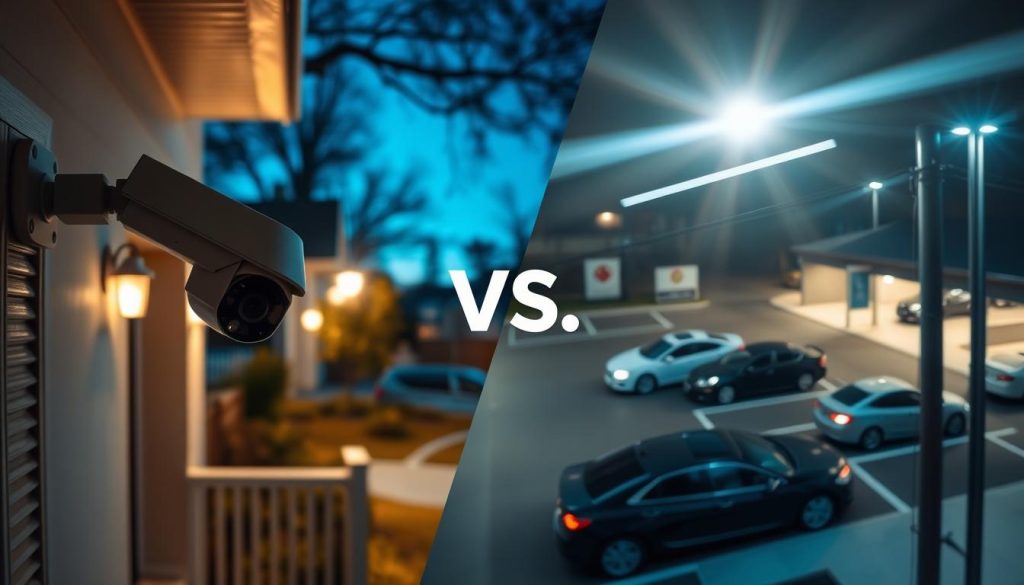
HDB regulations mandate specific height limitations for mounted devices. The 2.4-meter ceiling restriction favors compact dome cameras with wide viewing angles.
Landed properties require more robust weatherproof solutions. Bullet cameras with extended infrared ranges provide better coverage for larger outdoor areas.
- HDB units: 2MP resolution, 90° field of view, silent operation
- Commercial systems: 4K resolution, 120° coverage, analytics integration
- Residential ROI: 54-month average payback period
- Commercial ROI: 32-month average return on investment
Singapore’s tropical climate demands special attention to equipment ratings. Lux ratings below 0.01 ensure reliable performance during heavy rainfall.
Weather resistance becomes critical in humid conditions. Proper sealing protects internal components from moisture damage.
Regulatory compliance includes PSB SS 584 standards and IMDA certification. These requirements ensure equipment meets Singapore’s specific safety and performance standards.
Integration capabilities differ between residential and commercial setups. Smart home compatibility suits residential needs while enterprise systems require advanced analytics.
Scalability considerations should address future expansion needs. Commercial installations often require more extensive growth potential than residential systems.
Vendor selection requires careful evaluation of certification credentials. Singapore-based installers should possess relevant qualifications and local experience.
Implementation planning begins with thorough property assessment. Different security needs dictate specific equipment choices and placement strategies.
Cost analysis reveals significant differences between system types. Commercial installations involve higher initial investment but faster return through enhanced security.
Residential systems prioritize user-friendly operation and minimal maintenance. Commercial setups demand robust performance and advanced monitoring capabilities.
Implementing Your Enhanced Night Surveillance Plan
Professional installation transforms technical specifications into reliable security solutions. Certified technicians follow strict protocols for optimal performance.
Residential setups typically complete within 4-8 hours. Commercial projects may require 2-3 days for comprehensive implementation.
Service contracts should include emergency response within 2 hours. Regular audits and firmware updates maintain system reliability.
The Marina Bay deployment achieved 99.8% operational uptime through expert setup. This demonstrates the value of professional implementation.
Proper training ensures staff can effectively operate monitoring equipment. Documentation provides clear guidance for ongoing maintenance.
Strategic implementation maximizes your security investment while ensuring consistent nighttime coverage. This approach delivers peace of mind through proven performance.
FAQ
Do all security cameras work in complete darkness?
No, not all cameras function without light. Standard models require ambient lighting. However, night vision cameras with infrared LEDs or thermal imaging capabilities can operate effectively in total darkness by using non-visible light or heat detection.
What is the difference between infrared and thermal night vision?
Infrared night vision uses built-in LEDs to project invisible light, which the camera’s sensor detects to create a monochrome image. Thermal imaging cameras detect heat signatures from objects and living beings, creating an image based on temperature differences, which works in any lighting condition.
How far can security cameras see at night?
The effective range depends on the camera’s technology. Infrared models typically have a range between 30 to 100 feet, specified by their IR illumination capability. Higher-end thermal cameras can detect movement at much greater distances, though fine details may be less clear.
What does the lux rating mean on a security camera?
The lux rating indicates the minimum amount of light a camera needs to produce a usable image. A lower lux number (e.g., 0.001 lux) means the camera is highly sensitive and can perform better in extremely low-light conditions.
Can weather affect my camera’s night performance?
Yes, environmental factors like heavy rain, fog, or humidity can scatter infrared light, reducing clarity. Thermal imaging cameras are generally less affected by such conditions and can be a more reliable choice for challenging weather.
Why is my night footage hazy or overexposed?
Hazy footage is often caused by IR reflection from nearby surfaces like walls or windows. Overexposure occurs when the IR LEDs are too powerful for the scene. Repositioning the camera, adjusting IR settings, or using models with smart IR technology can solve these issues.
How important is external lighting for CCTV surveillance?
While many modern cameras are designed for darkness, supplemental lighting greatly enhances image quality. It allows color night vision cameras to capture full-color videos and can extend the effective range of standard IR cameras.
Do I need different cameras for home and business security?
Yes, needs vary. Residential systems often prioritize cost and basic infrared night vision. Commercial properties usually require higher-resolution cameras, longer IR range, advanced features like thermal imaging, and greater storage for 24/7 monitoring.


