

Can CCTV work in dark?
In today’s world, security is a top priority. This makes reliable surveillance systems even more important, even in dark places. The question is, can CCTV really work in the dark? Thanks to new night vision technology, the answer is yes. These systems can now capture clear images, even when it’s very dark.
This article will explore how these advanced techniques work. We’ll also look at why they’re so important for keeping us safe in different places.
Key Takeaways
- CCTV can operate in low-light conditions through specialized technologies.
- Night vision technology significantly enhances surveillance capabilities.
- Modern CCTV systems are designed for optimal performance during nighttime.
- Understanding camera functionality is essential for effective security setups.
- Choosing the right equipment is critical for ensuring surveillance effectiveness.
Introduction to CCTV Technology
CCTV technology has changed how we keep cities safe. It uses security cameras to watch over areas, capturing what’s happening live. This tech helps stop crimes and gives proof when they happen.
In Singapore, CCTV is key in many places, like shops and public areas. It makes everyone feel safer.
At the heart of CCTV tech are cameras, recorders, and monitors. Cameras take video, which goes to a recorder. You can watch it later to see what happened. Now, you can even check it on phones or computers, making it easy to keep an eye on things.
As cities get bigger, CCTV tech becomes more important. Busy streets and public spots need it. Watching live feeds and looking at recordings helps keep everyone safe. CCTV is a big help in keeping cities secure today.
Importance of Surveillance in Low-Light Conditions
Low-light surveillance is very important today. It helps keep properties safe and people secure, as crime often goes up at night.
At night, it’s hard to see well, making old surveillance methods less useful. But, systems with night vision are key. They help stop crime and give police important clues.
The CCTV importance keeps growing as cities get bigger. With more people and places, security gets harder. Good surveillance means we can feel safe all the time.
Cities are now using new tech for better night security. This includes things like infrared cameras. So, knowing about low-light surveillance systems is vital for keeping everyone safe.
Can CCTV Work in Dark?
CCTV systems have come a long way, working well in dark places. They use night vision technology to see in the dark. This part talks about how these cameras work in complete darkness.
Understanding Night Vision Capabilities
Today’s CCTV cameras can see in the dark thanks to advanced night vision. They use special tech to make light out of thin air. This means they can watch over areas even when it’s very dark.
Older cameras might not do as well in the dark. But most new ones use infrared tech. This makes them much better for watching over places at night.
Infrared Technology Explained
Infrared tech is key for CCTV night vision. Cameras with this feature send out invisible light. This light makes the area around the camera visible, even in total darkness.
This tech lets cameras take clear pictures in the dark. It also helps keep places safer by catching details that are hard to see.
Types of Night Vision Cameras
Night vision cameras are made for different needs in dark places. Knowing the types helps pick the right one. We’ll look at infrared (IR) cameras and thermal imaging cameras.
Infrared (IR) Night Vision Cameras
Infrared cameras use infrared light to see in total darkness. They show images in greyscale. These cameras have infrared LEDs that light up the area without visible light.
They’re great for night watching. The images are clear, even in complete blackness.
Thermal Imaging Cameras
Thermal imaging cameras work with thermal imaging technology. They see heat differences, not light. This lets them watch even when it’s very dark.
They can spot people and animals, even through smoke or fog. This makes them perfect for outdoor use or places without light.
Deciding between infrared and thermal cameras depends on your needs. For tips on using cameras in the dark, check this resource.
How Night Vision Cameras Operate
Night vision cameras help with surveillance in dark places. They use infrared LEDs to light up the area without visible light. This lets cameras take clear pictures even in total darkness.
Inside these cameras, there’s advanced sensor technology. Sensors like CMOS and CCD are key in turning infrared light into visible images. CMOS sensors use less power but give great quality in dark. CCD sensors, on the other hand, capture more details, making them better in low light.
Today’s night vision cameras also have cool features like color night vision. They use smart tech to show images in color at night. This makes them even more useful for watching over places.
Challenges of Using CCTV in Complete Darkness
Using CCTV in complete darkness comes with its own set of challenges. It’s important to understand these to know what to expect from your cameras in dark places. Camera performance factors play a big role in how well these systems work when it’s very dark.
Factors Affecting Camera Performance
The success of CCTV in dark places depends on several important camera performance factors. These include:
- Intensity of Infrared Light: Stronger infrared light sources help cameras see better at night. If the IR light is weak, images can be blurry.
- Environmental Conditions: Outdoor areas with things like trees or buildings can block light, making it harder to see.
- Camera Sensor Quality: Cameras with better sensors can handle low light better, improving their performance.
Quality of Footage in Low Light
Low light footage quality often suffers when cameras have no ambient light. Even the latest night-vision tech can struggle to get clear images in very dark places. Poor image quality can be due to noise, distortion, and lack of detail.
These issues make it hard to recognize and monitor things. It’s key to consider these factors when checking if your CCTV system works well in dark areas.
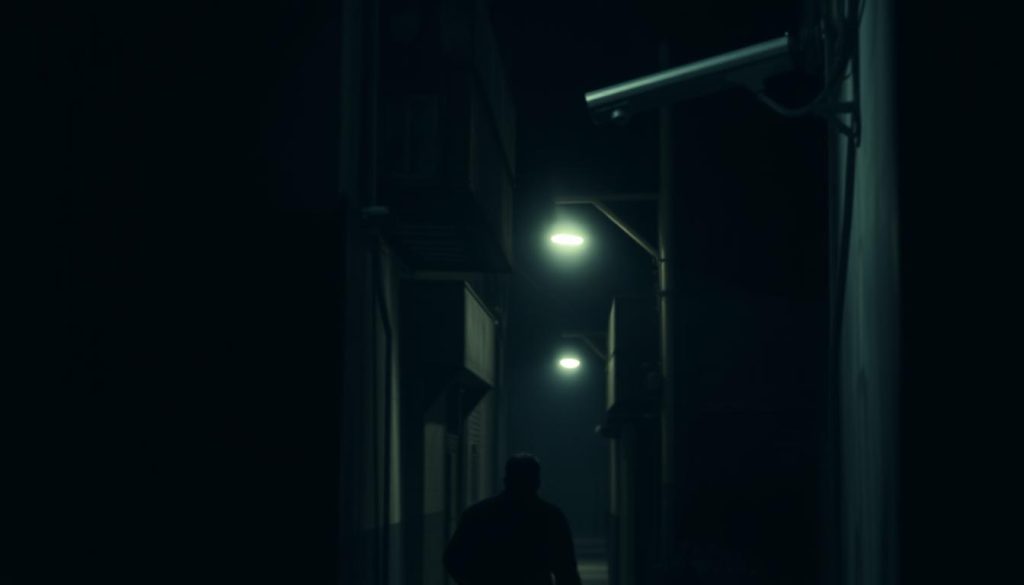
Accessories to Enhance Night Vision
To make night vision cameras work better, using different accessories is key. Adding extra lighting for cameras can really help. This makes sure surveillance is clear, even when it’s dark.
Utilizing Additional Light Sources
There are many ways to add light for better night vision. Street lights can help a lot by providing natural light. When there’s not enough light, portable floodlights or infrared lights are great options.
These lights not only help get clearer footage. They also scare off people who might do bad things.
Setting Up CCTV Systems for Optimal Night Vision
To get the most out of CCTV systems in the dark, setting them up right is key. Placing cameras well can really boost night vision, making sure all important areas are covered. It’s also important to keep cameras clear of things that might block their view.
Camera Placement Tips
Choosing the right spot for your CCTV cameras is very important for good night vision. Here are some tips to help you:
- Position cameras at elevated heights to reduce blind spots.
- Place cameras in well-lit areas, if possible, to capture clearer images.
- Aim for strategic locations that cover entrances and exits effectively.
- Avoid placing cameras near large trees or other obstructions that could block the view.
Use of Reflective Surfaces
Using reflective surfaces can really help with night vision. These materials spread light better, letting cameras see more clearly even when it’s dark. Try putting cameras next to white walls or mirrors to see better.
Choosing the Right Night Vision Camera
When picking a night vision camera, knowing what you need is key. The top cameras for night use have high-resolution images, even in the dark. Look for ones with strong Infrared (IR) lights to see clearly in total darkness.
Also, think about where the camera will go. If it’s outside, a weatherproof camera is a must. Some cameras can even show colors at night, making your footage better. Check out a detailed CCTV features guide to find the perfect camera for you.
Choosing the right night vision camera is important for a good surveillance system. Focus on the features you need most. This way, you can keep an eye on your property, even when it’s very dark.
FAQ
Can CCTV cameras capture footage in total darkness?
Yes, modern CCTV cameras can capture footage in total darkness. They have night vision technology, like infrared, to see in the dark. These cameras send out infrared light to light up their surroundings, making images clear at night.
What is the difference between infrared and thermal imaging cameras?
Infrared (IR) cameras use infrared light to make images, showing them in greyscale in low light. Thermal imaging cameras, on the other hand, show images based on temperature differences. This makes them great for seeing movement in complete darkness.
What factors affect the performance of CCTV cameras in low-light conditions?
Several things can affect how well CCTV cameras work in low light. These include how much infrared light they use, the weather, and the camera’s technology. Better cameras will work much better than lower-quality ones, even in dim light.
How can I improve the performance of my CCTV system in low light?
To make your CCTV system better in low light, use extra light sources. Street lights or portable floodlights can help a lot. They can make images clearer and help keep crime away.
What camera placement strategies should I consider for optimal night vision?
When setting up CCTV cameras, put them in busy and vulnerable areas. Make sure they’re not blocked by anything. Also, using reflective surfaces can help them see better at night.
What features should I look for when choosing a night vision camera?
Look for cameras with high resolution, good IR range, and weatherproofing. Also, consider features like color night vision. Think about what you need for your surveillance to pick the right camera for low light.


