
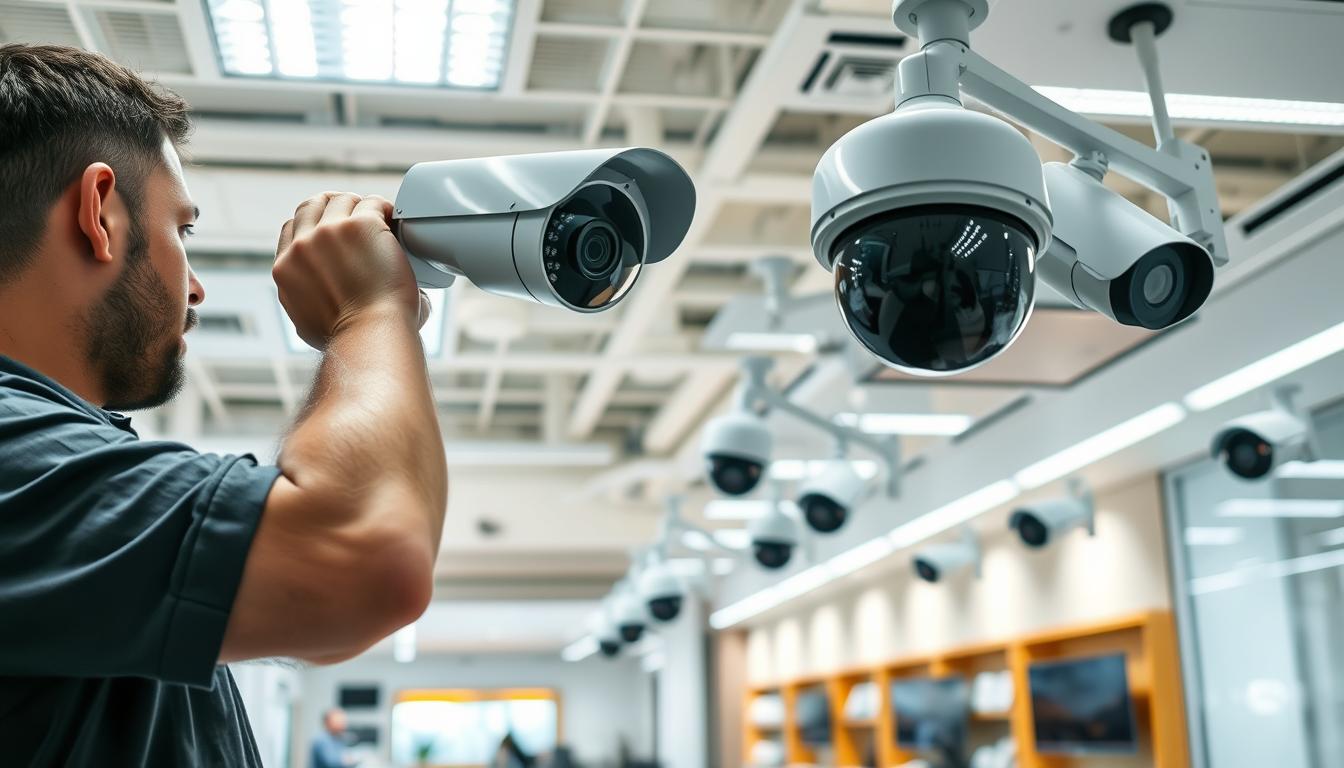
Ultimate Guide to Business Security Camera System Installation
Protecting your commercial space requires smart planning and the right tools. Modern surveillance technology offers powerful solutions for monitoring your property effectively.
This comprehensive resource covers everything from initial assessment to long-term upkeep. We focus on Singapore’s unique operational environment and legal requirements.
You’ll discover various equipment options and essential capabilities for different operational areas. Professional setup ensures optimal performance and compliance with local regulations.
Understanding cost factors and maintenance needs helps you make informed decisions. This guide provides actionable insights tailored specifically for Singapore operations.
Key Takeaways
- Professional setup ensures optimal performance and regulatory compliance
- Singapore has specific legal requirements for surveillance operations
- Different environments require tailored equipment and placement strategies
- Quality footage depends on proper equipment selection and positioning
- Regular maintenance prevents common operational issues
- Future-proofing your investment considers technological advancements
- Local experts understand Singapore’s unique conditions and requirements
Why Your Singapore Business Needs a Security Camera System
Modern commercial environments face evolving protection requirements that demand comprehensive solutions. A well-designed monitoring setup addresses these challenges while delivering multiple operational advantages.
The Growing Threat Landscape in Singapore
Singapore’s commercial sector encounters increasingly sophisticated risks. These extend beyond traditional theft and vandalism to include more complex operational threats.
Research indicates visible monitoring equipment reduces criminal activity by 47%. Despite this protection, 60% of local enterprises operate without proper surveillance coverage.
Bloomberg analysis demonstrates a 22% reduction in theft incidents when using video monitoring. This directly contributes to 7% higher profitability for protected organizations.
Studies confirm 67% of protection issues could be prevented through effective video monitoring
Enterprises lacking adequate monitoring face 20% higher insurance premiums. This financial impact makes professional surveillance setups economically sensible investments.
Tangible Benefits Beyond Theft Deterrence
Modern monitoring solutions provide advantages extending far beyond basic crime prevention. These systems create safer environments for both staff and customers.
Comprehensive surveillance delivers valuable documentation for incident investigation. This evidence supports legal proceedings and internal reviews.
The presence of monitoring equipment acts as a powerful psychological deterrent. This visible protection enhances overall operational confidence and efficiency.
Professional setup ensures optimal performance within Singapore’s regulatory framework. Expert installation addresses local environmental factors and compliance requirements.
Investment in quality monitoring typically pays for itself through reduced losses. Improved operational efficiency further enhances the return on this crucial protection expenditure.
Key Benefits of Installing a Commercial Surveillance System
Contemporary commercial monitoring setups provide layered advantages that significantly impact daily operations and long-term success. These solutions deliver value across multiple operational areas while addressing specific Singapore market needs.
Professional implementation ensures optimal performance of your monitoring equipment. The right setup maximizes all potential advantages while maintaining compliance.
Enhanced Physical Security and Crime Prevention
Visible monitoring equipment serves as a powerful psychological deterrent against unauthorized activities. Studies show this visible presence reduces incidents by nearly half.
Modern security systems provide comprehensive coverage that actively prevents criminal behavior. They create safer environments for both staff and customers.
These solutions help reduce employee misconduct and wrongful claims by up to 70%. About 30% of companies report increased employee satisfaction due to enhanced protection measures.
Operational Efficiency and Remote Monitoring
Remote monitoring capabilities transform how enterprises manage their operations. Owners can oversee multiple locations simultaneously from any location.
This technology cuts costs by up to 80% compared to physical guard services. The system provides real-time oversight of operations, inventory, and performance.
Modern cctv systems integrate with other operational tools. They provide valuable data for improving customer service and workflow efficiency.
Remote access allows watching your enterprise from anywhere, providing peace of mind and operational control
Insurance Advantages and Liability Protection
Insurance providers recognize the risk reduction offered by comprehensive monitoring. They offer significant premium discounts to protected enterprises.
The documentation provided by surveillance video is invaluable for resolving disputes. It protects against false claims from customers, employees, or suppliers.
High-quality footage serves as crucial evidence for incident investigation. This supports legal proceedings and internal review processes.
Regular maintenance ensures continuous protection and documentation capabilities. Professional installation addresses all critical factors for optimal performance.
The combination of protection and operational benefits makes these solutions valuable investments. They deliver returns that justify the initial expenditure for Singapore enterprises.
Exploring Different Types of Business Security Cameras
Selecting the right surveillance equipment involves understanding various options. Each type serves specific purposes and environments.
Proper selection ensures optimal performance and coverage. This section examines indoor versus outdoor models and connection methods.
Indoor vs. Outdoor Cameras: Choosing the Right Environment
Monitoring devices designed for interior spaces focus on discreet operation. They often feature compact designs and advanced capabilities.
These units typically include motion detection and audio recording. They work well in employee areas and retail spaces.
Outdoor models handle challenging weather conditions effectively. They protect against break-ins and monitor perimeter areas.
Weather-resistant construction prevents damage from humidity and rain. Vandal-proof designs ensure continuous operation in exposed locations.
Wired vs. Wireless Systems: Stability vs. Flexibility
Hardwired connections provide maximum reliability for permanent setups. They deliver consistent performance without signal interruptions.
These installations typically require professional assistance for optimal results. They offer higher resolution capabilities for clearer footage.
Wireless options allow easier setup and future expansion. They depend on strong network signals for best performance.
These systems might have lower initial setup costs but potential ongoing fees. Cloud-based storage often requires subscription services.
Modern surveillance solutions frequently combine both approaches. This balances reliability with installation flexibility.
Professional assessors evaluate your specific environment and needs. They recommend the optimal combination for comprehensive coverage.
The right selection minimizes blind spots and maintenance requirements. It ensures effective monitoring tailored to Singapore’s unique conditions.
Essential Features to Look for in Your Security System
Modern surveillance technology offers advanced capabilities that transform basic monitoring into intelligent protection. Understanding these critical components helps you select equipment that delivers maximum value.
The right combination of technical specifications ensures comprehensive coverage. These elements work together to create a robust monitoring solution.
Resolution and Image Quality: The Need for Clarity
High-definition imaging represents the foundation of effective surveillance. Modern systems typically offer 1080p or 4K resolution options.
Superior image quality captures fine details like facial features and license plates. This clarity becomes crucial during incident investigations.
4K resolution has become the standard for professional applications. It provides exceptional detail that enhances evidential value.
Investing in high-resolution equipment ensures your video remains useful for identification purposes. The right quality makes all the difference when reviewing footage.
Night Vision and Motion Detection Capabilities
Around-the-clock protection requires specialized night vision technology. Infrared illumination enables recording in complete darkness.
This feature maintains monitoring effectiveness during nighttime hours. It provides discreet observation without visible light emission.
Advanced motion detection features minimize false alerts while capturing genuine events. These systems can distinguish between routine movement and unusual activity.
Smart sensors reduce notification fatigue by filtering irrelevant triggers. They ensure appropriate personnel receive alerts for significant events.
Customizable sensitivity settings allow tailoring to specific environment needs. This optimization prevents missed incidents while reducing unnecessary alerts.
Remote Access and Cloud Storage Options
Modern surveillance solutions offer convenient remote viewing capabilities. You can monitor your premises from anywhere using smartphones or computers.
This network connectivity provides real-time oversight and peace of mind. It transforms traditional monitoring into flexible, mobile-enabled protection.
Cloud-based storage solutions protect footage against local system failures. They typically cost between SGD 10 to SGD 30 monthly per device.
These services ensure your recordings remain secure and accessible. They provide an additional layer of protection against tampering or equipment damage.
Most professionals recommend maintaining at least 30 days of footage retention. This duration supports thorough incident investigation and compliance requirements.
The combination of high-resolution imaging, infrared capability, and smart detection creates comprehensive protection that adapts to your specific needs
Professional configuration ensures all these features work together seamlessly. Expert setup maximizes each component’s potential while maintaining optimal performance.
Navigating Legal Considerations for CCTV in Singapore
Singapore’s regulatory environment demands specific adherence when implementing monitoring solutions. The Personal Data Protection Act establishes clear guidelines for surveillance operations.
Proper compliance ensures your monitoring setup operates within legal boundaries. This protects both your organization and the individuals being recorded.
Understanding the Personal Data Protection Act (PDPA)
The PDPA creates a comprehensive framework for data handling. It specifically addresses how organizations collect, use, and disclose personal information.
This legislation applies directly to surveillance activities in commercial settings. All recorded material containing identifiable individuals falls under PDPA protection.
Organizations must establish clear policies for footage management. These policies should address collection limitations and purpose specification.
Key PDPA requirements include:
- Purpose limitation – collecting data only for specific, legitimate purposes
- Notification obligation – informing individuals about surveillance activities
- Access and correction rights – allowing individuals to view and amend their data
- Protection obligation – securing personal data against unauthorized access
- Retention limitation – not keeping data longer than necessary
Consent, Notification, and Signage Requirements
Clear communication forms the cornerstone of legal compliance. Organizations must properly notify people about surveillance activities.
Signage should be prominently displayed at all entry points. Notices must clearly state the purpose of monitoring and contact information.
Consent requirements vary by context:
- Public areas require clear signage but not individual consent
- Employee areas need both notification and reasonable expectation policies
- Sensitive locations like changing rooms have additional restrictions
Footage retention periods should match operational needs. Most organizations maintain recordings for 30-90 days.
Special permissions are mandatory for public space monitoring. Local authorities review these applications carefully.
Professional installation services understand Singapore’s unique compliance landscape and can guide organizations through proper implementation
Regular compliance audits help maintain legal adherence. Documentation practices should be reviewed annually.
Non-compliance can result in significant penalties. These may include fines and reputational damage.
Planning Your Business Security Camera System Installation
Effective monitoring begins with thorough preparation and strategic thinking. Proper groundwork ensures your investment delivers maximum protection and operational value.
The initial planning phase sets the foundation for successful implementation. It addresses your specific operational needs and environmental factors.
Conducting a Site Survey and Vulnerability Assessment
Professional assessors examine your entire property layout during site evaluation. They identify potential weak points and optimal equipment positions.
Lighting conditions receive special attention during these inspections. Different illumination levels affect equipment selection and placement decisions.
Physical barriers and architectural features influence coverage planning. Assessors note obstructions that might create monitoring gaps.
Traffic patterns help determine priority monitoring zones. High-activity areas typically require more comprehensive coverage.
Advanced tools like 3D mapping visualize potential coverage before implementation. This technology identifies blind spots during the planning stage.
Determining the Number and Placement of Cameras
The right number cameras balances comprehensive coverage with budget considerations. Too few units leave vulnerabilities, while too many increase costs unnecessarily.
Entry points and high-value zones receive priority in placement strategies. These locations demand constant monitoring for optimal protection.
Coverage calculators use square footage to suggest minimum equipment requirements. These tools provide starting points for more detailed planning.
Future expansion possibilities should influence initial setup decisions. Planning for growth prevents costly modifications later.
Professional camera installation reduces coverage gaps by approximately 40%. Expert placement ensures every critical area receives appropriate attention.
Strategic placement maximizes monitoring effectiveness while minimizing equipment requirements
Wiring requirements and power sources factor into placement decisions. Network infrastructure needs influence both equipment selection and positioning.
A thorough planning process addresses both current operational needs and future requirements. This approach creates a scalable solution that grows with your enterprise.
Selecting a Professional Installation Service in Singapore
Finding the right team for your monitoring setup makes all the difference. The perfect match combines technical skill with local knowledge.
Professional expertise ensures your equipment works flawlessly from day one. They understand Singapore’s unique operational environment.
Key Factors to Consider When Vetting Providers
Experience matters when choosing your installation partner. Look for companies with proven track records in commercial projects.
Check their portfolio for similar-scale operations. Verify they understand local regulations and environmental conditions.
Certifications like NSI Gold indicate top-quality service standards. These credentials demonstrate commitment to excellence.
Insurance coverage protects your investment during the setup process. Proper licensing ensures compliance with all local requirements.
Response time commitments for support services are crucial. Establish clear maintenance agreements before work begins.
Essential Questions to Ask Your Prospective Installer
Start by inquiring about their experience with similar projects. Ask for references from past clients in Singapore.
Discuss their knowledge of current technology trends. Inquire about integration capabilities with existing equipment.
Request detailed proposals outlining equipment specifications. These should include clear timelines and cost breakdowns.
Ask about warranty offerings and ongoing support services. Understand what’s included in the initial installation costs.
Determine their training process for your staff members. Ensure they provide comprehensive system orientation.
Local experts bring invaluable understanding of Singapore’s unique operational landscape and regulatory framework
The right partnership ensures your monitoring solution performs optimally. It delivers peace of mind through professional implementation.
Thorough vetting prevents future issues and ensures long-term reliability. Your investment deserves this level of careful consideration.
The Professional Business Security Camera System Installation Process
Professional monitoring setup follows a structured approach that ensures optimal performance. This methodology combines technical expertise with practical implementation strategies.
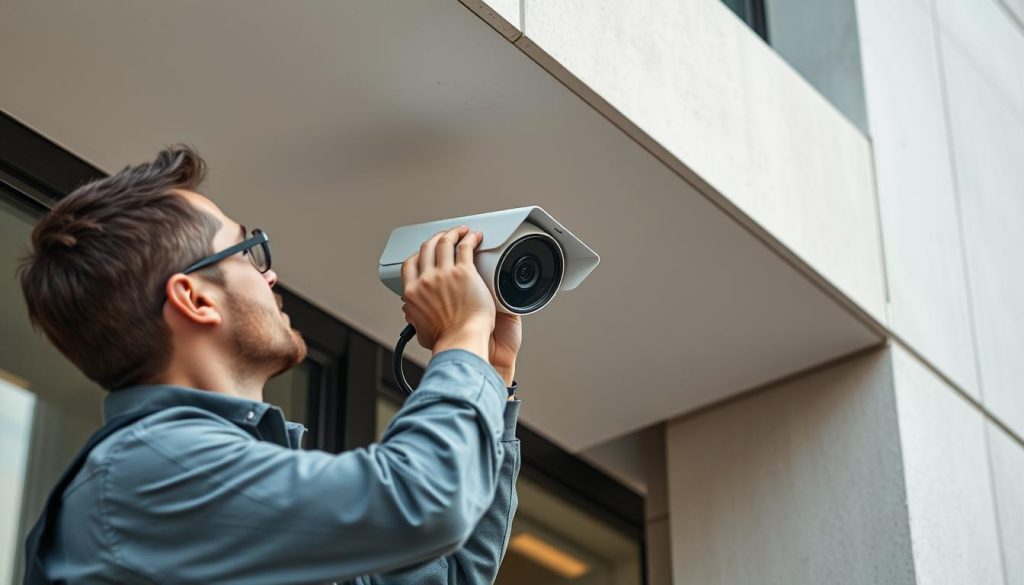
Experienced technicians follow proven protocols for reliable results. Their approach minimizes disruptions while maximizing coverage effectiveness.
Step 1: Initial Consultation and Site Survey
The process begins with comprehensive discussions about your operational requirements. Professionals analyze your property layout and specific monitoring needs.
Detailed site evaluation examines lighting conditions and architectural features. Technicians identify potential obstacles and optimal equipment positions.
This assessment phase typically takes several hours depending on property size. It forms the foundation for all subsequent planning decisions.
Step 2: System Design and Camera Positioning
Technical experts create customized plans addressing identified vulnerabilities. They select appropriate equipment types for different operational areas.
Strategic placement ensures maximum coverage with minimal blind spots. Professionals consider both current needs and future expansion possibilities.
The design phase includes feature configuration planning. Motion detection zones and recording parameters receive special attention.
Step 3: Installation, Configuration, and Testing
Skilled technicians implement the planned setup with precision. They follow industry standards for wiring and network integration.
Configuration establishes recording schedules and user access levels. Remote viewing capabilities receive thorough setup and verification.
Comprehensive testing validates all components and features. Technicians verify network connectivity and footage quality before final handover.
Professional installation reduces coverage gaps by approximately 40% compared to DIY approaches
The complete process typically requires 2-5 days depending on complexity. Efficient scheduling minimizes operational disruptions during implementation.
Final orientation provides essential training on system operation. Users learn basic troubleshooting and feature utilization techniques.
Proper documentation includes layout diagrams and configuration details. This information supports future maintenance and expansion activities.
Post-Installation: System Maintenance and Troubleshooting
Keeping your monitoring setup running smoothly requires ongoing attention. Proper care ensures continuous protection and optimal performance for years to come.
The Importance of Regular Maintenance Checks
Scheduled inspections prevent unexpected failures and performance degradation. These checks verify all components function correctly.
Quarterly assessments catch potential issues before they escalate. This proactive approach reduces downtime significantly.
Cleaning lenses and verifying angles maintains clear visibility. Storage capacity verification prevents recording gaps.
Connectivity testing ensures remote access works reliably. Software updates address vulnerabilities and add features.
Preventive maintenance identifies problems before they impact protection coverage
Performance monitoring tracks gradual equipment degradation. Documentation tracks service history and replacement parts.
Professional experts follow manufacturer recommendations during inspections. Their expertise extends equipment lifespan considerably.
Identifying and Resolving Common Technical Issues
Several typical problems may affect monitoring performance. Quick identification leads to faster resolution.
Network connectivity problems often cause feed access difficulties. Power supply failures require immediate attention.
Storage system errors can result in recording interruptions. Camera focus issues reduce image clarity.
Remote diagnostics allow technicians to address many problems quickly. This capability minimizes service delays.
Environmental factors like weather or obstructions sometimes cause performance changes. Regular checks catch these variations early.
Maintenance contracts provide scheduled visits and emergency support. These agreements ensure prompt response to critical situations.
Proper care keeps your investment performing optimally today and into the future. It maintains both protection coverage and evidential quality.
Understanding the Cost of Security Camera Installation
Smart financial planning helps organizations make informed decisions about their protection investments. Knowing what to expect financially prepares you for both initial and ongoing expenditures.
Breaking Down the Average Costs in Singapore
Commercial monitoring setup expenses vary widely based on several elements. Basic configurations for smaller operations typically start around SGD 1,500.
More comprehensive enterprise solutions can reach SGD 10,000 or higher. The final price reflects equipment quality, coverage area, and technical complexity.
Individual monitoring devices range from SGD 100 to SGD 2,000 each. Professional labor adds SGD 140 to SGD 560 per unit installed.
Monthly cloud storage services cost SGD 10 to SGD 30 per device. Maintenance agreements typically run SGD 7 to SGD 70 monthly per unit.
Total investment for complete protection often falls between SGD 10,700 and SGD 40,000. This comprehensive approach covers all aspects from setup to ongoing support.
Key Factors That Influence Your Final Quote
Several elements determine your final investment amount. The quality and capabilities of selected equipment significantly impact pricing.
Higher resolution units with advanced features cost more initially. They often provide better long-term value through superior performance.
Installation complexity affects labor expenses considerably. Difficult access points or integration needs increase setup time and costs.
System scalability requirements influence initial investment decisions. Planning for future expansion might involve higher upfront costs but saves money later.
Professional quotes should provide transparent breakdowns of equipment, labor, and service costs for accurate comparison between providers
Local Singapore conditions like building regulations and infrastructure affect pricing. Climate considerations might require specialized weather-resistant equipment.
Budgeting for Long-Term Maintenance and Upgrades
Ongoing expenses form an important part of total ownership costs. Regular maintenance ensures optimal performance and extends equipment lifespan.
Cloud storage subscriptions provide off-site footage protection. These services typically require monthly or annual payments.
Technical support contracts offer peace of mind through professional assistance. They ensure quick response times for any operational issues.
Future upgrades might become necessary as technology advances. Budgeting for improvements keeps your protection current and effective.
Many enterprises see full return on investment within 18-24 months. Reduced losses and improved efficiency contribute to this rapid payback period.
Insurance premium reductions further enhance financial benefits. These savings help offset initial and ongoing operational expenses.
Smart financial planning considers both immediate and future needs. This approach maximizes value while maintaining comprehensive protection.
The Future of Business Security: Smart Technologies and Integration
Modern protection evolves rapidly with intelligent innovations transforming traditional approaches. These advancements create more responsive and integrated operational environments.
Today’s solutions move beyond simple recording to provide predictive insights. They combine multiple technologies for comprehensive situational awareness.
The Rise of AI, Analytics, and IoT Integration
Artificial intelligence now powers advanced pattern recognition and behavioral analysis. These capabilities enable proactive threat identification before incidents occur.
Smart technology incorporates facial recognition and license plate reading. These features enhance identification accuracy significantly.
IoT connectivity allows various devices to communicate seamlessly. This creates unified environmental monitoring beyond traditional boundaries.
Predictive analytics examine patterns to forecast potential risks. This forward-looking approach transforms reactive monitoring into preventive protection.
Modern systems process vast amounts of data in real-time. They provide actionable intelligence rather than simple recorded footage.
Trends Shaping the Future of Commercial Surveillance
Cloud-based platforms enable centralized management across multiple locations. This approach supports scalable growth and remote accessibility.
Mobile integration provides real-time alerts and viewing capabilities. Professionals can monitor operations from anywhere using smartphones.
Advanced analytics deliver valuable business intelligence beyond protection. They track customer behavior and operational efficiency metrics.
Comprehensive integration connects monitoring with access control and alarms. This creates layered protection through coordinated response mechanisms.
Cybersecurity becomes increasingly crucial as connectivity grows. Protecting data integrity requires specialized attention to network vulnerabilities.
Future-proof designs accommodate technological advancements seamlessly. Scalable architecture supports emerging innovations without complete replacement.
Professional installation services recommend solutions with growth capabilities and deep insights
These innovations transform how organizations approach protection strategies. They create smarter, more responsive environments that anticipate needs.
The integration of multiple technologies delivers comprehensive situational awareness. This holistic approach addresses both current and future operational requirements.
Making an Informed Decision on Your Business Security
Choosing the right protection setup requires careful consideration of multiple factors. Balance your specific operational needs with budget constraints and future growth plans.
Professional consultation provides valuable insights for optimal design. Experts understand Singapore’s unique environment and regulatory requirements.
The investment in quality monitoring pays dividends through enhanced safety and operational benefits. Implementation timing should align with your operational cycles and expansion plans.
Established installers ensure proper setup and ongoing support. System flexibility accommodates future changes and technology upgrades.
Regular reviews maintain effectiveness as operations evolve. Contact ED Viston at +65 8313 4578 for customized solutions that address your specific requirements.
FAQ
How many surveillance units should my company install?
The quantity depends on your facility’s size, layout, and specific vulnerabilities. A professional assessment helps determine optimal coverage for critical zones like entrances, exits, and high-value areas.
What are the primary legal requirements for commercial surveillance in Singapore?
Compliance with the Personal Data Protection Act (PDPA) is mandatory. This includes notifying individuals through clear signage and ensuring footage is used only for stated security purposes.
Can I access my footage remotely?
A>Yes, modern setups offer remote viewing via smartphones or computers. This allows real-time monitoring and playback from anywhere with an internet connection.
What is the typical lifespan of a commercial surveillance setup?
Most high-quality equipment lasts 5-7 years with proper maintenance. Technological advancements may prompt upgrades before hardware fully deteriorates.
How does weather affect outdoor camera performance?
A>Outdoor models are built to withstand local conditions. Look for weatherproof ratings (IP66 or higher) to ensure reliability during heavy rain or intense heat.
Are wireless systems as reliable as wired options?
A>Wireless offers easier installation but may face connectivity issues in areas with interference. Wired systems provide stable, uninterrupted performance ideal for constant monitoring.
What maintenance is required after installation?
A>Regular checks include lens cleaning, software updates, and verifying storage functionality. Professional servicing annually helps address potential issues early.
Can existing analog systems integrate with new technology?
A>Many modern recorders support hybrid functionality, allowing integration of older analog cameras with newer IP models for cost-effective upgrades.


