

Best Solar Security Camera for Farms in Singapore
Did you know solar security cameras can run for up to seven days without sunlight? In Singapore, where the sun shines for about 2,500 hours a year, this is a game-changer for farm security. Solar-powered systems are becoming more popular as farmers look to protect their land. They’re eco-friendly, don’t need a lot of wiring, and can be set up in many ways.
This article will show you the top solar security cameras for farms in Singapore. We’ll cover their main features, benefits, and how to install them to keep your farm safe.
Key Takeaways
- Solar security cameras can operate for up to 7 days without sunlight.
- They reduce installation costs and time with integrated designs and 4G/Wi-Fi capabilities.
- Hikvision offers customizable solar systems suitable for various outdoor applications.
- These cameras are designed for reliable performance in tropical climates, featuring corrosion-resistant builds.
- Flexible camera configurations allow for tailored video coverage across expansive farmland.
Introduction to Solar Security Solutions for Farms
Farms face many security challenges, like theft and damage to crops. It’s vital to have strong security measures in place. Solar security solutions help protect valuable assets from threats.
These solutions create a network to detect and prevent threats. They are key to keeping farms safe.
Importance of Security on Farms
Keeping farms secure is important for crops, livestock, and equipment. Theft of solar panels and inverters is a big risk. Good surveillance can lower trespassing, theft, and vandalism.
This ensures farms can keep running smoothly.
Emerging Trends in Solar-Powered Surveillance
There’s a shift towards green surveillance systems. Solar cameras work without power lines, perfect for remote areas. They offer real-time monitoring and motion detection.
Using solar security solutions makes farms more resilient. It helps keep investments safe and stable.
Understanding the Benefits of Solar Security Cameras
Solar security cameras offer many benefits for farms. They use renewable energy, which is good for the environment. This makes them a great choice for farms that care about the planet.
These systems are also good for saving money and energy. We will look at how they help with these goals.
Eco-Friendly Monitoring Solutions
Solar security cameras use sunlight, which means they don’t harm the environment. They are powered by the sun, not by fossil fuels. This makes them a green choice for farms.
They are perfect for big farms where it’s hard to get to power sources. This way, farms can keep an eye on things without hurting the planet.
Energy Efficiency and Cost Savings
Even though solar security cameras cost more at first, they save money in the long run. They use solar power, not the grid, so they cut down on energy bills. This means farms can save a lot of money over time.
They also need less maintenance because they don’t rely on the grid. This means farms can save even more money. Plus, some insurance companies give discounts for farms with these systems. So, solar cameras are a smart choice for farms.
Why Choose a Solar Security Camera for Farm Monitoring
Solar security cameras are a big step forward for farm monitoring. They are both eco-friendly and packed with modern features. They let farmers keep an eye on their land from anywhere, thanks to their remote monitoring and outdoor durability.
Remote Monitoring Capabilities
Solar-powered cameras offer remote monitoring through 4G connectivity. Farmers can watch live feeds and past recordings on their phones or computers. With cloud storage, they can check footage anytime, without being there in person. This helps them act fast, even when they’re far away.
Performance in Remote Locations
These cameras work great in places far from power sources. Unlike wired systems, they don’t need long cables or electricity. They run on solar power, keeping watch all day and night. They even have color night vision, so they work well in the dark.
| Feature | Solar Security Cameras | Traditional Security Cameras |
|---|---|---|
| Power Source | Solar Energy (Renewable) | Grid Electricity (Limited) |
| Installation | Wireless, Flexible | Wired, Complex |
| Operation in Remote Areas | Excellent | Poor |
| Cloud Storage | Available | Not Always |
| Maintenance Requirements | Low | High |
| Durability Rating | IP66 (Waterproof) | Varies |
Key Features to Look for in Solar Security Cameras
When picking a solar security camera for your farm, look for certain features. These ensure the camera works well and reliably. Knowing what to look for can help keep your farm safe from threats.
Camera Resolution and Clarity
High camera resolution is key for good monitoring. A camera with at least 1080P resolution shows clear images. This makes it easier to spot people and vehicles.
Cameras with 4MP or 5MP resolution are even better. They offer clearer images, which is great for watching your farm at night. This is important for covering large areas.
Motion Detection Technology
Advanced motion detection technology boosts security. It sends alerts right away when it spots something moving. This cuts down on false alarms and helps respond quickly to real threats.
Many systems send these alerts to your phone. This means you can stay updated, no matter where you are.
Weatherproof Design for Tropical Climates
In places like Singapore, outdoor cameras need to be tough. They should have an IP rating of at least IP65 or IP66. This means they can handle heavy rain and high humidity.
Having a weatherproof camera means it will last longer. It also means you get a good value for your money.
| Feature | Importance | Recommended Standards |
|---|---|---|
| Camera Resolution | Ensures clear identification of individuals and events. | 1080P minimum; 4MP or 5MP recommended. |
| Motion Detection Technology | Provides real-time alerts, reducing false alarms. | Alerts via mobile notifications. |
| Weatherproof Design | Ensures functionality in harsh weather. | IP65 or higher rating. |
Best Solar Security Camera for Farms in Singapore
Farms in Singapore face growing threats of theft and safety issues. Solar security cameras are a great solution. They keep watch all day and night, using the sun’s power. Here are some top picks for solar security cameras for farms.
Dahua Imou Cruiser 4G Pan-Tilt Camera Overview
The Dahua Imou Cruiser is perfect for farmers who need flexibility. It has 1080P Full HD video and lets you control it remotely. Its 360-degree view covers all areas, making it great for outdoor use.
It works well in temperatures from -10°C to 55°C. This makes it suitable for different climates.
Reolink Go: Versatile and Starlight Night Vision
The Reolink Go shines with its starlight night vision. It runs on solar power, so it works all the time. It’s clear even in the dark, which is key for farm monitoring at night.
Many users say it lasts months on a single charge. This makes it very efficient for long periods.
Hikvision Solar-Powered Security Camera Features
Hikvision’s solar cameras have cool features. They can work for up to seven days without sunlight. This gives farmers peace of mind.
They have 4MP resolution for sharp video and can see colors at night. With a durability rating of 9.4, they’re built to last in tough rural settings.
| Camera Model | Video Quality | Battery Life | Durability Rating | Night Vision |
|---|---|---|---|---|
| Dahua Imou Cruiser | 1080P Full HD | Extended (months) | 9.4 | No |
| Reolink Go | 1080P | Months on a single charge | 9.5 | Starlight Night Vision |
| Hikvision | 4MP | Up to 7 days without sunlight | 9.4 | Color Imaging at Night |
Installation Guide for Solar Security Cameras
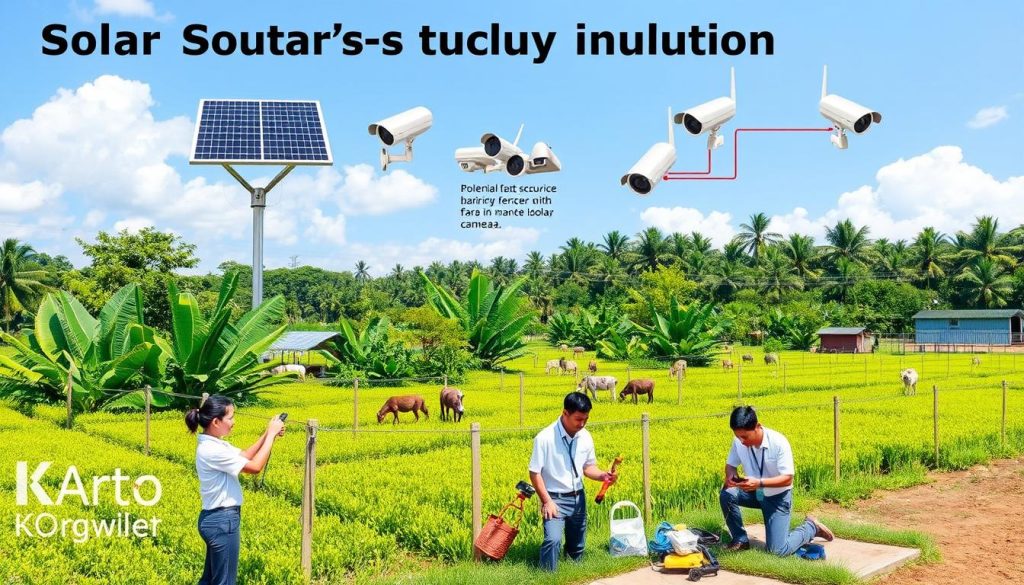
Securing your farm starts with installing solar security cameras. This guide shows how to place your cameras for the best coverage. It also walks you through a step-by-step process to keep your farm safe and watched.
Choosing the Right Locations for Optimal Coverage
Finding the best spots for solar security cameras is key. They should get lots of sunlight and watch important areas like:
- Main entry and exit points
- Livestock pens
- Crop fields
- Storage facilities
By placing cameras in these spots, they work well all day. They capture important footage while running on sunlight.
Step-by-Step Installation Process
To install solar security cameras right, follow these 17 steps:
- Charge the camera for up to 6 hours.
- Insert the SIM card from any UK network.
- For 4G network activation, use a SIM card from 1P Mobile on the EE network.
- Insert a micro SD card for footage recording.
- Connect the camera to a power source via a micro USB cable for indoor use.
- Mount the camera using brackets at the chosen location.
- Position the solar panel to maximize sunlight exposure, avoiding obstructions.
- Ensure proper alignment for optimal coverage.
- Login to the UBOX app for camera management.
- Add locations and customize device names in the app.
- Check the operating LED status: Red flashes to Blue indicates connection.
- Constant Blue light indicates successful network connection.
- Adjust camera angles as necessary.
- Conduct a test recording to ensure proper functionality.
- Ensure firmware updates are applied via the app.
- Set motion detection zones as needed.
- Document settings for future reference.
- Finalize installation by monitoring connected feeds.
Maintenance Tips for Solar Security Camera Systems
To keep your solar security camera systems working well, regular maintenance is key. It helps them perform better and last longer. By following some simple tips, you can ensure your cameras keep a clear view and work reliably.
Regular Cleaning and Checks
Cleaning the camera lenses regularly is essential for clear images. Dust or dirt can block the view, reducing security. Also, make sure the solar panels are clean to catch more sunlight.
Checking the panels often helps them work well, even in bad weather. Adjusting the camera’s position ensures it covers your property well.
Battery Maintenance and Troubleshooting
Keeping the batteries in good shape is important for your system’s performance. Watch for signs that the batteries are not working as well as they should. Catching problems early can stop bigger issues later.
Using good troubleshooting methods keeps your system running smoothly. For more tips on keeping batteries going strong, check out this resource.
| Maintenance Task | Frequency | Importance |
|---|---|---|
| Clean Camera Lenses | Monthly | Ensures clarity and effective monitoring |
| Inspect Solar Panels | Quarterly | Maximizes energy efficiency |
| Check Battery Health | Bi-Monthly | Prevents unexpected failures |
| Review System Performance | Monthly | Identifies and resolves issues promptly |
Comparing Solar Cameras with Traditional Security Systems
Looking at solar cameras and traditional security systems shows their unique benefits and drawbacks. Key points include how easy they are to install, their cost, and ongoing expenses.
Installation Ease and Cost-Effectiveness
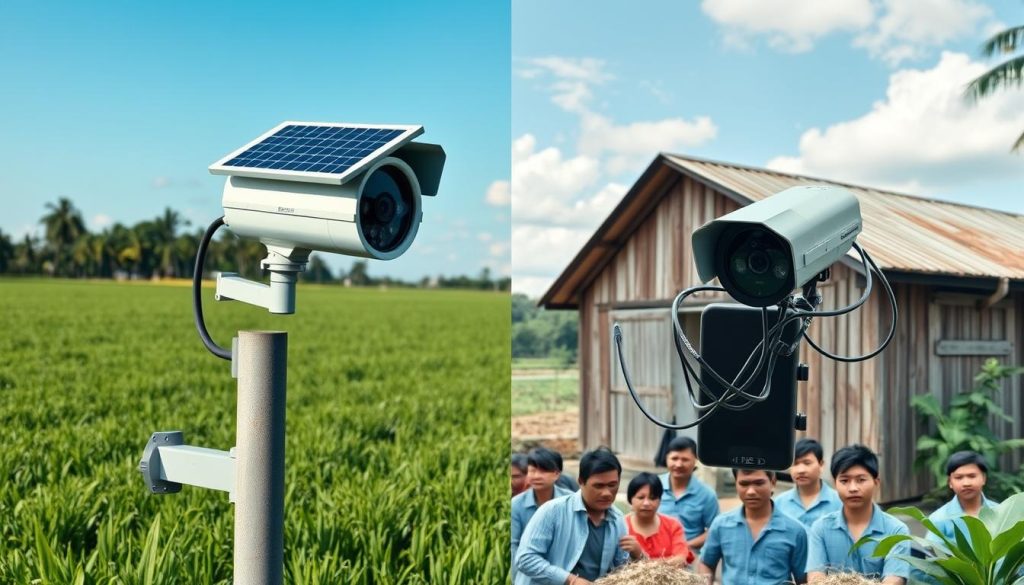
Solar cameras are easier to install than traditional systems. They need little wiring, cutting down on setup time and cost. Traditional systems, needing electrical connections, are more complex and expensive to install.
Solar cameras can be placed in remote areas without power, making them more flexible. This saves on infrastructure costs that traditional systems often require.
Operational Costs: Solar vs. Traditional
Operational costs are a big difference. Solar cameras use no grid electricity, saving money on energy bills over time. Traditional cameras, needing electricity, cost more to run.
Even though solar cameras might cost more upfront, they save money in the long run. They also need less maintenance in sunny areas. Traditional cameras need more upkeep because of their electrical needs.
Common Applications of Solar Security Cameras on Farms
Solar security cameras are becoming key in farming. They help farmers keep an eye on their livestock and prevent theft. This technology boosts security and helps manage farms better.
Monitoring Livestock and Crop Areas
Using solar security cameras is great for watching over livestock. It lets farmers know their animals are safe without needing to check on them all the time. These cameras also let farmers watch over their crops in big fields.
Big farms might need many cameras to cover everything. Solar cameras are a good choice because they use the sun’s energy. This saves money on electricity.
Preventing Trespassing and Theft
Solar security cameras also help stop trespassing and theft. Crime is a big worry in rural areas. These cameras act as a warning to would-be intruders.
They have features like motion detection and night vision. These help keep the farm safe. By using these cameras, farmers can make their farms safer places.
Challenges to Consider with Solar Security Cameras
Using solar security cameras for farm monitoring has its own set of challenges. It’s important to understand these to use solar tech effectively.
Weather Dependence and Battery Life
The challenges with solar security cameras mainly come from needing sunlight to work. For instance, a 40W solar panel and a 15Ah battery charge in about 7.5 hours in the sun. They can power for up to 15 hours on rainy days if fully charged.
A 50W solar panel with a 20Ah battery charges in 8 hours. It can last 20 hours in bad weather. But, solar cameras don’t work well in long cloudy spells. This affects their battery life and how reliable they are for watching over things.
Data Security and Privacy Concerns
Technology use raises big concerns about data security. People worry a lot about how their videos and personal info are handled. It’s key to know how data is managed to keep privacy safe while using solar cameras.
Wireless systems can face signal problems, causing issues with watching. Also, using traffic cards for signals can be more expensive than wired systems. This makes keeping data safe even more complicated.
Conclusion
Solar security cameras are changing farm security in Singapore. They offer green monitoring and meet rural security needs. The global video surveillance market is expected to hit $62.62 billion. Investing in top-notch surveillance tech is key to safeguarding farm assets.
Crime on farms is a big issue, with theft losses over $48 million in 2019. Solar cameras are a strong answer. They offer remote monitoring, advanced motion detection, and last in tough conditions. They help stop crime and catch culprits.
Technology keeps getting better, making solar cameras for farms even more valuable. The market for farm monitoring systems is growing. Farmers save on energy costs and get better security. For more info and custom CCTV solutions, call CCTV Maintenance at +65 6013 5960. Choose solar cameras for a safer future and to protect your farm.
FAQ
What is a solar security camera for farms?
A solar security camera for farms is a device that runs on solar power. It’s made to watch over farms. These cameras have cool features like motion detection and high-quality images. You can also see what they’re seeing from anywhere.
How do solar-powered surveillance cameras work?
Solar cameras use sunlight to work. They have solar panels that turn sunlight into energy. This means they don’t need electricity from the grid. It’s great for farms in the countryside.
What are the benefits of using a wireless farm camera system?
A wireless farm camera system is easy to set up. You don’t need to run wires everywhere. It’s also easy to move the cameras around. This makes it simple to keep an eye on different parts of the farm.
Are solar security cameras effective in tropical climates like Singapore?
Yes, solar cameras work well in hot and rainy places. They’re made to handle bad weather. So, they work all year round.
Can I monitor my farm remotely using solar security cameras?
Yes! Most solar cameras let you watch what’s happening live. You can do this through apps or websites. It helps keep your farm safe and lets you respond quickly.
How do motion detection sensors improve farm security?
Motion sensors in solar cameras alert you to any movement. They help avoid false alarms. This means you can quickly deal with any real threats.
What camera resolution should I look for in a farm security camera?
Look for a camera with at least 1080P resolution. This high quality helps you see clearly. It’s important for spotting people and recording events accurately.
What maintenance do solar-powered surveillance cameras require?
To keep your cameras working well, clean the lenses often. Make sure the solar panels are clear. Also, check the battery now and then to keep everything running smoothly.
How do solar security cameras compare with traditional security systems in terms of costs?
Solar cameras might cost more at first. But they save money on energy over time. They also cost less to install because you don’t need to run wires.
What should I consider regarding data security with solar security cameras?
It’s important to know how your camera handles data. Make sure it uses strong encryption. Also, understand the privacy settings and agreements. This helps keep your information safe.
Source Links
- https://www.hikvision.com/sg/products/IP-Products/Network-Cameras/solar-powered-security-camera-setup/
- https://www.edviston.com/solar-outdoor-camera-wifi/
- https://www.amazon.sg/CAKPRIO-Cellular-Security-Detection-Spotlight/dp/B0CT8LRVWK
- https://mobilevideoguard.com/solar-farm-security/
- https://sentrypods.com/critical-infrastructure-security-surveillance-protection/solar-farm-cameras/
- https://edgebusinesssecuritycameras.com/the-importance-of-video-surveillance-for-solar-farms
- https://www.lsvisionsolar.com/the-advantages-of-farm-security-cameras/
- https://www.techage.com/blogs/news/why-it-is-better-to-chose-solar-powered-to-use-in-farm?srsltid=AfmBOooR8L9baWWS_lyY0MyYYU0DAd7xmSnoGMDzYkgFzj_OB1N2h4mb
- https://www.techage.com/blogs/news/why-it-is-better-to-chose-solar-powered-to-use-in-farm?srsltid=AfmBOooseWNBxivY-xN4mOXx-OXmjW-LsfKLl3BFONc_P-MNdfn4XsFR
- https://simplyonline.com.au/secure-your-farm-with-solar-cctv-cameras/?srsltid=AfmBOooUtnttkKzkuQirosz_FauisW5rEXDDZjBfy-gY7P6auiqlit_L
- https://batessecurity.com/blog/farm-security-cameras-guide
- https://reolink.com/blog/how-to-choose-farm-security-camera-systems/?srsltid=AfmBOopBq3mMCQNhY7a3pChaemTC12K2ZlEaOjVxyyVW-KzePeh2LJYu
- https://www.milesight.com/company/blog/farm-security-cameras-without-wifi
- https://www.edviston.com/solar-panel-cctv-camera/
- https://www.hikvision.com/europe/solutions/solutions-by-scenario/farming/
- https://guardmyfarm.co.uk/pages/4g-setup-instructions?srsltid=AfmBOooRI_s-0wrzoOE9Q8Ouw10aRNuB-WjWsjm1teIVMN4j8vo2vK1X
- https://firstratemold.com/how-to-choose-and-install-farm-security-camera/
- https://www.agritechtomorrow.com/story/2024/05/how-to-secure-your-farm-surveillance-cameras-/15513/
- https://safeguardsystems.co.uk/solar-farm-cctv-systems/guide-cctv-monitoring-perimeter-protection-solar-farms-security/
- https://trueview.co.in/non-solar-vs-solar-cctv-camera-which-option-right/
- https://reolink.com/blog/how-to-choose-farm-security-camera-systems/?srsltid=AfmBOoq44q-0_dXaDqBQpTLKUIhraSExHIx4ZY3MDYeW7B7GEZ0P9BiJ
- https://pulsarvertex.com/the-importance-of-thermal-cctv-cameras-in-perimeter-security-systems-for-solar-farms/
- https://reolink.com/blog/how-to-choose-farm-security-camera-systems/?srsltid=AfmBOopGa0MsHr0TjLfto1sXqw9LPOyNB3afrZdO-Gn2FYgaeq1n58MR
- https://www.lsvisionsolar.com/what-is-best-farm-security-camera-system/
- https://www.techage.com/blogs/news/why-it-is-better-to-chose-solar-powered-to-use-in-farm?srsltid=AfmBOoooztELcgRoUJycem53ZpehYPfmPrFim4do3IGDjGkqZ7MA8G-d
- https://www.lsvisionsolar.com/which-one-is-better-solar-powered-camera-or-ip-camera/
- https://www.wcctv.com/the-complete-guide-to-solar-farm-security/
- https://stealthmonitoring.com/crime-prevention/what-are-the-security-risks-for-solar-farms
- https://anywhere.cam/blogs/learn/farm-security-cameras-without-wifi?srsltid=AfmBOoonafhK8VzfGeWLBtXIfEJEByHvBWrWThCjJhtfXar9RZ_Ip88k
- https://tnsg.ca/how-to-enhance-farm-rural-applications-security/


