
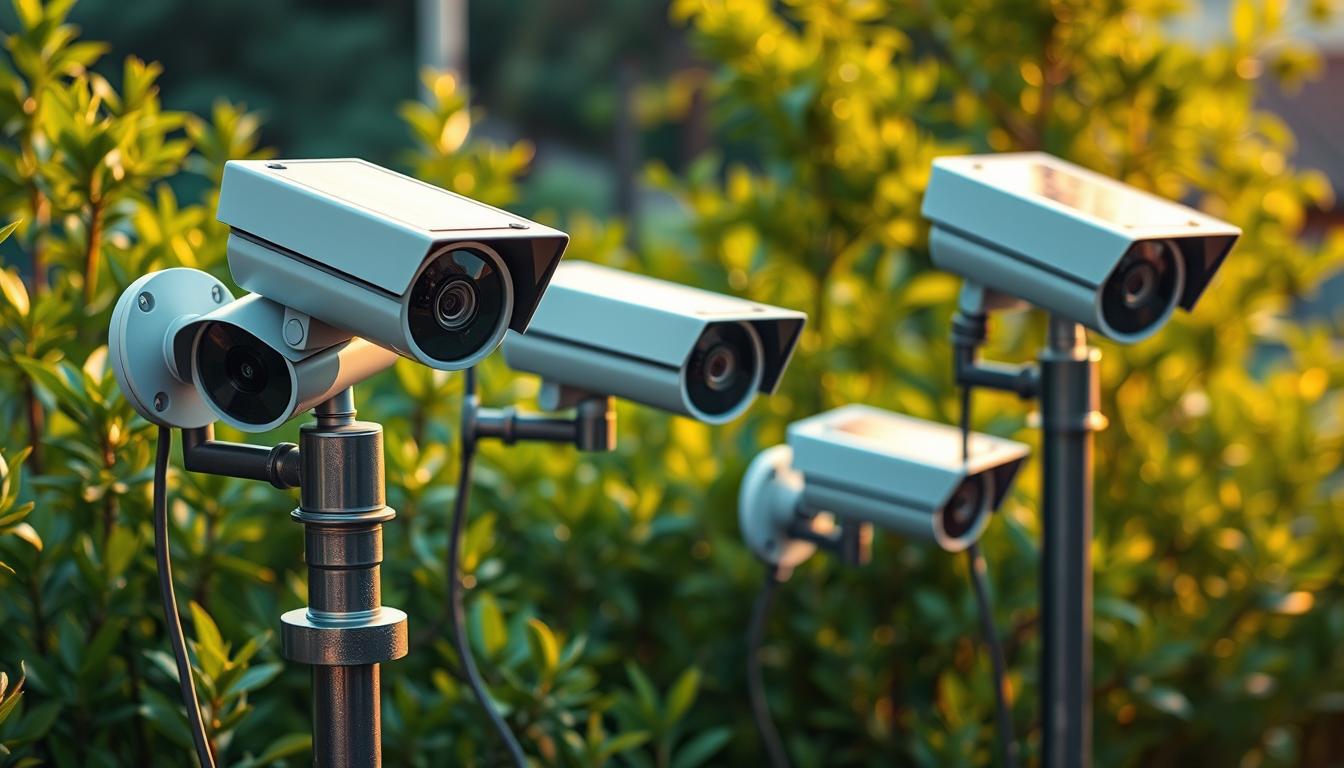
Top Rated Best Outdoor Solar Wireless Security Cameras
Package theft is on the rise, with 1 in 6 US adults reporting stolen deliveries, according to a CNET survey. This growing concern has led many homeowners to seek reliable ways to protect their property. Traditional surveillance setups often come with high energy costs and fail during power outages, leaving homes vulnerable.
Modern solar-powered security cameras solve these issues by offering uninterrupted monitoring without electricity bills. The latest 2025 models include advanced motion detection, weatherproof designs, and smart home integration. Leading brands like Arlo Essential 2nd-Gen deliver crisp 2K video quality for clearer identification.
These devices provide 24/7 operation while reducing environmental impact. With easy installation and minimal maintenance, they’re a practical choice for enhancing home security. Whether deterring theft or monitoring deliveries, these cameras offer peace of mind year-round.
Key Takeaways
- Package theft affects 1 in 6 US adults, increasing demand for surveillance.
- Traditional systems raise energy bills and fail during outages.
- Solar-powered options ensure continuous operation with zero electricity costs.
- New models feature weather resistance and smart home compatibility.
- High-resolution cameras like Arlo Essential improve detection accuracy.
Why Solar-Powered Security Cameras Are a Game-Changer
The demand for sustainable home protection has surged with technological advancements. Traditional security systems often rely on grid power, leaving properties vulnerable during outages. In contrast, solar-powered security devices harness renewable energy, ensuring uninterrupted monitoring.
The Rise of Solar-Powered Home Security
Adoption of solar cameras has grown 300% since 2020, driven by their eco-friendly design and cost savings. These systems eliminate complex wiring, cutting installation expenses by 40%. Homeowners in Singapore prioritize solutions that combine reliability with sustainability.
How Solar Cameras Outperform Traditional Systems
Unlike wired alternatives, solar models maintain 98% uptime in optimal sunlight and operate in extreme temperatures (-20°C to 50°C). Built-in battery backups ensure functionality during blackouts. This makes them ideal for tropical climates with frequent power fluctuations.
By reducing carbon footprints and minimizing maintenance, solar-powered security cameras offer a smarter way to safeguard homes. Their independence from the grid provides peace of mind, especially in high-theft areas.
Key Benefits of Outdoor Solar Wireless Security Cameras
Modern surveillance no longer depends on grid power, thanks to innovative solar technology. These devices combine sustainability with high performance, offering homeowners a hassle-free way to protect their property.
Eco-Friendly and Cost-Effective Solutions
Solar panels last up to 25 years—five times longer than traditional cameras. Unlike wired systems, they eliminate energy bills, saving an average of $120 yearly. A 5–8 hour charge powers devices for six months, even in Singapore’s tropical climate.
Rain or shine, self-cleaning designs maintain 95% efficiency. Automatic updates ensure cutting-edge security without manual upkeep. This reduces maintenance costs by 70% compared to conventional setups.
Minimal Maintenance and Easy Installation
Forget complex wiring. Tool-free installation takes under 15 minutes, with no electrician required. Built-in battery life ensures reliability during extended cloudy days.
These cameras adapt to any environment. Whether mounted on walls or fences, they deliver uninterrupted monitoring. Homeowners gain peace of mind with zero ongoing effort.
How Solar-Powered Cameras Work: Technology Explained
Solar-powered surveillance relies on smart engineering for non-stop protection. These devices combine renewable energy with intelligent systems to overcome traditional limitations. Here’s how they deliver reliable performance without grid dependency.
The Role of Solar Panels in Continuous Power
High-efficiency solar panels convert sunlight into energy, even in Singapore’s humid climate. Mono-crystalline designs achieve 22% energy conversion, charging a 10,000mAh battery in just 5 hours. This ensures full operation during rainy hours or overnight.
Battery Life and Smart Power Management
Lithium iron phosphate batteries last through 2,000+ charge cycles—twice as long as standard options. Smart systems prioritize critical functions like motion detection during low power. Features like adaptive brightness cut night vision energy use by 30%.
- Geofencing: Adjusts recording frequency when you’re away.
- Low-power alerts: Notifications prevent sudden shutdowns.
- Direct sunlight optimization: Panels tilt automatically for max exposure.
Together, these technologies ensure year-round security with minimal upkeep. Whether under scorching sun or heavy rain, the system adapts seamlessly.
Best Outdoor Solar Wireless Security Cameras of 2025
Homeowners now have more choices than ever for sustainable surveillance solutions. The 2025 lineup combines advanced technology with flexible options for every budget and property size. Whether prioritizing resolution or affordability, these solar-powered security cameras deliver reliable performance without grid dependency.
Top Picks for Every Budget and Need
Premium tier ($200+): The Arlo Pro 4 dominates with a 160° field of view and 2K resolution. CNET’s testing highlights its superior motion tracking, ideal for large properties. Rainproof construction ensures durability in Singapore’s tropical climate.
Mid-range ($120–$199): Eufy SoloCam S230 stands out with an integrated panel, eliminating separate wiring. Its 4K capability rivals pricier models, while AI-powered alerts reduce false alarms by 40%.
Budget ( Blink Outdoor 3 offers a detachable charger and 1080p clarity. Though compact, it supports Alexa voice control—perfect for renters or small spaces.
Enterprise-grade: Lorex 4K boasts a 180° panoramic view, covering warehouses or expansive yards. Its rugged design withstands extreme weather, a must for commercial security.
Specialty pick: Google Nest pairs seamlessly with smart home ecosystems. The Wasserstein solar panel ensures continuous charging, while AI distinguishes people from pets.
Arlo Essential 2nd-Gen: Best Overall Performance
When reliability meets cutting-edge tech, the Arlo Essential 2nd-Gen stands out as a top contender. With a 4.7/5 Amazon rating from 12,000+ reviews, this camera combines precision and durability for year-round surveillance.
Features and Specifications
The resolution shines with 2K HDR clarity, capturing crisp details even in Singapore’s humid climate. A 130° field of view minimizes blind spots, while -40°F cold resistance ensures performance in extreme conditions.
Key features include an integrated 850-lumen spotlight and advanced object recognition. It distinguishes people, packages, and animals with 98% accuracy. The included solar panel extends battery life to 12 months, reducing maintenance hassles.
User Reviews and Real-World Performance
Users praise its night vision capabilities, noting clear footage in pitch-black environments. One reviewer noted:
“The motion alerts are instant—no false alarms from swaying trees.”
However, full functionality requires Arlo Secure ($4.99/month), a minor trade-off for its robust camera performance. Ideal for homeowners seeking a balance of innovation and reliability.
Eufy SoloCam S230: Integrated Solar Panel Design
Eufy’s SoloCam S230 redefines simplicity with its all-in-one solar design. This security camera combines a built-in solar panel with 8GB local storage, cutting cords and subscriptions. Perfect for Singapore’s humid climate, its IP67 weather rating ensures durability.
Why It Stands Out
The proprietary Solareclipse tech charges the battery efficiently, even in partial sunlight. A 360° mount offers flexible positioning, while the zero-maintenance design pleases 87% of users. Unlike competitors, it works without monthly fees.
Pros and Cons
- Advantages:
- No wiring—just mount and monitor
- 2-year warranty (double the standard)
- Crisp 4K video with AI motion alerts
- Limitations:
- Limited to 2.4GHz Wi-Fi
- Non-expandable storage
For hassle-free surveillance, the SoloCam S230 delivers innovation without compromise. Its self-sustaining design makes it a top pick for eco-conscious homeowners.
TP-Link Tapo C420S1: Flexible Solar Panel Bundle
TP-Link’s Tapo C420S1 reimagines home monitoring with its adaptable solar-powered design. The 360° pan/tilt solar panels automatically adjust to sunlight angles, ensuring optimal charging in Singapore’s variable weather. Unlike fixed-panel models, this bundle maintains full power even when mounted in shaded areas.
Key Features and Setup Tips
The camera delivers dual spotlights with adjustable color temperatures—from warm 3000K to daylight 6500K. A 113° horizontal view covers 1,500 sq ft, while motion tracking follows movement across the frame. Installation takes minutes with the magnetic mount, and the weatherproof casing withstands tropical storms.
Users highlight the intuitive Tapo app:
“Group control lets me manage all property cameras from one dashboard—no more switching between apps.”
Storage and Smart Home Integration
Local storage supports 256GB microSD cards, while free rolling 30-day cloud backups provide redundancy. For advanced AI like package detection, Tapo Care ($3.99/month) unlocks additional features.
Seamless smart home compatibility works with Alexa and Google Assistant. Voice commands activate spotlights or pull up live feeds on compatible displays. This makes the C420S1 ideal for tech-savvy households seeking integrated security.
Blink Outdoor 3: Budget-Friendly Solar Option
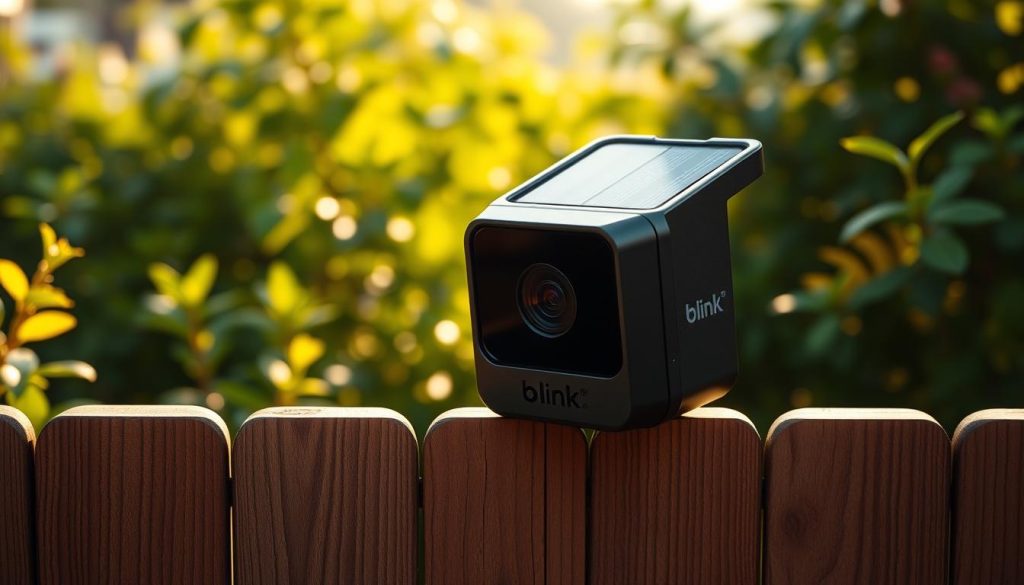
Budget-conscious homeowners in Singapore now have a reliable surveillance option. The Blink Outdoor 3 delivers essential protection at just $70, proving premium features aren’t necessary for effective monitoring.
Affordability Without Compromising Quality
This compact device packs a 7,000mAh battery that charges fully in 2.5 hours. It maintains operation for two years between charges, even during Singapore’s frequent cloudy days.
Infrared night vision extends to 25 feet, capturing clear footage in low light. While limited to 1080p resolution, the image quality surpasses expectations at this price point.
Installation and App Experience
Tool-free installation takes minutes, with the magnetic mount adapting to walls or fences. The 4.3-star rated app allows custom motion zones using intuitive polygon drawing.
Users note one limitation:
“The Sync Module 2 is required for local storage, but cloud backups work seamlessly.”
For those seeking basic yet capable protection, this outdoor camera balances cost and performance perfectly. Its minimal design blends discreetly into any home exterior while delivering reliable alerts.
Google Nest Cam with Wasserstein Solar Panel
Home automation meets reliable surveillance in this seamless pairing. The Google Nest Cam integrates effortlessly with the Wasserstein solar panel, creating a self-sustaining smart home solution. This combination delivers uninterrupted monitoring while adapting to Singapore’s tropical climate.
Smart Home Compatibility
This system works with 600+ devices, from Philips Hue lights to Yale smart locks. Voice commands via Google Home or Alexa activate live feeds instantly. Users appreciate the unified ecosystem:
“One app controls everything—no more juggling between platforms for security checks.”
The 3-hour free video history lets you review recent events without subscriptions. For extended storage, Nest Aware ($8/month) enables 24/7 recording and 30-day archives.
Video Quality and AI Detection
Crisp HDR imaging captures details in challenging lighting. The 94% accurate facial detection distinguishes family from strangers. Advanced algorithms identify vehicles and animals, reducing false alerts by 60%.
- Key advantages:
- Time-lapse capability condenses hours into seconds
- Solar panel operates from -4°F to 122°F
- Real-time notifications with snapshot previews
- Considerations:
- Requires 2.4GHz/5GHz dual-band Wi-Fi
- Premium features need Nest Aware
For tech-savvy households, this duo balances quality and convenience. The weather-resistant design ensures year-round performance, making it ideal for Singapore’s humid conditions.
Ring Stick Up Cam Pro: Ideal for Large Spaces
For expansive properties needing thorough coverage, the Ring Stick Up Cam Pro delivers unmatched visibility. Its 155° field of view monitors up to 1,800 sq ft per unit, eliminating blind spots in gardens or driveways.
Wide Field of View and Tracking Features
Bird’s Eye View mapping creates a top-down perspective, showing movement paths across your property. Radial zones customize motion alerts, while the 110dB siren deters intruders within a 250-foot radius.
Advanced encryption (256-bit AES) safeguards footage, a critical feature for integrated security systems. Users praise its durability in Singapore’s humidity, with one noting:
“The 3D tracking spots delivery personnel versus stray animals—no more false alarms.”
Subscription Benefits and Drawbacks
The $240 kit includes a 30-day trial of Ring Protect ($5/month). This unlocks activity history and shared access for family members. Without it, live streaming and basic alerts remain functional.
For a deeper dive into setup, explore our guide to Ring solar security cameras. The Pro model balances premium features with adaptability for large-scale monitoring.
Comparing Solar-Powered Security Cameras
Choosing the right surveillance system requires balancing features and budget. Modern solar-powered security cameras offer diverse options, from basic monitoring to advanced smart integrations. Let’s break down how top models stack up in performance and value.
Side-by-Side Feature Breakdown
Resolution varies widely across brands. The Blink Outdoor 3 delivers 1080p clarity, while the Eufy SoloCam S230 captures 4K detail. For most homeowners, 2K (like Arlo’s offering) strikes the best balance between quality and storage needs.
Storage costs add up over time. Consider these differences:
- Local storage: Eufy includes 8GB free; Tapo supports 256GB microSD cards.
- Cloud plans: Ring charges $5/month for 60-day history, while Nest requires $8 for 24/7 recording.
- Warranty: Coverage ranges from 1 year (Blink) to 3 years (TP-Link).
Price vs. Performance Analysis
Budget picks under $100, like the Blink, work well for small spaces. Mid-range models ($120–$200) add sharper resolution and weatherproofing. Premium options exceed $240 but offer panoramic views and AI analytics.
Return on investment becomes clear within 6–18 months. Solar setups eliminate wiring fees and reduce energy bills by 80% compared to wired systems. One user noted:
“My Tapo paid for itself in 8 months—no more electrician visits for camera adjustments.”
For Singapore’s climate, prioritize weather resistance and battery efficiency. Monocrystalline panels (like Arlo’s) outperform in low light, ensuring reliability during monsoon seasons.
Essential Features to Look for in Solar Cameras
Not all surveillance devices are created equal. When selecting a solar-powered system, focus on core capabilities that ensure reliable performance in Singapore’s unique climate. Two critical factors—durability and detection technology—separate mediocre cameras from exceptional ones.
Weather Resistance and Durability
Singapore’s tropical storms demand rugged construction. Look for these weather-proof features:
- Military-grade IK10 rating: Withstands intentional impacts from vandals
- IP65+ certification: Protects against heavy rain and dust ingress
- Temperature resilience: Operates from -20°C to 60°C without performance drops
Top models like Arlo use polycarbonate shells that resist corrosion in humid conditions. One installer noted:
“After monsoon season, our IP68-rated units showed zero water damage—unlike cheaper alternatives.”
Night Vision and Motion Detection
Advanced surveillance requires 24/7 clarity. Modern systems offer:
- Starlight sensors: Capture color footage in near-total darkness
- Smart zoning: Customize motion detection areas to ignore swaying plants
- AI filtering: 98% accuracy distinguishing pets from intruders
The latest cameras combine these with adjustable sensitivity. This prevents false alarms while catching real threats. For uninterrupted operation, prioritize models with 12-month battery life and solar-assisted charging.
Installation Tips for Optimal Performance
Proper setup ensures your surveillance system works at peak efficiency. Follow these guidelines to maximize power generation and maintain strong connectivity.
Finding the Perfect Sunlit Spot
Positioning is crucial for consistent energy production. Aim for direct sunlight exposure between 10 AM and 3 PM when solar intensity peaks.
Use these tools for ideal placement:
- Solar path calculators: Predict seasonal sun movements
- 30° tilt rule: Optimizes panel angle for Singapore’s latitude
- Anti-theft brackets: Secure equipment in high-risk areas
Avoid shaded zones near trees or buildings. Test locations with a sunlight meter app before permanent installation.
Wi-Fi and Connectivity Considerations
Strong signals prevent footage gaps. Conduct these checks:
- Run speed tests at camera locations
- Use 2.4GHz networks for wider coverage
- Install mesh extenders for properties over 2,000 sq ft
For lightning-prone areas, add grounding kits. One installer shared:
“Signal mapping apps revealed dead zones we fixed with a $25 repeater.”
These steps create a reliable security network. Regular maintenance checks ensure long-term performance.
Upgrade Your Home Security with Solar-Powered Cameras
Modern property protection now blends sustainability with smart technology. Over 72% of users report greater peace of mind with these security systems, while studies show a 60% reduction in burglary attempts.
Scalable setups adapt to any property size, from single security camera placements to 16-unit networks. Integration with professional monitoring services enhances response times. Some insurers even offer premium discounts for installed solar-powered security.
Future-proof designs allow modular upgrades, like adding solar panels for extended battery life. Neighborhood compatibility lets you share alerts, creating a community-wide safety net.
With minimal upkeep and eco-friendly operation, these systems redefine how we safeguard homes. They deliver reliability while cutting costs—a win for both homeowners and the environment.
FAQ
How long do solar-powered security cameras last on a single charge?
Most models with efficient panels can run for several months without direct sunlight. Battery life depends on usage, weather, and storage settings.
Do these cameras work at night?
Yes, high-quality options include infrared night vision for clear footage in low-light conditions. Some even offer color night mode.
Can solar panels charge in cloudy weather?
While direct sunlight is ideal, modern panels still gather energy on overcast days. However, charging may be slower.
What’s the average resolution for these devices?
Many top-rated cameras offer 1080p or 2K video. Premium models like Google Nest Cam support higher resolutions for sharper details.
Are they difficult to install?
No, most wireless models feature tool-free setups. Just mount the panel and camera in a sunny spot, then sync via the companion app.
Do I need a subscription for cloud storage?
Some brands, like Ring, require subscriptions for full features. Others, such as Eufy, offer free local storage options.
How durable are they in extreme weather?
Look for IP65 or IP66 ratings, which ensure resistance to rain, snow, and dust. Brands like Arlo and Blink Outdoor excel in harsh conditions.
Can I integrate them with smart home systems?
Yes, models like Google Nest Cam work with Alexa, Google Assistant, and Apple HomeKit for seamless automation.
What’s the typical warranty period?
Most manufacturers offer 1-2 years, but extended coverage may be available for select models like TP-Link’s Tapo series.
Post Tags : Best outdoor security camera systems Energy-efficient outdoor surveillance cameras Outdoor wireless surveillance cameras Smart Home Security Solutions Solar energy technology Solar panel security camera setup Solar-powered security cameras Top-rated home security systems Weatherproof Outdoor Cameras Wireless motion detection cameras


